

Sign Up
Thank you for Submitting!

AI vendor due diligence has quickly become a board-level concern for CIOs, CISOs, and procurement leaders. As AI capabilities are embedded into almost every SaaS product, the quality of a vendor's training data and the discipline of their AI model updates now directly affect your risk, compliance posture, and operational performance.
A recent industry report found that 81% of enterprises in regulated sectors now cite transparency over AI training data as a critical requirement for vendor selection (AI Compliance Trends Report 2026). Yet another survey showed that 62% of IT leaders experienced a compliance gap due to insufficient vendor disclosures on AI data sourcing and model revision logs during onboarding in 2026 (SaaS Risk Management Survey 2026).
This post provides a practical, enterprise-focused guide to AI vendor due diligence. You will get specific AI vendor questions to ask, a structured AI compliance checklist, and a view of how platforms like CloudNuro help operationalize SaaS AI governance at scale.
Most enterprise teams already have a due diligence process for SaaS vendors. What is changing is the need to treat AI behavior as a living system, not a static feature set.
A 2026 enterprise AI governance outlook report found that 76% of organizations plan to increase scrutiny on AI model update frequency and version control as part of their due diligence. In parallel, 42% of AI-related data breaches in SaaS environments were traced back to lack of verification of vendor data handling practices during due diligence (Security Insights Review 2026).
In other words, inadequate vetting of AI training data, model updates, and auditability is no longer a theoretical risk. It is already showing up in security incidents and regulatory findings.
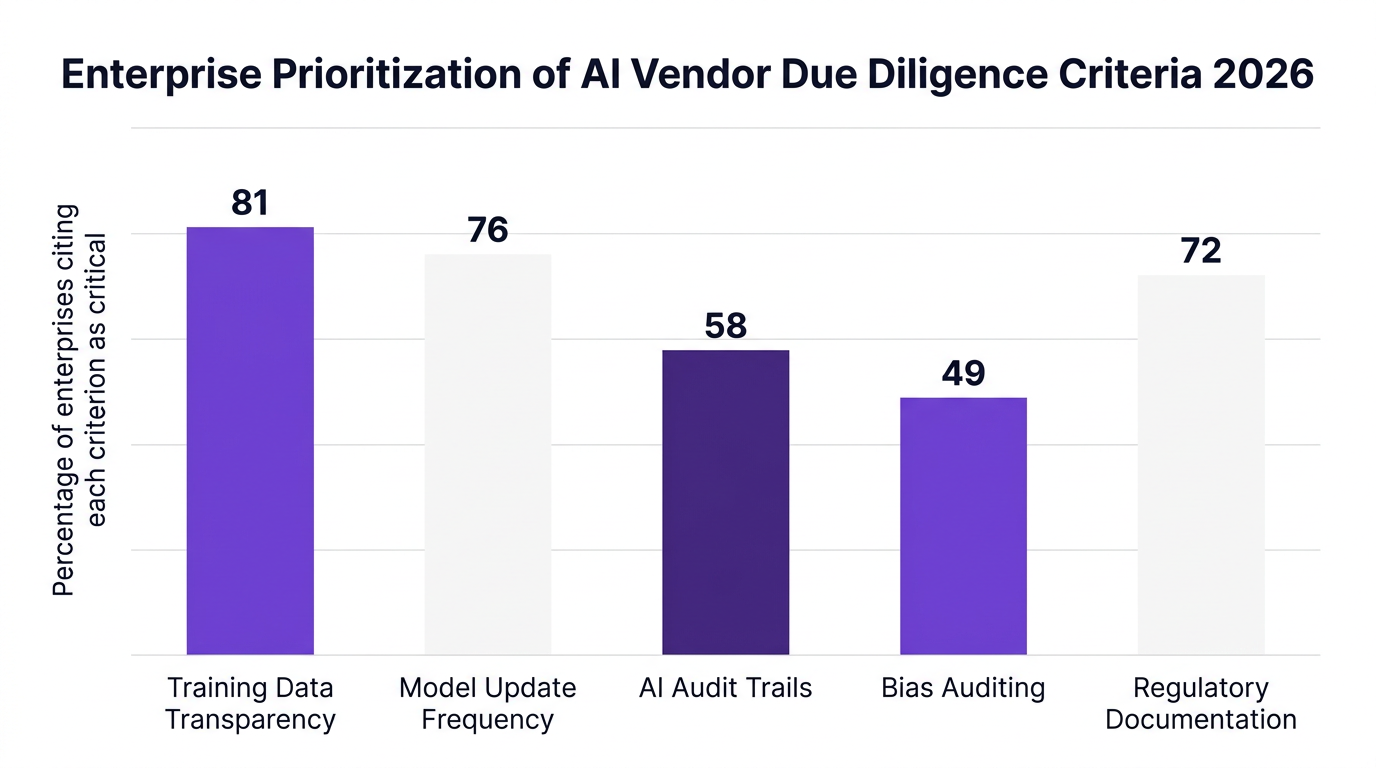
For enterprise leaders, three risk dimensions stand out:
Think of an AI model like a new team member with access to your most sensitive workflows. You would never onboard that person without checking their background and setting clear performance expectations. AI vendor due diligence plays the same role for algorithmic teammates.
AI training data transparency is the bedrock of any serious AI vendor risk management strategy. Yet many due diligence questionnaires treat it as a single yes or no checkbox.
To raise the bar, you need a set of specific, non-negotiable questions that force clarity around training data provenance, usage boundaries, and governance.
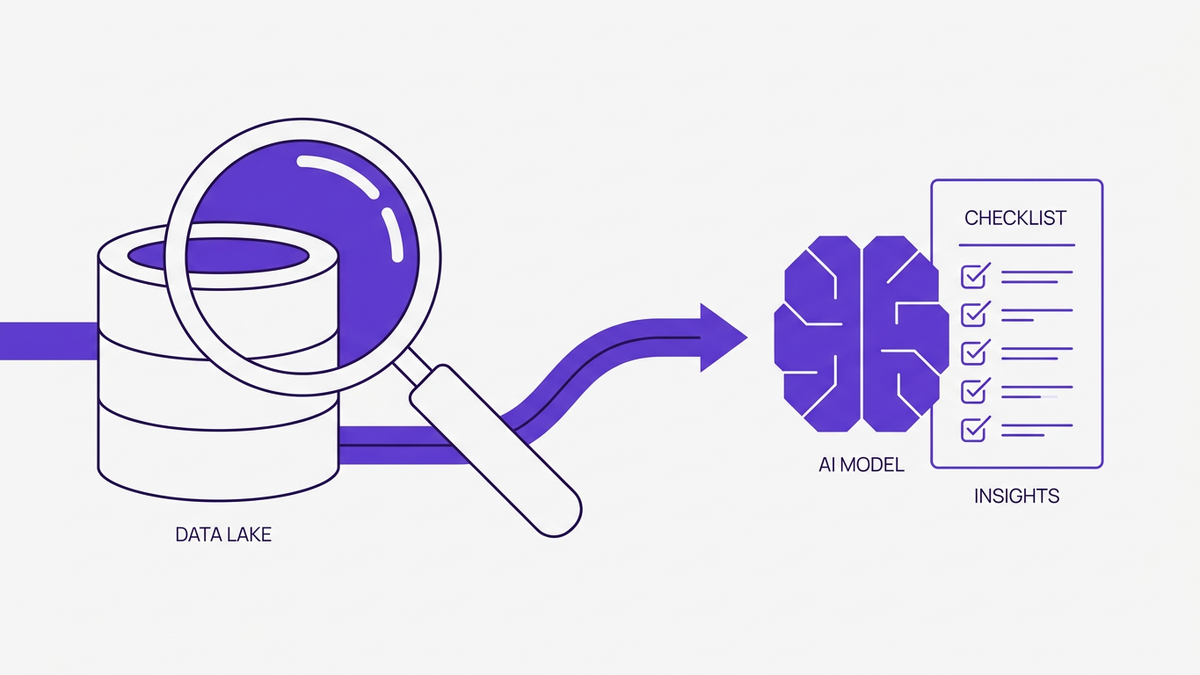
Ask vendors to provide written answers to questions such as:
These questions help you assess training data provenance and identify hidden dependencies that could create bias, IP disputes, or cross-border data transfer violations.
From a compliance angle, connect your AI vendor questions directly to your regulatory obligations:
A 2026 AI procurement barometer study reported that 58% of enterprise CIOs now require formal AI audit trails and model lifecycle documentation from potential SaaS vendors in due diligence stages. That means high-performing vendors should already have these answers packaged, not scramble to assemble them.
Many AI risks arise not from first-party data, but from opaque third-party sources.
Include questions such as:
According to a recent AI SaaS strategies analysis, senior advisors stress that without rigorous inquiry about data governance, enterprises risk exposing workflows to biases and regulatory violations. Due diligence for SaaS vendors must probe beyond the glossy marketing layer to the concrete mechanics of AI data governance.
If training data is the "past" of an AI system, AI model updates define its "future." A static description of model behavior at contract signature is not enough, because models are retrained, fine-tuned, and reconfigured continuously.
A 2026 market forecast projects over 1.8 billion dollars in investment in AI model governance solutions by 2026, a reflection of the growing need for formal model lifecycle management.
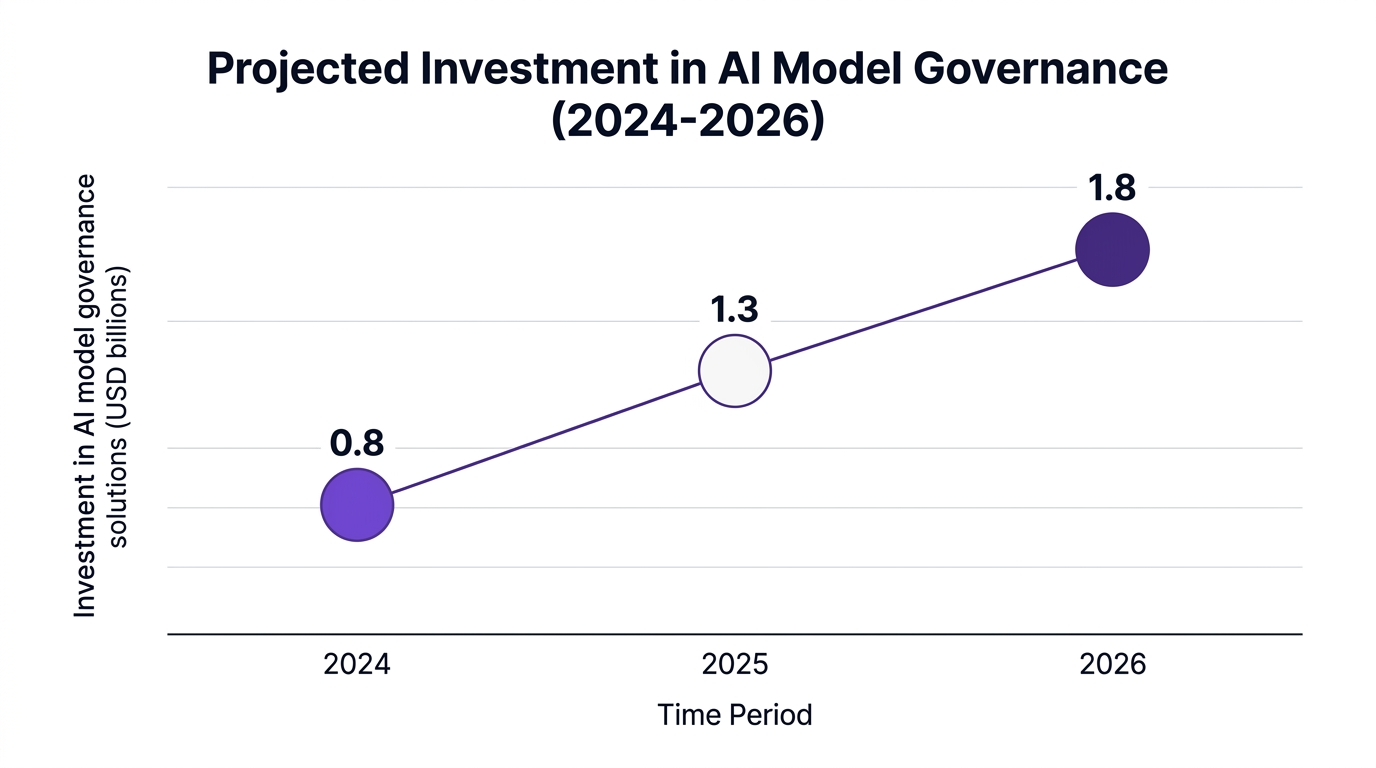
Your AI vendor due diligence should require clarity on the full model lifecycle management process:
A recent enterprise AI governance outlook report noted that 76% of organizations are raising scrutiny on model update frequency and version control. This is not only a technical issue, but a contract and oversight issue.
Model updates introduce change risk. You should expect vendors to demonstrate structured validation as part of their AI audit best practices:
Enterprises that treat AI like a "set and forget" feature often discover accuracy degradation or compliance problems months later. Continuous AI performance monitoring and validation is the antidote.
Even strong model governance on the vendor side is not enough if customers are surprised by behavioral changes.
Include questions such as:
AI service level agreements and AI contract negotiation should include clear expectations about notification windows, rollback rights, and documented change processes. This is often absent from standard SaaS documents, so procurement teams need to raise it explicitly.
Enterprises that succeed with AI vendor risk management treat it as a repeatable process, not an ad hoc conversation. This is where an AI compliance checklist and SaaS vendor risk checklist become vital.
According to a 2026 SaaS risk management survey, 62% of IT leaders who lacked formal AI-specific due diligence controls reported at least one compliance gap during onboarding. In contrast, organizations using structured checklists saw fewer unforced errors and were better prepared for audits.
A robust checklist should cover at least five domains:
These dimensions form a reusable backbone that procurement, legal, IT, and risk can tailor to specific use cases.
A 2026 healthcare industry AI risk report described a large healthcare system that implemented a mandatory AI vendor due diligence workflow. Every prospective SaaS vendor with AI components had to supply detailed training data provenance and annual model update documentation.
Within a year, the organization reported a 30% decrease in compliance incidents, largely attributed to better visibility into vendor AI practices.
Similarly, a financial sector technology review outlined how a multinational bank added an AI compliance checklist to procurement, including third-party bias testing and model lifecycle transparency. Audit readiness scores improved from 76 to 91 within two quarters, demonstrating that structured due diligence can deliver quantifiable benefits.
These examples underscore that enterprise AI procurement is no longer only about features and price. It is about repeatable AI vendor risk management with measurable outcomes.
Even the best AI vendor due diligence process will fail if it lives only in spreadsheets and email threads. To scale, enterprises need platforms that embed SaaS AI governance into daily operations, not just procurement checkpoints.
CloudNuro was built to give CIOs, FinOps leads, and compliance teams a unified, automated foundation for due diligence for SaaS vendors, including those with embedded AI.
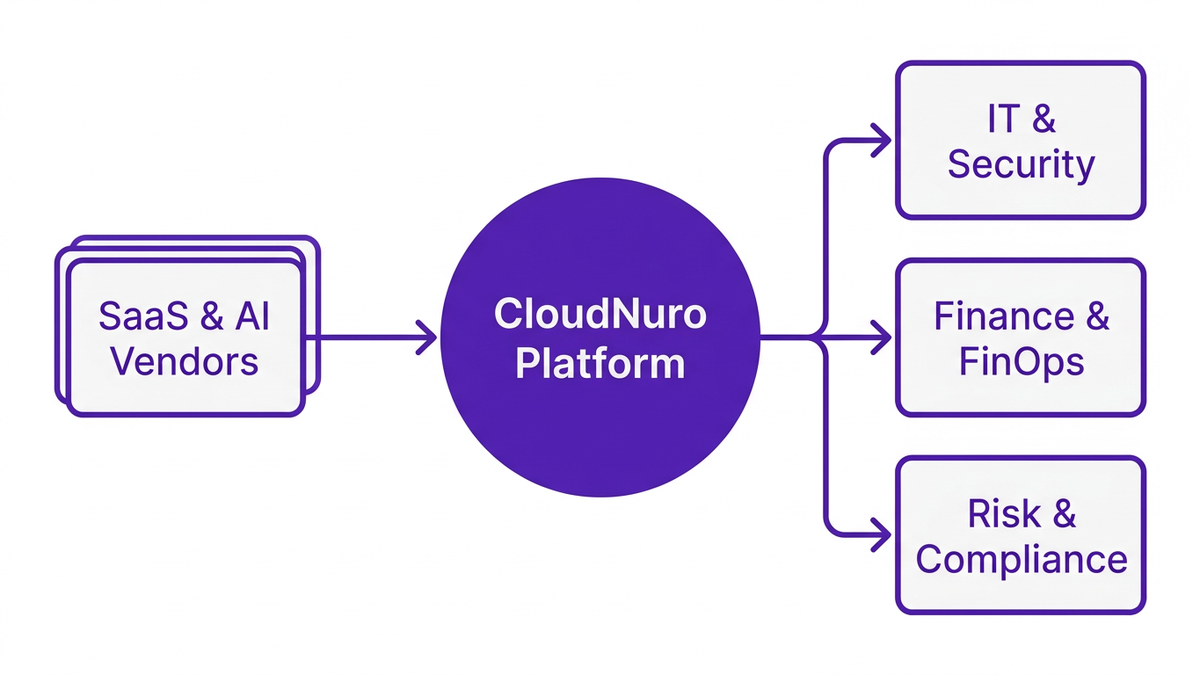
CloudNuro's intelligent SaaS management platform provides:
This gives IT and risk leaders a single pane of glass to see which AI vendors meet your standards and where immediate remediation is needed.
CloudNuro AI Custodian is designed to support AI vendor due diligence as an ongoing practice, not a one-time event.
Key capabilities include:
This allows enterprises to prove, at any point in time, that AI vendor questions about data and updates were not only asked, but are being actively monitored.
CloudNuro also strengthens AI contract negotiation and AI service level agreements by making AI-related obligations first-class contract data.
Procurement and legal teams can:
By tying contractual expectations to operational data, CloudNuro helps enterprises build a closed loop between AI vendor due diligence, ongoing enforcement, and renewal strategy.
Finally, CloudNuro supports AI audit best practices by maintaining a continuous record of:
When regulators or auditors ask how a particular AI decision was made, or how a vendor's AI model is governed, CloudNuro gives your teams an authoritative system of record instead of a scramble through disparate systems.
Some teams argue that deep AI vendor due diligence is unnecessary for "low-risk" tools, or that it will slow adoption too much. There is some truth here: not every AI feature has the same impact on risk.
For example, an AI system that suggests email subject lines carries less intrinsic regulatory risk than one that scores loan applications. A rigid, one-size-fits-all process can frustrate business teams.
The answer is not to lower the bar, but to tier your SaaS compliance strategy:
Another counterargument is that small or emerging vendors might not yet have mature AI governance documentation. In some innovation scenarios, enterprises may decide to accept this, but only with:
Even when you adjust the intensity of review, AI vendor due diligence should never be skipped entirely.
Focus on training data provenance, composition, and usage rights. Ask about primary data sources, the share of synthetic versus real data, how personal or sensitive data is handled, and whether your organization's data is used to train general models.
Also request documentation of data privacy controls, retention and deletion processes, and any third-party data providers involved in the training pipeline.
There is no universal "right" update cadence. What matters is that AI model updates are controlled, documented, and validated.
Ask vendors how often models are retrained, what triggers a new version, how changes are communicated, and whether they maintain rollback capabilities. Uncontrolled updates can introduce new biases, degrade accuracy, or break regulated workflows.
You should expect vendors to run ongoing validation as part of their AI performance monitoring. Ask for access to performance metrics and bias test summaries, especially after significant updates.
Internally, consider running your own spot checks with representative datasets, tracking error trends, and establishing thresholds that trigger escalation or vendor remediation.
Key risks include unauthorized use of personal or regulated data in training, biased or discriminatory outcomes, inadequate documentation for regulators, and poorly governed model changes that affect critical decisions.
A recent security insights review found that 42% of AI-related SaaS breaches were linked to inadequate verification of vendor data handling practices during due diligence. This underscores the need for explicit AI vendor risk management.
Extend your standard due diligence for SaaS vendors with AI-specific sections that cover training data transparency, model lifecycle documentation, AI security controls, and regulatory alignment.
Platforms like CloudNuro can help embed these checks into onboarding, entitlement reviews, and renewals so that AI vendor questions and responses are centralized and auditable.
AI vendor due diligence is no longer simply a checklist to complete before signature. It is a continuous discipline that spans AI training data transparency, AI model updates, security, and regulatory alignment.
According to recent market research, enterprises are rapidly adopting AI governance solutions and standardized AI compliance checklists to close a widening gap between AI innovation and oversight. Those that succeed treat AI vendor risk management as a shared responsibility across IT, security, legal, and procurement, with clear ownership and tooling.
CloudNuro helps enterprises transform this from theory into practice, giving leaders a unified platform to discover AI-powered SaaS, evaluate and monitor AI data and model governance, and maintain continuous audit readiness.
If you are ready to strengthen your AI vendor due diligence and build a more resilient SaaS compliance strategy, now is the right time to modernize your processes and tooling.
Take the next step: align your SaaS portfolio, AI governance, and cost controls with CloudNuro.
Request a no cost, no obligation free assessment —just 15 minutes to savings!
Get StartedAI vendor due diligence has quickly become a board-level concern for CIOs, CISOs, and procurement leaders. As AI capabilities are embedded into almost every SaaS product, the quality of a vendor's training data and the discipline of their AI model updates now directly affect your risk, compliance posture, and operational performance.
A recent industry report found that 81% of enterprises in regulated sectors now cite transparency over AI training data as a critical requirement for vendor selection (AI Compliance Trends Report 2026). Yet another survey showed that 62% of IT leaders experienced a compliance gap due to insufficient vendor disclosures on AI data sourcing and model revision logs during onboarding in 2026 (SaaS Risk Management Survey 2026).
This post provides a practical, enterprise-focused guide to AI vendor due diligence. You will get specific AI vendor questions to ask, a structured AI compliance checklist, and a view of how platforms like CloudNuro help operationalize SaaS AI governance at scale.
Most enterprise teams already have a due diligence process for SaaS vendors. What is changing is the need to treat AI behavior as a living system, not a static feature set.
A 2026 enterprise AI governance outlook report found that 76% of organizations plan to increase scrutiny on AI model update frequency and version control as part of their due diligence. In parallel, 42% of AI-related data breaches in SaaS environments were traced back to lack of verification of vendor data handling practices during due diligence (Security Insights Review 2026).
In other words, inadequate vetting of AI training data, model updates, and auditability is no longer a theoretical risk. It is already showing up in security incidents and regulatory findings.
For enterprise leaders, three risk dimensions stand out:
Think of an AI model like a new team member with access to your most sensitive workflows. You would never onboard that person without checking their background and setting clear performance expectations. AI vendor due diligence plays the same role for algorithmic teammates.
AI training data transparency is the bedrock of any serious AI vendor risk management strategy. Yet many due diligence questionnaires treat it as a single yes or no checkbox.
To raise the bar, you need a set of specific, non-negotiable questions that force clarity around training data provenance, usage boundaries, and governance.
Ask vendors to provide written answers to questions such as:
These questions help you assess training data provenance and identify hidden dependencies that could create bias, IP disputes, or cross-border data transfer violations.
From a compliance angle, connect your AI vendor questions directly to your regulatory obligations:
A 2026 AI procurement barometer study reported that 58% of enterprise CIOs now require formal AI audit trails and model lifecycle documentation from potential SaaS vendors in due diligence stages. That means high-performing vendors should already have these answers packaged, not scramble to assemble them.
Many AI risks arise not from first-party data, but from opaque third-party sources.
Include questions such as:
According to a recent AI SaaS strategies analysis, senior advisors stress that without rigorous inquiry about data governance, enterprises risk exposing workflows to biases and regulatory violations. Due diligence for SaaS vendors must probe beyond the glossy marketing layer to the concrete mechanics of AI data governance.
If training data is the "past" of an AI system, AI model updates define its "future." A static description of model behavior at contract signature is not enough, because models are retrained, fine-tuned, and reconfigured continuously.
A 2026 market forecast projects over 1.8 billion dollars in investment in AI model governance solutions by 2026, a reflection of the growing need for formal model lifecycle management.
Your AI vendor due diligence should require clarity on the full model lifecycle management process:
A recent enterprise AI governance outlook report noted that 76% of organizations are raising scrutiny on model update frequency and version control. This is not only a technical issue, but a contract and oversight issue.
Model updates introduce change risk. You should expect vendors to demonstrate structured validation as part of their AI audit best practices:
Enterprises that treat AI like a "set and forget" feature often discover accuracy degradation or compliance problems months later. Continuous AI performance monitoring and validation is the antidote.
Even strong model governance on the vendor side is not enough if customers are surprised by behavioral changes.
Include questions such as:
AI service level agreements and AI contract negotiation should include clear expectations about notification windows, rollback rights, and documented change processes. This is often absent from standard SaaS documents, so procurement teams need to raise it explicitly.
Enterprises that succeed with AI vendor risk management treat it as a repeatable process, not an ad hoc conversation. This is where an AI compliance checklist and SaaS vendor risk checklist become vital.
According to a 2026 SaaS risk management survey, 62% of IT leaders who lacked formal AI-specific due diligence controls reported at least one compliance gap during onboarding. In contrast, organizations using structured checklists saw fewer unforced errors and were better prepared for audits.
A robust checklist should cover at least five domains:
These dimensions form a reusable backbone that procurement, legal, IT, and risk can tailor to specific use cases.
A 2026 healthcare industry AI risk report described a large healthcare system that implemented a mandatory AI vendor due diligence workflow. Every prospective SaaS vendor with AI components had to supply detailed training data provenance and annual model update documentation.
Within a year, the organization reported a 30% decrease in compliance incidents, largely attributed to better visibility into vendor AI practices.
Similarly, a financial sector technology review outlined how a multinational bank added an AI compliance checklist to procurement, including third-party bias testing and model lifecycle transparency. Audit readiness scores improved from 76 to 91 within two quarters, demonstrating that structured due diligence can deliver quantifiable benefits.
These examples underscore that enterprise AI procurement is no longer only about features and price. It is about repeatable AI vendor risk management with measurable outcomes.
Even the best AI vendor due diligence process will fail if it lives only in spreadsheets and email threads. To scale, enterprises need platforms that embed SaaS AI governance into daily operations, not just procurement checkpoints.
CloudNuro was built to give CIOs, FinOps leads, and compliance teams a unified, automated foundation for due diligence for SaaS vendors, including those with embedded AI.
CloudNuro's intelligent SaaS management platform provides:
This gives IT and risk leaders a single pane of glass to see which AI vendors meet your standards and where immediate remediation is needed.
CloudNuro AI Custodian is designed to support AI vendor due diligence as an ongoing practice, not a one-time event.
Key capabilities include:
This allows enterprises to prove, at any point in time, that AI vendor questions about data and updates were not only asked, but are being actively monitored.
CloudNuro also strengthens AI contract negotiation and AI service level agreements by making AI-related obligations first-class contract data.
Procurement and legal teams can:
By tying contractual expectations to operational data, CloudNuro helps enterprises build a closed loop between AI vendor due diligence, ongoing enforcement, and renewal strategy.
Finally, CloudNuro supports AI audit best practices by maintaining a continuous record of:
When regulators or auditors ask how a particular AI decision was made, or how a vendor's AI model is governed, CloudNuro gives your teams an authoritative system of record instead of a scramble through disparate systems.
Some teams argue that deep AI vendor due diligence is unnecessary for "low-risk" tools, or that it will slow adoption too much. There is some truth here: not every AI feature has the same impact on risk.
For example, an AI system that suggests email subject lines carries less intrinsic regulatory risk than one that scores loan applications. A rigid, one-size-fits-all process can frustrate business teams.
The answer is not to lower the bar, but to tier your SaaS compliance strategy:
Another counterargument is that small or emerging vendors might not yet have mature AI governance documentation. In some innovation scenarios, enterprises may decide to accept this, but only with:
Even when you adjust the intensity of review, AI vendor due diligence should never be skipped entirely.
Focus on training data provenance, composition, and usage rights. Ask about primary data sources, the share of synthetic versus real data, how personal or sensitive data is handled, and whether your organization's data is used to train general models.
Also request documentation of data privacy controls, retention and deletion processes, and any third-party data providers involved in the training pipeline.
There is no universal "right" update cadence. What matters is that AI model updates are controlled, documented, and validated.
Ask vendors how often models are retrained, what triggers a new version, how changes are communicated, and whether they maintain rollback capabilities. Uncontrolled updates can introduce new biases, degrade accuracy, or break regulated workflows.
You should expect vendors to run ongoing validation as part of their AI performance monitoring. Ask for access to performance metrics and bias test summaries, especially after significant updates.
Internally, consider running your own spot checks with representative datasets, tracking error trends, and establishing thresholds that trigger escalation or vendor remediation.
Key risks include unauthorized use of personal or regulated data in training, biased or discriminatory outcomes, inadequate documentation for regulators, and poorly governed model changes that affect critical decisions.
A recent security insights review found that 42% of AI-related SaaS breaches were linked to inadequate verification of vendor data handling practices during due diligence. This underscores the need for explicit AI vendor risk management.
Extend your standard due diligence for SaaS vendors with AI-specific sections that cover training data transparency, model lifecycle documentation, AI security controls, and regulatory alignment.
Platforms like CloudNuro can help embed these checks into onboarding, entitlement reviews, and renewals so that AI vendor questions and responses are centralized and auditable.
AI vendor due diligence is no longer simply a checklist to complete before signature. It is a continuous discipline that spans AI training data transparency, AI model updates, security, and regulatory alignment.
According to recent market research, enterprises are rapidly adopting AI governance solutions and standardized AI compliance checklists to close a widening gap between AI innovation and oversight. Those that succeed treat AI vendor risk management as a shared responsibility across IT, security, legal, and procurement, with clear ownership and tooling.
CloudNuro helps enterprises transform this from theory into practice, giving leaders a unified platform to discover AI-powered SaaS, evaluate and monitor AI data and model governance, and maintain continuous audit readiness.
If you are ready to strengthen your AI vendor due diligence and build a more resilient SaaS compliance strategy, now is the right time to modernize your processes and tooling.
Take the next step: align your SaaS portfolio, AI governance, and cost controls with CloudNuro.
Request a no cost, no obligation free assessment - just 15 minutes to savings!
Get StartedWe're offering complimentary ServiceNow license assessments to only 25 enterprises this quarter who want to unlock immediate savings without disrupting operations.
Get Free AssessmentGet Started




CloudNuro Corp
1755 Park St. Suite 207
Naperville, IL 60563
Phone : +1-630-277-9470
Email: info@cloudnuro.com




.webp)

Recognized Leader in SaaS Management Platforms by Info-Tech SoftwareReviews

.svg)