

Sign Up
Thank you for Submitting!
Enterprise AI copilot license offerings are now baked into nearly every major SaaS platform you evaluate. Procurement teams see "copilot" or "AI assistant" lines on quotes, IT is asked if it is safe, and business leaders assume productivity gains are guaranteed.
Yet the reality is more nuanced. A recent industry survey in 2026 found that only 36% of enterprises find AI copilot ROI easy to quantify, and nearly 53% struggle to compare features and pricing across vendors. This blog provides a pragmatic framework for when buying copilot for SaaS is worth the premium, how to evaluate ai feature pricing in saas, and how to govern cost and risk at scale.
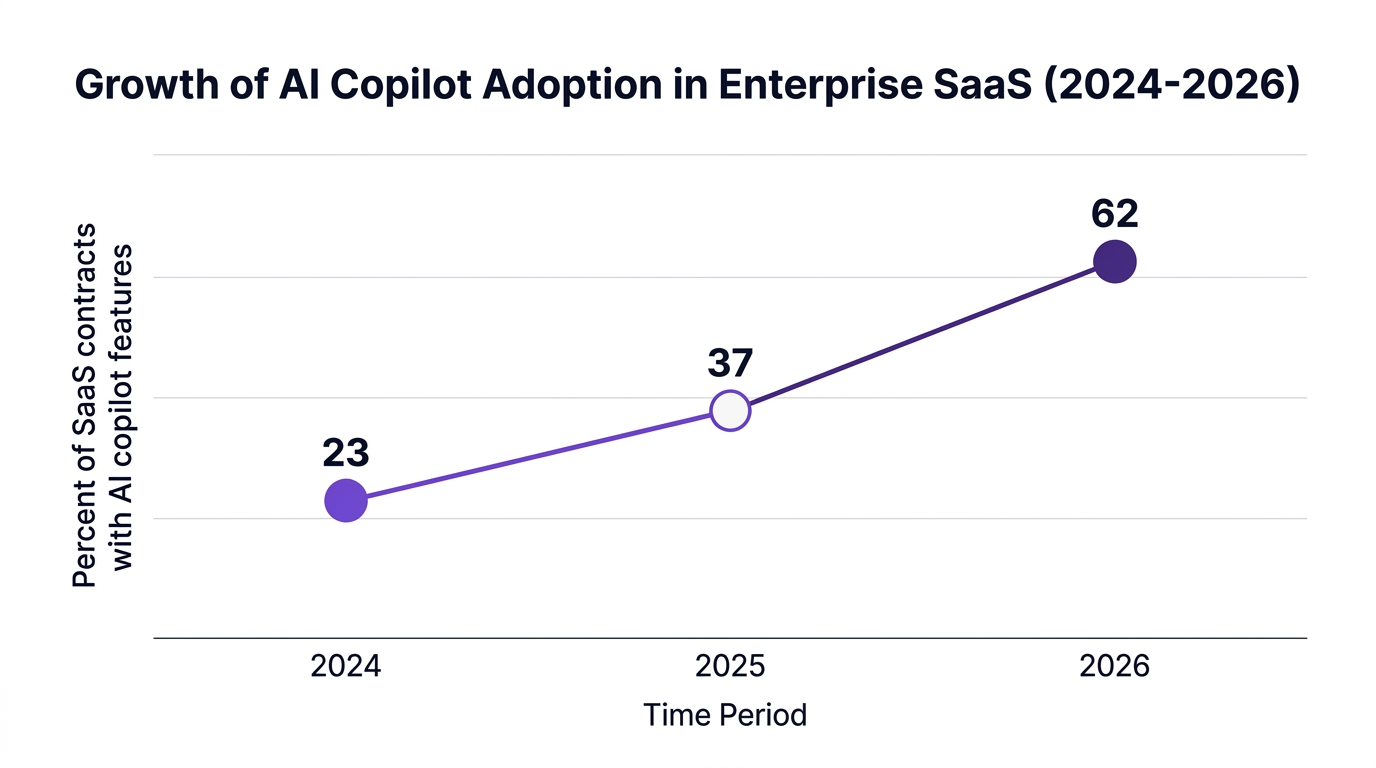
AI add ons for saas have shifted from optional experiments to default line items. One market analysis estimates that 41% of new SaaS contracts in 2026 include some form of AI assistant add on for enterprise saas by default, a figure expected to keep rising.
Three forces explain this surge:
Yet, as one SaaS strategy leader observed in 2026, AI copilots only justify a premium when deeply embedded into workflows and driving measurable productivity at scale, not as generic chatbots. That distinction is where many purchasing decisions go wrong.
To evaluate any enterprise ai copilot pricing, you first need to recognize the main patterns. Most vendors use some blend of these models for saas ai copilot license offers.
In this model, AI features are sold as an extra line item per named user. For example:
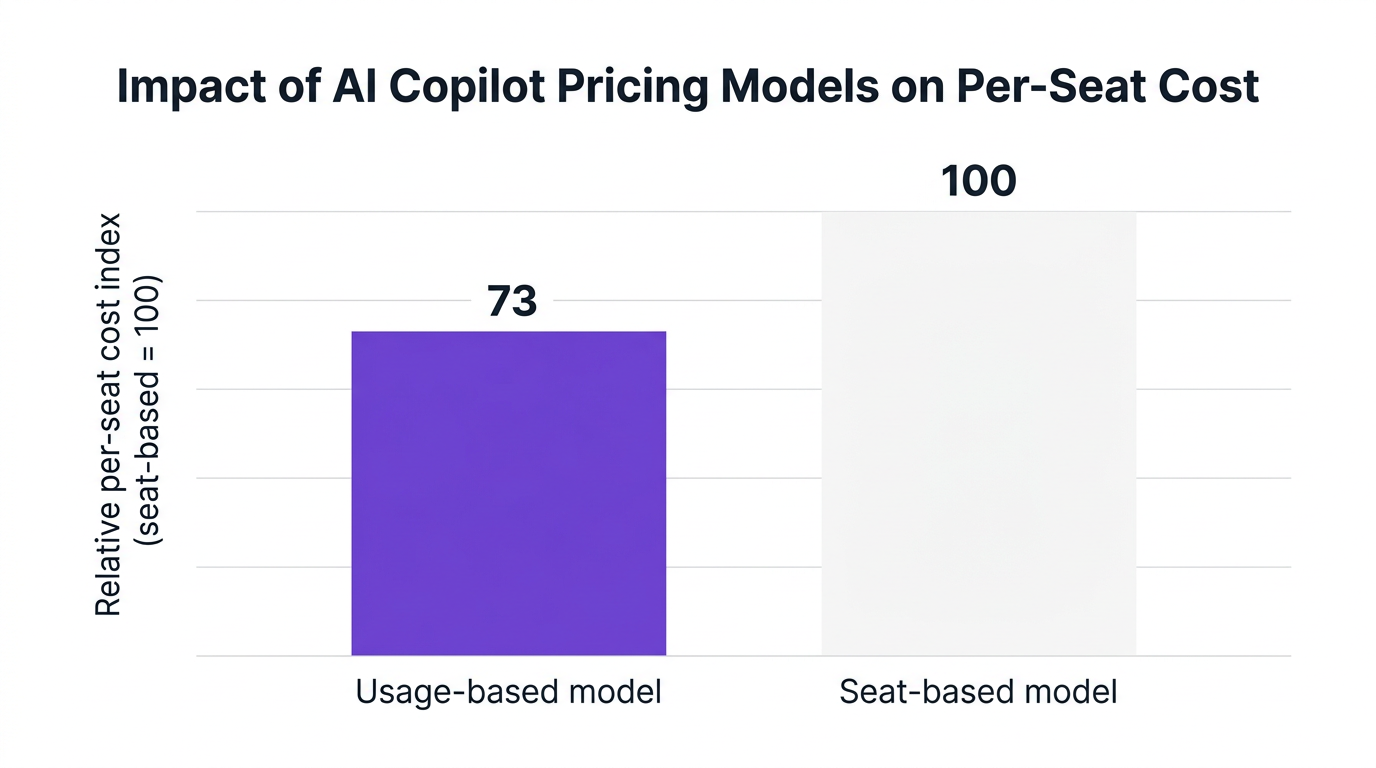
This is simple for finance and procurement, but it often leads to over-buying. A 2026 cost analysis found that enterprises adopting usage-based AI copilot pricing models saw 27% lower per-seat cost on average compared with pure seat-based setups.
When it works best:
Usage-based models tie fees to consumption. Common dimensions include:
In 2026, an estimated 74% of SaaS vendors offered AI credits or consumption-based plans. This structure is increasingly used for ai copilot add on pricing.
Benefits:
Risks:
Some platforms simply include AI features in higher product tiers or enterprise plans.
This simplifies procurement but can mask the incremental ai copilot license cost. You might be paying a premium primarily for AI, even if other advanced features are underused.
Hybrid models mix seat-based access with metered consumption, for example:
This is often positioned as the "best enterprise saas with ai copilot" approach because it balances predictability and flexibility. The challenge is that many organizations lack the ai usage analytics and governance to manage it.
CIOs often ask for a simple rule: "When does the business case for ai copilot in saas clear the bar?" There is no universal threshold, but a structured checklist helps.
AI copilots shine in narrow, repetitive workflows where context is rich and structured. Good signs:
An analogy: buying a robotic arm for a factory line is only wise if that line runs all day. Similarly, AI copilots for SaaS are most valuable when the "line" of digital work is constantly moving.
Before approving any saas ai copilot license buy, ensure you can quantify:
Only 36% of enterprises found AI copilot ROI straightforward to quantify in 2026, which shows how often this step is skipped. A basic formula to calculate roi of ai features in saas:
AI ROI (%) = ((Baseline hours − AI hours) × fully loaded hourly cost − AI cost) ÷ AI cost × 100
If you cannot estimate each component credibly, you are not ready to sign an enterprise ai copilot license at scale.
AI assistants that live inside the SaaS workflow, with direct access to records and actions, do better than separate chatbots that require context switching.
Prioritize copilots that can:
According to a 2026 compliance report, 92% of platforms with built-in AI copilots required additional security and compliance controls compared with baseline SaaS. That is because embedded AI touches more data, across more workflows, with new risks.
You should validate:
If these checks fail, even a strong business case does not justify the risk.
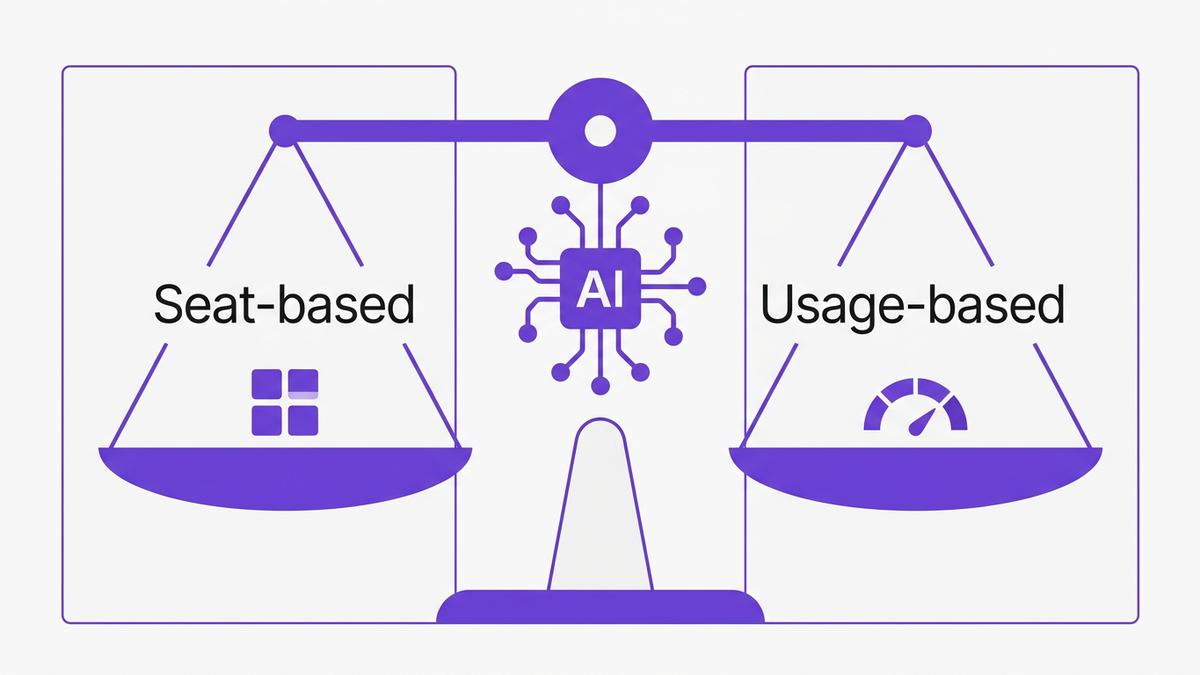
Enterprise buyers increasingly ask whether ai seat based pricing vs usage based pricing is more cost effective. The answer depends on maturity, but data from 2026 points to a trend.
A cost benchmarking study found that enterprises using usage-based ai copilot pricing model structures achieved an average of 27% reduction in per-seat cost compared with purely seat-based pricing. However, they also reported higher variance and more effort to manage budgets.
Seat-based models may be preferable when:
Usage-based models often win when:
A practical approach for 2026 and beyond is to start with usage-based trials, gather detailed usage and outcome data, then renegotiate into hybrid or tier-based contracts once patterns are clear.
A Fortune 100 financial services firm evaluated three different ai copilot vendor comparison options for a core SaaS platform in 2026. They initially considered a broad seat-based rollout but decided to pilot a usage-based model instead.
Using detailed usage analytics and workflow metrics, they discovered that only a subset of operations staff used AI features heavily. By standardizing on usage-based pricing for those teams and removing optional seats for low-usage roles, they achieved:
The key learning: do not assume every user needs an AI seat. Align licensing to proven use cases.
A large healthcare organization added ai add ons for saas on a major IT service management platform in 2026. Initially, they purchased AI-enabled seats for most of the IT staff based on vendor recommendations.
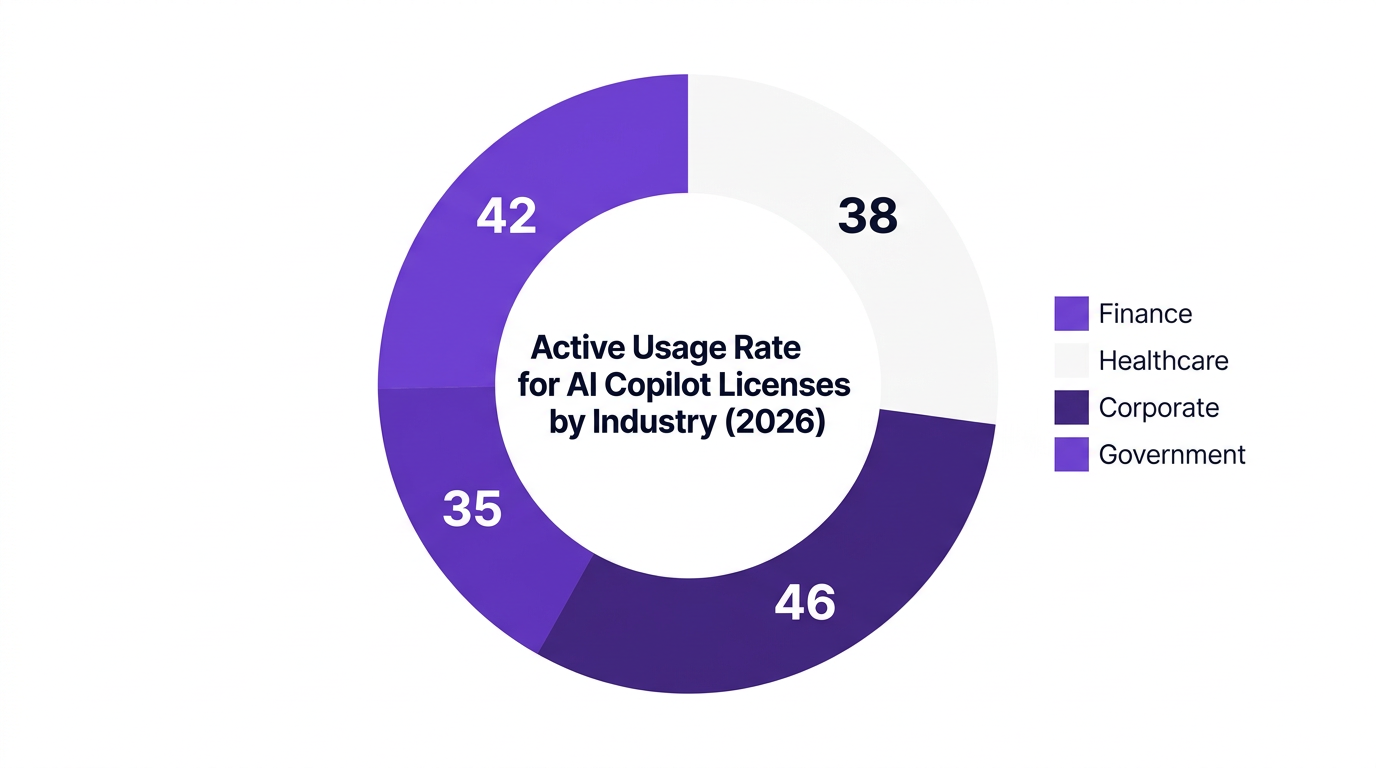
After six months, they used CloudNuro’s governance and cost optimization capabilities to analyze utilization. The insight was stark: only 38% of licenses actively used AI features.
With this data, they:
This case shows a common pattern: AI features get bought on promise, then require post-purchase governance to correct over-provisioning.

AI copilots change SaaS economics. CloudNuro’s platform is designed to give CIOs, IT procurement, and FinOps leaders the visibility and governance needed to treat each enterprise ai copilot license as a carefully managed investment, not an automatic upgrade.
CloudNuro continuously discovers SaaS, PaaS, and IaaS usage across the enterprise and identifies where AI features are enabled. This lets teams compare ai copilot features in enterprise saas based on:
Instead of relying on vendor demos, you evaluate the best enterprise saas with ai copilot options using your own data.
With AI-driven license rightsizing, CloudNuro shows exactly where you are overpaying for ai copilot license cost:
This is especially valuable for hybrid models, where CloudNuro helps teams add ai copilot to existing saas selectively, then validate that usage justifies the incremental spend.
CloudNuro’s Chargeback Module allows AI copilot spend to be allocated by business unit, department, or cost center based on real consumption.
This supports:
CloudNuro’s governance-first architecture centralizes visibility into:
This helps security and compliance teams enforce consistent security for ai copilot in saas, manage data residency obligations, and implement guardrails for generative ai in saas at enterprise scale.
Use this enterprise ai copilot evaluation checklist before approving any AI assistant module:
Applying this checklist with CloudNuro’s SaaS and AI visibility helps IT leaders move from anecdotal belief to data-backed AI purchasing.
Most vendors combine seat-based AI add-ons, usage-based AI credits, and bundled tiers. For example, a user may need a premium seat that includes AI features, or you may pay per AI call or per block of AI credits.
Over 70% of vendors now offer some form of ai usage based pricing saas for AI features, often layered on top of existing seats. Expect hybrid pricing to become the default for saas ai copilot license decisions over the next few years.
It is usually worth it when:
If you cannot estimate value per user or team, start with a limited pilot using a usage-based model, and instrument outcomes before scaling an enterprise ai copilot license.
Usage-based models are often more efficient, especially early in the adoption curve. A 2026 analysis showed 27% lower per-seat cost for organizations using usage-based AI copilot plans compared with pure seat-based pricing.
However, seat-based plans can be better when adoption is universal and predictable, or when you lack the analytics and governance needed to monitor usage and avoid overruns.
Start with a simple ROI formula:
CloudNuro helps by providing usage telemetry, license cost data, and cross-application analytics, which together make it far easier to calculate roi of ai features in saas in a way that finance and audit can trust.
Embedded AI copilots often access more data and perform more actions than traditional user interfaces. Risks include:
A 2026 compliance report noted that 92% of platforms with AI copilots required extra security and compliance controls. Enterprises should apply the same rigor to AI copilots as to the underlying SaaS application, and centralize monitoring using platforms like CloudNuro.
AI copilots inside SaaS are quickly becoming standard. The question is no longer if you will encounter enterprise ai copilot license decisions, but how rigorously you evaluate them.
The most successful organizations treat AI add-ons like any other capital investment. They insist on clear workflows, measurable outcomes, transparent ai copilot pricing model structures, and strong governance.
CloudNuro gives CIOs, procurement leaders, and FinOps teams the visibility to see where AI features are actually used, the governance to control cost and risk, and the analytics to prove when AI copilots are worth the premium and when they are not.
If you are planning your next renewal or looking to add ai copilot to existing saas platforms, now is the time to instrument your decisions with data.
CloudNuro is a leader in Enterprise SaaS Management Platforms, providing enterprises with unmatched visibility, governance, and cost optimization. Recognized twice in a row in the SaaS Management Platforms category and named a Leader in the SoftwareReviews Data Quadrant, CloudNuro is trusted by global enterprises and government agencies to bring financial discipline to SaaS, cloud, and AI. Trusted by enterprises such as Konica Minolta and Federal Signal, CloudNuro provides centralized SaaS inventory, license optimization, and renewal management along with advanced cost allocation and chargeback, giving IT and Finance leaders the visibility, control, and cost-conscious culture needed to drive financial discipline. Request a Demo | Get Free Savings | Explore Product
Request a no cost, no obligation free assessment —just 15 minutes to savings!
Get StartedEnterprise AI copilot license offerings are now baked into nearly every major SaaS platform you evaluate. Procurement teams see "copilot" or "AI assistant" lines on quotes, IT is asked if it is safe, and business leaders assume productivity gains are guaranteed.
Yet the reality is more nuanced. A recent industry survey in 2026 found that only 36% of enterprises find AI copilot ROI easy to quantify, and nearly 53% struggle to compare features and pricing across vendors. This blog provides a pragmatic framework for when buying copilot for SaaS is worth the premium, how to evaluate ai feature pricing in saas, and how to govern cost and risk at scale.
AI add ons for saas have shifted from optional experiments to default line items. One market analysis estimates that 41% of new SaaS contracts in 2026 include some form of AI assistant add on for enterprise saas by default, a figure expected to keep rising.
Three forces explain this surge:
Yet, as one SaaS strategy leader observed in 2026, AI copilots only justify a premium when deeply embedded into workflows and driving measurable productivity at scale, not as generic chatbots. That distinction is where many purchasing decisions go wrong.
To evaluate any enterprise ai copilot pricing, you first need to recognize the main patterns. Most vendors use some blend of these models for saas ai copilot license offers.
In this model, AI features are sold as an extra line item per named user. For example:
This is simple for finance and procurement, but it often leads to over-buying. A 2026 cost analysis found that enterprises adopting usage-based AI copilot pricing models saw 27% lower per-seat cost on average compared with pure seat-based setups.
When it works best:
Usage-based models tie fees to consumption. Common dimensions include:
In 2026, an estimated 74% of SaaS vendors offered AI credits or consumption-based plans. This structure is increasingly used for ai copilot add on pricing.
Benefits:
Risks:
Some platforms simply include AI features in higher product tiers or enterprise plans.
This simplifies procurement but can mask the incremental ai copilot license cost. You might be paying a premium primarily for AI, even if other advanced features are underused.
Hybrid models mix seat-based access with metered consumption, for example:
This is often positioned as the "best enterprise saas with ai copilot" approach because it balances predictability and flexibility. The challenge is that many organizations lack the ai usage analytics and governance to manage it.
CIOs often ask for a simple rule: "When does the business case for ai copilot in saas clear the bar?" There is no universal threshold, but a structured checklist helps.
AI copilots shine in narrow, repetitive workflows where context is rich and structured. Good signs:
An analogy: buying a robotic arm for a factory line is only wise if that line runs all day. Similarly, AI copilots for SaaS are most valuable when the "line" of digital work is constantly moving.
Before approving any saas ai copilot license buy, ensure you can quantify:
Only 36% of enterprises found AI copilot ROI straightforward to quantify in 2026, which shows how often this step is skipped. A basic formula to calculate roi of ai features in saas:
AI ROI (%) = ((Baseline hours − AI hours) × fully loaded hourly cost − AI cost) ÷ AI cost × 100
If you cannot estimate each component credibly, you are not ready to sign an enterprise ai copilot license at scale.
AI assistants that live inside the SaaS workflow, with direct access to records and actions, do better than separate chatbots that require context switching.
Prioritize copilots that can:
According to a 2026 compliance report, 92% of platforms with built-in AI copilots required additional security and compliance controls compared with baseline SaaS. That is because embedded AI touches more data, across more workflows, with new risks.
You should validate:
If these checks fail, even a strong business case does not justify the risk.
Enterprise buyers increasingly ask whether ai seat based pricing vs usage based pricing is more cost effective. The answer depends on maturity, but data from 2026 points to a trend.
A cost benchmarking study found that enterprises using usage-based ai copilot pricing model structures achieved an average of 27% reduction in per-seat cost compared with purely seat-based pricing. However, they also reported higher variance and more effort to manage budgets.
Seat-based models may be preferable when:
Usage-based models often win when:
A practical approach for 2026 and beyond is to start with usage-based trials, gather detailed usage and outcome data, then renegotiate into hybrid or tier-based contracts once patterns are clear.
A Fortune 100 financial services firm evaluated three different ai copilot vendor comparison options for a core SaaS platform in 2026. They initially considered a broad seat-based rollout but decided to pilot a usage-based model instead.
Using detailed usage analytics and workflow metrics, they discovered that only a subset of operations staff used AI features heavily. By standardizing on usage-based pricing for those teams and removing optional seats for low-usage roles, they achieved:
The key learning: do not assume every user needs an AI seat. Align licensing to proven use cases.
A large healthcare organization added ai add ons for saas on a major IT service management platform in 2026. Initially, they purchased AI-enabled seats for most of the IT staff based on vendor recommendations.
After six months, they used CloudNuro’s governance and cost optimization capabilities to analyze utilization. The insight was stark: only 38% of licenses actively used AI features.
With this data, they:
This case shows a common pattern: AI features get bought on promise, then require post-purchase governance to correct over-provisioning.
AI copilots change SaaS economics. CloudNuro’s platform is designed to give CIOs, IT procurement, and FinOps leaders the visibility and governance needed to treat each enterprise ai copilot license as a carefully managed investment, not an automatic upgrade.
CloudNuro continuously discovers SaaS, PaaS, and IaaS usage across the enterprise and identifies where AI features are enabled. This lets teams compare ai copilot features in enterprise saas based on:
Instead of relying on vendor demos, you evaluate the best enterprise saas with ai copilot options using your own data.
With AI-driven license rightsizing, CloudNuro shows exactly where you are overpaying for ai copilot license cost:
This is especially valuable for hybrid models, where CloudNuro helps teams add ai copilot to existing saas selectively, then validate that usage justifies the incremental spend.
CloudNuro’s Chargeback Module allows AI copilot spend to be allocated by business unit, department, or cost center based on real consumption.
This supports:
CloudNuro’s governance-first architecture centralizes visibility into:
This helps security and compliance teams enforce consistent security for ai copilot in saas, manage data residency obligations, and implement guardrails for generative ai in saas at enterprise scale.
Use this enterprise ai copilot evaluation checklist before approving any AI assistant module:
Applying this checklist with CloudNuro’s SaaS and AI visibility helps IT leaders move from anecdotal belief to data-backed AI purchasing.
Most vendors combine seat-based AI add-ons, usage-based AI credits, and bundled tiers. For example, a user may need a premium seat that includes AI features, or you may pay per AI call or per block of AI credits.
Over 70% of vendors now offer some form of ai usage based pricing saas for AI features, often layered on top of existing seats. Expect hybrid pricing to become the default for saas ai copilot license decisions over the next few years.
It is usually worth it when:
If you cannot estimate value per user or team, start with a limited pilot using a usage-based model, and instrument outcomes before scaling an enterprise ai copilot license.
Usage-based models are often more efficient, especially early in the adoption curve. A 2026 analysis showed 27% lower per-seat cost for organizations using usage-based AI copilot plans compared with pure seat-based pricing.
However, seat-based plans can be better when adoption is universal and predictable, or when you lack the analytics and governance needed to monitor usage and avoid overruns.
Start with a simple ROI formula:
CloudNuro helps by providing usage telemetry, license cost data, and cross-application analytics, which together make it far easier to calculate roi of ai features in saas in a way that finance and audit can trust.
Embedded AI copilots often access more data and perform more actions than traditional user interfaces. Risks include:
A 2026 compliance report noted that 92% of platforms with AI copilots required extra security and compliance controls. Enterprises should apply the same rigor to AI copilots as to the underlying SaaS application, and centralize monitoring using platforms like CloudNuro.
AI copilots inside SaaS are quickly becoming standard. The question is no longer if you will encounter enterprise ai copilot license decisions, but how rigorously you evaluate them.
The most successful organizations treat AI add-ons like any other capital investment. They insist on clear workflows, measurable outcomes, transparent ai copilot pricing model structures, and strong governance.
CloudNuro gives CIOs, procurement leaders, and FinOps teams the visibility to see where AI features are actually used, the governance to control cost and risk, and the analytics to prove when AI copilots are worth the premium and when they are not.
If you are planning your next renewal or looking to add ai copilot to existing saas platforms, now is the time to instrument your decisions with data.
CloudNuro is a leader in Enterprise SaaS Management Platforms, providing enterprises with unmatched visibility, governance, and cost optimization. Recognized twice in a row in the SaaS Management Platforms category and named a Leader in the SoftwareReviews Data Quadrant, CloudNuro is trusted by global enterprises and government agencies to bring financial discipline to SaaS, cloud, and AI. Trusted by enterprises such as Konica Minolta and Federal Signal, CloudNuro provides centralized SaaS inventory, license optimization, and renewal management along with advanced cost allocation and chargeback, giving IT and Finance leaders the visibility, control, and cost-conscious culture needed to drive financial discipline. Request a Demo | Get Free Savings | Explore Product
Request a no cost, no obligation free assessment - just 15 minutes to savings!
Get StartedWe're offering complimentary ServiceNow license assessments to only 25 enterprises this quarter who want to unlock immediate savings without disrupting operations.
Get Free AssessmentGet Started




CloudNuro Corp
1755 Park St. Suite 207
Naperville, IL 60563
Phone : +1-630-277-9470
Email: info@cloudnuro.com





.webp)

Recognized Leader in SaaS Management Platforms by Info-Tech SoftwareReviews

.svg)