

Sign Up
Thank you for Submitting!
The future of SaaS is no longer just about multi-tenant architectures or subscription models. The next decade will be defined by agentic workflows, AI-driven pricing, and automated governance that radically changes how enterprises buy, secure, and manage software.
By 2026, 67% of enterprise software buyers name AI-driven pricing and agentic automation as top priorities for SaaS procurement decisions (Gartner 2026). For CIOs, CTOs, and IT leaders in regulated industries, this shift brings both opportunity and risk: unprecedented optimization potential, but also new governance, compliance, and security challenges.
This article maps where the future of SaaS is heading, what agentic workflows really are, how AI pricing changes procurement, and how to prepare your organization for the next wave of software buying.
Agentic workflows describe orchestrated processes where autonomous digital agents make context-aware decisions and execute tasks on behalf of humans. In a SaaS environment, these agents do more than trigger simple automation; they interpret policies, monitor signals, and act at scale.
As a Lead SaaS Analyst at Gartner, notes, "Agentic workflows in SaaS are eliminating repetitive configuration, letting digital agents make thousands of micro-decisions per day, and fundamentally reshaping IT operations."
At a practical level, agentic workflows in enterprise SaaS management might:
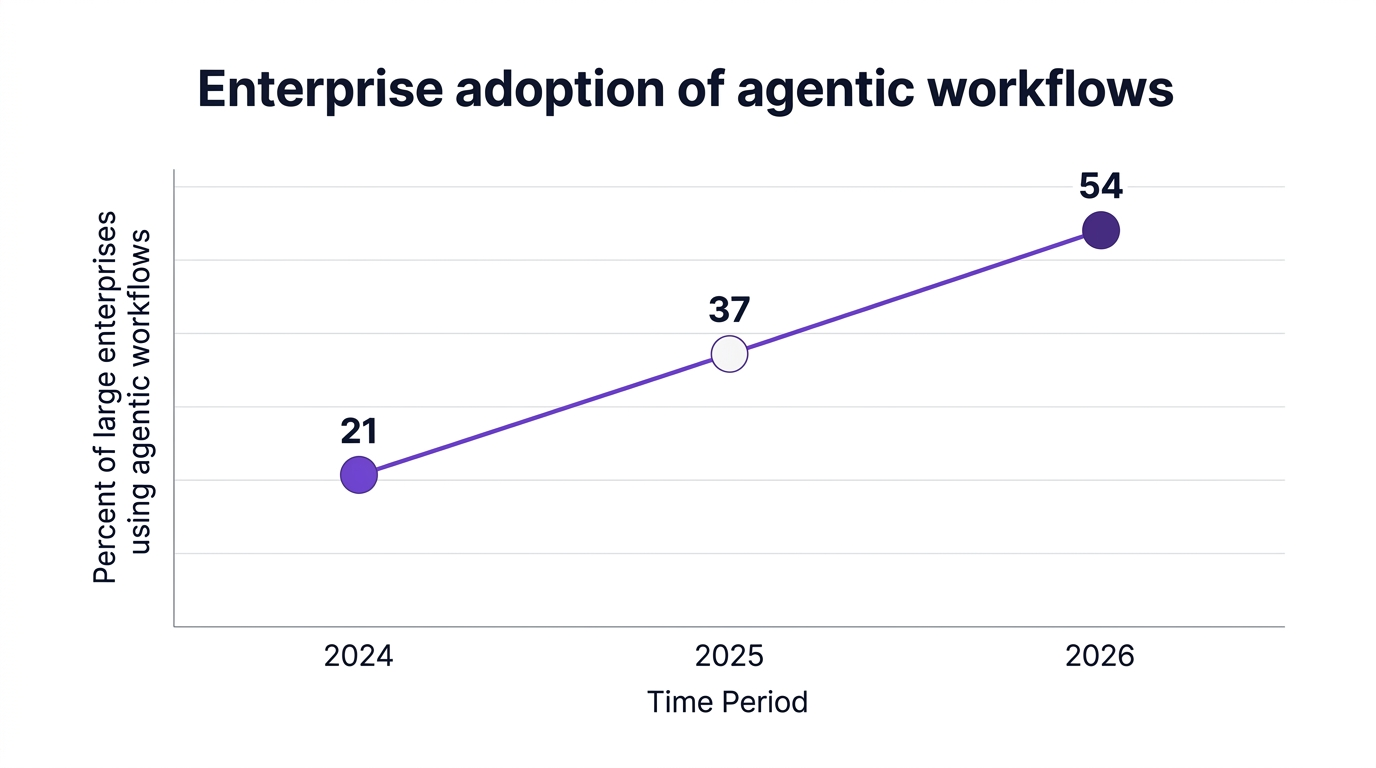
In 2026, 54% of large enterprises had already deployed agentic workflow automation in their SaaS stack (Forrester 2026). That adoption curve is steep, and it is transforming IT operations for SaaS from manual ticket-driven models to autonomous, policy-driven control.
One useful analogy is air traffic control. Traditional IT workflows are like pilots handling every small maneuver. Agentic workflows are closer to autopilot: humans set direction and constraints, while digital agents handle thousands of micro-adjustments safely and consistently.
Agentic workflows excel when:
They can fail or create risk when:
This is why cloud governance and SaaS risk management must evolve alongside the adoption of agentic workflows. Autonomy without oversight is not acceptable in healthcare, finance, or government environments.
AI is also reshaping the economics of SaaS. Usage patterns, license configurations, and contract terms now feed into models that recommend, or even automatically execute, pricing and procurement changes.
A 2026 study found that AI-based pricing optimization tools reduced SaaS spend overruns by up to 17% on average for Fortune 1000 companies (McKinsey 2026). Another Gartner 2026 finding reported that AI-enabled usage-based pricing delivers 14% greater cost alignment than static tiers.

In practice, AI SaaS pricing introduces several shifts:
This is closely tied to FinOps for SaaS. Instead of relying on quarterly true-ups, AI turns SaaS financial management into a continuous optimization loop.
There are two key caveats:
To protect your organization, insist on:
The future of SaaS industry economics will reward enterprises that treat pricing data as a first-class asset, not a byproduct.
The projected global SaaS market is expected to reach 368 billion dollars in revenue by 2026 (Statista 2026). As the market grows, so does SaaS sprawl. Most enterprises now run hundreds of applications across departments, regions, and business units.
By 2026, 70% of enterprises in regulated industries deployed AI-automated governance frameworks for data privacy, reducing audit failures and shadow IT incidents (IDC 2026). At the same time, 85% of IT leaders expect AI-enabled SaaS governance to become a mandatory requirement in regulated sectors by 2027 (IDC 2026).
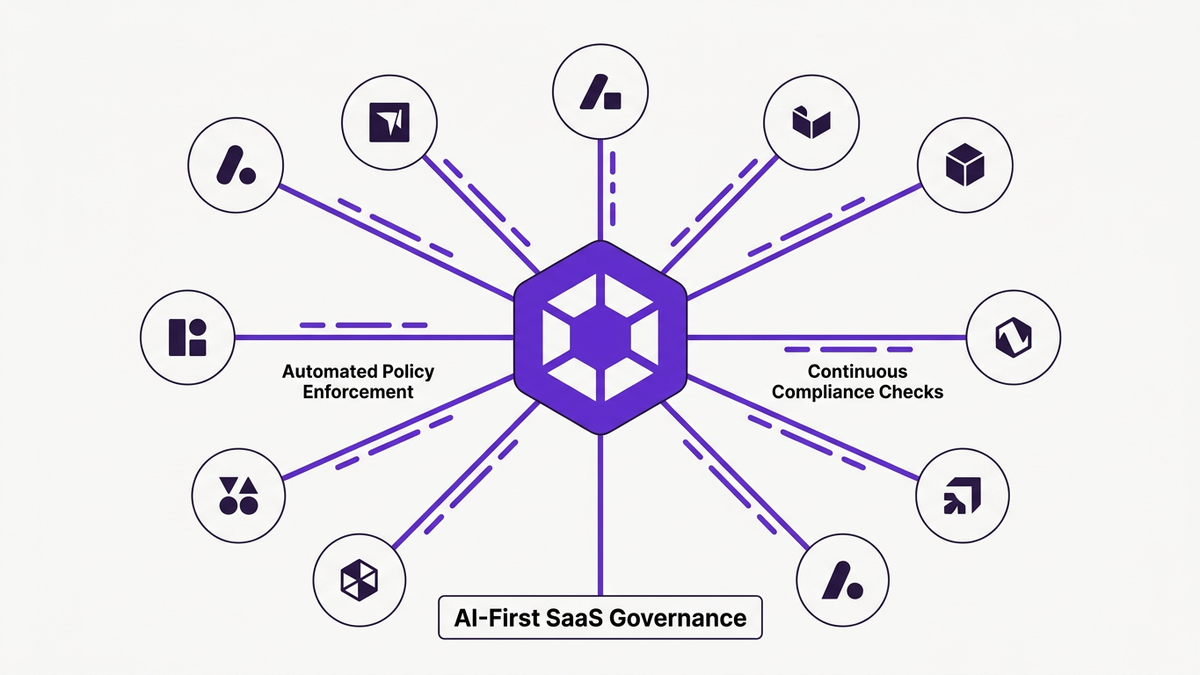
This next phase is not just more tools for cloud SaaS management. It is a shift to AI-first governance, characterized by:
In this context, IT asset management for SaaS expands from inventory tracking to active risk and cost control with AI agents monitoring, deciding, and acting.
Real enterprises are already proving that agentic workflows and AI pricing are more than hype. The experiences below mirror what many large organizations are trying to achieve.
Siemens Health integrated an agentic workflow platform in early 2026 to manage their SaaS stack. The platform autonomously handled onboarding and license reclamation, across dozens of tools, triggered by HR events and usage patterns.
The result: IT overhead dropped by 30%, and wasted SaaS spend fell by 4.7 million dollars in the first year (Forrester 2026). Time-to-value for new SaaS deployments improved by 62%, reflecting a broader trend where agentic platforms report significantly faster ramp-up times (Everest Group 2026).
The key insight is that enterprise SaaS management gains most when workflows are end-to-end. Partial automation of tickets or approvals cannot match the compounding effect of digital agents orchestrating entire joiner-mover-leaver processes.
A global financial services provider used AI pricing optimization in H1 2026 to align procurement with real usage. The AI engine analyzed consumption across business units and fed optimized allocation plans directly into procurement and finance workflows.
They achieved a 15% reduction in SaaS contract overruns and improved chargeback accuracy across departments (McKinsey 2026). This is a practical example of chargeback for SaaS executed with real-time AI insight rather than static allocation keys.
These case studies illustrate a broader pattern: the future of SaaS belongs to organizations that bring together data, AI, and governance into a unified operating model.
As AI-enabled SaaS, agentic workflows, and dynamic pricing mature, the next wave of software buying trends will look very different from the last decade of subscription deals.
IT leaders should rethink their playbook across five dimensions.
Before adopting AI-driven tools, define who sets the rules. Your AI governance charter should spell out:
This keeps agentic workflows accountable and aligned with risk tolerance.
Traditional RFPs asked vendors for features and pricing. Next-gen software procurement must also ask for:
Treat SaaS data rights and integration capabilities as non-negotiable requirements, particularly if you aim to practice serious enterprise IT optimization.
FinOps for cloud infrastructure is well established. Applying similar discipline to SaaS means:
AI models can handle the granularity that humans cannot, but they need clear financial guardrails and objectives.
IT operations for SaaS is moving toward:
This requires tight SaaS integration across identity, HR, finance, security, and ITSM systems. The more interconnected your environment, the more powerful your agentic workflows become.
Regulators are paying closer attention to SaaS data flows and AI decision-making. Given that 85% of IT leaders expect AI-enabled governance to become mandatory by 2027 (IDC 2026), forward-looking teams should:
The organizations that get ahead of this curve will reduce audit stress and avoid costly remediation later.
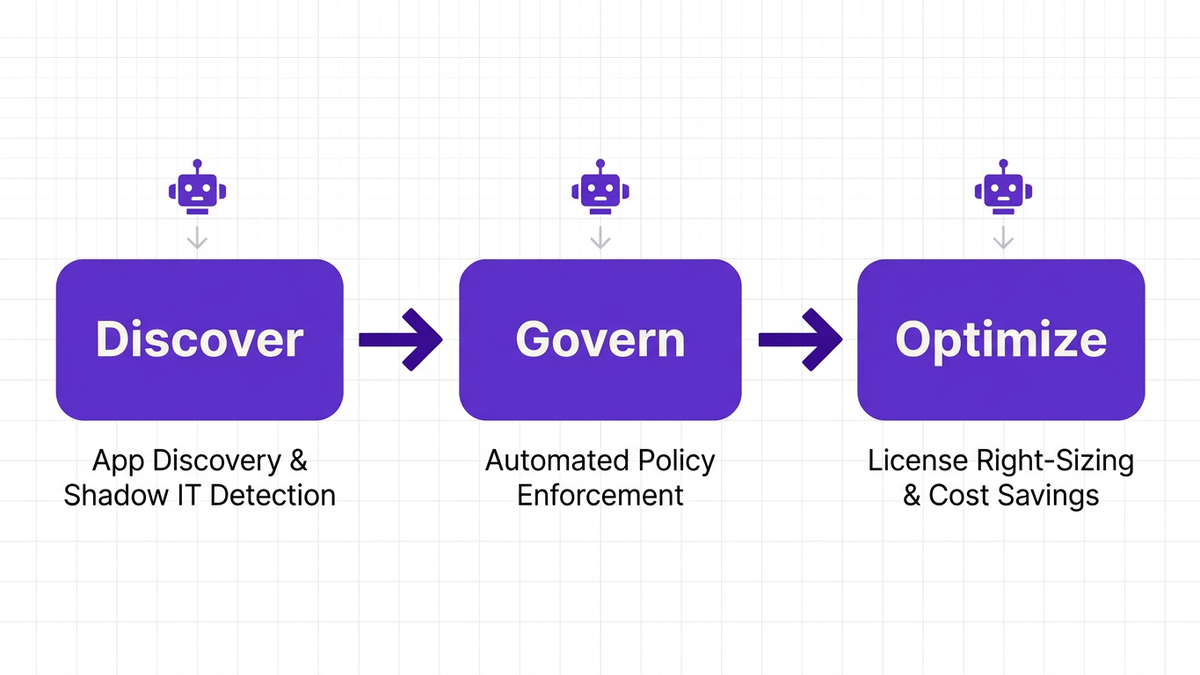
CloudNuro was built for this inflection point in the future of SaaS. The platform combines discovery, governance, and cost optimization with agentic workflows and AI-driven analytics so IT leaders can move from reactive control to proactive automation.
Here is how CloudNuro addresses the challenges outlined above.
CloudNuro AI Custodian uses digital agents to automate key operational tasks across more than 400 integrations. These include:
These agentic workflows reduce manual tickets, enforce SaaS governance, and cut waste while maintaining tight control over risk.
CloudNuro's Microsoft 365 Custodian and Salesforce Custodian bring deep, system-specific intelligence to two of the most critical platforms in the enterprise.
They deliver:
This supports the shift to AI-informed pricing and consumption models without sacrificing transparency or control.
CloudNuro's Unified Cloud Custodian aggregates insight across SaaS, PaaS, and IaaS, providing:
By unifying data and policies in one enterprise SaaS management platform, CloudNuro helps IT leaders implement governance-first architectures that are ready for agentic automation.
CloudNuro's FinOps services complement the platform with expertise and playbooks that translate AI analytics into action. Examples include:
Combined, these capabilities let you embrace the future of SaaS while maintaining the compliance, security, and financial discipline your organization demands.
Agentic workflows are orchestrated processes where autonomous digital agents interpret policies, monitor signals, and execute actions across your SaaS environment. They go beyond simple rule-based automation by making context-aware decisions, such as adjusting licenses, enforcing policies, or orchestrating onboarding across multiple apps.
For IT leaders, this means moving from manual, ticket-driven operations to policy-driven autonomy, as long as governance and guardrails are clearly defined.
AI SaaS pricing will make procurement more continuous and data-driven. Instead of negotiating contracts once every few years, AI models will constantly assess usage, recommend optimal license mixes, and highlight opportunities for cost reduction.
Enterprises will need to integrate pricing insights into their enterprise SaaS management and FinOps processes, and ensure they retain access to underlying data to validate AI-driven recommendations.
Enterprises should prioritize:
They should also evaluate vendors based on their ability to support IT asset management for SaaS and provide transparent AI models for optimization and pricing.
Businesses can use AI to:
A platform like CloudNuro, which combines automated cost optimization, discovery, and governance workflows, can help operationalize these capabilities at scale.
Key trends include:
Together, these trends confirm that SaaS is the future of enterprise software, but only for organizations that modernize their governance and cost management strategies.
CloudNuro is a leader in Enterprise SaaS Management Platforms, giving enterprises unmatched visibility, governance, and cost optimization.
We are proud to be recognized twice in a row by Gartner in the SaaS Management Platforms and named a Leader in the Info-Tech SoftwareReviews Data Quadrant.
Trusted by global enterprises and government agencies, CloudNuro provides centralized SaaS inventory, license optimization, and renewal management. With a 15-minute setup and measurable results in under 24 hours, CloudNuro gives IT teams a fast path to value.
Request a Demo | Get Free Savings Assessment | Explore Product
Request a no cost, no obligation free assessment —just 15 minutes to savings!
Get StartedThe future of SaaS is no longer just about multi-tenant architectures or subscription models. The next decade will be defined by agentic workflows, AI-driven pricing, and automated governance that radically changes how enterprises buy, secure, and manage software.
By 2026, 67% of enterprise software buyers name AI-driven pricing and agentic automation as top priorities for SaaS procurement decisions (Gartner 2026). For CIOs, CTOs, and IT leaders in regulated industries, this shift brings both opportunity and risk: unprecedented optimization potential, but also new governance, compliance, and security challenges.
This article maps where the future of SaaS is heading, what agentic workflows really are, how AI pricing changes procurement, and how to prepare your organization for the next wave of software buying.
Agentic workflows describe orchestrated processes where autonomous digital agents make context-aware decisions and execute tasks on behalf of humans. In a SaaS environment, these agents do more than trigger simple automation; they interpret policies, monitor signals, and act at scale.
As a Lead SaaS Analyst at Gartner, notes, "Agentic workflows in SaaS are eliminating repetitive configuration, letting digital agents make thousands of micro-decisions per day, and fundamentally reshaping IT operations."
At a practical level, agentic workflows in enterprise SaaS management might:
In 2026, 54% of large enterprises had already deployed agentic workflow automation in their SaaS stack (Forrester 2026). That adoption curve is steep, and it is transforming IT operations for SaaS from manual ticket-driven models to autonomous, policy-driven control.
One useful analogy is air traffic control. Traditional IT workflows are like pilots handling every small maneuver. Agentic workflows are closer to autopilot: humans set direction and constraints, while digital agents handle thousands of micro-adjustments safely and consistently.
Agentic workflows excel when:
They can fail or create risk when:
This is why cloud governance and SaaS risk management must evolve alongside the adoption of agentic workflows. Autonomy without oversight is not acceptable in healthcare, finance, or government environments.
AI is also reshaping the economics of SaaS. Usage patterns, license configurations, and contract terms now feed into models that recommend, or even automatically execute, pricing and procurement changes.
A 2026 study found that AI-based pricing optimization tools reduced SaaS spend overruns by up to 17% on average for Fortune 1000 companies (McKinsey 2026). Another Gartner 2026 finding reported that AI-enabled usage-based pricing delivers 14% greater cost alignment than static tiers.
In practice, AI SaaS pricing introduces several shifts:
This is closely tied to FinOps for SaaS. Instead of relying on quarterly true-ups, AI turns SaaS financial management into a continuous optimization loop.
There are two key caveats:
To protect your organization, insist on:
The future of SaaS industry economics will reward enterprises that treat pricing data as a first-class asset, not a byproduct.
The projected global SaaS market is expected to reach 368 billion dollars in revenue by 2026 (Statista 2026). As the market grows, so does SaaS sprawl. Most enterprises now run hundreds of applications across departments, regions, and business units.
By 2026, 70% of enterprises in regulated industries deployed AI-automated governance frameworks for data privacy, reducing audit failures and shadow IT incidents (IDC 2026). At the same time, 85% of IT leaders expect AI-enabled SaaS governance to become a mandatory requirement in regulated sectors by 2027 (IDC 2026).
This next phase is not just more tools for cloud SaaS management. It is a shift to AI-first governance, characterized by:
In this context, IT asset management for SaaS expands from inventory tracking to active risk and cost control with AI agents monitoring, deciding, and acting.
Real enterprises are already proving that agentic workflows and AI pricing are more than hype. The experiences below mirror what many large organizations are trying to achieve.
Siemens Health integrated an agentic workflow platform in early 2026 to manage their SaaS stack. The platform autonomously handled onboarding and license reclamation, across dozens of tools, triggered by HR events and usage patterns.
The result: IT overhead dropped by 30%, and wasted SaaS spend fell by 4.7 million dollars in the first year (Forrester 2026). Time-to-value for new SaaS deployments improved by 62%, reflecting a broader trend where agentic platforms report significantly faster ramp-up times (Everest Group 2026).
The key insight is that enterprise SaaS management gains most when workflows are end-to-end. Partial automation of tickets or approvals cannot match the compounding effect of digital agents orchestrating entire joiner-mover-leaver processes.
A global financial services provider used AI pricing optimization in H1 2026 to align procurement with real usage. The AI engine analyzed consumption across business units and fed optimized allocation plans directly into procurement and finance workflows.
They achieved a 15% reduction in SaaS contract overruns and improved chargeback accuracy across departments (McKinsey 2026). This is a practical example of chargeback for SaaS executed with real-time AI insight rather than static allocation keys.
These case studies illustrate a broader pattern: the future of SaaS belongs to organizations that bring together data, AI, and governance into a unified operating model.
As AI-enabled SaaS, agentic workflows, and dynamic pricing mature, the next wave of software buying trends will look very different from the last decade of subscription deals.
IT leaders should rethink their playbook across five dimensions.
Before adopting AI-driven tools, define who sets the rules. Your AI governance charter should spell out:
This keeps agentic workflows accountable and aligned with risk tolerance.
Traditional RFPs asked vendors for features and pricing. Next-gen software procurement must also ask for:
Treat SaaS data rights and integration capabilities as non-negotiable requirements, particularly if you aim to practice serious enterprise IT optimization.
FinOps for cloud infrastructure is well established. Applying similar discipline to SaaS means:
AI models can handle the granularity that humans cannot, but they need clear financial guardrails and objectives.
IT operations for SaaS is moving toward:
This requires tight SaaS integration across identity, HR, finance, security, and ITSM systems. The more interconnected your environment, the more powerful your agentic workflows become.
Regulators are paying closer attention to SaaS data flows and AI decision-making. Given that 85% of IT leaders expect AI-enabled governance to become mandatory by 2027 (IDC 2026), forward-looking teams should:
The organizations that get ahead of this curve will reduce audit stress and avoid costly remediation later.
CloudNuro was built for this inflection point in the future of SaaS. The platform combines discovery, governance, and cost optimization with agentic workflows and AI-driven analytics so IT leaders can move from reactive control to proactive automation.
Here is how CloudNuro addresses the challenges outlined above.
CloudNuro AI Custodian uses digital agents to automate key operational tasks across more than 400 integrations. These include:
These agentic workflows reduce manual tickets, enforce SaaS governance, and cut waste while maintaining tight control over risk.
CloudNuro's Microsoft 365 Custodian and Salesforce Custodian bring deep, system-specific intelligence to two of the most critical platforms in the enterprise.
They deliver:
This supports the shift to AI-informed pricing and consumption models without sacrificing transparency or control.
CloudNuro's Unified Cloud Custodian aggregates insight across SaaS, PaaS, and IaaS, providing:
By unifying data and policies in one enterprise SaaS management platform, CloudNuro helps IT leaders implement governance-first architectures that are ready for agentic automation.
CloudNuro's FinOps services complement the platform with expertise and playbooks that translate AI analytics into action. Examples include:
Combined, these capabilities let you embrace the future of SaaS while maintaining the compliance, security, and financial discipline your organization demands.
Agentic workflows are orchestrated processes where autonomous digital agents interpret policies, monitor signals, and execute actions across your SaaS environment. They go beyond simple rule-based automation by making context-aware decisions, such as adjusting licenses, enforcing policies, or orchestrating onboarding across multiple apps.
For IT leaders, this means moving from manual, ticket-driven operations to policy-driven autonomy, as long as governance and guardrails are clearly defined.
AI SaaS pricing will make procurement more continuous and data-driven. Instead of negotiating contracts once every few years, AI models will constantly assess usage, recommend optimal license mixes, and highlight opportunities for cost reduction.
Enterprises will need to integrate pricing insights into their enterprise SaaS management and FinOps processes, and ensure they retain access to underlying data to validate AI-driven recommendations.
Enterprises should prioritize:
They should also evaluate vendors based on their ability to support IT asset management for SaaS and provide transparent AI models for optimization and pricing.
Businesses can use AI to:
A platform like CloudNuro, which combines automated cost optimization, discovery, and governance workflows, can help operationalize these capabilities at scale.
Key trends include:
Together, these trends confirm that SaaS is the future of enterprise software, but only for organizations that modernize their governance and cost management strategies.
CloudNuro is a leader in Enterprise SaaS Management Platforms, giving enterprises unmatched visibility, governance, and cost optimization.
We are proud to be recognized twice in a row by Gartner in the SaaS Management Platforms and named a Leader in the Info-Tech SoftwareReviews Data Quadrant.
Trusted by global enterprises and government agencies, CloudNuro provides centralized SaaS inventory, license optimization, and renewal management. With a 15-minute setup and measurable results in under 24 hours, CloudNuro gives IT teams a fast path to value.
Request a Demo | Get Free Savings Assessment | Explore Product
Request a no cost, no obligation free assessment - just 15 minutes to savings!
Get StartedWe're offering complimentary ServiceNow license assessments to only 25 enterprises this quarter who want to unlock immediate savings without disrupting operations.
Get Free AssessmentGet Started



CloudNuro Corp
1755 Park St. Suite 207
Naperville, IL 60563
Phone : +1-630-277-9470
Email: info@cloudnuro.com



.webp)

Recognized Leader in SaaS Management Platforms by Info-Tech SoftwareReviews


.png)
.svg)