

Sign Up
Thank you for Submitting!
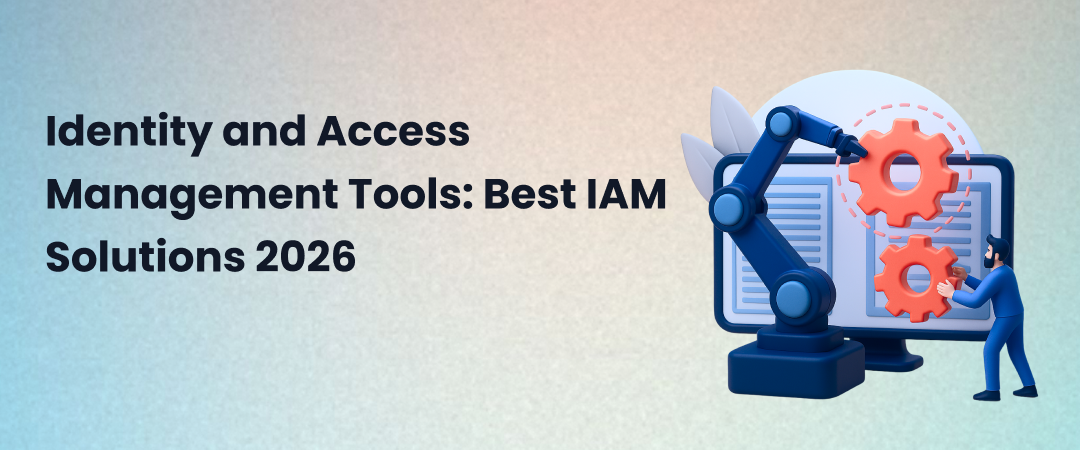
Identity and access management tools are essential platforms that control who can access which resources across your enterprise. In 2026, the best IAM solutions go beyond basic authentication to include identity governance, privileged access management, and integration with SaaS governance platforms. This guide covers the key categories of IAM tools, evaluation criteria, and implementation strategies to help security and IT leaders choose the proper access control solutions for their organization.
Here's a number that should concern every CISO: 80% of data breaches involve compromised credentials. Despite billions spent on cybersecurity, identity remains the most exploited attack vector in enterprise environments.
The problem isn't that organizations lack security tools; it's that they've built fragmented identity ecosystems that create blind spots. Between cloud applications, on-premise systems, remote workers, and an explosion of non-human identities (service accounts, API keys, bots), most enterprises have lost coherent control over who has access to what.
Identity and access management tools have evolved from simple directory services to sophisticated platforms that govern the entire identity lifecycle. But with dozens of solutions claiming to solve the same problems, choosing the right IAM tools requires understanding both the technology landscape and your organization's specific risk profile.
In this guide, we'll break down the categories of identity and access management best practices, compare different approaches to access control, and show you how to avoid implementation mistakes that leave organizations vulnerable.
Whether you're consolidating a sprawling IAM environment, implementing Zero Trust, or gaining visibility into shadow IT access, this is your comprehensive roadmap for 2026.
The identity security landscape has fundamentally shifted. Here's why identity access management tools have moved from "nice to have" to "business critical":
The traditional perimeter-based security model is dead. Zero Trust security assumes no user or system should be trusted by default; every access request must be verified.
This paradigm shift puts IAM tools at the center of enterprise security architecture. Without robust identity verification and continuous access validation, Zero Trust remains a buzzword rather than a reality.
The average enterprise now uses 300+ SaaS applications, each with its own user database, permission model, and authentication requirements. Managing user access management across this fragmented landscape is nearly impossible without centralized tooling.
According to Gartner, organizations with mature IAM programs experience 50% fewer security incidents related to access control.
Service accounts, API keys, machine identities, and automated workflows have exploded. In many organizations, non-human identities outnumber human users 10:1, yet they're often unmanaged and over-privileged. These identities represent a massive blind spot that traditional access control solutions weren't designed to address.
SOC 2, ISO 27001, HIPAA, GDPR, and industry-specific regulations all require demonstrable access controls. Auditors want evidence that access is granted based on least privilege, permissions are reviewed regularly, terminated users are deprovisioned promptly, and privileged access is monitored and logged.
Modern identity and access management tools must generate audit-ready reports that prove compliance across all connected systems.
💡 See how CloudNuro provides unified identity visibility across your SaaS landscape. Request a demo.
IAM tools operate by authenticating users verifying exactly who is trying to log in and then authorizing what those users are allowed to do. This is streamlined through automated user provisioning, multi-factor authentication (MFA), single sign-on (SSO), and a centralized directory that lets IT manage identities and enforce policies from one place.
By leveraging role-based access control (RBAC), IAM solutions automatically assign permissions based on job roles so employees only access what's relevant to them. Thorough audit logs track who accessed what and when, supporting both security monitoring and compliance. The result is a set of compounding benefits:
With granular access controls and least-privilege enforcement, IAM tools help organizations minimize risk while streamlining everyday workflows.
The IAM market has fragmented into specialized categories. Understanding these distinctions helps you build a comprehensive identity governance strategy:
Identity governance and administration tools focus on the lifecycle management of identities: automated provisioning/deprovisioning, access certification, role-based access control (RBAC), and segregation of duties to prevent toxic access combinations.
Best for: Enterprises with complex compliance requirements and large user populations.
Privileged access management tools secure and monitor high-risk accounts through credential vaulting, session recording, just-in-time access, and secrets management.
Best for: Organizations with significant infrastructure (cloud or on-premises) that require admin access controls.
Single sign-on tools simplify authentication across applications with federated identity, SAML/OIDC support, passwordless options, and adaptive risk-based authentication.
Best for: Organizations with many SaaS applications that need a unified login experience.
Authentication tools add verification layers beyond passwords via push notifications, hardware tokens (YubiKey), biometrics, and TOTP applications.
Best for: All organizations MFA is table stakes for security in 2026.
CIAM platforms manage external user identities with self-service registration, social login, consent management, and scalability to millions of customer identities.
Best for: B2C companies or organizations with significant external user populations.
In enterprise deployments, these categories often overlap with user provisioning and governance.
One of the most important architectural decisions in IAM is deployment model. Each approach has distinct strengths and trade-offs.
On-premises IAM solutions are hosted entirely within your own infrastructure, giving you full physical control over credentials, policies, and audit logs. They excel at privileged account management with advanced vaulting and session monitoring, are easier to tailor to legacy applications and custom workflows, and deliver the deep audit trails and granular compliance reporting that regulated industries (finance, healthcare) require.
On-prem IAM makes most sense for: organizations with data residency restrictions; enterprises needing tight integration with legacy or custom infrastructure; scenarios demanding advanced privileged user management.
Managing provisioning and compliance on-premises: Platforms like Oracle Identity Management and SailPoint IdentityIQ automate account creation, updating, and removal across legacy apps and enterprise systems. HR-triggered workflows ensure access is granted or revoked precisely when employment status changes. Compliance is maintained through scheduled access certification campaigns, segregation of duties (SoD) policy enforcement, and built-in audit trail reporting.
Cloud-native IAM solutions are purpose-built for modern cloud-first environments. They offer fine-grained permission controls resource-level access policies, JSON/YAML-based role management, and conditional access based on device, location, or time that make overpermissioning a thing of the past.
For cross-account access, cloud-native platforms like AWS IAM, Azure Entra ID, and Google Cloud IAM use federated identity management, role assumptions and trust relationships for temporary access without proliferating credentials, and automated approval workflows to remove manual bottlenecks.
Top cloud-native IAM solutions:
Fine-tuned access controls down to individual roles and users; unified management across multiple AWS accounts; supports secure cross-account access via role definitions. Pricing: Included at no additional cost with an AWS account you pay only for the AWS services your users access.
Granular policy management via Console, API, or CLI; seamless integration with Google's broader identity ecosystem; leverages machine learning to surface adaptive least-privilege recommendations and spot risky access patterns. Pricing: Core IAM features bundled with your Google Cloud account at no standalone fee.
Robust SSO, self-service portals, and policy-based access controls for Microsoft-stack organizations; central administration console with visibility across cloud and on-premises systems. Pricing: Tiered plans with free and premium options.
Combines IAM governance with broader cloud security monitoring; generates least-privilege policies, monitors permissions usage, and proactively manages cloud risk including for AI workloads. Strong option for folding IAM into broader infrastructure security operations.
Next-generation tools that automate permission grants only when truly needed ideal for on-call engineers or production troubleshooting. JIT access auto-expires elevated permissions, integrates with Slack/Teams and CI/CD workflows, and deploys in minutes. Pricing: Most vendors offer tiered plans by user count, integrations, and features, available on request.
Hybrid IAM solutions bridge cloud and on-premises environments. Key features include unified SSO across both cloud and legacy apps, flexible MFA (authenticator apps, SMS, hardware tokens, biometrics), automated user lifecycle management, directory integration with Active Directory and LDAP, thousands of pre-built SaaS connectors, and high scalability for distributed workforces.
Platforms like Okta and OneLogin are especially well-suited for organizations navigating the transition between legacy infrastructure and cloud-first strategies.
SSO and MFA in hybrid environments: Users sign in once to a secure portal that provides access to both cloud and on-premises applications Salesforce in the cloud and legacy intranet alike with the same unified login. MFA methods span authenticator apps, SMS codes, hardware tokens, and biometrics, ensuring compliance and protection against account takeover wherever apps reside.
Typical hybrid IAM pricing: Most vendors offer per-user/month tiers starting around $2/user/month for core capabilities (directory integration, SSO, basic MFA), with higher tiers adding adaptive authentication, workflow automation, and compliance packs. Free trials and custom enterprise quotes are common. Education, B2B, and CIAM scenarios often have specialized bundles, while large-scale IGA deployments typically require custom "contact sales" pricing.
When comparing identity and access management tools, these capabilities separate enterprise-grade solutions from basic offerings:
A unified directory is the backbone of modern IAM consolidating user identities, roles, and access permissions across cloud, hybrid, and on-premises environments into a single source of truth. Key benefits include centralized identity management from one location, granular access controls ensuring least privilege, cross-platform support across AWS IAM, Google Cloud IAM, and Entra ID, automated JIT workflows, self-service access request portals, and rapid deployment via cloud-native connectors. Beyond centralization, a unified directory delivers resilience, agility, and precise access at exactly the right time.
Your IAM tools should aggregate identities from Active Directory / Azure AD, LDAP directories, HR systems (Workday, BambooHR), SaaS applications, and cloud providers (AWS IAM, GCP, Azure).
Manual provisioning doesn't scale. Look for HR-triggered onboarding workflows, automatic deprovisioning on termination, role-based access assignment, and manager-driven access requests. IAM platforms empower teams to streamline onboarding with rule-driven provisioning and just as critically deprovision access instantly when employees leave, eliminating manual bottlenecks and reducing risks.
Continuous validation prevents access creep through scheduled certification campaigns, risk-based review prioritization, automated revocation for non-response, and audit-ready documentation.
Your access control solutions must connect with identity providers like Okta, Azure AD, and OneLogin; ITSM platforms (ServiceNow, Jira); SIEM/SOAR for security orchestration; and SaaS management platforms for visibility.
Visibility drives security decisions through access pattern analysis, anomaly detection, compliance dashboards, and risk scoring for identities.
A unified management dashboard simplifies administration and improves oversight. It allows security and IT teams to manage users, groups, and policies from one place; apply consistent configurations across Active Directory, Azure AD, and other data sources; streamline onboarding, offboarding, and access modifications without platform-hopping; and eliminate fragmented interfaces that create errors. The result: faster response times, tighter policy enforcement, and clearer audit trails crucial for enterprises facing complex regulatory requirements.
Machine learning models that detect unusual access patterns, recommend access right-sizing, predict access needs based on role, and identify dormant accounts automatically.
JIT access is becoming a cornerstone of modern IAM, allowing organizations to minimize risk by reducing the window of opportunity for attackers. Instead of granting standing privileges, JIT access enables users to receive permissions only when needed and only for as long as required. This significantly reduces the attack surface for sensitive cloud resources. Auto-expiring permissions mitigate risks from lingering privileged access and shifting from manual provisioning to JIT automation gives teams more control, agility, and security in dynamic environments.
Service accounts and API keys need governance too: secrets rotation automation, service account ownership tracking, API key lifecycle management, and machine identity certification.
The convergence of IAM and SaaS management is critical. Understanding how CloudNuro reduces your SaaS security and license bloat on Okta shows why unified visibility matters.
IAM solutions are purpose-built for growth without sacrificing control. As teams and departments multiply, RBAC lets you assign access based on profiles rather than manual configuration. SSO keeps login experiences frictionless as application stacks grow. New SaaS apps, cloud environments, and IT services can be integrated and access extended in minutes, not days making it possible to scale confidently while maintaining full visibility over who can access what.
When evaluating identity access management tools, understanding which category fits your needs is essential:
| Criteria | IGA Platforms | PAM Solutions | SSO/MFA Tools | CIAM Platforms | Unified SaaS + IAM |
|---|---|---|---|---|---|
| Primary Focus | Lifecycle governance | Privileged accounts | Authentication | Customer identity | Cross-platform visibility |
| User Scope | Employees/contractors | Admins/IT | All users | External customers | All identities |
| Compliance Strength | Strong | Moderate | Basic | Privacy-focused | Comprehensive |
| SaaS Visibility | Limited | None | Application-level | None | Full application + license |
| Cost Optimization | Not included | Not included | Not included | Not included | Native license insights |
| Non-Human Identity | Emerging | Strong | Limited | Not applicable | Growing support |
| Implementation Time | 3–6 months | 1–3 months | Days to weeks | 1–2 months | 15 minutes to days |
| Best For | Regulated enterprises | Infrastructure-heavy orgs | SaaS-first companies | B2C businesses | Unified governance needs |
Cloud-Native IAM (AWS IAM, Google Cloud IAM, Microsoft Entra ID, Wiz): Deep platform integration, granular access controls, automated provisioning, SSO, and self-service portals. AWS IAM and Google Cloud IAM are available at no additional cost; Entra ID offers tiered free and premium options. Best for organizations heavily invested in a single cloud ecosystem. Limitation: may require multiple tools to cover hybrid or multi-cloud environments.
Hybrid IAM (Okta, OneLogin, SailPoint IdentityIQ): Bridge cloud and on-premises resources with seamless SSO, MFA, and robust user lifecycle management. Okta stands out for its massive library of pre-built integrations; SailPoint IdentityIQ is favored by large enterprises for comprehensive identity governance and compliance. Flexible per-user and custom enterprise pricing. Best for environments where both traditional and cloud-based applications coexist.
On-Premises IAM (CyberArk, Oracle Identity Management): CyberArk leads in privileged access management with credential vaulting and temporary access grants indispensable for organizations handling sensitive data or large volumes of privileged users. Oracle Identity Management offers integrated IAM for both on-premises and cloud Oracle platforms with automated provisioning, compliance reviews, and SoD policy enforcement. Best for enterprises with legacy infrastructure or stringent regulatory requirements.
Before selecting IAM tools, ask vendors:
What users consistently value in IAM tools: ease of management down to the application level; fast deployment that onboards DevOps workflows quickly; broad integration with Google, Microsoft, and major SaaS ecosystems; strong identity verification including device checks and orphaned account detection; modern intuitive interfaces; centralized provisioning/de-provisioning from a single dashboard; and SSO that reduces password fatigue across all corporate applications.
Even with robust identity and access management tools, implementation failures are common. Here's what derails IAM programs:
Most organizations treat IAM and software asset management as separate domains. But every unused identity tied to a SaaS license represents wasted spend. Orphaned accounts aren't just security risks they're budget drains.
Solution: Integrate IAM data with SaaS management platforms to identify accounts consuming licenses without activity.
Service accounts, API keys, and machine identities often have persistent, over-privileged access. When a developer leaves, their personal credentials get revoked, but the service accounts they created often remain active indefinitely.
Solution: Implement governance for non-human identities with ownership assignment and regular certification.
Access creep is inevitable. Users accumulate permissions over time as they move between roles. Without regular certification, employees end up with far more access than their current role requires.
Solution: Implement quarterly (or more frequent) access reviews with automated revocation for unconfirmed permissions.
💡 Want to see how CloudNuro identifies access waste across your SaaS portfolio? Schedule a demo.
Deploying separate tools for SSO, MFA, IGA, and PAM creates integration complexity and visibility gaps. The more tools in your IAM stack, the more likely something falls through the cracks.
Solution: Prioritize platforms that consolidate multiple IAM functions or integrate seamlessly with your existing stack.
Rolling out new access control solutions without user communication and training leads to workarounds. When authentication becomes a friction point, users find ways to bypass controls.
Solution: Communicate the "why" behind IAM changes. Make security convenient, not just mandatory.
Deploying identity and access management tools requires a phased approach that balances security gains with operational continuity:
Leverage your organization's IT security solutions to understand the current posture.
💡 CloudNuro integrates with leading identity providers to give you unified visibility. Get your free assessment.
Identity and access management tools are software platforms that manage digital identities and control access to enterprise resources. They handle authentication (verifying who you are), authorization (determining what you can access), and governance (ensuring access remains appropriate over time). Modern IAM tools span multiple categories including identity governance, privileged access management, single sign-on, and multi-factor authentication. For a detailed overview, see our guide on IAM security tools.
Access control solutions improve security by reducing the attack surface through least-privilege enforcement, enabling faster threat response through quick identification and revocation of compromised accounts, enforcing continuous Zero Trust verification, providing visibility into who has access to sensitive resources, and maintaining audit trails for forensics and compliance.
Most enterprises need elements of all three. Privileged access management tools protect your most sensitive accounts, while IGA ensures all access remains appropriate.
Directory services act as the central hub that organizes, stores, and manages user identities and their attributes a digital phonebook, but far more powerful. Every user's details (usernames, departments, roles, permissions) are securely maintained and easily referenced. This centralization ensures that regardless of where users come from Active Directory, Azure AD, LDAP, or a cloud provider's directory you have a single authoritative source that keeps everything consistent, streamlined, and manageable.
The intersection of IAM tools and SaaS management platforms is increasingly essential. While IAM handles authentication and authorization, SaaS management provides visibility into all applications (including shadow IT), license usage tied to identity data, cost optimization through orphaned account detection, and unified governance across identity and software assets. This integration is essential for organizations managing large SaaS portfolios. Learn more about identity governance and administration tools.
Start with your highest-risk areas: privileged accounts with admin access to critical systems; SaaS applications with sensitive data; departing employee workflows to ensure timely deprovisioning; and compliance-critical systems under regulatory scrutiny. Build foundational capabilities (SSO, MFA) before advancing to sophisticated governance programs.
Service accounts, API keys, and machine identities require specialized governance: ownership assignment (every non-human identity should have a human owner), credential rotation automation, access certification with regular permission reviews, and activity monitoring to detect unusual behavior. This remains an emerging capability evaluate vendors specifically on their non-human identity management features.
The identity and access management tools landscape has matured significantly, but most organizations still lack comprehensive visibility across their identity ecosystems. In 2026, with Zero Trust mandates, expanding compliance requirements, and the explosion of non-human identities, that fragmentation is increasingly untenable.
The organizations getting IAM right aren't just deploying point solutions; they're building unified governance programs that connect identity access management tools with broader IT and security operations. They're recognizing that identity isn't just a security problem it's a cost problem, a compliance problem, and an operational efficiency problem.
The question isn't whether you need better IAM tools; it's whether your current approach provides the visibility and control that modern enterprises require.
CloudNuro is a leader in Enterprise SaaS Management Platforms, giving enterprises unmatched visibility, governance, and cost optimization. Recognized twice in a row by Gartner in the SaaS Management Platforms (2024, 2025) and named a Leader in the Info-Tech SoftwareReviews Data Quadrant, CloudNuro is trusted by global enterprises and government agencies to bring financial discipline to SaaS, cloud, and AI.
Trusted by enterprises such as Konica Minolta and FederalSignal, CloudNuro provides centralized SaaS inventory, license optimization, and renewal management along with advanced cost allocation and chargeback, giving IT and Finance leaders the visibility, control, and cost-conscious culture needed to drive financial discipline.
As the only Unified FinOps SaaS Management Platform for the Enterprise, CloudNuro brings AI, SaaS, and IaaS management together in a unified view. With a 15-minute setup and measurable results in under 24 hours, CloudNuro gives IT teams a fast path to value.
Request a Demo | Get Free Savings Assessment | Explore Product
Request a no cost, no obligation free assessment —just 15 minutes to savings!
Get StartedIdentity and access management tools are essential platforms that control who can access which resources across your enterprise. In 2026, the best IAM solutions go beyond basic authentication to include identity governance, privileged access management, and integration with SaaS governance platforms. This guide covers the key categories of IAM tools, evaluation criteria, and implementation strategies to help security and IT leaders choose the proper access control solutions for their organization.
Here's a number that should concern every CISO: 80% of data breaches involve compromised credentials. Despite billions spent on cybersecurity, identity remains the most exploited attack vector in enterprise environments.
The problem isn't that organizations lack security tools; it's that they've built fragmented identity ecosystems that create blind spots. Between cloud applications, on-premise systems, remote workers, and an explosion of non-human identities (service accounts, API keys, bots), most enterprises have lost coherent control over who has access to what.
Identity and access management tools have evolved from simple directory services to sophisticated platforms that govern the entire identity lifecycle. But with dozens of solutions claiming to solve the same problems, choosing the right IAM tools requires understanding both the technology landscape and your organization's specific risk profile.
In this guide, we'll break down the categories of identity and access management best practices, compare different approaches to access control, and show you how to avoid implementation mistakes that leave organizations vulnerable.
Whether you're consolidating a sprawling IAM environment, implementing Zero Trust, or gaining visibility into shadow IT access, this is your comprehensive roadmap for 2026.
The identity security landscape has fundamentally shifted. Here's why identity access management tools have moved from "nice to have" to "business critical":
The traditional perimeter-based security model is dead. Zero Trust security assumes no user or system should be trusted by default; every access request must be verified.
This paradigm shift puts IAM tools at the center of enterprise security architecture. Without robust identity verification and continuous access validation, Zero Trust remains a buzzword rather than a reality.
The average enterprise now uses 300+ SaaS applications, each with its own user database, permission model, and authentication requirements. Managing user access management across this fragmented landscape is nearly impossible without centralized tooling.
According to Gartner, organizations with mature IAM programs experience 50% fewer security incidents related to access control.
Service accounts, API keys, machine identities, and automated workflows have exploded. In many organizations, non-human identities outnumber human users 10:1, yet they're often unmanaged and over-privileged. These identities represent a massive blind spot that traditional access control solutions weren't designed to address.
SOC 2, ISO 27001, HIPAA, GDPR, and industry-specific regulations all require demonstrable access controls. Auditors want evidence that access is granted based on least privilege, permissions are reviewed regularly, terminated users are deprovisioned promptly, and privileged access is monitored and logged.
Modern identity and access management tools must generate audit-ready reports that prove compliance across all connected systems.
💡 See how CloudNuro provides unified identity visibility across your SaaS landscape. Request a demo.
IAM tools operate by authenticating users verifying exactly who is trying to log in and then authorizing what those users are allowed to do. This is streamlined through automated user provisioning, multi-factor authentication (MFA), single sign-on (SSO), and a centralized directory that lets IT manage identities and enforce policies from one place.
By leveraging role-based access control (RBAC), IAM solutions automatically assign permissions based on job roles so employees only access what's relevant to them. Thorough audit logs track who accessed what and when, supporting both security monitoring and compliance. The result is a set of compounding benefits:
With granular access controls and least-privilege enforcement, IAM tools help organizations minimize risk while streamlining everyday workflows.
The IAM market has fragmented into specialized categories. Understanding these distinctions helps you build a comprehensive identity governance strategy:
Identity governance and administration tools focus on the lifecycle management of identities: automated provisioning/deprovisioning, access certification, role-based access control (RBAC), and segregation of duties to prevent toxic access combinations.
Best for: Enterprises with complex compliance requirements and large user populations.
Privileged access management tools secure and monitor high-risk accounts through credential vaulting, session recording, just-in-time access, and secrets management.
Best for: Organizations with significant infrastructure (cloud or on-premises) that require admin access controls.
Single sign-on tools simplify authentication across applications with federated identity, SAML/OIDC support, passwordless options, and adaptive risk-based authentication.
Best for: Organizations with many SaaS applications that need a unified login experience.
Authentication tools add verification layers beyond passwords via push notifications, hardware tokens (YubiKey), biometrics, and TOTP applications.
Best for: All organizations MFA is table stakes for security in 2026.
CIAM platforms manage external user identities with self-service registration, social login, consent management, and scalability to millions of customer identities.
Best for: B2C companies or organizations with significant external user populations.
In enterprise deployments, these categories often overlap with user provisioning and governance.
One of the most important architectural decisions in IAM is deployment model. Each approach has distinct strengths and trade-offs.
On-premises IAM solutions are hosted entirely within your own infrastructure, giving you full physical control over credentials, policies, and audit logs. They excel at privileged account management with advanced vaulting and session monitoring, are easier to tailor to legacy applications and custom workflows, and deliver the deep audit trails and granular compliance reporting that regulated industries (finance, healthcare) require.
On-prem IAM makes most sense for: organizations with data residency restrictions; enterprises needing tight integration with legacy or custom infrastructure; scenarios demanding advanced privileged user management.
Managing provisioning and compliance on-premises: Platforms like Oracle Identity Management and SailPoint IdentityIQ automate account creation, updating, and removal across legacy apps and enterprise systems. HR-triggered workflows ensure access is granted or revoked precisely when employment status changes. Compliance is maintained through scheduled access certification campaigns, segregation of duties (SoD) policy enforcement, and built-in audit trail reporting.
Cloud-native IAM solutions are purpose-built for modern cloud-first environments. They offer fine-grained permission controls resource-level access policies, JSON/YAML-based role management, and conditional access based on device, location, or time that make overpermissioning a thing of the past.
For cross-account access, cloud-native platforms like AWS IAM, Azure Entra ID, and Google Cloud IAM use federated identity management, role assumptions and trust relationships for temporary access without proliferating credentials, and automated approval workflows to remove manual bottlenecks.
Top cloud-native IAM solutions:
Fine-tuned access controls down to individual roles and users; unified management across multiple AWS accounts; supports secure cross-account access via role definitions. Pricing: Included at no additional cost with an AWS account you pay only for the AWS services your users access.
Granular policy management via Console, API, or CLI; seamless integration with Google's broader identity ecosystem; leverages machine learning to surface adaptive least-privilege recommendations and spot risky access patterns. Pricing: Core IAM features bundled with your Google Cloud account at no standalone fee.
Robust SSO, self-service portals, and policy-based access controls for Microsoft-stack organizations; central administration console with visibility across cloud and on-premises systems. Pricing: Tiered plans with free and premium options.
Combines IAM governance with broader cloud security monitoring; generates least-privilege policies, monitors permissions usage, and proactively manages cloud risk including for AI workloads. Strong option for folding IAM into broader infrastructure security operations.
Next-generation tools that automate permission grants only when truly needed ideal for on-call engineers or production troubleshooting. JIT access auto-expires elevated permissions, integrates with Slack/Teams and CI/CD workflows, and deploys in minutes. Pricing: Most vendors offer tiered plans by user count, integrations, and features, available on request.
Hybrid IAM solutions bridge cloud and on-premises environments. Key features include unified SSO across both cloud and legacy apps, flexible MFA (authenticator apps, SMS, hardware tokens, biometrics), automated user lifecycle management, directory integration with Active Directory and LDAP, thousands of pre-built SaaS connectors, and high scalability for distributed workforces.
Platforms like Okta and OneLogin are especially well-suited for organizations navigating the transition between legacy infrastructure and cloud-first strategies.
SSO and MFA in hybrid environments: Users sign in once to a secure portal that provides access to both cloud and on-premises applications Salesforce in the cloud and legacy intranet alike with the same unified login. MFA methods span authenticator apps, SMS codes, hardware tokens, and biometrics, ensuring compliance and protection against account takeover wherever apps reside.
Typical hybrid IAM pricing: Most vendors offer per-user/month tiers starting around $2/user/month for core capabilities (directory integration, SSO, basic MFA), with higher tiers adding adaptive authentication, workflow automation, and compliance packs. Free trials and custom enterprise quotes are common. Education, B2B, and CIAM scenarios often have specialized bundles, while large-scale IGA deployments typically require custom "contact sales" pricing.
When comparing identity and access management tools, these capabilities separate enterprise-grade solutions from basic offerings:
A unified directory is the backbone of modern IAM consolidating user identities, roles, and access permissions across cloud, hybrid, and on-premises environments into a single source of truth. Key benefits include centralized identity management from one location, granular access controls ensuring least privilege, cross-platform support across AWS IAM, Google Cloud IAM, and Entra ID, automated JIT workflows, self-service access request portals, and rapid deployment via cloud-native connectors. Beyond centralization, a unified directory delivers resilience, agility, and precise access at exactly the right time.
Your IAM tools should aggregate identities from Active Directory / Azure AD, LDAP directories, HR systems (Workday, BambooHR), SaaS applications, and cloud providers (AWS IAM, GCP, Azure).
Manual provisioning doesn't scale. Look for HR-triggered onboarding workflows, automatic deprovisioning on termination, role-based access assignment, and manager-driven access requests. IAM platforms empower teams to streamline onboarding with rule-driven provisioning and just as critically deprovision access instantly when employees leave, eliminating manual bottlenecks and reducing risks.
Continuous validation prevents access creep through scheduled certification campaigns, risk-based review prioritization, automated revocation for non-response, and audit-ready documentation.
Your access control solutions must connect with identity providers like Okta, Azure AD, and OneLogin; ITSM platforms (ServiceNow, Jira); SIEM/SOAR for security orchestration; and SaaS management platforms for visibility.
Visibility drives security decisions through access pattern analysis, anomaly detection, compliance dashboards, and risk scoring for identities.
A unified management dashboard simplifies administration and improves oversight. It allows security and IT teams to manage users, groups, and policies from one place; apply consistent configurations across Active Directory, Azure AD, and other data sources; streamline onboarding, offboarding, and access modifications without platform-hopping; and eliminate fragmented interfaces that create errors. The result: faster response times, tighter policy enforcement, and clearer audit trails crucial for enterprises facing complex regulatory requirements.
Machine learning models that detect unusual access patterns, recommend access right-sizing, predict access needs based on role, and identify dormant accounts automatically.
JIT access is becoming a cornerstone of modern IAM, allowing organizations to minimize risk by reducing the window of opportunity for attackers. Instead of granting standing privileges, JIT access enables users to receive permissions only when needed and only for as long as required. This significantly reduces the attack surface for sensitive cloud resources. Auto-expiring permissions mitigate risks from lingering privileged access and shifting from manual provisioning to JIT automation gives teams more control, agility, and security in dynamic environments.
Service accounts and API keys need governance too: secrets rotation automation, service account ownership tracking, API key lifecycle management, and machine identity certification.
The convergence of IAM and SaaS management is critical. Understanding how CloudNuro reduces your SaaS security and license bloat on Okta shows why unified visibility matters.
IAM solutions are purpose-built for growth without sacrificing control. As teams and departments multiply, RBAC lets you assign access based on profiles rather than manual configuration. SSO keeps login experiences frictionless as application stacks grow. New SaaS apps, cloud environments, and IT services can be integrated and access extended in minutes, not days making it possible to scale confidently while maintaining full visibility over who can access what.
When evaluating identity access management tools, understanding which category fits your needs is essential:
| Criteria | IGA Platforms | PAM Solutions | SSO/MFA Tools | CIAM Platforms | Unified SaaS + IAM |
|---|---|---|---|---|---|
| Primary Focus | Lifecycle governance | Privileged accounts | Authentication | Customer identity | Cross-platform visibility |
| User Scope | Employees/contractors | Admins/IT | All users | External customers | All identities |
| Compliance Strength | Strong | Moderate | Basic | Privacy-focused | Comprehensive |
| SaaS Visibility | Limited | None | Application-level | None | Full application + license |
| Cost Optimization | Not included | Not included | Not included | Not included | Native license insights |
| Non-Human Identity | Emerging | Strong | Limited | Not applicable | Growing support |
| Implementation Time | 3–6 months | 1–3 months | Days to weeks | 1–2 months | 15 minutes to days |
| Best For | Regulated enterprises | Infrastructure-heavy orgs | SaaS-first companies | B2C businesses | Unified governance needs |
Cloud-Native IAM (AWS IAM, Google Cloud IAM, Microsoft Entra ID, Wiz): Deep platform integration, granular access controls, automated provisioning, SSO, and self-service portals. AWS IAM and Google Cloud IAM are available at no additional cost; Entra ID offers tiered free and premium options. Best for organizations heavily invested in a single cloud ecosystem. Limitation: may require multiple tools to cover hybrid or multi-cloud environments.
Hybrid IAM (Okta, OneLogin, SailPoint IdentityIQ): Bridge cloud and on-premises resources with seamless SSO, MFA, and robust user lifecycle management. Okta stands out for its massive library of pre-built integrations; SailPoint IdentityIQ is favored by large enterprises for comprehensive identity governance and compliance. Flexible per-user and custom enterprise pricing. Best for environments where both traditional and cloud-based applications coexist.
On-Premises IAM (CyberArk, Oracle Identity Management): CyberArk leads in privileged access management with credential vaulting and temporary access grants indispensable for organizations handling sensitive data or large volumes of privileged users. Oracle Identity Management offers integrated IAM for both on-premises and cloud Oracle platforms with automated provisioning, compliance reviews, and SoD policy enforcement. Best for enterprises with legacy infrastructure or stringent regulatory requirements.
Before selecting IAM tools, ask vendors:
What users consistently value in IAM tools: ease of management down to the application level; fast deployment that onboards DevOps workflows quickly; broad integration with Google, Microsoft, and major SaaS ecosystems; strong identity verification including device checks and orphaned account detection; modern intuitive interfaces; centralized provisioning/de-provisioning from a single dashboard; and SSO that reduces password fatigue across all corporate applications.
Even with robust identity and access management tools, implementation failures are common. Here's what derails IAM programs:
Most organizations treat IAM and software asset management as separate domains. But every unused identity tied to a SaaS license represents wasted spend. Orphaned accounts aren't just security risks they're budget drains.
Solution: Integrate IAM data with SaaS management platforms to identify accounts consuming licenses without activity.
Service accounts, API keys, and machine identities often have persistent, over-privileged access. When a developer leaves, their personal credentials get revoked, but the service accounts they created often remain active indefinitely.
Solution: Implement governance for non-human identities with ownership assignment and regular certification.
Access creep is inevitable. Users accumulate permissions over time as they move between roles. Without regular certification, employees end up with far more access than their current role requires.
Solution: Implement quarterly (or more frequent) access reviews with automated revocation for unconfirmed permissions.
💡 Want to see how CloudNuro identifies access waste across your SaaS portfolio? Schedule a demo.
Deploying separate tools for SSO, MFA, IGA, and PAM creates integration complexity and visibility gaps. The more tools in your IAM stack, the more likely something falls through the cracks.
Solution: Prioritize platforms that consolidate multiple IAM functions or integrate seamlessly with your existing stack.
Rolling out new access control solutions without user communication and training leads to workarounds. When authentication becomes a friction point, users find ways to bypass controls.
Solution: Communicate the "why" behind IAM changes. Make security convenient, not just mandatory.
Deploying identity and access management tools requires a phased approach that balances security gains with operational continuity:
Leverage your organization's IT security solutions to understand the current posture.
💡 CloudNuro integrates with leading identity providers to give you unified visibility. Get your free assessment.
Identity and access management tools are software platforms that manage digital identities and control access to enterprise resources. They handle authentication (verifying who you are), authorization (determining what you can access), and governance (ensuring access remains appropriate over time). Modern IAM tools span multiple categories including identity governance, privileged access management, single sign-on, and multi-factor authentication. For a detailed overview, see our guide on IAM security tools.
Access control solutions improve security by reducing the attack surface through least-privilege enforcement, enabling faster threat response through quick identification and revocation of compromised accounts, enforcing continuous Zero Trust verification, providing visibility into who has access to sensitive resources, and maintaining audit trails for forensics and compliance.
Most enterprises need elements of all three. Privileged access management tools protect your most sensitive accounts, while IGA ensures all access remains appropriate.
Directory services act as the central hub that organizes, stores, and manages user identities and their attributes a digital phonebook, but far more powerful. Every user's details (usernames, departments, roles, permissions) are securely maintained and easily referenced. This centralization ensures that regardless of where users come from Active Directory, Azure AD, LDAP, or a cloud provider's directory you have a single authoritative source that keeps everything consistent, streamlined, and manageable.
The intersection of IAM tools and SaaS management platforms is increasingly essential. While IAM handles authentication and authorization, SaaS management provides visibility into all applications (including shadow IT), license usage tied to identity data, cost optimization through orphaned account detection, and unified governance across identity and software assets. This integration is essential for organizations managing large SaaS portfolios. Learn more about identity governance and administration tools.
Start with your highest-risk areas: privileged accounts with admin access to critical systems; SaaS applications with sensitive data; departing employee workflows to ensure timely deprovisioning; and compliance-critical systems under regulatory scrutiny. Build foundational capabilities (SSO, MFA) before advancing to sophisticated governance programs.
Service accounts, API keys, and machine identities require specialized governance: ownership assignment (every non-human identity should have a human owner), credential rotation automation, access certification with regular permission reviews, and activity monitoring to detect unusual behavior. This remains an emerging capability evaluate vendors specifically on their non-human identity management features.
The identity and access management tools landscape has matured significantly, but most organizations still lack comprehensive visibility across their identity ecosystems. In 2026, with Zero Trust mandates, expanding compliance requirements, and the explosion of non-human identities, that fragmentation is increasingly untenable.
The organizations getting IAM right aren't just deploying point solutions; they're building unified governance programs that connect identity access management tools with broader IT and security operations. They're recognizing that identity isn't just a security problem it's a cost problem, a compliance problem, and an operational efficiency problem.
The question isn't whether you need better IAM tools; it's whether your current approach provides the visibility and control that modern enterprises require.
CloudNuro is a leader in Enterprise SaaS Management Platforms, giving enterprises unmatched visibility, governance, and cost optimization. Recognized twice in a row by Gartner in the SaaS Management Platforms (2024, 2025) and named a Leader in the Info-Tech SoftwareReviews Data Quadrant, CloudNuro is trusted by global enterprises and government agencies to bring financial discipline to SaaS, cloud, and AI.
Trusted by enterprises such as Konica Minolta and FederalSignal, CloudNuro provides centralized SaaS inventory, license optimization, and renewal management along with advanced cost allocation and chargeback, giving IT and Finance leaders the visibility, control, and cost-conscious culture needed to drive financial discipline.
As the only Unified FinOps SaaS Management Platform for the Enterprise, CloudNuro brings AI, SaaS, and IaaS management together in a unified view. With a 15-minute setup and measurable results in under 24 hours, CloudNuro gives IT teams a fast path to value.
Request a Demo | Get Free Savings Assessment | Explore Product
Request a no cost, no obligation free assessment - just 15 minutes to savings!
Get StartedWe're offering complimentary ServiceNow license assessments to only 25 enterprises this quarter who want to unlock immediate savings without disrupting operations.
Get Free AssessmentGet Started



CloudNuro Corp
1755 Park St. Suite 207
Naperville, IL 60563
Phone : +1-630-277-9470
Email: info@cloudnuro.com


.svg)



.webp)

Recognized Leader in SaaS Management Platforms by Info-Tech SoftwareReviews

.png)
