

Sign Up
Thank you for Submitting!
The surge in enterprise adoption of large language models (LLMs) has fundamentally transformed how organizations leverage AI for automation, productivity, and innovation. Alongside these opportunities, LLM cost management has emerged as a primary challenge for CIOs, CTOs, and IT leaders in sectors like healthcare, finance, government, and large corporates. With AI spend accelerating and financial scrutiny intensifying, the need for effective FinOps for AI has never been more pressing.
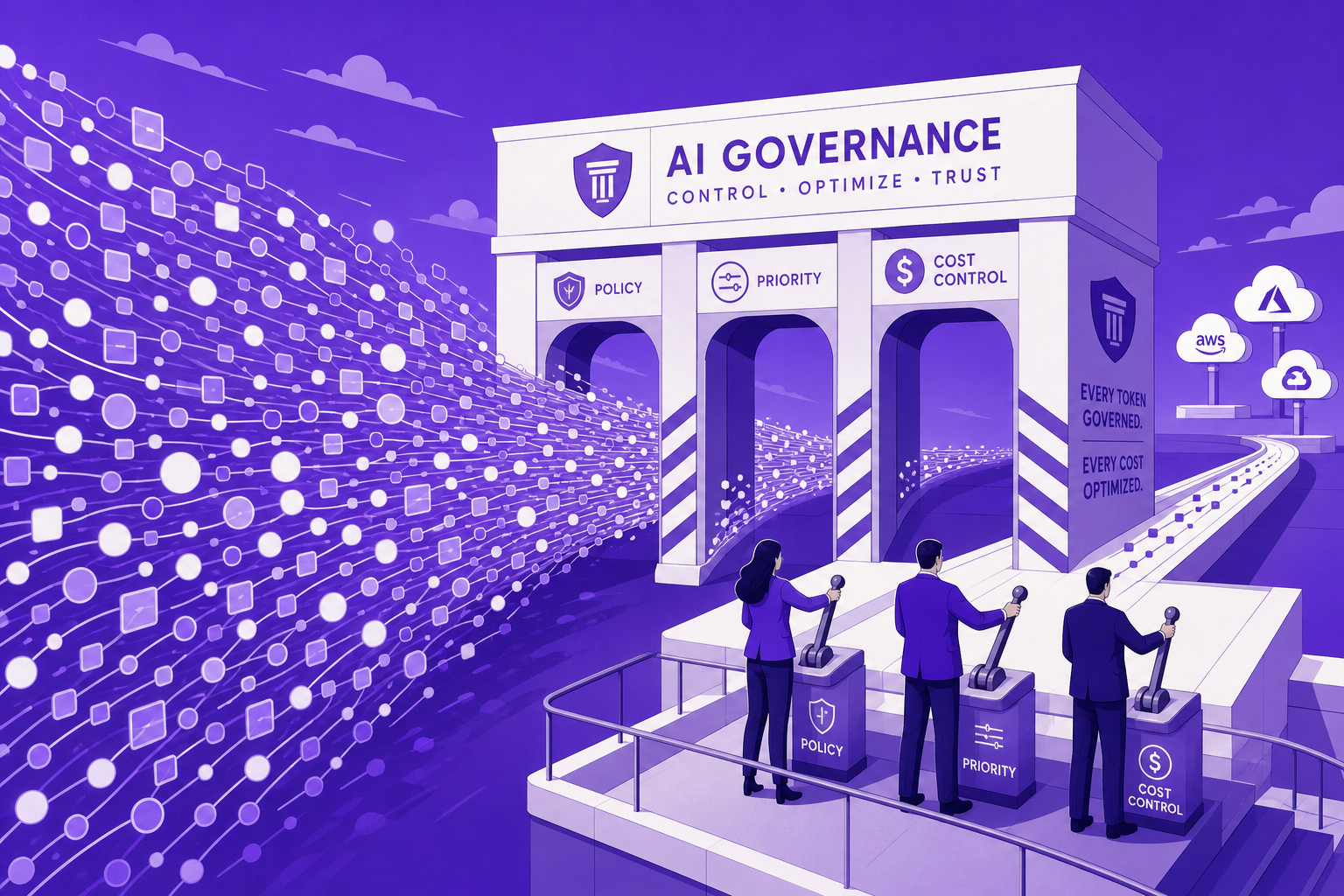
In this comprehensive guide, we examine the critical priorities and best practices for optimizing LLM costs in 2026, explore the market trends shaping enterprise strategies, and demonstrate how holistic solutions like CloudNuro deliver the centralized governance, security, and cost visibility modern organizations require.
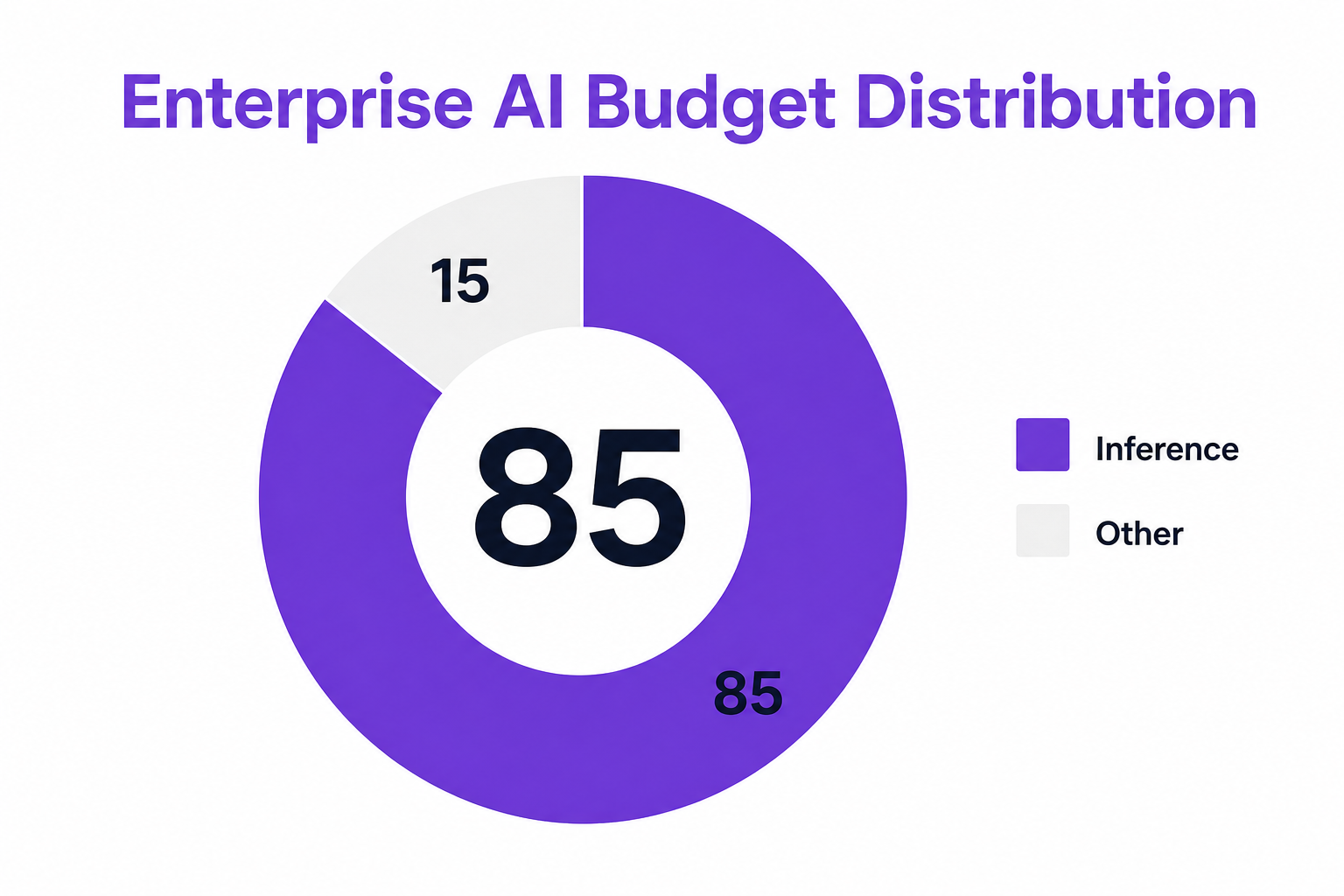
Enterprise investment in AI, and especially LLMs, has skyrocketed: between late 2024 and mid-2025, LLM API spend more than doubled to $8.4 billion, and generative AI investments tripled to $37 billion. Today, inference-related expenses consume an average of 85% of enterprise AI budgets, which have climbed past $7 million per year in many Fortune 1000 organizations.
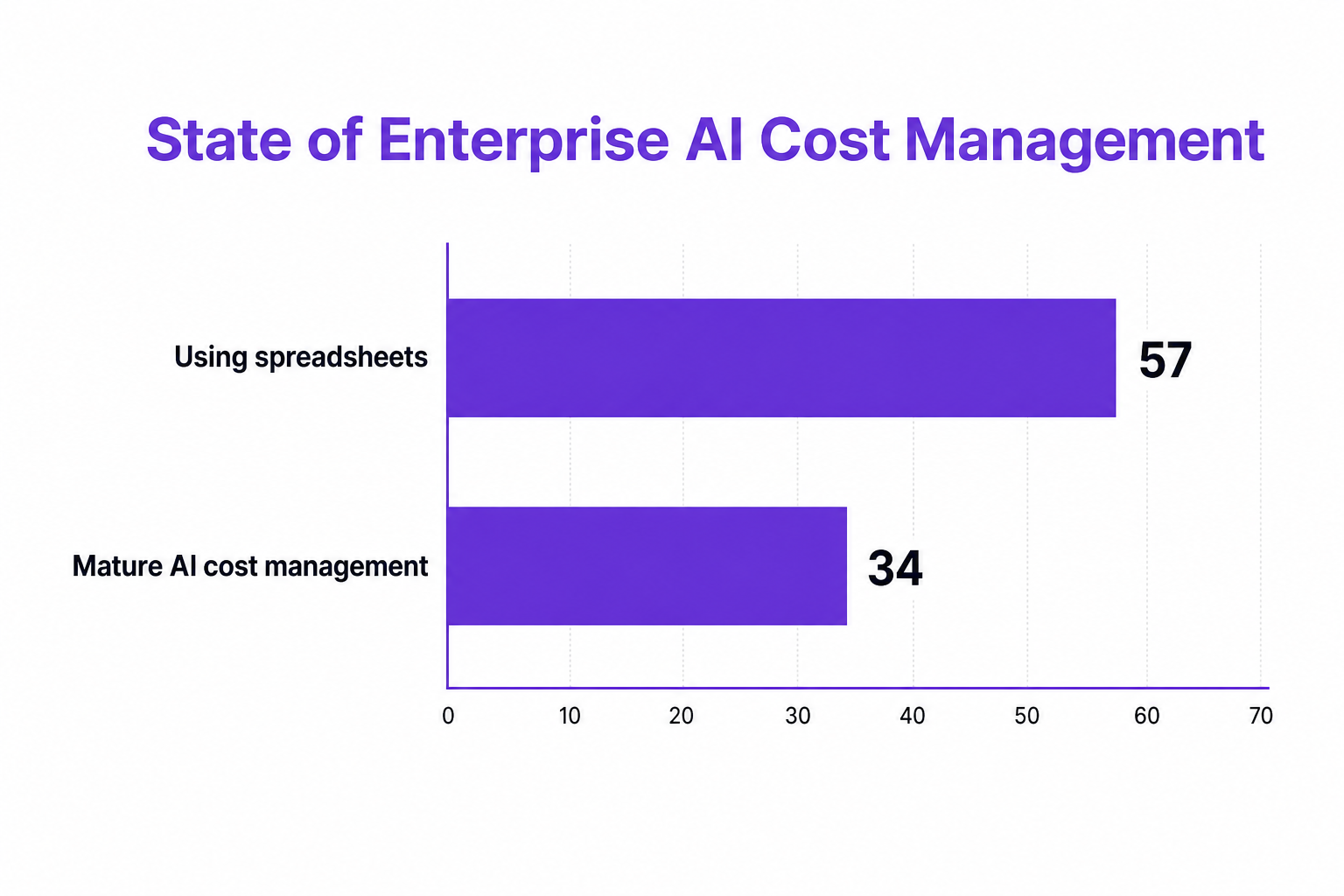
Such rapid expansion has outpaced cost governance capabilities. A remarkable 78% of AI teams now report LLM API expenses surpassed their projections in the first year of production. Only 34% of enterprises have mature AI cost management practices in place, leaving the majority (57%) dependent on manual spreadsheets, exposed to hidden waste, and unable to proactively manage risk.
The result: uncontrolled spend, budget overruns, and increased financial risk unless a dedicated FinOps approach is taken to rein in AI and LLM costs.
Faced with skyrocketing expenses, organizations have moved beyond basic model pricing comparisons to holistic, workflow-level optimization. Today’s leading enterprises:
Evaluate the total cost of their AI architectures, not just per-token or per-call pricing.
Rely on automated routing, caching, and strict usage metering to cap costly agentic calls and govern API spend.
Exploit prompt caching and access provider discounts as a major lever to optimize both performance and costs.
Adopt multi-model deployments to balance performance with cost control, with 55% to 65% now running multiple frontier LLMs concurrently.
Expert insight drives this evolution: cost management is no longer about seeking the lowest price for tokens, but about rooting out unnecessary inference, tightly governing workflow-level usage, and architecting for selective invocation.
What does it take to build a mature LLM FinOps practice? Distilling findings from hundreds of enterprise environments, several pillars recur:
Most organizations struggle with fragmented cost data, across SaaS, cloud AI, and internal LLM deployments. Unified reporting is the bedrock:
Integrate disparate cloud and SaaS environments into a single cost pane of glass.
Aggregate usage, licensing, and contract data for full spend accountability.
Track cost drivers at the department and workflow level, supporting budgeting and renewal cycles.
Manual methods cannot keep pace with the complexity and scale of AI billing. Proactive, automated controls are essential:
Threshold-based alerts surface waste and anomalies immediately, supporting real-time intervention.
Automated application discovery finds shadow IT and unbudgeted spend before it snowballs.
AI-powered forecasting delivers accurate, scenario-based long-range budgeting.
Organizations leveraging these tactics achieve measurable results: one major enterprise saw 55% reduction in licensing waste and reclaimed 1,700 unused licenses, boosting operational efficiency by 300 hours annually.
Cost management now demands true governance, tightly enforced controls at each layer:
Policy-driven routing to select the most cost-effective models for each task.
Limiting always-on agentic workflows; favor deterministic orchestration and selective LLM invocation to avoid runaway costs.
Caching and usage metering to ensure discounts are fully utilized, and to restrict unmonitored spend by business units.
When evaluating vendors and platforms, IT and finance leaders should look for solutions that support both AI speed and financial discipline. Critical criteria include:
Comprehensive Spend Visibility: Unified dashboards for cloud, SaaS, and AI costs, enabling centralized monitoring and chargeback.
Continuous Usage Analytics: Automated, granular tracking down to model, department, and even user level.
Automated Optimization & Rightsizing: Proactive identification of underutilized licenses, with in-platform remediation.
Multi-Tenant Integration: Out-of-the-box connectors for leading SaaS and AI platforms (Microsoft, Google, AWS, and beyond).
Governance-First Controls: Custom quotas, metering, and policy enforcement to preempt cost overruns and maintain compliance.
Predictive, AI-Powered Budgeting: Multi-scenario financial forecasting that adapts as environments scale and LLM behaviors evolve.
Organizations deploying such platforms have seen, for example, AI governance drive a 27% reduction in cloud database costs, and full automation of reporting across their environments.
CloudNuro stands apart with an integrated approach built for the scale of modern enterprises. The CloudNuro platform empowers IT and finance leaders through:
Centralized Visibility: Consolidates over 400 SaaS, cloud, and AI applications for real-time cost and usage reporting. No more fragmented data or manual spreadsheets.
Automated Governance: AI-powered anomaly detection, threshold alerts, and proactive policy enforcement control LLM infrastructure spend and expose cost leakage the moment it crops up.
Seamless Optimization: Usage-driven analytics to rapidly identify, remediate, and eliminate license waste. Entitlement tracking and renewal management to enforce discipline at every level.
Predictive Budgeting: Scenario-based planning and forecasting deliver the accuracy required for sustainable FinOps maturity.
Compliance and Security: Securely governs AI and LLM usage, ensuring compliance across highly regulated environments, an absolute requirement in healthcare, finance, and government verticals.
Case in point: a major transportation agency used CloudNuro to achieve 100% usage visibility and total transparency over their Copilot AI investments, while a medical society leveraged FinOps governance to automate reporting and cut resource waste by 27%.
What are the key strategies for LLM cost management in enterprises?
Centralized visibility, workflow-level governance, automated usage analytics, and proactive anomaly detection are foundational. Organizations must move beyond simple token optimization and control LLM spend at the architecture and policy level.
How can organizations optimize AI spend for large language models?
By leveraging dynamic model routing, agent throttling, prompt caching, and cost-aware orchestration, enterprises can minimize unnecessary inference and focus spending where it drives the greatest value.
What features should a 2026 LLM cost management platform include?
Look for robust integrations, automated licensing and usage tracking, predictive AI-powered budgeting, governance-first controls, and real-time anomaly detection.
How does FinOps for AI support LLM spend transparency?
FinOps applies proven cloud financial operations principles, such as granular monitoring, chargeback, and automated policy enforcement, to the LLM stack, increasing both transparency and accountability.
Why is cost governance critical for enterprise AI deployments?
Without strict governance, LLM costs can spiral due to untracked usage, duplicate licensing, and inefficient workflows, exposing organizations to compliance, security, and budget risks.
As LLMs become a cornerstone of enterprise infrastructure, the costs, complexity, and compliance risks only intensify. Effectively managing LLM spend in 2026 demands an evolved, holistic strategy, centralized visibility, proactive governance, automated optimization, and continuous alignment with business value. CloudNuro empowers organizations to meet these challenges head-on, delivering unmatched control, compliance, and cost savings at enterprise scale.
About CloudNuro
CloudNuro is a leader in Enterprise AI Adoption Management, providing enterprises with unmatched visibility, governance, and cost optimization. Recognized twice in a row in the SaaS Management Platforms category and named a Leader in the SoftwareReviews Data Quadrant, CloudNuro is trusted by global enterprises and government agencies to bring financial discipline to SaaS, cloud, and AI. Trusted by enterprises, CloudNuro provides centralized SaaS inventory, license optimization, and renewal management along with advanced cost allocation and chargeback, giving IT and Finance leaders the visibility, control, and cost-conscious culture needed to drive financial discipline.
Request a no cost, no obligation free assessment —just 15 minutes to savings!
Get StartedThe surge in enterprise adoption of large language models (LLMs) has fundamentally transformed how organizations leverage AI for automation, productivity, and innovation. Alongside these opportunities, LLM cost management has emerged as a primary challenge for CIOs, CTOs, and IT leaders in sectors like healthcare, finance, government, and large corporates. With AI spend accelerating and financial scrutiny intensifying, the need for effective FinOps for AI has never been more pressing.
In this comprehensive guide, we examine the critical priorities and best practices for optimizing LLM costs in 2026, explore the market trends shaping enterprise strategies, and demonstrate how holistic solutions like CloudNuro deliver the centralized governance, security, and cost visibility modern organizations require.
Enterprise investment in AI, and especially LLMs, has skyrocketed: between late 2024 and mid-2025, LLM API spend more than doubled to $8.4 billion, and generative AI investments tripled to $37 billion. Today, inference-related expenses consume an average of 85% of enterprise AI budgets, which have climbed past $7 million per year in many Fortune 1000 organizations.
Such rapid expansion has outpaced cost governance capabilities. A remarkable 78% of AI teams now report LLM API expenses surpassed their projections in the first year of production. Only 34% of enterprises have mature AI cost management practices in place, leaving the majority (57%) dependent on manual spreadsheets, exposed to hidden waste, and unable to proactively manage risk.
The result: uncontrolled spend, budget overruns, and increased financial risk unless a dedicated FinOps approach is taken to rein in AI and LLM costs.
Faced with skyrocketing expenses, organizations have moved beyond basic model pricing comparisons to holistic, workflow-level optimization. Today’s leading enterprises:
Evaluate the total cost of their AI architectures, not just per-token or per-call pricing.
Rely on automated routing, caching, and strict usage metering to cap costly agentic calls and govern API spend.
Exploit prompt caching and access provider discounts as a major lever to optimize both performance and costs.
Adopt multi-model deployments to balance performance with cost control, with 55% to 65% now running multiple frontier LLMs concurrently.
Expert insight drives this evolution: cost management is no longer about seeking the lowest price for tokens, but about rooting out unnecessary inference, tightly governing workflow-level usage, and architecting for selective invocation.
What does it take to build a mature LLM FinOps practice? Distilling findings from hundreds of enterprise environments, several pillars recur:
Most organizations struggle with fragmented cost data, across SaaS, cloud AI, and internal LLM deployments. Unified reporting is the bedrock:
Integrate disparate cloud and SaaS environments into a single cost pane of glass.
Aggregate usage, licensing, and contract data for full spend accountability.
Track cost drivers at the department and workflow level, supporting budgeting and renewal cycles.
Manual methods cannot keep pace with the complexity and scale of AI billing. Proactive, automated controls are essential:
Threshold-based alerts surface waste and anomalies immediately, supporting real-time intervention.
Automated application discovery finds shadow IT and unbudgeted spend before it snowballs.
AI-powered forecasting delivers accurate, scenario-based long-range budgeting.
Organizations leveraging these tactics achieve measurable results: one major enterprise saw 55% reduction in licensing waste and reclaimed 1,700 unused licenses, boosting operational efficiency by 300 hours annually.
Cost management now demands true governance, tightly enforced controls at each layer:
Policy-driven routing to select the most cost-effective models for each task.
Limiting always-on agentic workflows; favor deterministic orchestration and selective LLM invocation to avoid runaway costs.
Caching and usage metering to ensure discounts are fully utilized, and to restrict unmonitored spend by business units.
When evaluating vendors and platforms, IT and finance leaders should look for solutions that support both AI speed and financial discipline. Critical criteria include:
Comprehensive Spend Visibility: Unified dashboards for cloud, SaaS, and AI costs, enabling centralized monitoring and chargeback.
Continuous Usage Analytics: Automated, granular tracking down to model, department, and even user level.
Automated Optimization & Rightsizing: Proactive identification of underutilized licenses, with in-platform remediation.
Multi-Tenant Integration: Out-of-the-box connectors for leading SaaS and AI platforms (Microsoft, Google, AWS, and beyond).
Governance-First Controls: Custom quotas, metering, and policy enforcement to preempt cost overruns and maintain compliance.
Predictive, AI-Powered Budgeting: Multi-scenario financial forecasting that adapts as environments scale and LLM behaviors evolve.
Organizations deploying such platforms have seen, for example, AI governance drive a 27% reduction in cloud database costs, and full automation of reporting across their environments.
CloudNuro stands apart with an integrated approach built for the scale of modern enterprises. The CloudNuro platform empowers IT and finance leaders through:
Centralized Visibility: Consolidates over 400 SaaS, cloud, and AI applications for real-time cost and usage reporting. No more fragmented data or manual spreadsheets.
Automated Governance: AI-powered anomaly detection, threshold alerts, and proactive policy enforcement control LLM infrastructure spend and expose cost leakage the moment it crops up.
Seamless Optimization: Usage-driven analytics to rapidly identify, remediate, and eliminate license waste. Entitlement tracking and renewal management to enforce discipline at every level.
Predictive Budgeting: Scenario-based planning and forecasting deliver the accuracy required for sustainable FinOps maturity.
Compliance and Security: Securely governs AI and LLM usage, ensuring compliance across highly regulated environments, an absolute requirement in healthcare, finance, and government verticals.
Case in point: a major transportation agency used CloudNuro to achieve 100% usage visibility and total transparency over their Copilot AI investments, while a medical society leveraged FinOps governance to automate reporting and cut resource waste by 27%.
What are the key strategies for LLM cost management in enterprises?
Centralized visibility, workflow-level governance, automated usage analytics, and proactive anomaly detection are foundational. Organizations must move beyond simple token optimization and control LLM spend at the architecture and policy level.
How can organizations optimize AI spend for large language models?
By leveraging dynamic model routing, agent throttling, prompt caching, and cost-aware orchestration, enterprises can minimize unnecessary inference and focus spending where it drives the greatest value.
What features should a 2026 LLM cost management platform include?
Look for robust integrations, automated licensing and usage tracking, predictive AI-powered budgeting, governance-first controls, and real-time anomaly detection.
How does FinOps for AI support LLM spend transparency?
FinOps applies proven cloud financial operations principles, such as granular monitoring, chargeback, and automated policy enforcement, to the LLM stack, increasing both transparency and accountability.
Why is cost governance critical for enterprise AI deployments?
Without strict governance, LLM costs can spiral due to untracked usage, duplicate licensing, and inefficient workflows, exposing organizations to compliance, security, and budget risks.
As LLMs become a cornerstone of enterprise infrastructure, the costs, complexity, and compliance risks only intensify. Effectively managing LLM spend in 2026 demands an evolved, holistic strategy, centralized visibility, proactive governance, automated optimization, and continuous alignment with business value. CloudNuro empowers organizations to meet these challenges head-on, delivering unmatched control, compliance, and cost savings at enterprise scale.
About CloudNuro
CloudNuro is a leader in Enterprise AI Adoption Management, providing enterprises with unmatched visibility, governance, and cost optimization. Recognized twice in a row in the SaaS Management Platforms category and named a Leader in the SoftwareReviews Data Quadrant, CloudNuro is trusted by global enterprises and government agencies to bring financial discipline to SaaS, cloud, and AI. Trusted by enterprises, CloudNuro provides centralized SaaS inventory, license optimization, and renewal management along with advanced cost allocation and chargeback, giving IT and Finance leaders the visibility, control, and cost-conscious culture needed to drive financial discipline.
Request a no cost, no obligation free assessment - just 15 minutes to savings!
Get StartedWe're offering complimentary ServiceNow license assessments to only 25 enterprises this quarter who want to unlock immediate savings without disrupting operations.
Get Free AssessmentGet Started




CloudNuro Corp
1755 Park St. Suite 207
Naperville, IL 60563
Phone : +1-630-277-9470
Email: info@cloudnuro.com





.webp)

Recognized Leader in SaaS Management Platforms by Info-Tech SoftwareReviews

%20Tools%20for%20Proactive%20Security%20Managemen.png)

.svg)