

Sign Up
Thank you for Submitting!

SaaS has become the default way enterprises buy software, but uncontrolled growth of apps across teams has created a new problem: SaaS tool sprawl. IT leaders know they must practice strong SaaS management to control risk and cost, yet they are equally pressured not to become the “department of no” that blocks innovation.
The good news is that you do not have to choose between control and flexibility. With the right governance model, SaaS management platform, and automation strategy, you can reduce sprawl, manage SaaS subscriptions wisely, and still let business teams move fast.
SaaS tool sprawl occurs when different teams and individuals procure SaaS applications independently, often on corporate cards, with little central oversight. Over time, organizations accumulate overlapping SaaS tools, unused licenses, and unvetted apps that quietly access sensitive data.
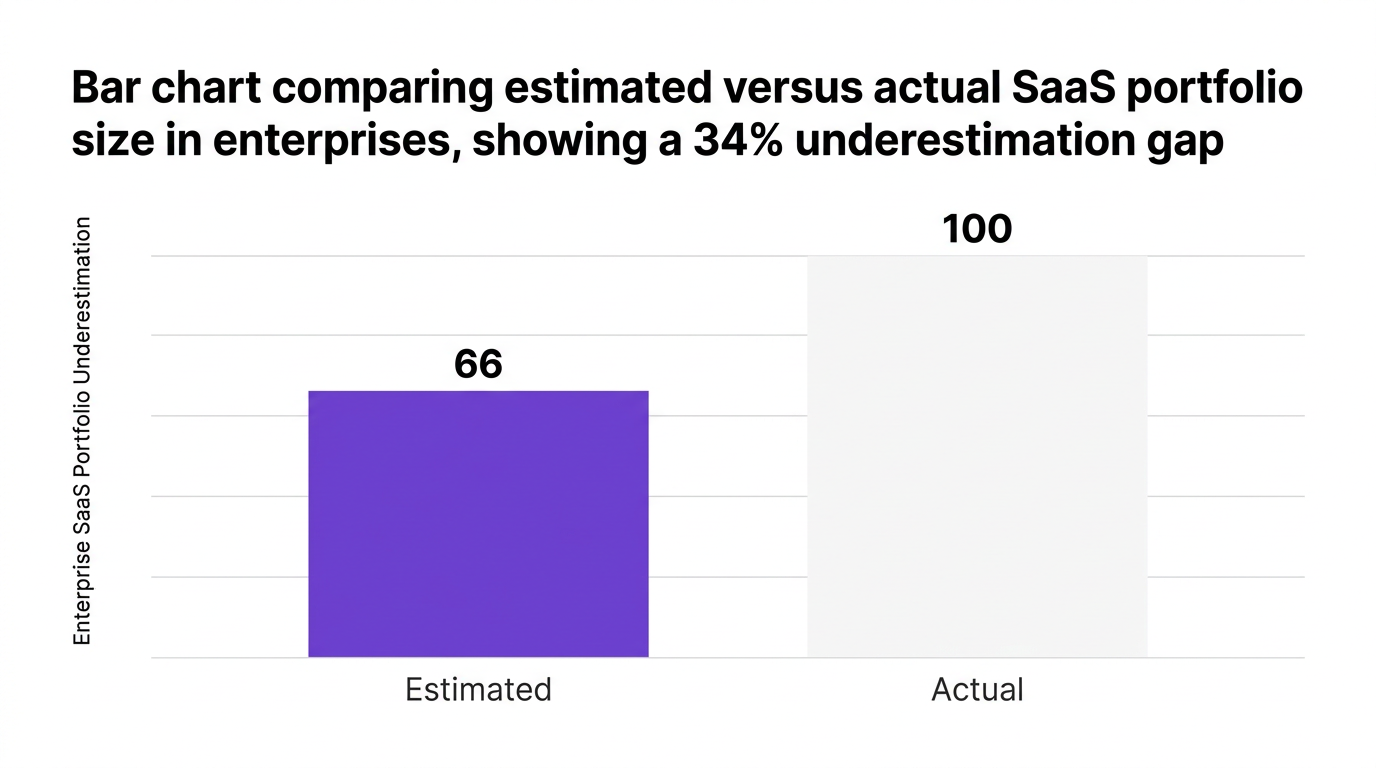
According to Gartner, 63% of enterprise IT leaders report SaaS sprawl as their top challenge in maintaining governance and cost controls (Gartner, 2026). Forrester found that organizations underestimate their SaaS portfolio size by 34% on average, which contributes to hidden costs and compliance risks (Forrester, 2026).
SaaS sprawl creates several concrete problems:
As cloud adoption accelerates, cloud security strategist Priya Mehta warns, “Without holistic SaaS visibility and automated governance, IT will inevitably face mounting security and budgetary challenges.” (TechCrunch, 2026). The solution starts with how you define SaaS governance.
Many IT teams try to fix SaaS tool sprawl by tightening approval gates and enforcing strict top, down standards. This might work for a quarter, then shadow IT returns through personal credit cards and freemium signups.
There are two reasons a pure control approach backfires:
Enterprise IT advisor Dr. Alex Rivera summarizes the alternative: “Empowering business users with approved self-service SaaS options, guided by IT policies, drastically reduces shadow IT without stifling innovation.” (CIO Review, 2026).
In practice, this means moving from a binary yes/no posture to a guardrails model:
This approach reframes IT from gatekeeper to strategic advisor, and it is the foundation for sustainable SaaS governance.

You cannot reduce SaaS tool sprawl you cannot see. Traditional asset inventories and endpoint tools rarely capture browser, based subscriptions, mobile, only apps, or departmental purchases.
Forrester’s finding that organizations underestimate their SaaS portfolio size by 34% illustrates how big the blind spot is. IDC also reports that enterprises that adopt centralized SaaS visibility tools achieve up to 98% visibility into shadow IT (IDC, 2026).
To gain actionable SaaS visibility:
An analogy: treating SaaS without visibility is like trying to manage a data center with the lights off. Turning on the lights through modern SaaS management tools is the prerequisite for any cost optimization or governance initiative.
Once you have visibility, the next step is to codify SaaS governance so teams know what is allowed, where flexibility exists, and where IT oversight is mandatory.
Effective cloud SaaS governance usually includes:
A key nuance: governance should focus on outcomes and guardrails, not dictating specific tools in all cases. For example, IT might mandate that any sales engagement tool must integrate with the CRM, log activity, and meet compliance requirements, but leave room for teams to choose from a shortlist of approved vendors.
When this fails: governance frameworks often break down when they live only in PDFs or wiki pages. Without embedded workflows and SaaS automation, policies are forgotten or worked around. That is why automation is essential.

Manual approvals and spreadsheet tracking cannot scale in environments with hundreds of applications and thousands of users. AI, enabled SaaS management services and workflow automation are now central to enterprise strategies.
Everest Group reports that 61% of large organizations cite automated workflow integration for onboarding and offboarding SaaS users as a primary driver of compliance improvement (Everest Group, 2026). Organizations deploying automated SaaS management software also saw a 41% reduction in redundant or overlapping SaaS tools within 12 months (Everest Group, 2026).
Core workflows to automate include:
As Forrester’s Jamie Liu notes, “The future of SaaS management hinges on AI-driven automation, enabling IT teams to shift from policing to strategic business partnership.” (Forrester, 2026). Automation lets IT focus on value creation, not chasing tickets.
SaaS spending is no longer a small line item. KPMG finds enterprises expect 30 to 40% ROI on SaaS management software investments by 2026, driven largely by cost reduction and risk avoidance (KPMG, 2026).
Independent research from the SaaS Management Council shows that robust SaaS visibility and license optimization tools drive an average of 37% reduction in SaaS overspend (SaaS Management Council, 2026). That level of SaaS spend optimization requires more than one, time audits.
Key practices for ongoing SaaS cost management:
A disciplined SaaS spend management practice does not equate to saying “no.” Instead, it funds innovation by freeing budget from low, value or duplicate tools.
Fintech leader BrightFund adopted an AI, enabled enterprise SaaS management platform to tackle rising SaaS costs and fragmented tools. Within one year, they:
Crucially, employee satisfaction with IT services improved, since approvals were faster and transparent. BrightFund shifted the IT narrative from “no” to “how do we do this safely and efficiently.” (Everest Group, 2026).
Healthcare provider Mercury Health deployed a unified SaaS governance solution to address compliance gaps and shadow IT. IDC reports that they:
Mercury Health did not restrict clinical and operational teams from finding innovative solutions. Instead, they provided a SaaS management platform where approved choices were easy, and risky choices automatically triggered additional checks.
These examples show that strong SaaS governance and automation almost always increase, rather than decrease, business agility.

CloudNuro was built specifically to help enterprises practice effective saas management across SaaS, cloud, and AI workloads, without slowing innovation. The platform combines SaaS visibility, governance, automation, and cost optimization into one SaaS management software stack.
Here is how CloudNuro supports the strategies covered above.
CloudNuro’s Unified Cloud Custodian provides 99% visibility into SaaS, cloud, and AI workloads, so IT teams gain a single, trusted inventory of applications, users, and data flows. Automated SaaS application discovery identifies shadow IT SaaS, maps it to business owners, and flags high, risk apps.
This reduces blind spots that drive security incidents and uncontrolled spend, and it gives security and compliance teams the data they need to treat SaaS as a first, class risk domain.
CloudNuro’s governance, first design lets you embed cloud SaaS governance policies directly into workflows.
This approach aligns with research showing that 75% of enterprises are integrating SaaS stores for employee self-service to curb shadow IT (IDC, 2026). CloudNuro enables that pattern with strong compliance and audit trails.
CloudNuro’s Microsoft 365 Custodian, Salesforce Custodian, and ServiceNow Custodian integrate directly with core enterprise platforms to automate saas automation workflows such as:
These capabilities support SOC 2 Type II compliant operations and reflect the market trend where 61% of organizations credit automated SaaS workflows with compliance improvements (Everest Group, 2026).
CloudNuro’s AI Custodian and FinOps services provide automated cost optimization that helps enterprises manage SaaS subscriptions and manage SaaS spend as a continuous discipline.
With CloudNuro, IT and finance teams can:
Customers commonly report around 35% reduction in SaaS overspend, in line with industry data showing an average 37% overspend reduction when using strong SaaS spend management solutions.
For sectors like healthcare, finance, and government, SaaS governance is inseparable from compliance. CloudNuro’s saas compliance software capabilities include:
By treating SaaS as part of a unified control plane, CloudNuro supports enterprise SaaS management that aligns with strict regulatory requirements while still supporting local innovation.
SaaS tool sprawl is the uncontrolled proliferation of SaaS applications across an organization, often driven by teams buying tools independently. It creates security risks, compliance gaps, and significant waste in SaaS spend, because IT lacks the visibility and governance needed to manage SaaS subscriptions effectively.
Focus on guardrails, not bans. Implement a central saas management platform that gives you visibility and policy control, create an approved app catalog with self, service requests, and automate approvals based on risk tiers. This lets employees choose tools within defined boundaries while IT retains control over security, data, and cost.
The most effective method combines SaaS application discovery from network and SSO data, financial data from expense systems, and identity data from HR and directory services. Dedicated saas management tools can correlate this information to build a complete inventory of apps, users, and associated risks.
Modern saas management solutions centralize application data, embed policy into access workflows, and maintain detailed audit logs. They support consistent application of controls, such as mandatory security reviews for high, risk apps, and provide evidence for regulatory audits, making cloud SaaS governance more reliable and less manual.
Workflow automation ties governance policies directly to operational processes. Automated onboarding and offboarding, license right, sizing, and approval flows reduce human error, eliminate orphaned accounts, and ensure that access is always aligned with role and policy, which is crucial for both security and SaaS cost management.
Start with full visibility, then focus on three levers: reclaiming unused licenses, consolidating overlapping tools, and negotiating renewals based on accurate usage data. Use saas spend management capabilities to continuously monitor usage patterns and align spend with business value, rather than relying on one, time audits.
CloudNuro is a leader in Enterprise SaaS Management Platforms, giving enterprises unmatched visibility, governance, and cost optimization. We are proud to be recognized twice in a row by Gartner in the SaaS Management Platforms and named a Leader in the Info-Tech SoftwareReviews Data Quadrant. Trusted by global enterprises and government agencies, CloudNuro provides centralized SaaS inventory, license optimization, and renewal management. With a 15-minute setup and measurable results in under 24 hours, CloudNuro gives IT teams a fast path to value.
Request a Demo | Get Free Savings Assessment | Explore Product
Request a no cost, no obligation free assessment —just 15 minutes to savings!
Get StartedSaaS has become the default way enterprises buy software, but uncontrolled growth of apps across teams has created a new problem: SaaS tool sprawl. IT leaders know they must practice strong SaaS management to control risk and cost, yet they are equally pressured not to become the “department of no” that blocks innovation.
The good news is that you do not have to choose between control and flexibility. With the right governance model, SaaS management platform, and automation strategy, you can reduce sprawl, manage SaaS subscriptions wisely, and still let business teams move fast.
SaaS tool sprawl occurs when different teams and individuals procure SaaS applications independently, often on corporate cards, with little central oversight. Over time, organizations accumulate overlapping SaaS tools, unused licenses, and unvetted apps that quietly access sensitive data.
According to Gartner, 63% of enterprise IT leaders report SaaS sprawl as their top challenge in maintaining governance and cost controls (Gartner, 2026). Forrester found that organizations underestimate their SaaS portfolio size by 34% on average, which contributes to hidden costs and compliance risks (Forrester, 2026).
SaaS sprawl creates several concrete problems:
As cloud adoption accelerates, cloud security strategist Priya Mehta warns, “Without holistic SaaS visibility and automated governance, IT will inevitably face mounting security and budgetary challenges.” (TechCrunch, 2026). The solution starts with how you define SaaS governance.
Many IT teams try to fix SaaS tool sprawl by tightening approval gates and enforcing strict top, down standards. This might work for a quarter, then shadow IT returns through personal credit cards and freemium signups.
There are two reasons a pure control approach backfires:
Enterprise IT advisor Dr. Alex Rivera summarizes the alternative: “Empowering business users with approved self-service SaaS options, guided by IT policies, drastically reduces shadow IT without stifling innovation.” (CIO Review, 2026).
In practice, this means moving from a binary yes/no posture to a guardrails model:
This approach reframes IT from gatekeeper to strategic advisor, and it is the foundation for sustainable SaaS governance.
You cannot reduce SaaS tool sprawl you cannot see. Traditional asset inventories and endpoint tools rarely capture browser, based subscriptions, mobile, only apps, or departmental purchases.
Forrester’s finding that organizations underestimate their SaaS portfolio size by 34% illustrates how big the blind spot is. IDC also reports that enterprises that adopt centralized SaaS visibility tools achieve up to 98% visibility into shadow IT (IDC, 2026).
To gain actionable SaaS visibility:
An analogy: treating SaaS without visibility is like trying to manage a data center with the lights off. Turning on the lights through modern SaaS management tools is the prerequisite for any cost optimization or governance initiative.
Once you have visibility, the next step is to codify SaaS governance so teams know what is allowed, where flexibility exists, and where IT oversight is mandatory.
Effective cloud SaaS governance usually includes:
A key nuance: governance should focus on outcomes and guardrails, not dictating specific tools in all cases. For example, IT might mandate that any sales engagement tool must integrate with the CRM, log activity, and meet compliance requirements, but leave room for teams to choose from a shortlist of approved vendors.
When this fails: governance frameworks often break down when they live only in PDFs or wiki pages. Without embedded workflows and SaaS automation, policies are forgotten or worked around. That is why automation is essential.
Manual approvals and spreadsheet tracking cannot scale in environments with hundreds of applications and thousands of users. AI, enabled SaaS management services and workflow automation are now central to enterprise strategies.
Everest Group reports that 61% of large organizations cite automated workflow integration for onboarding and offboarding SaaS users as a primary driver of compliance improvement (Everest Group, 2026). Organizations deploying automated SaaS management software also saw a 41% reduction in redundant or overlapping SaaS tools within 12 months (Everest Group, 2026).
Core workflows to automate include:
As Forrester’s Jamie Liu notes, “The future of SaaS management hinges on AI-driven automation, enabling IT teams to shift from policing to strategic business partnership.” (Forrester, 2026). Automation lets IT focus on value creation, not chasing tickets.
SaaS spending is no longer a small line item. KPMG finds enterprises expect 30 to 40% ROI on SaaS management software investments by 2026, driven largely by cost reduction and risk avoidance (KPMG, 2026).
Independent research from the SaaS Management Council shows that robust SaaS visibility and license optimization tools drive an average of 37% reduction in SaaS overspend (SaaS Management Council, 2026). That level of SaaS spend optimization requires more than one, time audits.
Key practices for ongoing SaaS cost management:
A disciplined SaaS spend management practice does not equate to saying “no.” Instead, it funds innovation by freeing budget from low, value or duplicate tools.
Fintech leader BrightFund adopted an AI, enabled enterprise SaaS management platform to tackle rising SaaS costs and fragmented tools. Within one year, they:
Crucially, employee satisfaction with IT services improved, since approvals were faster and transparent. BrightFund shifted the IT narrative from “no” to “how do we do this safely and efficiently.” (Everest Group, 2026).
Healthcare provider Mercury Health deployed a unified SaaS governance solution to address compliance gaps and shadow IT. IDC reports that they:
Mercury Health did not restrict clinical and operational teams from finding innovative solutions. Instead, they provided a SaaS management platform where approved choices were easy, and risky choices automatically triggered additional checks.
These examples show that strong SaaS governance and automation almost always increase, rather than decrease, business agility.
CloudNuro was built specifically to help enterprises practice effective saas management across SaaS, cloud, and AI workloads, without slowing innovation. The platform combines SaaS visibility, governance, automation, and cost optimization into one SaaS management software stack.
Here is how CloudNuro supports the strategies covered above.
CloudNuro’s Unified Cloud Custodian provides 99% visibility into SaaS, cloud, and AI workloads, so IT teams gain a single, trusted inventory of applications, users, and data flows. Automated SaaS application discovery identifies shadow IT SaaS, maps it to business owners, and flags high, risk apps.
This reduces blind spots that drive security incidents and uncontrolled spend, and it gives security and compliance teams the data they need to treat SaaS as a first, class risk domain.
CloudNuro’s governance, first design lets you embed cloud SaaS governance policies directly into workflows.
This approach aligns with research showing that 75% of enterprises are integrating SaaS stores for employee self-service to curb shadow IT (IDC, 2026). CloudNuro enables that pattern with strong compliance and audit trails.
CloudNuro’s Microsoft 365 Custodian, Salesforce Custodian, and ServiceNow Custodian integrate directly with core enterprise platforms to automate saas automation workflows such as:
These capabilities support SOC 2 Type II compliant operations and reflect the market trend where 61% of organizations credit automated SaaS workflows with compliance improvements (Everest Group, 2026).
CloudNuro’s AI Custodian and FinOps services provide automated cost optimization that helps enterprises manage SaaS subscriptions and manage SaaS spend as a continuous discipline.
With CloudNuro, IT and finance teams can:
Customers commonly report around 35% reduction in SaaS overspend, in line with industry data showing an average 37% overspend reduction when using strong SaaS spend management solutions.
For sectors like healthcare, finance, and government, SaaS governance is inseparable from compliance. CloudNuro’s saas compliance software capabilities include:
By treating SaaS as part of a unified control plane, CloudNuro supports enterprise SaaS management that aligns with strict regulatory requirements while still supporting local innovation.
SaaS tool sprawl is the uncontrolled proliferation of SaaS applications across an organization, often driven by teams buying tools independently. It creates security risks, compliance gaps, and significant waste in SaaS spend, because IT lacks the visibility and governance needed to manage SaaS subscriptions effectively.
Focus on guardrails, not bans. Implement a central saas management platform that gives you visibility and policy control, create an approved app catalog with self, service requests, and automate approvals based on risk tiers. This lets employees choose tools within defined boundaries while IT retains control over security, data, and cost.
The most effective method combines SaaS application discovery from network and SSO data, financial data from expense systems, and identity data from HR and directory services. Dedicated saas management tools can correlate this information to build a complete inventory of apps, users, and associated risks.
Modern saas management solutions centralize application data, embed policy into access workflows, and maintain detailed audit logs. They support consistent application of controls, such as mandatory security reviews for high, risk apps, and provide evidence for regulatory audits, making cloud SaaS governance more reliable and less manual.
Workflow automation ties governance policies directly to operational processes. Automated onboarding and offboarding, license right, sizing, and approval flows reduce human error, eliminate orphaned accounts, and ensure that access is always aligned with role and policy, which is crucial for both security and SaaS cost management.
Start with full visibility, then focus on three levers: reclaiming unused licenses, consolidating overlapping tools, and negotiating renewals based on accurate usage data. Use saas spend management capabilities to continuously monitor usage patterns and align spend with business value, rather than relying on one, time audits.
CloudNuro is a leader in Enterprise SaaS Management Platforms, giving enterprises unmatched visibility, governance, and cost optimization. We are proud to be recognized twice in a row by Gartner in the SaaS Management Platforms and named a Leader in the Info-Tech SoftwareReviews Data Quadrant. Trusted by global enterprises and government agencies, CloudNuro provides centralized SaaS inventory, license optimization, and renewal management. With a 15-minute setup and measurable results in under 24 hours, CloudNuro gives IT teams a fast path to value.
Request a Demo | Get Free Savings Assessment | Explore Product
Request a no cost, no obligation free assessment - just 15 minutes to savings!
Get StartedWe're offering complimentary ServiceNow license assessments to only 25 enterprises this quarter who want to unlock immediate savings without disrupting operations.
Get Free AssessmentGet Started




CloudNuro Corp
1755 Park St. Suite 207
Naperville, IL 60563
Phone : +1-630-277-9470
Email: info@cloudnuro.com




.webp)

Recognized Leader in SaaS Management Platforms by Info-Tech SoftwareReviews
.png)


.svg)