

Sign Up
Thank you for Submitting!
Shadow AI is quickly becoming one of the most serious blind spots in enterprise security. As employees experiment with generative AI, browser extensions, and SaaS copilots, unsanctioned AI tools are quietly ingesting sensitive data far outside IT governance.
Some report in 2026 found that 88% of organizations saw an increase in shadow AI tool usage, and 62% admitted these tools created unmanaged data access points. When almost every enterprise is dealing with uncontrolled AI usage, ai data leakage is no longer a theoretical risk, it is a daily operational reality.
This article explains what shadow ai is, how unsanctioned AI tools create data leakage and compliance exposure, and practical steps to build robust ai governance. It also details how CloudNuro helps enterprises discover and control shadow it ai before it becomes a regulatory and security crisis.
Shadow ai refers to any use of artificial intelligence tools, apps, bots, or models inside an organization that operate outside official IT oversight. Think employee signups to free AI writing assistants, browser-based copilots, or AI plugins connected to corporate systems without security review.
This is a natural extension of traditional shadow IT, but the ai shadow effect is more dangerous. AI tools are designed to ingest and process large volumes of data, often unstructured and sensitive, which significantly increases ai security risks and ai security concerns.
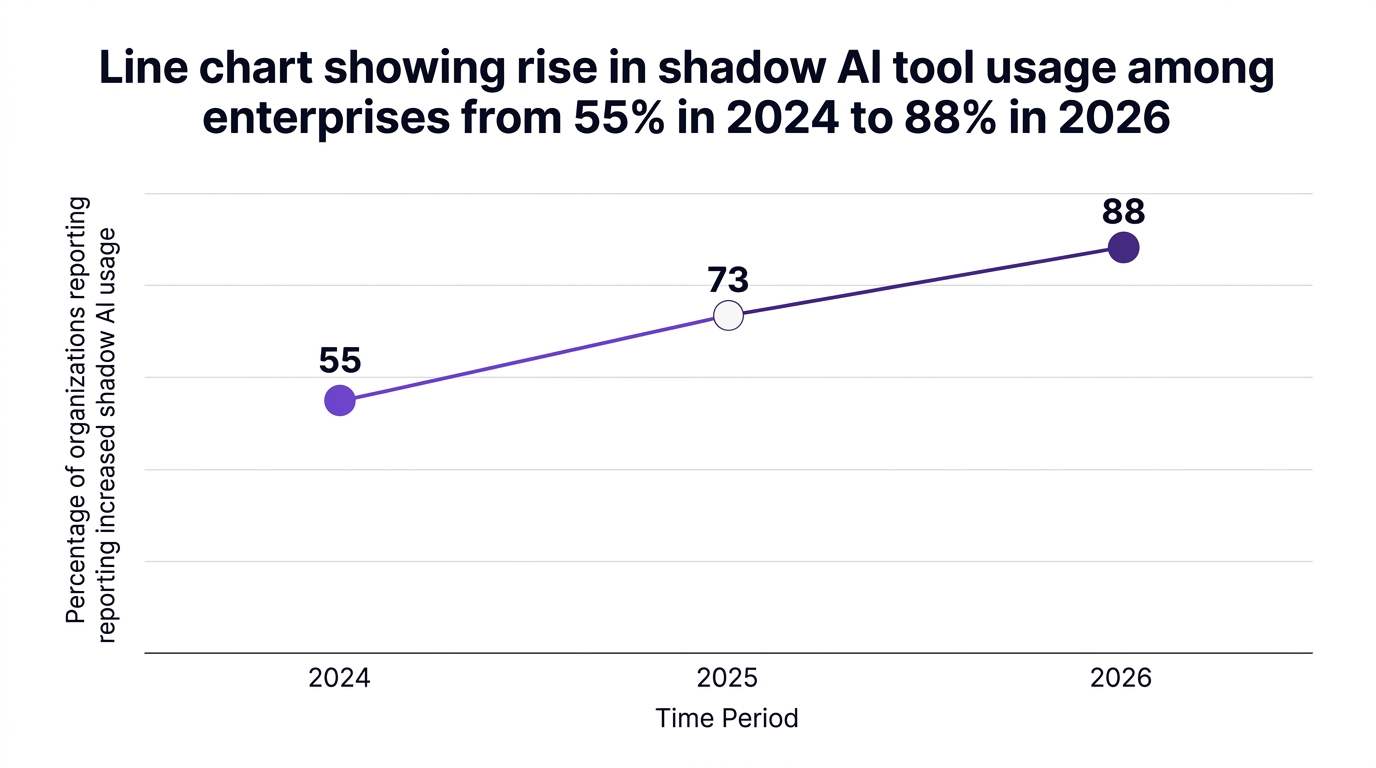
Some report from 2026 shows shadow AI usage rising from 55% of enterprises in 2024 to 88% in 2026. That curve is steep enough that boards and regulators are now treating ai security threats as a strategic risk, not a technical footnote.
A security strategist quoted in a 2026 security outlook called it plainly: "Shadow AI is the most significant new frontier in enterprise data risk, requiring organizations to rethink their compliance and governance strategies from the ground up."
Key characteristics of shadow in ai usage:
Each of these creates a new surface for ai cyber threats and unauthorized data flow.
The core risk of shadow ai is uncontrolled data movement. AI models are hungry, and users often paste or connect exactly the data you least want exposed.
Some analysis in 2026 reported that 47% of enterprises experienced at least one data leakage incident tied to unsanctioned AI applications in the previous 12 months. Another cyber risk study found that AI-driven shadow IT accounts for 32% of all unauthorized data transfers from enterprise cloud environments.

Here are the primary security risks of artificial intelligence in shadow usage:
Employees often paste:
If the AI provider logs prompts, uses them for training, or shares them across regions, you have instant ai data leakage without any breach in the traditional sense.
Shadow ai tools frequently connect through OAuth or API keys to:
Without IT review, scopes are often overly broad. A simple “summarize all my emails” plugin might gain read access to executive inboxes, legal notices, or M&A conversations, creating non-obvious ai security threats.
Many unsanctioned ai tools:
This silently violates ai compliance requirements such as data residency, retention limits, and consent rules. A compliance consultant in a 2026 commentary warned that "Failure to address shadow AI increases the risk of regulatory penalties, IP loss, and catastrophic data exposure."
Low-code automations make it easy to embed AI in daily work, for example:
These flows often bypass formal data loss prevention controls and are invisible in traditional SaaS inventories, turning shadow ai tools into a persistent, hard-to-detect data exfiltration channel.
The legal and compliance impact of unsanctioned AI is growing faster than most organizations appreciate. A regulatory survey in 2026 reported that 66% of regulated enterprises put “AI-driven data governance” among their top three compliance challenges.

Shadow AI disrupts multiple controls at once:
Some economic forecasts expect AI-enabled data leaks to surpass 6.3 billion dollars in global enterprise damages in 2026. That figure combines regulatory fines, incident response, legal costs, and lost business.
Compliance teams lose the ability to answer: Where did this data go, which processors handled it, and under what lawful basis? Shadow ai tools short-circuit
AI vendors may store data longer than policy allows, or in jurisdictions not approved by legal. This directly clashes with
Unsanctioned AI apps often authenticate users via OAuth but act as a “super-user” once connected. That contradicts least privilege principles and increases
When AI outputs influence lending decisions, patient triage, or approvals, regulators expect explainability and traceability. Shadow IT AI often offers neither, leaving organizations exposed under emerging
You cannot control what you cannot see. Yet only 19% of CISOs in a 2026 digital security outlook said they were “very confident” in their ability to detect and manage shadow AI usage.

Traditional discovery methods for shadow IT, like manual surveys or sporadic firewall logs, are no longer enough. Shadow ai often uses encrypted traffic, browser extensions, and direct-to-cloud connections that evade legacy controls.
A practical discovery strategy combines multiple lenses:
A leading healthcare provider cited in a 2026 security report used unified compliance monitoring that included automated AI discovery. It identified multiple bots and third-party AI integrations touching patient data, then took immediate action, achieving a 35% reduction in data exposure incidents within six months.
Controlling shadow ai is not about banning innovation. It is about building safe lanes so the business can use AI responsibly. Think of it like introducing guardrails on a fast highway: they allow more speed with less risk.
Here are practical, actionable steps for ai risk mitigation and ai governance.
A concise, plain-language policy should cover:
Tie this to existing ai and compliance frameworks and codes of conduct, so it is not perceived as a separate bureaucracy.
Not all data is equal. Define categories such as:
Then define AI rules per class, for example:
Instead of dozens of unsanctioned ai tools, provide a curated set of approved ones:
Centralization lets you apply consistent logging, retention, and encryption that align with your cloud compliance posture.
Paradoxically, AI itself can help close the gap:
Market research in 2026 suggests that 44% of organizations investing in AI compliance software cite “shadow AI discovery and control” as the primary driver. This shows how central discovery has become to ai security risks management.
Security programs fail when employees feel blocked. To prevent workarounds:
A useful analogy is bring-your-own-device. When organizations provided secure mobile management options instead of just banning personal phones, policy compliance improved dramatically. Shadow ai needs a similar balance.
CloudNuro was designed to give enterprises a unified, real-time view of their SaaS and AI footprint. As shadow ai usage accelerates, this unified visibility becomes the foundation for any credible ai governance program.
Here is how CloudNuro directly addresses shadow ai tools and data leakage risks.
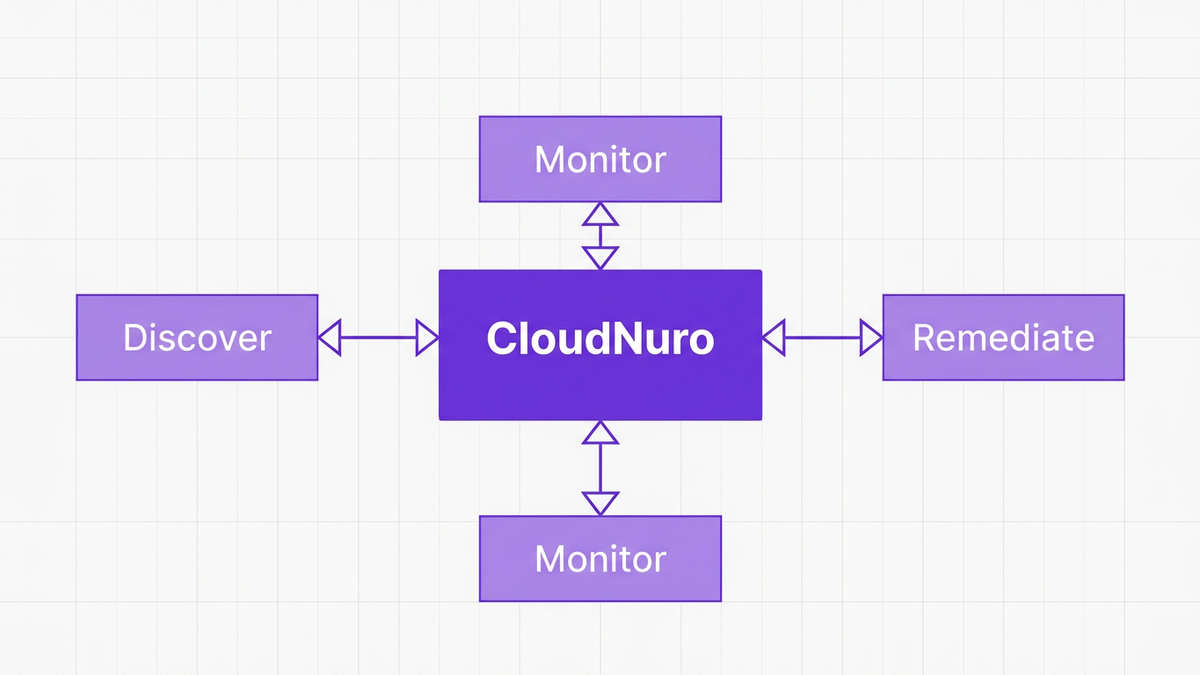
CloudNuro’s 360° app discovery capabilities help IT teams:
This transforms shadow it ai from a blind spot into a structured inventory, allowing security and compliance teams to prioritize risks.
CloudNuro’s compliance monitoring covers access controls, storage exposure, and MFA, which are crucial for AI-related risks:
By correlating AI usage with SaaS posture, CloudNuro helps organizations operationalize ai in compliance and maintain continuous assurance.
When a risky AI app is discovered, speed matters. CloudNuro’s automated workflows let teams:
This shrinks the window of exposure and reduces the overall ai security risks footprint.
Shadow AI is not only a security story, it is a financial one. CloudNuro’s cost optimization and chargeback features help:
This intersection of FinOps and AI application risk management ensures AI investments are both secure and economically rational.
Because CloudNuro can be deployed in hours, organizations do not need long projects before seeing impact. Customers typically see:
For one multinational financial institution cited in a 2026 risk review, using an AI-enabled SaaS management platform similar in scope to CloudNuro surfaced over 120 unsanctioned AI tools in 90 days, enabled removal of 85% of unauthorized accounts, and reduced compliance alerts by 60%. CloudNuro is built to deliver comparable outcomes, with a strong focus on governance and security.
Shadow ai is the use of AI tools, models, or assistants that are not approved, monitored, or governed by central IT or security. These can include free web-based AI tools, browser extensions, unofficial copilots, or third-party bots integrated into SaaS platforms.
Because these tools often access corporate identities and data, they introduce significant ai security threats and complicate ai and compliance obligations.
Unsanctioned ai tools often require data inputs or broad access to corporate systems. When users paste sensitive content or authorize wide-reaching permissions, data can be stored, processed, or transferred outside approved boundaries.
This leads to ai data leakage, where confidential or regulated information ends up in external AI environments, logs, or training pipelines without proper controls, contracts, or oversight.
The biggest security risks of artificial intelligence in shadow usage include:
These risks compound existing cyber exposures and make incident response more complex.
When governed correctly, ai for compliance can strengthen control environments. Examples include:
Using ai for regulatory compliance requires clear boundaries, vetted tools, and platforms such as CloudNuro that maintain visibility, logging, and policy enforcement.
CloudNuro provides the visibility and automation layer that most ai governance frameworks require. It discovers shadow ai tools, monitors compliance-relevant configurations, and orchestrates workflows to remediate risk.
By integrating SaaS inventory, license management, and compliance checks, CloudNuro becomes a central system of record for AI-related SaaS usage, helping IT, security, and compliance teams work from a shared, accurate picture.
A practical first step is to baseline where you are. That means:
Platforms like CloudNuro help accelerate that discovery phase, so you are not relying on manual surveys or partial logs.
Shadow ai is not going away. Employees will continue to seek AI tools that make them faster and more effective. The real question is whether that experimentation happens inside a governed framework or in the dark, where ai data leakage and regulatory risk quietly grow.
Research in 2026 shows that AI-driven shadow IT already accounts for nearly a third of unauthorized data transfers, and projected damages from AI-enabled leaks exceed 6.3 billion dollars. Organizations that act now, combining strong ai governance, clear policy, and automated discovery, will be far better positioned than those who wait for a major incident.
CloudNuro gives enterprises the visibility, controls, and workflows needed to discover shadow ai tools, reduce ai security risks, and align ai compliance with broader SaaS governance. If you are ready to move from guesswork to data-driven control, CloudNuro can help you take the first step in days, not months.
About CloudNuro We are proud to be recognized twice in a row by Gartner in the SaaS Management Platforms and named a Leader in the Info-Tech SoftwareReviews Data Quadrant. Trusted by global enterprises and government agencies, CloudNuro provides centralized SaaS inventory, license optimization, and renewal management. With a 15-minute setup and measurable results in under 24 hours, CloudNuro gives IT teams a fast path to value.
Request a Demo | Get Free Savings Assessment | Explore Product
Request a no cost, no obligation free assessment —just 15 minutes to savings!
Get StartedShadow AI is quickly becoming one of the most serious blind spots in enterprise security. As employees experiment with generative AI, browser extensions, and SaaS copilots, unsanctioned AI tools are quietly ingesting sensitive data far outside IT governance.
Some report in 2026 found that 88% of organizations saw an increase in shadow AI tool usage, and 62% admitted these tools created unmanaged data access points. When almost every enterprise is dealing with uncontrolled AI usage, ai data leakage is no longer a theoretical risk, it is a daily operational reality.
This article explains what shadow ai is, how unsanctioned AI tools create data leakage and compliance exposure, and practical steps to build robust ai governance. It also details how CloudNuro helps enterprises discover and control shadow it ai before it becomes a regulatory and security crisis.
Shadow ai refers to any use of artificial intelligence tools, apps, bots, or models inside an organization that operate outside official IT oversight. Think employee signups to free AI writing assistants, browser-based copilots, or AI plugins connected to corporate systems without security review.
This is a natural extension of traditional shadow IT, but the ai shadow effect is more dangerous. AI tools are designed to ingest and process large volumes of data, often unstructured and sensitive, which significantly increases ai security risks and ai security concerns.
Some report from 2026 shows shadow AI usage rising from 55% of enterprises in 2024 to 88% in 2026. That curve is steep enough that boards and regulators are now treating ai security threats as a strategic risk, not a technical footnote.
A security strategist quoted in a 2026 security outlook called it plainly: "Shadow AI is the most significant new frontier in enterprise data risk, requiring organizations to rethink their compliance and governance strategies from the ground up."
Key characteristics of shadow in ai usage:
Each of these creates a new surface for ai cyber threats and unauthorized data flow.
The core risk of shadow ai is uncontrolled data movement. AI models are hungry, and users often paste or connect exactly the data you least want exposed.
Some analysis in 2026 reported that 47% of enterprises experienced at least one data leakage incident tied to unsanctioned AI applications in the previous 12 months. Another cyber risk study found that AI-driven shadow IT accounts for 32% of all unauthorized data transfers from enterprise cloud environments.
Here are the primary security risks of artificial intelligence in shadow usage:
Employees often paste:
If the AI provider logs prompts, uses them for training, or shares them across regions, you have instant ai data leakage without any breach in the traditional sense.
Shadow ai tools frequently connect through OAuth or API keys to:
Without IT review, scopes are often overly broad. A simple “summarize all my emails” plugin might gain read access to executive inboxes, legal notices, or M&A conversations, creating non-obvious ai security threats.
Many unsanctioned ai tools:
This silently violates ai compliance requirements such as data residency, retention limits, and consent rules. A compliance consultant in a 2026 commentary warned that "Failure to address shadow AI increases the risk of regulatory penalties, IP loss, and catastrophic data exposure."
Low-code automations make it easy to embed AI in daily work, for example:
These flows often bypass formal data loss prevention controls and are invisible in traditional SaaS inventories, turning shadow ai tools into a persistent, hard-to-detect data exfiltration channel.
The legal and compliance impact of unsanctioned AI is growing faster than most organizations appreciate. A regulatory survey in 2026 reported that 66% of regulated enterprises put “AI-driven data governance” among their top three compliance challenges.
Shadow AI disrupts multiple controls at once:
Some economic forecasts expect AI-enabled data leaks to surpass 6.3 billion dollars in global enterprise damages in 2026. That figure combines regulatory fines, incident response, legal costs, and lost business.
Compliance teams lose the ability to answer: Where did this data go, which processors handled it, and under what lawful basis? Shadow ai tools short-circuit
AI vendors may store data longer than policy allows, or in jurisdictions not approved by legal. This directly clashes with
Unsanctioned AI apps often authenticate users via OAuth but act as a “super-user” once connected. That contradicts least privilege principles and increases
When AI outputs influence lending decisions, patient triage, or approvals, regulators expect explainability and traceability. Shadow IT AI often offers neither, leaving organizations exposed under emerging
You cannot control what you cannot see. Yet only 19% of CISOs in a 2026 digital security outlook said they were “very confident” in their ability to detect and manage shadow AI usage.
Traditional discovery methods for shadow IT, like manual surveys or sporadic firewall logs, are no longer enough. Shadow ai often uses encrypted traffic, browser extensions, and direct-to-cloud connections that evade legacy controls.
A practical discovery strategy combines multiple lenses:
A leading healthcare provider cited in a 2026 security report used unified compliance monitoring that included automated AI discovery. It identified multiple bots and third-party AI integrations touching patient data, then took immediate action, achieving a 35% reduction in data exposure incidents within six months.
Controlling shadow ai is not about banning innovation. It is about building safe lanes so the business can use AI responsibly. Think of it like introducing guardrails on a fast highway: they allow more speed with less risk.
Here are practical, actionable steps for ai risk mitigation and ai governance.
A concise, plain-language policy should cover:
Tie this to existing ai and compliance frameworks and codes of conduct, so it is not perceived as a separate bureaucracy.
Not all data is equal. Define categories such as:
Then define AI rules per class, for example:
Instead of dozens of unsanctioned ai tools, provide a curated set of approved ones:
Centralization lets you apply consistent logging, retention, and encryption that align with your cloud compliance posture.
Paradoxically, AI itself can help close the gap:
Market research in 2026 suggests that 44% of organizations investing in AI compliance software cite “shadow AI discovery and control” as the primary driver. This shows how central discovery has become to ai security risks management.
Security programs fail when employees feel blocked. To prevent workarounds:
A useful analogy is bring-your-own-device. When organizations provided secure mobile management options instead of just banning personal phones, policy compliance improved dramatically. Shadow ai needs a similar balance.
CloudNuro was designed to give enterprises a unified, real-time view of their SaaS and AI footprint. As shadow ai usage accelerates, this unified visibility becomes the foundation for any credible ai governance program.
Here is how CloudNuro directly addresses shadow ai tools and data leakage risks.
CloudNuro’s 360° app discovery capabilities help IT teams:
This transforms shadow it ai from a blind spot into a structured inventory, allowing security and compliance teams to prioritize risks.
CloudNuro’s compliance monitoring covers access controls, storage exposure, and MFA, which are crucial for AI-related risks:
By correlating AI usage with SaaS posture, CloudNuro helps organizations operationalize ai in compliance and maintain continuous assurance.
When a risky AI app is discovered, speed matters. CloudNuro’s automated workflows let teams:
This shrinks the window of exposure and reduces the overall ai security risks footprint.
Shadow AI is not only a security story, it is a financial one. CloudNuro’s cost optimization and chargeback features help:
This intersection of FinOps and AI application risk management ensures AI investments are both secure and economically rational.
Because CloudNuro can be deployed in hours, organizations do not need long projects before seeing impact. Customers typically see:
For one multinational financial institution cited in a 2026 risk review, using an AI-enabled SaaS management platform similar in scope to CloudNuro surfaced over 120 unsanctioned AI tools in 90 days, enabled removal of 85% of unauthorized accounts, and reduced compliance alerts by 60%. CloudNuro is built to deliver comparable outcomes, with a strong focus on governance and security.
Shadow ai is the use of AI tools, models, or assistants that are not approved, monitored, or governed by central IT or security. These can include free web-based AI tools, browser extensions, unofficial copilots, or third-party bots integrated into SaaS platforms.
Because these tools often access corporate identities and data, they introduce significant ai security threats and complicate ai and compliance obligations.
Unsanctioned ai tools often require data inputs or broad access to corporate systems. When users paste sensitive content or authorize wide-reaching permissions, data can be stored, processed, or transferred outside approved boundaries.
This leads to ai data leakage, where confidential or regulated information ends up in external AI environments, logs, or training pipelines without proper controls, contracts, or oversight.
The biggest security risks of artificial intelligence in shadow usage include:
These risks compound existing cyber exposures and make incident response more complex.
When governed correctly, ai for compliance can strengthen control environments. Examples include:
Using ai for regulatory compliance requires clear boundaries, vetted tools, and platforms such as CloudNuro that maintain visibility, logging, and policy enforcement.
CloudNuro provides the visibility and automation layer that most ai governance frameworks require. It discovers shadow ai tools, monitors compliance-relevant configurations, and orchestrates workflows to remediate risk.
By integrating SaaS inventory, license management, and compliance checks, CloudNuro becomes a central system of record for AI-related SaaS usage, helping IT, security, and compliance teams work from a shared, accurate picture.
A practical first step is to baseline where you are. That means:
Platforms like CloudNuro help accelerate that discovery phase, so you are not relying on manual surveys or partial logs.
Shadow ai is not going away. Employees will continue to seek AI tools that make them faster and more effective. The real question is whether that experimentation happens inside a governed framework or in the dark, where ai data leakage and regulatory risk quietly grow.
Research in 2026 shows that AI-driven shadow IT already accounts for nearly a third of unauthorized data transfers, and projected damages from AI-enabled leaks exceed 6.3 billion dollars. Organizations that act now, combining strong ai governance, clear policy, and automated discovery, will be far better positioned than those who wait for a major incident.
CloudNuro gives enterprises the visibility, controls, and workflows needed to discover shadow ai tools, reduce ai security risks, and align ai compliance with broader SaaS governance. If you are ready to move from guesswork to data-driven control, CloudNuro can help you take the first step in days, not months.
About CloudNuro We are proud to be recognized twice in a row by Gartner in the SaaS Management Platforms and named a Leader in the Info-Tech SoftwareReviews Data Quadrant. Trusted by global enterprises and government agencies, CloudNuro provides centralized SaaS inventory, license optimization, and renewal management. With a 15-minute setup and measurable results in under 24 hours, CloudNuro gives IT teams a fast path to value.
Request a Demo | Get Free Savings Assessment | Explore Product
Request a no cost, no obligation free assessment - just 15 minutes to savings!
Get StartedWe're offering complimentary ServiceNow license assessments to only 25 enterprises this quarter who want to unlock immediate savings without disrupting operations.
Get Free AssessmentGet Started




CloudNuro Corp
1755 Park St. Suite 207
Naperville, IL 60563
Phone : +1-630-277-9470
Email: info@cloudnuro.com




.webp)

Recognized Leader in SaaS Management Platforms by Info-Tech SoftwareReviews


.svg)