

Sign Up
Thank you for Submitting!
SaaS consumption-based pricing is moving from edge case to default, and it is about to change how IT, finance, and procurement think about software spend. Instead of fixed, predictable seat counts, more contracts are tying cost to actual usage, API calls, storage, or feature tiers, which makes SaaS budgets start to resemble cloud bills.
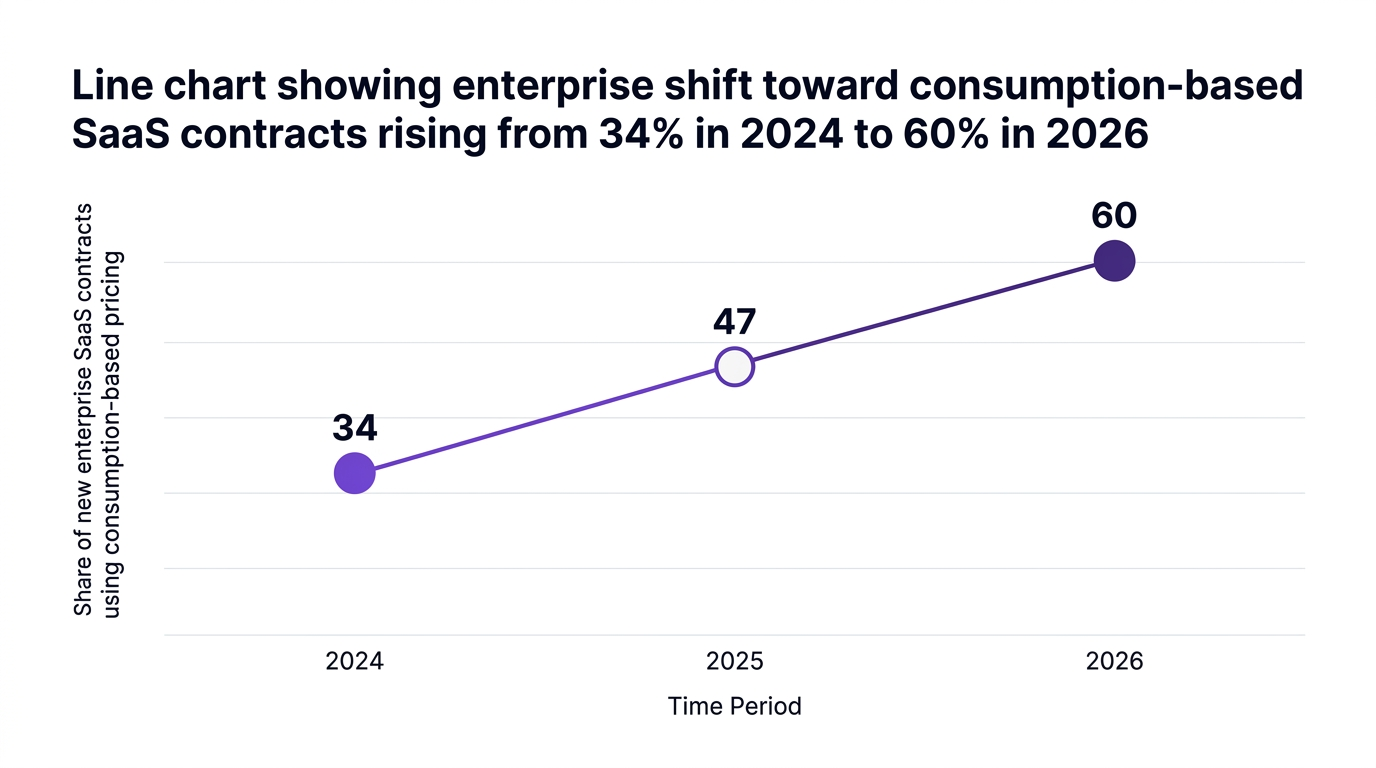
According to a recent SaaS market outlook for 2026, 60% of new enterprise SaaS contracts will rely on consumption or usage metrics rather than traditional per-seat licensing. For CIOs and CFOs, this represents a structural shift in financial operations, governance, and tooling, not just another pricing model to negotiate.
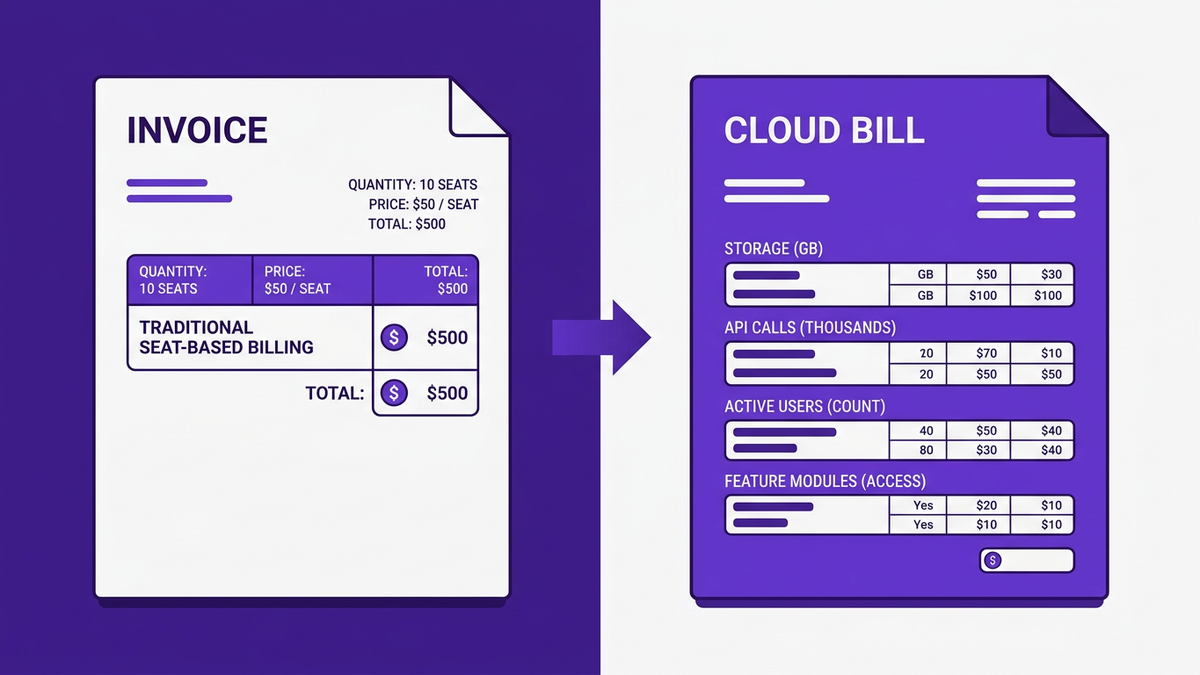
Traditional seat-based licensing was simple. You bought 5,000 seats, paid annually, then tried to use as many as possible. SaaS consumption-based pricing replaces that with metered dimensions like transactions, active users, storage, or feature modules.
A recent technology industry forecast notes that 72% of enterprises are prioritizing a shift to consumption-based SaaS models in their 2026 IT budgeting process. In practical terms, that means:
The same forecast highlights that enterprise SaaS spend under consumption-based models is projected to grow at a 20% CAGR through 2026. For IT leaders, this is both an opportunity for SaaS budget optimization and a risk if cost governance does not keep pace.
Cloud-like SaaS billing has three defining characteristics: variability, detail, and opacity. Many IT leaders already know this pattern from infrastructure bills, now the same pattern is emerging in SaaS.
According to a recent SaaS financial operations report for 2026, 58% of organizations say unpredictable SaaS costs have complicated IT financial planning. As usage-based SaaS pricing grows, that unpredictability will increase unless governance and analytics mature.
Under seat models, monthly spend was almost flat, regardless of real usage. In consumption models, spend flexes with:
This is beneficial when usage is well managed, because you can reduce SaaS costs by rightsizing in near real time. It becomes problematic when:
Cloud-like SaaS billing commonly introduces dozens of line items per product. You may see separate charges for:
This granularity improves software spend transparency but also complicates enterprise SaaS spend management. Finance teams must distinguish between necessary consumption and wasteful patterns, often across hundreds of applications.
A recurring complaint in enterprise IT is that cloud bills are clear on price but murky on cause. SaaS budgets are heading in the same direction.
Without unified views of SaaS metering and entitlements, teams struggle to answer basic questions:
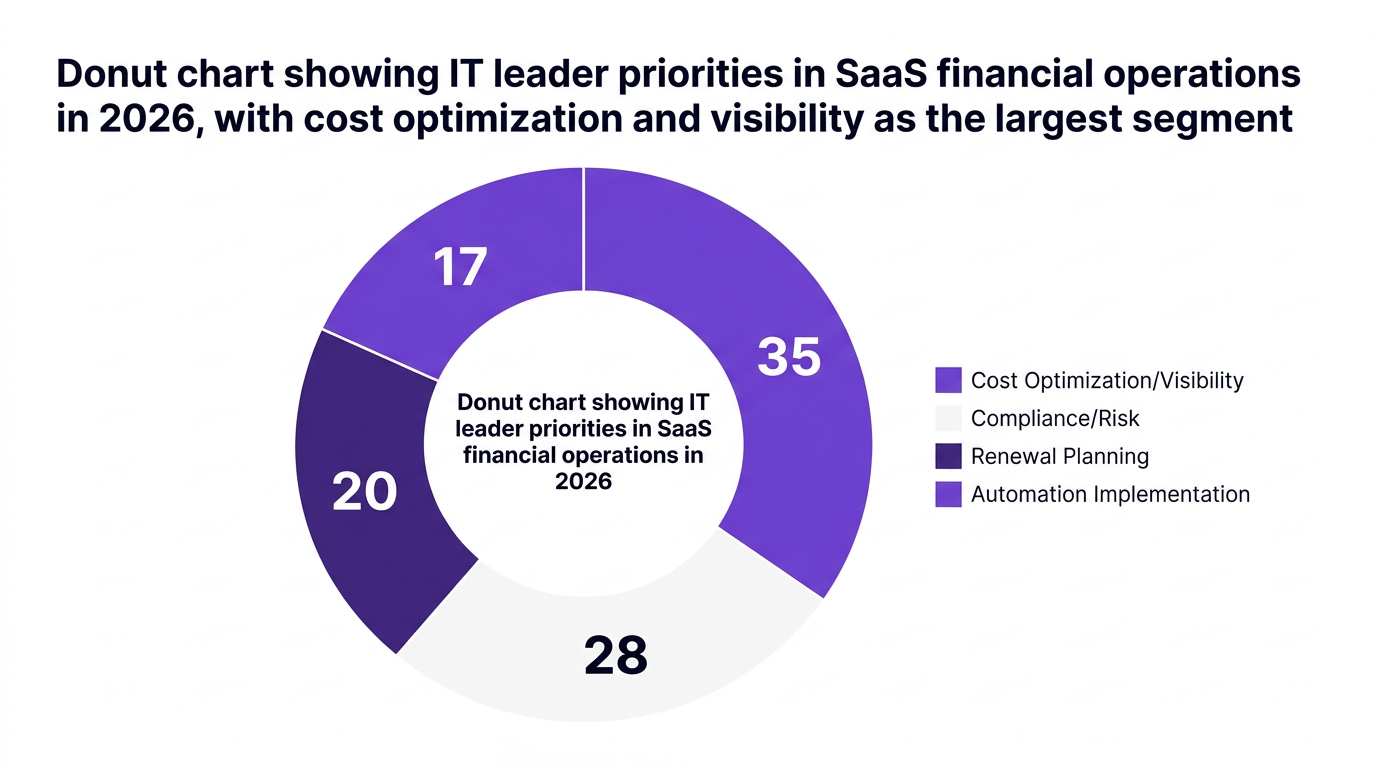
This is why 91% of IT leaders in a 2026 enterprise cloud management survey cited cost optimization and visibility as critical for adapting to SaaS consumption billing.
There is a strong temptation to see the shift to consumption-based models as purely a cost risk. That view is incomplete. When managed well, SaaS consumption-based pricing creates powerful benefits.
A FinOps practitioner at a 2026 cloud cost summit summarized it clearly: usage-based SaaS pricing aligns what you pay with the value you actually extract. If active users fall or a workflow is retired, spend should decline automatically.
This alignment supports better IT financial management by:
Consumption pricing naturally rewards organizations that practice SaaS rightsizing. Teams that regularly:
can drive significant savings. A global healthcare provider that migrated core collaboration and CRM suites to consumption-based contracts in 2026 used AI-driven license reclamation and entitlement optimization to cut total SaaS spend by 28% in 12 months.
Consumption models also change SaaS renewal strategy. Instead of negotiating around seat counts and list price discounts only, procurement can:
This flexibility is especially valuable for organizations entering new markets or launching digital initiatives where usage is initially uncertain.
The counterargument is valid: usage-based SaaS pricing introduces real complexity and the risk of bill shock. This occurs when:
These risks do not invalidate the model, but they raise the bar on SaaS cost governance and FinOps for SaaS disciplines.
As more vendors adopt usage-based SaaS pricing, finance and IT cannot rely on once-a-year true-ups and static allocation models. SaaS financial operations must start to look like cloud FinOps.
A recent enterprise cloud management survey for 2026 found that dedicated FinOps teams are increasingly including SaaS in scope, not just infrastructure. That shift comes with three core requirements.
Manual spreadsheets and quarterly reports are insufficient when costs are variable week to week. Organizations need:
Without this, finance leaders cannot understand the cloud bill comparison between infrastructure and SaaS or explain total cloud TCO (total cost of ownership).
SaaS cost governance must move from tactical to policy-based. Leading practices include:
This policy layer prevents unbounded growth in variable SaaS costs and supports compliance and security requirements.
In a consumption world, renewal planning is not a once-a-year negotiation event. It is a continuous process that requires:
A financial services firm that centralized SaaS usage analytics across 80 plus cloud applications in 2026 improved budget forecasting accuracy by 15% and reduced renewal costs by 22% through better negotiations informed by real consumption.
To make SaaS budgets behave more like managed cloud bills rather than uncontrolled ones, IT and finance leaders can adopt a simple framework: Discover, Govern, Optimize, Forecast.
You cannot manage what you cannot see. Discovery should:
This foundation is essential for credible SaaS budget optimization and enterprise SaaS spend management.
Once visibility is in place, use governance to prevent waste before it starts:
This is similar to applying network policies in infrastructure: you design the default paths to be cost aware.
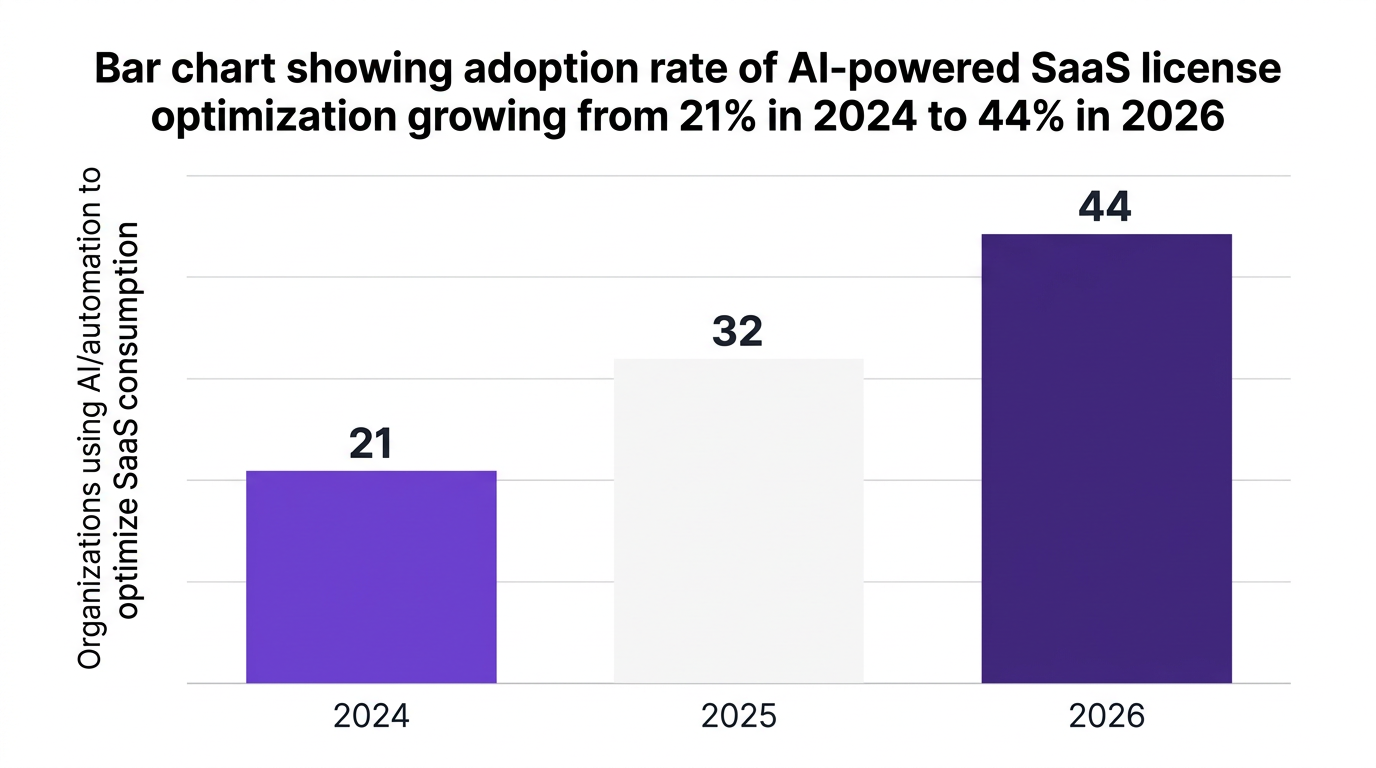
Optimization should not rely solely on quarterly manual reviews. According to a 2026 SaaS and AI optimization report, 44% of organizations have already implemented AI or automation tools to optimize SaaS consumption and reduce costs.
Focus optimization on:
Finally, forecasting should adopt cloud-style methods:
This approach supports more accurate SaaS financial operations and reduces the risk of budget surprises.

CloudNuro is built specifically for organizations that need to manage SaaS as a dynamic, cloud-like cost center. As SaaS consumption-based pricing expands, CloudNuro provides the visibility, automation, and governance required to stay in control.
CloudNuro delivers a single-pane-of-glass view across all SaaS and cloud assets. The platform automatically discovers applications and correlates usage data, billing information, and entitlement details.
This enables IT, finance, and procurement teams to:
As seat-based models give way to usage-based SaaS pricing, license and entitlement optimization become high ROI activities. CloudNuro uses AI and automation to:
In consumption-based contracts, these actions drive immediate savings and help reduce SaaS costs before they appear on the bill.
CloudNuro is built with a governance-first architecture that embeds controls directly into SaaS operations. This supports strong SaaS cost governance by:
This is particularly critical for regulated sectors like healthcare, finance, and government, where cost control, security, and compliance must move together.
CloudNuro extends core FinOps concepts to SaaS. The platform:
These capabilities allow organizations to treat SaaS budgets exactly like cloud bills: variable, detailed, and fully governed.
SaaS consumption-based pricing ties software costs to actual usage metrics, such as transactions, active users, or storage, instead of fixed seat counts. Customers pay based on what they consume during a billing period, similar to cloud infrastructure.
As more contracts adopt usage-based SaaS pricing, invoices will show multiple metered components, variable monthly totals, and detailed line items by feature or transaction. This makes SaaS budgets behave more like cloud bills, with higher variability and a stronger need for continuous optimization and governance.
Key benefits include better alignment between cost and value, because spend tracks actual use, and more flexibility to scale up or down without renegotiating seat counts. It also encourages disciplined SaaS rightsizing, since organizations that remove wasteful consumption see direct savings.
Enterprises should focus on real-time visibility, policy-based entitlements, automated SaaS license reclamation, and proactive renewal planning. Tools like CloudNuro help by centralizing data, automating optimization actions, and providing analytics that support enterprise SaaS spend management.
Finance teams must adopt cloud-style practices, including continuous forecasting, detailed cost allocation, and collaboration with IT through a SaaS financial operations or FinOps function. This requires new processes, KPIs, and technology platforms tailored to SaaS metering and variable costs.
IT leaders should implement a centralized SaaS management platform that aggregates usage, billing, and entitlement data across all applications. With this foundation, they can monitor trends, detect anomalies, enforce policies, and run optimization initiatives across the entire SaaS portfolio.
SaaS consumption-based pricing is not a distant trend; it is already shaping 2026 contract structures and IT budgets. With 72% of enterprises prioritizing the move to usage-based models and 60% of new contracts expected to follow suit, the organizations that succeed will be those that treat SaaS budgets like cloud bills, supported by rigorous governance and analytics.
CloudNuro gives CIOs, CTOs, and finance leaders the tools to turn variable SaaS costs into a source of advantage rather than risk. By combining centralized visibility, automated optimization, and governance-first controls, CloudNuro helps enterprises master SaaS consumption-based pricing and build a more disciplined, data-driven approach to digital spend.
CloudNuro is a leader in Enterprise SaaS Management Platforms, providing enterprises with unmatched visibility, governance, and cost optimization. Recognized twice in a row in the SaaS Management Platforms category and named a Leader in the SoftwareReviews Data Quadrant, CloudNuro is trusted by global enterprises and government agencies to bring financial discipline to SaaS, cloud, and AI. Trusted by enterprises such as Konica Minolta and Federal Signal, CloudNuro provides centralized SaaS inventory, license optimization, and renewal management along with advanced cost allocation and chargeback, giving IT and Finance leaders the visibility, control, and cost-conscious culture needed to drive financial discipline. Request a Demo | Get Free Savings | Explore Product
Request a no cost, no obligation free assessment —just 15 minutes to savings!
Get StartedSaaS consumption-based pricing is moving from edge case to default, and it is about to change how IT, finance, and procurement think about software spend. Instead of fixed, predictable seat counts, more contracts are tying cost to actual usage, API calls, storage, or feature tiers, which makes SaaS budgets start to resemble cloud bills.
According to a recent SaaS market outlook for 2026, 60% of new enterprise SaaS contracts will rely on consumption or usage metrics rather than traditional per-seat licensing. For CIOs and CFOs, this represents a structural shift in financial operations, governance, and tooling, not just another pricing model to negotiate.
Traditional seat-based licensing was simple. You bought 5,000 seats, paid annually, then tried to use as many as possible. SaaS consumption-based pricing replaces that with metered dimensions like transactions, active users, storage, or feature modules.
A recent technology industry forecast notes that 72% of enterprises are prioritizing a shift to consumption-based SaaS models in their 2026 IT budgeting process. In practical terms, that means:
The same forecast highlights that enterprise SaaS spend under consumption-based models is projected to grow at a 20% CAGR through 2026. For IT leaders, this is both an opportunity for SaaS budget optimization and a risk if cost governance does not keep pace.
Cloud-like SaaS billing has three defining characteristics: variability, detail, and opacity. Many IT leaders already know this pattern from infrastructure bills, now the same pattern is emerging in SaaS.
According to a recent SaaS financial operations report for 2026, 58% of organizations say unpredictable SaaS costs have complicated IT financial planning. As usage-based SaaS pricing grows, that unpredictability will increase unless governance and analytics mature.
Under seat models, monthly spend was almost flat, regardless of real usage. In consumption models, spend flexes with:
This is beneficial when usage is well managed, because you can reduce SaaS costs by rightsizing in near real time. It becomes problematic when:
Cloud-like SaaS billing commonly introduces dozens of line items per product. You may see separate charges for:
This granularity improves software spend transparency but also complicates enterprise SaaS spend management. Finance teams must distinguish between necessary consumption and wasteful patterns, often across hundreds of applications.
A recurring complaint in enterprise IT is that cloud bills are clear on price but murky on cause. SaaS budgets are heading in the same direction.
Without unified views of SaaS metering and entitlements, teams struggle to answer basic questions:
This is why 91% of IT leaders in a 2026 enterprise cloud management survey cited cost optimization and visibility as critical for adapting to SaaS consumption billing.
There is a strong temptation to see the shift to consumption-based models as purely a cost risk. That view is incomplete. When managed well, SaaS consumption-based pricing creates powerful benefits.
A FinOps practitioner at a 2026 cloud cost summit summarized it clearly: usage-based SaaS pricing aligns what you pay with the value you actually extract. If active users fall or a workflow is retired, spend should decline automatically.
This alignment supports better IT financial management by:
Consumption pricing naturally rewards organizations that practice SaaS rightsizing. Teams that regularly:
can drive significant savings. A global healthcare provider that migrated core collaboration and CRM suites to consumption-based contracts in 2026 used AI-driven license reclamation and entitlement optimization to cut total SaaS spend by 28% in 12 months.
Consumption models also change SaaS renewal strategy. Instead of negotiating around seat counts and list price discounts only, procurement can:
This flexibility is especially valuable for organizations entering new markets or launching digital initiatives where usage is initially uncertain.
The counterargument is valid: usage-based SaaS pricing introduces real complexity and the risk of bill shock. This occurs when:
These risks do not invalidate the model, but they raise the bar on SaaS cost governance and FinOps for SaaS disciplines.
As more vendors adopt usage-based SaaS pricing, finance and IT cannot rely on once-a-year true-ups and static allocation models. SaaS financial operations must start to look like cloud FinOps.
A recent enterprise cloud management survey for 2026 found that dedicated FinOps teams are increasingly including SaaS in scope, not just infrastructure. That shift comes with three core requirements.
Manual spreadsheets and quarterly reports are insufficient when costs are variable week to week. Organizations need:
Without this, finance leaders cannot understand the cloud bill comparison between infrastructure and SaaS or explain total cloud TCO (total cost of ownership).
SaaS cost governance must move from tactical to policy-based. Leading practices include:
This policy layer prevents unbounded growth in variable SaaS costs and supports compliance and security requirements.
In a consumption world, renewal planning is not a once-a-year negotiation event. It is a continuous process that requires:
A financial services firm that centralized SaaS usage analytics across 80 plus cloud applications in 2026 improved budget forecasting accuracy by 15% and reduced renewal costs by 22% through better negotiations informed by real consumption.
To make SaaS budgets behave more like managed cloud bills rather than uncontrolled ones, IT and finance leaders can adopt a simple framework: Discover, Govern, Optimize, Forecast.
You cannot manage what you cannot see. Discovery should:
This foundation is essential for credible SaaS budget optimization and enterprise SaaS spend management.
Once visibility is in place, use governance to prevent waste before it starts:
This is similar to applying network policies in infrastructure: you design the default paths to be cost aware.
Optimization should not rely solely on quarterly manual reviews. According to a 2026 SaaS and AI optimization report, 44% of organizations have already implemented AI or automation tools to optimize SaaS consumption and reduce costs.
Focus optimization on:
Finally, forecasting should adopt cloud-style methods:
This approach supports more accurate SaaS financial operations and reduces the risk of budget surprises.
CloudNuro is built specifically for organizations that need to manage SaaS as a dynamic, cloud-like cost center. As SaaS consumption-based pricing expands, CloudNuro provides the visibility, automation, and governance required to stay in control.
CloudNuro delivers a single-pane-of-glass view across all SaaS and cloud assets. The platform automatically discovers applications and correlates usage data, billing information, and entitlement details.
This enables IT, finance, and procurement teams to:
As seat-based models give way to usage-based SaaS pricing, license and entitlement optimization become high ROI activities. CloudNuro uses AI and automation to:
In consumption-based contracts, these actions drive immediate savings and help reduce SaaS costs before they appear on the bill.
CloudNuro is built with a governance-first architecture that embeds controls directly into SaaS operations. This supports strong SaaS cost governance by:
This is particularly critical for regulated sectors like healthcare, finance, and government, where cost control, security, and compliance must move together.
CloudNuro extends core FinOps concepts to SaaS. The platform:
These capabilities allow organizations to treat SaaS budgets exactly like cloud bills: variable, detailed, and fully governed.
SaaS consumption-based pricing ties software costs to actual usage metrics, such as transactions, active users, or storage, instead of fixed seat counts. Customers pay based on what they consume during a billing period, similar to cloud infrastructure.
As more contracts adopt usage-based SaaS pricing, invoices will show multiple metered components, variable monthly totals, and detailed line items by feature or transaction. This makes SaaS budgets behave more like cloud bills, with higher variability and a stronger need for continuous optimization and governance.
Key benefits include better alignment between cost and value, because spend tracks actual use, and more flexibility to scale up or down without renegotiating seat counts. It also encourages disciplined SaaS rightsizing, since organizations that remove wasteful consumption see direct savings.
Enterprises should focus on real-time visibility, policy-based entitlements, automated SaaS license reclamation, and proactive renewal planning. Tools like CloudNuro help by centralizing data, automating optimization actions, and providing analytics that support enterprise SaaS spend management.
Finance teams must adopt cloud-style practices, including continuous forecasting, detailed cost allocation, and collaboration with IT through a SaaS financial operations or FinOps function. This requires new processes, KPIs, and technology platforms tailored to SaaS metering and variable costs.
IT leaders should implement a centralized SaaS management platform that aggregates usage, billing, and entitlement data across all applications. With this foundation, they can monitor trends, detect anomalies, enforce policies, and run optimization initiatives across the entire SaaS portfolio.
SaaS consumption-based pricing is not a distant trend; it is already shaping 2026 contract structures and IT budgets. With 72% of enterprises prioritizing the move to usage-based models and 60% of new contracts expected to follow suit, the organizations that succeed will be those that treat SaaS budgets like cloud bills, supported by rigorous governance and analytics.
CloudNuro gives CIOs, CTOs, and finance leaders the tools to turn variable SaaS costs into a source of advantage rather than risk. By combining centralized visibility, automated optimization, and governance-first controls, CloudNuro helps enterprises master SaaS consumption-based pricing and build a more disciplined, data-driven approach to digital spend.
CloudNuro is a leader in Enterprise SaaS Management Platforms, providing enterprises with unmatched visibility, governance, and cost optimization. Recognized twice in a row in the SaaS Management Platforms category and named a Leader in the SoftwareReviews Data Quadrant, CloudNuro is trusted by global enterprises and government agencies to bring financial discipline to SaaS, cloud, and AI. Trusted by enterprises such as Konica Minolta and Federal Signal, CloudNuro provides centralized SaaS inventory, license optimization, and renewal management along with advanced cost allocation and chargeback, giving IT and Finance leaders the visibility, control, and cost-conscious culture needed to drive financial discipline. Request a Demo | Get Free Savings | Explore Product
Request a no cost, no obligation free assessment - just 15 minutes to savings!
Get StartedWe're offering complimentary ServiceNow license assessments to only 25 enterprises this quarter who want to unlock immediate savings without disrupting operations.
Get Free AssessmentGet Started




CloudNuro Corp
1755 Park St. Suite 207
Naperville, IL 60563
Phone : +1-630-277-9470
Email: info@cloudnuro.com





.webp)

Recognized Leader in SaaS Management Platforms by Info-Tech SoftwareReviews


.png)
.svg)