

Sign Up
Thank you for Submitting!
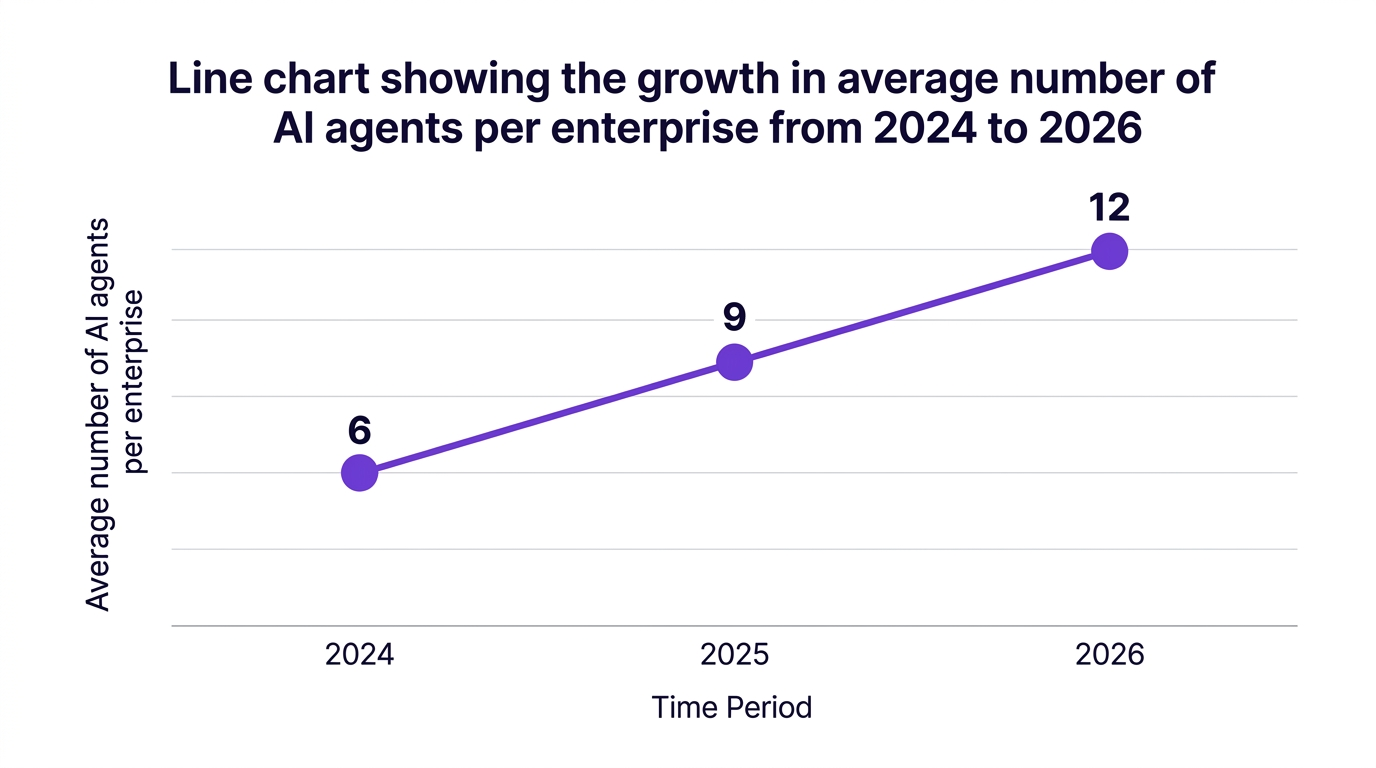
Enterprises are discovering that AI agent management is no longer a theoretical concern. A recent industry report found that enterprises now deploy an average of 12 AI agents, and roughly 50% operate without formal governance. In many organizations, the monitored agents are effectively spending their time observing the ungoverned ones, creating a surreal dynamic where automation watches automation, while risk quietly compounds in the background.
This blog explains what is really happening inside your SaaS and cloud environments, why ungoverned AI agents are a growing source of enterprise AI risk, and how to build a sustainable model for AI governance, cost control, and compliance.
The last two years have seen a sharp rise in AI workload usage across SaaS and cloud platforms. According to a 2026 market analysis, the number of AI agents in enterprise environments has doubled since 2024, largely driven by low-code tools, embedded AI in SaaS products, and custom automations built by business units.
Yet AI agent management has not kept pace. A 2026 enterprise survey found that 87% of IT leaders cite "visibility into AI agent activity" as their top challenge for managing SaaS environments. Another risk assessment study reported that unmonitored AI agents account for over 62% of unsanctioned data access incidents in large enterprises.
The result is a strange, but increasingly common reality:
An expert SaaS governance analyst summarized this shift: “The explosion of AI agents in enterprise SaaS stacks is outpacing existing governance models, creating urgent needs for unified visibility and policy enforcement.”
Ungoverned AI agents are any automated or semi-autonomous systems that:
They might be chatbots plugged into CRM systems, workflow bots that sync data between HR and finance, or AI plugins in collaboration tools. Many of these agents are created by non-IT teams or bought through expense cards, so they never enter formal inventories or SaaS management platforms.
The risks are significant:
A leading enterprise security strategist captured the concern clearly: “Unmonitored AI agents represent a new frontier of shadow IT risk, exposing enterprises to data leakage, non-compliance, and cost overruns.”
Many teams initially treat AI agent management as a separate problem from SaaS governance. In practice, they are deeply intertwined.
Your AI agents rarely operate in isolation. They:
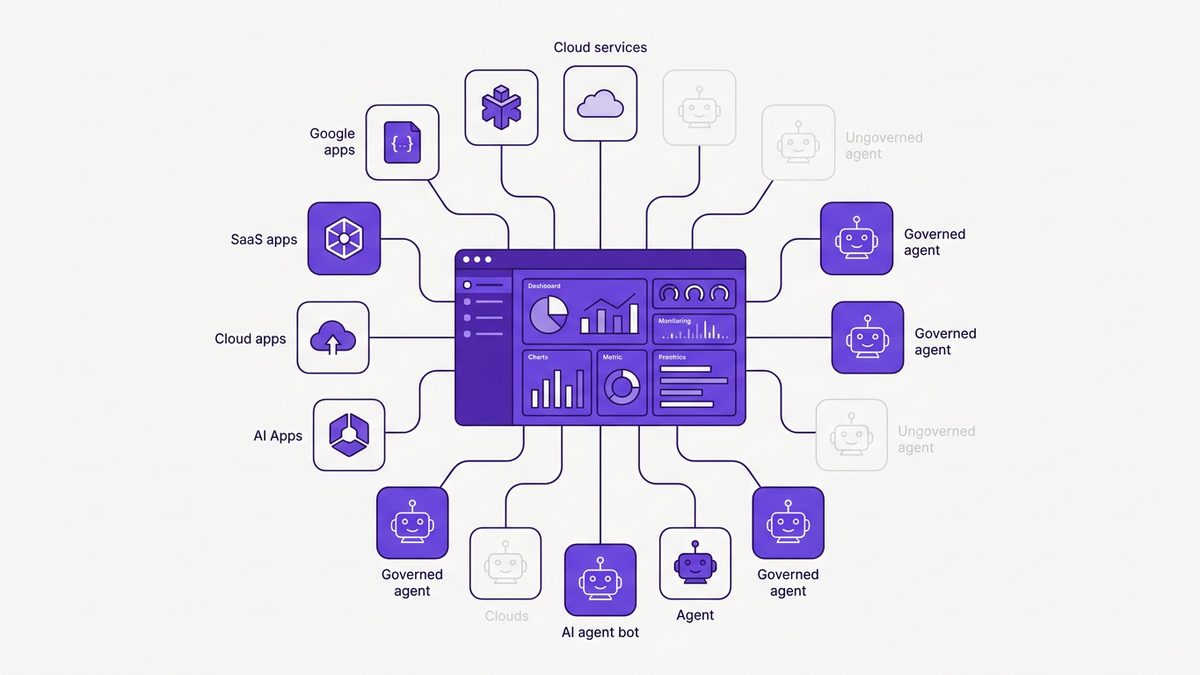
This means that SaaS AI governance and AI agent management should share the same control plane. According to a 2026 technology landscape report, there is a strong shift toward AI-first SaaS management platforms that combine:
The benefits of this unified approach are substantial:
Without this convergence, enterprises end up with fragmented controls: security tools watch traffic, SaaS admins watch licenses, and finance tracks invoices, while ungoverned AI agents quietly proliferate between them.
The phrase “the other half are watching the first half” is more than a joke. In many enterprises, governed AI agents are used to monitor systems, detect anomalies, and enforce policies. For example, they may:
A 2026 security leadership survey reported that 81% of security executives have increased cross-departmental monitoring between sanctioned and unsanctioned AI agents due to rising governance concerns.
This can be powerful, but it introduces two pitfalls if not handled carefully:
To avoid these traps, monitored agents should be part of a governance-first architecture, not a patch over a fragmented environment. AI agent management must begin with complete discovery, clear ownership, and policy baselines before adding more monitoring layers.
To move from reactive firefighting to sustainable AI governance, enterprises need a structured approach. The following five-step framework, the C-FACT model (Catalog, Federate, Authorize, Control, Track), offers a practical blueprint.
You cannot govern what you cannot see. Start by creating a unified catalog of:
This should include vendor-provided AI features, custom bots, workflow automations, and third-party plugins. A recent enterprise survey found that 68% of organizations now require governance tools that integrate with 400+ applications, because discovery must span the full stack.
Key practices:
Next, treat AI agents as first-class identities in your environment. This means:
This step reduces shadow IT behavior where bots share credentials with humans or other automations. It also enables precise license optimization for AI, because you see which licenses or AI subscriptions are tied to which agents.
Once agents are visible and federated, codify policies that govern:
This is central to AI compliance for enterprises, especially in regulated sectors. Policies should be tied to control objectives such as SOC 2 Type II, privacy regulations, and internal data-handling standards.
AI agent best practices at this stage include:
Manual oversight cannot scale to dozens of agents across hundreds of apps. In fact, a 2026 market forecast reported that 94% of enterprises now prioritize adopting automated workflows for identity and entitlement governance related to AI agents.
Key automation capabilities include:
This is where automated SaaS governance and AI agent management intersect most strongly. Automation reduces human error, shortens response times, and embeds security into daily operations instead of relying on manual reviews.
Finally, treat AI agents as ongoing investments that must justify their cost and risk profile. This requires continuous cloud AI visibility into:
A CIO quoted in a 2026 financial institution study noted that “Automated, cross-platform oversight is no longer optional; it is the linchpin for reducing risk and optimizing value from AI-driven automation.” This is exactly the role of integrated tracking in AI agent management.
A North American healthcare provider offers a strong illustration of what this transformation looks like in practice.
The organization discovered that it was running 17 internal AI agents across its SaaS stack, including clinical support tools, scheduling assistants, and back-office automations. Many were not formally documented, and several had broad, overlapping access to patient and financial data.
By deploying a unified AI custodian platform:
Within six months, the institution reduced unauthorized data access by 63% and achieved full compliance against its control framework, according to a 2026 health tech implementation report.
In another example, a multinational financial services firm applied a SaaS governance suite to consolidate visibility across CRM, productivity suites, and cloud tools. Using automated license optimization and entitlement workflows, the firm:
These outcomes are not just about security. They represent a shift to enterprise SaaS optimization, where AI is governed as a strategic asset rather than a collection of disconnected experiments.
CloudNuro was designed for enterprises facing exactly this problem: a growing population of AI agents, scattered across hundreds of apps, with fragmented governance and limited visibility.
CloudNuro’s AI Custodian Services provide continuous discovery of all AI agents in your SaaS stack. This includes agents embedded in major SaaS platforms, custom automations, and low-code bots.
Once discovered, agents are automatically classified by:
This comprehensive catalog supports both AI-first SaaS management and traditional SaaS oversight from a single control plane.
CloudNuro treats AI agents as first-class identities. The platform supports identity governance by:
By aligning AI agents with structured entitlements, CloudNuro enables AI compliance tools to operate with precise context, improving both security and auditability.
CloudNuro’s governance-first architecture extends to automation and financial control:
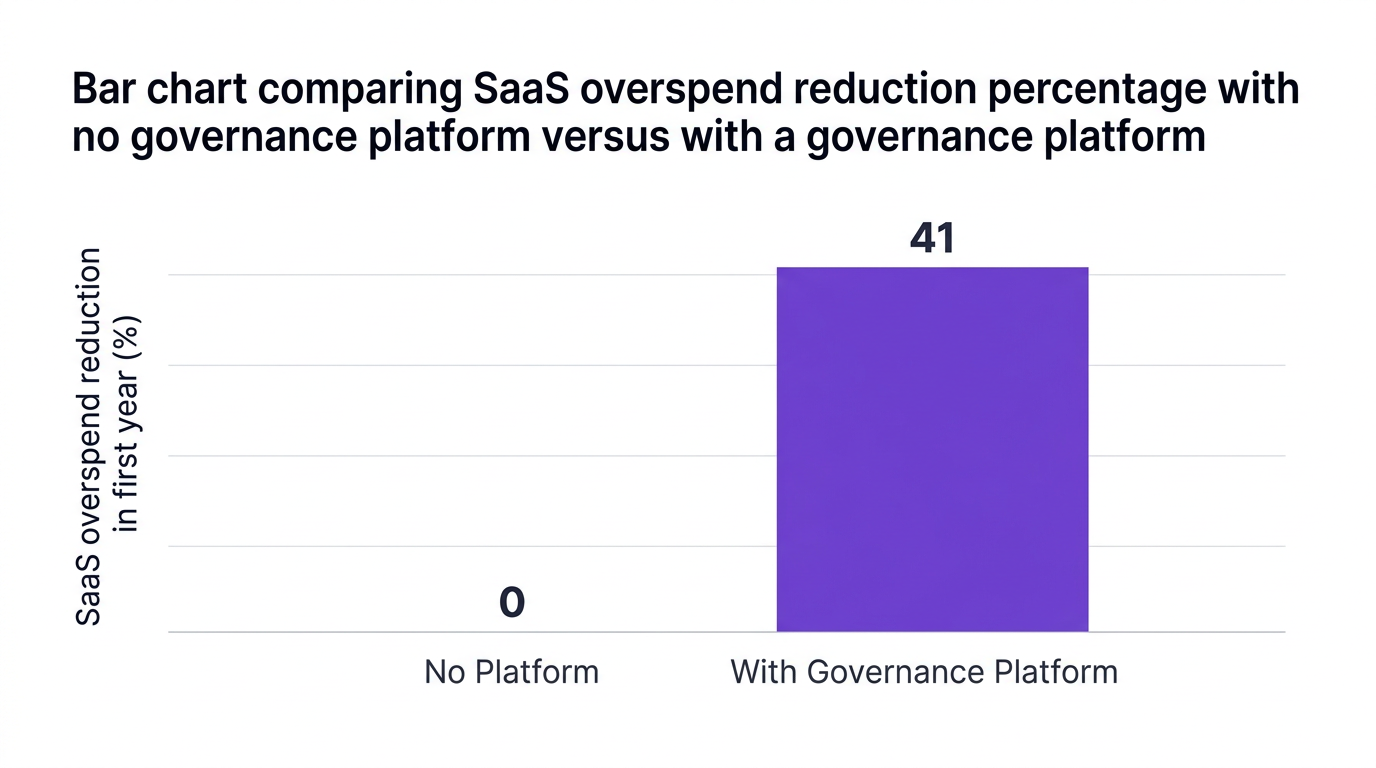
Organizations that implement unified governance capabilities like these have reported up to 41% reduction in SaaS overspend within the first year, as noted in a 2026 SaaS management analytics study.
CloudNuro delivers 400+ app integration, covering leading SaaS platforms, collaboration tools, and cloud services. This breadth of integration is critical for cloud governance in environments where AI agents routinely cross system boundaries.
Through a single pane of glass, IT and security leaders can:
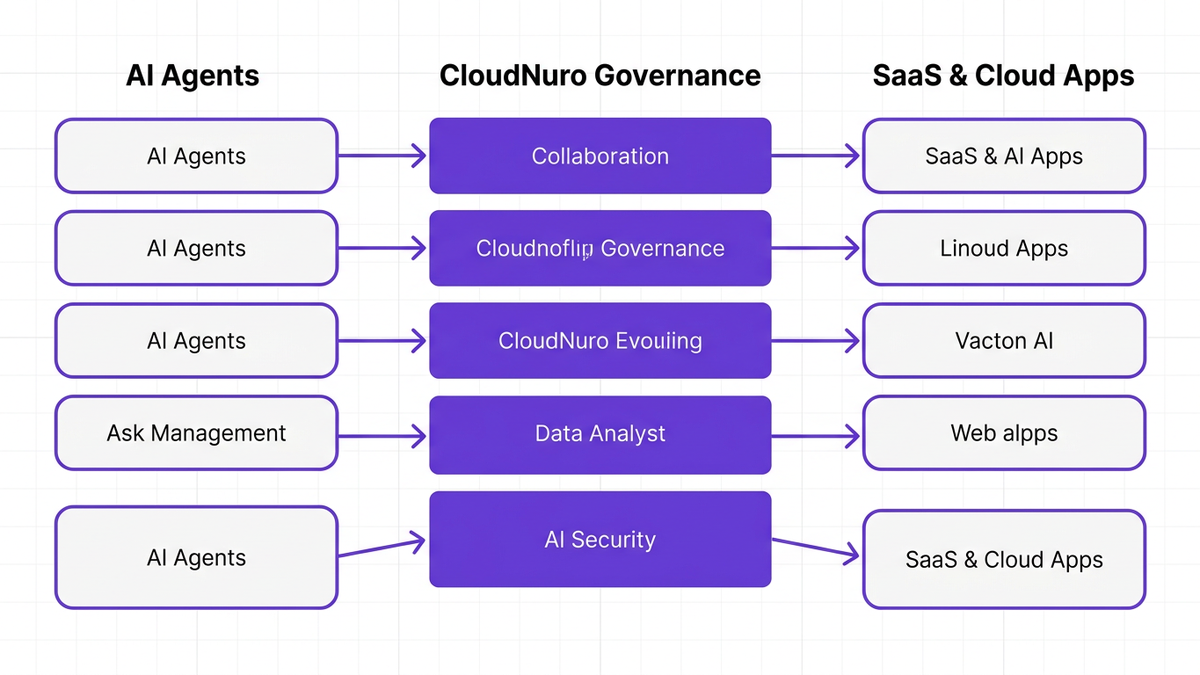
By consolidating discovery, governance, cost optimization, and reporting, CloudNuro turns AI agent management from a reactive chore into a disciplined, repeatable operating model.
Ungoverned AI agents are automated or semi-autonomous systems that access enterprise data or apps without formal ownership, policies, or lifecycle controls. They are risky because they often use shared credentials, access more data than necessary, and operate outside audit and compliance processes.
Studies in 2026 found that unmonitored AI agents were responsible for over 62% of unsanctioned data access incidents in large enterprises, and contributed to 57% of SaaS compliance breaches. This makes them one of the fastest-growing forms of enterprise AI risk.
Start by implementing a discovery capability that reveals all AI agents across your SaaS and cloud stack, including low-code automations and plugins. Then, assign ownership, apply role-based access, and standardize policies on data usage and logging.
Using a SaaS management platform with automated workflows helps enforce these controls at scale. Over time, decommission redundant or high-risk agents and migrate valuable ones into your formal governance framework.
Effective AI governance for agents usually includes:
These AI agent best practices reduce both security exposure and cost, while maintaining auditability.
In a mature model, AI agent management is a feature of your broader SaaS management platform, not a parallel system. The same platform that tracks human users, licenses, and configurations should track non-human agents, their identities, and their entitlements.
This integrated approach supports enterprise SaaS optimization, unified cloud governance, and consistent policy enforcement across SaaS, PaaS, and IaaS layers. It also centralizes compliance reporting, which is essential for audits.
Compliance frameworks require you to know which systems access sensitive data, how access is granted, and how activity is monitored. If SaaS AI agents are invisible, you cannot prove that controls extend to them.
Regulators and auditors increasingly expect organizations to demonstrate that AI-driven processes meet the same standards as traditional applications. Cloud AI visibility across all agents, including those embedded in SaaS tools, is therefore critical to maintaining certifications such as SOC 2 Type II.
Automated workflows are the only way to scale AI agent management across dozens of apps and hundreds of agents. They:
A 2026 market forecast found that 94% of enterprises prioritize adopting automated identity and entitlement workflows for AI agents. Automation is central to sustainable AI governance, cost control, and risk reduction.
AI agents are no longer experimental. They are deeply embedded in SaaS and cloud workflows, and industry data shows that enterprises already run an average of 12 agents, with half ungoverned. This imbalance drives security incidents, hidden costs, and compliance gaps.
By elevating ai agent management into a core discipline, unified with SaaS and cloud governance, organizations can:
CloudNuro provides the visibility, governance, and automation needed to bring order to your AI ecosystem and ensure that the half watching the rest can finally do more than just observe.
Request a no cost, no obligation free assessment —just 15 minutes to savings!
Get StartedEnterprises are discovering that AI agent management is no longer a theoretical concern. A recent industry report found that enterprises now deploy an average of 12 AI agents, and roughly 50% operate without formal governance. In many organizations, the monitored agents are effectively spending their time observing the ungoverned ones, creating a surreal dynamic where automation watches automation, while risk quietly compounds in the background.
This blog explains what is really happening inside your SaaS and cloud environments, why ungoverned AI agents are a growing source of enterprise AI risk, and how to build a sustainable model for AI governance, cost control, and compliance.
The last two years have seen a sharp rise in AI workload usage across SaaS and cloud platforms. According to a 2026 market analysis, the number of AI agents in enterprise environments has doubled since 2024, largely driven by low-code tools, embedded AI in SaaS products, and custom automations built by business units.
Yet AI agent management has not kept pace. A 2026 enterprise survey found that 87% of IT leaders cite "visibility into AI agent activity" as their top challenge for managing SaaS environments. Another risk assessment study reported that unmonitored AI agents account for over 62% of unsanctioned data access incidents in large enterprises.
The result is a strange, but increasingly common reality:
An expert SaaS governance analyst summarized this shift: “The explosion of AI agents in enterprise SaaS stacks is outpacing existing governance models, creating urgent needs for unified visibility and policy enforcement.”
Ungoverned AI agents are any automated or semi-autonomous systems that:
They might be chatbots plugged into CRM systems, workflow bots that sync data between HR and finance, or AI plugins in collaboration tools. Many of these agents are created by non-IT teams or bought through expense cards, so they never enter formal inventories or SaaS management platforms.
The risks are significant:
A leading enterprise security strategist captured the concern clearly: “Unmonitored AI agents represent a new frontier of shadow IT risk, exposing enterprises to data leakage, non-compliance, and cost overruns.”
Many teams initially treat AI agent management as a separate problem from SaaS governance. In practice, they are deeply intertwined.
Your AI agents rarely operate in isolation. They:
This means that SaaS AI governance and AI agent management should share the same control plane. According to a 2026 technology landscape report, there is a strong shift toward AI-first SaaS management platforms that combine:
The benefits of this unified approach are substantial:
Without this convergence, enterprises end up with fragmented controls: security tools watch traffic, SaaS admins watch licenses, and finance tracks invoices, while ungoverned AI agents quietly proliferate between them.
The phrase “the other half are watching the first half” is more than a joke. In many enterprises, governed AI agents are used to monitor systems, detect anomalies, and enforce policies. For example, they may:
A 2026 security leadership survey reported that 81% of security executives have increased cross-departmental monitoring between sanctioned and unsanctioned AI agents due to rising governance concerns.
This can be powerful, but it introduces two pitfalls if not handled carefully:
To avoid these traps, monitored agents should be part of a governance-first architecture, not a patch over a fragmented environment. AI agent management must begin with complete discovery, clear ownership, and policy baselines before adding more monitoring layers.
To move from reactive firefighting to sustainable AI governance, enterprises need a structured approach. The following five-step framework, the C-FACT model (Catalog, Federate, Authorize, Control, Track), offers a practical blueprint.
You cannot govern what you cannot see. Start by creating a unified catalog of:
This should include vendor-provided AI features, custom bots, workflow automations, and third-party plugins. A recent enterprise survey found that 68% of organizations now require governance tools that integrate with 400+ applications, because discovery must span the full stack.
Key practices:
Next, treat AI agents as first-class identities in your environment. This means:
This step reduces shadow IT behavior where bots share credentials with humans or other automations. It also enables precise license optimization for AI, because you see which licenses or AI subscriptions are tied to which agents.
Once agents are visible and federated, codify policies that govern:
This is central to AI compliance for enterprises, especially in regulated sectors. Policies should be tied to control objectives such as SOC 2 Type II, privacy regulations, and internal data-handling standards.
AI agent best practices at this stage include:
Manual oversight cannot scale to dozens of agents across hundreds of apps. In fact, a 2026 market forecast reported that 94% of enterprises now prioritize adopting automated workflows for identity and entitlement governance related to AI agents.
Key automation capabilities include:
This is where automated SaaS governance and AI agent management intersect most strongly. Automation reduces human error, shortens response times, and embeds security into daily operations instead of relying on manual reviews.
Finally, treat AI agents as ongoing investments that must justify their cost and risk profile. This requires continuous cloud AI visibility into:
A CIO quoted in a 2026 financial institution study noted that “Automated, cross-platform oversight is no longer optional; it is the linchpin for reducing risk and optimizing value from AI-driven automation.” This is exactly the role of integrated tracking in AI agent management.
A North American healthcare provider offers a strong illustration of what this transformation looks like in practice.
The organization discovered that it was running 17 internal AI agents across its SaaS stack, including clinical support tools, scheduling assistants, and back-office automations. Many were not formally documented, and several had broad, overlapping access to patient and financial data.
By deploying a unified AI custodian platform:
Within six months, the institution reduced unauthorized data access by 63% and achieved full compliance against its control framework, according to a 2026 health tech implementation report.
In another example, a multinational financial services firm applied a SaaS governance suite to consolidate visibility across CRM, productivity suites, and cloud tools. Using automated license optimization and entitlement workflows, the firm:
These outcomes are not just about security. They represent a shift to enterprise SaaS optimization, where AI is governed as a strategic asset rather than a collection of disconnected experiments.
CloudNuro was designed for enterprises facing exactly this problem: a growing population of AI agents, scattered across hundreds of apps, with fragmented governance and limited visibility.
CloudNuro’s AI Custodian Services provide continuous discovery of all AI agents in your SaaS stack. This includes agents embedded in major SaaS platforms, custom automations, and low-code bots.
Once discovered, agents are automatically classified by:
This comprehensive catalog supports both AI-first SaaS management and traditional SaaS oversight from a single control plane.
CloudNuro treats AI agents as first-class identities. The platform supports identity governance by:
By aligning AI agents with structured entitlements, CloudNuro enables AI compliance tools to operate with precise context, improving both security and auditability.
CloudNuro’s governance-first architecture extends to automation and financial control:
Organizations that implement unified governance capabilities like these have reported up to 41% reduction in SaaS overspend within the first year, as noted in a 2026 SaaS management analytics study.
CloudNuro delivers 400+ app integration, covering leading SaaS platforms, collaboration tools, and cloud services. This breadth of integration is critical for cloud governance in environments where AI agents routinely cross system boundaries.
Through a single pane of glass, IT and security leaders can:
By consolidating discovery, governance, cost optimization, and reporting, CloudNuro turns AI agent management from a reactive chore into a disciplined, repeatable operating model.
Ungoverned AI agents are automated or semi-autonomous systems that access enterprise data or apps without formal ownership, policies, or lifecycle controls. They are risky because they often use shared credentials, access more data than necessary, and operate outside audit and compliance processes.
Studies in 2026 found that unmonitored AI agents were responsible for over 62% of unsanctioned data access incidents in large enterprises, and contributed to 57% of SaaS compliance breaches. This makes them one of the fastest-growing forms of enterprise AI risk.
Start by implementing a discovery capability that reveals all AI agents across your SaaS and cloud stack, including low-code automations and plugins. Then, assign ownership, apply role-based access, and standardize policies on data usage and logging.
Using a SaaS management platform with automated workflows helps enforce these controls at scale. Over time, decommission redundant or high-risk agents and migrate valuable ones into your formal governance framework.
Effective AI governance for agents usually includes:
These AI agent best practices reduce both security exposure and cost, while maintaining auditability.
In a mature model, AI agent management is a feature of your broader SaaS management platform, not a parallel system. The same platform that tracks human users, licenses, and configurations should track non-human agents, their identities, and their entitlements.
This integrated approach supports enterprise SaaS optimization, unified cloud governance, and consistent policy enforcement across SaaS, PaaS, and IaaS layers. It also centralizes compliance reporting, which is essential for audits.
Compliance frameworks require you to know which systems access sensitive data, how access is granted, and how activity is monitored. If SaaS AI agents are invisible, you cannot prove that controls extend to them.
Regulators and auditors increasingly expect organizations to demonstrate that AI-driven processes meet the same standards as traditional applications. Cloud AI visibility across all agents, including those embedded in SaaS tools, is therefore critical to maintaining certifications such as SOC 2 Type II.
Automated workflows are the only way to scale AI agent management across dozens of apps and hundreds of agents. They:
A 2026 market forecast found that 94% of enterprises prioritize adopting automated identity and entitlement workflows for AI agents. Automation is central to sustainable AI governance, cost control, and risk reduction.
AI agents are no longer experimental. They are deeply embedded in SaaS and cloud workflows, and industry data shows that enterprises already run an average of 12 agents, with half ungoverned. This imbalance drives security incidents, hidden costs, and compliance gaps.
By elevating ai agent management into a core discipline, unified with SaaS and cloud governance, organizations can:
CloudNuro provides the visibility, governance, and automation needed to bring order to your AI ecosystem and ensure that the half watching the rest can finally do more than just observe.
Request a no cost, no obligation free assessment - just 15 minutes to savings!
Get StartedWe're offering complimentary ServiceNow license assessments to only 25 enterprises this quarter who want to unlock immediate savings without disrupting operations.
Get Free AssessmentGet Started




CloudNuro Corp
1755 Park St. Suite 207
Naperville, IL 60563
Phone : +1-630-277-9470
Email: info@cloudnuro.com



.webp)

Recognized Leader in SaaS Management Platforms by Info-Tech SoftwareReviews

.png)
.svg)