

Sign Up
Thank you for Submitting!
The story of enterprise AI spending over the past two years is a paradox. The cost of powerful AI tokens plummeted, falling from $20 to just $0.07 per million tokens, a breathtaking 280x drop. Expectations ran high that AI would now be accessible, affordable, and scalable. Yet across industries, enterprises discovered something entirely different: their overall AI bills soared. Average enterprise AI budgets jumped from $1.2 million to $7 million, a 483% leap. How can expenses skyrocket when the main cost metric collapses? Welcome to the AI pricing paradox.
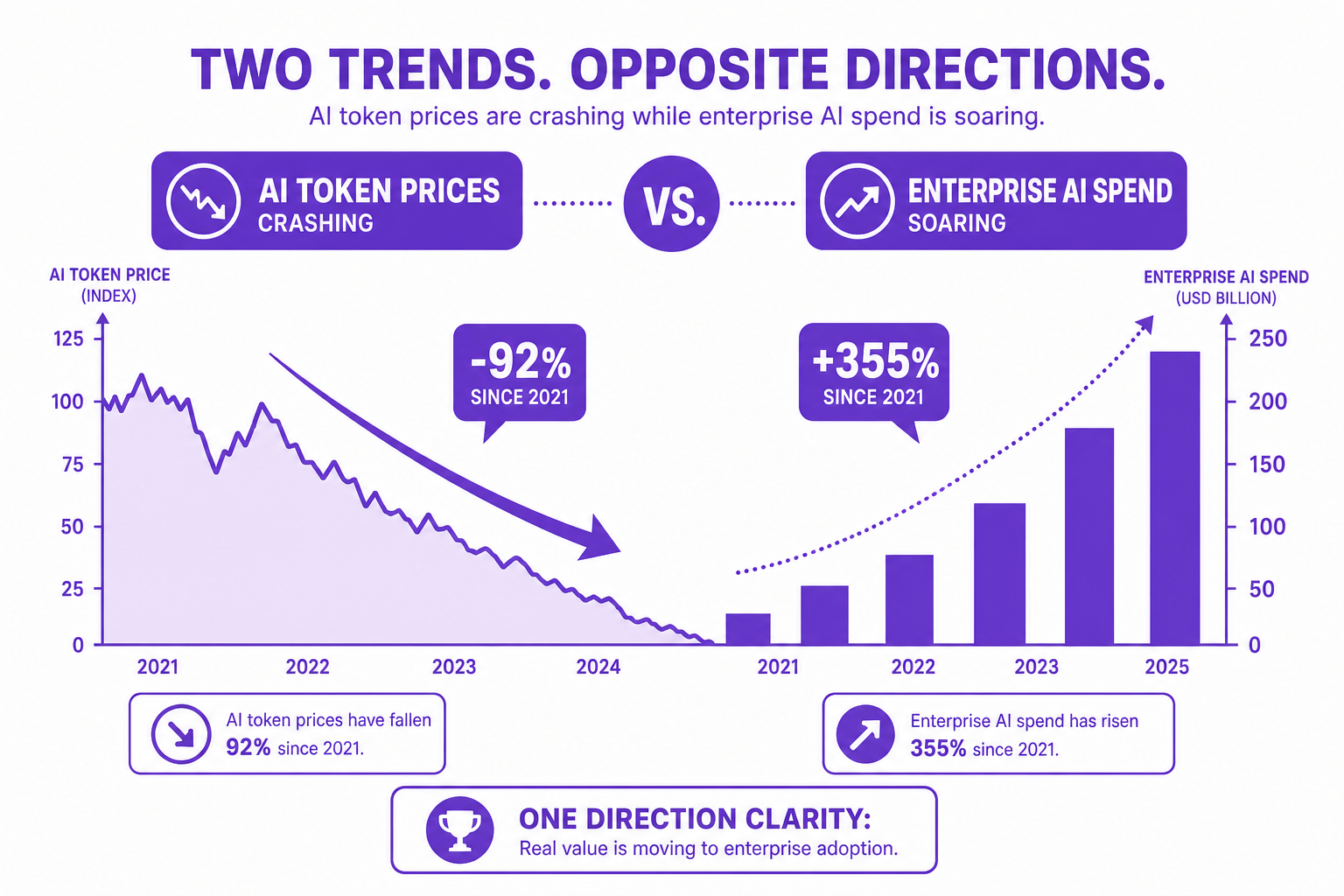
On the surface, the economics appear simple. Unit prices for AI tokens, core to most large language models and foundational platforms, collapsed as a direct result of competition and market maturation. Suppliers raced to offer better performance at a tiny fraction of last year’s price, driving a price war across the industry.
The paradox reveals itself in usage and deployment behavior. As soon as tokens became cheaper, organizations expanded their use cases. They ran longer prompts, built more autonomous AI agents, and initiated richer data pipelines. Demand for compute is highly elastic, so even as per-token pricing crashed, total usage multiplied, often exponentially.
Enterprises shifted rapidly from test pilots to production-scale integrations. With more ambitious projects in flight, the cost base for AI did not shrink with per-token prices; it exploded due to scale, complexity, and architecture sprawl.

The modern enterprise AI budget has evolved. Today, spend is allocated across a spectrum of components:
Token Usage: 34%
API Call Volume: 28%
Platform Credits: 18%
License or Seat Fees: 15%
Other Costs: 5%
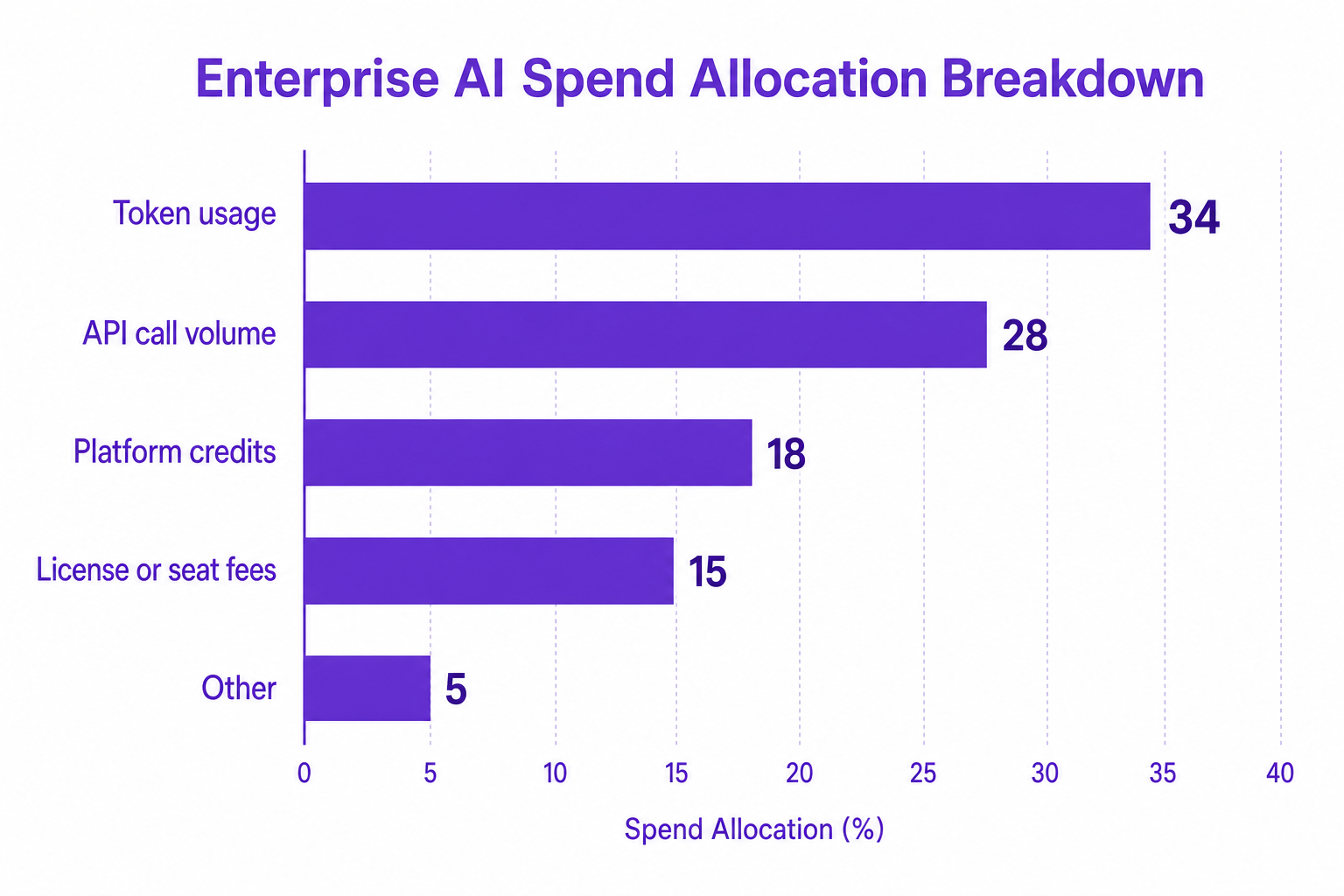
Even as the unit price for tokens nose-dived, total consumption volumes rocketed. API calls and platform credits followed similar trajectories. Beyond just tokens, organizations found themselves paying for every aspect: integration, orchestration, monitoring, and licenses for seat-based plans.
The main driver is elastic demand. Lower costs per million tokens led to an explosion of use. More sophisticated use cases, longer prompts, and microservice-powered AI led to growth not just in tokens, but in API volume and seat requirements.
Enterprises migrated quickly from small-scale pilots to company-wide deployments. AI now powers chatbots, workflow automation, analytics dashboards, and more. These integrations multiply costs via increased usage, high availability standards, and the need for system redundancies and new governance infrastructure.
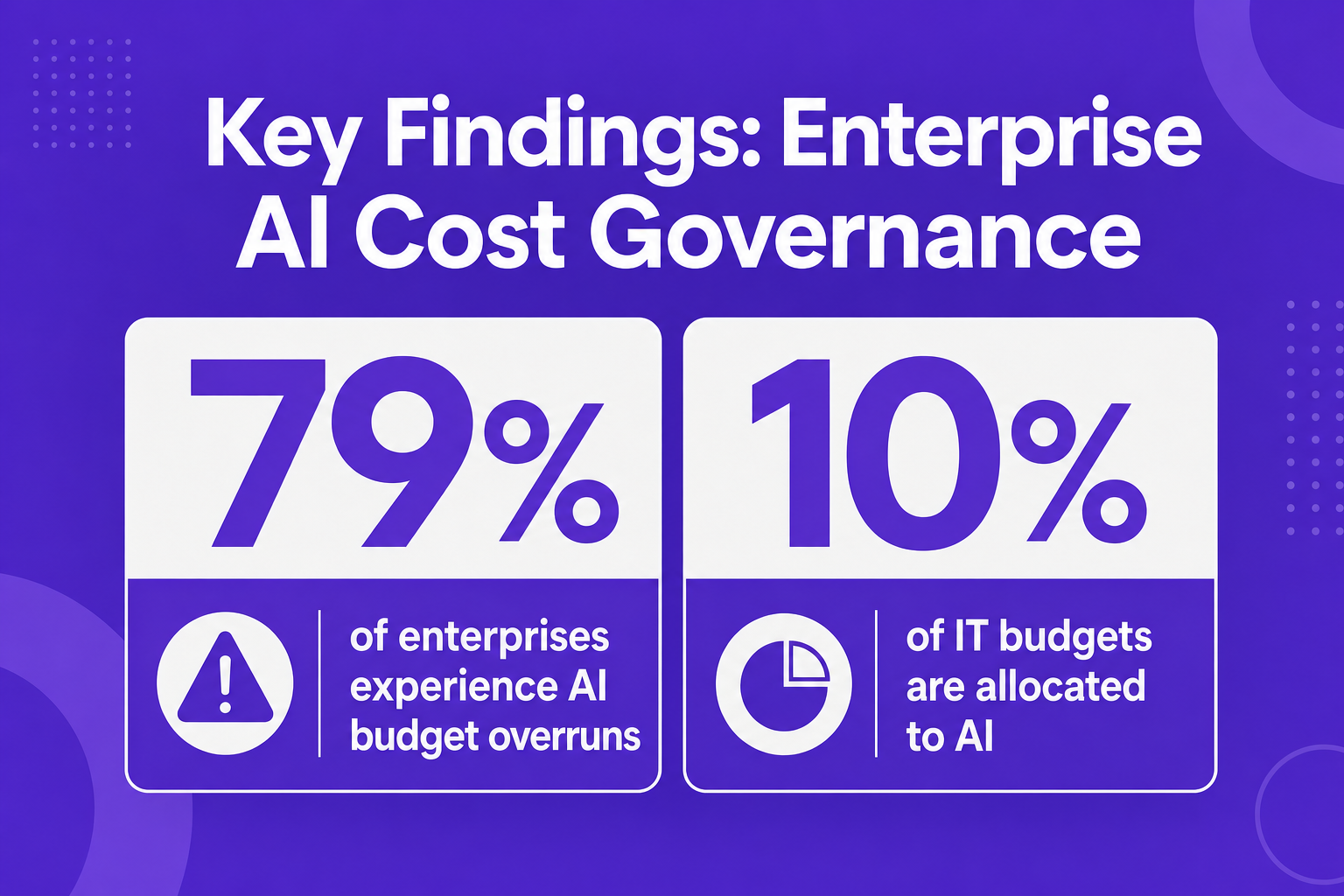
Traditional budgeting methods crumbled. 85% of enterprises systematically misestimate AI costs during planning. With unpredictable usage spikes and new feature launches, 79% faced AI cost overruns in the past year alone. In fact, 56% of organizations miss cost forecasts by 11.25%, and 24% overshoot by more than 50%.
Without mature cost management and policy enforcement, organizations face shadow IT, runaway workloads, orphaned licenses, and bill shocks from failed throttling or alerting. In 28% of organizations, AI has crossed the 10% mark of total IT budgets, magnifying the risk of unchecked spending.
Fundamental pricing changes have shifted AI cost management from a procurement problem to a governance and visibility challenge. Successful organizations are embracing enterprise FinOps, financial operations disciplines adapted for the quirks of AI economics.
CloudNuro addresses this new landscape with a governance-first approach. Here is how:
Unified AI and Cloud Visibility: CloudNuro integrates with 400+ SaaS and cloud providers, unifying live token, API, and seat consumption into one dashboard.
Real-Time Forecasting and Scenario Modeling: Predictive analytics learn from historic usage to estimate future AI and SaaS expenses. Teams simulate what-if scenarios to track budget exposure when scaling up AI deployments.
Automated Governance and Alerts: CloudNuro’s system issues warnings or throttles workloads the instant spend crosses defined thresholds, curbing overruns.
License Optimization and Chargeback: By mapping usage to per-seat, per-token, and hybrid models, and enforcing automated chargeback, CloudNuro eliminates license waste and reclaims unused entitlements.
Policy Enforcement and Shadow AI Elimination: Unapproved workloads and rogue deployments are automatically discovered and assigned to accountable business units, reducing unauthorized consumption.
One healthcare company cut unbudgeted expenses by 22% and fully eliminated shadow IT AI spend within three quarters with CloudNuro’s automated tools.
As AI pricing volatility increases, organizations are abandoning static annual forecasts in favor of rolling, dynamic forecasting. This approach blends real-time usage data with granular scenario modeling, making budgets responsive to immediate business needs.
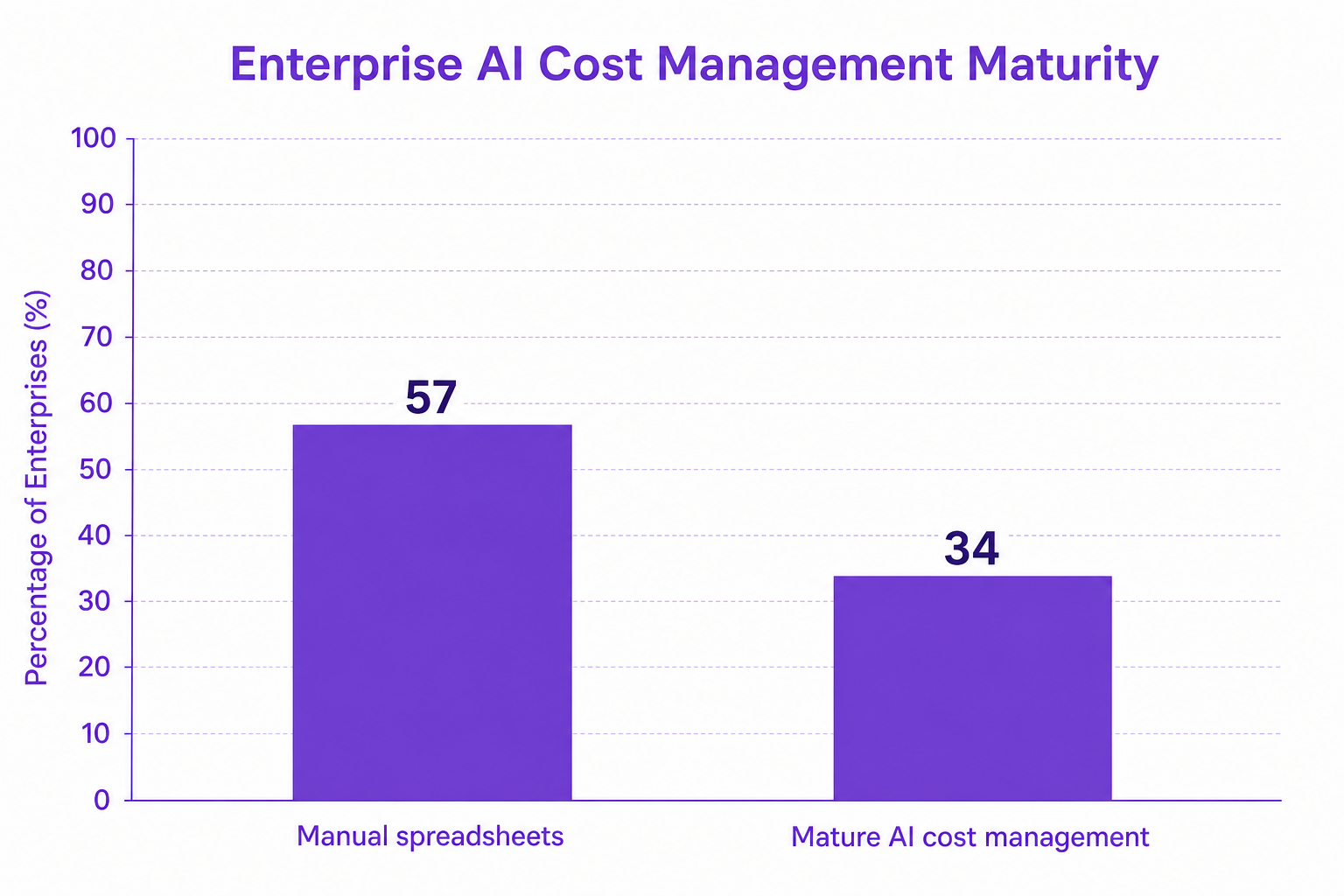
In practice, 34% of enterprises have reached a state of mature AI cost management, leveraging platforms like CloudNuro to bridge finance, IT, and engineering. Conversely, 57% still rely on manual spreadsheets, making them highly vulnerable to surprise overruns and eroded ROI.
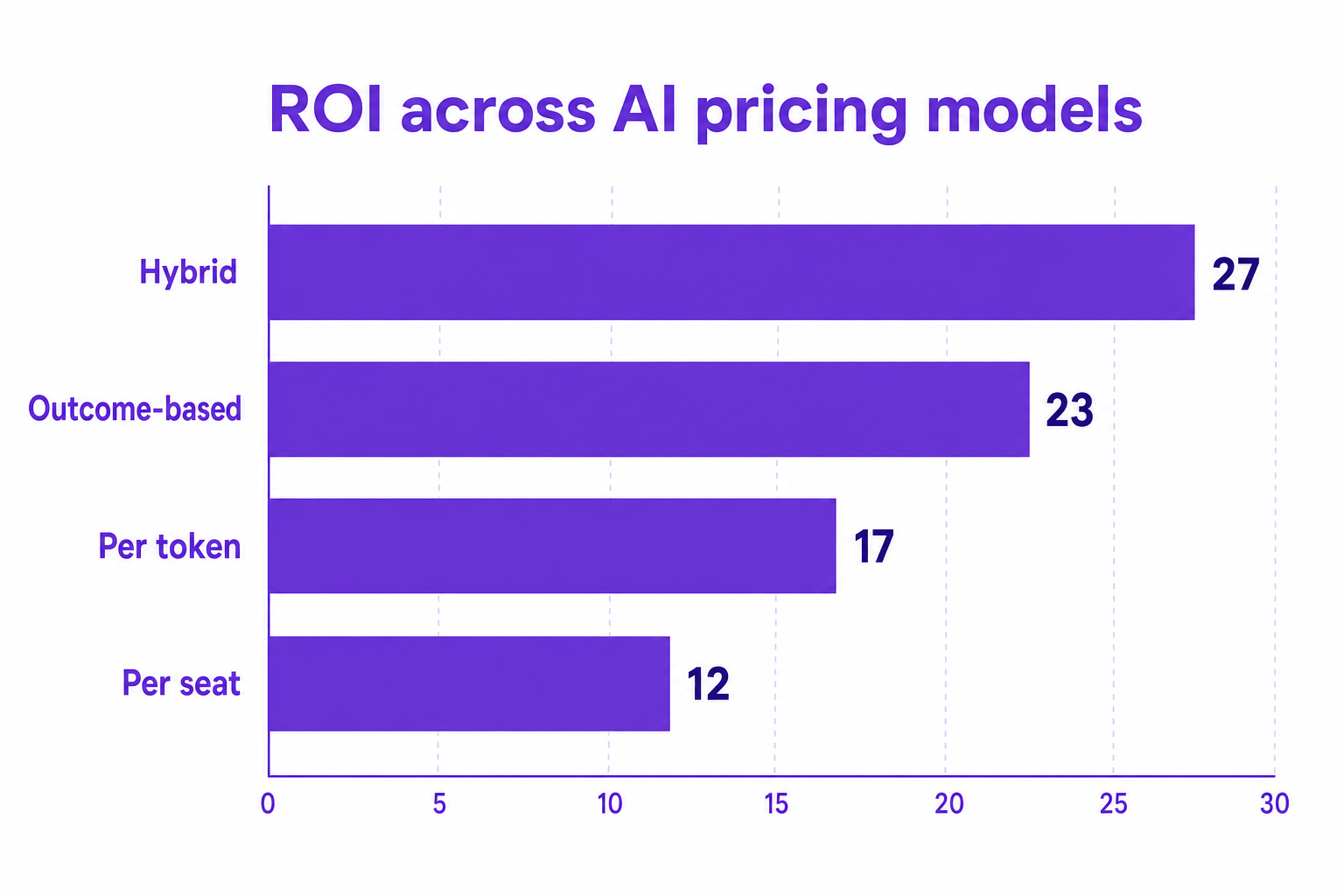
A major transformation in AI cost models is underway. Organizations are increasingly adopting hybrid and outcome-based pricing to link spend directly to value, not just usage. While pure token models deliver baseline access, hybrid plans offer more predictable costs and higher ROI. Outcomes-based agreements tie payments to tangible business metrics.
Current ROI breakdown by pricing model:
Hybrid: 27%
Outcome-based: 23%
Per token: 17%
Per seat: 12%
CloudNuro natively supports all leading pricing models and automatically aligns cost allocation with business value. Enterprises using automated AI forecasting, license optimization, and policy-driven chargeback reduced budget overruns from 17% down to 6% on average.
What is the AI token pricing paradox?
It is the contradiction between a drastic fall in AI token unit costs and a simultaneous surge in total enterprise AI spending. As prices shrank, organizations simply consumed much more, leading to higher overall costs.
Why did enterprise AI costs rise even as token prices fell?
While token prices dropped steeply, total usage (more projects, agents, prompts, and users) increased even faster. The shift to production integrations amplified total consumption, outstripping price reductions.
How can enterprises manage increasing AI spend?
The best approach combines unified visibility, real-time forecasting, automated governance, and chargeback policies. CloudNuro delivers these with live dashboards, alerts, workload throttling, and license optimization.
What drives the growth in enterprise AI cost?
Growth is driven by expanded usage, longer prompts, richer integrations, and new governance requirements as AI moves from pilot to production.
How does token price decline impact overall AI expenses?
The decline makes each unit of use cheaper, but encourages far more usage. Without controls and strategic cost governance, this results in paradoxically higher total spend.
Enterprises cannot depend on falling prices alone to curb AI expenses. The real challenge is managing the explosive growth in consumption with mature financial governance. Leaders today require tools for unified visibility, predictive forecasting, and automated policy enforcement.
CloudNuro enables organizations to embrace AI’s promise while instituting financial discipline. Automated AI spend intelligence, live scenario modeling, and robust chargeback frameworks allow CIOs, CTOs, and IT Finance Leaders to scale AI with confidence and control, transforming the paradox into a strategic advantage.
About CloudNuro
CloudNuro is a leader in Enterprise AI Adoption Management, providing enterprises with unmatched visibility, governance, and cost optimization. Recognized twice in a row in the SaaS Management Platforms category and named a Leader in the SoftwareReviews Data Quadrant, CloudNuro is trusted by global enterprises and government agencies to bring financial discipline to SaaS, cloud, and AI. Trusted by enterprises, CloudNuro provides centralized SaaS inventory, license optimization, and renewal management along with advanced cost allocation and chargeback, giving IT and Finance leaders the visibility, control, and cost-conscious culture needed to drive financial discipline.
Request a no cost, no obligation free assessment —just 15 minutes to savings!
Get StartedThe story of enterprise AI spending over the past two years is a paradox. The cost of powerful AI tokens plummeted, falling from $20 to just $0.07 per million tokens, a breathtaking 280x drop. Expectations ran high that AI would now be accessible, affordable, and scalable. Yet across industries, enterprises discovered something entirely different: their overall AI bills soared. Average enterprise AI budgets jumped from $1.2 million to $7 million, a 483% leap. How can expenses skyrocket when the main cost metric collapses? Welcome to the AI pricing paradox.
On the surface, the economics appear simple. Unit prices for AI tokens, core to most large language models and foundational platforms, collapsed as a direct result of competition and market maturation. Suppliers raced to offer better performance at a tiny fraction of last year’s price, driving a price war across the industry.
The paradox reveals itself in usage and deployment behavior. As soon as tokens became cheaper, organizations expanded their use cases. They ran longer prompts, built more autonomous AI agents, and initiated richer data pipelines. Demand for compute is highly elastic, so even as per-token pricing crashed, total usage multiplied, often exponentially.
Enterprises shifted rapidly from test pilots to production-scale integrations. With more ambitious projects in flight, the cost base for AI did not shrink with per-token prices; it exploded due to scale, complexity, and architecture sprawl.
The modern enterprise AI budget has evolved. Today, spend is allocated across a spectrum of components:
Token Usage: 34%
API Call Volume: 28%
Platform Credits: 18%
License or Seat Fees: 15%
Other Costs: 5%
Even as the unit price for tokens nose-dived, total consumption volumes rocketed. API calls and platform credits followed similar trajectories. Beyond just tokens, organizations found themselves paying for every aspect: integration, orchestration, monitoring, and licenses for seat-based plans.
The main driver is elastic demand. Lower costs per million tokens led to an explosion of use. More sophisticated use cases, longer prompts, and microservice-powered AI led to growth not just in tokens, but in API volume and seat requirements.
Enterprises migrated quickly from small-scale pilots to company-wide deployments. AI now powers chatbots, workflow automation, analytics dashboards, and more. These integrations multiply costs via increased usage, high availability standards, and the need for system redundancies and new governance infrastructure.
Traditional budgeting methods crumbled. 85% of enterprises systematically misestimate AI costs during planning. With unpredictable usage spikes and new feature launches, 79% faced AI cost overruns in the past year alone. In fact, 56% of organizations miss cost forecasts by 11.25%, and 24% overshoot by more than 50%.
Without mature cost management and policy enforcement, organizations face shadow IT, runaway workloads, orphaned licenses, and bill shocks from failed throttling or alerting. In 28% of organizations, AI has crossed the 10% mark of total IT budgets, magnifying the risk of unchecked spending.
Fundamental pricing changes have shifted AI cost management from a procurement problem to a governance and visibility challenge. Successful organizations are embracing enterprise FinOps, financial operations disciplines adapted for the quirks of AI economics.
CloudNuro addresses this new landscape with a governance-first approach. Here is how:
Unified AI and Cloud Visibility: CloudNuro integrates with 400+ SaaS and cloud providers, unifying live token, API, and seat consumption into one dashboard.
Real-Time Forecasting and Scenario Modeling: Predictive analytics learn from historic usage to estimate future AI and SaaS expenses. Teams simulate what-if scenarios to track budget exposure when scaling up AI deployments.
Automated Governance and Alerts: CloudNuro’s system issues warnings or throttles workloads the instant spend crosses defined thresholds, curbing overruns.
License Optimization and Chargeback: By mapping usage to per-seat, per-token, and hybrid models, and enforcing automated chargeback, CloudNuro eliminates license waste and reclaims unused entitlements.
Policy Enforcement and Shadow AI Elimination: Unapproved workloads and rogue deployments are automatically discovered and assigned to accountable business units, reducing unauthorized consumption.
One healthcare company cut unbudgeted expenses by 22% and fully eliminated shadow IT AI spend within three quarters with CloudNuro’s automated tools.
As AI pricing volatility increases, organizations are abandoning static annual forecasts in favor of rolling, dynamic forecasting. This approach blends real-time usage data with granular scenario modeling, making budgets responsive to immediate business needs.
In practice, 34% of enterprises have reached a state of mature AI cost management, leveraging platforms like CloudNuro to bridge finance, IT, and engineering. Conversely, 57% still rely on manual spreadsheets, making them highly vulnerable to surprise overruns and eroded ROI.
A major transformation in AI cost models is underway. Organizations are increasingly adopting hybrid and outcome-based pricing to link spend directly to value, not just usage. While pure token models deliver baseline access, hybrid plans offer more predictable costs and higher ROI. Outcomes-based agreements tie payments to tangible business metrics.
Current ROI breakdown by pricing model:
Hybrid: 27%
Outcome-based: 23%
Per token: 17%
Per seat: 12%
CloudNuro natively supports all leading pricing models and automatically aligns cost allocation with business value. Enterprises using automated AI forecasting, license optimization, and policy-driven chargeback reduced budget overruns from 17% down to 6% on average.
What is the AI token pricing paradox?
It is the contradiction between a drastic fall in AI token unit costs and a simultaneous surge in total enterprise AI spending. As prices shrank, organizations simply consumed much more, leading to higher overall costs.
Why did enterprise AI costs rise even as token prices fell?
While token prices dropped steeply, total usage (more projects, agents, prompts, and users) increased even faster. The shift to production integrations amplified total consumption, outstripping price reductions.
How can enterprises manage increasing AI spend?
The best approach combines unified visibility, real-time forecasting, automated governance, and chargeback policies. CloudNuro delivers these with live dashboards, alerts, workload throttling, and license optimization.
What drives the growth in enterprise AI cost?
Growth is driven by expanded usage, longer prompts, richer integrations, and new governance requirements as AI moves from pilot to production.
How does token price decline impact overall AI expenses?
The decline makes each unit of use cheaper, but encourages far more usage. Without controls and strategic cost governance, this results in paradoxically higher total spend.
Enterprises cannot depend on falling prices alone to curb AI expenses. The real challenge is managing the explosive growth in consumption with mature financial governance. Leaders today require tools for unified visibility, predictive forecasting, and automated policy enforcement.
CloudNuro enables organizations to embrace AI’s promise while instituting financial discipline. Automated AI spend intelligence, live scenario modeling, and robust chargeback frameworks allow CIOs, CTOs, and IT Finance Leaders to scale AI with confidence and control, transforming the paradox into a strategic advantage.
About CloudNuro
CloudNuro is a leader in Enterprise AI Adoption Management, providing enterprises with unmatched visibility, governance, and cost optimization. Recognized twice in a row in the SaaS Management Platforms category and named a Leader in the SoftwareReviews Data Quadrant, CloudNuro is trusted by global enterprises and government agencies to bring financial discipline to SaaS, cloud, and AI. Trusted by enterprises, CloudNuro provides centralized SaaS inventory, license optimization, and renewal management along with advanced cost allocation and chargeback, giving IT and Finance leaders the visibility, control, and cost-conscious culture needed to drive financial discipline.
Request a no cost, no obligation free assessment - just 15 minutes to savings!
Get StartedWe're offering complimentary ServiceNow license assessments to only 25 enterprises this quarter who want to unlock immediate savings without disrupting operations.
Get Free AssessmentGet Started




CloudNuro Corp
1755 Park St. Suite 207
Naperville, IL 60563
Phone : +1-630-277-9470
Email: info@cloudnuro.com





.webp)

Recognized Leader in SaaS Management Platforms by Info-Tech SoftwareReviews


.svg)