TL;DR: What is the difference between CASB, SSPM, and SMP?
These three tool categories address different layers of SaaS security and management. A CASB (Cloud Access Security Broker) acts as a "gatekeeper," sitting between users and the cloud to enforce data security policies in real-time. An SSPM (SaaS Security Posture Management) tool is a "configuration auditor" that connects directly to your SaaS apps via API to find and fix misconfigurations and permissions issues. An SMP (SaaS Management Platform) is the "central dashboard" for IT and Finance, focusing on discovery, cost optimization, and operational management across the entire SaaS portfolio.
The Acronym Overload: Why This is Confusing
In the world of cloud security, the lines between tool categories are blurring. Vendors are expanding their feature sets, leading to significant confusion for buyers. You might hear three vendors claim they "secure your SaaS," but they do so in fundamentally different ways. Understanding the core jobs of a CASB, an SSPM, and an SMP is the first step to building a comprehensive SaaS governance strategy and avoiding redundant tool purchases.
The core difference lies in how they see your SaaS environment:
- CASB: Sees the traffic between your users and the cloud.
- SSPM: Sees the configuration settings inside your SaaS apps.
- SMP: Sees the inventory, spend, and usage data across all your apps.
What is a CASB (Cloud Access Security Broker)?
A CASB is a security policy enforcement point that sits between your users and your cloud applications. It acts like a security guard at the gate, inspecting traffic and enforcing your security policies as data flows in and out of the cloud. CASBs typically operate in one of two ways: as a forward proxy (for traffic from managed devices) or in-line via API connectors.
What a CASB is great at:
- Visibility and Shadow IT Discovery: By analyzing network traffic, a CASB can see which cloud applications your users are accessing, even unsanctioned ones.
- Data Loss Prevention (DLP): A CASB can inspect data in real time and block users from uploading sensitive information (such as PII or credit card numbers) to a non-compliant application.
- Threat Protection: It can identify and block access to malicious or high-risk applications and detect anomalous user behavior.
- Access Control: It can enforce policies like "block access to this app from unmanaged devices."
The CASB's Blind Spot: A CASB has no visibility inside the application. It cannot tell you if your Salesforce profiles are misconfigured or if you have a publicly exposed SharePoint site. It only sees the traffic going to and from the app.
What is an SSPM (SaaS Security Posture Management) Tool?
An SSPM tool is designed to solve the problem of SaaS misconfigurations. It connects directly to your major SaaS applications (such as Microsoft 365, Salesforce, ServiceNow, and GitHub) via their native APIs. It continuously audits the thousands of complex configuration settings within these apps against security best practices and compliance frameworks.
What an SSPM is great at:
- Detecting Misconfigurations: An SSPM will alert you if a SharePoint site is accidentally made public, if an S3 bucket is open to the internet, or if your Salesforce security settings are too permissive.
- Managing User Permissions: It can identify over-privileged users and provide a clear view of who has access to what data within a specific application.
- Compliance Auditing: It automates checks for compliance with standards like CIS Benchmarks, NIST, and others, making it easier to prepare for a compliance audit.
- Remediation: Many SSPM tools can automatically remediate misconfigurations or provide a one-click button for an admin to fix the issue.
The SSPM's Blind Spot: An SSPM only focuses on a limited number of large, complex, and officially sanctioned SaaS applications. It has no visibility into your long tail of smaller apps, no ability to discover Shadow IT, and no insight into software spend or license usage.
Learn more about the security frameworks that an SSPM audits against: SaaS Security Baseline: Minimum Controls Every App Must Meet.
What is an SMP (SaaS Management Platform)?
An SMP is a centralized platform for IT and Finance to manage the entire lifecycle of their SaaS portfolio. Its primary focus is on the operational and financial aspects of SaaS, rather than deep security configuration. It discovers applications by integrating with financial systems, expense reports, SSO logs, and direct integrations.
What an SMP is great at:
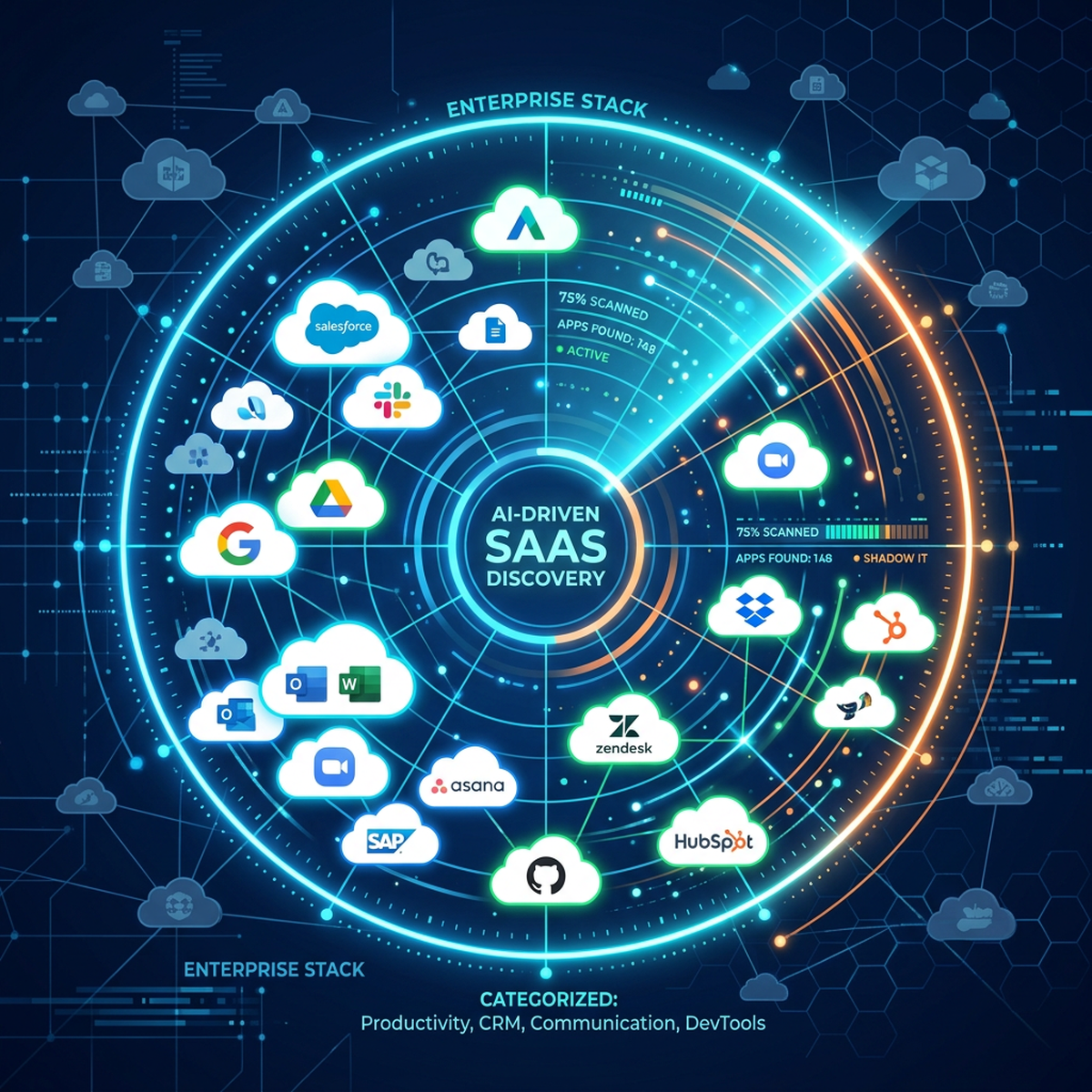
- Comprehensive SaaS Discovery: An SMP is the best tool for discovering 100% of your SaaS inventory, including paid Shadow IT and free apps.
- Cost Optimization: It identifies redundant applications, unused licenses ("shelfware"), and opportunities to downgrade license tiers.
- Vendor and Contract Management: It serves as a central renewal calendar and a repository for contracts, spend data, and vendor information.
- Operational Automation: It automates workflows for onboarding and offboarding, ensuring users receive the proper access quickly and that access is revoked upon departure.
The SMP's Blind Spot: While some SMPs have light security features, they are not a dedicated security tool. They cannot detect that a specific Salesforce profile is misconfigured or that a user is uploading sensitive data to a specific app. Their focus is on inventory, cost, and operations.
CASB vs SSPM vs SMP: A Comparison Table
| Feature |
CASB (Gatekeeper) |
SSPM (Configuration Auditor) |
SMP (Central Dashboard) |
| Core Function |
Data security and access control for sanctioned and unsanctioned apps. |
Deep security configuration and posture management for sanctioned apps. |
Discovery, cost optimization, and operational management for all apps. |
| How it Works |
Network Proxy / API |
Direct API Integration |
API, Financial, and SSO Integrations |
| Solves For |
- Shadow IT Discovery
- Data Loss Prevention (DLP)
- Threat Protection
|
- SaaS Misconfigurations
- Over-privileged Users
- Compliance Drifts
|
- Wasted SaaS Spend
- Orphaned Licenses
- Renewal Management
|
| Primary User |
Security Operations Center (SOC) |
Cloud Security Team / App Admins |
IT Asset Management, FinOps, Procurement |
| Key Question Answered |
"Is sensitive data leaving my network to an app I don't trust?" |
"Is my Salesforce configured securely according to best practices?" |
"How much are we spending on SaaS, and are we using what we pay for?" |
Which Tool Do You Need First?
The right tool depends on your primary pain point.
- If your most significant problems are Shadow IT and data exfiltration, you need a CASB. Your priority is visibility and control over which data goes to which cloud service.
- If your biggest problem is securing your core, complex SaaS suites (like M365 or Salesforce), you need an SSPM. Your priority is preventing breaches caused by misconfigurations in these critical applications.
- If your most significant problems are runaway costs, license management, and operational chaos, you need an SMP. Your priority is to get a complete inventory and take control of the financial and lifecycle aspects of your SaaS stack.
For most organizations, an SMP is the foundational first step. You cannot secure or manage what you cannot see. Gaining a complete, financially grounded inventory of all your SaaS applications provides the visibility needed to prioritize which applications require the deeper security scrutiny of an SSPM or the data flow controls of a CASB.
Industry Benchmarks: Tool Adoption by Vertical
Different industries prioritize these tools based on their primary risks.
| Industry |
Primary Tool Priority |
Rationale |
| Financial Services |
1. CASB, 2. SSPM |
The top priority is preventing data leakage (DLP), making a CASB essential. SSPM is a close second for ensuring the secure configuration of core financial systems. |
| Healthcare |
1. CASB, 2. SSPM |
Similar to finance, the need to prevent the exfiltration of Protected Health Information (PHI) makes a CASB a top priority. |
| Technology |
1. SMP, 2. SSPM |
Tech companies often have huge, sprawling SaaS portfolios and high engineering costs. An SMP is critical for cost control. SSPM is key to securing developer tools like GitHub. |
| Retail & Manufacturing |
1. SMP |
These industries are typically more cost-sensitive. The primary driver is often gaining control over spend and optimizing licenses, making an SMP the first investment. |
FAQ
Here are the top questions professionals ask about these tool categories.
1. Is there a single tool that does all three?
Not really. While vendors are trying to converge, each category has a distinct "center of gravity." A CASB vendor that adds SSPM features will have strong network controls but weaker configuration auditing. An SMP vendor that adds security features will have great financial data but less granular security insights. It is best to think of them as complementary parts of a "defense-in-depth" strategy.
2. Where does a CNAPP fit in?
A CNAPP (Cloud-Native Application Protection Platform) is primarily focused on securing the cloud infrastructure (IaaS) where you build and run your own applications (e.g., AWS, Azure, GCP). It often includes some SSPM-like capabilities for the IaaS provider's control plane, but it typically does not cover third-party SaaS applications such as Salesforce or Workday.
3. What is the difference between a CASB and a "Next-Gen" Secure Web Gateway (SWG)?
The lines are blurring, but historically, a SWG focused on web filtering and threat protection for general web traffic. In contrast, a CASB explicitly focuses on understanding and controlling cloud application traffic. Many vendors now offer an integrated solution.
4. Our Identity Provider (like Okta) has some of these features. Is that enough?
IdPs are great for centralizing access and MFA, and they provide some visibility into which apps are being used (via SSO logs). However, they lack the deep configuration auditing of an SSPM, the real-time data inspection of a CASB, and the financial discovery and license management of an SMP.
5. How do I get a budget for these tools?
Frame the investment in terms of risk reduction and ROI. For an SSPM, calculate the potential cost of a data breach from a single misconfiguration. For an SMP, build a business case based on a conservative estimate of 15-20% savings on your total SaaS spend through license optimization and redundant app elimination.
Conclusion
Understanding the distinct roles of CASB, SSPM, and SMP is crucial for building an effective SaaS governance and security program. They are not interchangeable. Each tool addresses a unique and critical piece of the puzzle.
- A CASB is your real-time data security gatekeeper.
- An SSPM is your deep configuration and compliance auditor for critical apps.
- An SMP is your central system of record for inventory, spend, and operations.
For most organizations, the journey begins with visibility. By first deploying an SMP to get a complete and accurate picture of your entire SaaS estate, you can then make intelligent, data-driven decisions about where to apply the more specialized security controls of an SSPM and a CASB.
About CloudNuro
CloudNuro is a leader in Enterprise SaaS Management Platforms, giving enterprises unmatched visibility, governance, and cost optimization.
We are proud to be recognized twice in a row by Gartner in the SaaS Management Platforms and named a Leader in the Info-Tech SoftwareReviews Data Quadrant.
Trusted by global enterprises and government agencies, CloudNuro provides centralized SaaS inventory, license optimization, and renewal management. With a 15-minute setup and measurable results in under 24 hours, CloudNuro gives IT teams a fast path to value.
Request a Demo | Get Free Savings Assessment | Explore Product









.webp)


.png)
.svg)