

Sign Up
Thank you for Submitting!
The phrase “End of SaaS” has become a convenient headline for a more complex reality. SaaS is not disappearing. Instead, it is entering a new phase where governance-first architecture, automation, and unified oversight matter more than individual app choices.
For enterprise leaders, the question is not whether SaaS survives. The real question is how to control cost, risk, and complexity as portfolios expand, AI infuses every layer, and procurement models shift. A modern SaaS management platform is quickly becoming as foundational as identity or networking.
This article breaks down what is actually changing, what remains constant, and how to adapt with a governance, cost, and compliance mindset.
The “End of SaaS” storyline is not about eliminating cloud applications. It reflects a shift from app-centric thinking to platform-centric SaaS application management and governance.
Several structural changes are driving this narrative:
A 2026 report notes that 65% of enterprise IT leaders have consolidated SaaS and cloud application management under unified platforms to improve cost control and governance. This is the core of the narrative: not fewer SaaS apps, but more centralization of control.
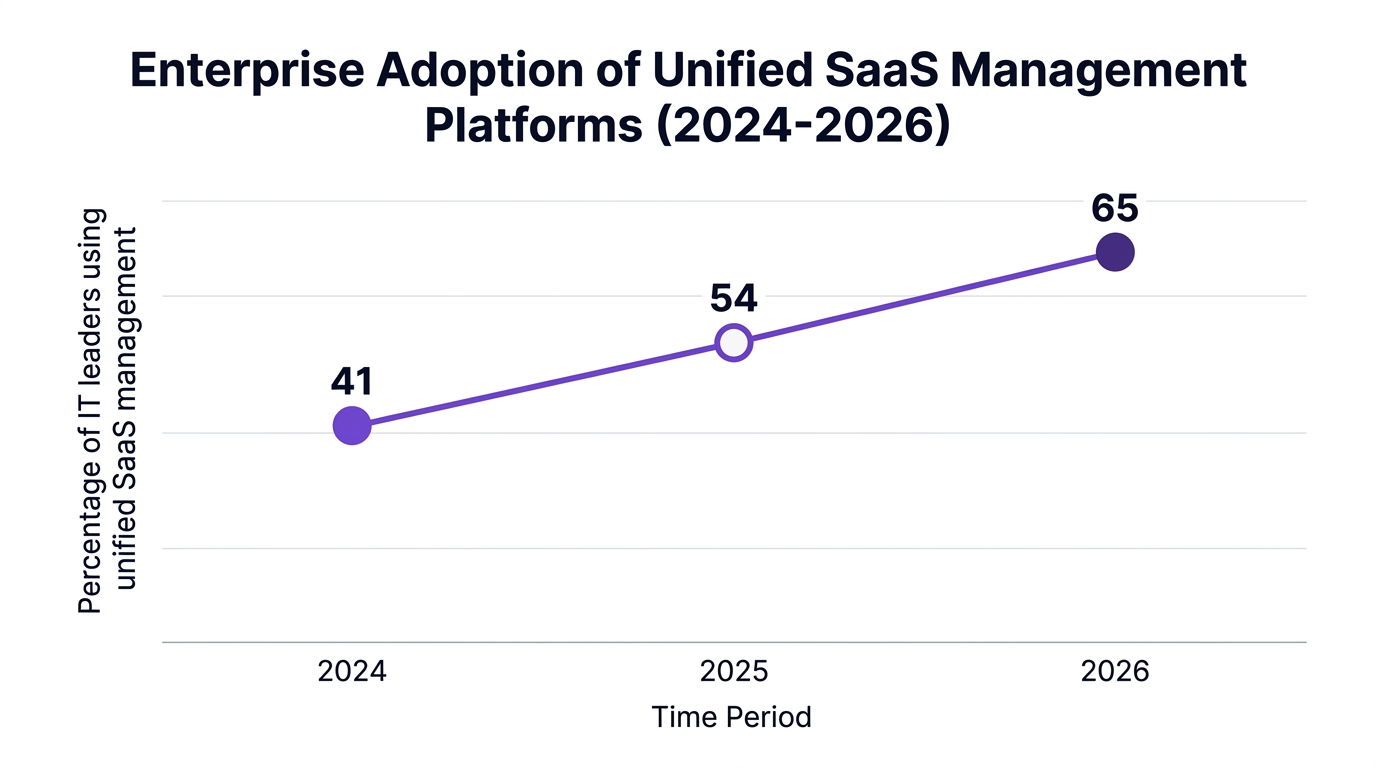
According to a 2026 market adoption report, enterprise adoption of unified SaaS management platforms rose from 41% in 2024 to 65% in 2026. That trajectory shows that the “End of SaaS” is actually the rise of SaaS management.
An expert panel in 2026 summarized it well: “The narrative around the 'End of SaaS' reflects not the disappearance of SaaS, but a fundamental reset towards governance-first platforms that automate optimization and compliance.”
Key takeaway: The risk is not that SaaS disappears. The risk is that enterprises cling to app-by-app management models while their peers move to continuous, platform-wide SaaS oversight.
IT procurement is shifting from annual, project-style buying to continuous optimization. This changes how CIOs, CTOs, and procurement work with SaaS vendors and internal stakeholders.
Historically, line-of-business teams drove SaaS selection, then IT “caught up” on integration and security. That model is breaking under its own weight.
Current procurement trends show that 68% of procurement leaders in 2026 prioritize automated license rightsizing to address overspending in SaaS subscriptions. At the same time, 79% of IT decision-makers select SaaS management tools based on integration breadth with core applications.
This leads to a new behavior: instead of negotiating each SaaS contract in isolation, enterprises evaluate total portfolio impact, looking at:

FinOps has moved from cloud infrastructure into SaaS. According to a 2026 industry survey, 74% of organizations implementing AI-driven SaaS management platforms achieved an average 22% reduction in unnecessary SaaS spend.
The shift is from “renegotiate at renewal” to continuous FinOps automation:
A 2026 executive insight captured this: “As AI matures, SaaS management is evolving to focus more on automated discovery, spend transparency, and regulatory posture tracking than on traditional license administration.”
Counterpoint: Some argue that hyperscaler marketplaces, bundled suites, and AI-native platforms will naturally curb sprawl. In practice, these options often increase the number of subscriptions and variants, which still requires centralized SaaS portfolio analytics and governance.
Despite better technology, the fundamental challenges of SaaS cost optimization and risk management have not disappeared. If anything, they have become more visible.
SaaS cost issues are rarely about one vendor. They are structural:
Recent benchmarks show:
The gap between those numbers represents the opportunity: organizations that adopt license optimization platforms and workflow automation are structurally advantaged.
According to a 2026 IT leadership study, 54% of enterprises identify shadow IT as their primary risk factor in managing SaaS portfolios.
This is amplified by regulatory and security dynamics:
A 2026 compliance brief reports that 85% of CIOs view governance-first architecture as critical to compliance and risk reduction amid increased regulation and platform complexity.
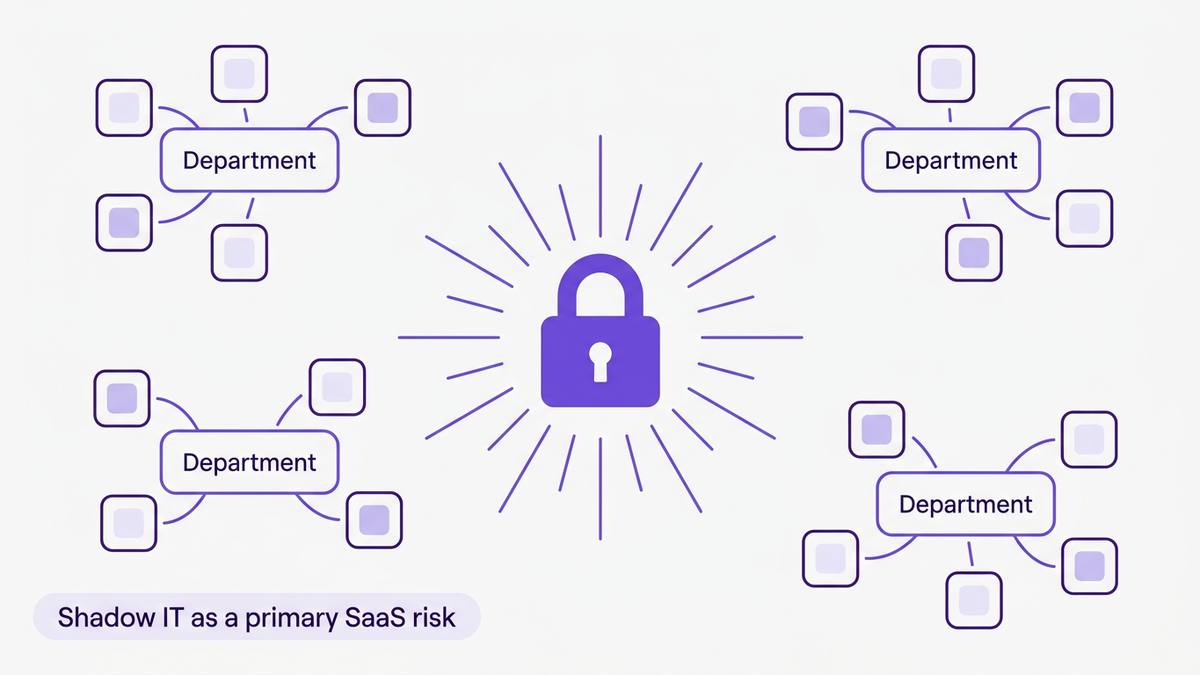
Analogy: Managing SaaS without unified controls is like trying to secure a building where every team can cut its own keys and install side doors. Centralized enterprise SaaS governance is the equivalent of a master access system with full audit trails.
Key takeaway: The tools have improved, but the problems remain: shadow IT, opaque spend, and fragmented compliance. These do not go away on their own simply because AI is more prevalent.
Amid the noise, several SaaS fundamentals remain stable and will outlast any “End of SaaS” headline.
Complete SaaS visibility across licensed, freemium, and shadow tools is still step one. This includes:
Without this, any attempt at cloud spend visibility or IT cost governance is guesswork.
Governance is not an overlay. It must be part of the architecture:
An analyst commentary in 2026 notes: “Successful organizations are those that move beyond point solutions to continuous, platform-wide SaaS oversight with strong FinOps and compliance automation.”
This is precisely what a governance-first architecture in a SaaS management platform is designed to support.
One-time cleanups deliver short-lived gains. Sustainable savings require:
A 2026 benchmark report reveals that 68% of procurement leaders explicitly name automated rightsizing as a top priority, confirming that recurring license reviews are a durable practice.
The shared responsibility model persists, even as tools evolve:
Tools can automate FinOps automation, but organizations still need clear accountability, escalation paths, and policy ownership.
Key takeaway: The surface area has grown, but the principles are stable: visibility, governance, rightsizing, and shared responsibility.
In this new phase, enterprises increasingly expect their SaaS management platform to serve as a control plane for cost, risk, and compliance across cloud services. CloudNuro is built explicitly around this governance-first mandate.
CloudNuro AI Custodian centralizes SaaS application management and cloud operations, giving IT and finance unified visibility into usage, spend, and risk.
Key capabilities include:
This provides the foundation for accurate technology spend dashboards and informed IT procurement transformation.
CloudNuro operationalizes SaaS cost optimization with AI-driven workflows that move beyond static reports.
Examples of cost controls include:
A 2026 industry survey shows that organizations implementing AI-driven SaaS management platforms achieve an average 22% reduction in unnecessary SaaS spend. CloudNuro is designed to help enterprises target and sustain that level of savings with minimal manual effort.
For regulated sectors, CloudNuro’s governance-first architecture supports both operational control and regulatory posture management.
CloudNuro helps teams:
This moves compliance from episodic audits to continuous compliance automation, which is essential as regulators increase scrutiny.
CloudNuro’s specialized modules, such as Microsoft 365 Custodian and Salesforce Custodian, address the reality that a large portion of SaaS spend is concentrated in a few platforms.
Capabilities include:
These modules turn high-stakes suites into controllable, measurable assets.
CloudNuro complements the platform with FinOps services that support:
For CIOs and finance leaders, this combination of platform and expert services creates a durable framework for IT cost governance and long-term savings.
Recent real-world examples show how unified SaaS and cloud oversight changes outcomes.
A global financial services provider implemented a unified SaaS management platform in 2026, integrating AI-driven license optimization across core tools.
Within the first 12 months, the organization:
The key success factors were continuous rightsizing, automated discovery, and a shared dashboard for IT, security, and finance.
In 2026, a multinational healthcare organization deployed automated SaaS discovery and governance tools across more than 120 cloud applications.
Within the first year, they:
The organization did not reduce its dependence on SaaS. It improved control, reduced waste, and enhanced enterprise security and SaaS governance.
Key lesson: These results are not about an “End of SaaS.” They show that the real transformation lies in how SaaS is governed, optimized, and audited.
The “End of SaaS” is a shorthand for the shift away from fragmented, app-by-app management toward platform-centric SaaS portfolio analytics and governance.
SaaS applications are not going away. Instead, enterprises are consolidating control into unified SaaS management platforms that deliver visibility, cost optimization, and compliance automation across the portfolio.
SaaS management will increasingly revolve around AI for SaaS governance, continuous discovery, and automated FinOps.
Expect more emphasis on:
Several structural challenges will persist:
Addressing these requires a combination of license optimization platforms, clear governance, and ongoing FinOps automation.
Enterprises should adopt a governance-first architecture that includes:
Platforms like CloudNuro support this by providing compliance automation and live regulatory posture views across applications.
Several practices remain non-negotiable:
These fundamentals continue to matter regardless of how vendors or pricing models evolve.
CloudNuro combines AI Custodian capabilities, specialized modules for Microsoft 365 and Salesforce, and FinOps services to deliver:
This allows CIOs, CTOs, and finance leaders to move from reactive cleanups to continuous governance and optimization.
The “End of SaaS” is better understood as the end of unmanaged SaaS. What changes is not the delivery model, but how enterprises govern, optimize, and secure their digital ecosystems.
SaaS will remain central to digital transformation governance, but the winners will:
CloudNuro is built to help enterprises make that transition, with AI-powered visibility, automated cost optimization, and centralized controls across hundreds of applications.
To move beyond the narrative and into action, evaluate where your organization stands on visibility, governance, and optimization, then consider how CloudNuro can become the foundation for cost-conscious, compliant SaaS operations.
CloudNuro is a leader in Enterprise SaaS Management Platforms, providing enterprises with unmatched visibility, governance, and cost optimization. Recognized twice in a row in the SaaS Management Platforms category and named a Leader in the SoftwareReviews Data Quadrant, CloudNuro is trusted by global enterprises and government agencies to bring financial discipline to SaaS, cloud, and AI. Trusted by enterprises such as Konica Minolta and Federal Signal, CloudNuro provides centralized SaaS inventory, license optimization, and renewal management along with advanced cost allocation and chargeback, giving IT and Finance leaders the visibility, control, and cost-conscious culture needed to drive financial discipline. Request a Demo | Get Free Savings | Explore Product
Request a no cost, no obligation free assessment —just 15 minutes to savings!
Get StartedThe phrase “End of SaaS” has become a convenient headline for a more complex reality. SaaS is not disappearing. Instead, it is entering a new phase where governance-first architecture, automation, and unified oversight matter more than individual app choices.
For enterprise leaders, the question is not whether SaaS survives. The real question is how to control cost, risk, and complexity as portfolios expand, AI infuses every layer, and procurement models shift. A modern SaaS management platform is quickly becoming as foundational as identity or networking.
This article breaks down what is actually changing, what remains constant, and how to adapt with a governance, cost, and compliance mindset.
The “End of SaaS” storyline is not about eliminating cloud applications. It reflects a shift from app-centric thinking to platform-centric SaaS application management and governance.
Several structural changes are driving this narrative:
A 2026 report notes that 65% of enterprise IT leaders have consolidated SaaS and cloud application management under unified platforms to improve cost control and governance. This is the core of the narrative: not fewer SaaS apps, but more centralization of control.
According to a 2026 market adoption report, enterprise adoption of unified SaaS management platforms rose from 41% in 2024 to 65% in 2026. That trajectory shows that the “End of SaaS” is actually the rise of SaaS management.
An expert panel in 2026 summarized it well: “The narrative around the 'End of SaaS' reflects not the disappearance of SaaS, but a fundamental reset towards governance-first platforms that automate optimization and compliance.”
Key takeaway: The risk is not that SaaS disappears. The risk is that enterprises cling to app-by-app management models while their peers move to continuous, platform-wide SaaS oversight.
IT procurement is shifting from annual, project-style buying to continuous optimization. This changes how CIOs, CTOs, and procurement work with SaaS vendors and internal stakeholders.
Historically, line-of-business teams drove SaaS selection, then IT “caught up” on integration and security. That model is breaking under its own weight.
Current procurement trends show that 68% of procurement leaders in 2026 prioritize automated license rightsizing to address overspending in SaaS subscriptions. At the same time, 79% of IT decision-makers select SaaS management tools based on integration breadth with core applications.
This leads to a new behavior: instead of negotiating each SaaS contract in isolation, enterprises evaluate total portfolio impact, looking at:
FinOps has moved from cloud infrastructure into SaaS. According to a 2026 industry survey, 74% of organizations implementing AI-driven SaaS management platforms achieved an average 22% reduction in unnecessary SaaS spend.
The shift is from “renegotiate at renewal” to continuous FinOps automation:
A 2026 executive insight captured this: “As AI matures, SaaS management is evolving to focus more on automated discovery, spend transparency, and regulatory posture tracking than on traditional license administration.”
Counterpoint: Some argue that hyperscaler marketplaces, bundled suites, and AI-native platforms will naturally curb sprawl. In practice, these options often increase the number of subscriptions and variants, which still requires centralized SaaS portfolio analytics and governance.
Despite better technology, the fundamental challenges of SaaS cost optimization and risk management have not disappeared. If anything, they have become more visible.
SaaS cost issues are rarely about one vendor. They are structural:
Recent benchmarks show:
The gap between those numbers represents the opportunity: organizations that adopt license optimization platforms and workflow automation are structurally advantaged.
According to a 2026 IT leadership study, 54% of enterprises identify shadow IT as their primary risk factor in managing SaaS portfolios.
This is amplified by regulatory and security dynamics:
A 2026 compliance brief reports that 85% of CIOs view governance-first architecture as critical to compliance and risk reduction amid increased regulation and platform complexity.
Analogy: Managing SaaS without unified controls is like trying to secure a building where every team can cut its own keys and install side doors. Centralized enterprise SaaS governance is the equivalent of a master access system with full audit trails.
Key takeaway: The tools have improved, but the problems remain: shadow IT, opaque spend, and fragmented compliance. These do not go away on their own simply because AI is more prevalent.
Amid the noise, several SaaS fundamentals remain stable and will outlast any “End of SaaS” headline.
Complete SaaS visibility across licensed, freemium, and shadow tools is still step one. This includes:
Without this, any attempt at cloud spend visibility or IT cost governance is guesswork.
Governance is not an overlay. It must be part of the architecture:
An analyst commentary in 2026 notes: “Successful organizations are those that move beyond point solutions to continuous, platform-wide SaaS oversight with strong FinOps and compliance automation.”
This is precisely what a governance-first architecture in a SaaS management platform is designed to support.
One-time cleanups deliver short-lived gains. Sustainable savings require:
A 2026 benchmark report reveals that 68% of procurement leaders explicitly name automated rightsizing as a top priority, confirming that recurring license reviews are a durable practice.
The shared responsibility model persists, even as tools evolve:
Tools can automate FinOps automation, but organizations still need clear accountability, escalation paths, and policy ownership.
Key takeaway: The surface area has grown, but the principles are stable: visibility, governance, rightsizing, and shared responsibility.
In this new phase, enterprises increasingly expect their SaaS management platform to serve as a control plane for cost, risk, and compliance across cloud services. CloudNuro is built explicitly around this governance-first mandate.
CloudNuro AI Custodian centralizes SaaS application management and cloud operations, giving IT and finance unified visibility into usage, spend, and risk.
Key capabilities include:
This provides the foundation for accurate technology spend dashboards and informed IT procurement transformation.
CloudNuro operationalizes SaaS cost optimization with AI-driven workflows that move beyond static reports.
Examples of cost controls include:
A 2026 industry survey shows that organizations implementing AI-driven SaaS management platforms achieve an average 22% reduction in unnecessary SaaS spend. CloudNuro is designed to help enterprises target and sustain that level of savings with minimal manual effort.
For regulated sectors, CloudNuro’s governance-first architecture supports both operational control and regulatory posture management.
CloudNuro helps teams:
This moves compliance from episodic audits to continuous compliance automation, which is essential as regulators increase scrutiny.
CloudNuro’s specialized modules, such as Microsoft 365 Custodian and Salesforce Custodian, address the reality that a large portion of SaaS spend is concentrated in a few platforms.
Capabilities include:
These modules turn high-stakes suites into controllable, measurable assets.
CloudNuro complements the platform with FinOps services that support:
For CIOs and finance leaders, this combination of platform and expert services creates a durable framework for IT cost governance and long-term savings.
Recent real-world examples show how unified SaaS and cloud oversight changes outcomes.
A global financial services provider implemented a unified SaaS management platform in 2026, integrating AI-driven license optimization across core tools.
Within the first 12 months, the organization:
The key success factors were continuous rightsizing, automated discovery, and a shared dashboard for IT, security, and finance.
In 2026, a multinational healthcare organization deployed automated SaaS discovery and governance tools across more than 120 cloud applications.
Within the first year, they:
The organization did not reduce its dependence on SaaS. It improved control, reduced waste, and enhanced enterprise security and SaaS governance.
Key lesson: These results are not about an “End of SaaS.” They show that the real transformation lies in how SaaS is governed, optimized, and audited.
The “End of SaaS” is a shorthand for the shift away from fragmented, app-by-app management toward platform-centric SaaS portfolio analytics and governance.
SaaS applications are not going away. Instead, enterprises are consolidating control into unified SaaS management platforms that deliver visibility, cost optimization, and compliance automation across the portfolio.
SaaS management will increasingly revolve around AI for SaaS governance, continuous discovery, and automated FinOps.
Expect more emphasis on:
Several structural challenges will persist:
Addressing these requires a combination of license optimization platforms, clear governance, and ongoing FinOps automation.
Enterprises should adopt a governance-first architecture that includes:
Platforms like CloudNuro support this by providing compliance automation and live regulatory posture views across applications.
Several practices remain non-negotiable:
These fundamentals continue to matter regardless of how vendors or pricing models evolve.
CloudNuro combines AI Custodian capabilities, specialized modules for Microsoft 365 and Salesforce, and FinOps services to deliver:
This allows CIOs, CTOs, and finance leaders to move from reactive cleanups to continuous governance and optimization.
The “End of SaaS” is better understood as the end of unmanaged SaaS. What changes is not the delivery model, but how enterprises govern, optimize, and secure their digital ecosystems.
SaaS will remain central to digital transformation governance, but the winners will:
CloudNuro is built to help enterprises make that transition, with AI-powered visibility, automated cost optimization, and centralized controls across hundreds of applications.
To move beyond the narrative and into action, evaluate where your organization stands on visibility, governance, and optimization, then consider how CloudNuro can become the foundation for cost-conscious, compliant SaaS operations.
CloudNuro is a leader in Enterprise SaaS Management Platforms, providing enterprises with unmatched visibility, governance, and cost optimization. Recognized twice in a row in the SaaS Management Platforms category and named a Leader in the SoftwareReviews Data Quadrant, CloudNuro is trusted by global enterprises and government agencies to bring financial discipline to SaaS, cloud, and AI. Trusted by enterprises such as Konica Minolta and Federal Signal, CloudNuro provides centralized SaaS inventory, license optimization, and renewal management along with advanced cost allocation and chargeback, giving IT and Finance leaders the visibility, control, and cost-conscious culture needed to drive financial discipline. Request a Demo | Get Free Savings | Explore Product
Request a no cost, no obligation free assessment - just 15 minutes to savings!
Get StartedWe're offering complimentary ServiceNow license assessments to only 25 enterprises this quarter who want to unlock immediate savings without disrupting operations.
Get Free AssessmentGet Started



CloudNuro Corp
1755 Park St. Suite 207
Naperville, IL 60563
Phone : +1-630-277-9470
Email: info@cloudnuro.com


.webp)

Recognized Leader in SaaS Management Platforms by Info-Tech SoftwareReviews


%20Tools%20for%20Process%20Governance%20(2025%20Guide).png)
.svg)