

Sign Up
Thank you for Submitting!
Enterprises are accelerating their adoption of large language models (LLMs) to drive innovation and automation across every sector, from healthcare and finance to government and beyond. Yet, as LLM-powered workflows permeate critical business processes, maintaining model quality, detecting drift, and mitigating hallucination risks becomes a pressing challenge. Without effective LLM quality monitoring, organizations can face surging costs, reputational harm, and compliance violations, all at scale.
This guide provides a clear, actionable roadmap for CIOs and CTOs who are responsible for LLM oversight in complex environments. We will examine the most urgent pain points, best practices for quality and drift assessment, metrics that matter, and how CloudNuro enables enterprise AI governance with unmatched visibility and operational control.
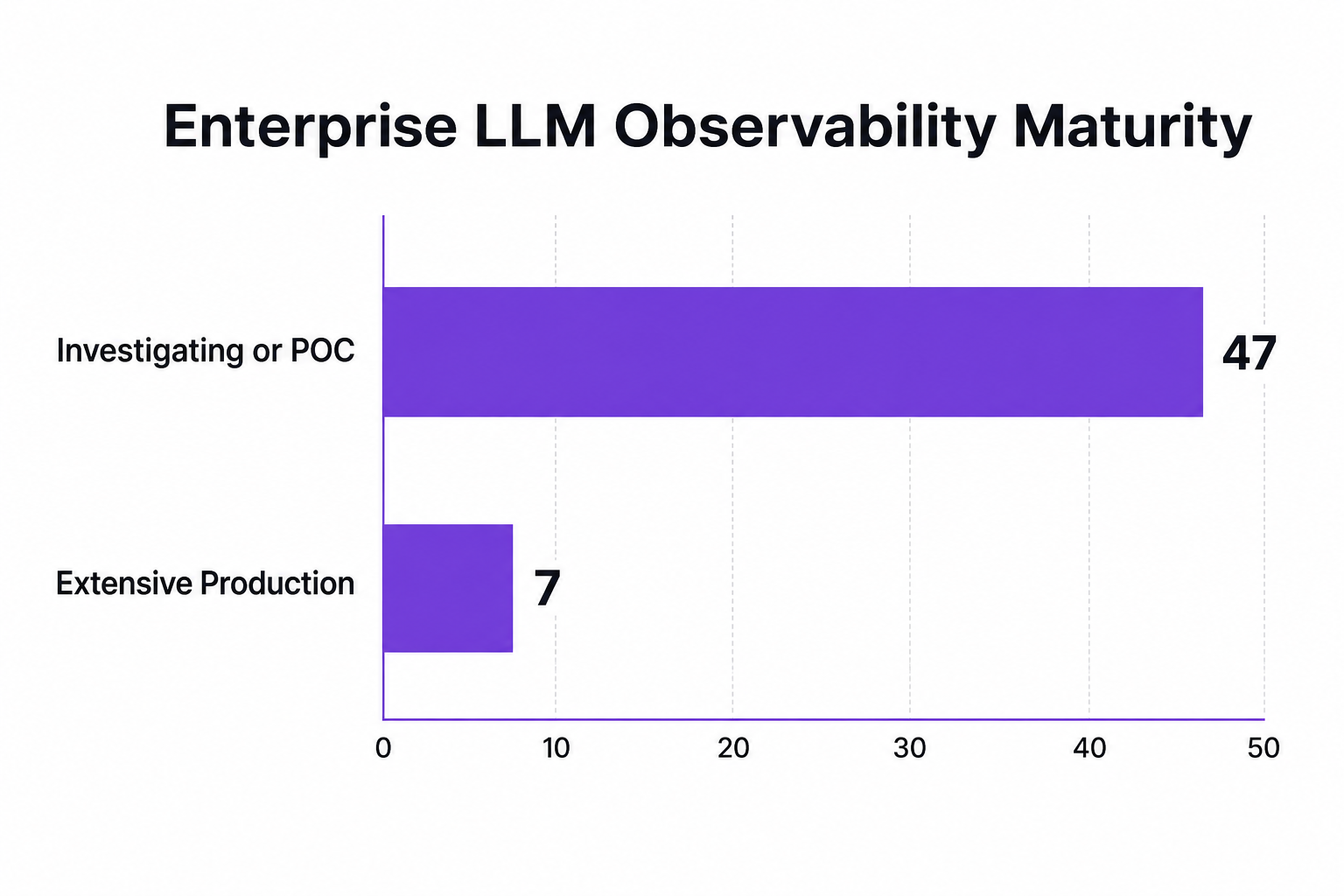
Enterprises demand dependability from AI systems, especially as LLMs automate mission-critical tasks and customer interactions. Yet, industry data shows only 7% of organizations have LLM observability running extensively or exclusively in production. As deployment scales, risks compound:
Business losses from AI hallucinations reached an estimated $67.4 billion.
35% of brands experienced reputational damage due to AI hallucinations.
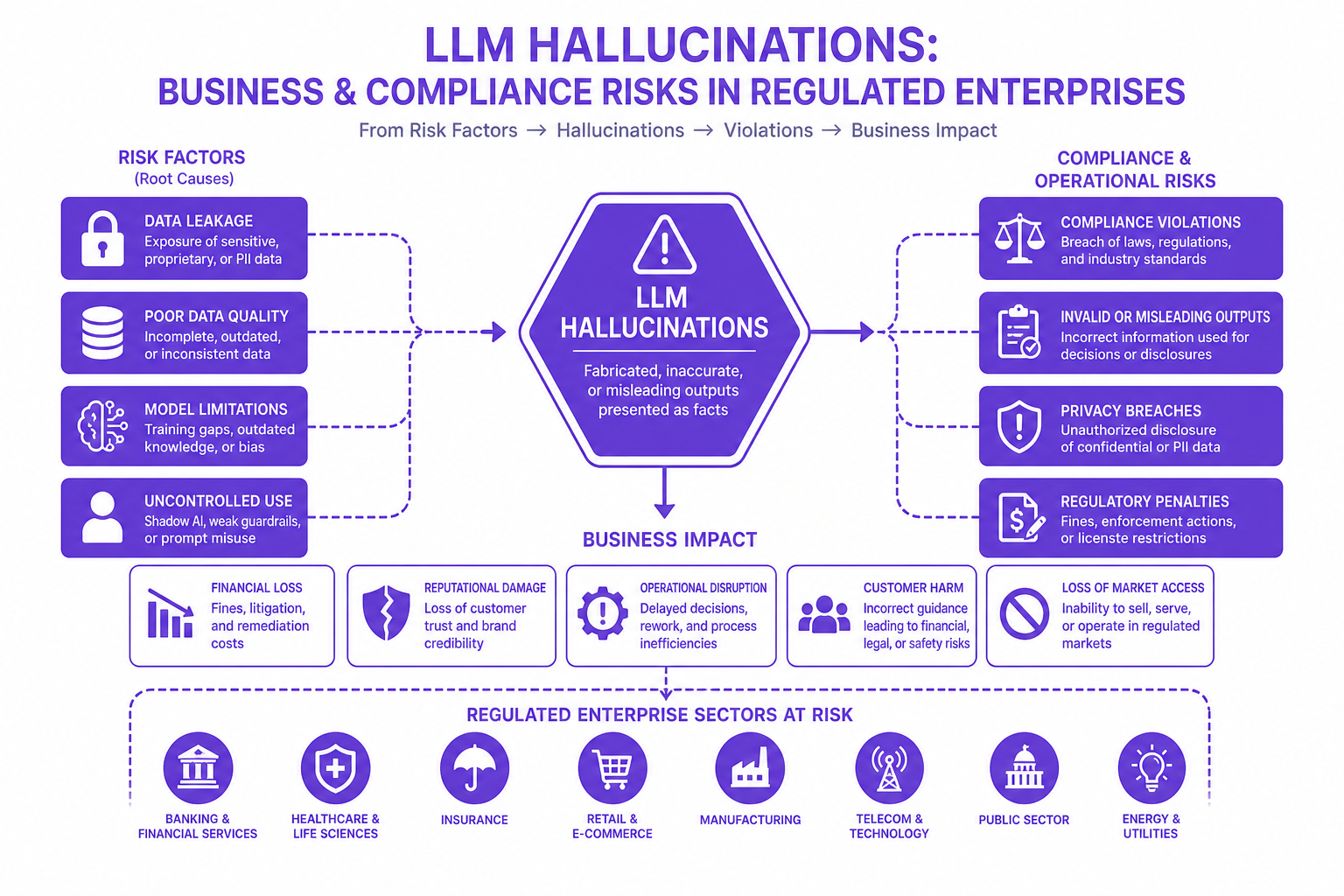
Hallucinations, unfounded or misleading outputs, are particularly acute in regulated industries and specialized domains. Domain-specific benchmarks show hallucination rates as high as 69% to 88% for legal queries, while sensitive verticals like healthcare regularly exceed 10% to 20% in critical support tasks. High-quality, always-on LLM monitoring is not a nice-to-have, but essential for operational integrity and regulatory compliance.
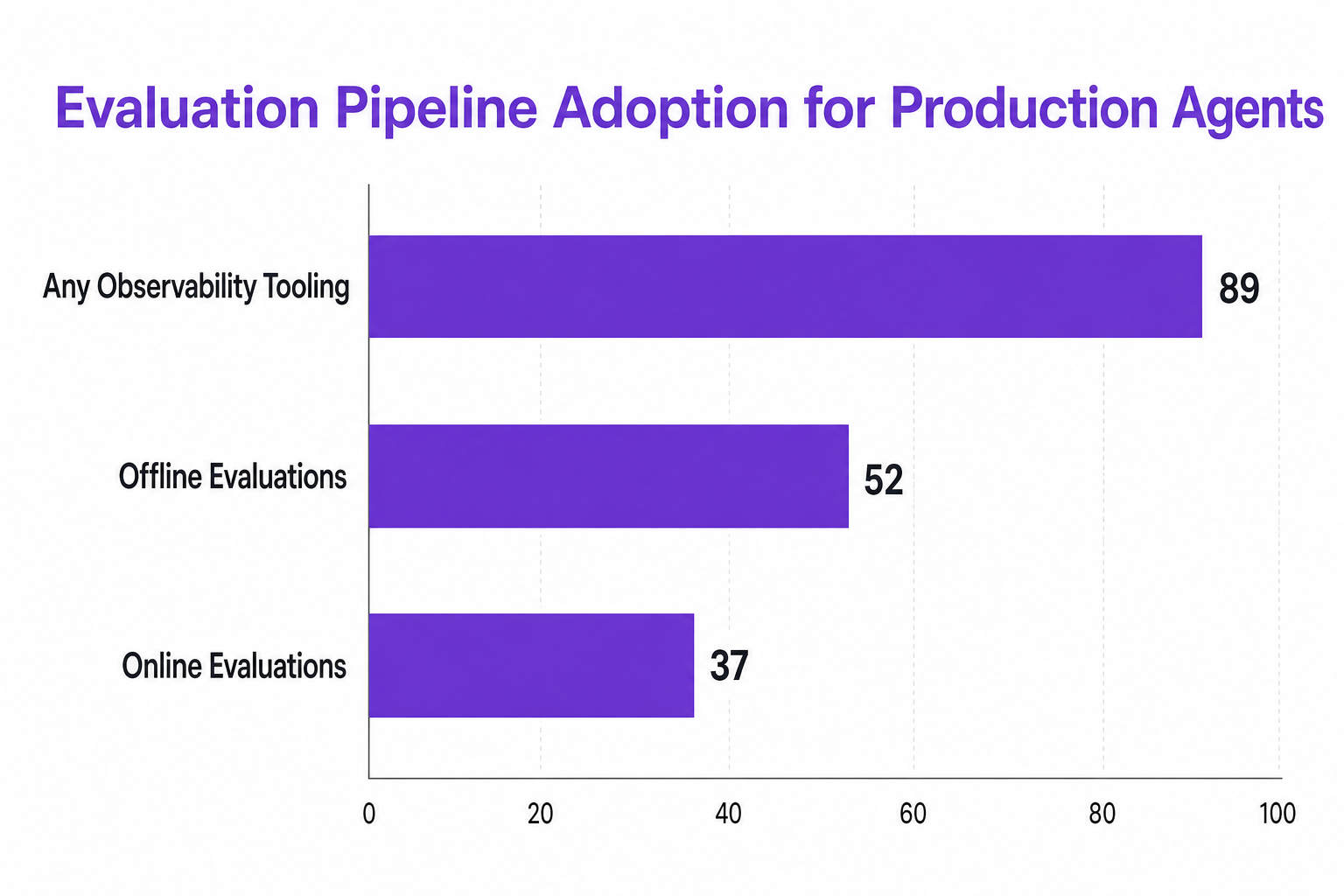
Organizations are moving away from ad-hoc, offline evaluations in favor of continuous, always-on observability. This accounts for constantly evolving user inputs, context, and the underlying model updates. Today’s best-in-class LLM monitoring frameworks combine:
Multi-signal drift detection: factuality, groundedness, semantic similarity, latency, and token consumption
Real-time KPI tracking by application, project, and user
Granular compliance reporting and governance guardrails
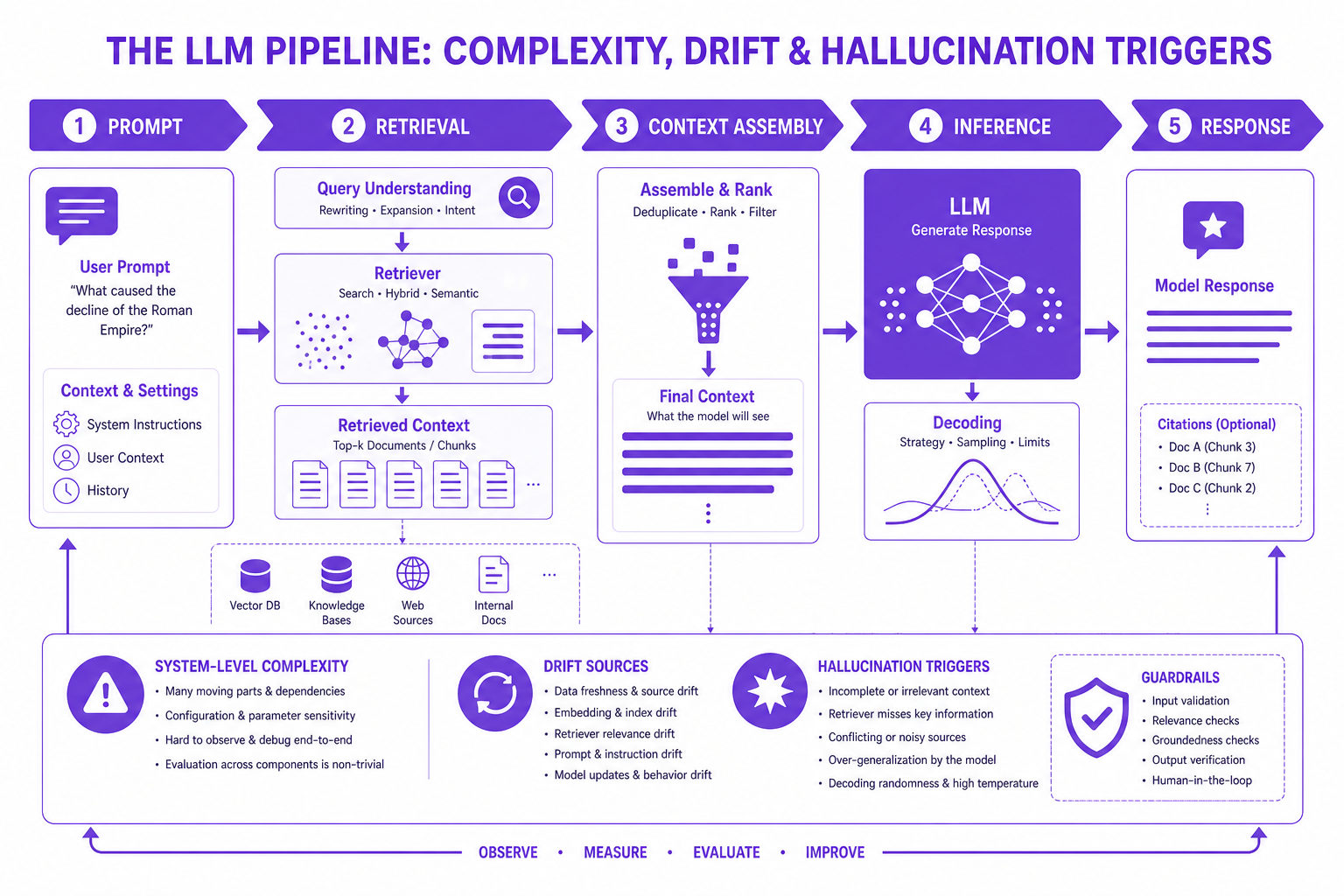
LLMs do not operate in isolation; they function as part of complex pipelines involving retrieval, multi-stage reasoning, and downstream systems. Traditional accuracy and similarity metrics fall short. Enterprises must instead evaluate quality based on end-to-end completion rates, groundedness, non-repudiation, and compliance with regulatory constraints, across massive user populations.
Latency: Both total and stage-level (prompt, retrieval, inference, post-processing)
Factuality & Groundedness: Task completion rates, correctness, and adherence to source data
Semantic Drift: Deviation from intended meaning or context in outputs
Hallucination Rate: The percentage of outputs containing unsupported or false information
Compliance Violations: Sensitive data detected in prompts or outputs
Token Consumption: Cost tracking at agent, application, and project levels
Operational alert thresholds typically trigger when hallucination rates exceed 5% in a one-hour window or spike threefold within 15 minutes, signaling potential emerging risks.
Even the best models are prone to drift and hallucinations as:
Models are retrained or updated behind the scenes
User queries evolve and novel business scenarios arise
Integration complexity grows, introducing new error propagation paths
Expert insights link hallucinations to weak reasoning supervision, poor contextual grounding, and error compounding in multi-step pipelines. Model drift is best detected by simultaneously monitoring multiple signals, like rising latency coupled with falling semantic similarity and increasing hallucination rates.
Relying on periodic offline evaluation is no longer sufficient. The most effective enterprises:
Instrument every layer of the LLM pipeline to capture real-time usage, performance, and compliance data
Correlate metrics across prompt activity, user segments, latency, and factuality
Implement rapid alerting and remediation workflows before user trust or compliance is undermined
Hallucinations and drift do not always originate from the core model, they can emerge from data retrieval steps, agent orchestration, or data leakage. Monitor outputs as delivered to the end user and align evaluation to core business objectives:
Task-specific risk in high-stakes workflows
Non-repudiation and traceability, especially in regulated sectors
Token and cost attribution by user, agent, and department
Compliance mishaps can have outsized consequences. Use LLM observability platforms that:
Detect and flag the flow of personally identifiable information or regulated data into prompts
Enforce budget ceilings and granular contract rates programmatically
Uncover unsanctioned “shadow AI” usage and rogue applications
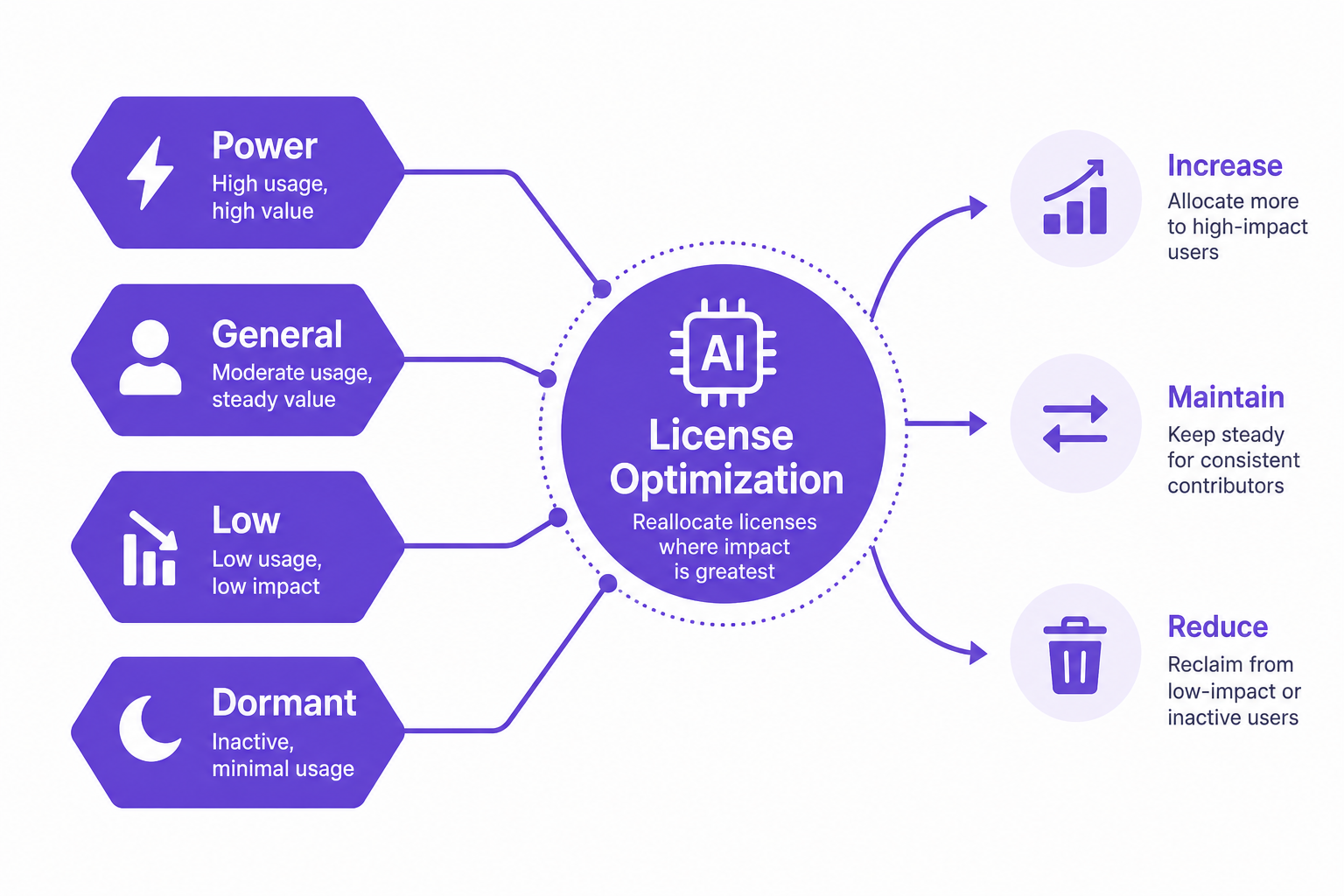
Behavioral activity segmentation enables organizations to reallocate expensive AI and SaaS licenses seamlessly, reclaiming unused spend and boosting ROI:
Segmenting users into Power, General, Low, and Dormant categories enables right-sizing of access and privileges
Enterprises have generated savings exceeding $120,000 within the first quarter of deploying automated AI usage audits
CloudNuro AI Custodian is purpose-built for the complexities of enterprise LLM and generative AI operations:
End-to-end observability: Tracks latency, performance, factuality, groundedness, and compliance for every agent and application
Complete cost transparency: Allocates token expenses at project and user level, enforces budget caps, and reconciles custom contract rates
Compliance-first architecture: Real-time guardrails protect sensitive data and enforce policy, integrated with 400+ business applications
Unified governance and reporting: Aggregates all AI usage and performance signals into a single dashboard for IT, Finance, and Governance leaders
Automated license optimization: Segments user activity and flags dormant access, minimizing spend and maximizing utilization across the LLM portfolio
Organizations leveraging CloudNuro consistently identify 20% to 30% in cost savings within 90 days, with returns exceeding 1000% within one year. A global legal firm realized over $230,000 in savings by moving to a unified FinOps and governance platform, while dramatically reducing audit risk and operational blind spots.
How do enterprises monitor LLM quality?
Enterprises deploy always-on LLM quality monitoring across applications, stages, and user segments. This includes tracking end-to-end latency, factuality, semantic similarity, completion rates, groundedness, hallucination rates, and compliance violations through centralized dashboards like CloudNuro AI Custodian.
What is LLM drift and how can it be detected?
LLM drift refers to unwanted changes in model performance, context alignment, or accuracy over time. Detecting drift requires correlating metrics, such as rising latency, changing semantic similarity, and increased hallucination rates, across multiple applications and projects.
How can organizations detect AI hallucinations in LLMs?
By continuously analyzing outputs for unsupported, false, or misleading information (hallucinations), and setting operational thresholds for automatic alerting. Tools like CloudNuro use benchmarked hallucination metrics by domain to detect when intervention is needed.
What tools are best for LLM evaluation and monitoring?
Enterprise-focused LLM monitoring platforms such as CloudNuro AI Custodian offer end-to-end observability, cost tracking, compliance guardrails, license optimization, and policy enforcement at scale, designed for both IT and governance leaders.
Why is LLM quality monitoring crucial at enterprise scale?
Quality monitoring prevents costly errors, reputational risk, and compliance violations by tracking real-world outputs, usage, and cost. As deployments scale, the operational and financial consequences of model drift and hallucination become more severe, making robust monitoring essential for enterprise success.
Achieving trustworthy and effective LLM operations at enterprise scale is about more than maximizing accuracy, it’s about operationalizing visibility, governance, and cost control. CloudNuro equips organizations to embrace AI innovation with confidence, knowing that every stage of the LLM lifecycle is observed, secured, and optimized.
Ready to future-proof your enterprise LLM strategy?'
CloudNuro is a leader in Enterprise AI Adoption Management, providing enterprises with unmatched visibility, governance, and cost optimization. Recognized twice in a row in the SaaS Management Platforms category and named a Leader in the SoftwareReviews Data Quadrant, CloudNuro is trusted by global enterprises and government agencies to bring financial discipline to SaaS, cloud, and AI. Trusted by enterprises, CloudNuro provides centralized SaaS inventory, license optimization, and renewal management along with advanced cost allocation and chargeback, giving IT and Finance leaders the visibility, control, and cost-conscious culture needed to drive financial discipline.
Request a no cost, no obligation free assessment —just 15 minutes to savings!
Get StartedEnterprises are accelerating their adoption of large language models (LLMs) to drive innovation and automation across every sector, from healthcare and finance to government and beyond. Yet, as LLM-powered workflows permeate critical business processes, maintaining model quality, detecting drift, and mitigating hallucination risks becomes a pressing challenge. Without effective LLM quality monitoring, organizations can face surging costs, reputational harm, and compliance violations, all at scale.
This guide provides a clear, actionable roadmap for CIOs and CTOs who are responsible for LLM oversight in complex environments. We will examine the most urgent pain points, best practices for quality and drift assessment, metrics that matter, and how CloudNuro enables enterprise AI governance with unmatched visibility and operational control.
Enterprises demand dependability from AI systems, especially as LLMs automate mission-critical tasks and customer interactions. Yet, industry data shows only 7% of organizations have LLM observability running extensively or exclusively in production. As deployment scales, risks compound:
Business losses from AI hallucinations reached an estimated $67.4 billion.
35% of brands experienced reputational damage due to AI hallucinations.
Hallucinations, unfounded or misleading outputs, are particularly acute in regulated industries and specialized domains. Domain-specific benchmarks show hallucination rates as high as 69% to 88% for legal queries, while sensitive verticals like healthcare regularly exceed 10% to 20% in critical support tasks. High-quality, always-on LLM monitoring is not a nice-to-have, but essential for operational integrity and regulatory compliance.
Organizations are moving away from ad-hoc, offline evaluations in favor of continuous, always-on observability. This accounts for constantly evolving user inputs, context, and the underlying model updates. Today’s best-in-class LLM monitoring frameworks combine:
Multi-signal drift detection: factuality, groundedness, semantic similarity, latency, and token consumption
Real-time KPI tracking by application, project, and user
Granular compliance reporting and governance guardrails
LLMs do not operate in isolation; they function as part of complex pipelines involving retrieval, multi-stage reasoning, and downstream systems. Traditional accuracy and similarity metrics fall short. Enterprises must instead evaluate quality based on end-to-end completion rates, groundedness, non-repudiation, and compliance with regulatory constraints, across massive user populations.
Latency: Both total and stage-level (prompt, retrieval, inference, post-processing)
Factuality & Groundedness: Task completion rates, correctness, and adherence to source data
Semantic Drift: Deviation from intended meaning or context in outputs
Hallucination Rate: The percentage of outputs containing unsupported or false information
Compliance Violations: Sensitive data detected in prompts or outputs
Token Consumption: Cost tracking at agent, application, and project levels
Operational alert thresholds typically trigger when hallucination rates exceed 5% in a one-hour window or spike threefold within 15 minutes, signaling potential emerging risks.
Even the best models are prone to drift and hallucinations as:
Models are retrained or updated behind the scenes
User queries evolve and novel business scenarios arise
Integration complexity grows, introducing new error propagation paths
Expert insights link hallucinations to weak reasoning supervision, poor contextual grounding, and error compounding in multi-step pipelines. Model drift is best detected by simultaneously monitoring multiple signals, like rising latency coupled with falling semantic similarity and increasing hallucination rates.
Relying on periodic offline evaluation is no longer sufficient. The most effective enterprises:
Instrument every layer of the LLM pipeline to capture real-time usage, performance, and compliance data
Correlate metrics across prompt activity, user segments, latency, and factuality
Implement rapid alerting and remediation workflows before user trust or compliance is undermined
Hallucinations and drift do not always originate from the core model, they can emerge from data retrieval steps, agent orchestration, or data leakage. Monitor outputs as delivered to the end user and align evaluation to core business objectives:
Task-specific risk in high-stakes workflows
Non-repudiation and traceability, especially in regulated sectors
Token and cost attribution by user, agent, and department
Compliance mishaps can have outsized consequences. Use LLM observability platforms that:
Detect and flag the flow of personally identifiable information or regulated data into prompts
Enforce budget ceilings and granular contract rates programmatically
Uncover unsanctioned “shadow AI” usage and rogue applications
Behavioral activity segmentation enables organizations to reallocate expensive AI and SaaS licenses seamlessly, reclaiming unused spend and boosting ROI:
Segmenting users into Power, General, Low, and Dormant categories enables right-sizing of access and privileges
Enterprises have generated savings exceeding $120,000 within the first quarter of deploying automated AI usage audits
CloudNuro AI Custodian is purpose-built for the complexities of enterprise LLM and generative AI operations:
End-to-end observability: Tracks latency, performance, factuality, groundedness, and compliance for every agent and application
Complete cost transparency: Allocates token expenses at project and user level, enforces budget caps, and reconciles custom contract rates
Compliance-first architecture: Real-time guardrails protect sensitive data and enforce policy, integrated with 400+ business applications
Unified governance and reporting: Aggregates all AI usage and performance signals into a single dashboard for IT, Finance, and Governance leaders
Automated license optimization: Segments user activity and flags dormant access, minimizing spend and maximizing utilization across the LLM portfolio
Organizations leveraging CloudNuro consistently identify 20% to 30% in cost savings within 90 days, with returns exceeding 1000% within one year. A global legal firm realized over $230,000 in savings by moving to a unified FinOps and governance platform, while dramatically reducing audit risk and operational blind spots.
How do enterprises monitor LLM quality?
Enterprises deploy always-on LLM quality monitoring across applications, stages, and user segments. This includes tracking end-to-end latency, factuality, semantic similarity, completion rates, groundedness, hallucination rates, and compliance violations through centralized dashboards like CloudNuro AI Custodian.
What is LLM drift and how can it be detected?
LLM drift refers to unwanted changes in model performance, context alignment, or accuracy over time. Detecting drift requires correlating metrics, such as rising latency, changing semantic similarity, and increased hallucination rates, across multiple applications and projects.
How can organizations detect AI hallucinations in LLMs?
By continuously analyzing outputs for unsupported, false, or misleading information (hallucinations), and setting operational thresholds for automatic alerting. Tools like CloudNuro use benchmarked hallucination metrics by domain to detect when intervention is needed.
What tools are best for LLM evaluation and monitoring?
Enterprise-focused LLM monitoring platforms such as CloudNuro AI Custodian offer end-to-end observability, cost tracking, compliance guardrails, license optimization, and policy enforcement at scale, designed for both IT and governance leaders.
Why is LLM quality monitoring crucial at enterprise scale?
Quality monitoring prevents costly errors, reputational risk, and compliance violations by tracking real-world outputs, usage, and cost. As deployments scale, the operational and financial consequences of model drift and hallucination become more severe, making robust monitoring essential for enterprise success.
Achieving trustworthy and effective LLM operations at enterprise scale is about more than maximizing accuracy, it’s about operationalizing visibility, governance, and cost control. CloudNuro equips organizations to embrace AI innovation with confidence, knowing that every stage of the LLM lifecycle is observed, secured, and optimized.
Ready to future-proof your enterprise LLM strategy?'
CloudNuro is a leader in Enterprise AI Adoption Management, providing enterprises with unmatched visibility, governance, and cost optimization. Recognized twice in a row in the SaaS Management Platforms category and named a Leader in the SoftwareReviews Data Quadrant, CloudNuro is trusted by global enterprises and government agencies to bring financial discipline to SaaS, cloud, and AI. Trusted by enterprises, CloudNuro provides centralized SaaS inventory, license optimization, and renewal management along with advanced cost allocation and chargeback, giving IT and Finance leaders the visibility, control, and cost-conscious culture needed to drive financial discipline.
Request a no cost, no obligation free assessment - just 15 minutes to savings!
Get StartedWe're offering complimentary ServiceNow license assessments to only 25 enterprises this quarter who want to unlock immediate savings without disrupting operations.
Get Free AssessmentGet Started




CloudNuro Corp
1755 Park St. Suite 207
Naperville, IL 60563
Phone : +1-630-277-9470
Email: info@cloudnuro.com




.webp)

Recognized Leader in SaaS Management Platforms by Info-Tech SoftwareReviews



.svg)