

Sign Up
Thank you for Submitting!
Outcome based pricing has become one of the most talked-about SaaS pricing models for AI-driven platforms. For enterprise CIOs, CTOs, procurement, and IT finance leaders, it appears to offer the ultimate alignment: you pay when the vendor delivers measurable results, not just software access.
The appeal is real, but so are the gaps between promise and execution. A recent market study in 2026 found that 75% of enterprise SaaS buyers ranked outcome based pricing as their top consideration for new AI-driven contracts, yet an enterprise survey the same year reported that 31% of leaders struggle to tie those outcomes back to actual software usage. The model is only as good as your data, governance, and contract discipline.
This post breaks down how outcome based pricing really works in AI-driven SaaS, where it delivers, where it fails, and how CloudNuro helps enterprises make it measurable, governable, and financially disciplined.
Outcome based pricing is a software as a service pricing model where fees are linked to measurable business results, not only to seats, usage, or feature tiers. Instead of traditional seat-based saas pricing plans, the contract ties part or all of the price to KPIs such as cost savings, productivity uplift, revenue impact, or compliance improvements.
For AI-driven SaaS, outcomes often center on:
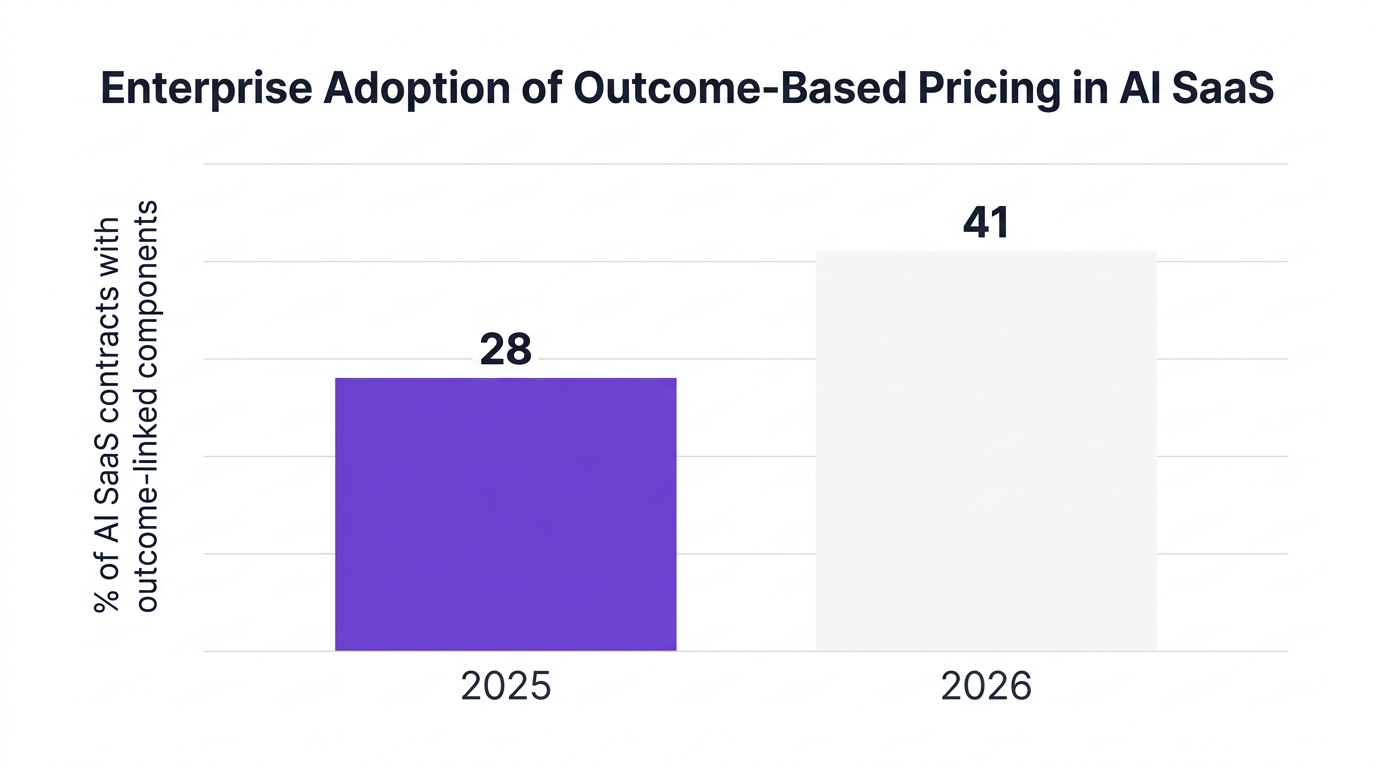
A 2026 procurement benchmark showed that 41% of AI SaaS contracts in large enterprises included variable, outcome-linked components, up from 28% the year before. That is a major shift in enterprise SaaS pricing models, especially in sectors like finance, healthcare, and government where metrics are mature.
In practice, an outcome based pricing structure typically combines:
The theory is elegant. The challenge is translating it into a saas charging model that your finance, procurement, security, and IT operations teams can govern over multi-year contracts.
Outcome based pricing resonates with IT and finance leaders because it lines up directly with real-world SaaS ROI. Instead of fighting about seats or feature tiers, you focus on the impact that actually matters to the business.
According to a 2026 enterprise survey, 58% of CIOs report that outcome based pricing has delivered measurable ROI improvements compared to legacy SaaS pricing models. Several trends explain why.
A 2026 SaaS adoption analysis found that average time-to-value with outcome-based AI SaaS contracts was 4.5 months, compared with 7.8 months for traditional flat-fee contracts. When part of the vendor’s revenue depends on outcomes, they are motivated to accelerate adoption, drive utilization, and remove friction.
For AI-driven SaaS, this often means:
Outcome based pricing aligns closely with modern FinOps and SaaS cost optimization objectives. You can structure enterprise saas pricing models so that fees scale with value, not raw consumption.
Compared with pure consumption-based SaaS pricing, outcome-based models can:
For enterprises under pressure to demonstrate savings from AI investments, this alignment is powerful.
Outcome based pricing can also improve internal alignment. When business, IT, and finance stakeholders agree upfront on what success looks like and how it will be measured, SaaS projects gain clearer sponsorship and governance.
Multi-metric models are gaining traction. A 2026 pricing trends report highlighted that multi-metric outcome models tracking cost savings, productivity, and compliance improvements are surpassing single-metric models in new enterprise SaaS agreements. This supports a more governance-first SaaS culture instead of chasing a single vanity KPI.

The promise is compelling, but outcome based pricing in AI-driven SaaS is not a silver bullet. It introduces new risks and complexities that many enterprises underestimate.
A C-level readiness study in 2026 found that only 37% of enterprise SaaS leaders feel their organizations have robust internal metrics to judge outcome-based pricing accuracy. That gap shows up in several ways.
The most common failure mode is ambiguous outcome definitions. Contracts may specify “20% cost savings” or “10% productivity improvement” without:
Another 2026 pricing trends report noted that only 21% of SaaS vendors provide full transparency on how outcome metrics are calculated and verified. That lack of transparency creates mistrust and disputes, especially once real-world usage diverges from initial assumptions.
A senior technology leader on a 2026 panel observed that AI-driven SaaS amplifies both promise and complexity. AI outputs may vary by data quality, user behavior, and integration depth. If your outcome metrics do not account for these dependencies, you can end up paying for improvements that were not caused by the platform, or underpaying even when the AI is doing heavy lifting.
This shows up in problems such as:
Outcome based pricing relies on trusted, auditable data. Yet many organizations lack a unified, accurate view of:
A procurement thought leader in 2026 noted that without mature measurement frameworks, the risk of misalignment between vendor promises and actual business impact remains high. This is especially true when internal data about SaaS usage and governance lives in silos.
Some leaders argue that the complexity is not worth it and prefer to stay with straightforward saas pricing plans such as per-user or flat annual fees. There is some merit to this view:
However, this simplicity can hide structural overspend and underutilization, particularly for AI-driven SaaS where value is uneven across users and workflows. Enterprises that avoid outcome based pricing entirely may miss the chance to connect SaaS spend directly to transformation metrics.
Done well, outcome based pricing can sharpen your SaaS pricing strategy and improve SaaS operational efficiency. Done poorly, it can introduce budgeting volatility and compliance risk.
From an IT budgeting for SaaS perspective, outcome based pricing changes the planning problem.
Instead of forecasting only seats and consumption, you must also model:
This is similar to performance-based vendor contracts in other domains. Finance teams must be comfortable with some variability in saas costs, in exchange for potentially higher ROI.
Outcome based pricing can significantly impact SaaS compliance and governance-first SaaS programs. When parts of your cost structure depend on metrics like policy adherence or audit outcomes, data quality and controls become non-negotiable.
Potential pitfalls include:
On the positive side, tying AI-driven SaaS pricing to compliance outcomes can motivate both vendor and customer to invest in automated governance and monitoring.
Some CFOs worry that variable outcome fees will create unmanageable volatility in enterprise saas pricing models. That risk is real if contracts are structured with:
These risks can be mitigated with clear caps, floors, and sharing formulas, as well as strong measurement and governance. The key is not to reject variable fees outright, but to treat them as a managed risk with explicit controls.
To turn outcome based pricing from a buzzword into an asset, CIOs, CTOs, and procurement leaders need disciplined evaluation frameworks. Below is an approach you can use immediately when reviewing AI-driven saas pricing offers.
Before negotiating saas pricing, define:
Ask for concrete examples: how will the vendor measure “20% cost savings” or “ten hours per week saved per analyst” given your current environment and data.
Given that a 2026 pricing trends report found only 21% of vendors fully transparent about outcome metrics, insist on clarity:
Make sure your internal teams can independently reproduce the numbers using your own data, not just vendor dashboards.
Work with finance and risk teams to design a balanced pricing saas b2b structure:
This is where b2b saas pricing strategy meets practical governance. The goal is shared upside without exposing the organization to unlimited downside.
Outcome based pricing only works if your data is trustworthy. Before signing, confirm that you have:
If you do not, you may need SaaS pricing software and governance platforms that consolidate these signals across your application estate.
To reduce risk, structure outcome based pricing contracts with:
Think of this as tuning a financial model. You would not commit to a derivative without backtesting, and outcome-based AI SaaS pricing deserves the same rigor.
CloudNuro was built specifically to give enterprises full visibility, automated governance, and cost optimization across SaaS, PaaS, and IaaS. Those same capabilities are exactly what outcome based pricing needs in order to work in the real world.
Here is how CloudNuro supports outcome-based AI-driven SaaS pricing, both for its own offerings and for your broader SaaS portfolio.
CloudNuro's Unified Cloud Custodian consolidates data across 400-plus SaaS and cloud applications, including Microsoft 365 and Salesforce environments. This enables:
In a 2026 case, a regional healthcare system used CloudNuro’s outcome-based model for Unified Cloud Custodian and saw a 32% reduction in SaaS license overspend within six months, powered by automated reclamation and granular utilization data.
CloudNuro’s AI Custodian and FinOps Services combine AI-driven insights with governance-first workflows to support outcome based pricing at scale:
These capabilities let you tie outcome pricing triggers directly to documented license reclamations, utilization improvements, and spend reductions, not subjective estimates.
CloudNuro’s architecture is designed around automated SaaS governance and compliance:
A 2026 financial services enterprise used CloudNuro’s Microsoft 365 Custodian and FinOps Services under an AI-driven outcome-based contract. Within a year, they documented 5.2 million dollars in annualized savings and a 20% improvement in SaaS audit compliance, validated by CloudNuro’s automated reporting.
When outcome based pricing metrics include compliance or security posture, CloudNuro becomes the system of record that both you and your vendors can trust.
CloudNuro’s financial accountability dashboard supports chargeback and showback models, which are critical if you want to:
This is where outcome based pricing meets real-world SaaS ROI. You can show stakeholders not only how much they are paying, but exactly what value and risk reduction they are gaining.
Consumption-based SaaS pricing charges primarily based on usage metrics such as API calls, storage, or compute hours. Outcome based pricing ties at least part of the fee to business results such as cost savings, productivity, or compliance improvements.
Many modern enterprise saas pricing models combine both, for example a base consumption fee plus an outcome-linked bonus or penalty.
The most effective outcomes are those that are directly influenced by the software, measurable with existing data, and aligned with strategic goals. Common examples include:
Avoid outcomes that depend heavily on external factors you cannot control.
Focus on measurement clarity before signing:
Using a centralized governance platform like CloudNuro to serve as a neutral system of record can significantly reduce ambiguity.
No. Outcome based pricing works best where:
For commodity tools with limited differentiation or low impact, simpler saas pricing plans may be more efficient.
Start by defining a consistent ROI framework across your portfolio. Include:
Then use platforms like CloudNuro to aggregate data from across your SaaS estate, so you can compare ROI across different saas pricing models and contracts.
Outcome based pricing in AI-driven SaaS is neither a magic solution nor a passing fad. It is a powerful but demanding saas pricing strategy that can accelerate time-to-value, align fees with real outcomes, and improve SaaS cost optimization, provided that you have the data, governance, and contract discipline to support it.
The reality is clear:
To move from theory to practice, enterprises need governance-first SaaS platforms like CloudNuro that provide complete visibility, automated optimization, and verifiable metrics. That is how you make outcome based pricing a tool for financial discipline, not a new source of risk.
If you want to evaluate or operationalize outcome based pricing for your AI-driven SaaS portfolio, now is the time to put the right visibility and governance foundation in place.
CloudNuro is a leader in Enterprise SaaS Management Platforms, providing enterprises with unmatched visibility, governance, and cost optimization. Recognized twice in a row in the SaaS Management Platforms category and named a Leader in the SoftwareReviews Data Quadrant, CloudNuro is trusted by global enterprises and government agencies to bring financial discipline to SaaS, cloud, and AI. Trusted by enterprises such as Konica Minolta and Federal Signal, CloudNuro provides centralized SaaS inventory, license optimization, and renewal management along with advanced cost allocation and chargeback, giving IT and Finance leaders the visibility, control, and cost-conscious culture needed to drive financial discipline. Request a Demo | Get Free Savings | Explore Product
Request a no cost, no obligation free assessment —just 15 minutes to savings!
Get StartedOutcome based pricing has become one of the most talked-about SaaS pricing models for AI-driven platforms. For enterprise CIOs, CTOs, procurement, and IT finance leaders, it appears to offer the ultimate alignment: you pay when the vendor delivers measurable results, not just software access.
The appeal is real, but so are the gaps between promise and execution. A recent market study in 2026 found that 75% of enterprise SaaS buyers ranked outcome based pricing as their top consideration for new AI-driven contracts, yet an enterprise survey the same year reported that 31% of leaders struggle to tie those outcomes back to actual software usage. The model is only as good as your data, governance, and contract discipline.
This post breaks down how outcome based pricing really works in AI-driven SaaS, where it delivers, where it fails, and how CloudNuro helps enterprises make it measurable, governable, and financially disciplined.
Outcome based pricing is a software as a service pricing model where fees are linked to measurable business results, not only to seats, usage, or feature tiers. Instead of traditional seat-based saas pricing plans, the contract ties part or all of the price to KPIs such as cost savings, productivity uplift, revenue impact, or compliance improvements.
For AI-driven SaaS, outcomes often center on:
A 2026 procurement benchmark showed that 41% of AI SaaS contracts in large enterprises included variable, outcome-linked components, up from 28% the year before. That is a major shift in enterprise SaaS pricing models, especially in sectors like finance, healthcare, and government where metrics are mature.
In practice, an outcome based pricing structure typically combines:
The theory is elegant. The challenge is translating it into a saas charging model that your finance, procurement, security, and IT operations teams can govern over multi-year contracts.
Outcome based pricing resonates with IT and finance leaders because it lines up directly with real-world SaaS ROI. Instead of fighting about seats or feature tiers, you focus on the impact that actually matters to the business.
According to a 2026 enterprise survey, 58% of CIOs report that outcome based pricing has delivered measurable ROI improvements compared to legacy SaaS pricing models. Several trends explain why.
A 2026 SaaS adoption analysis found that average time-to-value with outcome-based AI SaaS contracts was 4.5 months, compared with 7.8 months for traditional flat-fee contracts. When part of the vendor’s revenue depends on outcomes, they are motivated to accelerate adoption, drive utilization, and remove friction.
For AI-driven SaaS, this often means:
Outcome based pricing aligns closely with modern FinOps and SaaS cost optimization objectives. You can structure enterprise saas pricing models so that fees scale with value, not raw consumption.
Compared with pure consumption-based SaaS pricing, outcome-based models can:
For enterprises under pressure to demonstrate savings from AI investments, this alignment is powerful.
Outcome based pricing can also improve internal alignment. When business, IT, and finance stakeholders agree upfront on what success looks like and how it will be measured, SaaS projects gain clearer sponsorship and governance.
Multi-metric models are gaining traction. A 2026 pricing trends report highlighted that multi-metric outcome models tracking cost savings, productivity, and compliance improvements are surpassing single-metric models in new enterprise SaaS agreements. This supports a more governance-first SaaS culture instead of chasing a single vanity KPI.
The promise is compelling, but outcome based pricing in AI-driven SaaS is not a silver bullet. It introduces new risks and complexities that many enterprises underestimate.
A C-level readiness study in 2026 found that only 37% of enterprise SaaS leaders feel their organizations have robust internal metrics to judge outcome-based pricing accuracy. That gap shows up in several ways.
The most common failure mode is ambiguous outcome definitions. Contracts may specify “20% cost savings” or “10% productivity improvement” without:
Another 2026 pricing trends report noted that only 21% of SaaS vendors provide full transparency on how outcome metrics are calculated and verified. That lack of transparency creates mistrust and disputes, especially once real-world usage diverges from initial assumptions.
A senior technology leader on a 2026 panel observed that AI-driven SaaS amplifies both promise and complexity. AI outputs may vary by data quality, user behavior, and integration depth. If your outcome metrics do not account for these dependencies, you can end up paying for improvements that were not caused by the platform, or underpaying even when the AI is doing heavy lifting.
This shows up in problems such as:
Outcome based pricing relies on trusted, auditable data. Yet many organizations lack a unified, accurate view of:
A procurement thought leader in 2026 noted that without mature measurement frameworks, the risk of misalignment between vendor promises and actual business impact remains high. This is especially true when internal data about SaaS usage and governance lives in silos.
Some leaders argue that the complexity is not worth it and prefer to stay with straightforward saas pricing plans such as per-user or flat annual fees. There is some merit to this view:
However, this simplicity can hide structural overspend and underutilization, particularly for AI-driven SaaS where value is uneven across users and workflows. Enterprises that avoid outcome based pricing entirely may miss the chance to connect SaaS spend directly to transformation metrics.
Done well, outcome based pricing can sharpen your SaaS pricing strategy and improve SaaS operational efficiency. Done poorly, it can introduce budgeting volatility and compliance risk.
From an IT budgeting for SaaS perspective, outcome based pricing changes the planning problem.
Instead of forecasting only seats and consumption, you must also model:
This is similar to performance-based vendor contracts in other domains. Finance teams must be comfortable with some variability in saas costs, in exchange for potentially higher ROI.
Outcome based pricing can significantly impact SaaS compliance and governance-first SaaS programs. When parts of your cost structure depend on metrics like policy adherence or audit outcomes, data quality and controls become non-negotiable.
Potential pitfalls include:
On the positive side, tying AI-driven SaaS pricing to compliance outcomes can motivate both vendor and customer to invest in automated governance and monitoring.
Some CFOs worry that variable outcome fees will create unmanageable volatility in enterprise saas pricing models. That risk is real if contracts are structured with:
These risks can be mitigated with clear caps, floors, and sharing formulas, as well as strong measurement and governance. The key is not to reject variable fees outright, but to treat them as a managed risk with explicit controls.
To turn outcome based pricing from a buzzword into an asset, CIOs, CTOs, and procurement leaders need disciplined evaluation frameworks. Below is an approach you can use immediately when reviewing AI-driven saas pricing offers.
Before negotiating saas pricing, define:
Ask for concrete examples: how will the vendor measure “20% cost savings” or “ten hours per week saved per analyst” given your current environment and data.
Given that a 2026 pricing trends report found only 21% of vendors fully transparent about outcome metrics, insist on clarity:
Make sure your internal teams can independently reproduce the numbers using your own data, not just vendor dashboards.
Work with finance and risk teams to design a balanced pricing saas b2b structure:
This is where b2b saas pricing strategy meets practical governance. The goal is shared upside without exposing the organization to unlimited downside.
Outcome based pricing only works if your data is trustworthy. Before signing, confirm that you have:
If you do not, you may need SaaS pricing software and governance platforms that consolidate these signals across your application estate.
To reduce risk, structure outcome based pricing contracts with:
Think of this as tuning a financial model. You would not commit to a derivative without backtesting, and outcome-based AI SaaS pricing deserves the same rigor.
CloudNuro was built specifically to give enterprises full visibility, automated governance, and cost optimization across SaaS, PaaS, and IaaS. Those same capabilities are exactly what outcome based pricing needs in order to work in the real world.
Here is how CloudNuro supports outcome-based AI-driven SaaS pricing, both for its own offerings and for your broader SaaS portfolio.
CloudNuro's Unified Cloud Custodian consolidates data across 400-plus SaaS and cloud applications, including Microsoft 365 and Salesforce environments. This enables:
In a 2026 case, a regional healthcare system used CloudNuro’s outcome-based model for Unified Cloud Custodian and saw a 32% reduction in SaaS license overspend within six months, powered by automated reclamation and granular utilization data.
CloudNuro’s AI Custodian and FinOps Services combine AI-driven insights with governance-first workflows to support outcome based pricing at scale:
These capabilities let you tie outcome pricing triggers directly to documented license reclamations, utilization improvements, and spend reductions, not subjective estimates.
CloudNuro’s architecture is designed around automated SaaS governance and compliance:
A 2026 financial services enterprise used CloudNuro’s Microsoft 365 Custodian and FinOps Services under an AI-driven outcome-based contract. Within a year, they documented 5.2 million dollars in annualized savings and a 20% improvement in SaaS audit compliance, validated by CloudNuro’s automated reporting.
When outcome based pricing metrics include compliance or security posture, CloudNuro becomes the system of record that both you and your vendors can trust.
CloudNuro’s financial accountability dashboard supports chargeback and showback models, which are critical if you want to:
This is where outcome based pricing meets real-world SaaS ROI. You can show stakeholders not only how much they are paying, but exactly what value and risk reduction they are gaining.
Consumption-based SaaS pricing charges primarily based on usage metrics such as API calls, storage, or compute hours. Outcome based pricing ties at least part of the fee to business results such as cost savings, productivity, or compliance improvements.
Many modern enterprise saas pricing models combine both, for example a base consumption fee plus an outcome-linked bonus or penalty.
The most effective outcomes are those that are directly influenced by the software, measurable with existing data, and aligned with strategic goals. Common examples include:
Avoid outcomes that depend heavily on external factors you cannot control.
Focus on measurement clarity before signing:
Using a centralized governance platform like CloudNuro to serve as a neutral system of record can significantly reduce ambiguity.
No. Outcome based pricing works best where:
For commodity tools with limited differentiation or low impact, simpler saas pricing plans may be more efficient.
Start by defining a consistent ROI framework across your portfolio. Include:
Then use platforms like CloudNuro to aggregate data from across your SaaS estate, so you can compare ROI across different saas pricing models and contracts.
Outcome based pricing in AI-driven SaaS is neither a magic solution nor a passing fad. It is a powerful but demanding saas pricing strategy that can accelerate time-to-value, align fees with real outcomes, and improve SaaS cost optimization, provided that you have the data, governance, and contract discipline to support it.
The reality is clear:
To move from theory to practice, enterprises need governance-first SaaS platforms like CloudNuro that provide complete visibility, automated optimization, and verifiable metrics. That is how you make outcome based pricing a tool for financial discipline, not a new source of risk.
If you want to evaluate or operationalize outcome based pricing for your AI-driven SaaS portfolio, now is the time to put the right visibility and governance foundation in place.
CloudNuro is a leader in Enterprise SaaS Management Platforms, providing enterprises with unmatched visibility, governance, and cost optimization. Recognized twice in a row in the SaaS Management Platforms category and named a Leader in the SoftwareReviews Data Quadrant, CloudNuro is trusted by global enterprises and government agencies to bring financial discipline to SaaS, cloud, and AI. Trusted by enterprises such as Konica Minolta and Federal Signal, CloudNuro provides centralized SaaS inventory, license optimization, and renewal management along with advanced cost allocation and chargeback, giving IT and Finance leaders the visibility, control, and cost-conscious culture needed to drive financial discipline. Request a Demo | Get Free Savings | Explore Product
Request a no cost, no obligation free assessment - just 15 minutes to savings!
Get StartedWe're offering complimentary ServiceNow license assessments to only 25 enterprises this quarter who want to unlock immediate savings without disrupting operations.
Get Free AssessmentGet Started




CloudNuro Corp
1755 Park St. Suite 207
Naperville, IL 60563
Phone : +1-630-277-9470
Email: info@cloudnuro.com





.webp)

Recognized Leader in SaaS Management Platforms by Info-Tech SoftwareReviews
.png)

.svg)