

Sign Up
Thank you for Submitting!

Ethical, well governed SaaS license optimization is no longer optional for enterprises. As SaaS spend surges and regulatory scrutiny intensifies, CIOs and IT leaders must reclaim unused licenses, control access, and protect data while preserving employee trust and avoiding compliance risk.
Gartner reports that 68% of enterprises now cite license reclamation and ethical access removal as a top IT governance priority for 2026 (Gartner 2026). Yet 72% of IT decision makers say compliance risks during access removal are their primary challenge (McKinsey 2026). This gap is exactly where strong change management, automation, and governance-first SaaS management come together.
This guide explains how to build an ethical, low friction license reclamation process, with practical steps, governance patterns, and examples of how CloudNuro supports secure and compliant access removal.
For most enterprises, SaaS is now the default delivery model. That also means unused and over-provisioned licenses quietly erode budgets and expand the attack surface.
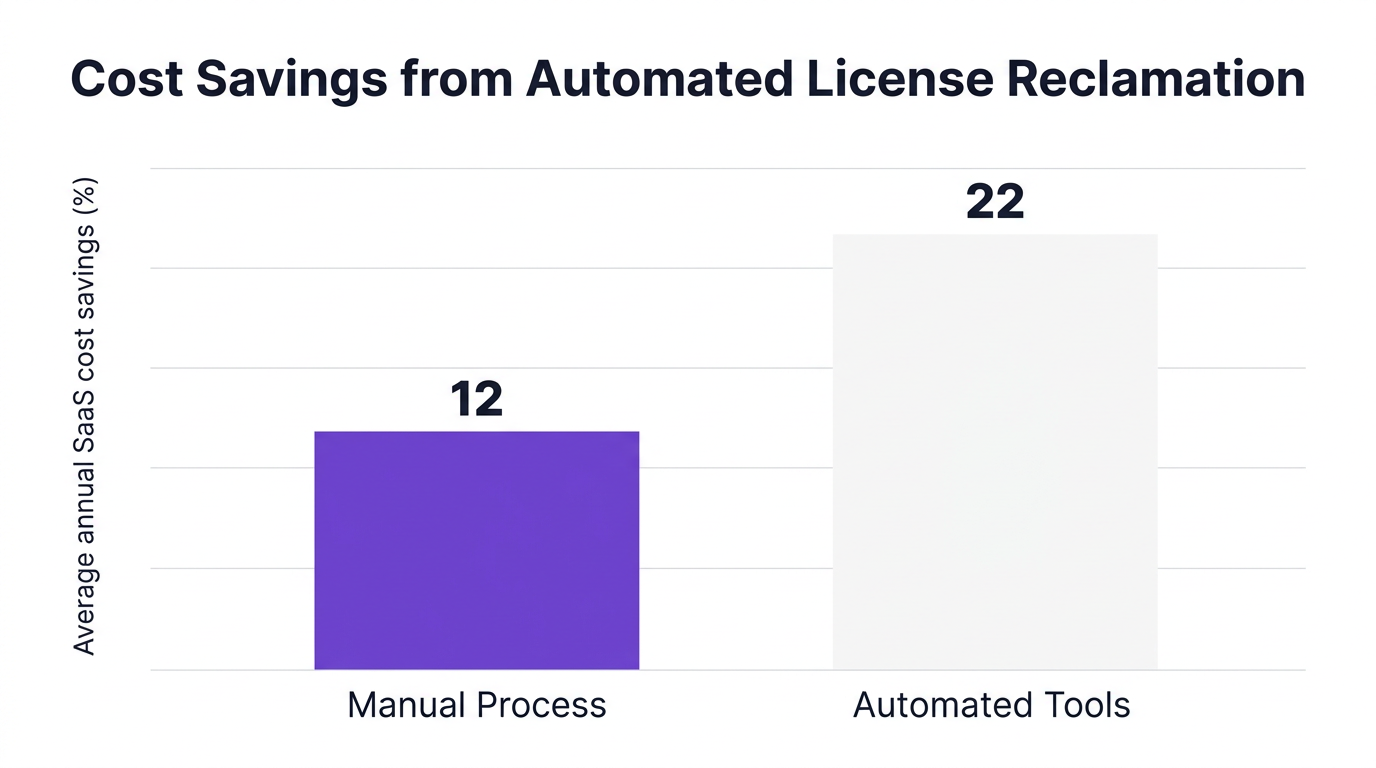
IDC finds that automated license reclamation tools deliver an average of 22% annual cost savings in large enterprises (IDC 2026). At the same time, a leading cloud strategy study shows that companies using AI-driven license management report a 35% reduction in unused SaaS licenses year over year (Forrester 2026).
The financial story is compelling, but cost is only half of the equation. Ethical license reclamation also underpins:
As a SaaS governance analyst, notes, "Successful license reclamation hinges on robust change management protocols that safeguard employee experience while preventing compliance lapses" (Gartner 2026). If reclamation is handled abruptly or opaquely, employees feel punished, shadow IT grows, and compliance exposure increases.
Key takeaway: Ethical SaaS license optimization aligns financial outcomes with human impact and regulatory expectations. The goal is not just to reclaim licenses, but to do it in a way that employees and auditors both consider fair.
Ethical license reclamation depends on a few non-negotiable principles. Think of these as the "bill of rights" for users who are losing access.

Ethical license removal never feels like a silent revocation. Users should understand:
This can be as simple as standardized notifications that explain the policy behind the decision, expected dates, and a point of contact for appeals.
Access removal should always follow documented IT governance and license entitlement management policies. For example:
Codified rules reduce bias, make decisions defendable in audits, and help HR and Legal support IT.
Ethical access removal accounts for:
This means combining SaaS usage analytics with HR data, org charts, and collaboration context, not just raw login counts.
Whenever feasible, use stages instead of a hard cut:
This staged model is the access equivalent of a runway instead of a cliff.
Change management for SaaS access needs the same structure you bring to infrastructure changes. 83% of organizations already adopt change management frameworks to minimize friction during SaaS access removal (Deloitte 2026).
Here is a practical, governance-first framework you can implement today for ethical license reclamation processes.

Effective saas license optimization starts with visibility.
You need to:
This creates a baseline for identifying over-provisioned licenses, high-risk apps, and critical systems where access changes require more care.
Bring together IT, Security, HR, Legal, and business stakeholders to define policies that balance saas cost control, security, and employee experience.
Core policy elements should include:
Treat these as living documents aligned with your broader cloud software governance and IT governance standards.
Ethical license reclamation must be embedded into operational workflows, not handled as ad hoc cleanups.
Key workflows include:
Each workflow should have:
Automation is essential for scale, but ethics and context often require human judgment.
Use automated access removal for:
Retain human review for:
Finally, treat access removal and license reclamation as measurable IT change management programs.
Track:
Use these metrics to refine thresholds, adjust communication, and tune your license optimization strategies over time.
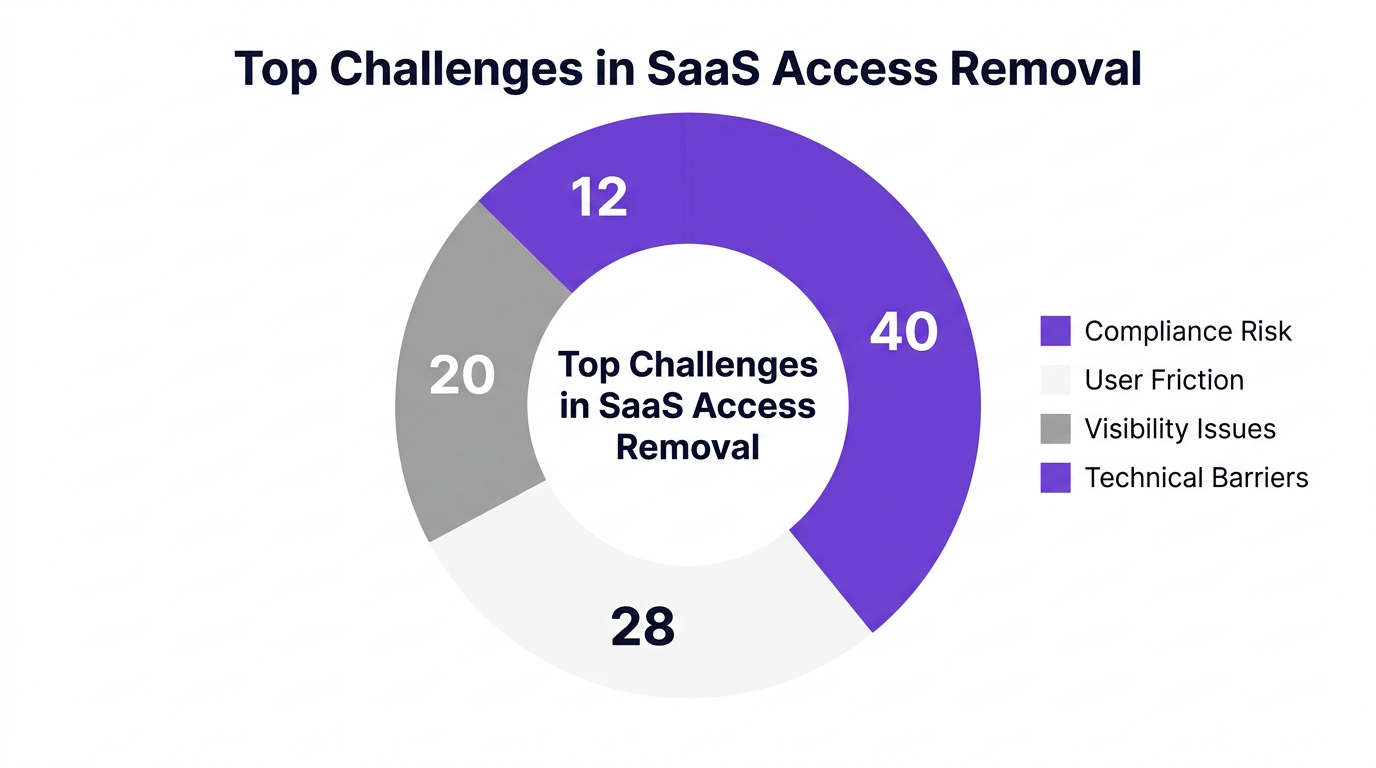
When access removal is treated as a cost-only exercise, you introduce material risks. McKinsey reports that 72% of IT leaders consider compliance risks during access removal their primary challenge in SaaS license reclamation (McKinsey 2026).
Removing access without transferring ownership can leave:
This complicates e-discovery, records retention, and operational continuity.
If employees feel blindsided by ethical license removal decisions, they often:
All three increase your exposure to breaches and non-compliance.
Offboarding gaps are a classic security failure. If you reclaim some licenses but leave others active:
Change management must ensure offboarding is complete, consistent, and provable.
Regulators and auditors increasingly expect compliance automation and detailed logs:
Manual processes and spreadsheet tracking cannot reliably produce this evidence at scale.
Counterargument to consider: Some leaders argue that strict, automated access removal hurts productivity. In practice, organizations that combine automation with staged access and transparent communication typically see higher satisfaction and lower shadow IT because employees know what to expect.
Mature enterprises treat saas license optimisation as part of their broader cloud governance and software asset management strategy.
This shifts the conversation from "cut seats" to "align access, risk, and value".
Instead of sweeping reductions, use saas usage analytics to:
This supports license right-sizing, not blunt removal, and ties your license renewal strategies to real usage and outcomes.
Ethical reclamation is part of broader asset lifecycle management and saas lifecycle management:
Handled well, this reduces saas sprawl control challenges and keeps your license footprint tightly aligned to organizational needs.
License reclamation also advances IT security for saas by:
A leading cloud strategy forecast estimates 60% of CIOs will increase investment in SaaS optimization tools focused on compliant offboarding in 2026 (TechCrunch 2026). Governance-first saas license optimization is becoming a core security control, not just a finance initiative.
CloudNuro is designed for organizations that need AI-enabled, compliance-first saas access governance and cost optimization at enterprise scale. Rather than bolt-on scripts, it offers a governance-first architecture with deep SaaS integrations and automated workflows.
CloudNuro AI Custodian provides real-time discovery across sanctioned and unsanctioned SaaS, including deep integrations with more than 400 applications.
IT teams gain:
This enables data-backed license entitlement management and avoids knee-jerk cuts.
CloudNuro's Custodian products for Microsoft 365, Salesforce, and ServiceNow translate your governance rules into automated workflows for workforce app access management.
You can:
This reduces manual effort, improves consistency, and respects ethical guidelines around notice and impact.
CloudNuro offers compliance and risk dashboards that:
As a chief compliance officer, notes, "Ethical access removal requires transparent communication with users and automated controls that document every step for audit readiness" (McKinsey 2026). CloudNuro operationalizes this approach.
A leading healthcare provider used CloudNuro AI Custodian to automate access removal as part of clinician and staff offboarding.
Within six months, they:
A global financial services enterprise adopted CloudNuro during a large organizational restructure.
Using governance dashboards and automated workflows, they:
These examples demonstrate that license reclamation processes can reduce costs, strengthen security, and uphold employee trust when guided by strong governance and automation.
Ethical reclamation starts with clear policies, accurate data, and transparent communication. Use saas usage analytics to identify unused or underused licenses, then apply documented thresholds and grace periods before reclaiming.
Notify users in advance, explain the rationale, and offer a simple way to request continued access when justified by their role. Finally, ensure all actions are logged in your saas access governance system for auditability.
Best practices include:
Embedding these practices into your IT change management framework minimizes disruption and complaints while maintaining strong control.
Avoid risk by:
Using a platform that supports compliance automation and centralized cloud software governance is crucial for complex, regulated environments.
To reduce user friction:
These practices build trust and reduce the risk of shadow IT reduction efforts backfiring.
Effective saas license optimization aligns spend with real value and risk. It supports cost savings by reclaiming unused licenses, right-sizing tiers, and guiding license renewal strategies with accurate data.
At the same time, it strengthens governance by enforcing consistent access rules, reducing dormant accounts, and providing reliable evidence for audits and security reviews.
Security considerations include:
Treat IT security for saas as a core design requirement for your license reclamation process, not an afterthought.
Enterprises that approach saas license optimization as a governance, security, and culture initiative outperform those that focus only on short-term cost cuts.
By combining accurate discovery, ethical policies, structured change management, and automated workflows, you can reclaim licenses, reduce risk, and maintain employee trust at the same time.
CloudNuro helps CIOs, IT leaders, and compliance teams operationalize this model across complex SaaS estates, with AI-driven discovery, policy-driven automation, and complete auditability.
Next step: Evaluate where your current access removal practices fall short, then pilot a policy-based, automated reclamation workflow for one major SaaS platform. Use the results to scale an ethical, governance-first model across your portfolio.
CloudNuro is a leader in Enterprise SaaS Management Platforms, giving enterprises unmatched visibility, governance, and cost optimization.
We are proud to be recognized twice in a row by Gartner in the SaaS Management Platforms and named a Leader in the Info-Tech SoftwareReviews Data Quadrant.
Trusted by global enterprises and government agencies, CloudNuro provides centralized SaaS inventory, license optimization, and renewal management. With a 15-minute setup and measurable results in under 24 hours, CloudNuro gives IT teams a fast path to value.
Request a Demo | Get Free Savings Assessment | Explore Product
Request a no cost, no obligation free assessment —just 15 minutes to savings!
Get StartedEthical, well governed SaaS license optimization is no longer optional for enterprises. As SaaS spend surges and regulatory scrutiny intensifies, CIOs and IT leaders must reclaim unused licenses, control access, and protect data while preserving employee trust and avoiding compliance risk.
Gartner reports that 68% of enterprises now cite license reclamation and ethical access removal as a top IT governance priority for 2026 (Gartner 2026). Yet 72% of IT decision makers say compliance risks during access removal are their primary challenge (McKinsey 2026). This gap is exactly where strong change management, automation, and governance-first SaaS management come together.
This guide explains how to build an ethical, low friction license reclamation process, with practical steps, governance patterns, and examples of how CloudNuro supports secure and compliant access removal.
For most enterprises, SaaS is now the default delivery model. That also means unused and over-provisioned licenses quietly erode budgets and expand the attack surface.
IDC finds that automated license reclamation tools deliver an average of 22% annual cost savings in large enterprises (IDC 2026). At the same time, a leading cloud strategy study shows that companies using AI-driven license management report a 35% reduction in unused SaaS licenses year over year (Forrester 2026).
The financial story is compelling, but cost is only half of the equation. Ethical license reclamation also underpins:
As a SaaS governance analyst, notes, "Successful license reclamation hinges on robust change management protocols that safeguard employee experience while preventing compliance lapses" (Gartner 2026). If reclamation is handled abruptly or opaquely, employees feel punished, shadow IT grows, and compliance exposure increases.
Key takeaway: Ethical SaaS license optimization aligns financial outcomes with human impact and regulatory expectations. The goal is not just to reclaim licenses, but to do it in a way that employees and auditors both consider fair.
Ethical license reclamation depends on a few non-negotiable principles. Think of these as the "bill of rights" for users who are losing access.
Ethical license removal never feels like a silent revocation. Users should understand:
This can be as simple as standardized notifications that explain the policy behind the decision, expected dates, and a point of contact for appeals.
Access removal should always follow documented IT governance and license entitlement management policies. For example:
Codified rules reduce bias, make decisions defendable in audits, and help HR and Legal support IT.
Ethical access removal accounts for:
This means combining SaaS usage analytics with HR data, org charts, and collaboration context, not just raw login counts.
Whenever feasible, use stages instead of a hard cut:
This staged model is the access equivalent of a runway instead of a cliff.
Change management for SaaS access needs the same structure you bring to infrastructure changes. 83% of organizations already adopt change management frameworks to minimize friction during SaaS access removal (Deloitte 2026).
Here is a practical, governance-first framework you can implement today for ethical license reclamation processes.
Effective saas license optimization starts with visibility.
You need to:
This creates a baseline for identifying over-provisioned licenses, high-risk apps, and critical systems where access changes require more care.
Bring together IT, Security, HR, Legal, and business stakeholders to define policies that balance saas cost control, security, and employee experience.
Core policy elements should include:
Treat these as living documents aligned with your broader cloud software governance and IT governance standards.
Ethical license reclamation must be embedded into operational workflows, not handled as ad hoc cleanups.
Key workflows include:
Each workflow should have:
Automation is essential for scale, but ethics and context often require human judgment.
Use automated access removal for:
Retain human review for:
Finally, treat access removal and license reclamation as measurable IT change management programs.
Track:
Use these metrics to refine thresholds, adjust communication, and tune your license optimization strategies over time.
When access removal is treated as a cost-only exercise, you introduce material risks. McKinsey reports that 72% of IT leaders consider compliance risks during access removal their primary challenge in SaaS license reclamation (McKinsey 2026).
Removing access without transferring ownership can leave:
This complicates e-discovery, records retention, and operational continuity.
If employees feel blindsided by ethical license removal decisions, they often:
All three increase your exposure to breaches and non-compliance.
Offboarding gaps are a classic security failure. If you reclaim some licenses but leave others active:
Change management must ensure offboarding is complete, consistent, and provable.
Regulators and auditors increasingly expect compliance automation and detailed logs:
Manual processes and spreadsheet tracking cannot reliably produce this evidence at scale.
Counterargument to consider: Some leaders argue that strict, automated access removal hurts productivity. In practice, organizations that combine automation with staged access and transparent communication typically see higher satisfaction and lower shadow IT because employees know what to expect.
Mature enterprises treat saas license optimisation as part of their broader cloud governance and software asset management strategy.
This shifts the conversation from "cut seats" to "align access, risk, and value".
Instead of sweeping reductions, use saas usage analytics to:
This supports license right-sizing, not blunt removal, and ties your license renewal strategies to real usage and outcomes.
Ethical reclamation is part of broader asset lifecycle management and saas lifecycle management:
Handled well, this reduces saas sprawl control challenges and keeps your license footprint tightly aligned to organizational needs.
License reclamation also advances IT security for saas by:
A leading cloud strategy forecast estimates 60% of CIOs will increase investment in SaaS optimization tools focused on compliant offboarding in 2026 (TechCrunch 2026). Governance-first saas license optimization is becoming a core security control, not just a finance initiative.
CloudNuro is designed for organizations that need AI-enabled, compliance-first saas access governance and cost optimization at enterprise scale. Rather than bolt-on scripts, it offers a governance-first architecture with deep SaaS integrations and automated workflows.
CloudNuro AI Custodian provides real-time discovery across sanctioned and unsanctioned SaaS, including deep integrations with more than 400 applications.
IT teams gain:
This enables data-backed license entitlement management and avoids knee-jerk cuts.
CloudNuro's Custodian products for Microsoft 365, Salesforce, and ServiceNow translate your governance rules into automated workflows for workforce app access management.
You can:
This reduces manual effort, improves consistency, and respects ethical guidelines around notice and impact.
CloudNuro offers compliance and risk dashboards that:
As a chief compliance officer, notes, "Ethical access removal requires transparent communication with users and automated controls that document every step for audit readiness" (McKinsey 2026). CloudNuro operationalizes this approach.
A leading healthcare provider used CloudNuro AI Custodian to automate access removal as part of clinician and staff offboarding.
Within six months, they:
A global financial services enterprise adopted CloudNuro during a large organizational restructure.
Using governance dashboards and automated workflows, they:
These examples demonstrate that license reclamation processes can reduce costs, strengthen security, and uphold employee trust when guided by strong governance and automation.
Ethical reclamation starts with clear policies, accurate data, and transparent communication. Use saas usage analytics to identify unused or underused licenses, then apply documented thresholds and grace periods before reclaiming.
Notify users in advance, explain the rationale, and offer a simple way to request continued access when justified by their role. Finally, ensure all actions are logged in your saas access governance system for auditability.
Best practices include:
Embedding these practices into your IT change management framework minimizes disruption and complaints while maintaining strong control.
Avoid risk by:
Using a platform that supports compliance automation and centralized cloud software governance is crucial for complex, regulated environments.
To reduce user friction:
These practices build trust and reduce the risk of shadow IT reduction efforts backfiring.
Effective saas license optimization aligns spend with real value and risk. It supports cost savings by reclaiming unused licenses, right-sizing tiers, and guiding license renewal strategies with accurate data.
At the same time, it strengthens governance by enforcing consistent access rules, reducing dormant accounts, and providing reliable evidence for audits and security reviews.
Security considerations include:
Treat IT security for saas as a core design requirement for your license reclamation process, not an afterthought.
Enterprises that approach saas license optimization as a governance, security, and culture initiative outperform those that focus only on short-term cost cuts.
By combining accurate discovery, ethical policies, structured change management, and automated workflows, you can reclaim licenses, reduce risk, and maintain employee trust at the same time.
CloudNuro helps CIOs, IT leaders, and compliance teams operationalize this model across complex SaaS estates, with AI-driven discovery, policy-driven automation, and complete auditability.
Next step: Evaluate where your current access removal practices fall short, then pilot a policy-based, automated reclamation workflow for one major SaaS platform. Use the results to scale an ethical, governance-first model across your portfolio.
CloudNuro is a leader in Enterprise SaaS Management Platforms, giving enterprises unmatched visibility, governance, and cost optimization.
We are proud to be recognized twice in a row by Gartner in the SaaS Management Platforms and named a Leader in the Info-Tech SoftwareReviews Data Quadrant.
Trusted by global enterprises and government agencies, CloudNuro provides centralized SaaS inventory, license optimization, and renewal management. With a 15-minute setup and measurable results in under 24 hours, CloudNuro gives IT teams a fast path to value.
Request a Demo | Get Free Savings Assessment | Explore Product
Request a no cost, no obligation free assessment - just 15 minutes to savings!
Get StartedWe're offering complimentary ServiceNow license assessments to only 25 enterprises this quarter who want to unlock immediate savings without disrupting operations.
Get Free AssessmentGet Started




CloudNuro Corp
1755 Park St. Suite 207
Naperville, IL 60563
Phone : +1-630-277-9470
Email: info@cloudnuro.com


.webp)

Recognized Leader in SaaS Management Platforms by Info-Tech SoftwareReviews


.svg)