

Sign Up
Thank you for Submitting!
AI is now embedded into almost every SaaS product, which means AI compliance risk is now SaaS compliance risk. As new AI laws take effect across regions and sectors, enterprises are turning to AI compliance software and governance platforms to keep pace.
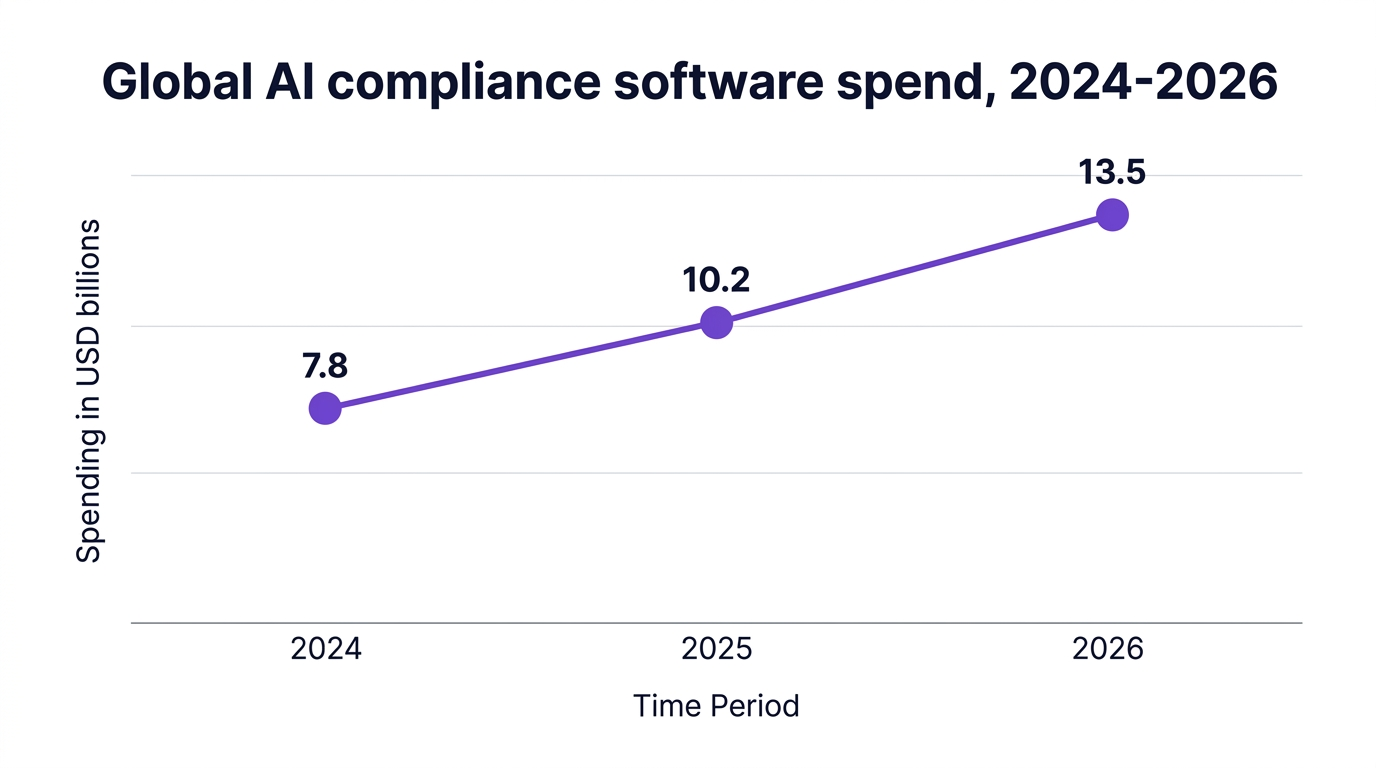
By 2026, global spending on AI compliance solutions is projected to exceed $13.5 billion, driven largely by new regulations such as the EU AI Act and sectoral rules in finance and healthcare, according to a recent industry report from 2026. Another 2026 enterprise SaaS study found that 78% of vendors expect to increase investment in AI compliance tools to address these requirements.
This article explains what emerging AI laws mean for SaaS, how AI regulation will shape your operating model, and how IT and risk leaders can build a practical AI governance and compliance strategy.
Regulators are no longer treating AI as a future concern. They see it as a live operational risk that touches privacy, safety, consumer protection, and financial stability.
Recent industry analyses highlight three primary drivers:
As a result, regulators are:
These trends make one thing clear: ad hoc controls and manual reviews are no longer enough. Enterprises need consistent AI governance and compliance that spans every SaaS and cloud environment.
Different jurisdictions are moving at different speeds, but the regulatory themes are converging. For SaaS and cloud-delivered AI, several pillars now shape the compliance landscape.
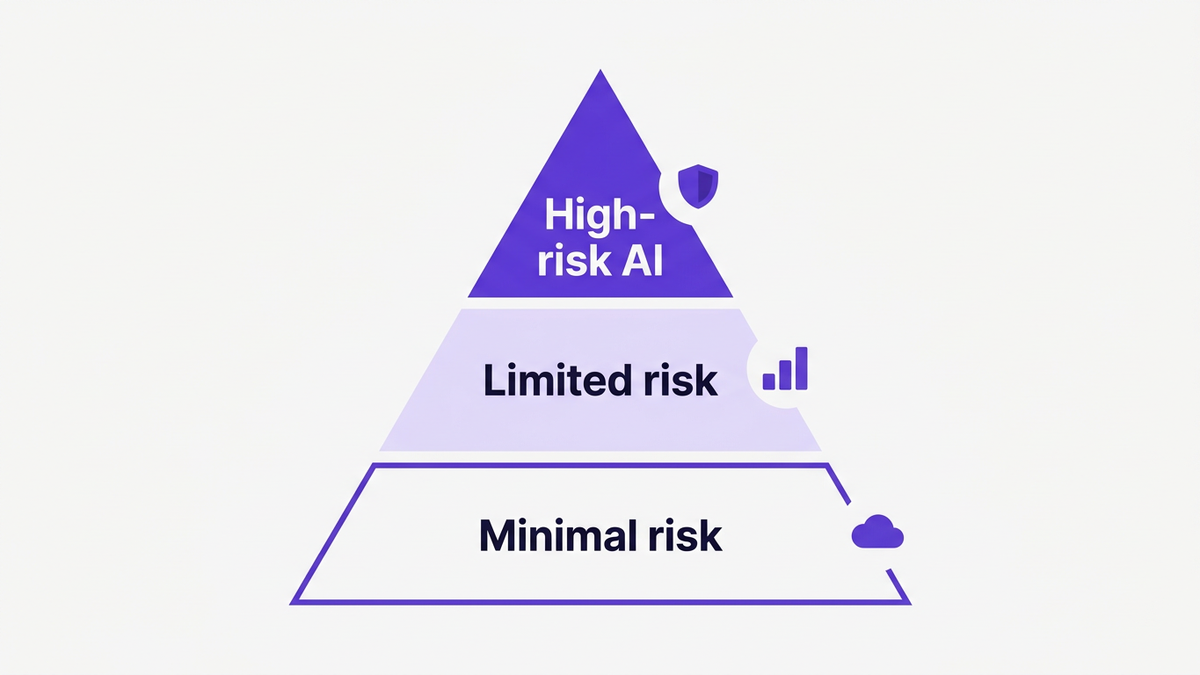
Emerging AI frameworks commonly:
According to a 2026 regulatory analysis, over 60% of high, risk AI systems deployed in the EU will need to meet defined standards for documentation, auditability, and transparency.
For SaaS providers, this means:
The EU AI Act is setting a global benchmark. For high, risk AI systems used or marketed in the EU, organizations must comply with requirements such as:
This is particularly acute for:
SaaS providers will need repeatable workflows for EU AI Act compliance, not one-off projects.
In parallel, regulators in finance, healthcare, and government are tightening AI-related rules.
For SaaS platforms, this means the same AI service may need to satisfy multiple overlapping frameworks depending on customers’ industries.
AI regulation does not exist in a vacuum. AI requirements are intersecting with:
A 2026 enterprise compliance report notes that 57% of large organizations view the lack of unified governance across multicloud AI deployments as a primary risk for compliance failure.
All of this is driving strong interest in AI governance platforms, unified AI regulatory compliance software, and enterprise AI governance software that can bridge the gaps.
Many teams use governance and compliance interchangeably, but they address different problems. The most resilient organizations treat them as complementary.
An AI governance framework defines how your organization:
Governance shapes your internal rules and culture. For example, a strong governance program will set expectations for responsible AI software use before a single model goes to production.
AI compliance is about demonstrable evidence. It asks:
This is where AI compliance software, AI risk management software, and AI audit trail software become essential. They provide the automation, monitoring, and reporting needed to satisfy regulators.
Think of governance as the blueprint and compliance as the inspection process. Without governance, compliance efforts are chaotic and reactive. Without compliance, governance is just a set of good intentions with no proof.
The most advanced teams are:
IT and risk leaders often ask three questions:
A 2026 governance study emphasizes that continuous monitoring, audit trails, and model explainability will form the backbone of AI SaaS compliance.
Expect regulators and auditors to focus on:
This is driving demand for Gen AI compliance platforms and LLM compliance software that can track large language model usage, prompts, and outputs over time.
As more AI capabilities are consumed through SaaS, organizations must treat vendors as an extension of their own AI risk surface.
Key expectations include:
This is especially salient for AI regulation for government programs, where public accountability and transparency standards are stringent.
High, risk AI systems will need:
Many organizations are building internal templates for an EU AI Act technical file and extending them globally to create a consistent AI compliance framework.
Regulators increasingly expect AI controls to be aligned with existing security and privacy frameworks. This is prompting organizations to:
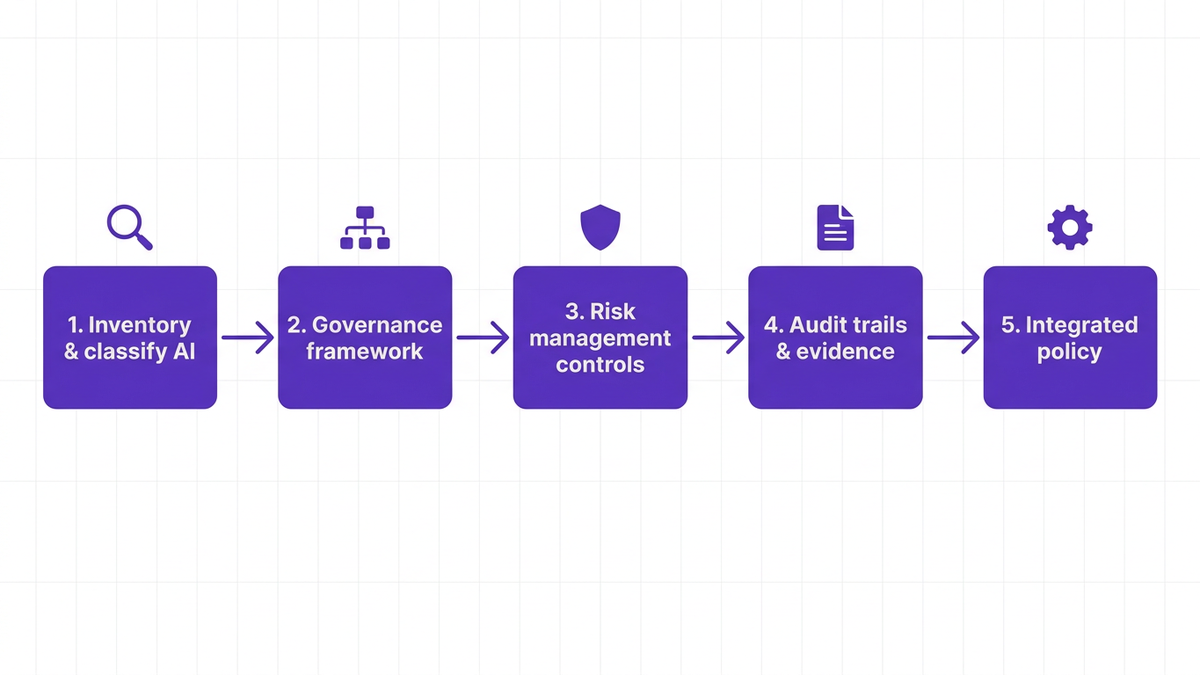
Compliance leaders need action, not just awareness. The following five, step approach gives enterprises a concrete starting point for how to comply with AI regulations without paralyzing innovation.
You cannot govern what you cannot see. Start by:
Automated discovery is especially critical in environments with heavy SaaS adoption and multiple business units.
Create a structured framework that includes:
This framework should anchor your AI ethics and compliance principles and make it clear when additional controls or approvals are needed.
Once governance rules are defined, operationalize them through technology:
This is the layer where AI trust and safety platforms and AI security and compliance platforms provide measurable value.
Manual evidence gathering will not scale as AI regulations multiply. Enterprises should:
This automation is central to automated AI compliance, where systems continuously generate the documentation regulators expect.
Finally, make compliance part of the way you deploy and operate SaaS:
Teams that integrate AI governance into everyday SaaS operations will be better positioned to support innovation with fewer surprises.
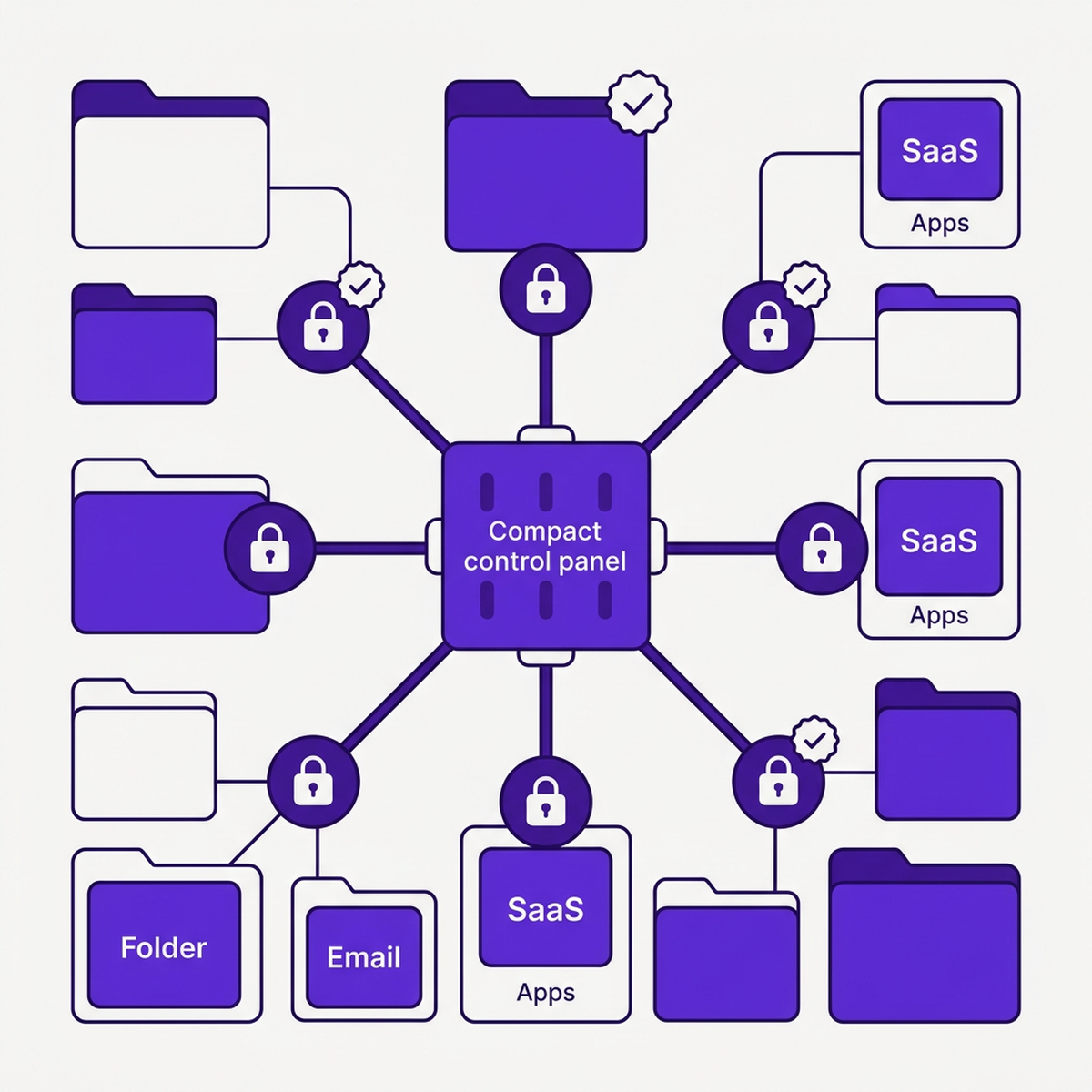
CloudNuro was built for enterprises that must balance aggressive adoption of AI SaaS with stringent regulatory expectations. Its AI-enabled platform brings AI governance and compliance into the same control plane as SaaS and cloud management.
CloudNuro’s Unified Cloud Custodian provides:
This directly addresses the 2026 finding that 57% of large enterprises struggle with fragmented governance across multicloud AI deployments.
With AI Custodian, CloudNuro helps operationalize automated AI compliance by providing:
Enterprises can use these capabilities as a Gen AI compliance platform and LLM compliance software foundation, rather than stitching together point tools.
CloudNuro supports a full AI governance platform approach by integrating:
This creates a practical bridge between governance decisions and operational controls.
A European financial services organization, as reported in a 2026 industry case study, used an AI governance platform to automate risk monitoring and regulatory reporting, leading to a 42% reduction in audit preparation time and full compliance with the EU AI Act by mid, 2026.
Similarly, a North American healthcare SaaS vendor used integrated compliance and model monitoring capabilities to align with health data regulations and emerging AI rules, achieving zero compliance violations while improving model transparency for auditors.
CloudNuro’s architecture and focus mirror these successful patterns: centralized visibility, automated evidence, and strong model oversight across AI SaaS ecosystems.
The most impactful regulations include risk, based AI frameworks such as the EU AI Act, along with sector-specific rules in finance, healthcare, and public sector. These laws focus on high, risk AI systems and require documentation, monitoring, and human oversight.
For SaaS, the key impact areas are technical documentation, auditability, and clear risk classification for AI features offered to customers.
Enterprises should start by identifying which AI systems fall under the high, risk category and then developing technical files for those systems. This includes documenting design, training data, testing, monitoring plans, and human oversight mechanisms.
Using AI compliance software and an enterprise AI governance software platform can help automate evidence collection, policy enforcement, and incident reporting that the EU AI Act expects.
AI governance is about how your organization makes decisions about AI: which use cases to allow, which standards to apply, and who is accountable. AI compliance is about proving to regulators and auditors that you followed the rules.
Effective programs use both an AI governance framework to set direction and AI regulatory compliance software to provide the data, logs, and reports required for verification.
Regulators are concerned about model drift, emerging biases, and unanticipated impacts in production. One, time testing before deployment does not address these risks.
Continuous monitoring provides ongoing evidence of performance, fairness, and control effectiveness, which is central to AI trust and safety platforms and modern AI security and compliance platforms.
IT and procurement teams should treat AI-enabled SaaS vendors as part of their extended AI risk surface. This means conducting structured assessments of model transparency, security, incident response, and regulatory alignment.
Using AI vendor risk management software features within a broader governance platform helps centralize assessments, track remediation, and demonstrate due diligence to regulators and auditors.
Start with an inventory of all AI use cases across SaaS and cloud, then classify them by risk and sector exposure. Establish a basic governance framework that defines approval workflows, minimum controls, and responsibilities.
From there, introduce targeted AI compliance software capabilities for audit trails and monitoring, then scale toward a unified AI governance and compliance platform as complexity grows.
Emerging AI laws are not a temporary wave; they mark a structural shift in how AI in SaaS will be governed. As spending on AI compliance solutions climbs toward $13.5 billion by 2026, organizations that invest early in unified governance and AI compliance software will have a clear advantage.
The path forward is to treat AI, SaaS, and cloud governance as one connected problem. Platforms like CloudNuro that bring visibility, policy, monitoring, and auditability into a single control plane can help enterprises stay compliant while continuing to innovate.
To see how CloudNuro can support your AI regulation strategy across SaaS and multicloud, request a tailored walkthrough with your IT, security, and compliance stakeholders.
CloudNuro is a leader in Enterprise SaaS Management Platforms, providing enterprises with unmatched visibility, governance, and cost optimization. Recognized twice in a row in the SaaS Management Platforms category and named a Leader in the SoftwareReviews Data Quadrant, CloudNuro is trusted by global enterprises and government agencies to bring financial discipline to SaaS, cloud, and AI. Trusted by enterprises such as Konica Minolta and Federal Signal, CloudNuro provides centralized SaaS inventory, license optimization, and renewal management along with advanced cost allocation and chargeback, giving IT and Finance leaders the visibility, control, and cost-conscious culture needed to drive financial discipline. Request a Demo | Get Free Savings | Explore Product
Request a no cost, no obligation free assessment —just 15 minutes to savings!
Get StartedAI is now embedded into almost every SaaS product, which means AI compliance risk is now SaaS compliance risk. As new AI laws take effect across regions and sectors, enterprises are turning to AI compliance software and governance platforms to keep pace.
By 2026, global spending on AI compliance solutions is projected to exceed $13.5 billion, driven largely by new regulations such as the EU AI Act and sectoral rules in finance and healthcare, according to a recent industry report from 2026. Another 2026 enterprise SaaS study found that 78% of vendors expect to increase investment in AI compliance tools to address these requirements.
This article explains what emerging AI laws mean for SaaS, how AI regulation will shape your operating model, and how IT and risk leaders can build a practical AI governance and compliance strategy.
Regulators are no longer treating AI as a future concern. They see it as a live operational risk that touches privacy, safety, consumer protection, and financial stability.
Recent industry analyses highlight three primary drivers:
As a result, regulators are:
These trends make one thing clear: ad hoc controls and manual reviews are no longer enough. Enterprises need consistent AI governance and compliance that spans every SaaS and cloud environment.
Different jurisdictions are moving at different speeds, but the regulatory themes are converging. For SaaS and cloud-delivered AI, several pillars now shape the compliance landscape.
Emerging AI frameworks commonly:
According to a 2026 regulatory analysis, over 60% of high, risk AI systems deployed in the EU will need to meet defined standards for documentation, auditability, and transparency.
For SaaS providers, this means:
The EU AI Act is setting a global benchmark. For high, risk AI systems used or marketed in the EU, organizations must comply with requirements such as:
This is particularly acute for:
SaaS providers will need repeatable workflows for EU AI Act compliance, not one-off projects.
In parallel, regulators in finance, healthcare, and government are tightening AI-related rules.
For SaaS platforms, this means the same AI service may need to satisfy multiple overlapping frameworks depending on customers’ industries.
AI regulation does not exist in a vacuum. AI requirements are intersecting with:
A 2026 enterprise compliance report notes that 57% of large organizations view the lack of unified governance across multicloud AI deployments as a primary risk for compliance failure.
All of this is driving strong interest in AI governance platforms, unified AI regulatory compliance software, and enterprise AI governance software that can bridge the gaps.
Many teams use governance and compliance interchangeably, but they address different problems. The most resilient organizations treat them as complementary.
An AI governance framework defines how your organization:
Governance shapes your internal rules and culture. For example, a strong governance program will set expectations for responsible AI software use before a single model goes to production.
AI compliance is about demonstrable evidence. It asks:
This is where AI compliance software, AI risk management software, and AI audit trail software become essential. They provide the automation, monitoring, and reporting needed to satisfy regulators.
Think of governance as the blueprint and compliance as the inspection process. Without governance, compliance efforts are chaotic and reactive. Without compliance, governance is just a set of good intentions with no proof.
The most advanced teams are:
IT and risk leaders often ask three questions:
A 2026 governance study emphasizes that continuous monitoring, audit trails, and model explainability will form the backbone of AI SaaS compliance.
Expect regulators and auditors to focus on:
This is driving demand for Gen AI compliance platforms and LLM compliance software that can track large language model usage, prompts, and outputs over time.
As more AI capabilities are consumed through SaaS, organizations must treat vendors as an extension of their own AI risk surface.
Key expectations include:
This is especially salient for AI regulation for government programs, where public accountability and transparency standards are stringent.
High, risk AI systems will need:
Many organizations are building internal templates for an EU AI Act technical file and extending them globally to create a consistent AI compliance framework.
Regulators increasingly expect AI controls to be aligned with existing security and privacy frameworks. This is prompting organizations to:
Compliance leaders need action, not just awareness. The following five, step approach gives enterprises a concrete starting point for how to comply with AI regulations without paralyzing innovation.
You cannot govern what you cannot see. Start by:
Automated discovery is especially critical in environments with heavy SaaS adoption and multiple business units.
Create a structured framework that includes:
This framework should anchor your AI ethics and compliance principles and make it clear when additional controls or approvals are needed.
Once governance rules are defined, operationalize them through technology:
This is the layer where AI trust and safety platforms and AI security and compliance platforms provide measurable value.
Manual evidence gathering will not scale as AI regulations multiply. Enterprises should:
This automation is central to automated AI compliance, where systems continuously generate the documentation regulators expect.
Finally, make compliance part of the way you deploy and operate SaaS:
Teams that integrate AI governance into everyday SaaS operations will be better positioned to support innovation with fewer surprises.
CloudNuro was built for enterprises that must balance aggressive adoption of AI SaaS with stringent regulatory expectations. Its AI-enabled platform brings AI governance and compliance into the same control plane as SaaS and cloud management.
CloudNuro’s Unified Cloud Custodian provides:
This directly addresses the 2026 finding that 57% of large enterprises struggle with fragmented governance across multicloud AI deployments.
With AI Custodian, CloudNuro helps operationalize automated AI compliance by providing:
Enterprises can use these capabilities as a Gen AI compliance platform and LLM compliance software foundation, rather than stitching together point tools.
CloudNuro supports a full AI governance platform approach by integrating:
This creates a practical bridge between governance decisions and operational controls.
A European financial services organization, as reported in a 2026 industry case study, used an AI governance platform to automate risk monitoring and regulatory reporting, leading to a 42% reduction in audit preparation time and full compliance with the EU AI Act by mid, 2026.
Similarly, a North American healthcare SaaS vendor used integrated compliance and model monitoring capabilities to align with health data regulations and emerging AI rules, achieving zero compliance violations while improving model transparency for auditors.
CloudNuro’s architecture and focus mirror these successful patterns: centralized visibility, automated evidence, and strong model oversight across AI SaaS ecosystems.
The most impactful regulations include risk, based AI frameworks such as the EU AI Act, along with sector-specific rules in finance, healthcare, and public sector. These laws focus on high, risk AI systems and require documentation, monitoring, and human oversight.
For SaaS, the key impact areas are technical documentation, auditability, and clear risk classification for AI features offered to customers.
Enterprises should start by identifying which AI systems fall under the high, risk category and then developing technical files for those systems. This includes documenting design, training data, testing, monitoring plans, and human oversight mechanisms.
Using AI compliance software and an enterprise AI governance software platform can help automate evidence collection, policy enforcement, and incident reporting that the EU AI Act expects.
AI governance is about how your organization makes decisions about AI: which use cases to allow, which standards to apply, and who is accountable. AI compliance is about proving to regulators and auditors that you followed the rules.
Effective programs use both an AI governance framework to set direction and AI regulatory compliance software to provide the data, logs, and reports required for verification.
Regulators are concerned about model drift, emerging biases, and unanticipated impacts in production. One, time testing before deployment does not address these risks.
Continuous monitoring provides ongoing evidence of performance, fairness, and control effectiveness, which is central to AI trust and safety platforms and modern AI security and compliance platforms.
IT and procurement teams should treat AI-enabled SaaS vendors as part of their extended AI risk surface. This means conducting structured assessments of model transparency, security, incident response, and regulatory alignment.
Using AI vendor risk management software features within a broader governance platform helps centralize assessments, track remediation, and demonstrate due diligence to regulators and auditors.
Start with an inventory of all AI use cases across SaaS and cloud, then classify them by risk and sector exposure. Establish a basic governance framework that defines approval workflows, minimum controls, and responsibilities.
From there, introduce targeted AI compliance software capabilities for audit trails and monitoring, then scale toward a unified AI governance and compliance platform as complexity grows.
Emerging AI laws are not a temporary wave; they mark a structural shift in how AI in SaaS will be governed. As spending on AI compliance solutions climbs toward $13.5 billion by 2026, organizations that invest early in unified governance and AI compliance software will have a clear advantage.
The path forward is to treat AI, SaaS, and cloud governance as one connected problem. Platforms like CloudNuro that bring visibility, policy, monitoring, and auditability into a single control plane can help enterprises stay compliant while continuing to innovate.
To see how CloudNuro can support your AI regulation strategy across SaaS and multicloud, request a tailored walkthrough with your IT, security, and compliance stakeholders.
CloudNuro is a leader in Enterprise SaaS Management Platforms, providing enterprises with unmatched visibility, governance, and cost optimization. Recognized twice in a row in the SaaS Management Platforms category and named a Leader in the SoftwareReviews Data Quadrant, CloudNuro is trusted by global enterprises and government agencies to bring financial discipline to SaaS, cloud, and AI. Trusted by enterprises such as Konica Minolta and Federal Signal, CloudNuro provides centralized SaaS inventory, license optimization, and renewal management along with advanced cost allocation and chargeback, giving IT and Finance leaders the visibility, control, and cost-conscious culture needed to drive financial discipline. Request a Demo | Get Free Savings | Explore Product
Request a no cost, no obligation free assessment - just 15 minutes to savings!
Get StartedWe're offering complimentary ServiceNow license assessments to only 25 enterprises this quarter who want to unlock immediate savings without disrupting operations.
Get Free AssessmentGet Started




CloudNuro Corp
1755 Park St. Suite 207
Naperville, IL 60563
Phone : +1-630-277-9470
Email: info@cloudnuro.com


.webp)

Recognized Leader in SaaS Management Platforms by Info-Tech SoftwareReviews


.svg)