

Sign Up
Thank you for Submitting!
Shadow IT is no longer just unsanctioned SaaS signups on corporate credit cards. It now includes generative AI tools, embedded AI assistants inside SaaS, and AI APIs quietly connected to sensitive data.
That is why SaaS discovery for Shadow IT and Shadow AI has become a strategic priority for CIOs, CISOs, and GRC leaders. Without unified discovery, you cannot secure what you cannot see, and you certainly cannot govern or optimize it.
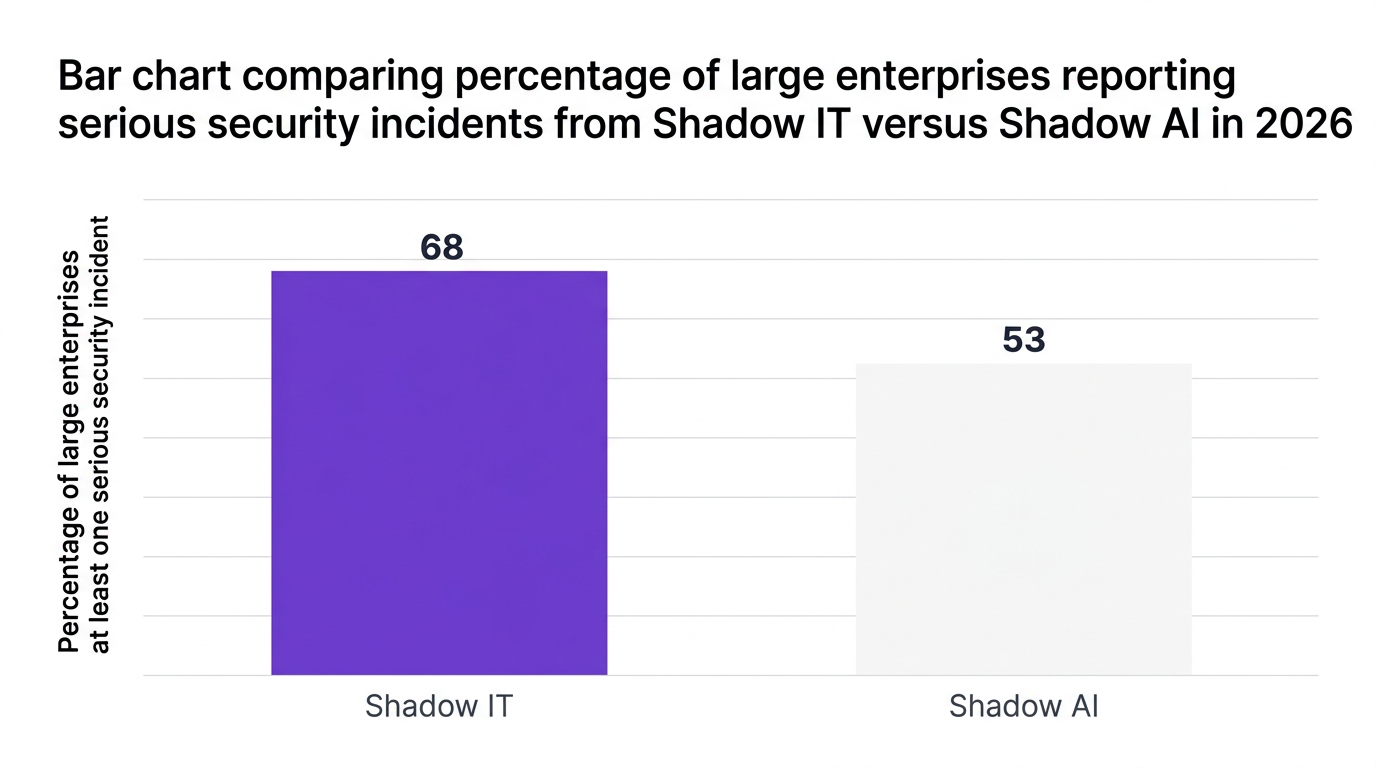
According to a recent enterprise IT report, 68% of large enterprises experienced at least one serious security incident linked to Shadow IT or Shadow AI in the past year. Another survey found 81% of CIOs in regulated industries cite a lack of unified SaaS and AI discovery as a major barrier to compliance and risk management.
This post explains the difference between Shadow IT and Shadow AI, why they are now intertwined, and how SaaS discovery tools help you address both security and cost risks together.
Shadow IT historically meant any IT system, SaaS application, or infrastructure used without IT approval or governance. Think file sharing, niche collaboration tools, or small team CRMs.
Shadow AI is the AI era equivalent. It covers:
According to a recent security study, 58% of IT leaders say shadow AI tools introduce significant data residency and privacy gaps.
At first glance, Shadow IT and Shadow AI look similar. Both bypass IT governance and introduce risk. The difference is that AI is often embedded inside existing SaaS, so traditional app catalogs alone are not enough.
In a typical enterprise, the lines blur quickly:
Shadow IT creates the surface area. Shadow AI amplifies the depth of risk, since AI systems learn from and reuse the data that is exposed.
As one industry expert noted in a 2026 commentary, "Shadow IT has become intertwined with Shadow AI. Organizations must unify application visibility to address both security and regulatory risks."
Traditional asset inventories and CMDBs are too static for modern SaaS and AI adoption. New services can appear in hours, and AI features may launch within existing tools without explicit contracts or IT tickets.
This is where SaaS discovery tools change the game. They do not rely only on self-reporting or manual inventories. Instead, they observe network traffic, SSO logs, financial data, and admin APIs to continuously map what is actually in use.

Effective SaaS discovery for Shadow IT and Shadow AI typically combines:
A recent enterprise IT report found that organizations using automated SaaS discovery achieved a 42% reduction in unauthorized AI tool usage within 12 months. Another study reported a 36% improvement in license utilization and waste reduction after deploying unified SaaS and AI discovery.
A useful way to think about this is a simple three-layer framework:
Without continuous discovery, the second and third layers are guesswork. For governance-first architecture, discovery is the control surface that keeps the other policies grounded in reality.
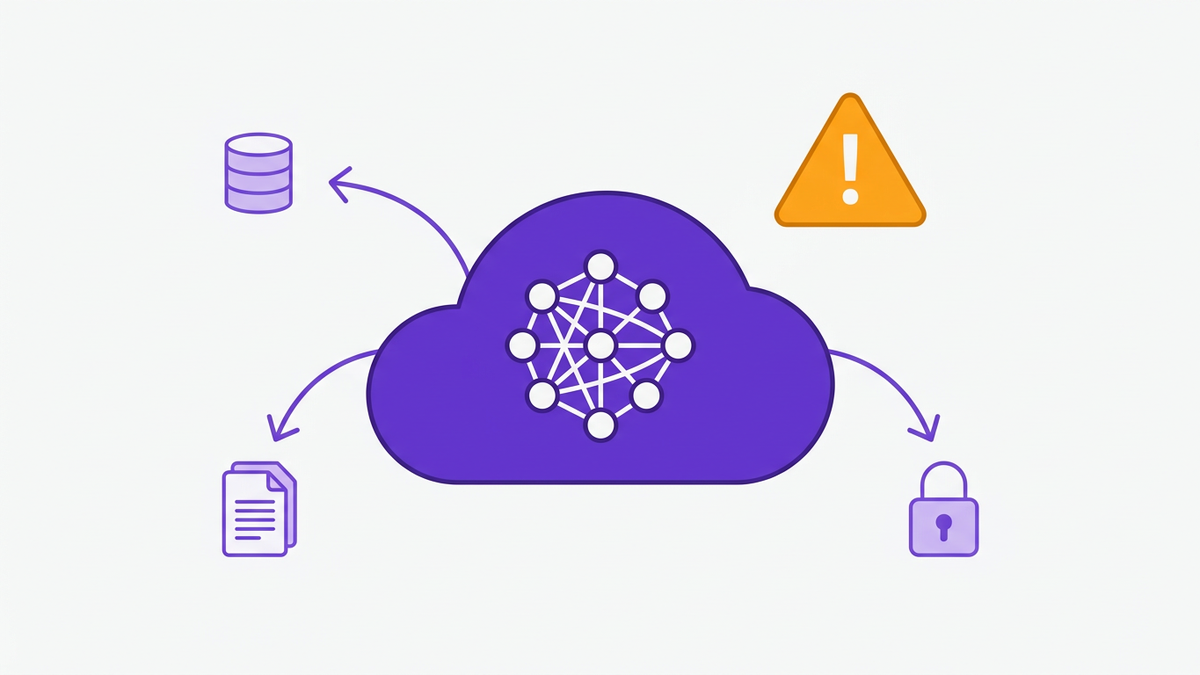
Shadow AI is not just external chatbots and generative apps. It is also AI copilots, assistants, and automation engines embedded inside your core SaaS stack.
According to a recent enterprise security survey, 58% of IT leaders indicated that shadow AI tools created major issues around data residency and privacy. In regulated sectors, those gaps directly translate into potential regulatory exposure.
1. AI features bypassing DLP and access policies
An AI assistant inside a collaboration suite may access documents that users can view, even if external sharing or exports are normally blocked. That assistant might process content on infrastructure not covered in your original data protection impact assessment.
2. Orphaned AI integrations and service accounts
Developers and citizen integrators connect AI tools via APIs or OAuth. When people move roles or leave the company, those connections often remain active as orphaned accounts with wide privileges.
3. Shadow AI in highly regulated workflows
In healthcare, finance, and public sector environments, even “temporary” AI usage can create record-keeping and audit obligations. A 2026 study of healthcare organizations using unified SaaS and AI governance reported a 27% reduction in audit times once they gained a complete view of AI-enabled services.
Counterargument: some teams argue that AI experimentation must remain unconstrained to maintain innovation. The reality is that governed experimentation is possible if discovery gives you visibility into who is doing what, with which data, and under which policies.
Shadow IT and Shadow AI are not only security problems. They erode your FinOps strategy and create persistent license waste.
Recent industry data shows that organizations adopting SaaS and AI discovery solutions saw a 36% improvement in license utilization. Another report found that unified SaaS and AI discovery adoption in regulated sectors grew 29% year over year, driven partly by cost pressures.
One expert in a 2026 FinOps-focused analysis summarized the challenge: "The key to cost optimization with SaaS and AI is merging financial operations data with real-time usage analytics. This requires continuous discovery and entitlement governance."
A global financial services firm deployed a unified SaaS and AI discovery platform to understand where AI was actually used. They identified over 150 unsanctioned AI apps, many connected to finance and customer data.
By implementing entitlement management, license optimization, and unused license reclamation, they reduced shadow app risk exposure by 47% and saved 1.2 million dollars in SaaS costs within nine months. The same discovery data then fed into renewal planning, which further reduced renewal cost exposure.
CloudNuro was built for AI-driven SaaS governance in regulated industries. Its platform brings together SaaS discovery, Shadow IT detection, Shadow AI security, and FinOps into one single pane of glass visibility.
The CloudNuro approach follows the Discover, Decide, Direct framework but extends it with automation, compliance reporting, and cost optimization.
CloudNuro AI Custodian unifies IaaS and SaaS discovery and is designed to surface both Shadow IT and Shadow AI:
Organizations can set policies like “no AI processing of regulated PHI datasets” or “AI copilots disabled for specific departments” and have CloudNuro highlight deviations.
CloudNuro offers Microsoft 365 Custodian and Salesforce Custodian for environments where AI-enabled SaaS is mission critical.
These modules provide:
The result is centralized SaaS governance that reduces both security exposure and AI related spend.
CloudNuro’s FinOps Services combine spend data with usage analytics to operationalize your finops strategy:
Enterprises using CloudNuro can turn Shadow IT detection and Shadow AI insights directly into SaaS cost optimization initiatives, supported by board ready reporting.
SaaS discovery for Shadow IT and Shadow AI is most effective when paired with clear governance and automation. The following practices are emerging as effective patterns in regulated industries.
Shadow apps appear and disappear fast. A quarterly spreadsheet exercise is like checking a smoke detector once a year in a building that is constantly under construction.
Instead, adopt continuous SaaS discovery tools that:
Not every shadow app is equal. A low risk project management tool has a different impact than an AI assistant that can read financial statements.
Use your SaaS discovery data to:
This feeds directly into AI risk management and cloud compliance programs.
To reduce risk, you need tight user access control across SaaS and AI tools:
When this is missing, orphaned accounts and abandoned AI integrations accumulate quietly, often only discovered during an incident or audit.
A governance-first architecture treats AI as a controlled capability, not a wild experiment.
Core elements include:
SaaS discovery gives you the factual map of where AI is used, so your policies are not blind.
Bring Finance into your program early. Use discovery insights to:
This transforms your SaaS and AI governance from a “security tax” into a clear risk reduction in SaaS and cost optimization initiative.
Shadow IT refers to any technology, particularly SaaS applications, acquired or used without IT approval or governance. Shadow AI is the subset of this where AI tools or AI features are adopted without proper review.
Shadow AI often rides on top of Shadow IT, for example AI assistants embedded in unapproved tools or unvetted AI integrations connected to sanctioned platforms.
SaaS discovery tools combine signals from network traffic, SSO and MFA logs, finance systems, and SaaS APIs. They automatically detect new applications, domains, and OAuth connections.
For Shadow AI specifically, advanced tools inspect SaaS configurations and metadata to see where AI features are enabled, which users have access, and which datasets those features can touch.
Unmanaged AI usage can expose sensitive data to external AI services, bypass DLP rules, and create non compliant processing of regulated information. Embedded AI can also expand the effective privilege of users by allowing them to query data they would not normally access directly.
Additionally, AI integrations often rely on service accounts and tokens, which can become orphaned accounts that persist long after the original owner has left or changed roles.
Start with cloud application visibility from a SaaS discovery platform, then combine it with SaaS usage analytics and financial data. This lets you identify duplicate tools, unused AI seats, and premium tiers that deliver low value.
From there, implement automated unused license reclamation, rightsizing, and renewal planning. This approach can deliver measurable SaaS cost optimization and renewal cost reduction within the first 12 months.
Regulated industries must demonstrate control over where data resides, how it is processed, and which third parties access it. Shadow IT and Shadow AI break that chain of control.
Unified SaaS discovery provides a single, continuously updated inventory of SaaS and AI usage, which supports compliance automation, audit readiness, and evidence for regulators.
CloudNuro provides AI-driven SaaS governance, combining discovery, security, and FinOps. Its AI Custodian detects both Shadow IT and Shadow AI, while Microsoft 365 Custodian and Salesforce Custodian deliver deep application level governance.
CloudNuro’s FinOps Services connect this discovery data to spend analysis, helping organizations address both risk and cost in a unified program.
Shadow IT and Shadow AI are converging problems. Unapproved SaaS tools and unmanaged AI features both expand your attack surface, increase compliance risk, and inflate costs.
SaaS discovery for Shadow IT and Shadow AI provides the factual foundation you need to act. With continuous visibility, you can enforce centralized SaaS governance, improve AI risk management, and execute a more effective finops strategy across cloud and SaaS.
CloudNuro brings these capabilities together through unified discovery, entitlement management, SaaS usage analytics, and cost optimization for regulated industries. If you want to reduce risk, close compliance gaps, and reclaim spend from Shadow IT and Shadow AI, now is the time to operationalize discovery as a core control.
Ready to see your full SaaS and AI footprint, including what is hidden today? Start by assessing your current discovery capabilities and evaluating how CloudNuro can centralize visibility, governance, and cost optimization across your environment.
Request a no cost, no obligation free assessment —just 15 minutes to savings!
Get StartedShadow IT is no longer just unsanctioned SaaS signups on corporate credit cards. It now includes generative AI tools, embedded AI assistants inside SaaS, and AI APIs quietly connected to sensitive data.
That is why SaaS discovery for Shadow IT and Shadow AI has become a strategic priority for CIOs, CISOs, and GRC leaders. Without unified discovery, you cannot secure what you cannot see, and you certainly cannot govern or optimize it.
According to a recent enterprise IT report, 68% of large enterprises experienced at least one serious security incident linked to Shadow IT or Shadow AI in the past year. Another survey found 81% of CIOs in regulated industries cite a lack of unified SaaS and AI discovery as a major barrier to compliance and risk management.
This post explains the difference between Shadow IT and Shadow AI, why they are now intertwined, and how SaaS discovery tools help you address both security and cost risks together.
Shadow IT historically meant any IT system, SaaS application, or infrastructure used without IT approval or governance. Think file sharing, niche collaboration tools, or small team CRMs.
Shadow AI is the AI era equivalent. It covers:
According to a recent security study, 58% of IT leaders say shadow AI tools introduce significant data residency and privacy gaps.
At first glance, Shadow IT and Shadow AI look similar. Both bypass IT governance and introduce risk. The difference is that AI is often embedded inside existing SaaS, so traditional app catalogs alone are not enough.
In a typical enterprise, the lines blur quickly:
Shadow IT creates the surface area. Shadow AI amplifies the depth of risk, since AI systems learn from and reuse the data that is exposed.
As one industry expert noted in a 2026 commentary, "Shadow IT has become intertwined with Shadow AI. Organizations must unify application visibility to address both security and regulatory risks."
Traditional asset inventories and CMDBs are too static for modern SaaS and AI adoption. New services can appear in hours, and AI features may launch within existing tools without explicit contracts or IT tickets.
This is where SaaS discovery tools change the game. They do not rely only on self-reporting or manual inventories. Instead, they observe network traffic, SSO logs, financial data, and admin APIs to continuously map what is actually in use.
Effective SaaS discovery for Shadow IT and Shadow AI typically combines:
A recent enterprise IT report found that organizations using automated SaaS discovery achieved a 42% reduction in unauthorized AI tool usage within 12 months. Another study reported a 36% improvement in license utilization and waste reduction after deploying unified SaaS and AI discovery.
A useful way to think about this is a simple three-layer framework:
Without continuous discovery, the second and third layers are guesswork. For governance-first architecture, discovery is the control surface that keeps the other policies grounded in reality.
Shadow AI is not just external chatbots and generative apps. It is also AI copilots, assistants, and automation engines embedded inside your core SaaS stack.
According to a recent enterprise security survey, 58% of IT leaders indicated that shadow AI tools created major issues around data residency and privacy. In regulated sectors, those gaps directly translate into potential regulatory exposure.
1. AI features bypassing DLP and access policies
An AI assistant inside a collaboration suite may access documents that users can view, even if external sharing or exports are normally blocked. That assistant might process content on infrastructure not covered in your original data protection impact assessment.
2. Orphaned AI integrations and service accounts
Developers and citizen integrators connect AI tools via APIs or OAuth. When people move roles or leave the company, those connections often remain active as orphaned accounts with wide privileges.
3. Shadow AI in highly regulated workflows
In healthcare, finance, and public sector environments, even “temporary” AI usage can create record-keeping and audit obligations. A 2026 study of healthcare organizations using unified SaaS and AI governance reported a 27% reduction in audit times once they gained a complete view of AI-enabled services.
Counterargument: some teams argue that AI experimentation must remain unconstrained to maintain innovation. The reality is that governed experimentation is possible if discovery gives you visibility into who is doing what, with which data, and under which policies.
Shadow IT and Shadow AI are not only security problems. They erode your FinOps strategy and create persistent license waste.
Recent industry data shows that organizations adopting SaaS and AI discovery solutions saw a 36% improvement in license utilization. Another report found that unified SaaS and AI discovery adoption in regulated sectors grew 29% year over year, driven partly by cost pressures.
One expert in a 2026 FinOps-focused analysis summarized the challenge: "The key to cost optimization with SaaS and AI is merging financial operations data with real-time usage analytics. This requires continuous discovery and entitlement governance."
A global financial services firm deployed a unified SaaS and AI discovery platform to understand where AI was actually used. They identified over 150 unsanctioned AI apps, many connected to finance and customer data.
By implementing entitlement management, license optimization, and unused license reclamation, they reduced shadow app risk exposure by 47% and saved 1.2 million dollars in SaaS costs within nine months. The same discovery data then fed into renewal planning, which further reduced renewal cost exposure.
CloudNuro was built for AI-driven SaaS governance in regulated industries. Its platform brings together SaaS discovery, Shadow IT detection, Shadow AI security, and FinOps into one single pane of glass visibility.
The CloudNuro approach follows the Discover, Decide, Direct framework but extends it with automation, compliance reporting, and cost optimization.
CloudNuro AI Custodian unifies IaaS and SaaS discovery and is designed to surface both Shadow IT and Shadow AI:
Organizations can set policies like “no AI processing of regulated PHI datasets” or “AI copilots disabled for specific departments” and have CloudNuro highlight deviations.
CloudNuro offers Microsoft 365 Custodian and Salesforce Custodian for environments where AI-enabled SaaS is mission critical.
These modules provide:
The result is centralized SaaS governance that reduces both security exposure and AI related spend.
CloudNuro’s FinOps Services combine spend data with usage analytics to operationalize your finops strategy:
Enterprises using CloudNuro can turn Shadow IT detection and Shadow AI insights directly into SaaS cost optimization initiatives, supported by board ready reporting.
SaaS discovery for Shadow IT and Shadow AI is most effective when paired with clear governance and automation. The following practices are emerging as effective patterns in regulated industries.
Shadow apps appear and disappear fast. A quarterly spreadsheet exercise is like checking a smoke detector once a year in a building that is constantly under construction.
Instead, adopt continuous SaaS discovery tools that:
Not every shadow app is equal. A low risk project management tool has a different impact than an AI assistant that can read financial statements.
Use your SaaS discovery data to:
This feeds directly into AI risk management and cloud compliance programs.
To reduce risk, you need tight user access control across SaaS and AI tools:
When this is missing, orphaned accounts and abandoned AI integrations accumulate quietly, often only discovered during an incident or audit.
A governance-first architecture treats AI as a controlled capability, not a wild experiment.
Core elements include:
SaaS discovery gives you the factual map of where AI is used, so your policies are not blind.
Bring Finance into your program early. Use discovery insights to:
This transforms your SaaS and AI governance from a “security tax” into a clear risk reduction in SaaS and cost optimization initiative.
Shadow IT refers to any technology, particularly SaaS applications, acquired or used without IT approval or governance. Shadow AI is the subset of this where AI tools or AI features are adopted without proper review.
Shadow AI often rides on top of Shadow IT, for example AI assistants embedded in unapproved tools or unvetted AI integrations connected to sanctioned platforms.
SaaS discovery tools combine signals from network traffic, SSO and MFA logs, finance systems, and SaaS APIs. They automatically detect new applications, domains, and OAuth connections.
For Shadow AI specifically, advanced tools inspect SaaS configurations and metadata to see where AI features are enabled, which users have access, and which datasets those features can touch.
Unmanaged AI usage can expose sensitive data to external AI services, bypass DLP rules, and create non compliant processing of regulated information. Embedded AI can also expand the effective privilege of users by allowing them to query data they would not normally access directly.
Additionally, AI integrations often rely on service accounts and tokens, which can become orphaned accounts that persist long after the original owner has left or changed roles.
Start with cloud application visibility from a SaaS discovery platform, then combine it with SaaS usage analytics and financial data. This lets you identify duplicate tools, unused AI seats, and premium tiers that deliver low value.
From there, implement automated unused license reclamation, rightsizing, and renewal planning. This approach can deliver measurable SaaS cost optimization and renewal cost reduction within the first 12 months.
Regulated industries must demonstrate control over where data resides, how it is processed, and which third parties access it. Shadow IT and Shadow AI break that chain of control.
Unified SaaS discovery provides a single, continuously updated inventory of SaaS and AI usage, which supports compliance automation, audit readiness, and evidence for regulators.
CloudNuro provides AI-driven SaaS governance, combining discovery, security, and FinOps. Its AI Custodian detects both Shadow IT and Shadow AI, while Microsoft 365 Custodian and Salesforce Custodian deliver deep application level governance.
CloudNuro’s FinOps Services connect this discovery data to spend analysis, helping organizations address both risk and cost in a unified program.
Shadow IT and Shadow AI are converging problems. Unapproved SaaS tools and unmanaged AI features both expand your attack surface, increase compliance risk, and inflate costs.
SaaS discovery for Shadow IT and Shadow AI provides the factual foundation you need to act. With continuous visibility, you can enforce centralized SaaS governance, improve AI risk management, and execute a more effective finops strategy across cloud and SaaS.
CloudNuro brings these capabilities together through unified discovery, entitlement management, SaaS usage analytics, and cost optimization for regulated industries. If you want to reduce risk, close compliance gaps, and reclaim spend from Shadow IT and Shadow AI, now is the time to operationalize discovery as a core control.
Ready to see your full SaaS and AI footprint, including what is hidden today? Start by assessing your current discovery capabilities and evaluating how CloudNuro can centralize visibility, governance, and cost optimization across your environment.
Request a no cost, no obligation free assessment - just 15 minutes to savings!
Get StartedWe're offering complimentary ServiceNow license assessments to only 25 enterprises this quarter who want to unlock immediate savings without disrupting operations.
Get Free AssessmentGet Started




CloudNuro Corp
1755 Park St. Suite 207
Naperville, IL 60563
Phone : +1-630-277-9470
Email: info@cloudnuro.com



.webp)

Recognized Leader in SaaS Management Platforms by Info-Tech SoftwareReviews
.png)

.svg)