

Sign Up
Thank you for Submitting!

As corporate budgets migrate entirely to subscription models, software applications have become a dominant and increasingly difficult financial commitment to trace. Finance teams face mounting pressure to accurately account for every application purchased by business units. Achieving true SaaS spend management requires far more than rudimentary expense tracking. It demands a systematic structural translation of raw billing data into highly actionable software insights.
The transition from decentralized, ad hoc purchasing to formal software governance is no longer a luxury. According to IDC 2026 research, 71% of finance leaders report that software spend is the fastest growing line item in their IT budgets. Critically, 82% of these leaders anticipate this growth will accelerate even further over the next year. When individual departments bypass formal procurement channels, the resulting shadow IT creates massive financial blind spots. These blind spots inevitably lead to unused licenses, duplicate platforms, and unpredictable renewal costs across the organization. Establishing clear IT financial transparency empowers chief financial officers to regain absolute control over their technology investments and drive meaningful cost containment.
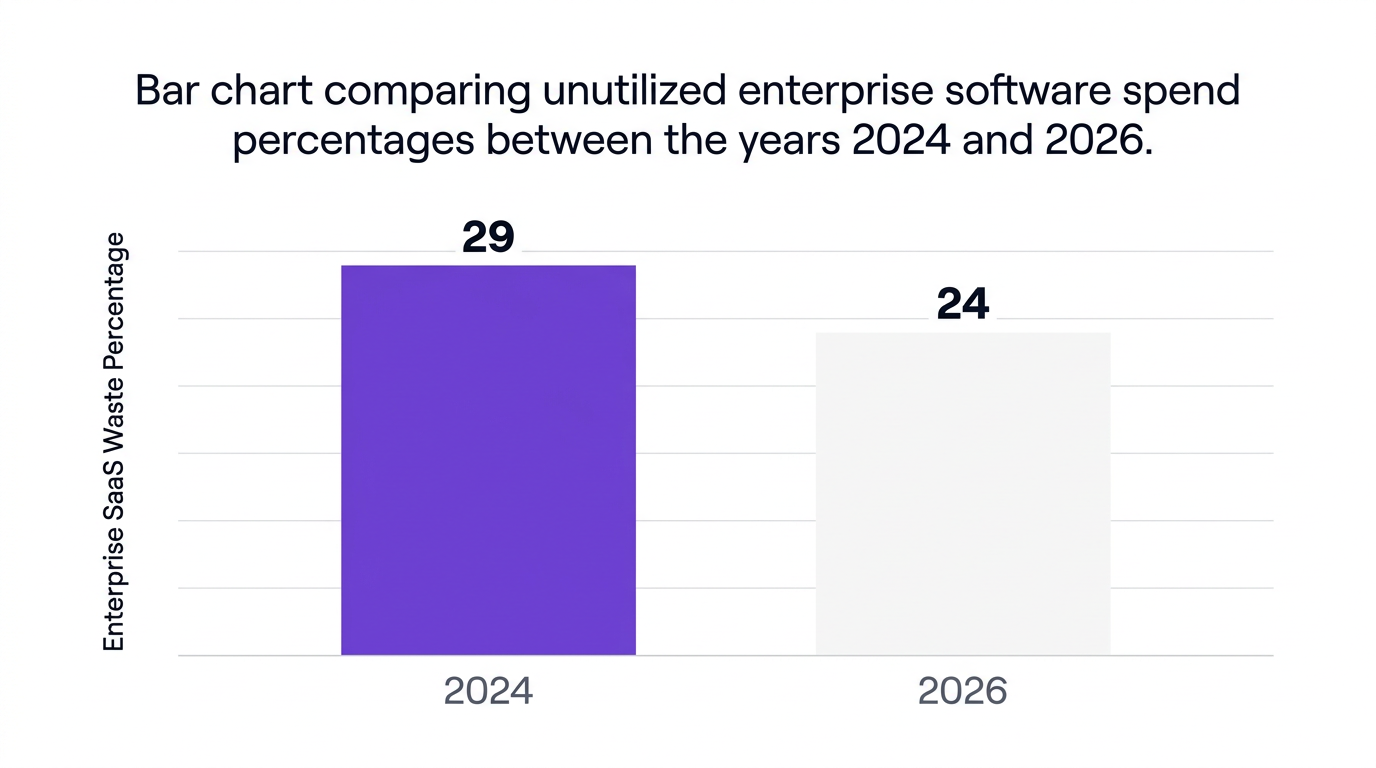
A lack of centralized financial visibility directly erodes corporate profit margins. Without a reliable automated system to uncover hidden applications, budget forecasts remain entirely speculative week over week. Gartner 2026 data indicates that enterprises waste an estimated 24% of their annual software expenditure on unused or entirely underutilized applications. This administrative waste compounds quietly across different departments, silently absorbing vital capital that could otherwise fund critical business expansion initiatives.
Analysts emphasize the absolute seriousness of this visibility gap. Carla Mendez, a Senior Partner at Deloitte 2026, notes, "Integrating real-time expense tracking with software management yields not only cost savings, but also enhances compliance and decision agility for finance executives." Organizations cannot optimize resources they cannot see. Real time SaaS expense tracking replaces lagging quarterly spreadsheet audits with proactive, daily oversight.

In fact, 74% of CFOs explicitly state that real time software spend visibility is critical for managing financial risk within their operations (Deloitte 2026). As companies expand their digital environments, the sheer volume of vendor contracts becomes overwhelming for small teams to process manually. Legacy tracking systems fail completely to capture the dynamic, constantly shifting nature of enterprise cloud applications. Finance teams need robust SaaS spend management tools to evaluate precise usage against their actual negotiated expenditures.
To turn highly decentralized bills into coherent strategic advantages, modern organizations must build their SaaS cost optimization strategy upon specific functional pillars. These structural areas work together closely to provide absolute transparency.
First, comprehensive software discovery forms the necessary foundation. Finance teams need to know exactly which applications exist within the corporate network environment before they can audit them. Automated discovery tools scan financial systems, single sign-on platforms, and browser extensions to uncover every single tool in active use. InfoTech 2026 reports that companies implementing automated discovery tools reduced software waste by an average of 31% within their first year of deployment.
Second, exact expense tracking and SaaS license optimization must immediately follow discovery. Once applications are identified, the analytical focus shifts quickly to active deployment metrics. Finance leaders must match the total purchased licenses against the actual number of active users per week. If a marketing department buys two hundred premium seats but only forty users log in on a regular basis, the excess volume represents immediate right sizing potential. Mapping this granular usage data directly to billing statements allows procurement to systematically downgrade subscription tiers or cancel unused agreements outright.
Third, rigid policy automation and continuous compliance reporting act as the defensive structure against future bloat. Establishing highly structured workflows for software purchasing ensures that new requests always undergo proper financial scrutiny before a credit card is charged. Automated onboarding and offboarding workflows prevent departing staff members from indefinitely retaining access to expensive paid seats. This tight operational control secures vital company data while permanently stopping unnecessary recurring billing profiles.
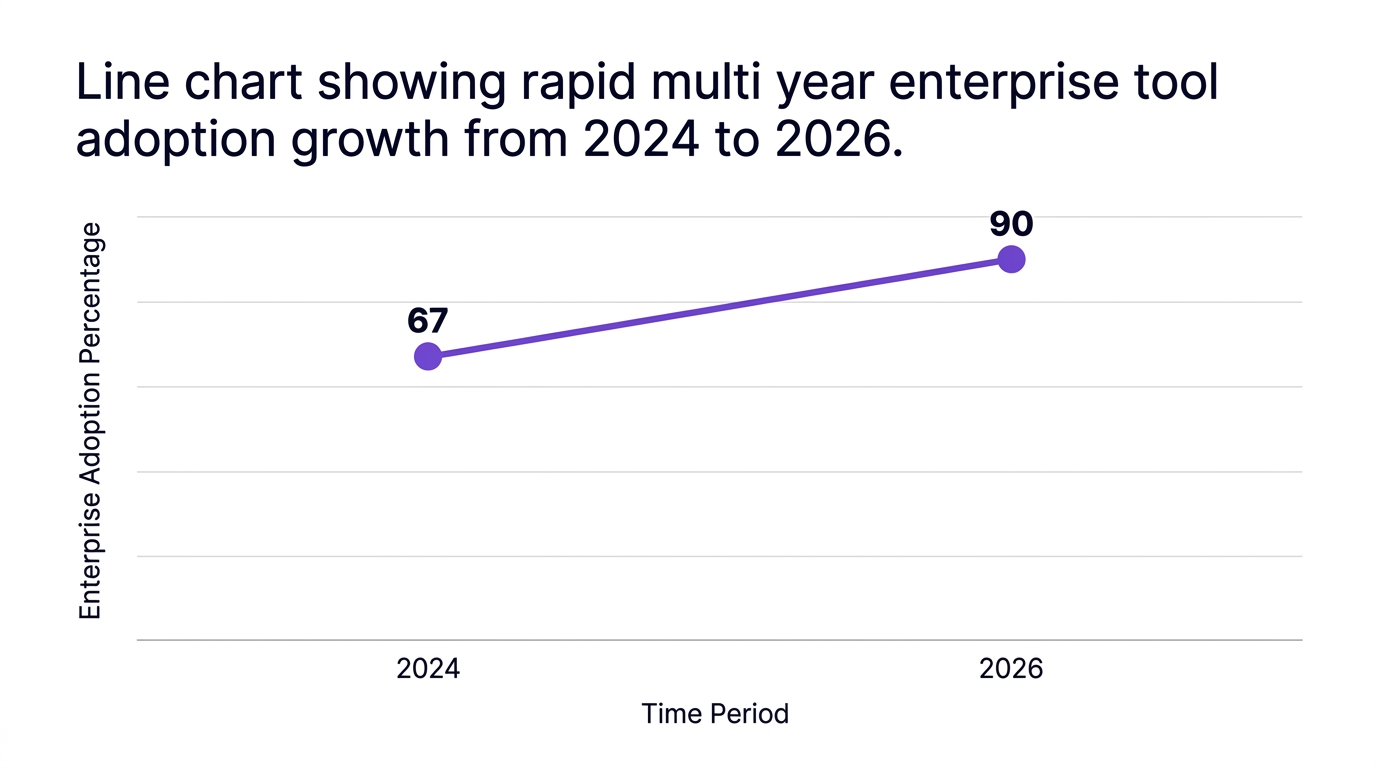
The reliance on manual spreadsheets for software subscription audits is rapidly declining among corporate enterprises. The enterprise market is witnessing a tremendous structural shift toward dedicated systems that handle large scale compliance operations without human error. Forrester 2026 research reveals that 90% of large enterprises expect to adopt a unified SaaS spend management tool by the close of 2026, which is up aggressively from just 67% in 2024.
Joseph Lin, an Enterprise Technology Strategist at Forrester 2026, provides necessary context for this rapid software adoption curve. He states, "In 2026, the biggest gains in ROI come from platforms providing 360-degree visibility, enabling IT and finance to act on actionable usage insights." The global software market for these specific governance solutions is clearly expanding in direct response to this need. MarketsandMarkets 2026 forecasts that the industry will grow at an 18% compound annual growth rate, ultimately reaching $7.5 billion by 2026.
This extreme investment surge is largely driven by the absolute necessity for accurate chargeback analytics. Finance departments must allocate software subscription costs precisely back to the specific business units continuously consuming them. Cross functional committees are quickly emerging to bridge the historical communication gap between standard procurement teams and ambitious departmental leaders. When department heads see their exact software footprint directly reflected in their monthly operational budgets, they rapidly become active participants in identifying ongoing waste and driving new financial efficiency.
The strict mandate for financial discipline has elevated software governance directly to the corporate boardroom level. Setting aggressive long term cost reduction goals requires a structured operational blueprint that accurately aligns technology consumption with tangible, measured business value.
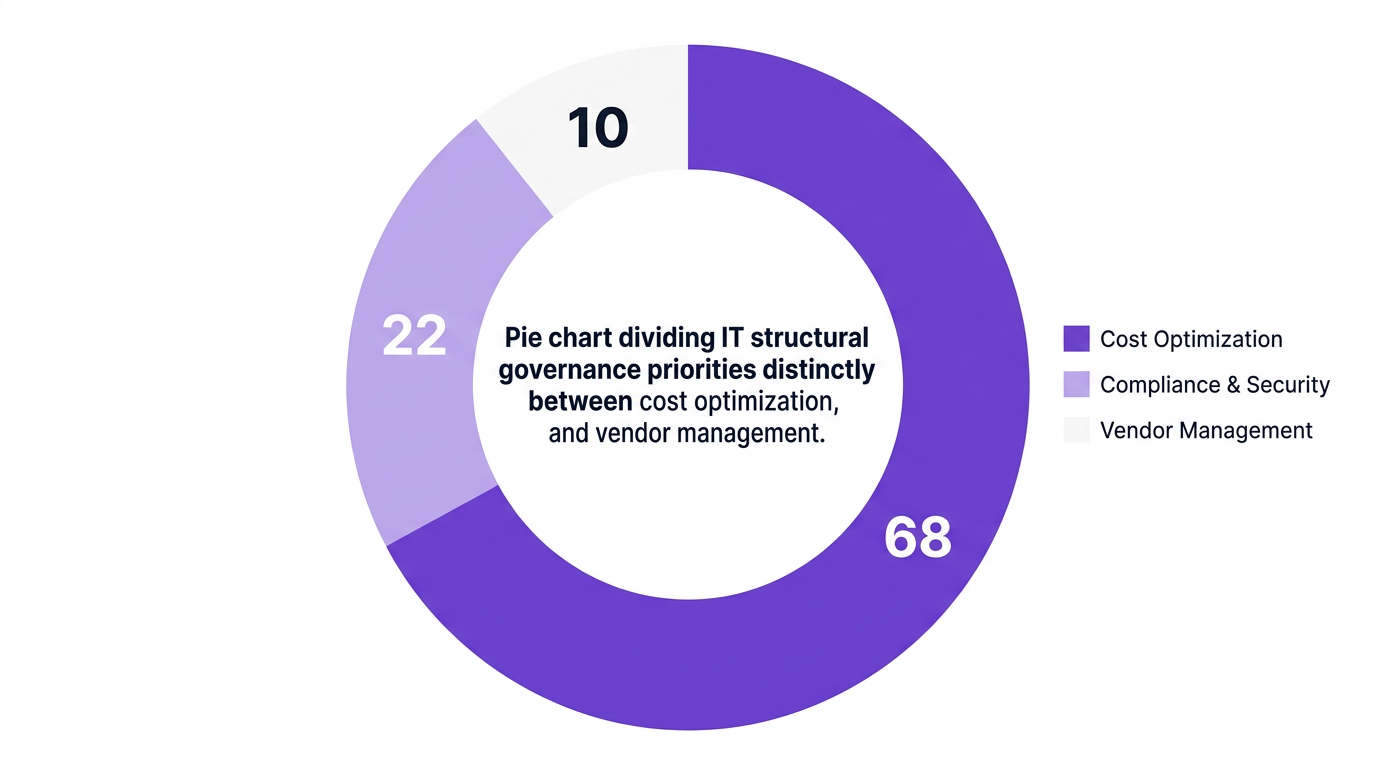
According to PwC 2026 research, 68% of finance teams explicitly cite SaaS cost optimization as their single top IT governance priority for the coming year. The immediate secondary priorities structurally include software compliance and security at 22%, followed directly by basic vendor management at 10%. These verified industry figures neatly illustrate that pure unit cost control continues to dominate the strategic planning agenda. Successfully achieving these complex goals requires a deep organizational commitment to absolute continuous tracking rather than episodic, reactionary budget cuts.
A highly proactive SaaS renewal management strategy provides the final critical element. Most enterprise software subscriptions auto renew without any formal usage review, directly locking unwary organizations into another twelve full months of wasted expenditure. By implementing proactive software alerts ninety days before any major contract expires, corporate finance teams generate sufficient runway to precisely assess platform utilization. This critical window enables direct negotiation of much better unit pricing or active exploration of vendor platform consolidations. This forward looking methodology effectively turns the dreaded renewal phase into a highly strategic financial review rather than a simple administrative rubber stamp.
Organizations actively seeking a permanent, definitive resolution to software sprawl turn confidently to CloudNuro. The platform delivers an advanced AI enabled ecosystem customized entirely to strictly align technical IT operations with uncompromising financial oversight. By integrating directly with over 400 top applications and enterprise cloud vendors, CloudNuro ensures that finance and IT leaders immediately gain absolute, centralized visibility into their corporate technology footprint.
Deployable within heavily regulated environments in just hours, the CloudNuro Unified Cloud Custodian firmly handles comprehensive software lifecycle supervision. It rapidly identifies unapproved external applications and delivers unprecedented operational insight into precise daily deployment patterns. This functional transparency helps large organizations easily streamline procurement workflows, eliminate unauthorized applications, and drastically reduce overall software licensing waste.
Analysts emphasize the value of this approach using verified operational impacts. A Fortune 500 healthcare firm implemented the Unified Cloud Custodian and successfully cut its software waste by a staggering 38% within twelve months (CloudNuro Case Studies 2026). This precise optimization allowed the firm to redirect $2.8 million back into critical clinical growth initiatives. Additionally, the automated policy enforcement natively built into CloudNuro measurably improved the firm's compliance reporting efficiency by 41%.
For exacting operational financial accountability, CloudNuro Chargeback operates as a profoundly critical asset. It cleanly automates the notoriously complex allocation of software operations expenses across highly varied corporate departments, fully empowering the office of the CFO to track and optimize spending dynamically. A leading global financial services provider adopted CloudNuro Chargeback and rapidly achieved a full 26% reduction in completely unallocated operational expenditures. Because the comprehensive platform provides robust FinOps Services and deeply extensive audit traceability, the financial provider elevated its complex audit readiness scores from a risky 75% to an exceptional 96% (CloudNuro Case Studies 2026).
Through rigid foundational governance, highly automated daily onboarding routines, and aggressive real time risk scoring, CloudNuro establishes a deeply seated enterprise cost conscious culture. With these systems fully in place, corporate finance teams finally possess the highly definitive tools universally necessary to completely maximize total software ROI while maintaining the most exacting compliance security standards.
It is the highly systematic process of actively discovering, financially tracking, and carefully optimizing application expenses within a modern organization. It focuses strictly on turning raw vendor billing data into highly transparent usage metrics. This disciplined framework actively helps centralized finance divisions accurately control variable costs, uncover unused tier licenses, and ultimately eliminate any duplicate digital subscriptions initially created by decentralized shadow purchasing.
Finance teams formally track these complex operating expenses by selectively deploying highly automated digital discovery platforms that connect deeply into their core financial systems, single sign-on security providers, and basic corporate credit cards. This integrated approach cleanly maps exact financial outlays directly to specific employee operational usage data, quickly replacing heavily error prone manual tracking spreadsheets with tight continuous monitoring structures.
Top tier practices include permanently implementing rigorous automated software discovery to expose unapproved IT application purchases. Best practices also require establishing highly strict functional purchasing protocols and carefully reviewing detailed internal usage metrics well before any auto renewal notification date triggers. Installing comprehensive internal chargeback analytics modules guarantees that individual operational departments take total financial accountability for the specific application bandwidth they consume daily.
Massive companies confidently control this severe sprawl by standardizing upon highly dedicated SaaS management platform systems that meticulously conduct constant automated user access reviews. By automatically offboarding technically inactive users and systematically revoking premium platform licenses from departing corporate employees, enterprise organizations successfully block ongoing monthly charges for fundamentally empty seats and effortlessly maintain continuous tight control over their expansive digital environments.
When critically evaluating these structural products, finance practice leaders must rigorously verify that the proposed application architecture cleanly supports detailed billing exports and integrates gracefully with their existing enterprise resource planning ledger systems. Overwhelmingly, the absolute ideal structural product always provides deeply insightful administrator tier dashboards that prominently highlight total operating cost per user alongside verified active feature utilization data metrics.
Translating massive, highly complex vendor invoice expense data into deeply refined software insights stands as the defining operational imperative for any modern corporate finance department. As fundamental enterprise application reliance structurally explodes across global industries, treating software merely as an opaque background operational cost is entirely unsustainable. Implementing a fiercely rigorous SaaS spend management strategy enables massive organizations to proactively identify tremendous budget waste, rigidly enforce complex security compliance, and confidently reallocate their vital operational capital strictly toward genuine market innovation workloads. By deeply adopting advanced automated network discovery and maintaining precise corporate chargeback accounting analytics structures, visionary CFOs will definitively transform previously disjointed digital technology billing statements into a rigidly structured operational driver of compounding commercial enterprise value.
About CloudNuro
CloudNuro is a leader in Enterprise SaaS Management Platforms, providing enterprises with unmatched visibility, governance, and cost optimization. Recognized twice in a row in the SaaS Management Platforms category and named a Leader in the SoftwareReviews Data Quadrant, CloudNuro is trusted by global enterprises and government agencies to bring financial discipline to SaaS, cloud, and AI. Trusted by enterprises such as Konica Minolta and Federal Signal, CloudNuro provides centralized SaaS inventory, license optimization, and renewal management along with advanced cost allocation and chargeback, giving IT and Finance leaders the visibility, control, and cost-conscious culture needed to drive financial discipline.
Request a no cost, no obligation free assessment —just 15 minutes to savings!
Get StartedAs corporate budgets migrate entirely to subscription models, software applications have become a dominant and increasingly difficult financial commitment to trace. Finance teams face mounting pressure to accurately account for every application purchased by business units. Achieving true SaaS spend management requires far more than rudimentary expense tracking. It demands a systematic structural translation of raw billing data into highly actionable software insights.
The transition from decentralized, ad hoc purchasing to formal software governance is no longer a luxury. According to IDC 2026 research, 71% of finance leaders report that software spend is the fastest growing line item in their IT budgets. Critically, 82% of these leaders anticipate this growth will accelerate even further over the next year. When individual departments bypass formal procurement channels, the resulting shadow IT creates massive financial blind spots. These blind spots inevitably lead to unused licenses, duplicate platforms, and unpredictable renewal costs across the organization. Establishing clear IT financial transparency empowers chief financial officers to regain absolute control over their technology investments and drive meaningful cost containment.
A lack of centralized financial visibility directly erodes corporate profit margins. Without a reliable automated system to uncover hidden applications, budget forecasts remain entirely speculative week over week. Gartner 2026 data indicates that enterprises waste an estimated 24% of their annual software expenditure on unused or entirely underutilized applications. This administrative waste compounds quietly across different departments, silently absorbing vital capital that could otherwise fund critical business expansion initiatives.
Analysts emphasize the absolute seriousness of this visibility gap. Carla Mendez, a Senior Partner at Deloitte 2026, notes, "Integrating real-time expense tracking with software management yields not only cost savings, but also enhances compliance and decision agility for finance executives." Organizations cannot optimize resources they cannot see. Real time SaaS expense tracking replaces lagging quarterly spreadsheet audits with proactive, daily oversight.
In fact, 74% of CFOs explicitly state that real time software spend visibility is critical for managing financial risk within their operations (Deloitte 2026). As companies expand their digital environments, the sheer volume of vendor contracts becomes overwhelming for small teams to process manually. Legacy tracking systems fail completely to capture the dynamic, constantly shifting nature of enterprise cloud applications. Finance teams need robust SaaS spend management tools to evaluate precise usage against their actual negotiated expenditures.
To turn highly decentralized bills into coherent strategic advantages, modern organizations must build their SaaS cost optimization strategy upon specific functional pillars. These structural areas work together closely to provide absolute transparency.
First, comprehensive software discovery forms the necessary foundation. Finance teams need to know exactly which applications exist within the corporate network environment before they can audit them. Automated discovery tools scan financial systems, single sign-on platforms, and browser extensions to uncover every single tool in active use. InfoTech 2026 reports that companies implementing automated discovery tools reduced software waste by an average of 31% within their first year of deployment.
Second, exact expense tracking and SaaS license optimization must immediately follow discovery. Once applications are identified, the analytical focus shifts quickly to active deployment metrics. Finance leaders must match the total purchased licenses against the actual number of active users per week. If a marketing department buys two hundred premium seats but only forty users log in on a regular basis, the excess volume represents immediate right sizing potential. Mapping this granular usage data directly to billing statements allows procurement to systematically downgrade subscription tiers or cancel unused agreements outright.
Third, rigid policy automation and continuous compliance reporting act as the defensive structure against future bloat. Establishing highly structured workflows for software purchasing ensures that new requests always undergo proper financial scrutiny before a credit card is charged. Automated onboarding and offboarding workflows prevent departing staff members from indefinitely retaining access to expensive paid seats. This tight operational control secures vital company data while permanently stopping unnecessary recurring billing profiles.
The reliance on manual spreadsheets for software subscription audits is rapidly declining among corporate enterprises. The enterprise market is witnessing a tremendous structural shift toward dedicated systems that handle large scale compliance operations without human error. Forrester 2026 research reveals that 90% of large enterprises expect to adopt a unified SaaS spend management tool by the close of 2026, which is up aggressively from just 67% in 2024.
Joseph Lin, an Enterprise Technology Strategist at Forrester 2026, provides necessary context for this rapid software adoption curve. He states, "In 2026, the biggest gains in ROI come from platforms providing 360-degree visibility, enabling IT and finance to act on actionable usage insights." The global software market for these specific governance solutions is clearly expanding in direct response to this need. MarketsandMarkets 2026 forecasts that the industry will grow at an 18% compound annual growth rate, ultimately reaching $7.5 billion by 2026.
This extreme investment surge is largely driven by the absolute necessity for accurate chargeback analytics. Finance departments must allocate software subscription costs precisely back to the specific business units continuously consuming them. Cross functional committees are quickly emerging to bridge the historical communication gap between standard procurement teams and ambitious departmental leaders. When department heads see their exact software footprint directly reflected in their monthly operational budgets, they rapidly become active participants in identifying ongoing waste and driving new financial efficiency.
The strict mandate for financial discipline has elevated software governance directly to the corporate boardroom level. Setting aggressive long term cost reduction goals requires a structured operational blueprint that accurately aligns technology consumption with tangible, measured business value.
According to PwC 2026 research, 68% of finance teams explicitly cite SaaS cost optimization as their single top IT governance priority for the coming year. The immediate secondary priorities structurally include software compliance and security at 22%, followed directly by basic vendor management at 10%. These verified industry figures neatly illustrate that pure unit cost control continues to dominate the strategic planning agenda. Successfully achieving these complex goals requires a deep organizational commitment to absolute continuous tracking rather than episodic, reactionary budget cuts.
A highly proactive SaaS renewal management strategy provides the final critical element. Most enterprise software subscriptions auto renew without any formal usage review, directly locking unwary organizations into another twelve full months of wasted expenditure. By implementing proactive software alerts ninety days before any major contract expires, corporate finance teams generate sufficient runway to precisely assess platform utilization. This critical window enables direct negotiation of much better unit pricing or active exploration of vendor platform consolidations. This forward looking methodology effectively turns the dreaded renewal phase into a highly strategic financial review rather than a simple administrative rubber stamp.
Organizations actively seeking a permanent, definitive resolution to software sprawl turn confidently to CloudNuro. The platform delivers an advanced AI enabled ecosystem customized entirely to strictly align technical IT operations with uncompromising financial oversight. By integrating directly with over 400 top applications and enterprise cloud vendors, CloudNuro ensures that finance and IT leaders immediately gain absolute, centralized visibility into their corporate technology footprint.
Deployable within heavily regulated environments in just hours, the CloudNuro Unified Cloud Custodian firmly handles comprehensive software lifecycle supervision. It rapidly identifies unapproved external applications and delivers unprecedented operational insight into precise daily deployment patterns. This functional transparency helps large organizations easily streamline procurement workflows, eliminate unauthorized applications, and drastically reduce overall software licensing waste.
Analysts emphasize the value of this approach using verified operational impacts. A Fortune 500 healthcare firm implemented the Unified Cloud Custodian and successfully cut its software waste by a staggering 38% within twelve months (CloudNuro Case Studies 2026). This precise optimization allowed the firm to redirect $2.8 million back into critical clinical growth initiatives. Additionally, the automated policy enforcement natively built into CloudNuro measurably improved the firm's compliance reporting efficiency by 41%.
For exacting operational financial accountability, CloudNuro Chargeback operates as a profoundly critical asset. It cleanly automates the notoriously complex allocation of software operations expenses across highly varied corporate departments, fully empowering the office of the CFO to track and optimize spending dynamically. A leading global financial services provider adopted CloudNuro Chargeback and rapidly achieved a full 26% reduction in completely unallocated operational expenditures. Because the comprehensive platform provides robust FinOps Services and deeply extensive audit traceability, the financial provider elevated its complex audit readiness scores from a risky 75% to an exceptional 96% (CloudNuro Case Studies 2026).
Through rigid foundational governance, highly automated daily onboarding routines, and aggressive real time risk scoring, CloudNuro establishes a deeply seated enterprise cost conscious culture. With these systems fully in place, corporate finance teams finally possess the highly definitive tools universally necessary to completely maximize total software ROI while maintaining the most exacting compliance security standards.
It is the highly systematic process of actively discovering, financially tracking, and carefully optimizing application expenses within a modern organization. It focuses strictly on turning raw vendor billing data into highly transparent usage metrics. This disciplined framework actively helps centralized finance divisions accurately control variable costs, uncover unused tier licenses, and ultimately eliminate any duplicate digital subscriptions initially created by decentralized shadow purchasing.
Finance teams formally track these complex operating expenses by selectively deploying highly automated digital discovery platforms that connect deeply into their core financial systems, single sign-on security providers, and basic corporate credit cards. This integrated approach cleanly maps exact financial outlays directly to specific employee operational usage data, quickly replacing heavily error prone manual tracking spreadsheets with tight continuous monitoring structures.
Top tier practices include permanently implementing rigorous automated software discovery to expose unapproved IT application purchases. Best practices also require establishing highly strict functional purchasing protocols and carefully reviewing detailed internal usage metrics well before any auto renewal notification date triggers. Installing comprehensive internal chargeback analytics modules guarantees that individual operational departments take total financial accountability for the specific application bandwidth they consume daily.
Massive companies confidently control this severe sprawl by standardizing upon highly dedicated SaaS management platform systems that meticulously conduct constant automated user access reviews. By automatically offboarding technically inactive users and systematically revoking premium platform licenses from departing corporate employees, enterprise organizations successfully block ongoing monthly charges for fundamentally empty seats and effortlessly maintain continuous tight control over their expansive digital environments.
When critically evaluating these structural products, finance practice leaders must rigorously verify that the proposed application architecture cleanly supports detailed billing exports and integrates gracefully with their existing enterprise resource planning ledger systems. Overwhelmingly, the absolute ideal structural product always provides deeply insightful administrator tier dashboards that prominently highlight total operating cost per user alongside verified active feature utilization data metrics.
Translating massive, highly complex vendor invoice expense data into deeply refined software insights stands as the defining operational imperative for any modern corporate finance department. As fundamental enterprise application reliance structurally explodes across global industries, treating software merely as an opaque background operational cost is entirely unsustainable. Implementing a fiercely rigorous SaaS spend management strategy enables massive organizations to proactively identify tremendous budget waste, rigidly enforce complex security compliance, and confidently reallocate their vital operational capital strictly toward genuine market innovation workloads. By deeply adopting advanced automated network discovery and maintaining precise corporate chargeback accounting analytics structures, visionary CFOs will definitively transform previously disjointed digital technology billing statements into a rigidly structured operational driver of compounding commercial enterprise value.
About CloudNuro
CloudNuro is a leader in Enterprise SaaS Management Platforms, providing enterprises with unmatched visibility, governance, and cost optimization. Recognized twice in a row in the SaaS Management Platforms category and named a Leader in the SoftwareReviews Data Quadrant, CloudNuro is trusted by global enterprises and government agencies to bring financial discipline to SaaS, cloud, and AI. Trusted by enterprises such as Konica Minolta and Federal Signal, CloudNuro provides centralized SaaS inventory, license optimization, and renewal management along with advanced cost allocation and chargeback, giving IT and Finance leaders the visibility, control, and cost-conscious culture needed to drive financial discipline.
Request a no cost, no obligation free assessment - just 15 minutes to savings!
Get StartedWe're offering complimentary ServiceNow license assessments to only 25 enterprises this quarter who want to unlock immediate savings without disrupting operations.
Get Free AssessmentGet Started




CloudNuro Corp
1755 Park St. Suite 207
Naperville, IL 60563
Phone : +1-630-277-9470
Email: info@cloudnuro.com





.webp)

Recognized Leader in SaaS Management Platforms by Info-Tech SoftwareReviews
.png)


.svg)