

Sign Up
Thank you for Submitting!
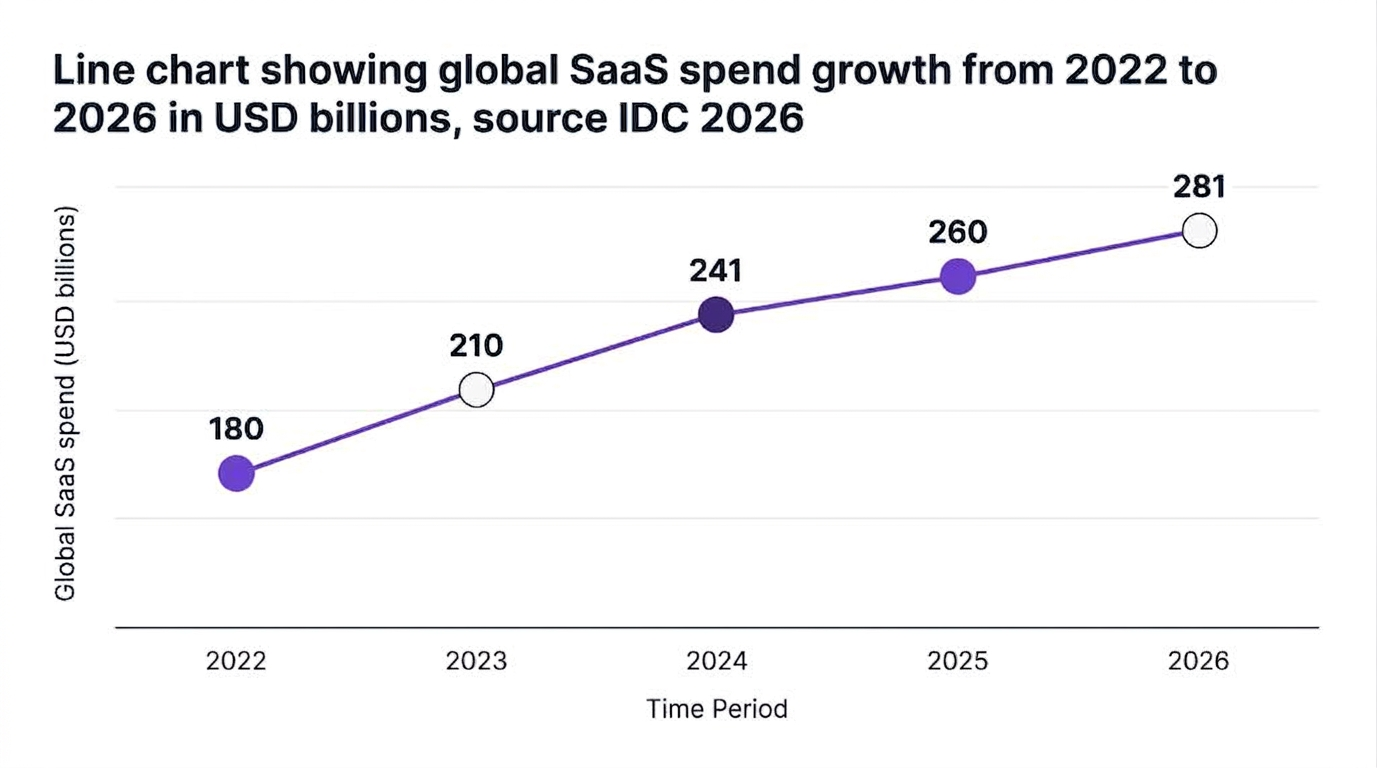
Global SaaS spend is expected to hit 281 billion dollars by 2026, growing at 17 percent CAGR since 2022 (IDC 2026). As CIOs and IT leaders race to manage SaaS spend across sprawling app portfolios, most still lack full visibility into what they actually own and use. A disciplined SaaS stack audit is now the starting point for any serious attempt to control risk, improve compliance, and optimize costs.
This guide walks through a practical SaaS stack audit that helps you manage SaaS spend, tighten governance, and expose hidden risks. You will see how leading enterprises structure SaaS inventory, risk, and spend analysis, and where automation and platforms like CloudNuro remove manual work.
Only 41 percent of enterprises report full visibility into their SaaS apps inventory as of 2026 (McKinsey 2026). That means most organizations make security and budget decisions with incomplete data, relying on partial IT asset management records and scattered spreadsheets.
At the same time, average unused license spend is forecast to reach 29 million dollars per large enterprise annually in 2026 (Accenture 2026). For regulated sectors, this is not just waste, it is also a governance issue, since every redundant app is a potential data exposure point.
Several trends are driving SaaS stack audits to the top of the agenda:
For 80 percent of CIOs in healthcare and finance, SaaS spend management is now the top technology governance priority (InfoTech 2026). A robust SaaS stack audit is how they translate that priority into concrete action.
Every effective SaaS stack audit begins with a saas inventory audit. You cannot manage SaaS spend or risk if you do not know what is in the environment.
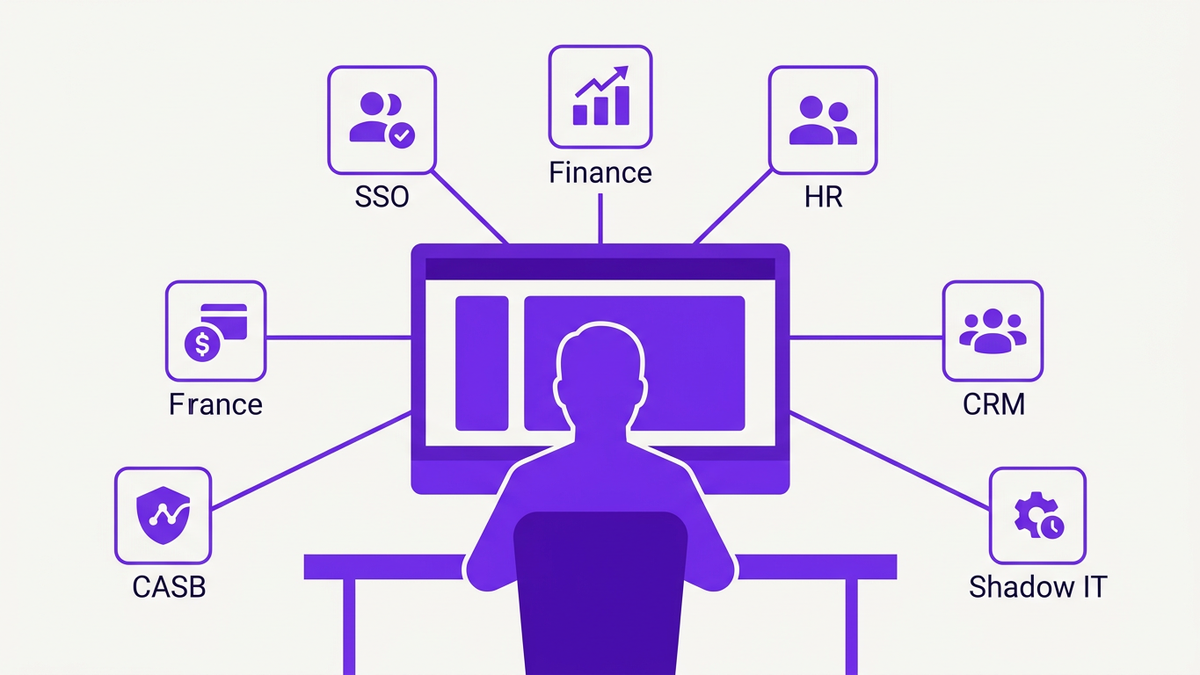
Relying only on procurement or ITSM records misses a large portion of the picture. Shadow IT, non-PO purchases, and free trials often never touch official systems.
Use multiple discovery sources:
Automated SaaS discovery is gaining traction, with 56 percent of enterprises projected to automate SaaS inventory and risk audits by 2026 (Gartner 2026). This builds the foundation for accurate SaaS spend analysis.
Once you have a consolidated list, normalize and classify apps so you can apply SaaS governance consistently.
Capture at least these data points per app:
Then segment by:
This classification allows you to align SaaS audit best practices with risk level, so you do not treat a design tool the same as a PHI-hosting clinical system.
Once inventory is stable, connect it to the financials. This is where a saas spend management platform or saas spend management software starts to show its value.
For each app, link to contracts and license models to clarify obligations and opportunities for SaaS license management.
Track:
This data enables renewal readiness and avoids costly auto-renewals that undercut saas spend optimization.
Next, roll up spend and unit economics:
Use this for systematic SaaS spend analysis. Look for:
Mature SaaS stack audits drive an average 28 percent reduction in redundant subscriptions (Forrester 2026). That result is only possible when contracts, usage, and cost are linked in a unified SaaS expense management view.
You cannot manage SaaS spend effectively unless you know who is using what, and how often. Think of this as moving from “What did we buy?” to “What are we really using?”
For each app, collect and review:
Practical thresholds many enterprises adopt:
This directly supports saas spend optimization, since underutilized licenses represent pure waste.
Next, scan the portfolio for categories with multiple tools doing similar jobs. An analogy that resonates with boards is “tool sprawl as an unplanned merger of three overlapping finance teams.” You would never accept three controllers doing the same work; similarly, you should question three project management tools with similar capabilities.
Look for:
A disciplined rationalization program based on your saas stack audit often frees up double-digit percentages of spend, without affecting user outcomes.
Financial optimization alone is not enough for highly regulated enterprises. A comprehensive saas risk audit must cover security, compliance, and data protection risks, especially where apps hold PHI, PII, or financial data.
Start with a simple risk score that combines:
Assign numeric values and create a tiered model, for example:
This helps you prioritize audit attention and remediation work.
For each high or medium risk app, validate:
A leading analyst notes that “real-time discovery and risk scoring of SaaS applications empower IT leaders to proactively manage security and financial risk” (Priya Agarwal, Forrester 2026). This is exactly what a strong SaaS governance framework delivers.
You will often hear:
Both views miss the point. Free tools still touch sensitive data and may create compliance SaaS issues. Business-owned apps still fall under enterprise security and regulatory scrutiny.
The SaaS audit guide you use should treat all cloud apps that store or process corporate data as in scope, regardless of who pays the invoice.
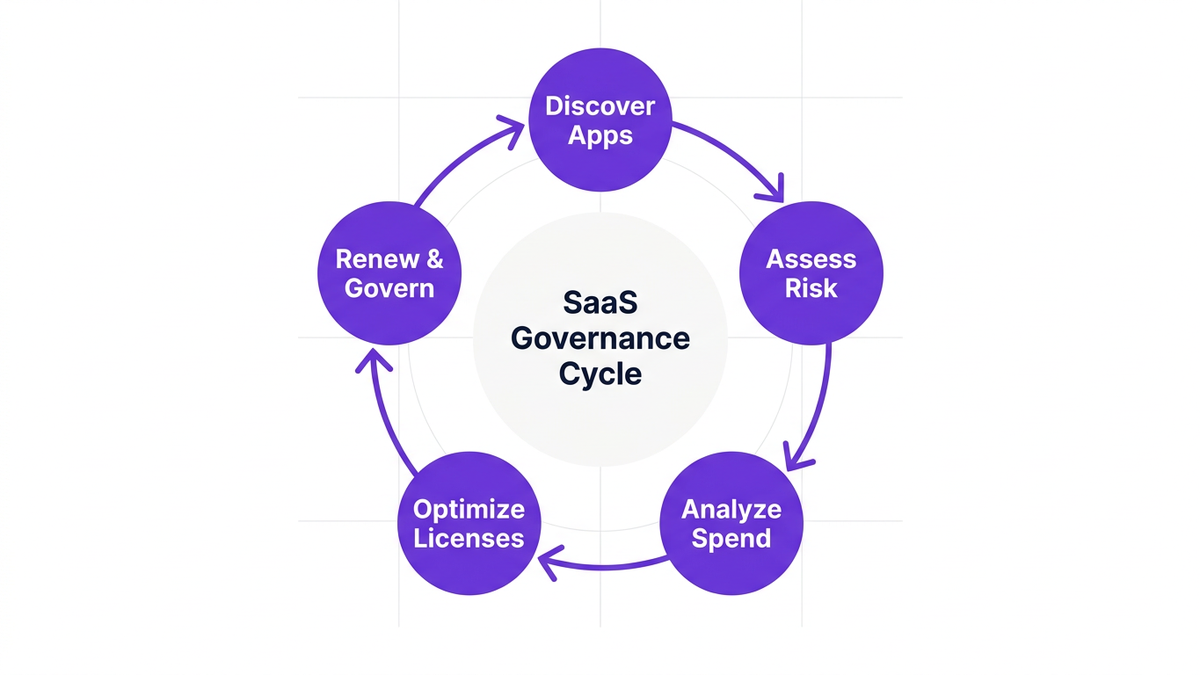
A one-off project to manage SaaS spend delivers initial savings, but without process and tooling the gains erode within a year. The goal is to embed spend management cloud SaaS practices into your operating model.
Aim to:
Automated workflows can:
This blend of automation and process supports both cost optimization SaaS initiatives and risk management.
Technology alone cannot fix fragmented decision making. Leaders need to align policy, financial accountability, and user experience.
Core practices include:
An analyst from InfoTech notes that “SaaS expense management has evolved beyond simple license tracking; actionable, AI-driven insights are now a regulatory necessity” (Michael Brooks, InfoTech 2026). Embedding these practices makes that insight real.
CloudNuro is built to help enterprises manage SaaS spend, risk, and compliance at scale, across both SaaS and broader cloud services. Rather than stitching together multiple point tools, IT leaders get a single control plane for SaaS spend management and governance.
CloudNuro’s Unified Cloud Custodian automatically discovers apps across SSO, finance systems, and cloud activity, creating a complete saas inventory audit with minimal manual effort. It integrates with over 400 platforms and classifies apps by category, department, and data sensitivity.
Real-time risk scores highlight high-risk apps based on:
This allows security and compliance teams to focus immediately on the apps that matter most.
CloudNuro’s FinOps Services and AI Custodian modules address the financial side of saas spend management. They:
For example, CloudNuro has helped customers identify multi-million dollar savings in collaboration and productivity suites by aligning license levels to true usage and enforcing SaaS license management policies.
CloudNuro also automates key workflows that underpin SaaS governance:
A major US healthcare provider, used CloudNuro’s Unified Cloud Custodian to run a comprehensive saas stack audit. The result: a 31 percent reduction in SaaS spend and elimination of 14 high-risk Shadow IT apps in under a year (CloudNuro Case Library 2026).
Similarly, Bank audited its SaaS inventory using automated risk scoring and contract analysis, achieving 23 percent cost savings and full SOC 2 Type II compliance by Q2 2026 (ISG Case Study 2026). These outcomes reflect how automated saas spend management tools and structured governance can transform both budgets and risk posture.
Start by building a complete saas apps inventory from SSO, finance, and network data. Map each app to contracts, licenses, and spend, then analyze usage to identify underutilized licenses and redundant tools. Use this data to renegotiate contracts, reclaim seats, and standardize on preferred platforms as part of a broader cost optimization SaaS program.
Focus on data sensitivity, access controls, vendor security posture, and compliance SaaS alignment. High-risk signals include PHI or PII stored in apps without strong certifications like SOC 2 Type II, weak MFA or SSO adoption, unclear data residency, and missing breach notification terms. A saas risk audit should prioritize these issues with a clear remediation plan.
Use a combination of automated discovery and manual attestations. Pull data from SSO logs, expense systems, and network or CASB tools, then ask business leaders to confirm their critical apps. A saas spend management platform that automates discovery and maintains a living inventory significantly reduces manual effort.
Typical SaaS audit best practices include:
Automated risk scoring accelerates this process and keeps it current.
Use a structured SaaS spend management program built on accurate data. Combine inventory, contract, and usage insights to reclaim idle licenses, downshift tiers, and rationalize overlapping apps. A dedicated saas spend management tool can automate these insights and trigger workflows so savings are sustained over time.
A thorough saas stack audit often discovers missing DPAs, apps processing regulated data without appropriate certifications, data stored in prohibited regions, or tools bypassing SSO and MFA. Addressing these gaps reduces the likelihood of breaches, fines, and regulatory findings, especially in healthcare, finance, and public sector environments.
A rigorous SaaS stack audit does more than clean up a few licenses. It gives IT leaders the visibility and control they need to manage SaaS spend strategically, reduce security and compliance risk, and align technology choices with business value.
Enterprises that institutionalize discovery, risk scoring, and SaaS spend management as ongoing disciplines see sustained reductions in waste and a stronger compliance posture. Platforms like CloudNuro make this scalable by automating discovery, risk assessment, and optimization, so IT teams can focus on decisions, not spreadsheets.
To see how you can move from a one-off audit to continuous SaaS governance, schedule a CloudNuro SaaS stack assessment.
CloudNuro is a leader in Enterprise SaaS Management Platforms, giving enterprises unmatched visibility, governance, and cost optimization.
We are proud to be recognized twice in a row by Gartner in the SaaS Management Platforms and named a Leader in the Info-Tech SoftwareReviews Data Quadrant.
Trusted by global enterprises and government agencies, CloudNuro provides centralized SaaS inventory, license optimization, and renewal management. With a 15-minute setup and measurable results in under 24 hours, CloudNuro gives IT teams a fast path to value.
Request a Demo | Get Free Savings Assessment | Explore Product
Request a no cost, no obligation free assessment —just 15 minutes to savings!
Get StartedGlobal SaaS spend is expected to hit 281 billion dollars by 2026, growing at 17 percent CAGR since 2022 (IDC 2026). As CIOs and IT leaders race to manage SaaS spend across sprawling app portfolios, most still lack full visibility into what they actually own and use. A disciplined SaaS stack audit is now the starting point for any serious attempt to control risk, improve compliance, and optimize costs.
This guide walks through a practical SaaS stack audit that helps you manage SaaS spend, tighten governance, and expose hidden risks. You will see how leading enterprises structure SaaS inventory, risk, and spend analysis, and where automation and platforms like CloudNuro remove manual work.
Only 41 percent of enterprises report full visibility into their SaaS apps inventory as of 2026 (McKinsey 2026). That means most organizations make security and budget decisions with incomplete data, relying on partial IT asset management records and scattered spreadsheets.
At the same time, average unused license spend is forecast to reach 29 million dollars per large enterprise annually in 2026 (Accenture 2026). For regulated sectors, this is not just waste, it is also a governance issue, since every redundant app is a potential data exposure point.
Several trends are driving SaaS stack audits to the top of the agenda:
For 80 percent of CIOs in healthcare and finance, SaaS spend management is now the top technology governance priority (InfoTech 2026). A robust SaaS stack audit is how they translate that priority into concrete action.
Every effective SaaS stack audit begins with a saas inventory audit. You cannot manage SaaS spend or risk if you do not know what is in the environment.
Relying only on procurement or ITSM records misses a large portion of the picture. Shadow IT, non-PO purchases, and free trials often never touch official systems.
Use multiple discovery sources:
Automated SaaS discovery is gaining traction, with 56 percent of enterprises projected to automate SaaS inventory and risk audits by 2026 (Gartner 2026). This builds the foundation for accurate SaaS spend analysis.
Once you have a consolidated list, normalize and classify apps so you can apply SaaS governance consistently.
Capture at least these data points per app:
Then segment by:
This classification allows you to align SaaS audit best practices with risk level, so you do not treat a design tool the same as a PHI-hosting clinical system.
Once inventory is stable, connect it to the financials. This is where a saas spend management platform or saas spend management software starts to show its value.
For each app, link to contracts and license models to clarify obligations and opportunities for SaaS license management.
Track:
This data enables renewal readiness and avoids costly auto-renewals that undercut saas spend optimization.
Next, roll up spend and unit economics:
Use this for systematic SaaS spend analysis. Look for:
Mature SaaS stack audits drive an average 28 percent reduction in redundant subscriptions (Forrester 2026). That result is only possible when contracts, usage, and cost are linked in a unified SaaS expense management view.
You cannot manage SaaS spend effectively unless you know who is using what, and how often. Think of this as moving from “What did we buy?” to “What are we really using?”
For each app, collect and review:
Practical thresholds many enterprises adopt:
This directly supports saas spend optimization, since underutilized licenses represent pure waste.
Next, scan the portfolio for categories with multiple tools doing similar jobs. An analogy that resonates with boards is “tool sprawl as an unplanned merger of three overlapping finance teams.” You would never accept three controllers doing the same work; similarly, you should question three project management tools with similar capabilities.
Look for:
A disciplined rationalization program based on your saas stack audit often frees up double-digit percentages of spend, without affecting user outcomes.
Financial optimization alone is not enough for highly regulated enterprises. A comprehensive saas risk audit must cover security, compliance, and data protection risks, especially where apps hold PHI, PII, or financial data.
Start with a simple risk score that combines:
Assign numeric values and create a tiered model, for example:
This helps you prioritize audit attention and remediation work.
For each high or medium risk app, validate:
A leading analyst notes that “real-time discovery and risk scoring of SaaS applications empower IT leaders to proactively manage security and financial risk” (Priya Agarwal, Forrester 2026). This is exactly what a strong SaaS governance framework delivers.
You will often hear:
Both views miss the point. Free tools still touch sensitive data and may create compliance SaaS issues. Business-owned apps still fall under enterprise security and regulatory scrutiny.
The SaaS audit guide you use should treat all cloud apps that store or process corporate data as in scope, regardless of who pays the invoice.
A one-off project to manage SaaS spend delivers initial savings, but without process and tooling the gains erode within a year. The goal is to embed spend management cloud SaaS practices into your operating model.
Aim to:
Automated workflows can:
This blend of automation and process supports both cost optimization SaaS initiatives and risk management.
Technology alone cannot fix fragmented decision making. Leaders need to align policy, financial accountability, and user experience.
Core practices include:
An analyst from InfoTech notes that “SaaS expense management has evolved beyond simple license tracking; actionable, AI-driven insights are now a regulatory necessity” (Michael Brooks, InfoTech 2026). Embedding these practices makes that insight real.
CloudNuro is built to help enterprises manage SaaS spend, risk, and compliance at scale, across both SaaS and broader cloud services. Rather than stitching together multiple point tools, IT leaders get a single control plane for SaaS spend management and governance.
CloudNuro’s Unified Cloud Custodian automatically discovers apps across SSO, finance systems, and cloud activity, creating a complete saas inventory audit with minimal manual effort. It integrates with over 400 platforms and classifies apps by category, department, and data sensitivity.
Real-time risk scores highlight high-risk apps based on:
This allows security and compliance teams to focus immediately on the apps that matter most.
CloudNuro’s FinOps Services and AI Custodian modules address the financial side of saas spend management. They:
For example, CloudNuro has helped customers identify multi-million dollar savings in collaboration and productivity suites by aligning license levels to true usage and enforcing SaaS license management policies.
CloudNuro also automates key workflows that underpin SaaS governance:
A major US healthcare provider, used CloudNuro’s Unified Cloud Custodian to run a comprehensive saas stack audit. The result: a 31 percent reduction in SaaS spend and elimination of 14 high-risk Shadow IT apps in under a year (CloudNuro Case Library 2026).
Similarly, Bank audited its SaaS inventory using automated risk scoring and contract analysis, achieving 23 percent cost savings and full SOC 2 Type II compliance by Q2 2026 (ISG Case Study 2026). These outcomes reflect how automated saas spend management tools and structured governance can transform both budgets and risk posture.
Start by building a complete saas apps inventory from SSO, finance, and network data. Map each app to contracts, licenses, and spend, then analyze usage to identify underutilized licenses and redundant tools. Use this data to renegotiate contracts, reclaim seats, and standardize on preferred platforms as part of a broader cost optimization SaaS program.
Focus on data sensitivity, access controls, vendor security posture, and compliance SaaS alignment. High-risk signals include PHI or PII stored in apps without strong certifications like SOC 2 Type II, weak MFA or SSO adoption, unclear data residency, and missing breach notification terms. A saas risk audit should prioritize these issues with a clear remediation plan.
Use a combination of automated discovery and manual attestations. Pull data from SSO logs, expense systems, and network or CASB tools, then ask business leaders to confirm their critical apps. A saas spend management platform that automates discovery and maintains a living inventory significantly reduces manual effort.
Typical SaaS audit best practices include:
Automated risk scoring accelerates this process and keeps it current.
Use a structured SaaS spend management program built on accurate data. Combine inventory, contract, and usage insights to reclaim idle licenses, downshift tiers, and rationalize overlapping apps. A dedicated saas spend management tool can automate these insights and trigger workflows so savings are sustained over time.
A thorough saas stack audit often discovers missing DPAs, apps processing regulated data without appropriate certifications, data stored in prohibited regions, or tools bypassing SSO and MFA. Addressing these gaps reduces the likelihood of breaches, fines, and regulatory findings, especially in healthcare, finance, and public sector environments.
A rigorous SaaS stack audit does more than clean up a few licenses. It gives IT leaders the visibility and control they need to manage SaaS spend strategically, reduce security and compliance risk, and align technology choices with business value.
Enterprises that institutionalize discovery, risk scoring, and SaaS spend management as ongoing disciplines see sustained reductions in waste and a stronger compliance posture. Platforms like CloudNuro make this scalable by automating discovery, risk assessment, and optimization, so IT teams can focus on decisions, not spreadsheets.
To see how you can move from a one-off audit to continuous SaaS governance, schedule a CloudNuro SaaS stack assessment.
CloudNuro is a leader in Enterprise SaaS Management Platforms, giving enterprises unmatched visibility, governance, and cost optimization.
We are proud to be recognized twice in a row by Gartner in the SaaS Management Platforms and named a Leader in the Info-Tech SoftwareReviews Data Quadrant.
Trusted by global enterprises and government agencies, CloudNuro provides centralized SaaS inventory, license optimization, and renewal management. With a 15-minute setup and measurable results in under 24 hours, CloudNuro gives IT teams a fast path to value.
Request a Demo | Get Free Savings Assessment | Explore Product
Request a no cost, no obligation free assessment - just 15 minutes to savings!
Get StartedWe're offering complimentary ServiceNow license assessments to only 25 enterprises this quarter who want to unlock immediate savings without disrupting operations.
Get Free AssessmentGet Started




CloudNuro Corp
1755 Park St. Suite 207
Naperville, IL 60563
Phone : +1-630-277-9470
Email: info@cloudnuro.com




.webp)

Recognized Leader in SaaS Management Platforms by Info-Tech SoftwareReviews
.png)


.svg)