

Sign Up
Thank you for Submitting!
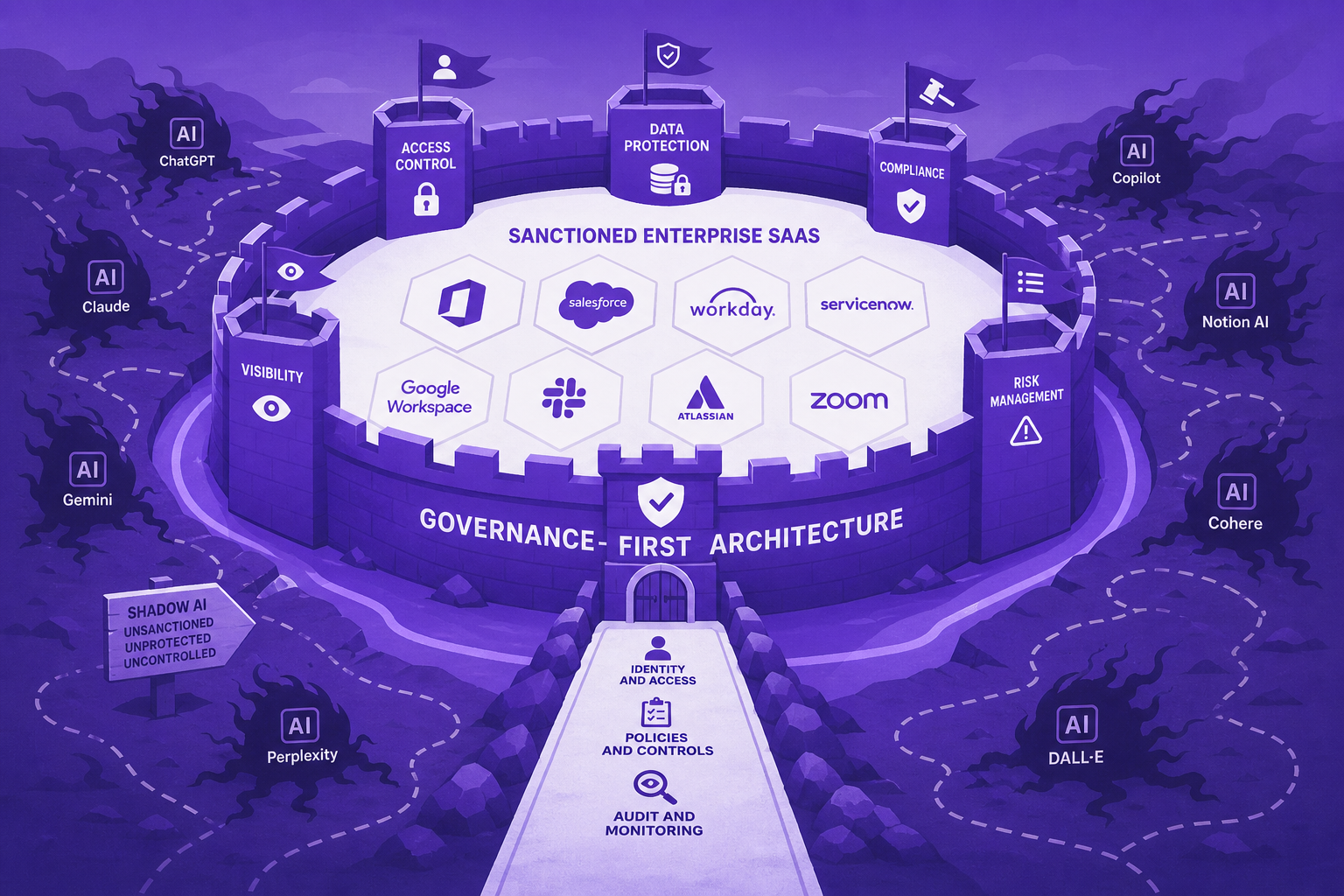
Artificial intelligence (AI) is revolutionizing how enterprises operate, driving both productivity gains and a new era of operational risks. However, this transformation has unleashed an unprecedented phenomenon: Shadow AI. As employees turn to generative AI tools and autonomous agents, often without explicit IT approval, organizations face hidden threats to security, compliance, and financial discipline. Without the right governance framework in place, uncontrolled AI adoption, driven by shadow IT, can rapidly spiral into noncompliance, data exposure, and ballooning costs at the token level. In this high-stakes environment, enterprises need a robust AI governance strategy that integrates visibility, control, and cost optimization before the spend spirals out of control.
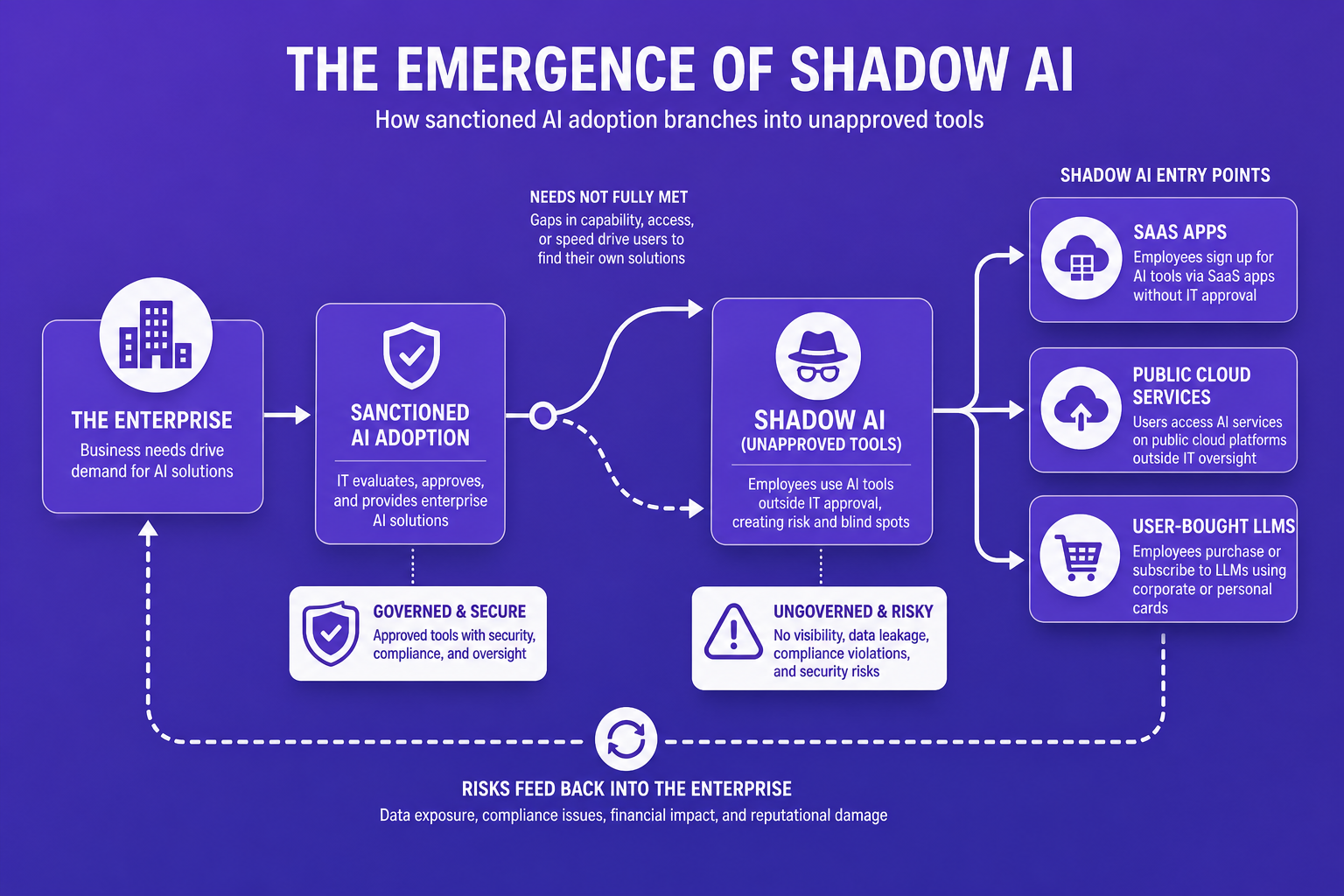
Shadow AI refers to the unsanctioned use of AI applications, agents, and tools within an enterprise. Unlike approved AI deployments managed by IT, shadow AI emerges when employees or teams independently procure, integrate, or leverage AI-driven capabilities, most commonly through SaaS platforms or cloud marketplaces. This unmonitored adoption is not limited to legacy shadow IT issues; it now includes usage of generative large language models, autonomous workflow agents, and even embedded AI inside traditional business applications.
The risks are real and growing:
73% of enterprises have reported instances of ungoverned AI tool usage by employees.
40% of enterprises are projected to experience a shadow AI-related breach.
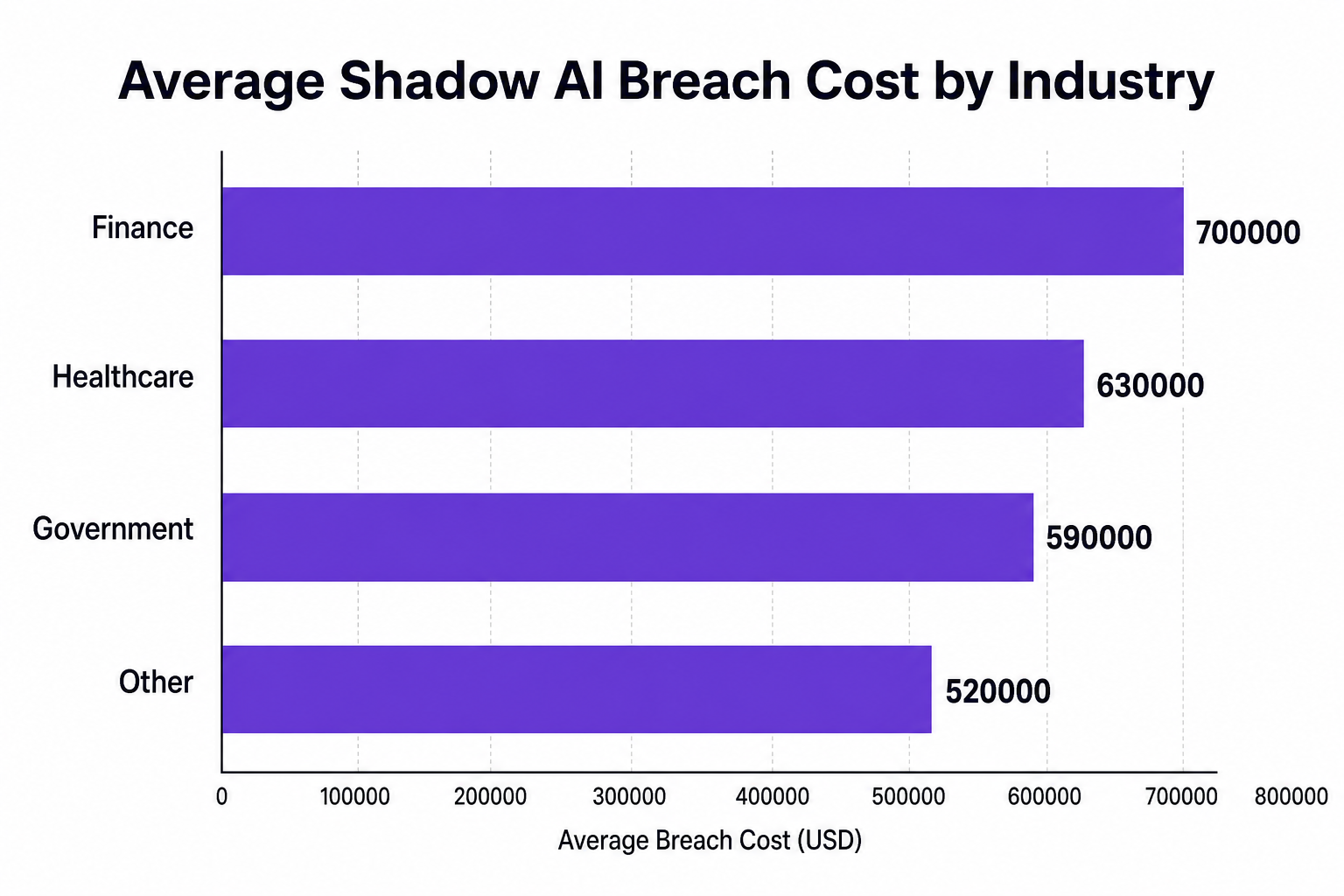
The average cost of a single Shadow AI-related data breach in large enterprises is $670,000.
Shadow AI’s spread is propelled by easy access, remote work trends, and the race to leverage competitive intelligence. Yet, it often leads to violations of established ai usage policy, circumvention of compliance controls, and redundant costs for duplicate AI services.
Traditional governance models for enterprise software and cloud services are insufficient for the complexity and velocity of AI adoption. In the AI era, best practices demand:
Continuous inventory and monitoring of all AI-related entitlements across SaaS and cloud.
Real-time enforcement of entitlement and token model policies (including least privilege and conditional access).
Automated detection of unsanctioned AI agents, features, and account provisioning.
Enterprises lacking an integrated AI governance approach face:
Heightened risk of data leakage and non-compliance events, especially in regulated industries like finance, healthcare, and government.
Loss of visibility into token-level AI expenditure, leading to runaway costs.
Fragmented audit trails, hindering both internal reviews and external regulatory audits.
AI governance is not simply a compliance checkbox, it is as foundational as data security or identity management. Market leaders increasingly define FinOps for AI as a discipline that combines spend management, policy enforcement, anomaly detection, and governance-first architecture.
AI spend management has evolved rapidly, mirroring the dynamics of SaaS cost optimization but introducing new complexities around tokenized consumption and entitlements. Key statistics highlight the urgency:
Generative AI spending by companies reached $37 billion, up from $11.5 billion.
AI-enabled expense management software is projected to grow from $7.3 billion to $14.1 billion.
Only 24% of companies currently have a dedicated AI spend management tool, leaving most exposed to hidden cost centers.
What is TokenOps? TokenOps refers to operational practices for monitoring, governing, and optimizing AI usage at the token level, where each token represents a unit of generative or computational activity billed by an AI vendor. Effective TokenOps involves:
Mapping real-world feature usage to token consumption data.
Identifying orphaned or inactive AI licenses and accounts.
Reclaiming and rightsizing entitlements automatically.
Enabling real-time chargebacks and cost allocation aligned to departments or projects.
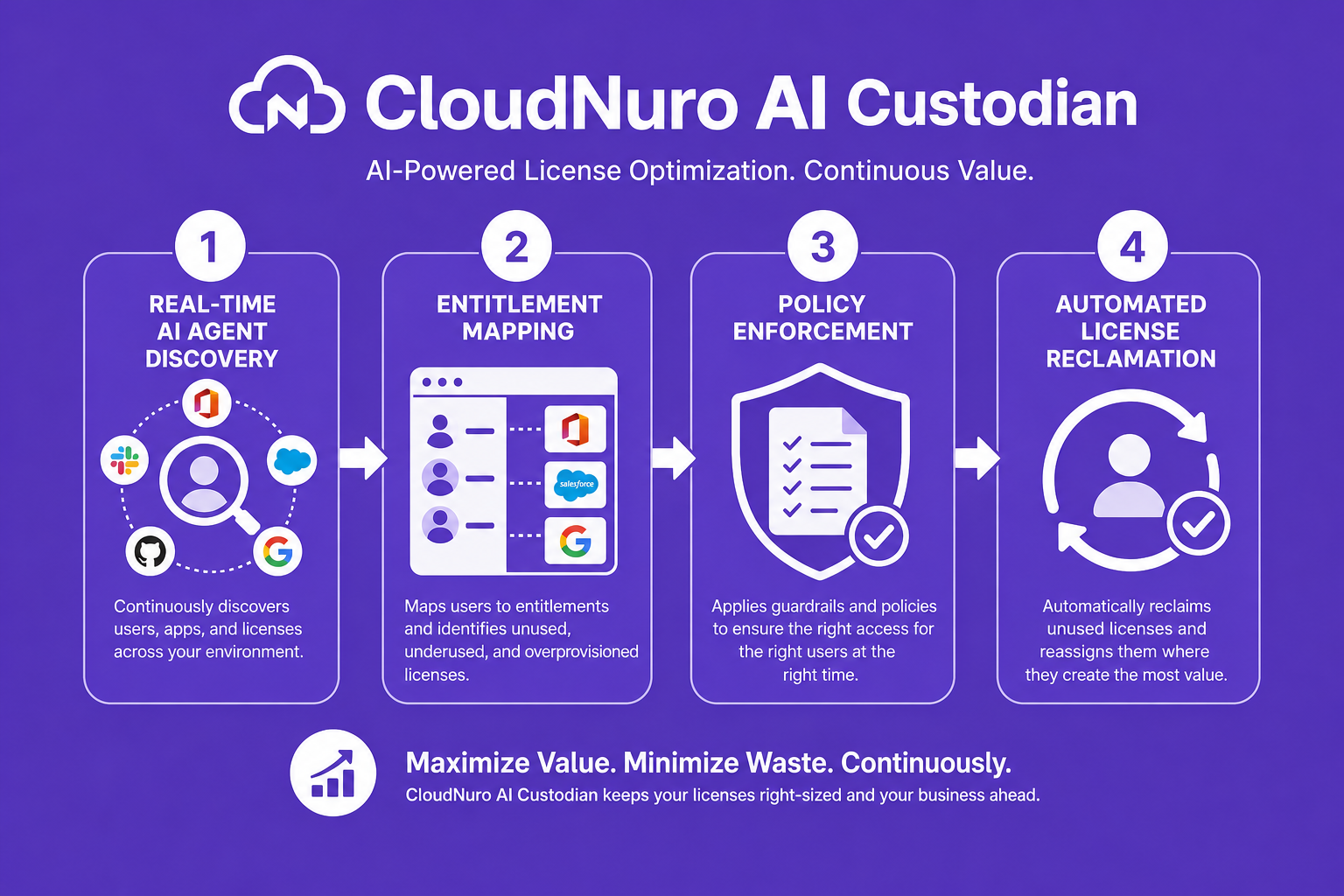
CloudNuro AI Custodian delivers a robust solution by integrating TokenOps directly into AI governance workflows, ensuring that every AI investment is justified and continuously monitored. This automation prevents spend spiral and gives financial and IT leaders the levers they need to drive financial discipline.
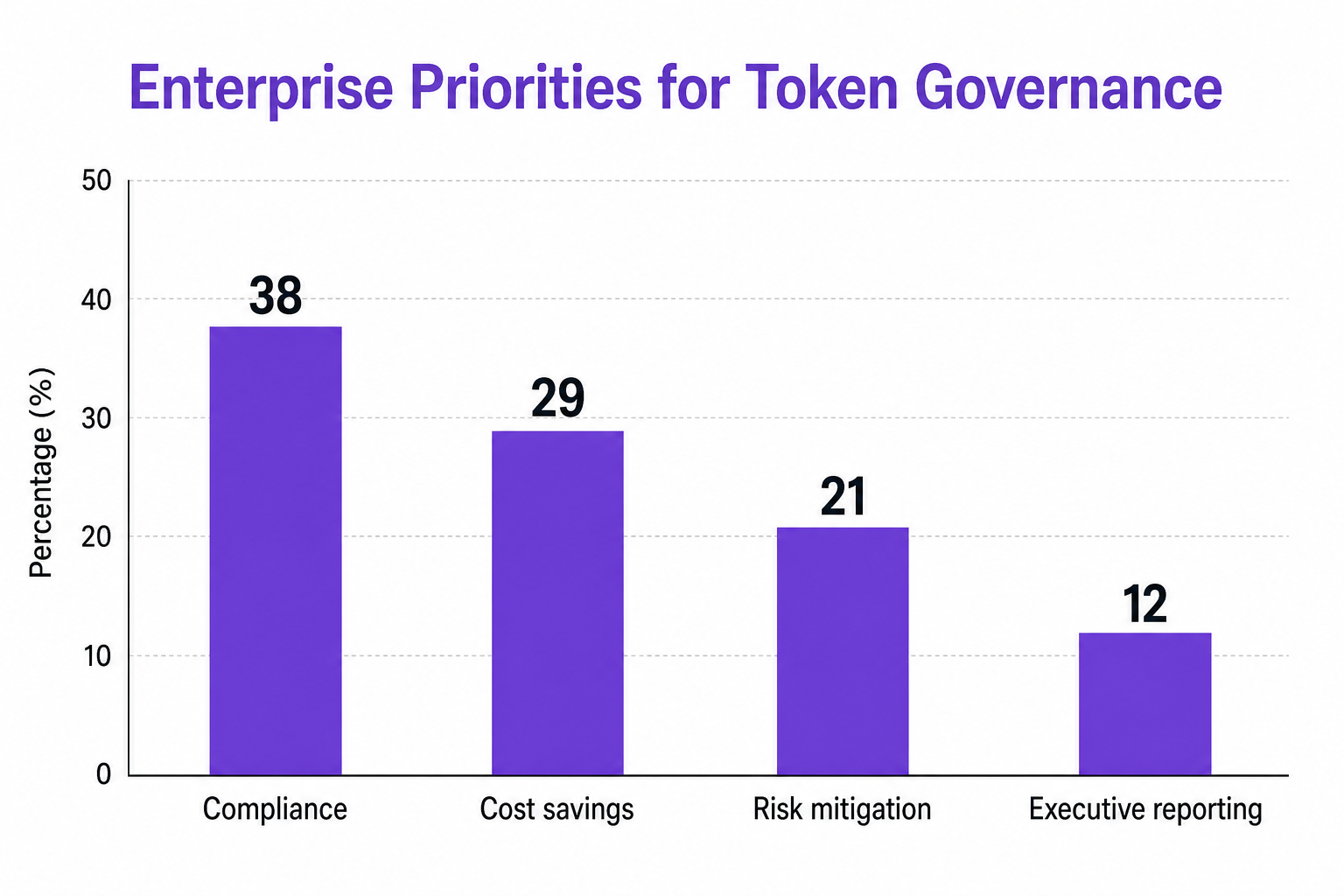
Left ungoverned, shadow AI presents a cocktail of high-impact risks:
Data Leakage and Non-Compliance: Without visibility into unsanctioned AI tools, organizations risk accidental regulatory violations and unauthorized disclosure of sensitive data. For example, a North American healthcare provider achieved a 63% reduction in unauthorized data access after deploying a unified AI custodian, demonstrating how centralized oversight directly mitigates risk.
Overspend and Orphaned Licenses: A multinational financial services firm eliminated duplicate AI services and reduced shadow IT AI agents by 90%, avoiding $2.4 million in SaaS overspend, proof that most unchecked enterprises are paying for redundant or idle accounts.
Fragmented Auditability: Manual, after-the-fact expense audits leave organizations blind to anomaly detection. AI-assisted auditing catches anomalies at 3 to 5 times the rate of manual sample reviews, anchoring compliance in real-time rather than in hindsight.
A best-in-class AI governance strategy integrates technology, process, and policy. Here is how leading organizations are turning the tide:
With platforms like ai custodian, IT teams gain a living inventory of AI-related entitlements, logins, and token usage. This continuous discovery is vital for surfacing new shadow AI agents as soon as they emerge.
Integrated entitlement engines ensure that all AI access adheres to least-privilege and conditional access policies, automatically revoking unapproved AI logins and controlling data flows.
By mapping actual AI feature usage and identifying underutilized or orphaned licenses, enterprises can rightsize spend and optimize procurement, eliminating hidden cost centers.
Centralized, exportable audit trails and compliance dashboards help organizations maintain a continuous state of readiness for both internal reviews and external regulatory demands.
Predictive analytics spot unusual spend patterns, while automated workflows reclaim unused entitlements and block rogue AI agents, minimizing both risk and cost.
CloudNuro sets the industry standard for enterprise AI oversight:
Integration with 400+ Enterprise Applications: Ensures complete visibility across saas management and cloud environments.
Unified Cloud Custodian: Delivers real-time discovery and oversight, automatically identifying hidden Shadow AI agents and services.
Automated TokenOps: Tracks token-level consumption, eliminates orphaned licenses, and empowers cost allocation with granular detail.
Governance-First Architecture: Merges policy enforcement, compliance, and intelligent automation in a single pane of glass.
Audit-Ready Compliance Dashboards: Map to leading frameworks for seamless regulatory alignment.
These capabilities yield measurable outcomes: a global financial services firm using CloudNuro AI Custodian achieved a 92% reduction in unapproved AI logins and zero shadow AI data leakage incidents. Enterprises can move from reactive to proactive, from costly to disciplined.
What is Shadow AI in the enterprise context?
Shadow AI refers to the unsanctioned use of AI-powered applications, tools, or agents that are not provisioned or monitored by IT. It often involves employees adopting generative AI, autonomous agents, or third-party integrations outside of approved enterprise channels.
Why is AI governance important for businesses?
AI governance ensures proper oversight, cost control, and risk mitigation as enterprises deploy AI capabilities. It provides continuous visibility, enforces usage policies, supports regulatory compliance, and protects sensitive data against leaks or breaches from unauthorized AI usage.
How can organizations control AI-related spending?
Organizations gain financial discipline over AI spend by implementing real-time monitoring (TokenOps), automating license reclamation, eliminating orphaned accounts, and leveraging AI-driven cost optimization platforms like CloudNuro AI Custodian.
What risks are associated with unmanaged AI (Shadow AI)?
Unmanaged AI poses risks of data leakage, regulatory non-compliance, redundant spending on duplicate or idle AI agents, and exposure to costly breaches that can severely impact operations and reputation.
What is TokenOps and how does it enable AI spend management?
TokenOps is the operational discipline of tracking, governing, and optimizing token-based AI consumption. It enables organizations to match spend to actual usage, reclaim underutilized resources, and orchestrate financial controls in real time.
Shadow AI is not a passing trend but a permanent transformation in the enterprise landscape, one that demands a coordinated governance response grounded in automation, continuous discovery, and spend management. By adopting a governance-first architecture and integrating TokenOps principles, enterprises protect themselves from spiraling costs, regulatory pitfalls, and shadow IT risk.
With CloudNuro AI Custodian, CIOs, IT leaders, and compliance-focused enterprises can finally turn AI from a source of hidden threat into a competitive, well-managed asset.
About CloudNuro
CloudNuro is a leader in Enterprise AI Adoption Management, providing enterprises with unmatched visibility, governance, and cost optimization. Recognized twice in a row in the SaaS Management Platforms category and named a Leader in the SoftwareReviews Data Quadrant, CloudNuro is trusted by global enterprises and government agencies to bring financial discipline to SaaS, cloud, and AI. Trusted by enterprises, CloudNuro provides centralized SaaS inventory, license optimization, and renewal management along with advanced cost allocation and chargeback, giving IT and Finance leaders the visibility, control, and cost-conscious culture needed to drive financial discipline. Request a Demo | Get Free Savings | Explore Product
Request a no cost, no obligation free assessment —just 15 minutes to savings!
Get StartedArtificial intelligence (AI) is revolutionizing how enterprises operate, driving both productivity gains and a new era of operational risks. However, this transformation has unleashed an unprecedented phenomenon: Shadow AI. As employees turn to generative AI tools and autonomous agents, often without explicit IT approval, organizations face hidden threats to security, compliance, and financial discipline. Without the right governance framework in place, uncontrolled AI adoption, driven by shadow IT, can rapidly spiral into noncompliance, data exposure, and ballooning costs at the token level. In this high-stakes environment, enterprises need a robust AI governance strategy that integrates visibility, control, and cost optimization before the spend spirals out of control.
Shadow AI refers to the unsanctioned use of AI applications, agents, and tools within an enterprise. Unlike approved AI deployments managed by IT, shadow AI emerges when employees or teams independently procure, integrate, or leverage AI-driven capabilities, most commonly through SaaS platforms or cloud marketplaces. This unmonitored adoption is not limited to legacy shadow IT issues; it now includes usage of generative large language models, autonomous workflow agents, and even embedded AI inside traditional business applications.
The risks are real and growing:
73% of enterprises have reported instances of ungoverned AI tool usage by employees.
40% of enterprises are projected to experience a shadow AI-related breach.
The average cost of a single Shadow AI-related data breach in large enterprises is $670,000.
Shadow AI’s spread is propelled by easy access, remote work trends, and the race to leverage competitive intelligence. Yet, it often leads to violations of established ai usage policy, circumvention of compliance controls, and redundant costs for duplicate AI services.
Traditional governance models for enterprise software and cloud services are insufficient for the complexity and velocity of AI adoption. In the AI era, best practices demand:
Continuous inventory and monitoring of all AI-related entitlements across SaaS and cloud.
Real-time enforcement of entitlement and token model policies (including least privilege and conditional access).
Automated detection of unsanctioned AI agents, features, and account provisioning.
Enterprises lacking an integrated AI governance approach face:
Heightened risk of data leakage and non-compliance events, especially in regulated industries like finance, healthcare, and government.
Loss of visibility into token-level AI expenditure, leading to runaway costs.
Fragmented audit trails, hindering both internal reviews and external regulatory audits.
AI governance is not simply a compliance checkbox, it is as foundational as data security or identity management. Market leaders increasingly define FinOps for AI as a discipline that combines spend management, policy enforcement, anomaly detection, and governance-first architecture.
AI spend management has evolved rapidly, mirroring the dynamics of SaaS cost optimization but introducing new complexities around tokenized consumption and entitlements. Key statistics highlight the urgency:
Generative AI spending by companies reached $37 billion, up from $11.5 billion.
AI-enabled expense management software is projected to grow from $7.3 billion to $14.1 billion.
Only 24% of companies currently have a dedicated AI spend management tool, leaving most exposed to hidden cost centers.
What is TokenOps? TokenOps refers to operational practices for monitoring, governing, and optimizing AI usage at the token level, where each token represents a unit of generative or computational activity billed by an AI vendor. Effective TokenOps involves:
Mapping real-world feature usage to token consumption data.
Identifying orphaned or inactive AI licenses and accounts.
Reclaiming and rightsizing entitlements automatically.
Enabling real-time chargebacks and cost allocation aligned to departments or projects.
CloudNuro AI Custodian delivers a robust solution by integrating TokenOps directly into AI governance workflows, ensuring that every AI investment is justified and continuously monitored. This automation prevents spend spiral and gives financial and IT leaders the levers they need to drive financial discipline.
Left ungoverned, shadow AI presents a cocktail of high-impact risks:
Data Leakage and Non-Compliance: Without visibility into unsanctioned AI tools, organizations risk accidental regulatory violations and unauthorized disclosure of sensitive data. For example, a North American healthcare provider achieved a 63% reduction in unauthorized data access after deploying a unified AI custodian, demonstrating how centralized oversight directly mitigates risk.
Overspend and Orphaned Licenses: A multinational financial services firm eliminated duplicate AI services and reduced shadow IT AI agents by 90%, avoiding $2.4 million in SaaS overspend, proof that most unchecked enterprises are paying for redundant or idle accounts.
Fragmented Auditability: Manual, after-the-fact expense audits leave organizations blind to anomaly detection. AI-assisted auditing catches anomalies at 3 to 5 times the rate of manual sample reviews, anchoring compliance in real-time rather than in hindsight.
A best-in-class AI governance strategy integrates technology, process, and policy. Here is how leading organizations are turning the tide:
With platforms like ai custodian, IT teams gain a living inventory of AI-related entitlements, logins, and token usage. This continuous discovery is vital for surfacing new shadow AI agents as soon as they emerge.
Integrated entitlement engines ensure that all AI access adheres to least-privilege and conditional access policies, automatically revoking unapproved AI logins and controlling data flows.
By mapping actual AI feature usage and identifying underutilized or orphaned licenses, enterprises can rightsize spend and optimize procurement, eliminating hidden cost centers.
Centralized, exportable audit trails and compliance dashboards help organizations maintain a continuous state of readiness for both internal reviews and external regulatory demands.
Predictive analytics spot unusual spend patterns, while automated workflows reclaim unused entitlements and block rogue AI agents, minimizing both risk and cost.
CloudNuro sets the industry standard for enterprise AI oversight:
Integration with 400+ Enterprise Applications: Ensures complete visibility across saas management and cloud environments.
Unified Cloud Custodian: Delivers real-time discovery and oversight, automatically identifying hidden Shadow AI agents and services.
Automated TokenOps: Tracks token-level consumption, eliminates orphaned licenses, and empowers cost allocation with granular detail.
Governance-First Architecture: Merges policy enforcement, compliance, and intelligent automation in a single pane of glass.
Audit-Ready Compliance Dashboards: Map to leading frameworks for seamless regulatory alignment.
These capabilities yield measurable outcomes: a global financial services firm using CloudNuro AI Custodian achieved a 92% reduction in unapproved AI logins and zero shadow AI data leakage incidents. Enterprises can move from reactive to proactive, from costly to disciplined.
What is Shadow AI in the enterprise context?
Shadow AI refers to the unsanctioned use of AI-powered applications, tools, or agents that are not provisioned or monitored by IT. It often involves employees adopting generative AI, autonomous agents, or third-party integrations outside of approved enterprise channels.
Why is AI governance important for businesses?
AI governance ensures proper oversight, cost control, and risk mitigation as enterprises deploy AI capabilities. It provides continuous visibility, enforces usage policies, supports regulatory compliance, and protects sensitive data against leaks or breaches from unauthorized AI usage.
How can organizations control AI-related spending?
Organizations gain financial discipline over AI spend by implementing real-time monitoring (TokenOps), automating license reclamation, eliminating orphaned accounts, and leveraging AI-driven cost optimization platforms like CloudNuro AI Custodian.
What risks are associated with unmanaged AI (Shadow AI)?
Unmanaged AI poses risks of data leakage, regulatory non-compliance, redundant spending on duplicate or idle AI agents, and exposure to costly breaches that can severely impact operations and reputation.
What is TokenOps and how does it enable AI spend management?
TokenOps is the operational discipline of tracking, governing, and optimizing token-based AI consumption. It enables organizations to match spend to actual usage, reclaim underutilized resources, and orchestrate financial controls in real time.
Shadow AI is not a passing trend but a permanent transformation in the enterprise landscape, one that demands a coordinated governance response grounded in automation, continuous discovery, and spend management. By adopting a governance-first architecture and integrating TokenOps principles, enterprises protect themselves from spiraling costs, regulatory pitfalls, and shadow IT risk.
With CloudNuro AI Custodian, CIOs, IT leaders, and compliance-focused enterprises can finally turn AI from a source of hidden threat into a competitive, well-managed asset.
About CloudNuro
CloudNuro is a leader in Enterprise AI Adoption Management, providing enterprises with unmatched visibility, governance, and cost optimization. Recognized twice in a row in the SaaS Management Platforms category and named a Leader in the SoftwareReviews Data Quadrant, CloudNuro is trusted by global enterprises and government agencies to bring financial discipline to SaaS, cloud, and AI. Trusted by enterprises, CloudNuro provides centralized SaaS inventory, license optimization, and renewal management along with advanced cost allocation and chargeback, giving IT and Finance leaders the visibility, control, and cost-conscious culture needed to drive financial discipline. Request a Demo | Get Free Savings | Explore Product
Request a no cost, no obligation free assessment - just 15 minutes to savings!
Get StartedWe're offering complimentary ServiceNow license assessments to only 25 enterprises this quarter who want to unlock immediate savings without disrupting operations.
Get Free AssessmentGet Started




CloudNuro Corp
1755 Park St. Suite 207
Naperville, IL 60563
Phone : +1-630-277-9470
Email: info@cloudnuro.com



.webp)

Recognized Leader in SaaS Management Platforms by Info-Tech SoftwareReviews


.png)
.svg)