
Should You Lock In Current M365 Pricing Before July 1, 2026? A Renewal Guide

Originally Published:
April 10, 2026
Last Updated:
April 10, 2026
8

Understanding the Microsoft 365 Price Increase Coming in 2026

The Microsoft 365 price increase scheduled for July 1, 2026, has IT leaders across every industry wondering: should you lock in current pricing now, or wait to act? The stakes are significant—since 2021, Microsoft has raised global prices on core M365 enterprise SKUs by as much as 25%, with experts forecasting further increases tied to expanded AI functionality and platform investments. (Gartner, 2022; Directions on Microsoft, 2024)

Flat illustration of a renewal deadline calendar with cost icons highlighting the urgency of locking in Microsoft 365 pricing before July 2026

Recent years have seen an uptick in organizations reporting surprise cost hikes at renewal—primarily due to auto-renewals and lack of contract oversight. If your renewal window falls within the next 12-18 months, acting early can mean substantial savings and operational clarity for your enterprise.

Key Enterprise Impacts: The Data on M365 Renewal Costs

  • Microsoft 365 remains the single largest SaaS spend category for most enterprises, accounting for 30-40% of the IT software budget, and cited as the top expense by over 60% of large organizations. (Forrester, 2023)
  • Enterprises locking in multi-year M365 contracts before a price increase typically see 10-19% cost savings vs. those renegotiating after the increase. (IDC, 2022)
  • Utilizing automated SaaS management tools for renewal workflows and license optimization has delivered average reductions of 20-35% in M365 overspend. (Info-Tech Research Group, 2023)
Flat illustration of a SaaS license optimization dashboard showing active versus underutilized Microsoft 365 licenses in CloudNuro brand colors

Why Early Renewal & Price Lock-In Makes Sense in 2024–2025

Price protection and early renewal strategies are now industry standard. With Microsoft’s public commitment to AI and security innovation, major enterprise increases are anticipated every 2-3 years. Early negotiation provides:

  • Avoidance of ‘sticker shock’ at renewal—especially critical with the July 2026 deadline looming
  • Long-term budgeting predictability across business units
  • Negotiation leverage with Microsoft and resellers, especially when coupled with license right-sizing
  • Proactive identification and removal of underused or redundant licenses to curb overspend

Expert Insight: “Given Microsoft's ongoing investments in AI and security, we expect regular price increases in Microsoft 365 for enterprise SKUs every 2-3 years. Enterprises should prioritize early negotiations and multi-year commitments to buffer future escalations.” – Wes Miller, Senior Analyst, Directions on Microsoft (2024)
Common Pitfalls That Cause M365 Renewal Cost Overruns

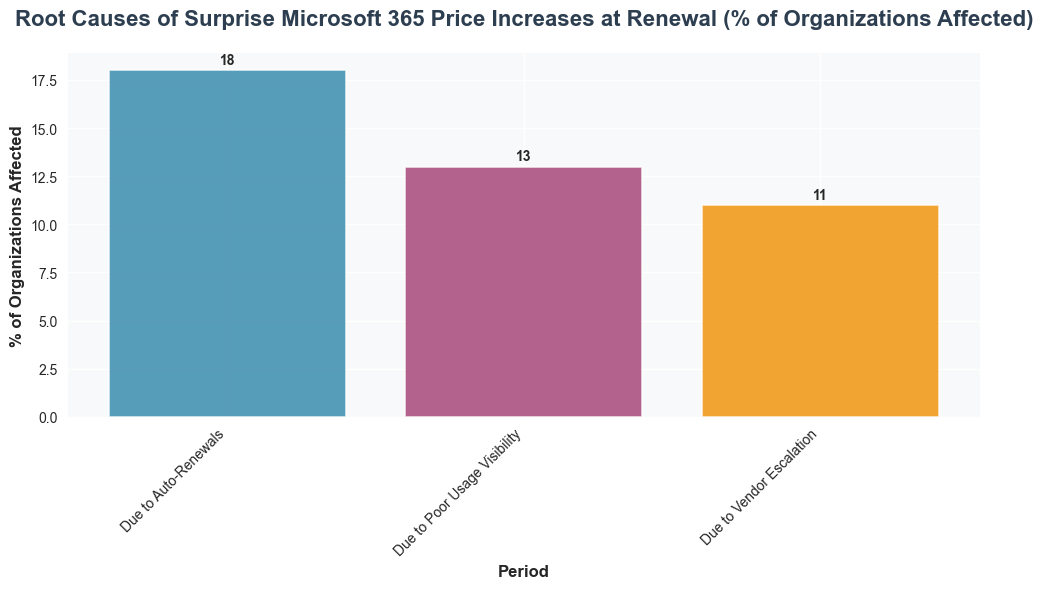
Bar chart showing causes of surprise M365 price increases: 18% from auto-renewals, 13% from poor usage visibility, and 11% from vendor escalation
  • Auto-renewals without contract review: 42% of organizations experienced surprise SaaS cost increases due to passive contract rollover or unplanned user growth. (Blissfully, 2023)
  • Poor usage visibility: Shadow IT risks and lack of license-level usage analytics mean IT often pays for dormant or redundant subscriptions.
  • Delayed negotiation: Enterprises approaching Microsoft after a new list price goes live lose leverage and face higher TCO.

“Shadow IT and redundant licensing are key drivers of M365 overspend. Cloud cost governance tools now play a critical role in uncovering hidden usage and providing optimization strategies before renewals.” – Michael Silver, VP Analyst, Gartner (2023)
Enterprise Case Studies: The ROI of Locking in Early

  • Manufacturing Fortune 500: Leveraged CloudNuro’s Microsoft 365 Custodian to audit licenses six months prior to renewal, identified 14% underutilized, secured a three-year price lock, and avoided $2.1M in excess spend even as Microsoft announced new AI upcharges.
  • US Public Sector Agency: Using SaaS Discovery and FinOps Services, the agency achieved 99% usage visibility, right-sized its contract, and negotiated a rate freeze until 2027, realizing a 22% reduction in anticipated spend.

M365 Renewal Optimization: Stats & Strategies

License Optimization Impact

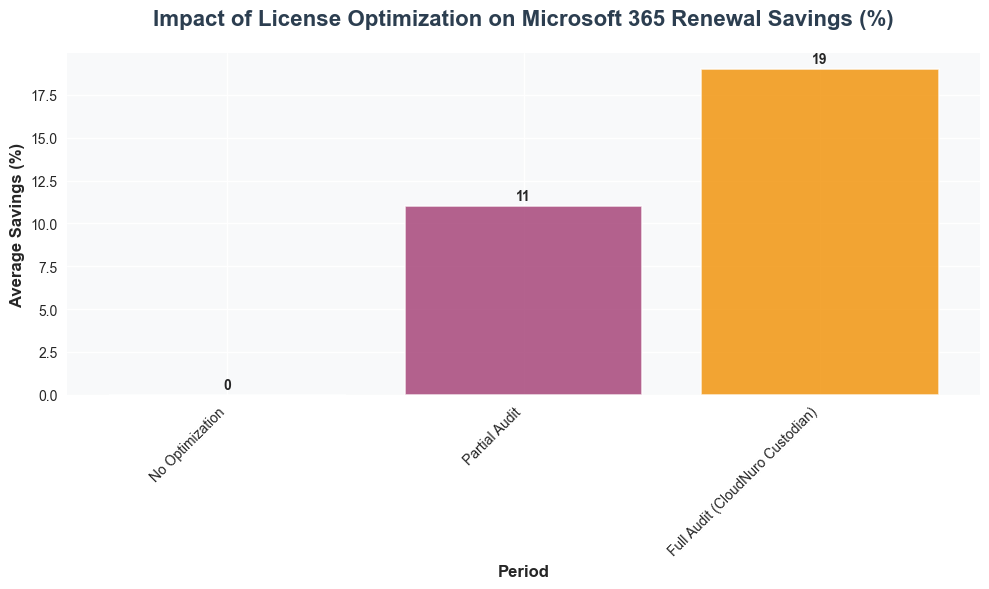
Bar chart showing Microsoft 365 renewal savings: 0% with no optimization, 11% with partial audit, and 19% with full audit using CloudNuro Custodian
  • No Optimization: 0% average renewal savings
  • Partial License Audit: 11% savings
  • Full Audit with CloudNuro Custodian: 19% savings

Renewal Management Methods

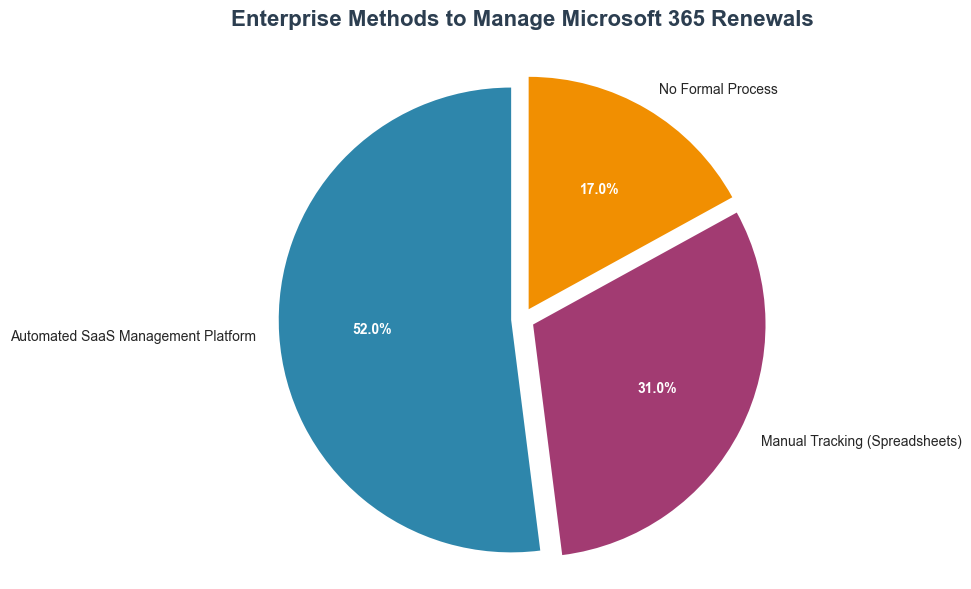
Pie chart showing enterprise renewal management methods: 52% use automated SaaS management platforms, 31% use manual spreadsheets, and 17% have no formal process
  • 52% of enterprises now use automated SaaS management platforms (like CloudNuro Custodian)
  • 31% still depend on manual tracking (spreadsheets/emails)
  • 17% have no formal process at all

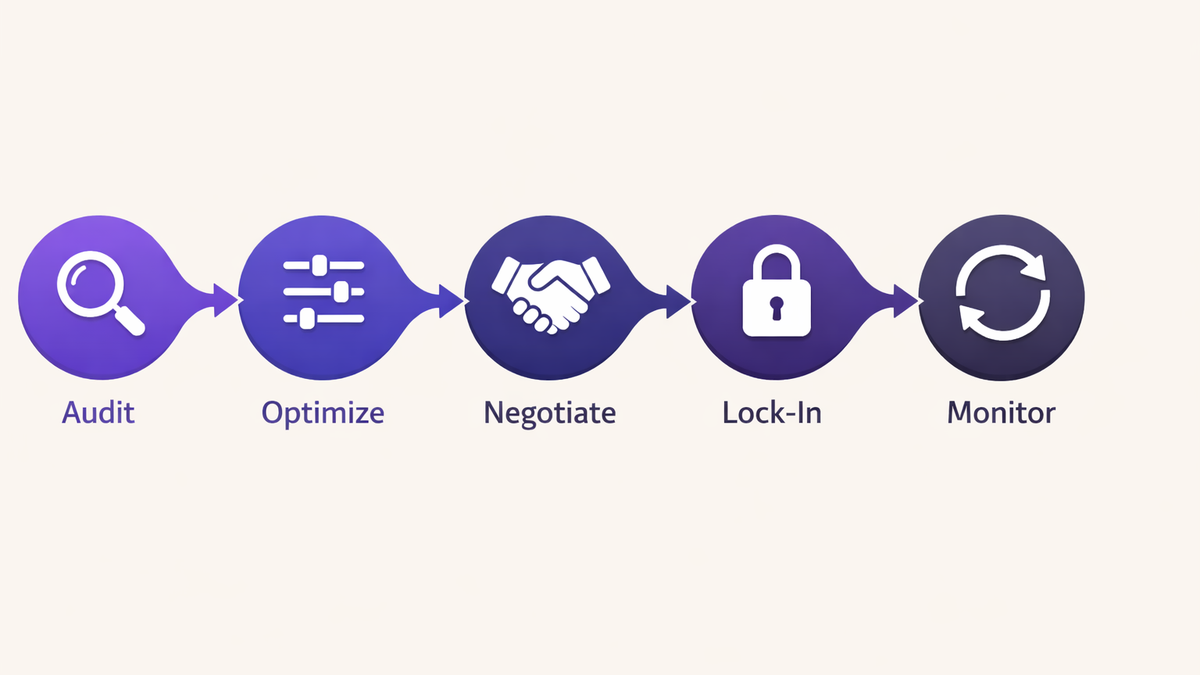
The M365 Renewal Workflow: Audit, Optimize, Negotiate, Lock-In, Monitor

Flat illustration of a five-step Microsoft 365 renewal workflow from license audit to price lock-in, in CloudNuro brand colors
  1. Audit: Conduct a full license usage analysis six months in advance of the renewal date.
  2. Optimize: Remove redundant and underused licenses. Validate compliance and budget controls in each business unit.
  3. Negotiate: Use your right-sized license data to negotiate pricing and terms.
  4. Lock-In: Secure a multi-year contract and protect against anticipated July 2026 escalations.
  5. Monitor: Leverage SaaS management platforms for continuous usage and spend oversight—preventing surprises at your next cycle.

Organizations with automated renewal workflows and proactive optimization report up to a third lower spend on redundant subscriptions. (Info-Tech Research Group, 2023)

Recommendation: Don’t Wait. Proactively Secure M365 Pricing for Your Enterprise

With another Microsoft 365 price hike widely expected, the best time to review, optimize, and lock in your renewal is now—well before July 1, 2026. Automated SaaS management, license right-sizing, and early negotiation are proven to drive 10-35% in savings, support long-term financial accountability, and eliminate the shock of hidden increases. Partnering with enterprise SaaS management leaders like CloudNuro means IT teams can unlock the full value of Microsoft 365 and avoid costly renewal missteps in the year ahead.

Table of Content

Start saving with CloudNuro

Request a no cost, no obligation free assessment —just 15 minutes to savings!

Get Started

Table of Contents

Understanding the Microsoft 365 Price Increase Coming in 2026

The Microsoft 365 price increase scheduled for July 1, 2026, has IT leaders across every industry wondering: should you lock in current pricing now, or wait to act? The stakes are significant—since 2021, Microsoft has raised global prices on core M365 enterprise SKUs by as much as 25%, with experts forecasting further increases tied to expanded AI functionality and platform investments. (Gartner, 2022; Directions on Microsoft, 2024)

Flat illustration of a renewal deadline calendar with cost icons highlighting the urgency of locking in Microsoft 365 pricing before July 2026

Recent years have seen an uptick in organizations reporting surprise cost hikes at renewal—primarily due to auto-renewals and lack of contract oversight. If your renewal window falls within the next 12-18 months, acting early can mean substantial savings and operational clarity for your enterprise.

Key Enterprise Impacts: The Data on M365 Renewal Costs

  • Microsoft 365 remains the single largest SaaS spend category for most enterprises, accounting for 30-40% of the IT software budget, and cited as the top expense by over 60% of large organizations. (Forrester, 2023)
  • Enterprises locking in multi-year M365 contracts before a price increase typically see 10-19% cost savings vs. those renegotiating after the increase. (IDC, 2022)
  • Utilizing automated SaaS management tools for renewal workflows and license optimization has delivered average reductions of 20-35% in M365 overspend. (Info-Tech Research Group, 2023)
Flat illustration of a SaaS license optimization dashboard showing active versus underutilized Microsoft 365 licenses in CloudNuro brand colors

Why Early Renewal & Price Lock-In Makes Sense in 2024–2025

Price protection and early renewal strategies are now industry standard. With Microsoft’s public commitment to AI and security innovation, major enterprise increases are anticipated every 2-3 years. Early negotiation provides:

  • Avoidance of ‘sticker shock’ at renewal—especially critical with the July 2026 deadline looming
  • Long-term budgeting predictability across business units
  • Negotiation leverage with Microsoft and resellers, especially when coupled with license right-sizing
  • Proactive identification and removal of underused or redundant licenses to curb overspend

Expert Insight: “Given Microsoft's ongoing investments in AI and security, we expect regular price increases in Microsoft 365 for enterprise SKUs every 2-3 years. Enterprises should prioritize early negotiations and multi-year commitments to buffer future escalations.” – Wes Miller, Senior Analyst, Directions on Microsoft (2024)

Common Pitfalls That Cause M365 Renewal Cost Overruns

Bar chart showing causes of surprise M365 price increases: 18% from auto-renewals, 13% from poor usage visibility, and 11% from vendor escalation
  • Auto-renewals without contract review: 42% of organizations experienced surprise SaaS cost increases due to passive contract rollover or unplanned user growth. (Blissfully, 2023)
  • Poor usage visibility: Shadow IT risks and lack of license-level usage analytics mean IT often pays for dormant or redundant subscriptions.
  • Delayed negotiation: Enterprises approaching Microsoft after a new list price goes live lose leverage and face higher TCO.

“Shadow IT and redundant licensing are key drivers of M365 overspend. Cloud cost governance tools now play a critical role in uncovering hidden usage and providing optimization strategies before renewals.” – Michael Silver, VP Analyst, Gartner (2023)
Enterprise Case Studies: The ROI of Locking in Early

  • Manufacturing Fortune 500: Leveraged CloudNuro’s Microsoft 365 Custodian to audit licenses six months prior to renewal, identified 14% underutilized, secured a three-year price lock, and avoided $2.1M in excess spend even as Microsoft announced new AI upcharges.
  • US Public Sector Agency: Using SaaS Discovery and FinOps Services, the agency achieved 99% usage visibility, right-sized its contract, and negotiated a rate freeze until 2027, realizing a 22% reduction in anticipated spend.

M365 Renewal Optimization: Stats & Strategies

License Optimization Impact

Bar chart showing Microsoft 365 renewal savings: 0% with no optimization, 11% with partial audit, and 19% with full audit using CloudNuro Custodian
  • No Optimization: 0% average renewal savings
  • Partial License Audit: 11% savings
  • Full Audit with CloudNuro Custodian: 19% savings

Renewal Management Methods

Pie chart showing enterprise renewal management methods: 52% use automated SaaS management platforms, 31% use manual spreadsheets, and 17% have no formal process
  • 52% of enterprises now use automated SaaS management platforms (like CloudNuro Custodian)
  • 31% still depend on manual tracking (spreadsheets/emails)
  • 17% have no formal process at all

The M365 Renewal Workflow: Audit, Optimize, Negotiate, Lock-In, Monitor

Flat illustration of a five-step Microsoft 365 renewal workflow from license audit to price lock-in, in CloudNuro brand colors
  1. Audit: Conduct a full license usage analysis six months in advance of the renewal date.
  2. Optimize: Remove redundant and underused licenses. Validate compliance and budget controls in each business unit.
  3. Negotiate: Use your right-sized license data to negotiate pricing and terms.
  4. Lock-In: Secure a multi-year contract and protect against anticipated July 2026 escalations.
  5. Monitor: Leverage SaaS management platforms for continuous usage and spend oversight—preventing surprises at your next cycle.

Organizations with automated renewal workflows and proactive optimization report up to a third lower spend on redundant subscriptions. (Info-Tech Research Group, 2023)

Recommendation: Don’t Wait. Proactively Secure M365 Pricing for Your Enterprise

With another Microsoft 365 price hike widely expected, the best time to review, optimize, and lock in your renewal is now—well before July 1, 2026. Automated SaaS management, license right-sizing, and early negotiation are proven to drive 10-35% in savings, support long-term financial accountability, and eliminate the shock of hidden increases. Partnering with enterprise SaaS management leaders like CloudNuro means IT teams can unlock the full value of Microsoft 365 and avoid costly renewal missteps in the year ahead.

Start saving with CloudNuro

Request a no cost, no obligation free assessment - just 15 minutes to savings!

Get Started

Don't Let Hidden ServiceNow Costs Drain Your IT Budget - Claim Your Free

We're offering complimentary ServiceNow license assessments to only 25 enterprises this quarter who want to unlock immediate savings without disrupting operations.

Get Free AssessmentGet Started


Ask AI for a Summary of This Blog

Save 20% of your SaaS spends with CloudNuro.ai

Recognized Leader in SaaS Management Platforms by Info-Tech SoftwareReviews

Thank you! Your submission has been received!
Oops! Something went wrong while submitting the form.