

Sign Up
Thank you for Submitting!
AI is embedded in almost every conversation about SaaS right now. For enterprise buyers, the key question is not only what AI can do, but what AI will do to their SaaS portfolio itself.
Will AI consolidate tools into a few intelligent platforms, or will it multiply specialized apps and intensify SaaS sprawl? The answer matters because it directly impacts risk, cost, and governance strategies.
Recent enterprise data points in a clear direction. A recent enterprise SaaS report notes that 74% of enterprise CIOs expect AI to increase SaaS app usage by 2026, as more microservices and niche tools appear. At the same time, AI-enabled platforms promise consolidation and smarter workflows. The AI SaaS story is not one of pure reduction or expansion. It is one of controlled expansion for organizations that build strong governance.
This article explains how AI will reshape SaaS portfolios, what it means for AI SaaS buyers, and how to prepare with the right governance and cost optimization approach.
The first instinct for many IT leaders is to assume AI will consolidate tools. After all, AI SaaS products often promise to automate workflows across multiple systems, acting as a central intelligence layer.
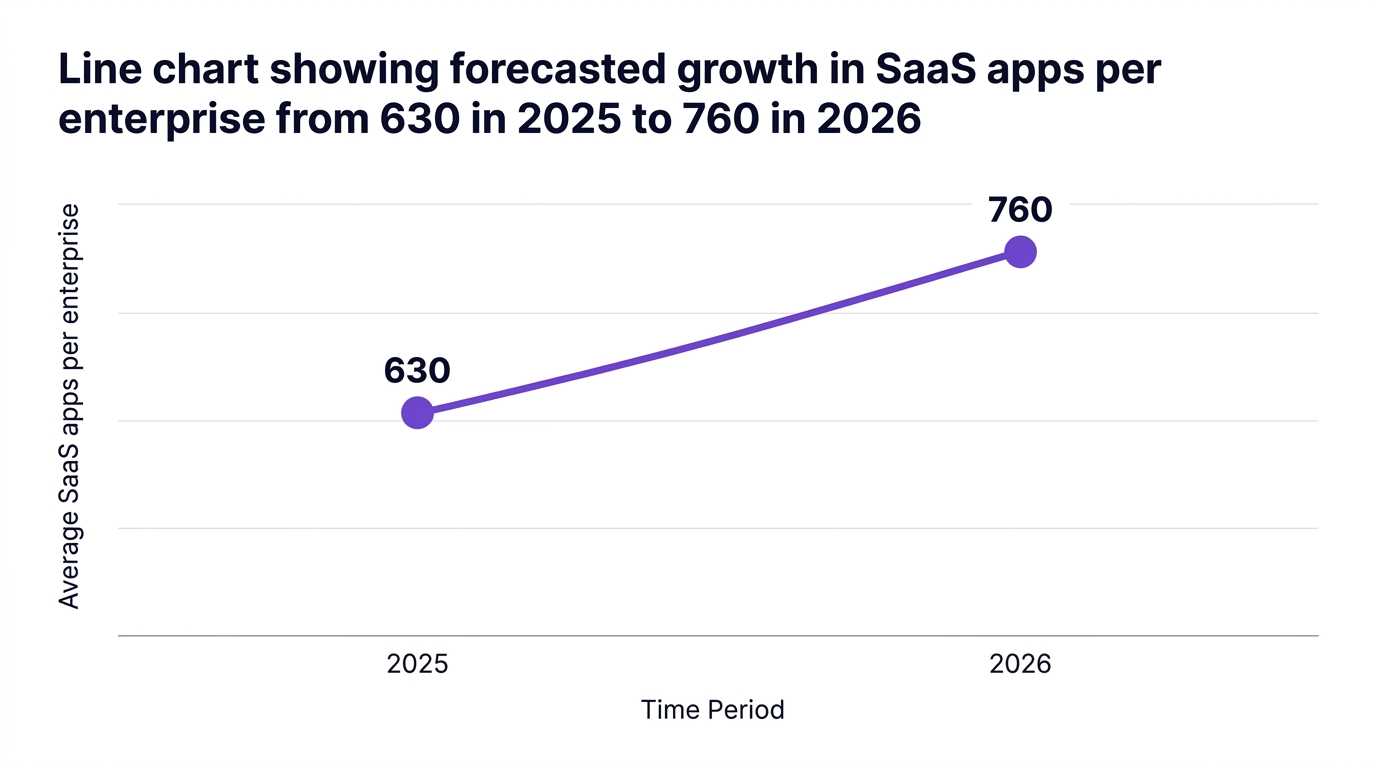
Yet, market data shows a different reality. A recent industry report expects the average number of SaaS apps per enterprise to grow from 630 in 2025 to more than 750 by the end of 2026. That growth is heavily influenced by AI-enabled tools, microservices, and specialized AI apps.
AI is doing two things at once:
A recent enterprise IT survey reports that over 60% of organizations expect AI to increase integration complexity by 2026 because of the proliferation of specialized SaaS solutions. In other words, AI is simplifying some tasks while increasing the architectural complexity of the SaaS environment.
This is why AI in SaaS should be viewed not as a universal consolidator, but as an accelerant. It accelerates innovation, new use cases, and consequently, more apps. The strategic question for buyers is not “Will my SaaS count shrink?” but “Can I grow my portfolio without losing control?”
To understand the future of SaaS, it helps to think in terms of city planning. AI is like a powerful new transportation system that makes it easier to travel, trade, and build. Cities do not get smaller; they get more complex, so they require smarter governance.
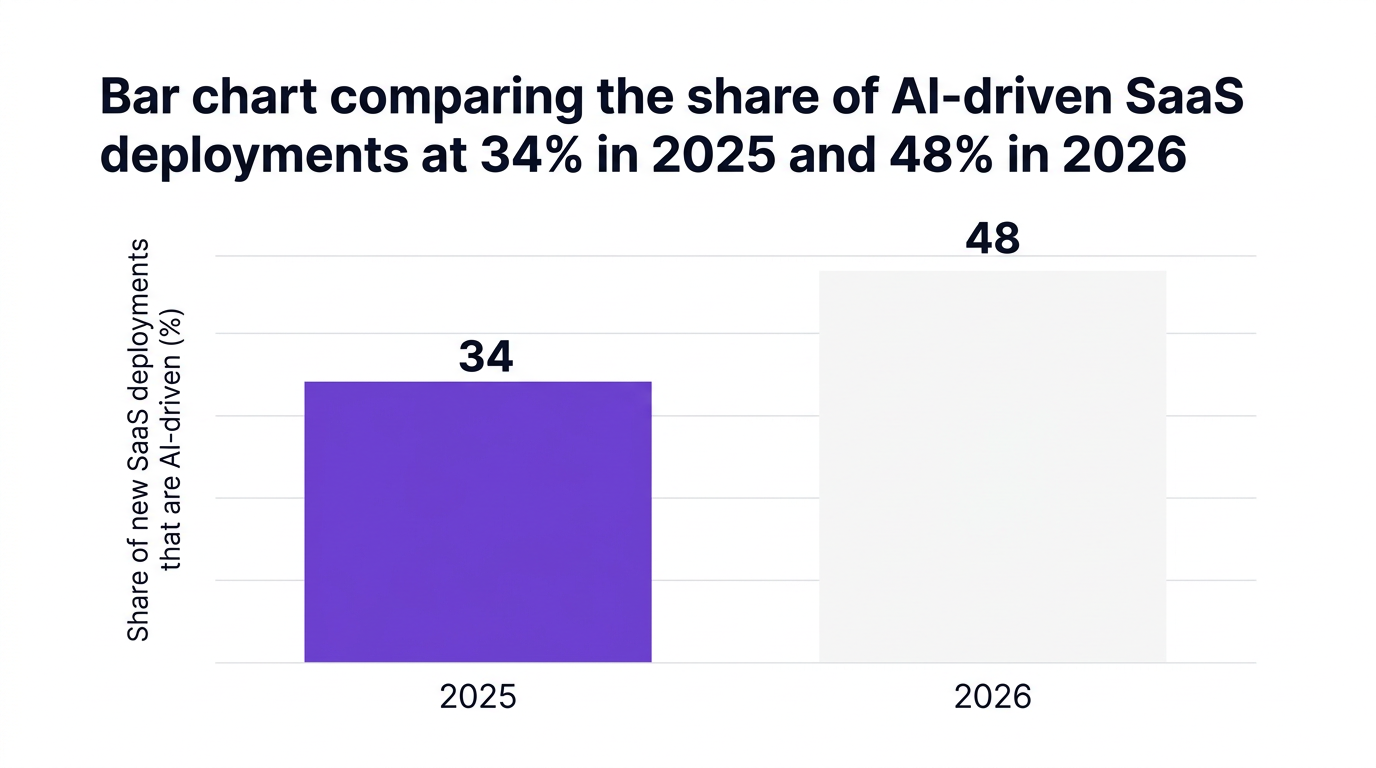
Market forecasts reinforce this direction. A recent global SaaS trends forecast estimates that AI-driven SaaS platforms will account for 48% of all new enterprise SaaS deployments by 2026, up from 34% in 2025. Another forecast suggests that AI-driven SaaS market value will reach 312 billion dollars by 2026, up from 230 billion dollars in 2025.
From a buyer perspective, several enterprise SaaS trends are converging:
A recent enterprise SaaS governance study found that 85% of IT leaders now rank SaaS sprawl as a top governance challenge in the AI era, and that up to 43% of SaaS spend is wasted on underutilized or redundant tools.
This combination of growth and waste indicates that the future of SaaS is not fewer tools, but smarter control. AI will continue to drive new solutions, especially as AI SaaS startups explore specialized use cases. Enterprises that succeed will be those that:

Many CIOs hope that AI-powered platforms or a single AI SaaS platform will simplify their app landscape. In practice, SaaS sprawl often intensifies first, then becomes governable once the right controls are in place.
A recent technology outlook observed that among enterprises implementing AI-based SaaS management, 35% reduced app duplication, yet their overall number of SaaS tools still grew by 19% in 2026. This matches what many IT teams experience on the ground.
Three dynamics explain this pattern:
A case study from a large healthcare organization illustrates the point. The company implemented an AI-enabled SaaS management approach and reduced redundant subscriptions by 29%. However, they still saw a 12% increase in overall app count, as they onboarded new, high-value AI solutions under proper governance.
The lesson: AI in SaaS is not a shortcut to minimalism. It is a catalyst for innovation that must be paired with automated SaaS governance, strong SaaS app visibility, and proactive SaaS discovery.
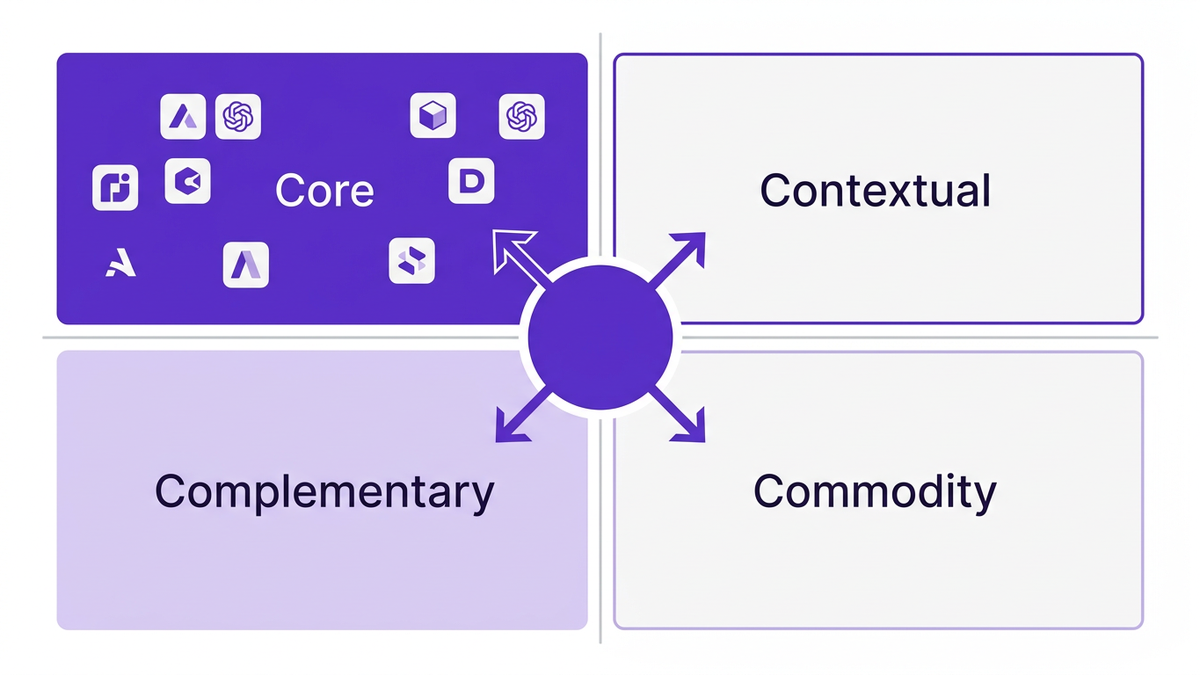
To bring structure to these dynamics, it helps to use a simple framework when evaluating AI SaaS solutions. One practical model is the 4C Portfolio Framework:
Using the 4C lens, IT and procurement leaders can ask better questions when evaluating AI SaaS products:
This framework supports app portfolio management decisions by linking each tool to a strategic role, instead of treating every AI app as an isolated purchase.
AI-enabled SaaS changes not just the number of apps, but also how risk and cost behave. When AI is embedded everywhere, data flows, model usage, and third-party dependencies all multiply.
From a cost perspective, recent governance studies show that up to 43% of SaaS spend is wasted on underused or duplicated tools. With AI in the mix, that risk grows because:
From a governance and risk perspective, AI increases the need for:
A recent enterprise IT governance study notes that 78% of organizations report higher compliance and budgeting risk from uncontrolled SaaS growth in AI-heavy environments. This is why cloud cost optimization, governance SaaS, and SaaS management platform capabilities are no longer optional for enterprises.
To build a realistic strategy, IT leaders need to challenge two common assumptions:
AI-based SaaS is powerful, but it still requires disciplined operations.
AI will almost certainly increase the number of SaaS apps in your environment. The strategic goal is to create controlled growth, where every additional app is visible, governed, and financially justified.
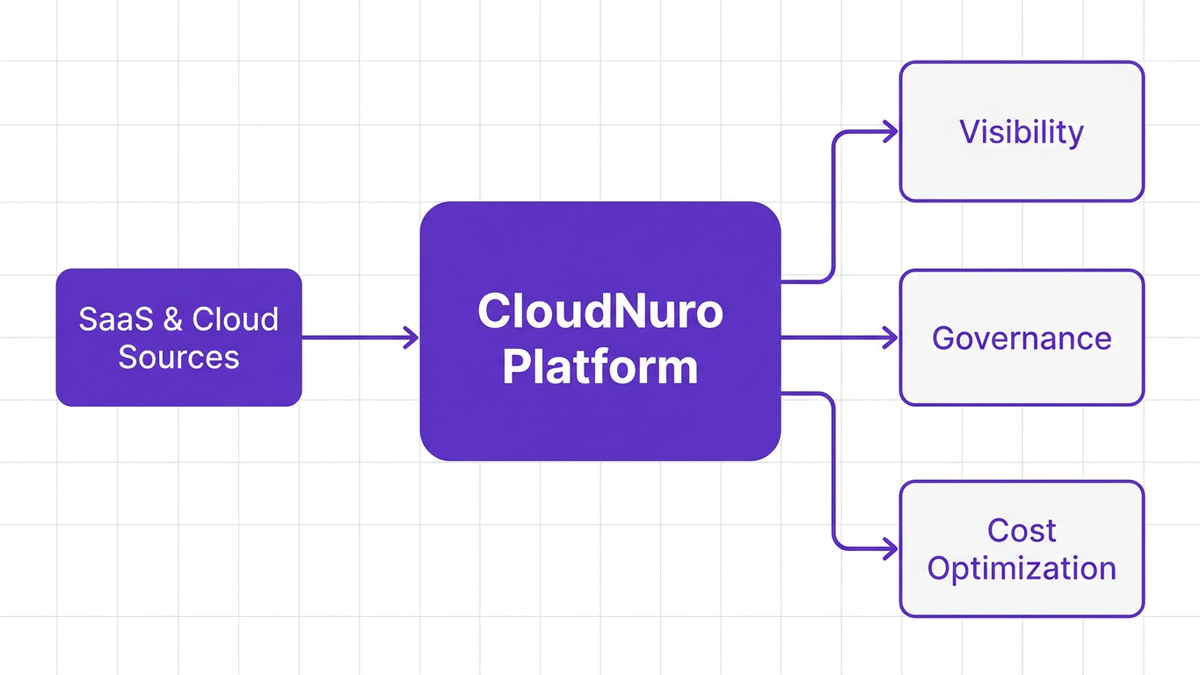
CloudNuro is designed precisely for that reality. It brings together AI SaaS management, financial analytics, and governance so that CIOs and IT leaders can embrace the future of SaaS without sacrificing control.
CloudNuro’s Unified Cloud Custodian gives organizations a single pane of glass across SaaS, PaaS, and IaaS.
Key capabilities include:
This unified view is essential when AI SaaS market growth increases the number and variety of tools in use.
CloudNuro’s AI Custodian focuses on automated governance:
By connecting AI-powered insights with clear governance, CloudNuro helps avoid the uncontrolled sprawl that many enterprises fear when considering AI solutions for SaaS providers and AI-rich platforms.
CloudNuro’s capabilities for cost optimization SaaS give IT and finance teams the tools to manage spend as AI expands portfolios:
In customer environments, CloudNuro’s optimization features commonly deliver up to 35% reduction in SaaS overspend, even as the number of apps continues to grow.
As AI SaaS products proliferate, onboarding and offboarding become critical touchpoints for risk and cost.
CloudNuro supports:
The result is a model where AI SaaS platform adoption can scale, but every new app is onboarded with governance and cost control from day one.
Most data indicates that AI will increase the number of SaaS apps, not reduce them. Recent reports show the average enterprise app count rising from 630 to more than 750 within a year, with AI-driven tools being a major contributor.
However, AI and strong governance can reduce redundancy and waste. You may end up with more apps overall, but with better alignment to business value.
Traditional SaaS management often focuses on basic inventory and manual reporting. AI-enabled SaaS management uses intelligent discovery, pattern detection, and automated workflows.
For example, it can identify unusual access behavior, flag risky AI tools, or automatically suggest license reclamation based on usage patterns. This is critical when AI in SaaS accelerates the pace of change.
Yes, provided AI is paired with robust financial controls. AI can analyze usage, spot underused apps, and recommend license optimizations.
But cost optimization SaaS capabilities must be connected to procurement, budgeting, and chargeback processes. AI surfaces insights; governance and process turn them into savings.
Key questions include:
These questions help you understand the tool’s position in your app portfolio management strategy.
The most effective approach is making approved options easy and unapproved options visible. A self-service IT store with curated AI SaaS products, combined with automated SaaS governance and continuous discovery, gives users safe choices while surfacing unapproved tools.
Platforms like CloudNuro play a central role here by combining SaaS discovery, risk assessment, and financial analytics in one place.
For CIOs and IT leaders, the core message is straightforward: AI SaaS will grow your portfolio. AI will drive new capabilities, new categories, and new vendors. The winning strategy is not to attempt artificial minimalism, but to build a governed, cost-conscious, AI-ready SaaS environment.
To prepare, organizations should:
AI will not simplify your SaaS portfolio by itself. With the right strategy and tools, however, you can turn AI-driven portfolio expansion into a controlled, high-ROI evolution of your SaaS landscape.
Explore how CloudNuro can help you govern AI SaaS growth with confidence and financial discipline.
Request a no cost, no obligation free assessment —just 15 minutes to savings!
Get StartedAI is embedded in almost every conversation about SaaS right now. For enterprise buyers, the key question is not only what AI can do, but what AI will do to their SaaS portfolio itself.
Will AI consolidate tools into a few intelligent platforms, or will it multiply specialized apps and intensify SaaS sprawl? The answer matters because it directly impacts risk, cost, and governance strategies.
Recent enterprise data points in a clear direction. A recent enterprise SaaS report notes that 74% of enterprise CIOs expect AI to increase SaaS app usage by 2026, as more microservices and niche tools appear. At the same time, AI-enabled platforms promise consolidation and smarter workflows. The AI SaaS story is not one of pure reduction or expansion. It is one of controlled expansion for organizations that build strong governance.
This article explains how AI will reshape SaaS portfolios, what it means for AI SaaS buyers, and how to prepare with the right governance and cost optimization approach.
The first instinct for many IT leaders is to assume AI will consolidate tools. After all, AI SaaS products often promise to automate workflows across multiple systems, acting as a central intelligence layer.
Yet, market data shows a different reality. A recent industry report expects the average number of SaaS apps per enterprise to grow from 630 in 2025 to more than 750 by the end of 2026. That growth is heavily influenced by AI-enabled tools, microservices, and specialized AI apps.
AI is doing two things at once:
A recent enterprise IT survey reports that over 60% of organizations expect AI to increase integration complexity by 2026 because of the proliferation of specialized SaaS solutions. In other words, AI is simplifying some tasks while increasing the architectural complexity of the SaaS environment.
This is why AI in SaaS should be viewed not as a universal consolidator, but as an accelerant. It accelerates innovation, new use cases, and consequently, more apps. The strategic question for buyers is not “Will my SaaS count shrink?” but “Can I grow my portfolio without losing control?”
To understand the future of SaaS, it helps to think in terms of city planning. AI is like a powerful new transportation system that makes it easier to travel, trade, and build. Cities do not get smaller; they get more complex, so they require smarter governance.
Market forecasts reinforce this direction. A recent global SaaS trends forecast estimates that AI-driven SaaS platforms will account for 48% of all new enterprise SaaS deployments by 2026, up from 34% in 2025. Another forecast suggests that AI-driven SaaS market value will reach 312 billion dollars by 2026, up from 230 billion dollars in 2025.
From a buyer perspective, several enterprise SaaS trends are converging:
A recent enterprise SaaS governance study found that 85% of IT leaders now rank SaaS sprawl as a top governance challenge in the AI era, and that up to 43% of SaaS spend is wasted on underutilized or redundant tools.
This combination of growth and waste indicates that the future of SaaS is not fewer tools, but smarter control. AI will continue to drive new solutions, especially as AI SaaS startups explore specialized use cases. Enterprises that succeed will be those that:
Many CIOs hope that AI-powered platforms or a single AI SaaS platform will simplify their app landscape. In practice, SaaS sprawl often intensifies first, then becomes governable once the right controls are in place.
A recent technology outlook observed that among enterprises implementing AI-based SaaS management, 35% reduced app duplication, yet their overall number of SaaS tools still grew by 19% in 2026. This matches what many IT teams experience on the ground.
Three dynamics explain this pattern:
A case study from a large healthcare organization illustrates the point. The company implemented an AI-enabled SaaS management approach and reduced redundant subscriptions by 29%. However, they still saw a 12% increase in overall app count, as they onboarded new, high-value AI solutions under proper governance.
The lesson: AI in SaaS is not a shortcut to minimalism. It is a catalyst for innovation that must be paired with automated SaaS governance, strong SaaS app visibility, and proactive SaaS discovery.
To bring structure to these dynamics, it helps to use a simple framework when evaluating AI SaaS solutions. One practical model is the 4C Portfolio Framework:
Using the 4C lens, IT and procurement leaders can ask better questions when evaluating AI SaaS products:
This framework supports app portfolio management decisions by linking each tool to a strategic role, instead of treating every AI app as an isolated purchase.
AI-enabled SaaS changes not just the number of apps, but also how risk and cost behave. When AI is embedded everywhere, data flows, model usage, and third-party dependencies all multiply.
From a cost perspective, recent governance studies show that up to 43% of SaaS spend is wasted on underused or duplicated tools. With AI in the mix, that risk grows because:
From a governance and risk perspective, AI increases the need for:
A recent enterprise IT governance study notes that 78% of organizations report higher compliance and budgeting risk from uncontrolled SaaS growth in AI-heavy environments. This is why cloud cost optimization, governance SaaS, and SaaS management platform capabilities are no longer optional for enterprises.
To build a realistic strategy, IT leaders need to challenge two common assumptions:
AI-based SaaS is powerful, but it still requires disciplined operations.
AI will almost certainly increase the number of SaaS apps in your environment. The strategic goal is to create controlled growth, where every additional app is visible, governed, and financially justified.
CloudNuro is designed precisely for that reality. It brings together AI SaaS management, financial analytics, and governance so that CIOs and IT leaders can embrace the future of SaaS without sacrificing control.
CloudNuro’s Unified Cloud Custodian gives organizations a single pane of glass across SaaS, PaaS, and IaaS.
Key capabilities include:
This unified view is essential when AI SaaS market growth increases the number and variety of tools in use.
CloudNuro’s AI Custodian focuses on automated governance:
By connecting AI-powered insights with clear governance, CloudNuro helps avoid the uncontrolled sprawl that many enterprises fear when considering AI solutions for SaaS providers and AI-rich platforms.
CloudNuro’s capabilities for cost optimization SaaS give IT and finance teams the tools to manage spend as AI expands portfolios:
In customer environments, CloudNuro’s optimization features commonly deliver up to 35% reduction in SaaS overspend, even as the number of apps continues to grow.
As AI SaaS products proliferate, onboarding and offboarding become critical touchpoints for risk and cost.
CloudNuro supports:
The result is a model where AI SaaS platform adoption can scale, but every new app is onboarded with governance and cost control from day one.
Most data indicates that AI will increase the number of SaaS apps, not reduce them. Recent reports show the average enterprise app count rising from 630 to more than 750 within a year, with AI-driven tools being a major contributor.
However, AI and strong governance can reduce redundancy and waste. You may end up with more apps overall, but with better alignment to business value.
Traditional SaaS management often focuses on basic inventory and manual reporting. AI-enabled SaaS management uses intelligent discovery, pattern detection, and automated workflows.
For example, it can identify unusual access behavior, flag risky AI tools, or automatically suggest license reclamation based on usage patterns. This is critical when AI in SaaS accelerates the pace of change.
Yes, provided AI is paired with robust financial controls. AI can analyze usage, spot underused apps, and recommend license optimizations.
But cost optimization SaaS capabilities must be connected to procurement, budgeting, and chargeback processes. AI surfaces insights; governance and process turn them into savings.
Key questions include:
These questions help you understand the tool’s position in your app portfolio management strategy.
The most effective approach is making approved options easy and unapproved options visible. A self-service IT store with curated AI SaaS products, combined with automated SaaS governance and continuous discovery, gives users safe choices while surfacing unapproved tools.
Platforms like CloudNuro play a central role here by combining SaaS discovery, risk assessment, and financial analytics in one place.
For CIOs and IT leaders, the core message is straightforward: AI SaaS will grow your portfolio. AI will drive new capabilities, new categories, and new vendors. The winning strategy is not to attempt artificial minimalism, but to build a governed, cost-conscious, AI-ready SaaS environment.
To prepare, organizations should:
AI will not simplify your SaaS portfolio by itself. With the right strategy and tools, however, you can turn AI-driven portfolio expansion into a controlled, high-ROI evolution of your SaaS landscape.
Explore how CloudNuro can help you govern AI SaaS growth with confidence and financial discipline.
Request a no cost, no obligation free assessment - just 15 minutes to savings!
Get StartedWe're offering complimentary ServiceNow license assessments to only 25 enterprises this quarter who want to unlock immediate savings without disrupting operations.
Get Free AssessmentGet Started




CloudNuro Corp
1755 Park St. Suite 207
Naperville, IL 60563
Phone : +1-630-277-9470
Email: info@cloudnuro.com





.webp)

Recognized Leader in SaaS Management Platforms by Info-Tech SoftwareReviews
.png)


.svg)