

Sign Up
Thank you for Submitting!
Enterprise adoption of artificial intelligence offers unprecedented opportunities, but also exposes organizations to a landscape of emerging risks. The world’s largest companies rely on AI for productivity, innovation, and improved decision-making. Yet with this rapid adoption, CIOs, CTOs, and compliance leaders are grappling with regulatory uncertainty, shadow AI, and increased scrutiny over governance. Building a formal AI risk register is a foundational strategy for proactive risk management, aligning with leading frameworks like the NIST AI Risk Management Framework (NIST AI RMF).
This comprehensive guide explores:
The essentials of AI risk management and why every enterprise needs an AI risk register
The step-by-step process for building a resilient register
Best practices and real-world success stories
How CloudNuro streamlines risk governance and optimizes compliance
AI risk management is the set of controls, policies, and processes that enable organizations to identify, assess, monitor, and mitigate the risks associated with AI and machine learning systems. For enterprises dealing with large-scale cloud and SaaS adoption, the risk posture evolves rapidly, especially where AI agents impact sensitive data and regulated workflows.
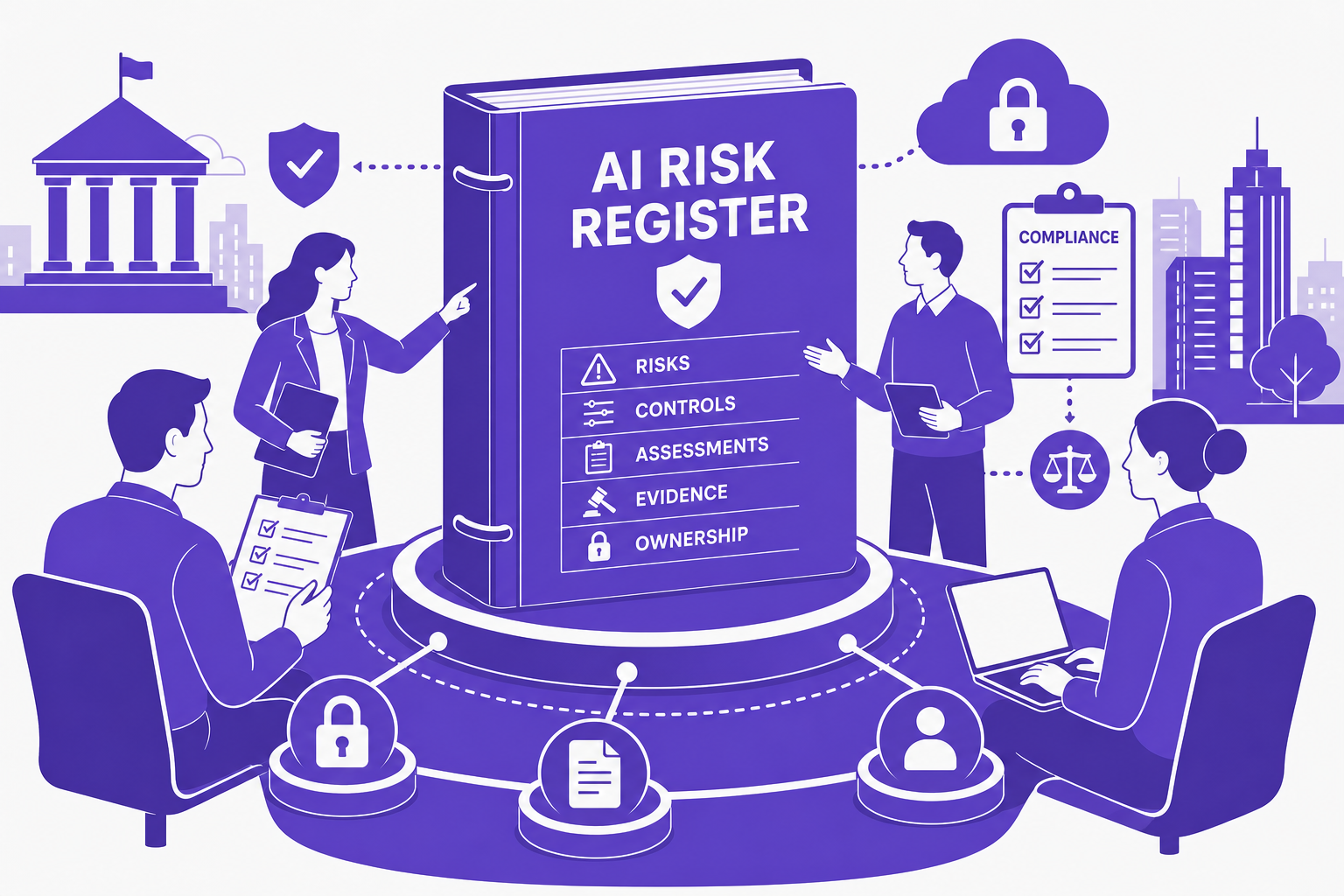
An AI risk register is a centralized repository cataloging all AI-related systems, associated risks, controls, and mitigation efforts. It serves several critical functions:
Centralized visibility: Provides end-to-end awareness of sanctioned and unsanctioned AI agents.
Active risk monitoring: Flags and tracks potential incidents, from data leakage to model drift.
Continuous compliance: Maintains audit-ready evidence to meet regulatory requirements.
Supports frameworks: Aligns processes with standards like the NIST AI RMF and ISO/IEC 42001.
Organizations without a robust AI risk register face high exposure to regulatory fines, data breaches, and reputational harm. In fact, only 21% of companies report a mature governance model for agentic AI, while documented AI-related incidents soared by 55% in the last year, reaching 362.
Organizations are dedicating 37% more time to managing AI-related risks than just 12 months ago, reflecting increased recognition of AI as a new risk class. Regulatory expectations have moved far beyond static policies, requiring:
Real-time operational oversight
Automated evidence collection
A unified platform bridging SaaS, cloud, and bespoke AI deployments
At the same time, risk and compliance teams are themselves adopting AI tools. 53% are actively trialing or using AI in their functions, and 36% are leveraging it for both compliance and investigations. But enterprise adoption is often outpacing the introduction of formal governance frameworks and impact assessments. Only 44% of organizations have conducted systematic AI impact assessments.
Establishing an enterprise-grade AI risk register requires coordination across IT, compliance, and business units. Below is a framework to get started:
Start with comprehensive discovery across all cloud and SaaS environments.
Catalog both sanctioned and shadow AI agents in use (including features embedded within tools like Microsoft 365, Salesforce, ServiceNow, etc.).
Use automated tools, such as CloudNuro’s Unified Cloud Custodian, to connect with over 400 integrations and ensure no AI activity goes unmonitored.
Build a dynamic asset register that updates in real time as new AI workloads are adopted.
Record every system’s owner, business function, data flows, and regulatory touchpoints.
Leverage CloudNuro’s AI Custodian to monitor active users, adoption rates, prompt volumes, and application-level workloads. Including tracking usage across popular platforms like Teams, Word, and Excel.
Segment users (Power, General, Low, Dormant) based on prompt activity to optimize expensive AI licenses and manage ROI.
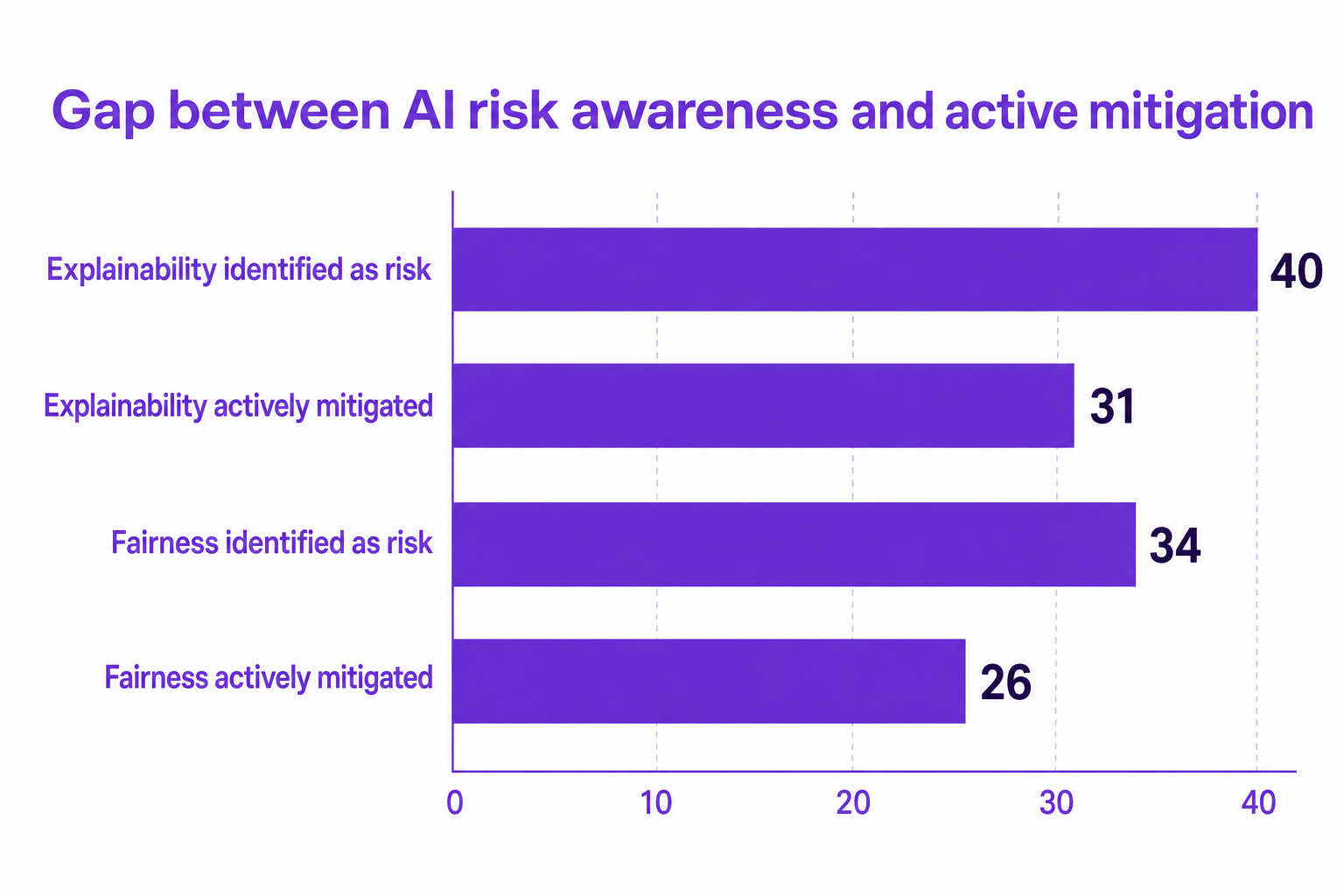
Assess risks such as model bias, data leakage, explainability, model drift, fairness, and compliance lapses.
Track risks at both the system and user levels. CloudNuro integrates with Microsoft Purview to surface overshared documents and leakage of sensitive or PII data through AI prompts.
Lay out risk controls. Automated access reviews, segregation of duties, anomaly detection, and agent-specific guardrails.
CloudNuro automates user access reviews and generates ready-to-share audit reports detailing who accessed which AI-enabled systems, supporting continuous compliance.
Assign controls directly to identified risks and monitor control effectiveness ongoing.
Ensure every AI event, from anomalous prompt behavior to system failures, is automatically recorded in the register.
Set automated alerts for risky prompt activity and flag suspicious model usage with CloudNuro’s AI Custodian.
Maintain an always-current audit trail, providing the evidence regulators require.
Implement least-privilege access models for risk and compliance teams.
Track specific token usage, project-based AI spend, and chargeback at the agent level to drive financial discipline (CloudNuro provides granular cost allocation and budget tracking across AI workloads).
The value of a well-managed AI risk register is proven in leading organizations:
A leading bank reduced annual compliance workload by 33% and cleared a regulatory review in just 90 days after automating documentation for high-risk AI models.
A global pharmaceutical company achieved zero non-conformities during an AI compliance audit by leveraging automated access reviews and transparency controls.
A regional healthcare organization uncovered 39 undisclosed AI agents within approved SaaS tools, slashing unauthorized data access events to zero.
A multinational insurance provider reduced shadow AI incidents by 68%, preventing a projected $10 million penalty.
A manufacturing company systematically eliminated rogue AI accounts within one year, eradicating spend leakage and related security risks.
CloudNuro’s AI Custodian delivers an automated, compliance-first architecture for enterprise AI risk management:
Comprehensive Inventory: 360-degree continuous discovery across SaaS and cloud to identify both official and shadow AI agents.
Ongoing Usage Monitoring: Constantly tracks adoption, prompt activity, and spend. Automatically segmenting users for right-sizing licenses.
Automated Evidence Collection: Delivers audit-ready reports and compliance automation, ensuring you meet requirements for all major frameworks including NIST AI RMF.
Real-Time Alerts and Controls: Flags risky behavior instantly, letting you enforce guardrails and mitigation actions without manual intervention.
Integrated Data Leakage Protection: With Microsoft Purview integration, automatically monitor and mitigate oversharing of sensitive or PII information through AI prompts.
By centralizing all risk data, automating controls, and embedding financial accountability, CloudNuro empowers IT and compliance teams to accelerate AI adoption, securely and cost-effectively.
Embrace automation: Only automated solutions can scale compliance activity and sustain continuous audit readiness.
Align to recognized frameworks: Anchor your register on NIST AI RMF, ISO/IEC 42001, or other global standards to future-proof regulatory compliance.
Maintain evidence: Continuous record-keeping is critical. Even for low-risk systems. And is a core expectation from regulators.
Unify data across platforms: Avoid fragmented registers; a single operational view across all SaaS and cloud assets is key to eliminating shadow AI and untracked risks.
What is AI risk management?
AI risk management encompasses the identification, assessment, monitoring, and mitigation of risks arising from AI use across an enterprise. This extends beyond technical model risks to include data privacy, compliance, explainability, fairness, and cost control.
How do you build an AI risk register?
Building an AI risk register means discovering all AI assets, documenting system and usage meta-data, assessing risks, mapping controls, capturing incidents, logging audit trails, and automating remediation. Ideally with a platform like CloudNuro’s Unified Cloud Custodian.
Why is an AI risk register important for enterprises?
It delivers centralized visibility, facilitates proactive risk response, reinforces regulatory compliance, and helps allocate resources wisely. Without it, organizations risk operational blind spots, fines, and lost trust.
What are the best practices for AI risk assessment?
Key practices include automated discovery, role-based access, segmenting users, ongoing usage monitoring, alignment to regulatory frameworks, automated reporting, and always-on control effectiveness reviews.
How does the NIST framework support AI risk management?
The NIST AI RMF provides a structured approach for organizations to manage AI system risks, emphasizing mapping, measuring, managing, and governing foundational practices that support enterprise-scale compliance and resilience.
With rapid AI adoption and regulators demanding more than static policies, enterprises need an operational strategy for AI risk management. Building an AI risk register is the linchpin. Enabling proactive monitoring, evidence generation, and automated control of fast-evolving risk factors. CloudNuro’s end-to-end platform empowers organizations to move from reactive compliance to strategic governance, delivering sustained trust and cost optimization in every phase of the AI lifecycle.
About CloudNuro
CloudNuro is a leader in Enterprise AI Adoption Management, providing enterprises with unmatched visibility, governance, and cost optimization. Recognized twice in a row in the SaaS Management Platforms category and named a Leader in the SoftwareReviews Data Quadrant, CloudNuro is trusted by global enterprises and government agencies to bring financial discipline to SaaS, cloud, and AI. Trusted by enterprises, CloudNuro provides centralized SaaS inventory, license optimization, and renewal management along with advanced cost allocation and chargeback, giving IT and Finance leaders the visibility, control, and cost-conscious culture needed to drive financial discipline.
Request a no cost, no obligation free assessment —just 15 minutes to savings!
Get StartedEnterprise adoption of artificial intelligence offers unprecedented opportunities, but also exposes organizations to a landscape of emerging risks. The world’s largest companies rely on AI for productivity, innovation, and improved decision-making. Yet with this rapid adoption, CIOs, CTOs, and compliance leaders are grappling with regulatory uncertainty, shadow AI, and increased scrutiny over governance. Building a formal AI risk register is a foundational strategy for proactive risk management, aligning with leading frameworks like the NIST AI Risk Management Framework (NIST AI RMF).
This comprehensive guide explores:
The essentials of AI risk management and why every enterprise needs an AI risk register
The step-by-step process for building a resilient register
Best practices and real-world success stories
How CloudNuro streamlines risk governance and optimizes compliance
AI risk management is the set of controls, policies, and processes that enable organizations to identify, assess, monitor, and mitigate the risks associated with AI and machine learning systems. For enterprises dealing with large-scale cloud and SaaS adoption, the risk posture evolves rapidly, especially where AI agents impact sensitive data and regulated workflows.
An AI risk register is a centralized repository cataloging all AI-related systems, associated risks, controls, and mitigation efforts. It serves several critical functions:
Centralized visibility: Provides end-to-end awareness of sanctioned and unsanctioned AI agents.
Active risk monitoring: Flags and tracks potential incidents, from data leakage to model drift.
Continuous compliance: Maintains audit-ready evidence to meet regulatory requirements.
Supports frameworks: Aligns processes with standards like the NIST AI RMF and ISO/IEC 42001.
Organizations without a robust AI risk register face high exposure to regulatory fines, data breaches, and reputational harm. In fact, only 21% of companies report a mature governance model for agentic AI, while documented AI-related incidents soared by 55% in the last year, reaching 362.
Organizations are dedicating 37% more time to managing AI-related risks than just 12 months ago, reflecting increased recognition of AI as a new risk class. Regulatory expectations have moved far beyond static policies, requiring:
Real-time operational oversight
Automated evidence collection
A unified platform bridging SaaS, cloud, and bespoke AI deployments
At the same time, risk and compliance teams are themselves adopting AI tools. 53% are actively trialing or using AI in their functions, and 36% are leveraging it for both compliance and investigations. But enterprise adoption is often outpacing the introduction of formal governance frameworks and impact assessments. Only 44% of organizations have conducted systematic AI impact assessments.
Establishing an enterprise-grade AI risk register requires coordination across IT, compliance, and business units. Below is a framework to get started:
Start with comprehensive discovery across all cloud and SaaS environments.
Catalog both sanctioned and shadow AI agents in use (including features embedded within tools like Microsoft 365, Salesforce, ServiceNow, etc.).
Use automated tools, such as CloudNuro’s Unified Cloud Custodian, to connect with over 400 integrations and ensure no AI activity goes unmonitored.
Build a dynamic asset register that updates in real time as new AI workloads are adopted.
Record every system’s owner, business function, data flows, and regulatory touchpoints.
Leverage CloudNuro’s AI Custodian to monitor active users, adoption rates, prompt volumes, and application-level workloads. Including tracking usage across popular platforms like Teams, Word, and Excel.
Segment users (Power, General, Low, Dormant) based on prompt activity to optimize expensive AI licenses and manage ROI.
Assess risks such as model bias, data leakage, explainability, model drift, fairness, and compliance lapses.
Track risks at both the system and user levels. CloudNuro integrates with Microsoft Purview to surface overshared documents and leakage of sensitive or PII data through AI prompts.
Lay out risk controls. Automated access reviews, segregation of duties, anomaly detection, and agent-specific guardrails.
CloudNuro automates user access reviews and generates ready-to-share audit reports detailing who accessed which AI-enabled systems, supporting continuous compliance.
Assign controls directly to identified risks and monitor control effectiveness ongoing.
Ensure every AI event, from anomalous prompt behavior to system failures, is automatically recorded in the register.
Set automated alerts for risky prompt activity and flag suspicious model usage with CloudNuro’s AI Custodian.
Maintain an always-current audit trail, providing the evidence regulators require.
Implement least-privilege access models for risk and compliance teams.
Track specific token usage, project-based AI spend, and chargeback at the agent level to drive financial discipline (CloudNuro provides granular cost allocation and budget tracking across AI workloads).
The value of a well-managed AI risk register is proven in leading organizations:
A leading bank reduced annual compliance workload by 33% and cleared a regulatory review in just 90 days after automating documentation for high-risk AI models.
A global pharmaceutical company achieved zero non-conformities during an AI compliance audit by leveraging automated access reviews and transparency controls.
A regional healthcare organization uncovered 39 undisclosed AI agents within approved SaaS tools, slashing unauthorized data access events to zero.
A multinational insurance provider reduced shadow AI incidents by 68%, preventing a projected $10 million penalty.
A manufacturing company systematically eliminated rogue AI accounts within one year, eradicating spend leakage and related security risks.
CloudNuro’s AI Custodian delivers an automated, compliance-first architecture for enterprise AI risk management:
Comprehensive Inventory: 360-degree continuous discovery across SaaS and cloud to identify both official and shadow AI agents.
Ongoing Usage Monitoring: Constantly tracks adoption, prompt activity, and spend. Automatically segmenting users for right-sizing licenses.
Automated Evidence Collection: Delivers audit-ready reports and compliance automation, ensuring you meet requirements for all major frameworks including NIST AI RMF.
Real-Time Alerts and Controls: Flags risky behavior instantly, letting you enforce guardrails and mitigation actions without manual intervention.
Integrated Data Leakage Protection: With Microsoft Purview integration, automatically monitor and mitigate oversharing of sensitive or PII information through AI prompts.
By centralizing all risk data, automating controls, and embedding financial accountability, CloudNuro empowers IT and compliance teams to accelerate AI adoption, securely and cost-effectively.
Embrace automation: Only automated solutions can scale compliance activity and sustain continuous audit readiness.
Align to recognized frameworks: Anchor your register on NIST AI RMF, ISO/IEC 42001, or other global standards to future-proof regulatory compliance.
Maintain evidence: Continuous record-keeping is critical. Even for low-risk systems. And is a core expectation from regulators.
Unify data across platforms: Avoid fragmented registers; a single operational view across all SaaS and cloud assets is key to eliminating shadow AI and untracked risks.
What is AI risk management?
AI risk management encompasses the identification, assessment, monitoring, and mitigation of risks arising from AI use across an enterprise. This extends beyond technical model risks to include data privacy, compliance, explainability, fairness, and cost control.
How do you build an AI risk register?
Building an AI risk register means discovering all AI assets, documenting system and usage meta-data, assessing risks, mapping controls, capturing incidents, logging audit trails, and automating remediation. Ideally with a platform like CloudNuro’s Unified Cloud Custodian.
Why is an AI risk register important for enterprises?
It delivers centralized visibility, facilitates proactive risk response, reinforces regulatory compliance, and helps allocate resources wisely. Without it, organizations risk operational blind spots, fines, and lost trust.
What are the best practices for AI risk assessment?
Key practices include automated discovery, role-based access, segmenting users, ongoing usage monitoring, alignment to regulatory frameworks, automated reporting, and always-on control effectiveness reviews.
How does the NIST framework support AI risk management?
The NIST AI RMF provides a structured approach for organizations to manage AI system risks, emphasizing mapping, measuring, managing, and governing foundational practices that support enterprise-scale compliance and resilience.
With rapid AI adoption and regulators demanding more than static policies, enterprises need an operational strategy for AI risk management. Building an AI risk register is the linchpin. Enabling proactive monitoring, evidence generation, and automated control of fast-evolving risk factors. CloudNuro’s end-to-end platform empowers organizations to move from reactive compliance to strategic governance, delivering sustained trust and cost optimization in every phase of the AI lifecycle.
About CloudNuro
CloudNuro is a leader in Enterprise AI Adoption Management, providing enterprises with unmatched visibility, governance, and cost optimization. Recognized twice in a row in the SaaS Management Platforms category and named a Leader in the SoftwareReviews Data Quadrant, CloudNuro is trusted by global enterprises and government agencies to bring financial discipline to SaaS, cloud, and AI. Trusted by enterprises, CloudNuro provides centralized SaaS inventory, license optimization, and renewal management along with advanced cost allocation and chargeback, giving IT and Finance leaders the visibility, control, and cost-conscious culture needed to drive financial discipline.
Request a no cost, no obligation free assessment - just 15 minutes to savings!
Get StartedWe're offering complimentary ServiceNow license assessments to only 25 enterprises this quarter who want to unlock immediate savings without disrupting operations.
Get Free AssessmentGet Started




CloudNuro Corp
1755 Park St. Suite 207
Naperville, IL 60563
Phone : +1-630-277-9470
Email: info@cloudnuro.com




.webp)

Recognized Leader in SaaS Management Platforms by Info-Tech SoftwareReviews


.svg)