

Sign Up
Thank you for Submitting!
AI SaaS model drift is quickly becoming one of the most expensive blind spots in enterprise IT and compliance. Traditional SaaS changes on a quarterly or even annual cadence, but AI driven platforms can materially change behavior overnight as models, data pipelines, and features evolve.
For CIOs, CTOs, and compliance leaders, this is more than a technical nuance. It directly impacts audit readiness, access control, cost allocation, and risk exposure. This article explains model drift and feature drift in AI SaaS, why they move faster than traditional SaaS, and how to design AI SaaS governance that keeps pace, with practical ways CloudNuro supports that journey.
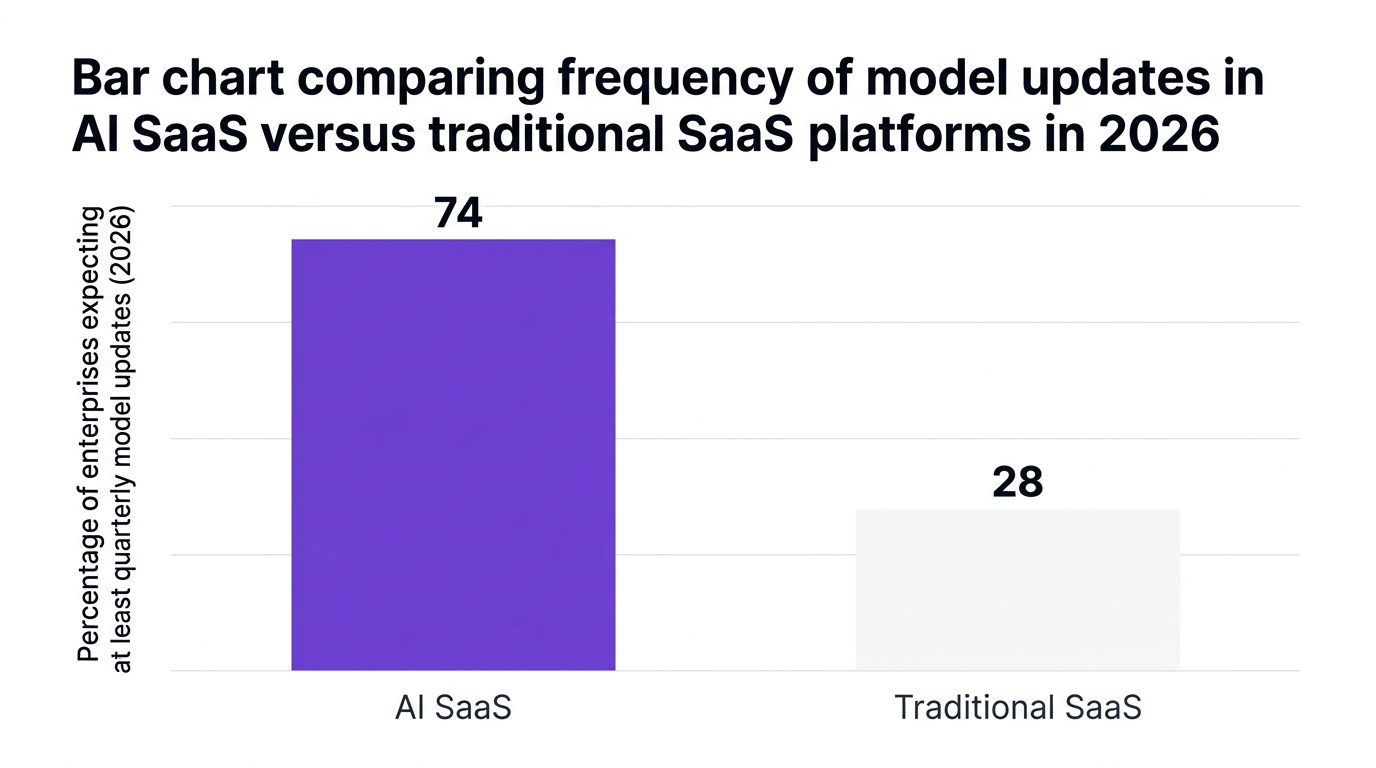
According to a recent market research report, 74% of enterprises expect AI driven SaaS platforms to undergo at least quarterly model updates, compared to just 28% for traditional SaaS offerings. Another 2026 benchmark found that AI SaaS solutions experience a 2.8x higher rate of feature change and versioning events than legacy platforms.
Several structural factors drive this acceleration:
A useful analogy is comparing a static ERP to an autonomous vehicle. Traditional SaaS is more like a well maintained truck: predictable routes, scheduled maintenance, and highly controlled change windows. AI SaaS behaves more like a self driving car: it continuously adjusts to conditions, which is powerful, but also demands real time monitoring, guardrails, and governance first architecture.
Model drift occurs when an AI model's performance or behavior changes over time relative to its original baseline. In AI SaaS, this typically happens because input data distributions shift, user behavior changes, or the vendor silently deploys a new model version.
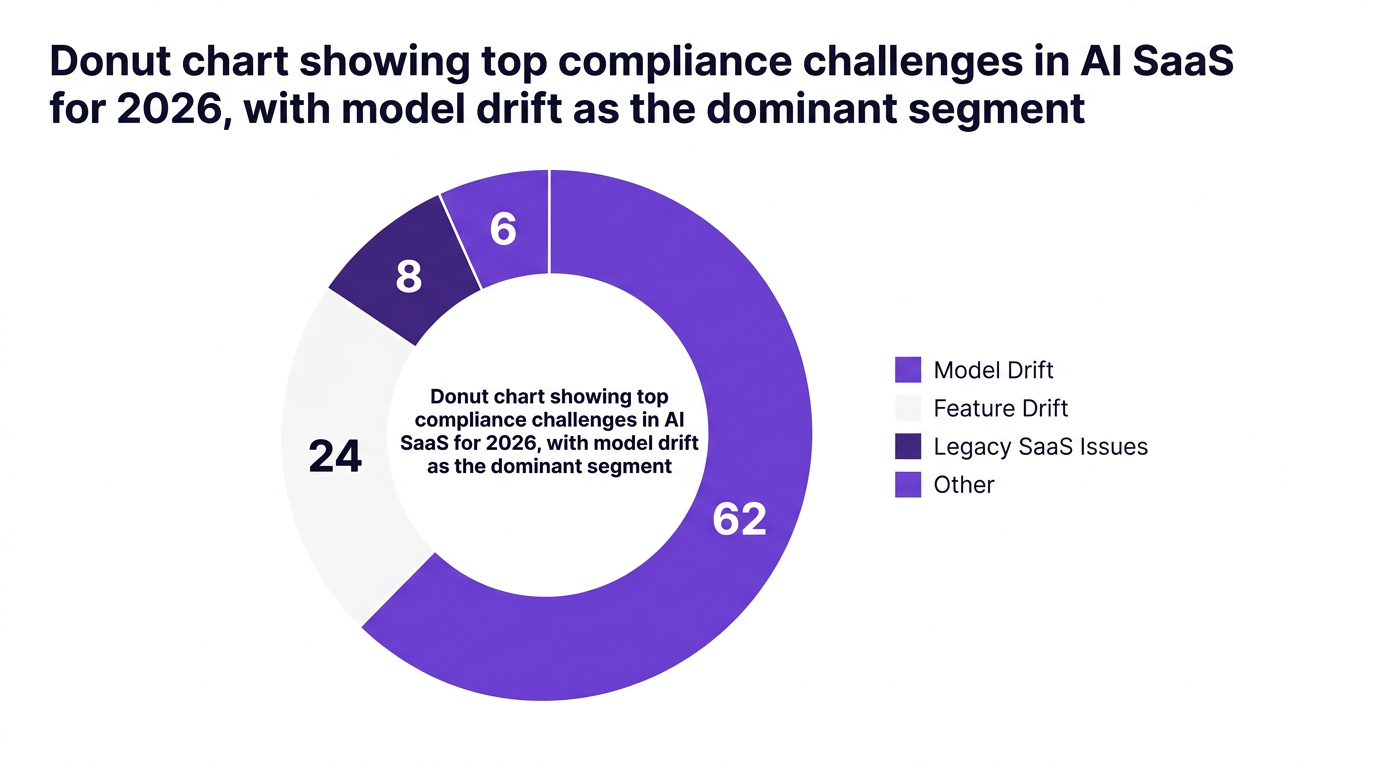
A 2026 enterprise AI survey reported that 81% of organizations had at least one SaaS AI model that required re tuning due to concept drift in the previous 12 months. Another compliance study in 2026 found that 62% of compliance managers cited model drift as the top reason for audit failures in AI powered SaaS environments.
From a governance and compliance perspective, three patterns are particularly important:
The expert insight from a 2026 governance panel captures it well: "Model drift in AI SaaS disrupts compliance baselines far more rapidly than traditional updates, demanding dynamic controls and adaptive governance policies."
Without explicit AI model governance, enterprises risk:
While AI SaaS model drift affects the "brain" of the application, feature drift affects the surface area that users and auditors see: the screens, APIs, fields, and configuration options.
Feature drift occurs when the set of capabilities, options, or default behaviors in a SaaS product changes faster than your processes, policies, or documentation. According to a 2026 industry benchmark, AI driven SaaS has 2.8x more feature change and versioning events than traditional SaaS.
Typical examples include:
In regulated industries, these changes can:
A 2026 compliance study highlights this: alongside model drift, feature drift accounted for a large share of new audit issues, with model drift and feature drift together dominating top reported challenges.
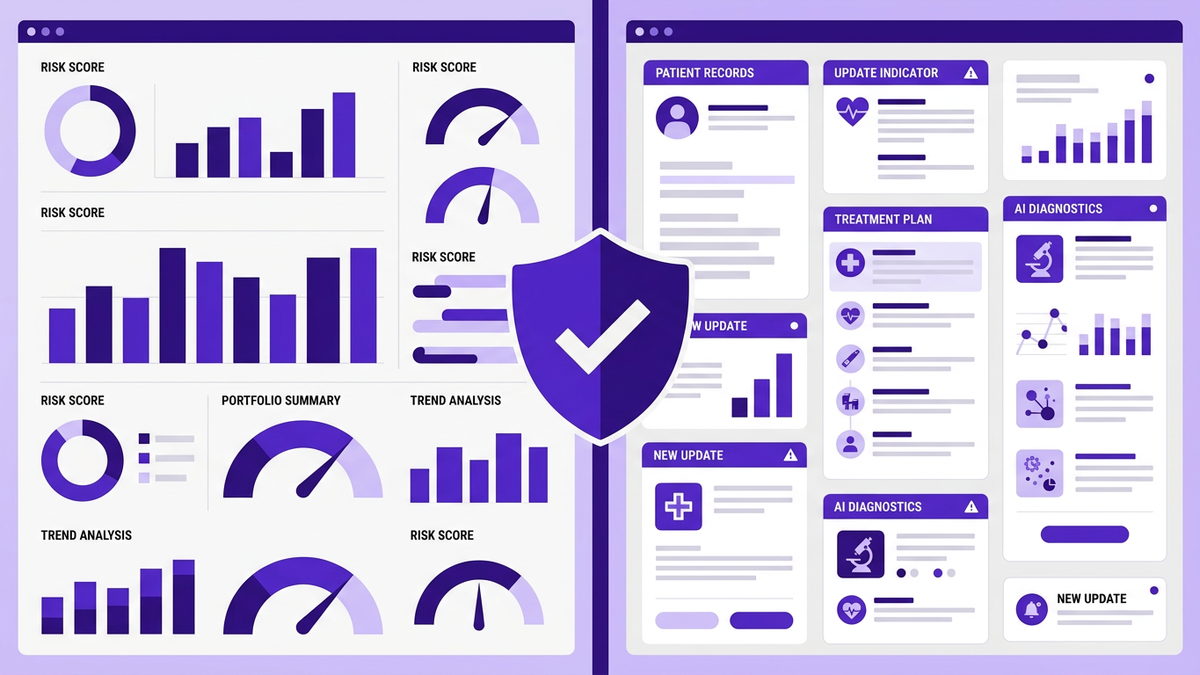
A recent case from a multinational bank illustrates the impact of AI SaaS model drift. The bank deployed an AI powered SaaS solution for risk scoring in early 2026. Within weeks, monitoring detected that certain demographic cohorts were receiving systematically lower risk scores than expected.
Root cause analysis showed concept drift: new transactional data samples had shifted the model's learned patterns. By catching this early, the bank re tuned the model and reduced regulatory audit flags by 36% within three months.
Another case in a healthcare network shows the cost of feature drift. The organization relied on a SaaS platform for patient engagement. A mid year update introduced a new AI field that automatically summarized patient messages, pulling in extra contextual data.
Because the governance layer included cross cloud SaaS oversight with feature drift detection, the team identified that the new field introduced unapproved data categories for certain regions. Policies automatically reverted the affected tenants to a prior feature configuration, preventing a major audit violation.
These examples highlight a key point: model monitoring alone is not enough. Enterprises need coordinated AI SaaS governance that connects model versions, feature sets, entitlements, and compliance policies.
Many enterprises still rely on governance patterns designed for static or slowly changing SaaS:
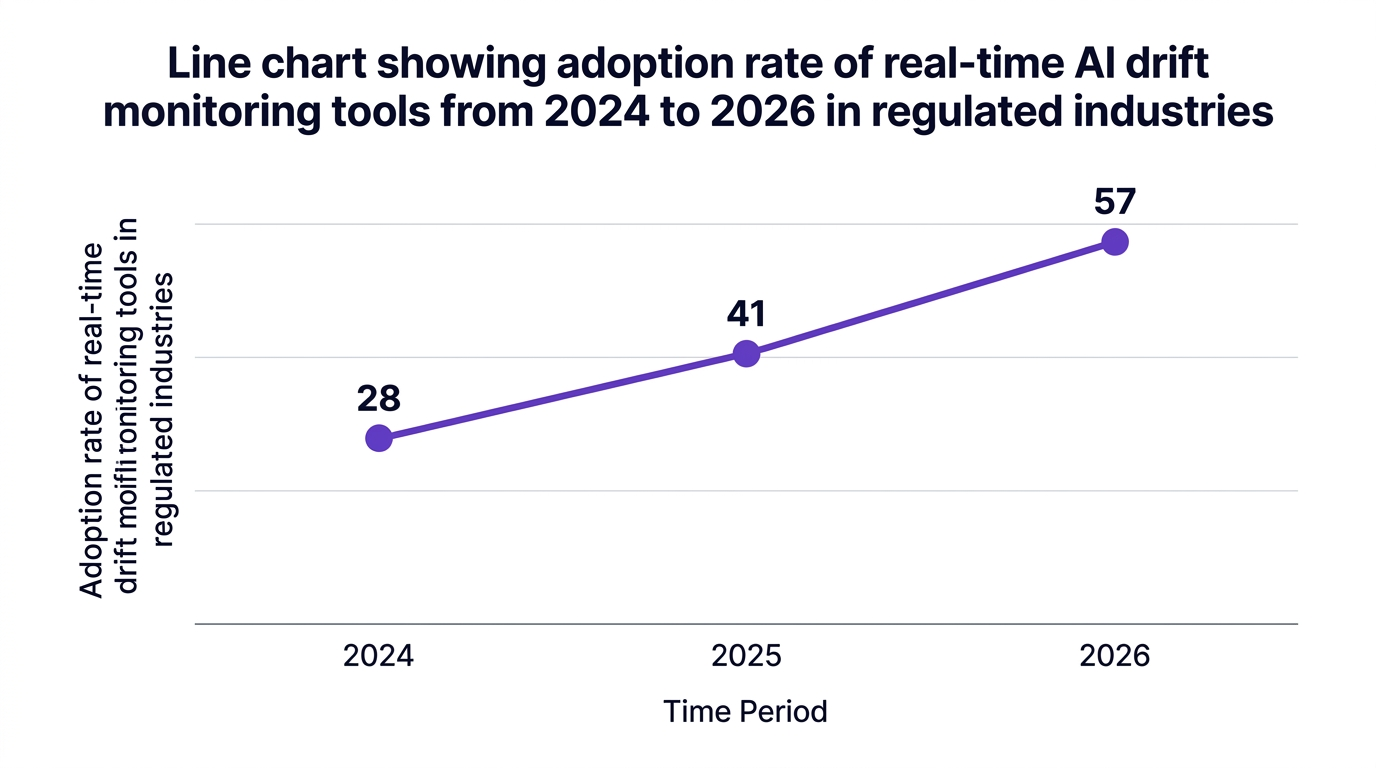
This approach breaks in the presence of AI SaaS model drift and feature drift. According to a 2026 SaaS trends report, 46% of enterprises list ongoing AI model governance as their number one concern when implementing AI driven platforms, up from 34% the previous year. Another 2026 industry survey found that 57% of regulated industries have instituted real time monitoring tools specifically for AI model and feature drift.
There are three core failure modes:
A common counterargument from some IT teams is: “Our SaaS vendor is responsible for AI quality and compliance, so we do not need additional governance.” In practice, this assumption frequently fails during audits. Regulators increasingly expect enterprise side controls, especially around who uses AI features, what data they access, and how outputs are logged and reviewed.
Another misconception is that model drift is purely a data science problem. For enterprise buyers, AI SaaS model drift is a governance and cost problem: it affects license allocation, chargeback, auditability, and contractual obligations.
To manage AI SaaS model drift effectively, enterprises are building governance frameworks with three pillars: visibility, control, and continuous compliance.
At minimum, IT and compliance need a real time inventory of:
Practical steps:
Once you can see AI model drift and feature drift, you need mechanisms to control them:
This supports cost optimization for SaaS by enabling:
A 2026 webinar on AI governance described the new baseline clearly: "Continuous monitoring for concept and feature drift is now table stakes for any SaaS platform deploying AI at scale."
To achieve continuous compliance:
When done well, this approach makes compliance feel less like a blocker and more like an automated guardrail around innovation.
CloudNuro is built on a governance first architecture that is uniquely suited to AI SaaS model drift and feature drift. The platform provides the visibility, control, and automation needed to manage AI driven change across multi cloud environments.
CloudNuro AI Custodian provides:
This helps address the finding that 62% of compliance managers see model drift as a primary cause of audit failures by making model behavior and changes fully transparent.
Through Microsoft 365 Custodian and Salesforce Custodian, CloudNuro ties AI features directly to entitlements and licenses:
As AI SaaS releases new features, CloudNuro can automatically adjust who has access and how much the enterprise pays, preserving financial discipline as the AI footprint grows.
CloudNuro's CloudNuro AI Custodian and FinOps services strengthen:
By combining usage analytics with governance policies, CloudNuro enables IT and finance leaders to enforce SaaS compliance while still encouraging responsible experimentation with AI features.
CloudNuro also supports:
This reduces manual change tickets and spreadsheets, replacing them with policy driven automation that keeps pace with AI model and feature changes.
AI SaaS model drift occurs when the behavior or performance of the AI model inside a SaaS product changes relative to the baseline that was originally validated. This can stem from new training data, re tuned models, or configuration changes made by the vendor, and it often impacts how decisions are scored, routed, or prioritized.
Feature drift introduces or modifies capabilities, fields, and workflows, often without explicit approvals or updated documentation. This can break role based access controls, invalidate risk assessments, and create new data processing patterns that are out of scope for existing policies, so it directly affects SaaS compliance obligations.
AI SaaS tools evolve faster because they are built around continuous learning and experimentation. Product teams push more frequent model updates and feature toggles to improve accuracy and user experience, which leads to much higher rates of change than traditional SaaS that focuses mainly on periodic functionality releases.
Best practices include maintaining a clear AI model lifecycle inventory, integrating model monitoring into governance dashboards, enforcing strict model versioning with auditable change logs, and automating policy checks whenever models or prompts change. Enterprises should also align entitlement and cost controls with AI specific features and usage.
Enterprises can ensure compliance by adopting AI SaaS governance frameworks that emphasize continuous monitoring, automated SaaS policy enforcement, and centralized reporting across all AI enabled platforms. Real time drift detection, change impact analysis, and automated access adjustments are critical to maintaining a state of continuous compliance.
CloudNuro combines deep enterprise SaaS management capabilities with AI aware governance tools. The platform offers cross cloud visibility, automated license optimization, shadow IT discovery, AI model and feature monitoring, and policy based controls that adjust entitlements and costs as AI SaaS model drift and feature drift occur.
AI SaaS model drift is not a niche data science concern. It is a board level issue that affects compliance, security, and technology spending for every enterprise that adopts AI enabled SaaS.
Recent industry research shows that AI driven SaaS experiences more frequent model updates, a 2.8x higher rate of feature change, and rapidly growing regulatory scrutiny. Enterprises that continue to treat AI SaaS like traditional applications will see more audit findings, uncontrolled costs, and ungoverned AI usage.
By building a governance first strategy that combines visibility, entitlement control, governance automation, and continuous monitoring, IT and finance leaders can keep AI innovation aligned with risk and cost objectives. CloudNuro is designed to make that practical, turning AI SaaS model drift from a hidden liability into a managed, auditable part of the SaaS portfolio.
To see how CloudNuro can help you govern AI SaaS model drift and feature drift across your environment, request a tailored walkthrough with your IT, finance, and compliance stakeholders.
CloudNuro is a leader in Enterprise SaaS Management Platforms, providing enterprises with unmatched visibility, governance, and cost optimization. Recognized twice in a row in the SaaS Management Platforms category and named a Leader in the SoftwareReviews Data Quadrant, CloudNuro is trusted by global enterprises and government agencies to bring financial discipline to SaaS, cloud, and AI. Trusted by enterprises such as Konica Minolta and Federal Signal, CloudNuro provides centralized SaaS inventory, license optimization, and renewal management along with advanced cost allocation and chargeback, giving IT and Finance leaders the visibility, control, and cost-conscious culture needed to drive financial discipline. Request a Demo | Get Free Savings | Explore Product
Request a no cost, no obligation free assessment —just 15 minutes to savings!
Get StartedAI SaaS model drift is quickly becoming one of the most expensive blind spots in enterprise IT and compliance. Traditional SaaS changes on a quarterly or even annual cadence, but AI driven platforms can materially change behavior overnight as models, data pipelines, and features evolve.
For CIOs, CTOs, and compliance leaders, this is more than a technical nuance. It directly impacts audit readiness, access control, cost allocation, and risk exposure. This article explains model drift and feature drift in AI SaaS, why they move faster than traditional SaaS, and how to design AI SaaS governance that keeps pace, with practical ways CloudNuro supports that journey.
According to a recent market research report, 74% of enterprises expect AI driven SaaS platforms to undergo at least quarterly model updates, compared to just 28% for traditional SaaS offerings. Another 2026 benchmark found that AI SaaS solutions experience a 2.8x higher rate of feature change and versioning events than legacy platforms.
Several structural factors drive this acceleration:
A useful analogy is comparing a static ERP to an autonomous vehicle. Traditional SaaS is more like a well maintained truck: predictable routes, scheduled maintenance, and highly controlled change windows. AI SaaS behaves more like a self driving car: it continuously adjusts to conditions, which is powerful, but also demands real time monitoring, guardrails, and governance first architecture.
Model drift occurs when an AI model's performance or behavior changes over time relative to its original baseline. In AI SaaS, this typically happens because input data distributions shift, user behavior changes, or the vendor silently deploys a new model version.
A 2026 enterprise AI survey reported that 81% of organizations had at least one SaaS AI model that required re tuning due to concept drift in the previous 12 months. Another compliance study in 2026 found that 62% of compliance managers cited model drift as the top reason for audit failures in AI powered SaaS environments.
From a governance and compliance perspective, three patterns are particularly important:
The expert insight from a 2026 governance panel captures it well: "Model drift in AI SaaS disrupts compliance baselines far more rapidly than traditional updates, demanding dynamic controls and adaptive governance policies."
Without explicit AI model governance, enterprises risk:
While AI SaaS model drift affects the "brain" of the application, feature drift affects the surface area that users and auditors see: the screens, APIs, fields, and configuration options.
Feature drift occurs when the set of capabilities, options, or default behaviors in a SaaS product changes faster than your processes, policies, or documentation. According to a 2026 industry benchmark, AI driven SaaS has 2.8x more feature change and versioning events than traditional SaaS.
Typical examples include:
In regulated industries, these changes can:
A 2026 compliance study highlights this: alongside model drift, feature drift accounted for a large share of new audit issues, with model drift and feature drift together dominating top reported challenges.
A recent case from a multinational bank illustrates the impact of AI SaaS model drift. The bank deployed an AI powered SaaS solution for risk scoring in early 2026. Within weeks, monitoring detected that certain demographic cohorts were receiving systematically lower risk scores than expected.
Root cause analysis showed concept drift: new transactional data samples had shifted the model's learned patterns. By catching this early, the bank re tuned the model and reduced regulatory audit flags by 36% within three months.
Another case in a healthcare network shows the cost of feature drift. The organization relied on a SaaS platform for patient engagement. A mid year update introduced a new AI field that automatically summarized patient messages, pulling in extra contextual data.
Because the governance layer included cross cloud SaaS oversight with feature drift detection, the team identified that the new field introduced unapproved data categories for certain regions. Policies automatically reverted the affected tenants to a prior feature configuration, preventing a major audit violation.
These examples highlight a key point: model monitoring alone is not enough. Enterprises need coordinated AI SaaS governance that connects model versions, feature sets, entitlements, and compliance policies.
Many enterprises still rely on governance patterns designed for static or slowly changing SaaS:
This approach breaks in the presence of AI SaaS model drift and feature drift. According to a 2026 SaaS trends report, 46% of enterprises list ongoing AI model governance as their number one concern when implementing AI driven platforms, up from 34% the previous year. Another 2026 industry survey found that 57% of regulated industries have instituted real time monitoring tools specifically for AI model and feature drift.
There are three core failure modes:
A common counterargument from some IT teams is: “Our SaaS vendor is responsible for AI quality and compliance, so we do not need additional governance.” In practice, this assumption frequently fails during audits. Regulators increasingly expect enterprise side controls, especially around who uses AI features, what data they access, and how outputs are logged and reviewed.
Another misconception is that model drift is purely a data science problem. For enterprise buyers, AI SaaS model drift is a governance and cost problem: it affects license allocation, chargeback, auditability, and contractual obligations.
To manage AI SaaS model drift effectively, enterprises are building governance frameworks with three pillars: visibility, control, and continuous compliance.
At minimum, IT and compliance need a real time inventory of:
Practical steps:
Once you can see AI model drift and feature drift, you need mechanisms to control them:
This supports cost optimization for SaaS by enabling:
A 2026 webinar on AI governance described the new baseline clearly: "Continuous monitoring for concept and feature drift is now table stakes for any SaaS platform deploying AI at scale."
To achieve continuous compliance:
When done well, this approach makes compliance feel less like a blocker and more like an automated guardrail around innovation.
CloudNuro is built on a governance first architecture that is uniquely suited to AI SaaS model drift and feature drift. The platform provides the visibility, control, and automation needed to manage AI driven change across multi cloud environments.
CloudNuro AI Custodian provides:
This helps address the finding that 62% of compliance managers see model drift as a primary cause of audit failures by making model behavior and changes fully transparent.
Through Microsoft 365 Custodian and Salesforce Custodian, CloudNuro ties AI features directly to entitlements and licenses:
As AI SaaS releases new features, CloudNuro can automatically adjust who has access and how much the enterprise pays, preserving financial discipline as the AI footprint grows.
CloudNuro's CloudNuro AI Custodian and FinOps services strengthen:
By combining usage analytics with governance policies, CloudNuro enables IT and finance leaders to enforce SaaS compliance while still encouraging responsible experimentation with AI features.
CloudNuro also supports:
This reduces manual change tickets and spreadsheets, replacing them with policy driven automation that keeps pace with AI model and feature changes.
AI SaaS model drift occurs when the behavior or performance of the AI model inside a SaaS product changes relative to the baseline that was originally validated. This can stem from new training data, re tuned models, or configuration changes made by the vendor, and it often impacts how decisions are scored, routed, or prioritized.
Feature drift introduces or modifies capabilities, fields, and workflows, often without explicit approvals or updated documentation. This can break role based access controls, invalidate risk assessments, and create new data processing patterns that are out of scope for existing policies, so it directly affects SaaS compliance obligations.
AI SaaS tools evolve faster because they are built around continuous learning and experimentation. Product teams push more frequent model updates and feature toggles to improve accuracy and user experience, which leads to much higher rates of change than traditional SaaS that focuses mainly on periodic functionality releases.
Best practices include maintaining a clear AI model lifecycle inventory, integrating model monitoring into governance dashboards, enforcing strict model versioning with auditable change logs, and automating policy checks whenever models or prompts change. Enterprises should also align entitlement and cost controls with AI specific features and usage.
Enterprises can ensure compliance by adopting AI SaaS governance frameworks that emphasize continuous monitoring, automated SaaS policy enforcement, and centralized reporting across all AI enabled platforms. Real time drift detection, change impact analysis, and automated access adjustments are critical to maintaining a state of continuous compliance.
CloudNuro combines deep enterprise SaaS management capabilities with AI aware governance tools. The platform offers cross cloud visibility, automated license optimization, shadow IT discovery, AI model and feature monitoring, and policy based controls that adjust entitlements and costs as AI SaaS model drift and feature drift occur.
AI SaaS model drift is not a niche data science concern. It is a board level issue that affects compliance, security, and technology spending for every enterprise that adopts AI enabled SaaS.
Recent industry research shows that AI driven SaaS experiences more frequent model updates, a 2.8x higher rate of feature change, and rapidly growing regulatory scrutiny. Enterprises that continue to treat AI SaaS like traditional applications will see more audit findings, uncontrolled costs, and ungoverned AI usage.
By building a governance first strategy that combines visibility, entitlement control, governance automation, and continuous monitoring, IT and finance leaders can keep AI innovation aligned with risk and cost objectives. CloudNuro is designed to make that practical, turning AI SaaS model drift from a hidden liability into a managed, auditable part of the SaaS portfolio.
To see how CloudNuro can help you govern AI SaaS model drift and feature drift across your environment, request a tailored walkthrough with your IT, finance, and compliance stakeholders.
CloudNuro is a leader in Enterprise SaaS Management Platforms, providing enterprises with unmatched visibility, governance, and cost optimization. Recognized twice in a row in the SaaS Management Platforms category and named a Leader in the SoftwareReviews Data Quadrant, CloudNuro is trusted by global enterprises and government agencies to bring financial discipline to SaaS, cloud, and AI. Trusted by enterprises such as Konica Minolta and Federal Signal, CloudNuro provides centralized SaaS inventory, license optimization, and renewal management along with advanced cost allocation and chargeback, giving IT and Finance leaders the visibility, control, and cost-conscious culture needed to drive financial discipline. Request a Demo | Get Free Savings | Explore Product
Request a no cost, no obligation free assessment - just 15 minutes to savings!
Get StartedWe're offering complimentary ServiceNow license assessments to only 25 enterprises this quarter who want to unlock immediate savings without disrupting operations.
Get Free AssessmentGet Started




CloudNuro Corp
1755 Park St. Suite 207
Naperville, IL 60563
Phone : +1-630-277-9470
Email: info@cloudnuro.com




.webp)

Recognized Leader in SaaS Management Platforms by Info-Tech SoftwareReviews


.png)
.png)
.svg)