

Sign Up
Thank you for Submitting!
Managing enterprise software costs requires constant vigilance, especially when employees depart. When an employee leaves, their account usually continues to consume budget until an administrator actively steps in. SaaS license reclamation during offboarding is the systematic process of identifying, revoking, and reassigning these active subscriptions from departed employees. Organizations that fail to prioritize this essential function find themselves paying top dollar for empty seats. Addressing inactive users is the most immediate way to reduce SaaS costs and bring predictability back to IT budgets.
The financial drain of unmanaged platforms accumulates remarkably quickly. For many IT and finance leaders, spotting and retrieving unused SaaS licenses feels like searching for a needle in a haystack. The sheer volume of applications adopted over the past few years means that tracking every single departure against every single subscription requires immense, manual oversight.
Up to 38% of SaaS licenses in large enterprises are assigned to inactive or departed users at any given time, directly contributing to overspend (IDC 2026). When accounts remain active, budget dollars evaporate month after month for services that no longer provide value. This phenomenon creates excessive SaaS waste that drains resources away from critical IT investments.
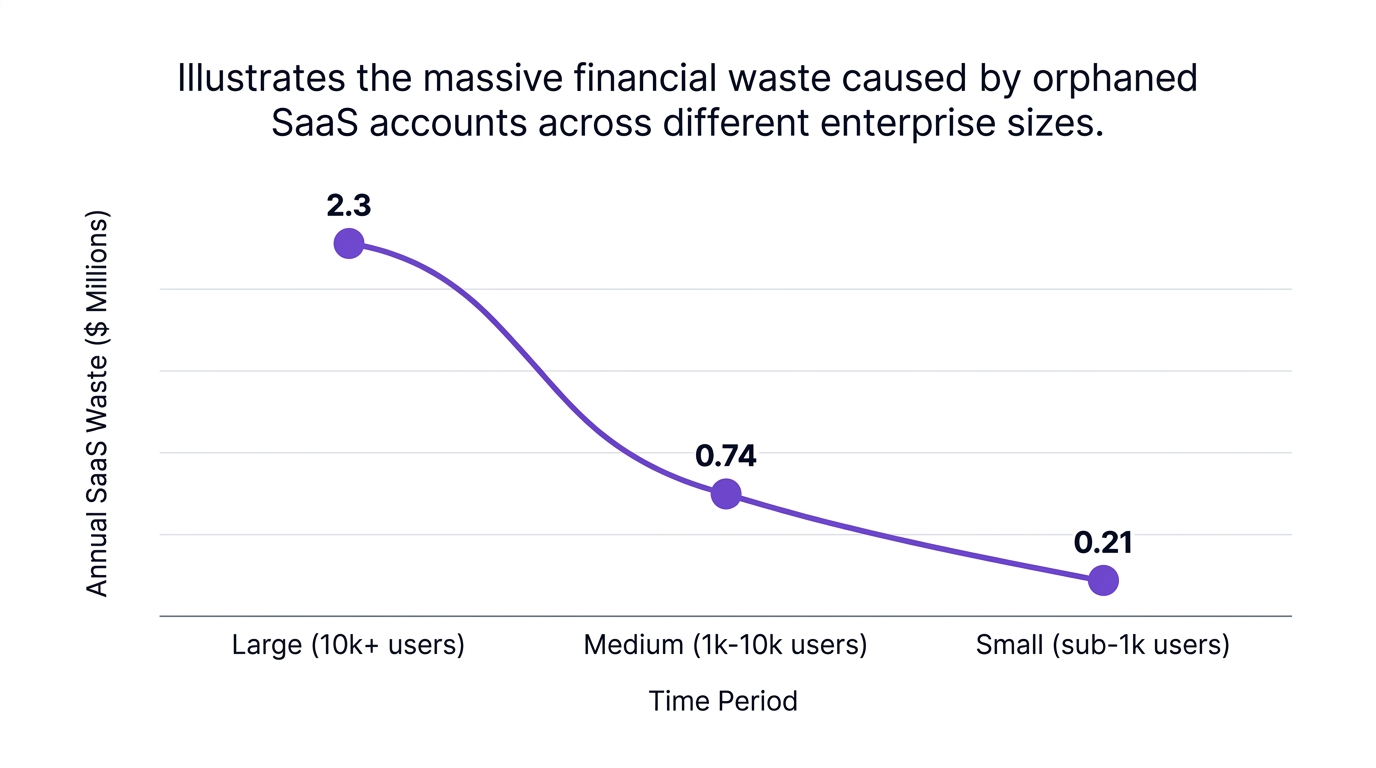
According to Everest Group 2026 data, the average enterprise wastes $2.3 million per year on orphaned SaaS accounts left after employee offboarding. Without automated license reclamation, these losses remain virtually undetectable until budget anomalies force an audit. Reclaiming those lost millions requires precise visibility.
Every dollar spent on an inactive user is a dollar subtracted from purposeful technological innovation. Reclaim SaaS licenses vigorously to eliminate the burden of continuous excess spending. The financial implications are too significant for IT departments to ignore or relegate to occasional, annual true-up exercises.
The traditional offboarding workflow involves a sprawling matrix of helpdesk tickets, spreadsheets, and emails sent across various administrative teams. A human operator processes a departure request, logs into each admin portal, and manually removes the user. This strategy breaks down under the weight of hundreds of enterprise applications and thousands of dynamic employee shifts per year.
Human error predictably limits the effectiveness of this hands-on process. Manual SaaS license audits recover only 18% of unused licenses compared to 57% through automation (SaaS Trends Report 2026). Attempting to rightsize software spending by clicking through portals manually guarantees missed accounts and persistent overpayments. Simply put, standard employee offboarding software processes not built for precise license oversight will fail to catch everything.
Shadow IT complicates this manual process even further. Flexera 2026 reports that shadow IT accounts for 27% of total SaaS spend, much of it attributable to unrevoked licenses post-offboarding. Admins cannot revoke access to a tool they do not know exists. The lack of proactive SaaS license management means these decentralized purchases remain active and billed, quietly draining department budgets long after the purchaser has left the building.
Stopping financial leakage demands an end-to-end, automated strategy. Transitioning from reactive spreadsheets to proactive deprovisioning allows enterprises to instantly neutralize zombie accounts upon departure. Automated license reclamation operates continuously, identifying underutilized software and immediately recovering the license when HR signals a change in employment status.
Gartner 2026 analysts estimate that automated license reclamation processes can reduce SaaS waste by as much as 41% annually in Fortune 1000 companies. This magnitude of savings directly proves the return on investment for intelligent, automated oversight tools. IT teams can reclaim unused licenses automatically, immediately shifting from a reactive posture to a commanding operational stance.
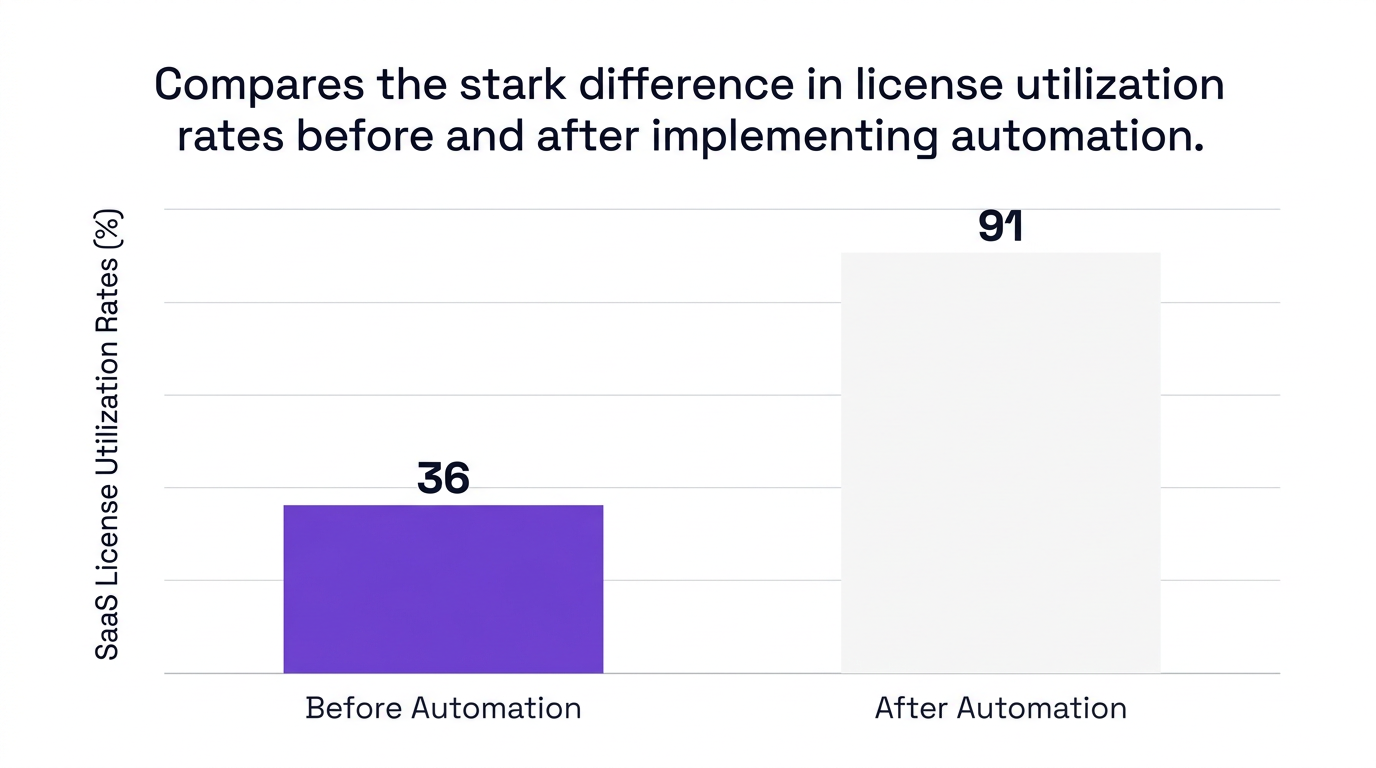
Organizations implementing automated SaaS offboarding tools reported a 55% improvement in license utilization rates within six months (Forrester 2026). Consolidating and automating offboarding brings the entire ecosystem into high focus. This continuous auditing and recovery capability transforms IT from a reactive cost center into an active optimizer of enterprise capital. Instead of paying for shelfware, administrators use actionable cost and usage insights to save on SaaS spend aggressively.
Constructing a resilient SaaS license offboarding pipeline requires specific architectural steps. Establishing this framework ensures precise access revocation and provides the insight necessary to reallocate those licenses properly.
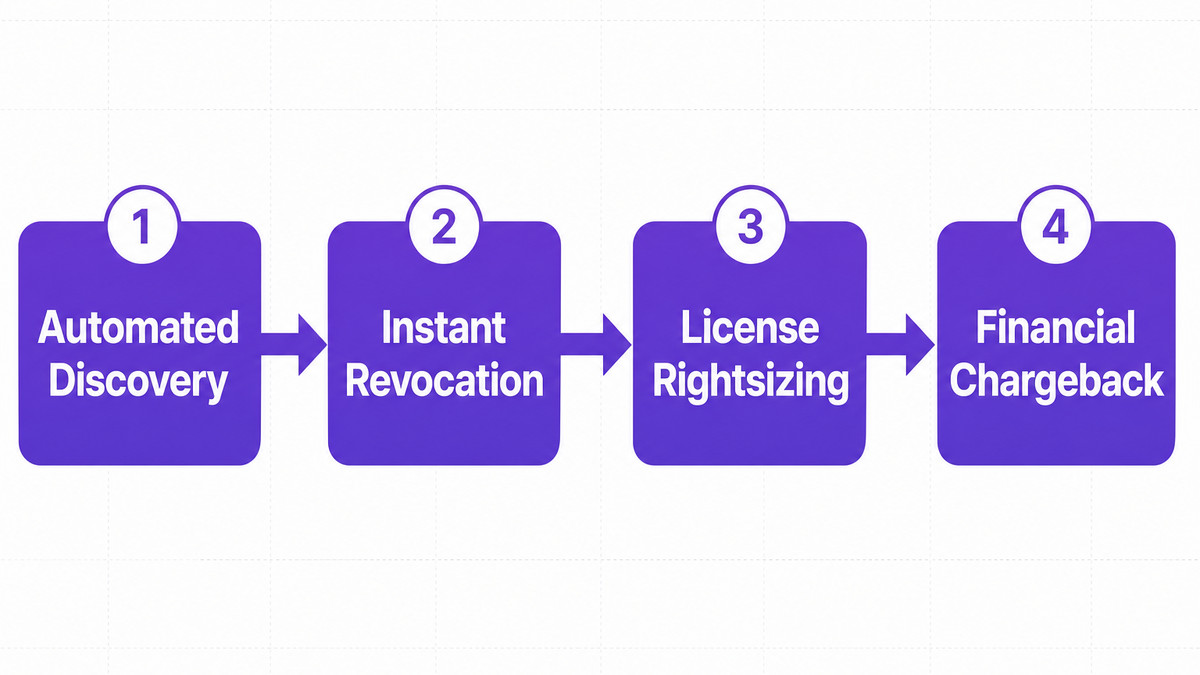
First, administrators must deploy continuous discovery mechanisms. You cannot remove access to accounts you cannot see. Uncovering the full inventory is fundamental. Second, organizations must integrate their HR directories directly with their SaaS governance platforms for real-time signaling. When an employee classification changes to inactive, the corresponding offboarding workflow triggers instantaneously.
Third, immediate access revocation ensures that the user can no longer log in or sync data. Once the security boundary is secured, the final step is license rightsizing. The system either returns the expensive seat to a centralized pool for the next new hire or downgrades the contract if no new employee requires it. By structuring the ecosystem this way, IT teams optimize their SaaS optimization efforts and eliminate orphaned accounts before the next billing cycle begins.
While the financial argument for proper deprovisioning is compelling on its own, the security risks associated with lingering access are equally alarming. Inactive users represent vulnerable, unmonitored entry points into the corporate network. Tarek Soliman, Cloud Security Lead at KPMG 2026, states that SaaS license management is not just about cost, it is a core security imperative, especially in regulated industries.
Nearly 70% of compliance breaches in SaaS environments were traced to inactive credentials left over from un-reclaimed licenses (KPMG 2026). When departed employees maintain access to proprietary company data, the risk of data exfiltration skyrockets. An attacker compromising an old, forgotten account can operate undetected for months because security teams typically focus their monitoring efforts on active, high-profile personnel.
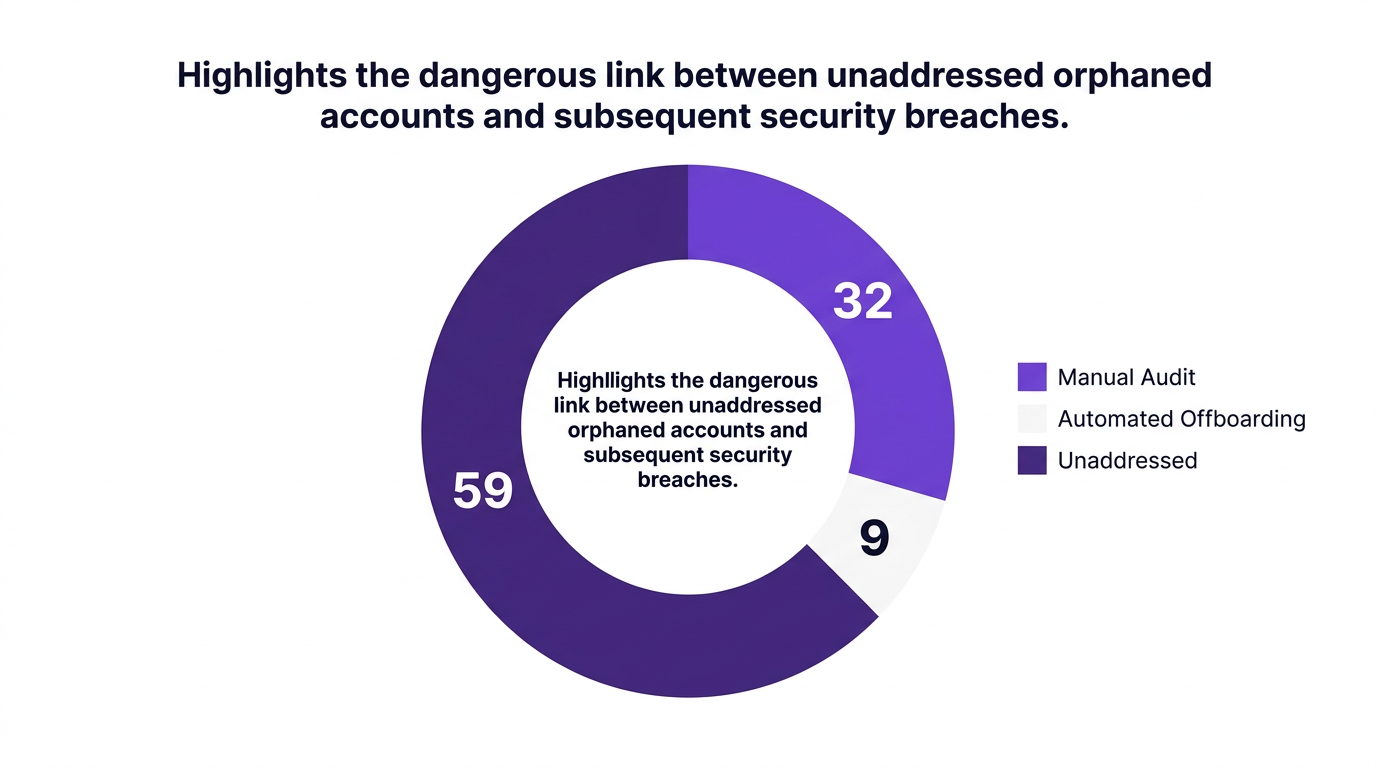
A definitive strategy to remove access comprehensively protects the enterprise from auditing failures and potentially devastating breaches. True security requires knowing exactly who holds a license, what they can access, and having the immediate capability to terminate that access when employment concludes.
Finding a comprehensive approach to SaaS license reclamation dictates relying on a governance-first architecture. Through the Unified Cloud Custodian, CloudNuro automates license discovery, rightsizing, and reclamation across all leading SaaS platforms, ensuring no inactive user retains an assigned license during offboarding. CloudNuro acts as a centralized brain for governance, bringing disparate applications into a single, highly visible framework.
Enterprises struggling with disjointed IT ecosystems find rapid value by deploying CloudNuro's intelligent onboarding and offboarding workflows. The platform actively monitors application usage, flags underutilized licenses, and executes real-time access revocation. CloudNuro’s real-time security and compliance monitoring mitigates compliance risks by instantly revoking access from departed users, protecting sensitive corporate data from unauthorized use.
To drive financial discipline deeper into the business, CloudNuro Chargeback provides transparent reporting and allocation of SaaS costs by department or business unit. This capability incentivizes prompt offboarding and cost accountability at massive scale. By combining these advanced capabilities with targeted FinOps Services, organizations can fully realize the financial and security benefits of stringent SaaS oversight. Extensive case studies demonstrate exactly how proactive deprovisioning transforms enterprise IT infrastructure.
It is the administrative process of identifying, deactivating, and recovering software subscriptions from employees who have departed the organization. During offboarding, an automated workflow triggers the immediate revocation of the user's access, unassigns the paid license from their dormant profile, and returns that license to the corporate pool for future deployment or cancellation.
Organizations achieve automation by integrating their central HR directory or identity provider directly with a dedicated SaaS governance platform. When an employee status updates to inactive, the platform uses pre-built integrations to query connected applications, automatically execute the deprovisioning commands, and document the successful recovery of the license.
Failing to recover licenses introduces severe financial bloat by forcing the company to pay for non-existent users. Additionally, leaving accounts active post-departure creates significant cybersecurity vulnerabilities. Unmonitored legacy accounts can be exploited by malicious actors, leading to severe compliance breaches and data theft.
Comprehensive governance platforms designed for deep application visibility provide the most accurate identification. These solutions monitor login frequency, track ongoing app engagement, and compare active personnel rosters against assigned subscriptions to highlight inactive or abandoned accounts ready for recovery.
By continuously stripping away licenses from departed or unengaged users, enterprises stop paying for software that provides zero business value. Returning these recovered seats to an available pool prevents the unnecessary purchase of net-new licenses for incoming hires, directly eliminating expensive shelfware and dramatically lowering the total invoice.
SaaS license reclamation during offboarding remains one of the most effective strategies for curbing runaway enterprise expenses. Relying on disconnected spreadsheets and manual portal logins guarantees continued financial waste and elevated security exposure. By adopting automated access revocation and adopting stringent usage oversight, IT leaders can fundamentally change their operational mechanics. Stop funding inactive users, tighten up your offboarding protocols, and reclaim the budget your organization deserves.
Request a comprehensive audit today to pinpoint exactly how many inactive licenses are silently draining your budget.
About CloudNuro
CloudNuro is a leader in Enterprise SaaS Management Platforms, providing enterprises with unmatched visibility, governance, and cost optimization. Recognized twice in a row in the SaaS Management Platforms category and named a Leader in the SoftwareReviews Data Quadrant, CloudNuro is trusted by global enterprises and government agencies to bring financial discipline to SaaS, cloud, and AI. Trusted by enterprises such as Konica Minolta and Federal Signal, CloudNuro provides centralized SaaS inventory, license optimization, and renewal management along with advanced cost allocation and chargeback, giving IT and Finance leaders the visibility, control, and cost-conscious culture needed to drive financial discipline.
Request a no cost, no obligation free assessment —just 15 minutes to savings!
Get StartedManaging enterprise software costs requires constant vigilance, especially when employees depart. When an employee leaves, their account usually continues to consume budget until an administrator actively steps in. SaaS license reclamation during offboarding is the systematic process of identifying, revoking, and reassigning these active subscriptions from departed employees. Organizations that fail to prioritize this essential function find themselves paying top dollar for empty seats. Addressing inactive users is the most immediate way to reduce SaaS costs and bring predictability back to IT budgets.
The financial drain of unmanaged platforms accumulates remarkably quickly. For many IT and finance leaders, spotting and retrieving unused SaaS licenses feels like searching for a needle in a haystack. The sheer volume of applications adopted over the past few years means that tracking every single departure against every single subscription requires immense, manual oversight.
Up to 38% of SaaS licenses in large enterprises are assigned to inactive or departed users at any given time, directly contributing to overspend (IDC 2026). When accounts remain active, budget dollars evaporate month after month for services that no longer provide value. This phenomenon creates excessive SaaS waste that drains resources away from critical IT investments.
According to Everest Group 2026 data, the average enterprise wastes $2.3 million per year on orphaned SaaS accounts left after employee offboarding. Without automated license reclamation, these losses remain virtually undetectable until budget anomalies force an audit. Reclaiming those lost millions requires precise visibility.
Every dollar spent on an inactive user is a dollar subtracted from purposeful technological innovation. Reclaim SaaS licenses vigorously to eliminate the burden of continuous excess spending. The financial implications are too significant for IT departments to ignore or relegate to occasional, annual true-up exercises.
The traditional offboarding workflow involves a sprawling matrix of helpdesk tickets, spreadsheets, and emails sent across various administrative teams. A human operator processes a departure request, logs into each admin portal, and manually removes the user. This strategy breaks down under the weight of hundreds of enterprise applications and thousands of dynamic employee shifts per year.
Human error predictably limits the effectiveness of this hands-on process. Manual SaaS license audits recover only 18% of unused licenses compared to 57% through automation (SaaS Trends Report 2026). Attempting to rightsize software spending by clicking through portals manually guarantees missed accounts and persistent overpayments. Simply put, standard employee offboarding software processes not built for precise license oversight will fail to catch everything.
Shadow IT complicates this manual process even further. Flexera 2026 reports that shadow IT accounts for 27% of total SaaS spend, much of it attributable to unrevoked licenses post-offboarding. Admins cannot revoke access to a tool they do not know exists. The lack of proactive SaaS license management means these decentralized purchases remain active and billed, quietly draining department budgets long after the purchaser has left the building.
Stopping financial leakage demands an end-to-end, automated strategy. Transitioning from reactive spreadsheets to proactive deprovisioning allows enterprises to instantly neutralize zombie accounts upon departure. Automated license reclamation operates continuously, identifying underutilized software and immediately recovering the license when HR signals a change in employment status.
Gartner 2026 analysts estimate that automated license reclamation processes can reduce SaaS waste by as much as 41% annually in Fortune 1000 companies. This magnitude of savings directly proves the return on investment for intelligent, automated oversight tools. IT teams can reclaim unused licenses automatically, immediately shifting from a reactive posture to a commanding operational stance.
Organizations implementing automated SaaS offboarding tools reported a 55% improvement in license utilization rates within six months (Forrester 2026). Consolidating and automating offboarding brings the entire ecosystem into high focus. This continuous auditing and recovery capability transforms IT from a reactive cost center into an active optimizer of enterprise capital. Instead of paying for shelfware, administrators use actionable cost and usage insights to save on SaaS spend aggressively.
Constructing a resilient SaaS license offboarding pipeline requires specific architectural steps. Establishing this framework ensures precise access revocation and provides the insight necessary to reallocate those licenses properly.
First, administrators must deploy continuous discovery mechanisms. You cannot remove access to accounts you cannot see. Uncovering the full inventory is fundamental. Second, organizations must integrate their HR directories directly with their SaaS governance platforms for real-time signaling. When an employee classification changes to inactive, the corresponding offboarding workflow triggers instantaneously.
Third, immediate access revocation ensures that the user can no longer log in or sync data. Once the security boundary is secured, the final step is license rightsizing. The system either returns the expensive seat to a centralized pool for the next new hire or downgrades the contract if no new employee requires it. By structuring the ecosystem this way, IT teams optimize their SaaS optimization efforts and eliminate orphaned accounts before the next billing cycle begins.
While the financial argument for proper deprovisioning is compelling on its own, the security risks associated with lingering access are equally alarming. Inactive users represent vulnerable, unmonitored entry points into the corporate network. Tarek Soliman, Cloud Security Lead at KPMG 2026, states that SaaS license management is not just about cost, it is a core security imperative, especially in regulated industries.
Nearly 70% of compliance breaches in SaaS environments were traced to inactive credentials left over from un-reclaimed licenses (KPMG 2026). When departed employees maintain access to proprietary company data, the risk of data exfiltration skyrockets. An attacker compromising an old, forgotten account can operate undetected for months because security teams typically focus their monitoring efforts on active, high-profile personnel.
A definitive strategy to remove access comprehensively protects the enterprise from auditing failures and potentially devastating breaches. True security requires knowing exactly who holds a license, what they can access, and having the immediate capability to terminate that access when employment concludes.
Finding a comprehensive approach to SaaS license reclamation dictates relying on a governance-first architecture. Through the Unified Cloud Custodian, CloudNuro automates license discovery, rightsizing, and reclamation across all leading SaaS platforms, ensuring no inactive user retains an assigned license during offboarding. CloudNuro acts as a centralized brain for governance, bringing disparate applications into a single, highly visible framework.
Enterprises struggling with disjointed IT ecosystems find rapid value by deploying CloudNuro's intelligent onboarding and offboarding workflows. The platform actively monitors application usage, flags underutilized licenses, and executes real-time access revocation. CloudNuro’s real-time security and compliance monitoring mitigates compliance risks by instantly revoking access from departed users, protecting sensitive corporate data from unauthorized use.
To drive financial discipline deeper into the business, CloudNuro Chargeback provides transparent reporting and allocation of SaaS costs by department or business unit. This capability incentivizes prompt offboarding and cost accountability at massive scale. By combining these advanced capabilities with targeted FinOps Services, organizations can fully realize the financial and security benefits of stringent SaaS oversight. Extensive case studies demonstrate exactly how proactive deprovisioning transforms enterprise IT infrastructure.
It is the administrative process of identifying, deactivating, and recovering software subscriptions from employees who have departed the organization. During offboarding, an automated workflow triggers the immediate revocation of the user's access, unassigns the paid license from their dormant profile, and returns that license to the corporate pool for future deployment or cancellation.
Organizations achieve automation by integrating their central HR directory or identity provider directly with a dedicated SaaS governance platform. When an employee status updates to inactive, the platform uses pre-built integrations to query connected applications, automatically execute the deprovisioning commands, and document the successful recovery of the license.
Failing to recover licenses introduces severe financial bloat by forcing the company to pay for non-existent users. Additionally, leaving accounts active post-departure creates significant cybersecurity vulnerabilities. Unmonitored legacy accounts can be exploited by malicious actors, leading to severe compliance breaches and data theft.
Comprehensive governance platforms designed for deep application visibility provide the most accurate identification. These solutions monitor login frequency, track ongoing app engagement, and compare active personnel rosters against assigned subscriptions to highlight inactive or abandoned accounts ready for recovery.
By continuously stripping away licenses from departed or unengaged users, enterprises stop paying for software that provides zero business value. Returning these recovered seats to an available pool prevents the unnecessary purchase of net-new licenses for incoming hires, directly eliminating expensive shelfware and dramatically lowering the total invoice.
SaaS license reclamation during offboarding remains one of the most effective strategies for curbing runaway enterprise expenses. Relying on disconnected spreadsheets and manual portal logins guarantees continued financial waste and elevated security exposure. By adopting automated access revocation and adopting stringent usage oversight, IT leaders can fundamentally change their operational mechanics. Stop funding inactive users, tighten up your offboarding protocols, and reclaim the budget your organization deserves.
Request a comprehensive audit today to pinpoint exactly how many inactive licenses are silently draining your budget.
About CloudNuro
CloudNuro is a leader in Enterprise SaaS Management Platforms, providing enterprises with unmatched visibility, governance, and cost optimization. Recognized twice in a row in the SaaS Management Platforms category and named a Leader in the SoftwareReviews Data Quadrant, CloudNuro is trusted by global enterprises and government agencies to bring financial discipline to SaaS, cloud, and AI. Trusted by enterprises such as Konica Minolta and Federal Signal, CloudNuro provides centralized SaaS inventory, license optimization, and renewal management along with advanced cost allocation and chargeback, giving IT and Finance leaders the visibility, control, and cost-conscious culture needed to drive financial discipline.
Request a no cost, no obligation free assessment - just 15 minutes to savings!
Get StartedWe're offering complimentary ServiceNow license assessments to only 25 enterprises this quarter who want to unlock immediate savings without disrupting operations.
Get Free AssessmentGet Started




CloudNuro Corp
1755 Park St. Suite 207
Naperville, IL 60563
Phone : +1-630-277-9470
Email: info@cloudnuro.com




.webp)

Recognized Leader in SaaS Management Platforms by Info-Tech SoftwareReviews


.svg)