

Sign Up
Thank you for Submitting!
Fabric capacity budgets are under more pressure than ever as organizations accelerate their investments in data analytics platforms and cloud-native tooling. While leaders focus on scaling insights and accelerating reporting cycles, silent cost drivers quietly erode budgets, none more insidious than the phenomenon of direct lake fallback in environments like Power BI and Microsoft Fabric. This silent, costly behavior often escapes detection, rapidly swelling costs and undermining governance.

This article examines how direct lake fallback operates, why it so often blindsides IT and finance teams, and what proactive steps you can take to prevent these silent overages from destroying your analytics ROI. Discover how CloudNuro empowers enterprises to expose and eliminate hidden lake fallback costs through AI-driven telemetry, automated policy enforcement, and best practices tailored for the hybrid realities of modern analytics architectures.
At its core, direct lake mode enables seamless, real-time querying of data stored in OneLake or similar environments, bypassing the need for full data refreshes or staging. This approach is pivotal for organizations needing fresh insights, as it avoids unnecessary data movement and lowers some storage-based costs. But there is a catch: when the system cannot fulfill a query due to architectural constraints, capacity limits, or underlying file complexity, it silently "falls back" to a more costly direct query mode.
What exactly triggers this fallback?
Table size limits: Entry-level F2 through F8 capacities top out at 300 million rows per table before fallback kicks in. Higher tiers (e.g., 64-unit) only defer the behavior to roughly 1.5 billion rows per table.
File fragmentation: If your underlying data design creates 10,000+ files, you dramatically increase the risk of fallback states.
Poor semantic model design: Inflated, poorly optimized models force the system into fallback far more often.
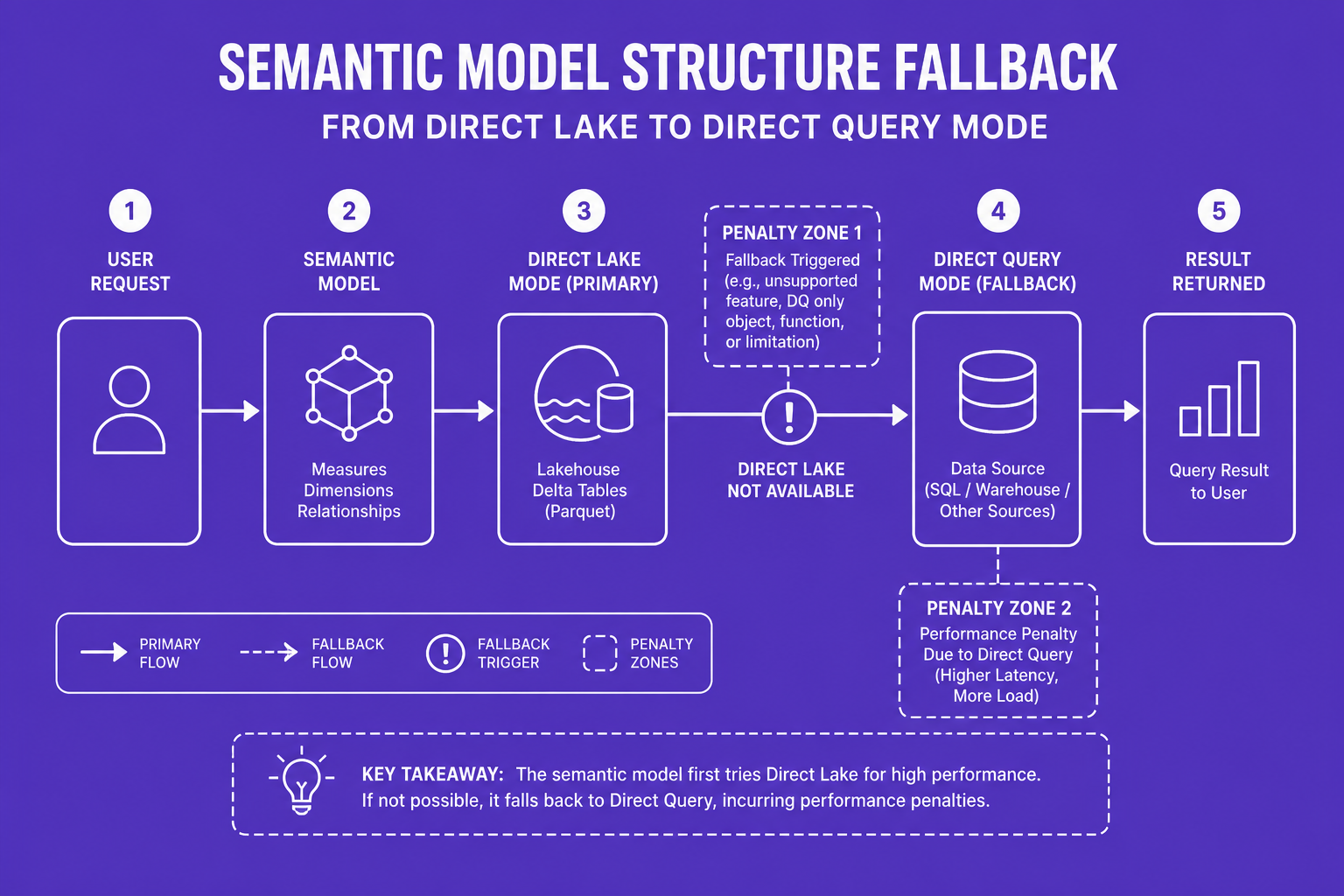
When fallback is triggered, the cost consequences are severe. Capacity units may be consumed at penalty rates, sometimes three times the standard rate. These extra cycles often pass unnoticed until a monthly bill arrives or performance issues mount.
Direct lake fallback is more than a feature quirk; it is a structural cost trap. Here are some eye-opening realities embedded deep in daily operations:
Stealth Consumption: Direct lake fallback into direct query operations can eat up 20% to 50% of your total platform capacity without alerting anyone.
No System Alarms: Performance degrades while costs rise, but traditional platform alerts seldom flag fallback behavior.
Severe Penalty Rates: Unchecked fallback triggers capacity overages billed at up to three times the regular pay-as-you-go rate.
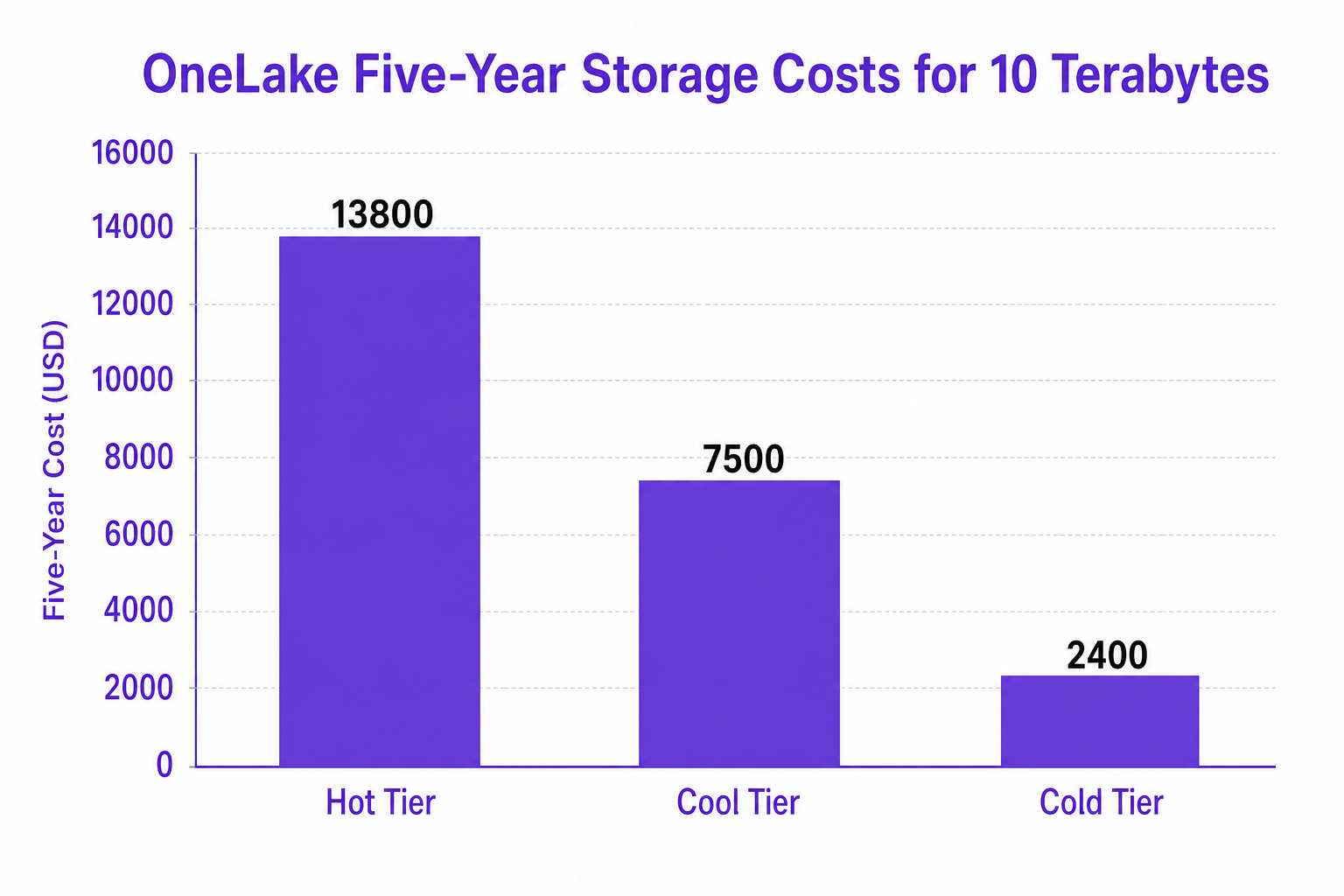
Consider this: A standard 64 capacity unit environment averages $8,395 per month. Scale that with duplicated, fallback-driven compute use, and your effective spend can skyrocket with no visible increase in business value.
Direct lake fallback presents a unique governance challenge:
Invisible in Usage Analytics: Standard dashboards often fail to distinguish fallback-triggered capacity drains from normal use.
Token-based Licensing is Misleading: Financial models tied to overall seat counts, rather than peak concurrent activity, hide spikes in demand and associated fallback behaviors.
Default Autoscale Reliance: Letting autoscale run unsupervised triggers pay-as-you-go premiums, inflating costs 23% to 37% over reserved rates, a silent, recurring drain.
Meanwhile, architecture teams migrating to composite models often mix direct lake for large fact tables with traditional import for dimensions to control cost. Yet, without precise insight into how and when fallbacks occur, their budget assumptions fall apart.
CloudNuro’s FinOps Services have consistently helped some of the world’s largest enterprises combat silent cost drivers. For example:
A multinational bank leveraging automated rightsizing cut unused compute hours by 45% and reduced annual analytics spend by 36%.
A global pharma enterprise achieved a 36% drop in penalty overage and automated chargeback for 27 departments in just one year.
In healthcare, annual SaaS spend was cut by 19%, with orphaned licenses reduced by 32%.
These outcomes underscore the value of continuous discovery, AI-driven optimization, and policy enforcement, not brute-force budget cuts or generic monitoring.
CloudNuro’s platform directly addresses the hidden risks that destroy data analytics ROI:
Continuous Capacity Discovery: Proprietary Microsoft 365 Custodian telemetry tracks active capacity to specific cost centers, making departmental overconsumption visible in real time.
Unified Cloud Custodian: AI-powered policy engines identify inflated semantic models and large, inefficient workspaces, automatically enforcing lifecycle rules to minimize fallback threats.
Cloud Commitments Optimization: Dynamically surfaces opportunities to auto-downshift unused computing tiers, flag idle schedules, and trigger alerts before budget is silently depleted.
Governance-First Architecture: All solutions are built to enable cost-conscious, compliant operations across SaaS and cloud with the visibility IT and finance require.
This governance-first strategy, combined with seamless integration across 400+ apps, ensures every cost driver, especially silent fallback behaviors, is quickly detected, analyzed, and resolved.
Design Models for Size: Structure semantic models to avoid boundary rows per table that trigger fallback mechanisms.
Control File Fragmentation: Regularly review and compact source files to keep below critical fragmentation thresholds.
Monitor with Purpose-Built Tools: Rely on specialized platforms like CloudNuro for granular, real-time insight into actual versus planned capacity use and fallback events.
Automate Optimization: Deploy AI-driven engines that proactively rightsizes and shift computing resources, instead of reactive, manual cleanup.
Embed FinOps at the Core: Make financial discipline a standard function of analytics delivery, not a periodic afterthought.

Direct lake fallback is when a system, unable to fulfill a data request using the streamlined direct lake mode, silently drops into a less efficient and more expensive direct query mode, increasing both cost and compute time.
When used properly, direct lake mode can improve efficiency by streaming data without full refreshes. However, if fallback scenarios are triggered, the associated hidden consumption can rapidly inflate fabric capacity budgets.
Fallback operations are not always flagged by standard monitoring tools or alerting systems. This lack of visibility means teams may not spot the problem until large, unexplained cost overruns occur.
By optimizing model structure, monitoring file fragmentation, applying proactive cost allocation, and using platforms like CloudNuro to automate discovery and remediation, enterprises can prevent most unplanned fallback-related overruns.
AI-powered data platforms promise cost savings, agility, and performance, but only for leaders who understand and control their hidden cost drivers. Direct lake fallback represents an invisible tax on today’s analytics investments. The only defense is proactive, governance-first FinOps, real-time capacity telemetry, and automation that turns unknown unknowns into visible, manageable signals.
CloudNuro delivers these capabilities, ensuring your analytics journey produces value, without silent cost overruns. To learn more, explore CloudNuro FinOps Services or request a demo.
About CloudNuro
CloudNuro is a leader in Enterprise AI Adoption Management, providing enterprises with unmatched visibility, governance, and cost optimization. Recognized twice in a row in the SaaS Management Platforms category and named a Leader in the SoftwareReviews Data Quadrant, CloudNuro is trusted by global enterprises and government agencies to bring financial discipline to SaaS, cloud, and AI. Trusted by enterprises, CloudNuro provides centralized SaaS inventory, license optimization, and renewal management along with advanced cost allocation and chargeback, giving IT and Finance leaders the visibility, control, and cost-conscious culture needed to drive financial discipline.
Request a no cost, no obligation free assessment —just 15 minutes to savings!
Get StartedFabric capacity budgets are under more pressure than ever as organizations accelerate their investments in data analytics platforms and cloud-native tooling. While leaders focus on scaling insights and accelerating reporting cycles, silent cost drivers quietly erode budgets, none more insidious than the phenomenon of direct lake fallback in environments like Power BI and Microsoft Fabric. This silent, costly behavior often escapes detection, rapidly swelling costs and undermining governance.
This article examines how direct lake fallback operates, why it so often blindsides IT and finance teams, and what proactive steps you can take to prevent these silent overages from destroying your analytics ROI. Discover how CloudNuro empowers enterprises to expose and eliminate hidden lake fallback costs through AI-driven telemetry, automated policy enforcement, and best practices tailored for the hybrid realities of modern analytics architectures.
At its core, direct lake mode enables seamless, real-time querying of data stored in OneLake or similar environments, bypassing the need for full data refreshes or staging. This approach is pivotal for organizations needing fresh insights, as it avoids unnecessary data movement and lowers some storage-based costs. But there is a catch: when the system cannot fulfill a query due to architectural constraints, capacity limits, or underlying file complexity, it silently "falls back" to a more costly direct query mode.
What exactly triggers this fallback?
Table size limits: Entry-level F2 through F8 capacities top out at 300 million rows per table before fallback kicks in. Higher tiers (e.g., 64-unit) only defer the behavior to roughly 1.5 billion rows per table.
File fragmentation: If your underlying data design creates 10,000+ files, you dramatically increase the risk of fallback states.
Poor semantic model design: Inflated, poorly optimized models force the system into fallback far more often.
When fallback is triggered, the cost consequences are severe. Capacity units may be consumed at penalty rates, sometimes three times the standard rate. These extra cycles often pass unnoticed until a monthly bill arrives or performance issues mount.
Direct lake fallback is more than a feature quirk; it is a structural cost trap. Here are some eye-opening realities embedded deep in daily operations:
Stealth Consumption: Direct lake fallback into direct query operations can eat up 20% to 50% of your total platform capacity without alerting anyone.
No System Alarms: Performance degrades while costs rise, but traditional platform alerts seldom flag fallback behavior.
Severe Penalty Rates: Unchecked fallback triggers capacity overages billed at up to three times the regular pay-as-you-go rate.
Consider this: A standard 64 capacity unit environment averages $8,395 per month. Scale that with duplicated, fallback-driven compute use, and your effective spend can skyrocket with no visible increase in business value.
Direct lake fallback presents a unique governance challenge:
Invisible in Usage Analytics: Standard dashboards often fail to distinguish fallback-triggered capacity drains from normal use.
Token-based Licensing is Misleading: Financial models tied to overall seat counts, rather than peak concurrent activity, hide spikes in demand and associated fallback behaviors.
Default Autoscale Reliance: Letting autoscale run unsupervised triggers pay-as-you-go premiums, inflating costs 23% to 37% over reserved rates, a silent, recurring drain.
Meanwhile, architecture teams migrating to composite models often mix direct lake for large fact tables with traditional import for dimensions to control cost. Yet, without precise insight into how and when fallbacks occur, their budget assumptions fall apart.
CloudNuro’s FinOps Services have consistently helped some of the world’s largest enterprises combat silent cost drivers. For example:
A multinational bank leveraging automated rightsizing cut unused compute hours by 45% and reduced annual analytics spend by 36%.
A global pharma enterprise achieved a 36% drop in penalty overage and automated chargeback for 27 departments in just one year.
In healthcare, annual SaaS spend was cut by 19%, with orphaned licenses reduced by 32%.
These outcomes underscore the value of continuous discovery, AI-driven optimization, and policy enforcement, not brute-force budget cuts or generic monitoring.
CloudNuro’s platform directly addresses the hidden risks that destroy data analytics ROI:
Continuous Capacity Discovery: Proprietary Microsoft 365 Custodian telemetry tracks active capacity to specific cost centers, making departmental overconsumption visible in real time.
Unified Cloud Custodian: AI-powered policy engines identify inflated semantic models and large, inefficient workspaces, automatically enforcing lifecycle rules to minimize fallback threats.
Cloud Commitments Optimization: Dynamically surfaces opportunities to auto-downshift unused computing tiers, flag idle schedules, and trigger alerts before budget is silently depleted.
Governance-First Architecture: All solutions are built to enable cost-conscious, compliant operations across SaaS and cloud with the visibility IT and finance require.
This governance-first strategy, combined with seamless integration across 400+ apps, ensures every cost driver, especially silent fallback behaviors, is quickly detected, analyzed, and resolved.
Design Models for Size: Structure semantic models to avoid boundary rows per table that trigger fallback mechanisms.
Control File Fragmentation: Regularly review and compact source files to keep below critical fragmentation thresholds.
Monitor with Purpose-Built Tools: Rely on specialized platforms like CloudNuro for granular, real-time insight into actual versus planned capacity use and fallback events.
Automate Optimization: Deploy AI-driven engines that proactively rightsizes and shift computing resources, instead of reactive, manual cleanup.
Embed FinOps at the Core: Make financial discipline a standard function of analytics delivery, not a periodic afterthought.
Direct lake fallback is when a system, unable to fulfill a data request using the streamlined direct lake mode, silently drops into a less efficient and more expensive direct query mode, increasing both cost and compute time.
When used properly, direct lake mode can improve efficiency by streaming data without full refreshes. However, if fallback scenarios are triggered, the associated hidden consumption can rapidly inflate fabric capacity budgets.
Fallback operations are not always flagged by standard monitoring tools or alerting systems. This lack of visibility means teams may not spot the problem until large, unexplained cost overruns occur.
By optimizing model structure, monitoring file fragmentation, applying proactive cost allocation, and using platforms like CloudNuro to automate discovery and remediation, enterprises can prevent most unplanned fallback-related overruns.
AI-powered data platforms promise cost savings, agility, and performance, but only for leaders who understand and control their hidden cost drivers. Direct lake fallback represents an invisible tax on today’s analytics investments. The only defense is proactive, governance-first FinOps, real-time capacity telemetry, and automation that turns unknown unknowns into visible, manageable signals.
CloudNuro delivers these capabilities, ensuring your analytics journey produces value, without silent cost overruns. To learn more, explore CloudNuro FinOps Services or request a demo.
About CloudNuro
CloudNuro is a leader in Enterprise AI Adoption Management, providing enterprises with unmatched visibility, governance, and cost optimization. Recognized twice in a row in the SaaS Management Platforms category and named a Leader in the SoftwareReviews Data Quadrant, CloudNuro is trusted by global enterprises and government agencies to bring financial discipline to SaaS, cloud, and AI. Trusted by enterprises, CloudNuro provides centralized SaaS inventory, license optimization, and renewal management along with advanced cost allocation and chargeback, giving IT and Finance leaders the visibility, control, and cost-conscious culture needed to drive financial discipline.
Request a no cost, no obligation free assessment - just 15 minutes to savings!
Get StartedWe're offering complimentary ServiceNow license assessments to only 25 enterprises this quarter who want to unlock immediate savings without disrupting operations.
Get Free AssessmentGet Started




CloudNuro Corp
1755 Park St. Suite 207
Naperville, IL 60563
Phone : +1-630-277-9470
Email: info@cloudnuro.com





.webp)

Recognized Leader in SaaS Management Platforms by Info-Tech SoftwareReviews


.svg)