

Sign Up
Thank you for Submitting!
Enterprise AI governance is rapidly evolving, shaped by explosive growth in generative models, increasing regulatory complexity, and the demand for operational control over how AI is built and used. As we look ahead to 2026, the stakes for CIOs, CTOs, IT leaders, and technology governance professionals in healthcare, finance, government, and other highly regulated sectors have never been higher. Success in the next wave of enterprise AI requires future-proof governance strategies, deep visibility, and a proactive stance on compliance, risk, and cost optimization.
This guide reveals the critical enterprise AI governance trends for the next 24 months, unpacks what winning organizations are already doing, and provides a step-by-step strategy to help your organization move beyond mere policy and into automated oversight, driving both business value and sustainability.
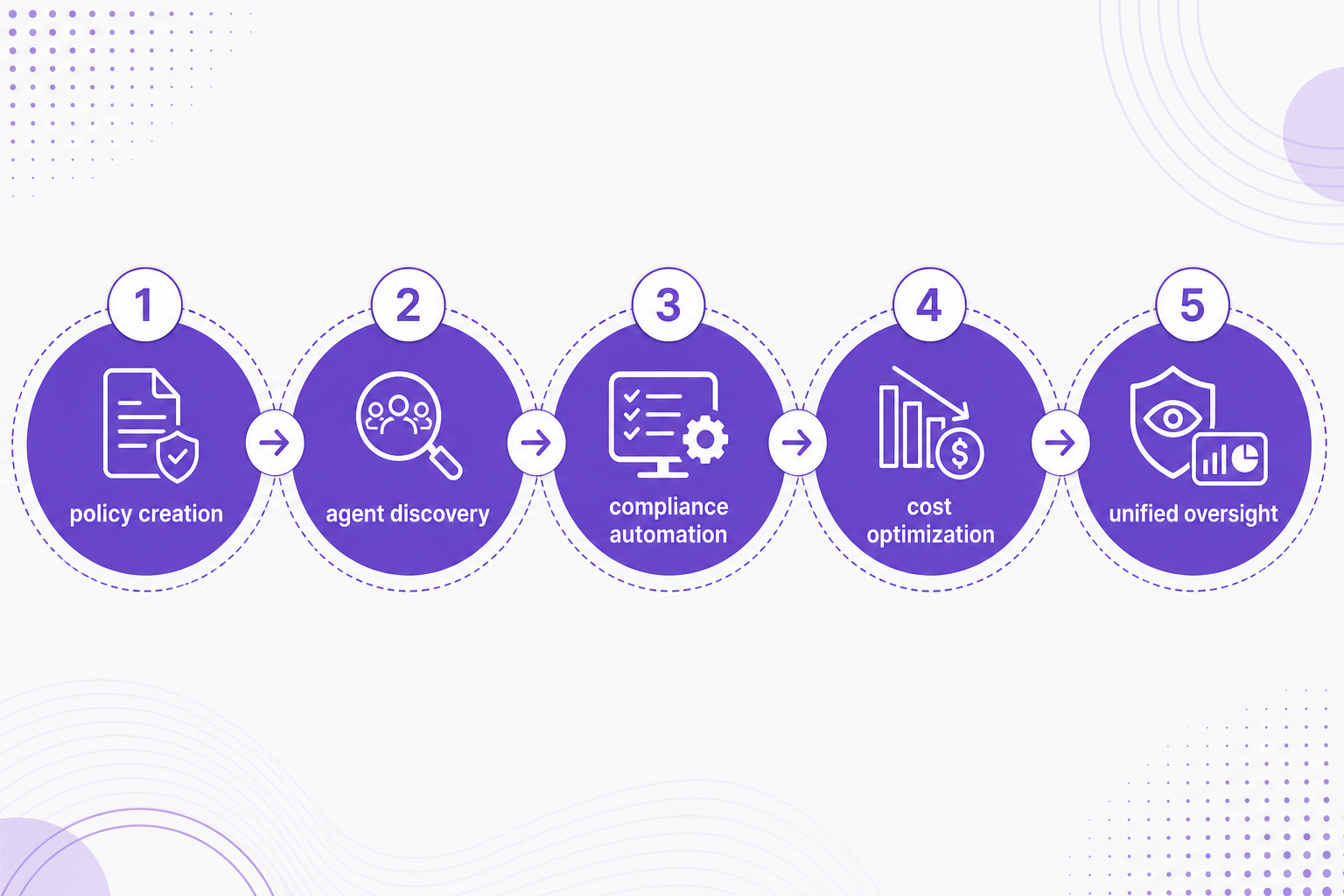
Enterprise AI governance is shifting away from static policy documents towards dynamic, operationalized control systems. Organizations are increasingly recognizing that:
Proof in practice: A regional healthcare organization uncovered 39 previously undetected AI agents hidden within sanctioned tools, leading to a 100% reduction in unauthorized data access events.
Regulators and boards are now demanding enhanced transparency, such as an AI Bill of Materials during quarterly reporting. As AI complexity grows, these stakeholders expect organizations to prove they know exactly what AI is running, who controls it, how it’s behaving, and where sensitive data is going. Failure to deliver may result in penalties or oversight imposed from outside.
As enterprise adoption of AI accelerates, so does the fragmentation of governance. Many organizations still rely on legacy security tools and access controls that fail to capture:
Boards, auditors, and CIOs are converging on the need for unified platforms that span multicloud, on-prem, and SaaS workloads. These platforms must:
Enterprise example: A multinational insurance provider reduced shadow AI incidents by 68% using agent-specific controls, achieving total transparency compliance and avoiding a projected $10 million penalty.
CloudNuro’s Unified Cloud Custodian delivers continuous discovery and real-time oversight, automatically identifying hidden AI agents and enforcing governance across the full AI estate. The AI Custodian module creates a governance-first architecture for truly scalable, secure, and cost-effective AI deployment.
Traditional SSO and identity controls only address the surface. As the number of autonomous AI agents grows, organizations need to:
Result: A manufacturing company leveraged behavioral oversight to systematically eliminate rogue AI accounts, removing both spend leakage and security risk within one year.
The next 24 months will see a majority of Fortune 100 companies appointing strong, accountable AI governance leadership. A foundational responsibility will be to:
Impact: A healthcare firm achieved compliance in under 90 days using automated collection for over 150 controls, reducing SaaS overspend by 35% and slashing compliance workflow time by up to 65% compared with manual processes.
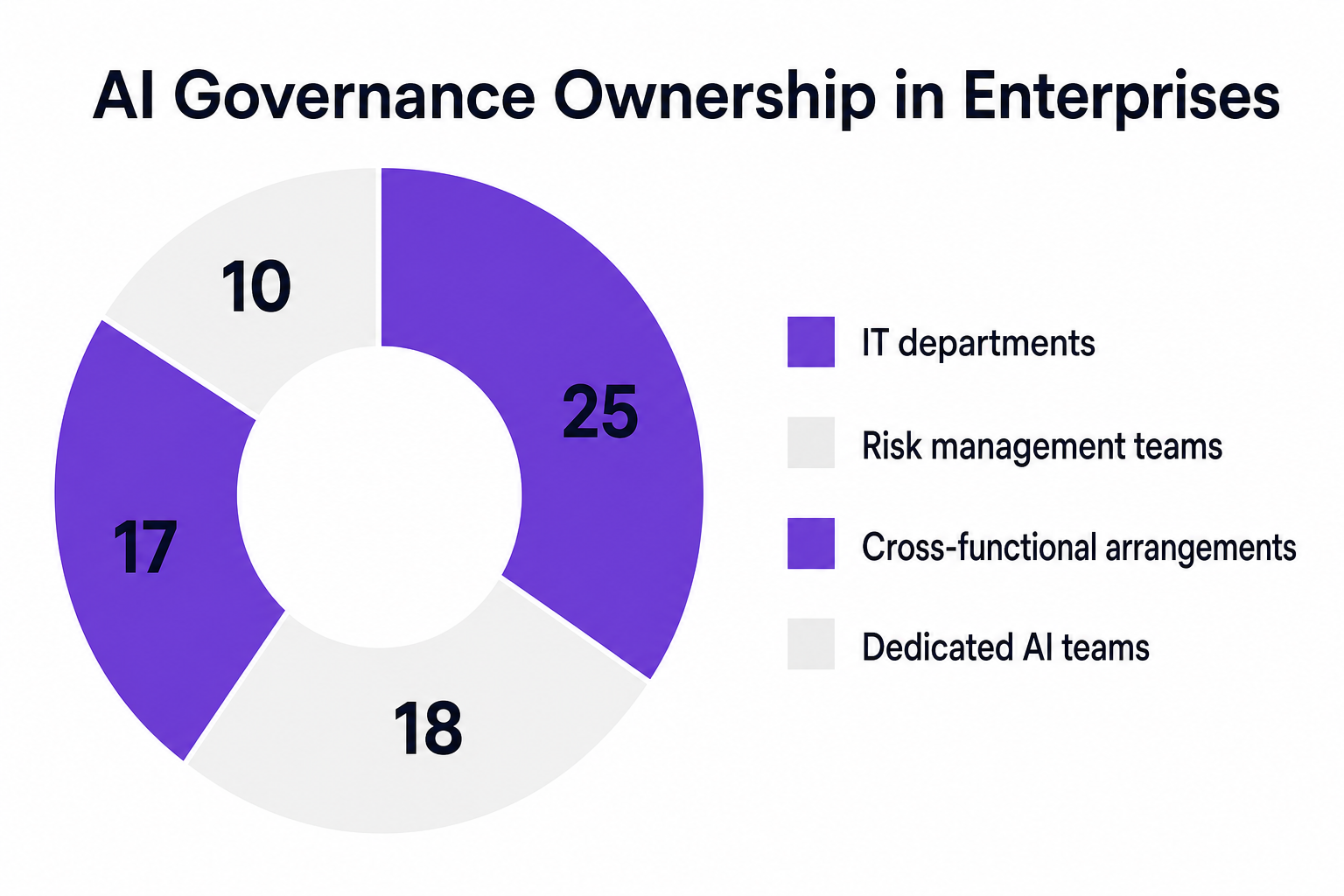
As AI adoption increases, cross-functional ownership is essential but remains fragmented:
Based on leading practices and upcoming trends, a robust roadmap should include:
CloudNuro enables every stage of this governance journey, ensuring seamless integration, security, and regulatory confidence as you build out your enterprise AI future.
What are the latest predictions for enterprise AI governance in 2026?
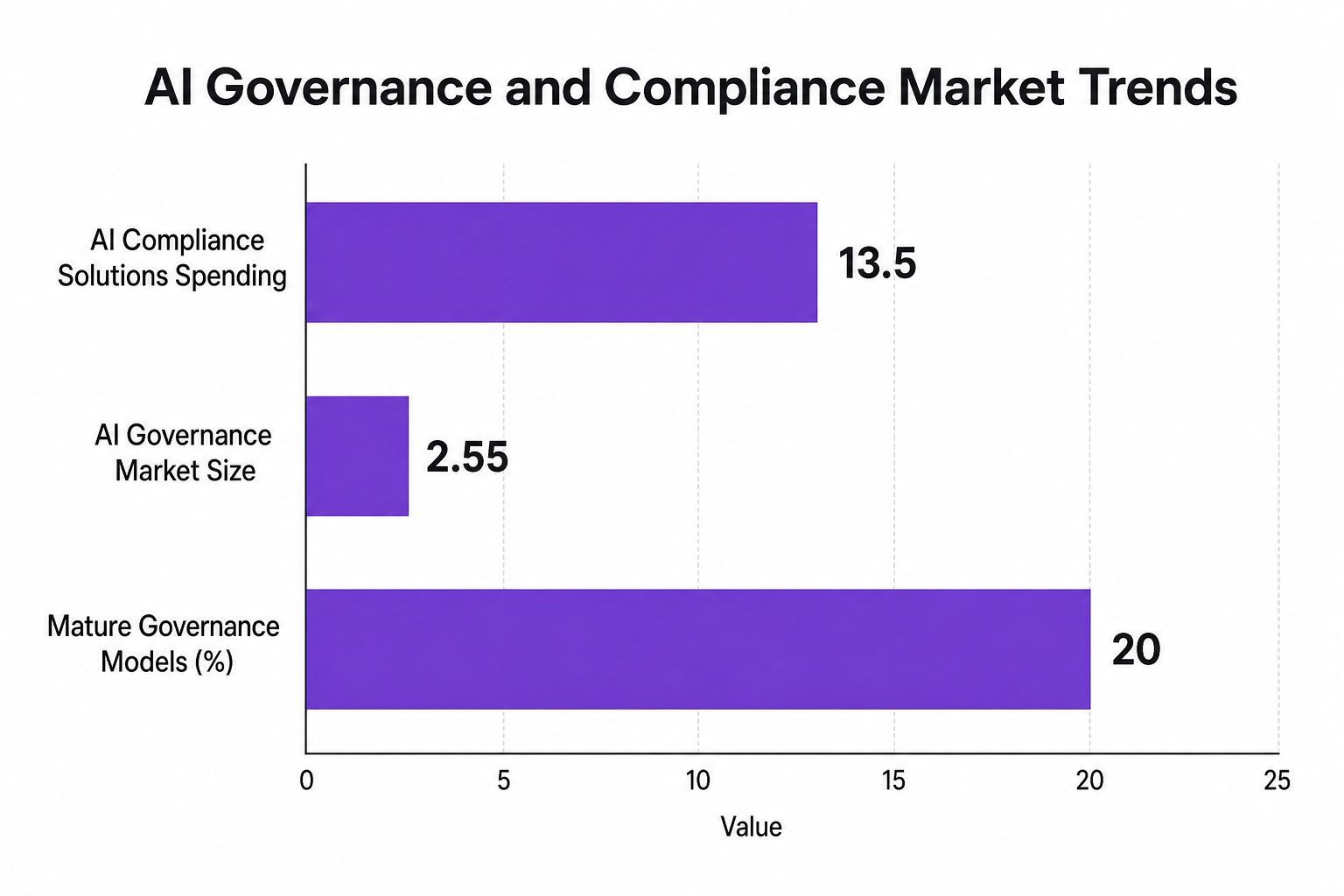
AI governance will become operationalized, with most Fortune 100 companies appointing heads of AI governance and automating continuous compliance. The market for AI compliance will surpass $13.5 billion, and unified platforms will dominate.
How can organizations build a future-proof AI governance roadmap?
Adopt continuous discovery tools, unify oversight and compliance automation, enforce financial accountability, and appoint clear AI governance leadership roles, leveraging platforms like CloudNuro to ensure integration across all systems.
What trends will shape AI governance over the next 24 months?
Rising regulatory demands, the proliferation of autonomous agents, the shift from policy to operational oversight, and the convergence of AI, privacy, and cloud security will accelerate the adoption of automation-driven governance.
What are the best practices for enterprise AI governance in 2026?
Implement automated evidence collection, maintain an up-to-date AI Bill of Materials, enforce per-agent guardrails, and use detailed telemetry and spend allocation for true accountability.
How do leading companies position themselves to win with AI governance?
They embrace unified platforms, automate both control and compliance, promote financial discipline, and codify ownership and accountability for the entire AI lifecycle.
Over the next 24 months, the winners in enterprise AI governance will be those who move fastest from policy statements to operational, automated controls. Establishing a future-proof governance roadmap requires unifying oversight, automating compliance and cost optimization, and elevating accountable leadership. With CloudNuro, enterprises gain the competitive edge, centralized visibility, continuous discovery, granular guardrails, and dynamic financial discipline, to thrive in 2026 and beyond.
About CloudNuro
CloudNuro is a leader in Enterprise AI Adoption Management, providing enterprises with unmatched visibility, governance, and cost optimization. Recognized twice in a row in the SaaS Management Platforms category and named a Leader in the SoftwareReviews Data Quadrant, CloudNuro is trusted by global enterprises and government agencies to bring financial discipline to SaaS, cloud, and AI. Trusted by enterprises, CloudNuro provides centralized SaaS inventory, license optimization, and renewal management along with advanced cost allocation and chargeback, giving IT and Finance leaders the visibility, control, and cost-conscious culture needed to drive financial discipline.
Request a no cost, no obligation free assessment —just 15 minutes to savings!
Get StartedEnterprise AI governance is rapidly evolving, shaped by explosive growth in generative models, increasing regulatory complexity, and the demand for operational control over how AI is built and used. As we look ahead to 2026, the stakes for CIOs, CTOs, IT leaders, and technology governance professionals in healthcare, finance, government, and other highly regulated sectors have never been higher. Success in the next wave of enterprise AI requires future-proof governance strategies, deep visibility, and a proactive stance on compliance, risk, and cost optimization.
This guide reveals the critical enterprise AI governance trends for the next 24 months, unpacks what winning organizations are already doing, and provides a step-by-step strategy to help your organization move beyond mere policy and into automated oversight, driving both business value and sustainability.
Enterprise AI governance is shifting away from static policy documents towards dynamic, operationalized control systems. Organizations are increasingly recognizing that:
Proof in practice: A regional healthcare organization uncovered 39 previously undetected AI agents hidden within sanctioned tools, leading to a 100% reduction in unauthorized data access events.
Regulators and boards are now demanding enhanced transparency, such as an AI Bill of Materials during quarterly reporting. As AI complexity grows, these stakeholders expect organizations to prove they know exactly what AI is running, who controls it, how it’s behaving, and where sensitive data is going. Failure to deliver may result in penalties or oversight imposed from outside.
As enterprise adoption of AI accelerates, so does the fragmentation of governance. Many organizations still rely on legacy security tools and access controls that fail to capture:
Boards, auditors, and CIOs are converging on the need for unified platforms that span multicloud, on-prem, and SaaS workloads. These platforms must:
Enterprise example: A multinational insurance provider reduced shadow AI incidents by 68% using agent-specific controls, achieving total transparency compliance and avoiding a projected $10 million penalty.
CloudNuro’s Unified Cloud Custodian delivers continuous discovery and real-time oversight, automatically identifying hidden AI agents and enforcing governance across the full AI estate. The AI Custodian module creates a governance-first architecture for truly scalable, secure, and cost-effective AI deployment.
Traditional SSO and identity controls only address the surface. As the number of autonomous AI agents grows, organizations need to:
Result: A manufacturing company leveraged behavioral oversight to systematically eliminate rogue AI accounts, removing both spend leakage and security risk within one year.
The next 24 months will see a majority of Fortune 100 companies appointing strong, accountable AI governance leadership. A foundational responsibility will be to:
Impact: A healthcare firm achieved compliance in under 90 days using automated collection for over 150 controls, reducing SaaS overspend by 35% and slashing compliance workflow time by up to 65% compared with manual processes.
As AI adoption increases, cross-functional ownership is essential but remains fragmented:
Based on leading practices and upcoming trends, a robust roadmap should include:
CloudNuro enables every stage of this governance journey, ensuring seamless integration, security, and regulatory confidence as you build out your enterprise AI future.
What are the latest predictions for enterprise AI governance in 2026?
AI governance will become operationalized, with most Fortune 100 companies appointing heads of AI governance and automating continuous compliance. The market for AI compliance will surpass $13.5 billion, and unified platforms will dominate.
How can organizations build a future-proof AI governance roadmap?
Adopt continuous discovery tools, unify oversight and compliance automation, enforce financial accountability, and appoint clear AI governance leadership roles, leveraging platforms like CloudNuro to ensure integration across all systems.
What trends will shape AI governance over the next 24 months?
Rising regulatory demands, the proliferation of autonomous agents, the shift from policy to operational oversight, and the convergence of AI, privacy, and cloud security will accelerate the adoption of automation-driven governance.
What are the best practices for enterprise AI governance in 2026?
Implement automated evidence collection, maintain an up-to-date AI Bill of Materials, enforce per-agent guardrails, and use detailed telemetry and spend allocation for true accountability.
How do leading companies position themselves to win with AI governance?
They embrace unified platforms, automate both control and compliance, promote financial discipline, and codify ownership and accountability for the entire AI lifecycle.
Over the next 24 months, the winners in enterprise AI governance will be those who move fastest from policy statements to operational, automated controls. Establishing a future-proof governance roadmap requires unifying oversight, automating compliance and cost optimization, and elevating accountable leadership. With CloudNuro, enterprises gain the competitive edge, centralized visibility, continuous discovery, granular guardrails, and dynamic financial discipline, to thrive in 2026 and beyond.
About CloudNuro
CloudNuro is a leader in Enterprise AI Adoption Management, providing enterprises with unmatched visibility, governance, and cost optimization. Recognized twice in a row in the SaaS Management Platforms category and named a Leader in the SoftwareReviews Data Quadrant, CloudNuro is trusted by global enterprises and government agencies to bring financial discipline to SaaS, cloud, and AI. Trusted by enterprises, CloudNuro provides centralized SaaS inventory, license optimization, and renewal management along with advanced cost allocation and chargeback, giving IT and Finance leaders the visibility, control, and cost-conscious culture needed to drive financial discipline.
Request a no cost, no obligation free assessment - just 15 minutes to savings!
Get StartedWe're offering complimentary ServiceNow license assessments to only 25 enterprises this quarter who want to unlock immediate savings without disrupting operations.
Get Free AssessmentGet Started




CloudNuro Corp
1755 Park St. Suite 207
Naperville, IL 60563
Phone : +1-630-277-9470
Email: info@cloudnuro.com



.webp)

Recognized Leader in SaaS Management Platforms by Info-Tech SoftwareReviews


.svg)