

Sign Up
Thank you for Submitting!
Cloud maturity has redefined the responsibilities of enterprise IT and governance leaders. For multi-business-unit (multi-BU) organizations, ensuring consistent visibility, compliance, and cost control across sprawling SaaS and Fabric environments has never been more pressing. As SaaS adoption soars, with Microsoft Fabric now central to business analytics, the challenge is magnified: centralized IT must enforce global guardrails, yet each business unit needs enough autonomy to innovate and operate at pace.
This complexity is exactly why a clear, intentional fabric governance blueprint is critical. In this deep dive, we present a four-layer framework tailored to the needs of modern enterprises driven by Microsoft Fabric, paired with actionable blueprints for governance, security, and cost discipline at scale.
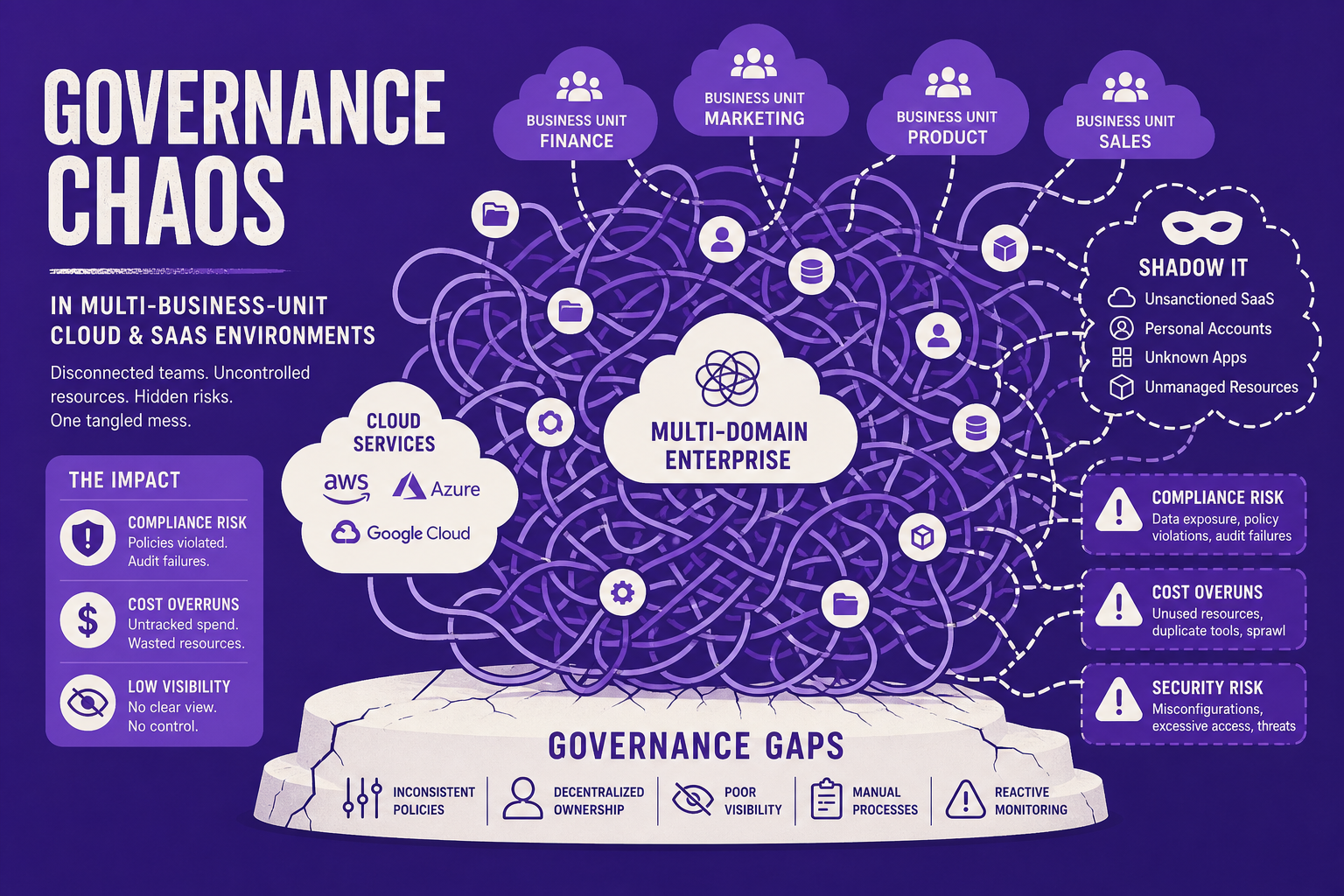
Data and analytics platforms like Microsoft Fabric enable organizations to rapidly scale insights across dozens, or even hundreds, of departments. However, without robust governance, enterprises face:
Runaway costs from over-provisioned or misallocated capacity
Security risks from inconsistent access controls and shadow IT
Compliance gaps, particularly with government and regulated industries
Orphaned workspaces and legacy data, leading to inefficiencies
The market is shifting from tooling conversations to operating model conversations. Enterprises are adopting multi-layered governance architectures that standardize controls at the center, while enabling domain-specific policies and budget allocations. This blueprint makes accountability and agility possible, without sacrificing oversight.
To meet the complex needs of multi-BU organizations, an enterprise must implement a governance architecture built for scale. The four layers are:
Domain Architecture and Ownership
Controls and Policy Enforcement
Cost Allocation and Accountability
Continuous Optimization and Risk Monitoring
We will explore each layer in detail, mapping real-world practices and technology accelerators.
At the foundation, define clear governance boundaries. In Microsoft Fabric, the 'domain' is the logical construct used to represent a business unit, department, or subsidiary. This enables:
Segmented budgets and capacity
Role-based access controls and permissions
Tailored policies for data residency, retention, and compliance
Expert recommendation: Establish strong data ownership by domain. Assign domain admins empowered to manage capacity and lifecycles, with ongoing oversight from central IT.
CloudNuro in action: The Microsoft 365 Custodian gives IT a single-pane view across all domains and tenants, pinpointing granular license and workload consumption per department. This empowers decentralized management with unified guardrails.
Governance is only as strong as policy adherence. Effective Fabric governance requires:
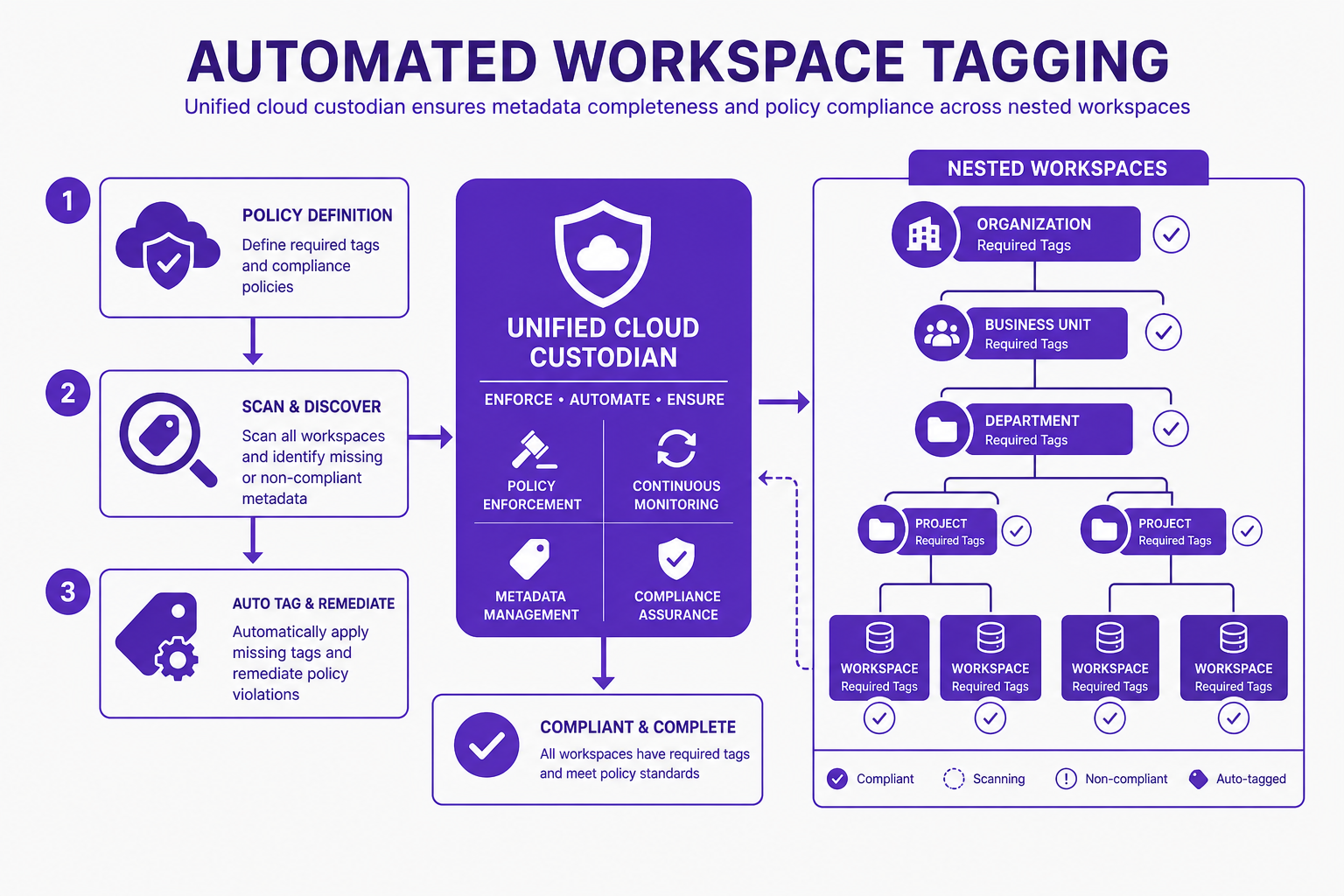
Enforcement of workspace creation standards and metadata tagging
Automated policy inheritance from domain to workspace
Consistent access and permission reviews, reducing over-permissioning
Key statistic: 85% of enterprises cite lack of unified workspace metadata governance as a major obstacle to scaling Microsoft Fabric.
CloudNuro capability: The Unified Cloud Custodian automates metadata compliance at workspace creation, scanning continuously for missing/inconsistent tags and enforcing required controls. 77% of organizations deploying Fabric automate policy enforcement for tags and cost attribution.
Unmanaged cloud and SaaS spend erodes ROI. Chargeback models, allocating costs to business units based on actual usage, are proven to drive discipline:
Automated chargeback ensures accurate allocation without manual reconciliation
Workspace-level matching aligns consumption with organizational classification
User segmentation (Power/General/Low/Dormant) enables rightsizing of premium licenses
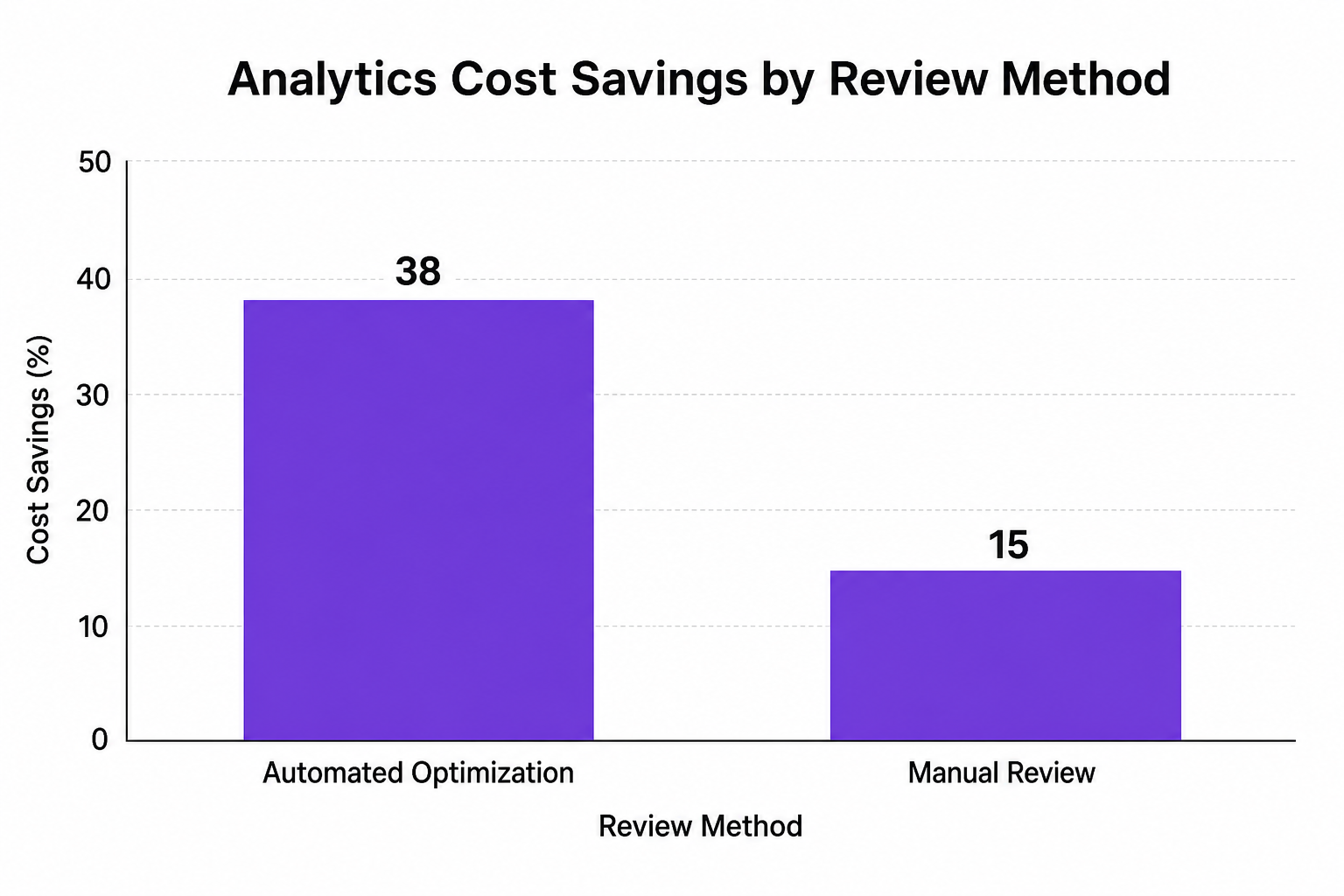
Proof: A healthcare organization automated workspace tagging with CloudNuro's Custodian and realized a 22% reduction in Microsoft Fabric spend. Enterprises using automated SaaS chargeback report 34% greater accuracy in cost attribution.
Product feature: CloudNuro Chargeback automates capacity-based cost attribution, mapping usage data directly to business unit cost centers.
Governance is an ongoing process. Regular optimization and proactive anomaly detection are necessary to:
Rightsize capacity and licenses based on utilization
Surface budget spikes before they escalate
Reduce orphaned or underutilized resources via automated tagging
Key statistics:
76% of IT teams with real-time budget/capacity alerts keep spend within 5% of plan
69% using automated tagging for governance achieve a 20% reduction in orphaned resources
CloudNuro's edge: Predictive Budget Alerting notifies teams at 50%, 75%, 90%, 100% of budget. Rightsizing recommendations draw directly from telemetry and activity data, driving ongoing savings and compliance.
A state agency governed 90,000 licenses across 19 instances with CloudNuro, automating chargeback and eliminating manual reconciliation.
A pharma enterprise automated chargeback via CloudNuro and cut overage costs by 36% across 27 departments.
Financial firms using CloudNuro’s AI Custodian onboard new teams 30% faster and saw an 18% improvement in accountability.
These outcomes are possible when layered governance is operationalized, not just conceptual.
Involve central IT early to define baseline controls, then empower domain leads
Deploy automated tools for workspace tagging, access reviews, and budget alerts
Integrate cost attribution with up-to-date organizational hierarchy and metadata
Build continuous optimization cycles, review, remediate, repeat
CloudNuro’s AI-driven governance-first approach makes these best practices real, seamless, and audit-ready.
A fabric governance framework provides the structure, policies, and processes to manage analytics, security, and cost control at scale in platforms like Microsoft Fabric. It defines how business units independently operate while ensuring central oversight and compliance.
Microsoft Fabric adopts a domain-driven model where each business unit operates within clearly defined boundaries. Policies, budgets, and controls set centrally then cascade, enabling agility but maintaining consistency for compliance and security.
There are four key layers: domain architecture and ownership, controls and policy enforcement, cost allocation and accountability, and continuous optimization/risk monitoring. Together, they enable businesses to scale with discipline.
With decentralized app usage, shadow IT risk, and rising costs, governance ensures organizations stay secure, compliant, and financially disciplined while enabling innovation.
By establishing domains, automating controls, operationalizing chargeback, and continuously reviewing usage patterns and tag compliance, ideally with platforms like CloudNuro that integrate these workflows seamlessly.
As SaaS and analytics ecosystems grow in complexity, a layered, automated governance blueprint is the only way to deliver both scale and discipline. CloudNuro’s unified platform, natively integrated with Microsoft Fabric, gives IT and Finance leaders the end-to-end visibility, policy enforcement, and cost controls required to lead with confidence.
Ready to streamline governance and financial discipline for every business unit?
About CloudNuro
CloudNuro is a leader in Enterprise AI Adoption Management, providing enterprises with unmatched visibility, governance, and cost optimization. Recognized twice in a row in the SaaS Management Platforms category and named a Leader in the SoftwareReviews Data Quadrant, CloudNuro is trusted by global enterprises and government agencies to bring financial discipline to SaaS, cloud, and AI. Trusted by enterprises, CloudNuro provides centralized SaaS inventory, license optimization, and renewal management along with advanced cost allocation and chargeback, giving IT and Finance leaders the visibility, control, and cost-conscious culture needed to drive financial discipline.
Request a no cost, no obligation free assessment —just 15 minutes to savings!
Get StartedCloud maturity has redefined the responsibilities of enterprise IT and governance leaders. For multi-business-unit (multi-BU) organizations, ensuring consistent visibility, compliance, and cost control across sprawling SaaS and Fabric environments has never been more pressing. As SaaS adoption soars, with Microsoft Fabric now central to business analytics, the challenge is magnified: centralized IT must enforce global guardrails, yet each business unit needs enough autonomy to innovate and operate at pace.
This complexity is exactly why a clear, intentional fabric governance blueprint is critical. In this deep dive, we present a four-layer framework tailored to the needs of modern enterprises driven by Microsoft Fabric, paired with actionable blueprints for governance, security, and cost discipline at scale.
Data and analytics platforms like Microsoft Fabric enable organizations to rapidly scale insights across dozens, or even hundreds, of departments. However, without robust governance, enterprises face:
Runaway costs from over-provisioned or misallocated capacity
Security risks from inconsistent access controls and shadow IT
Compliance gaps, particularly with government and regulated industries
Orphaned workspaces and legacy data, leading to inefficiencies
The market is shifting from tooling conversations to operating model conversations. Enterprises are adopting multi-layered governance architectures that standardize controls at the center, while enabling domain-specific policies and budget allocations. This blueprint makes accountability and agility possible, without sacrificing oversight.
To meet the complex needs of multi-BU organizations, an enterprise must implement a governance architecture built for scale. The four layers are:
Domain Architecture and Ownership
Controls and Policy Enforcement
Cost Allocation and Accountability
Continuous Optimization and Risk Monitoring
We will explore each layer in detail, mapping real-world practices and technology accelerators.
At the foundation, define clear governance boundaries. In Microsoft Fabric, the 'domain' is the logical construct used to represent a business unit, department, or subsidiary. This enables:
Segmented budgets and capacity
Role-based access controls and permissions
Tailored policies for data residency, retention, and compliance
Expert recommendation: Establish strong data ownership by domain. Assign domain admins empowered to manage capacity and lifecycles, with ongoing oversight from central IT.
CloudNuro in action: The Microsoft 365 Custodian gives IT a single-pane view across all domains and tenants, pinpointing granular license and workload consumption per department. This empowers decentralized management with unified guardrails.
Governance is only as strong as policy adherence. Effective Fabric governance requires:
Enforcement of workspace creation standards and metadata tagging
Automated policy inheritance from domain to workspace
Consistent access and permission reviews, reducing over-permissioning
Key statistic: 85% of enterprises cite lack of unified workspace metadata governance as a major obstacle to scaling Microsoft Fabric.
CloudNuro capability: The Unified Cloud Custodian automates metadata compliance at workspace creation, scanning continuously for missing/inconsistent tags and enforcing required controls. 77% of organizations deploying Fabric automate policy enforcement for tags and cost attribution.
Unmanaged cloud and SaaS spend erodes ROI. Chargeback models, allocating costs to business units based on actual usage, are proven to drive discipline:
Automated chargeback ensures accurate allocation without manual reconciliation
Workspace-level matching aligns consumption with organizational classification
User segmentation (Power/General/Low/Dormant) enables rightsizing of premium licenses
Proof: A healthcare organization automated workspace tagging with CloudNuro's Custodian and realized a 22% reduction in Microsoft Fabric spend. Enterprises using automated SaaS chargeback report 34% greater accuracy in cost attribution.
Product feature: CloudNuro Chargeback automates capacity-based cost attribution, mapping usage data directly to business unit cost centers.
Governance is an ongoing process. Regular optimization and proactive anomaly detection are necessary to:
Rightsize capacity and licenses based on utilization
Surface budget spikes before they escalate
Reduce orphaned or underutilized resources via automated tagging
Key statistics:
76% of IT teams with real-time budget/capacity alerts keep spend within 5% of plan
69% using automated tagging for governance achieve a 20% reduction in orphaned resources
CloudNuro's edge: Predictive Budget Alerting notifies teams at 50%, 75%, 90%, 100% of budget. Rightsizing recommendations draw directly from telemetry and activity data, driving ongoing savings and compliance.
A state agency governed 90,000 licenses across 19 instances with CloudNuro, automating chargeback and eliminating manual reconciliation.
A pharma enterprise automated chargeback via CloudNuro and cut overage costs by 36% across 27 departments.
Financial firms using CloudNuro’s AI Custodian onboard new teams 30% faster and saw an 18% improvement in accountability.
These outcomes are possible when layered governance is operationalized, not just conceptual.
Involve central IT early to define baseline controls, then empower domain leads
Deploy automated tools for workspace tagging, access reviews, and budget alerts
Integrate cost attribution with up-to-date organizational hierarchy and metadata
Build continuous optimization cycles, review, remediate, repeat
CloudNuro’s AI-driven governance-first approach makes these best practices real, seamless, and audit-ready.
A fabric governance framework provides the structure, policies, and processes to manage analytics, security, and cost control at scale in platforms like Microsoft Fabric. It defines how business units independently operate while ensuring central oversight and compliance.
Microsoft Fabric adopts a domain-driven model where each business unit operates within clearly defined boundaries. Policies, budgets, and controls set centrally then cascade, enabling agility but maintaining consistency for compliance and security.
There are four key layers: domain architecture and ownership, controls and policy enforcement, cost allocation and accountability, and continuous optimization/risk monitoring. Together, they enable businesses to scale with discipline.
With decentralized app usage, shadow IT risk, and rising costs, governance ensures organizations stay secure, compliant, and financially disciplined while enabling innovation.
By establishing domains, automating controls, operationalizing chargeback, and continuously reviewing usage patterns and tag compliance, ideally with platforms like CloudNuro that integrate these workflows seamlessly.
As SaaS and analytics ecosystems grow in complexity, a layered, automated governance blueprint is the only way to deliver both scale and discipline. CloudNuro’s unified platform, natively integrated with Microsoft Fabric, gives IT and Finance leaders the end-to-end visibility, policy enforcement, and cost controls required to lead with confidence.
Ready to streamline governance and financial discipline for every business unit?
About CloudNuro
CloudNuro is a leader in Enterprise AI Adoption Management, providing enterprises with unmatched visibility, governance, and cost optimization. Recognized twice in a row in the SaaS Management Platforms category and named a Leader in the SoftwareReviews Data Quadrant, CloudNuro is trusted by global enterprises and government agencies to bring financial discipline to SaaS, cloud, and AI. Trusted by enterprises, CloudNuro provides centralized SaaS inventory, license optimization, and renewal management along with advanced cost allocation and chargeback, giving IT and Finance leaders the visibility, control, and cost-conscious culture needed to drive financial discipline.
Request a no cost, no obligation free assessment - just 15 minutes to savings!
Get StartedWe're offering complimentary ServiceNow license assessments to only 25 enterprises this quarter who want to unlock immediate savings without disrupting operations.
Get Free AssessmentGet Started




CloudNuro Corp
1755 Park St. Suite 207
Naperville, IL 60563
Phone : +1-630-277-9470
Email: info@cloudnuro.com





.webp)

Recognized Leader in SaaS Management Platforms by Info-Tech SoftwareReviews



.svg)