

Sign Up
Thank you for Submitting!
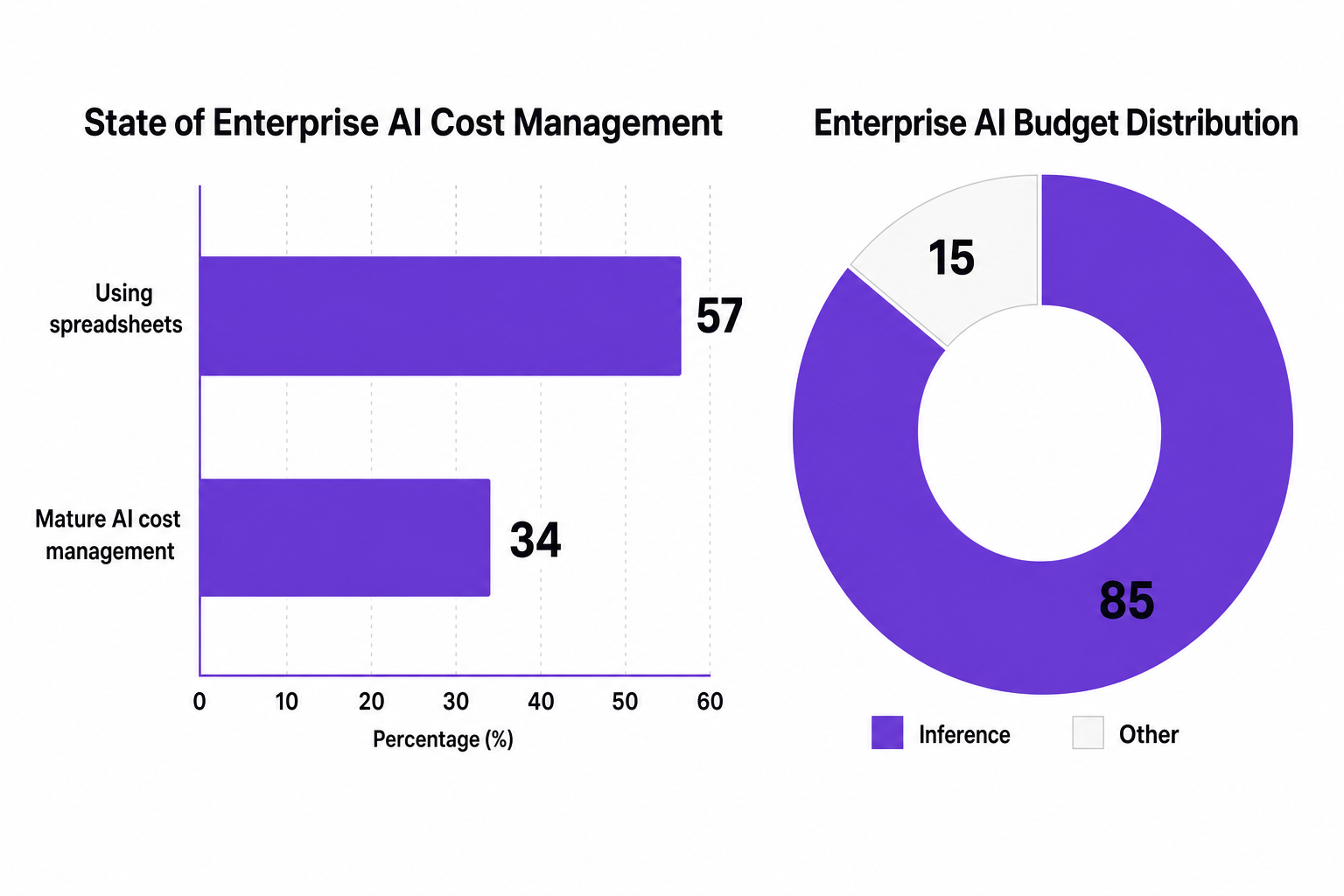
Enterprise adoption of large language models (LLMs) is scaling rapidly, with annual AI spending in Fortune 1000 organizations regularly exceeding $7 million and inference-related expenses consuming approximately 85% of these budgets. This explosive growth underscores a common challenge: even sophisticated finance teams struggle to predict, manage, and govern LLM and AI expenses. Traditional approaches fall short in a world with token-based pricing, surging multimodal workloads, and unpredictable usage peaks.
This guide explores five practical methods for LLM cost forecasting, distilling real-world findings from leading finance and IT leaders and highlighting how CloudNuro empowers organizations to turn complex AI spend into actionable cost forecasts and disciplined financial operations.

Generative AI investments have tripled, with industry LLM API spend more than doubling to $8.4 billion between late 2024 and mid-2025. Yet, 78% of AI teams saw LLM API expenses exceed their initial projections, and only 34% of enterprises report having mature AI cost management practices. Meanwhile, 57% still depend on manual spreadsheets for AI and LLM cost management, creating bottlenecks and risking costly surprises.
As LLMs integrate into workflow automation, customer interactions, and industry-specific process optimization, inaccurate forecasts can stall innovation, erode margins, and undermine compliance. Finance leaders are shifting from broad-strokes budget planning to proactive, scenario-driven FinOps strategies that surface true cost drivers and enable granular governance.
Driver-based modeling links LLM spending forecasts directly to measurable, controllable business activities. such as daily active users, document volume processed, or API calls. rather than opaque or generic AI usage metrics.
This approach enables finance teams to tie LLM cost projections to real-world operational benchmarks, allowing rapid recalibration if, for instance, user growth outpaces expectations or new products trigger usage spikes.
Benefits:
Baseline cost estimates mapped to actual business drivers
Increased agility in updating forecasts as drivers change
More actionable conversations between technical and finance leaders
CloudNuro’s advantage: CloudNuro’s rolling forecasts combine live SaaS and cloud spend trends with operational drivers, making it easy to adjust assumptions and rapidly model "what if" scenarios organization-wide.
Unexpected changes. new features, shifting pricing models, or multimodal usage. can swing LLM spend by 2-3x. Leading teams embrace strategic scenario modeling to proactively build alternative budget plans and stress-test assumptions across:
License types and feature tiers
LLM model family mixes
Pricing shifts (e.g., reserved capacity vs. on-demand)
GL code-based cost allocations
Finance teams using these methods move from annual budget cycles to rolling, data-driven forecasts, quickly evaluating the financial impact of model switches or product launches.
CloudNuro’s advantage: The platform enables granular what-if analyses for license changes, pricing alterations, and team- or project-level usage. all from a unified dashboard.
LLM vendors increasingly rely on per-token pricing, but real enterprise spend hinges on how models are called, batch sizes, context window, and tool integrations. Forecasting major cost variables means moving beyond vendor-provided calculators to:
Track baseline token usage by workflow, team, or project
Model tail-risk events such as bursts in long-context queries
Factor in premium surcharges from multimodal or tool-calling use cases
Evidence in the enterprise: Inference expenses represent the vast majority of AI budgets, but teams unaccustomed to these nuances regularly experience actual LLM costs as 1.8-3.2 times the base rate.
CloudNuro’s advantage: Integrated usage analytics and AI-powered recommendations help track token-level spend patterns and identify outliers before they become budget overruns.
Static annual budgeting is quickly being replaced by rolling forecasts that adapt to real-time spend and usage data. The most mature teams are moving toward:
Automated chargebacks and cost allocation at the team, application, or GL code level
Real-time anomaly detection and policy enforcement via alerts and workflow controls
Dynamic notification of usage drops, triggering contract optimizations before renewals
CloudNuro’s advantage: CloudNuro combines automated chargeback and custom rule engines with live alerts, delivering finance-ready reporting and cost allocation without spreadsheet pain.
LLM cost forecasting requires more than prediction; it mandates disciplined, cross-functional governance modeled after SaaS FinOps. Key best practices:
Single-pane-of-glass for all SaaS, cloud, and AI usage
Real-time consolidation of cost, usage, and licensing across hundreds of platforms
Automated AI-driven waste remediation (e.g., predictive license downgrades, auto-scaledowns)
Scenario-based renewal dashboards for proactive negotiation
Proof in practice:
One major enterprise reduced licensing waste by 55% and reclaimed 1,700 unused licenses, saving 300 operational hours annually.
A medical society leveraged automated reporting to cut resource waste by 27%.
An enterprise transportation agency gained total transparency into their AI spend with CloudNuro platform integration.
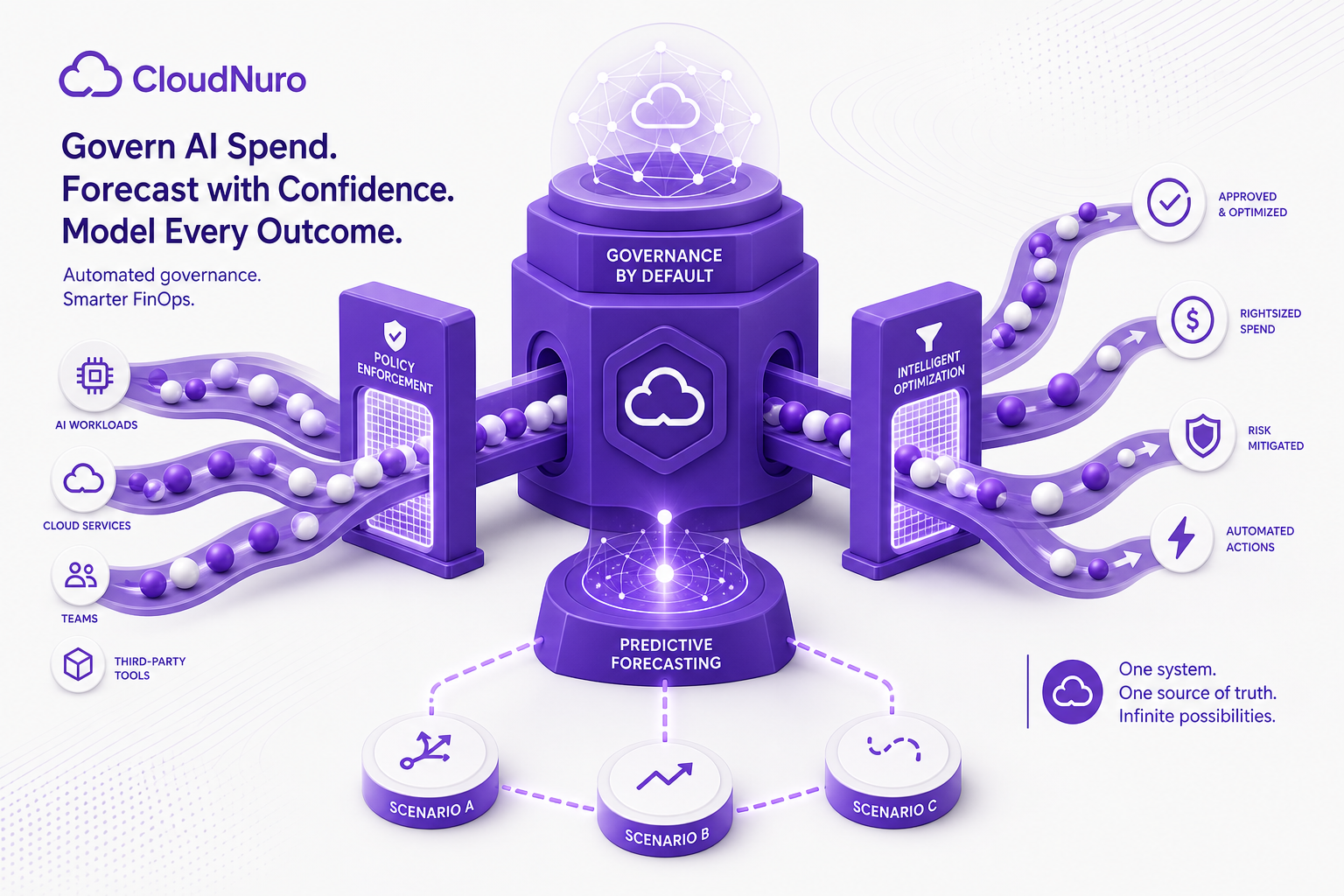
CloudNuro’s FinOps Services platform is built for the complexity of enterprise AI. Key features aligning with cost optimization and compliance:
Rolling forecasts: Blend historical SaaS, cloud, and AI expense trends with predictive modeling for accurate, always-current budget estimates
Unified chargeback and true-up: Allocate every AI, SaaS, and cloud cost in real-time. no more end-of-quarter surprises
Scenario modeling: Run simulations for license, usage, and pricing changes, instantly update rolling budgets, and justify investments with data
400+ integrations: Automated aggregation across the SaaS and cloud landscape streamlines reporting and identifies hidden spend
Governance-first controls: Dynamic alerts, real-time waste detection, and automated recommendations drive a culture of financial discipline
CloudNuro is trusted by enterprises and public sector leaders to transform AI cost chaos into governed, financial discipline. and is recognized as a leader in the SaaS Management Platforms and SoftwareReviews Data Quadrant.
Modern LLM cost forecasting uses driver-based models, scenario planning, token-level analytics, rolling forecasts, and governance-first FinOps. Integrating these methods improves predictability and enables continuous optimization.
By leveraging unified FinOps platforms like CloudNuro, combining real-time usage data, predictive analytics, and automated chargebacks, organizations stay ahead of rapidly changing LLM adoption and cost challenges.
Tools that consolidate SaaS, cloud, and AI spend, enable scenario simulation, and provide automated governance. such as CloudNuro. are essential for finance teams seeking visibility and control over AI budgets.
FinOps platforms centralize AI cost and usage data, automate policy enforcement, and create standardized workflows for budget allocation. This shifts organizations from reactive reporting to proactive management.
Key challenges include unpredictable usage, complex pricing models, fragmented spend visibility, and lack of real-time controls. all of which can be addressed through automation and governance-first platforms.
Forecasting LLM spend is now a core financial and operational discipline, not a luxury. Enterprise finance teams who move from spreadsheets and static budgets to scenario-driven FinOps governance gain a competitive edge. optimizing costs, justifying investments, and driving secure, compliant AI innovation at scale.
With CloudNuro’s end-to-end FinOps Services, organizations achieve clarity, compliance, and control in an era of rapid AI evolution.
About CloudNuro
CloudNuro is a leader in Enterprise AI Adoption Management, providing enterprises with unmatched visibility, governance, and cost optimization. Recognized twice in a row in the SaaS Management Platforms category and named a Leader in the SoftwareReviews Data Quadrant, CloudNuro is trusted by global enterprises and government agencies to bring financial discipline to SaaS, cloud, and AI. Trusted by enterprises, CloudNuro provides centralized SaaS inventory, license optimization, and renewal management along with advanced cost allocation and chargeback, giving IT and Finance leaders the visibility, control, and cost-conscious culture needed to drive financial discipline.
Request a no cost, no obligation free assessment —just 15 minutes to savings!
Get StartedEnterprise adoption of large language models (LLMs) is scaling rapidly, with annual AI spending in Fortune 1000 organizations regularly exceeding $7 million and inference-related expenses consuming approximately 85% of these budgets. This explosive growth underscores a common challenge: even sophisticated finance teams struggle to predict, manage, and govern LLM and AI expenses. Traditional approaches fall short in a world with token-based pricing, surging multimodal workloads, and unpredictable usage peaks.
This guide explores five practical methods for LLM cost forecasting, distilling real-world findings from leading finance and IT leaders and highlighting how CloudNuro empowers organizations to turn complex AI spend into actionable cost forecasts and disciplined financial operations.
Generative AI investments have tripled, with industry LLM API spend more than doubling to $8.4 billion between late 2024 and mid-2025. Yet, 78% of AI teams saw LLM API expenses exceed their initial projections, and only 34% of enterprises report having mature AI cost management practices. Meanwhile, 57% still depend on manual spreadsheets for AI and LLM cost management, creating bottlenecks and risking costly surprises.
As LLMs integrate into workflow automation, customer interactions, and industry-specific process optimization, inaccurate forecasts can stall innovation, erode margins, and undermine compliance. Finance leaders are shifting from broad-strokes budget planning to proactive, scenario-driven FinOps strategies that surface true cost drivers and enable granular governance.
Driver-based modeling links LLM spending forecasts directly to measurable, controllable business activities. such as daily active users, document volume processed, or API calls. rather than opaque or generic AI usage metrics.
This approach enables finance teams to tie LLM cost projections to real-world operational benchmarks, allowing rapid recalibration if, for instance, user growth outpaces expectations or new products trigger usage spikes.
Benefits:
Baseline cost estimates mapped to actual business drivers
Increased agility in updating forecasts as drivers change
More actionable conversations between technical and finance leaders
CloudNuro’s advantage: CloudNuro’s rolling forecasts combine live SaaS and cloud spend trends with operational drivers, making it easy to adjust assumptions and rapidly model "what if" scenarios organization-wide.
Unexpected changes. new features, shifting pricing models, or multimodal usage. can swing LLM spend by 2-3x. Leading teams embrace strategic scenario modeling to proactively build alternative budget plans and stress-test assumptions across:
License types and feature tiers
LLM model family mixes
Pricing shifts (e.g., reserved capacity vs. on-demand)
GL code-based cost allocations
Finance teams using these methods move from annual budget cycles to rolling, data-driven forecasts, quickly evaluating the financial impact of model switches or product launches.
CloudNuro’s advantage: The platform enables granular what-if analyses for license changes, pricing alterations, and team- or project-level usage. all from a unified dashboard.
LLM vendors increasingly rely on per-token pricing, but real enterprise spend hinges on how models are called, batch sizes, context window, and tool integrations. Forecasting major cost variables means moving beyond vendor-provided calculators to:
Track baseline token usage by workflow, team, or project
Model tail-risk events such as bursts in long-context queries
Factor in premium surcharges from multimodal or tool-calling use cases
Evidence in the enterprise: Inference expenses represent the vast majority of AI budgets, but teams unaccustomed to these nuances regularly experience actual LLM costs as 1.8-3.2 times the base rate.
CloudNuro’s advantage: Integrated usage analytics and AI-powered recommendations help track token-level spend patterns and identify outliers before they become budget overruns.
Static annual budgeting is quickly being replaced by rolling forecasts that adapt to real-time spend and usage data. The most mature teams are moving toward:
Automated chargebacks and cost allocation at the team, application, or GL code level
Real-time anomaly detection and policy enforcement via alerts and workflow controls
Dynamic notification of usage drops, triggering contract optimizations before renewals
CloudNuro’s advantage: CloudNuro combines automated chargeback and custom rule engines with live alerts, delivering finance-ready reporting and cost allocation without spreadsheet pain.
LLM cost forecasting requires more than prediction; it mandates disciplined, cross-functional governance modeled after SaaS FinOps. Key best practices:
Single-pane-of-glass for all SaaS, cloud, and AI usage
Real-time consolidation of cost, usage, and licensing across hundreds of platforms
Automated AI-driven waste remediation (e.g., predictive license downgrades, auto-scaledowns)
Scenario-based renewal dashboards for proactive negotiation
Proof in practice:
One major enterprise reduced licensing waste by 55% and reclaimed 1,700 unused licenses, saving 300 operational hours annually.
A medical society leveraged automated reporting to cut resource waste by 27%.
An enterprise transportation agency gained total transparency into their AI spend with CloudNuro platform integration.
CloudNuro’s FinOps Services platform is built for the complexity of enterprise AI. Key features aligning with cost optimization and compliance:
Rolling forecasts: Blend historical SaaS, cloud, and AI expense trends with predictive modeling for accurate, always-current budget estimates
Unified chargeback and true-up: Allocate every AI, SaaS, and cloud cost in real-time. no more end-of-quarter surprises
Scenario modeling: Run simulations for license, usage, and pricing changes, instantly update rolling budgets, and justify investments with data
400+ integrations: Automated aggregation across the SaaS and cloud landscape streamlines reporting and identifies hidden spend
Governance-first controls: Dynamic alerts, real-time waste detection, and automated recommendations drive a culture of financial discipline
CloudNuro is trusted by enterprises and public sector leaders to transform AI cost chaos into governed, financial discipline. and is recognized as a leader in the SaaS Management Platforms and SoftwareReviews Data Quadrant.
Modern LLM cost forecasting uses driver-based models, scenario planning, token-level analytics, rolling forecasts, and governance-first FinOps. Integrating these methods improves predictability and enables continuous optimization.
By leveraging unified FinOps platforms like CloudNuro, combining real-time usage data, predictive analytics, and automated chargebacks, organizations stay ahead of rapidly changing LLM adoption and cost challenges.
Tools that consolidate SaaS, cloud, and AI spend, enable scenario simulation, and provide automated governance. such as CloudNuro. are essential for finance teams seeking visibility and control over AI budgets.
FinOps platforms centralize AI cost and usage data, automate policy enforcement, and create standardized workflows for budget allocation. This shifts organizations from reactive reporting to proactive management.
Key challenges include unpredictable usage, complex pricing models, fragmented spend visibility, and lack of real-time controls. all of which can be addressed through automation and governance-first platforms.
Forecasting LLM spend is now a core financial and operational discipline, not a luxury. Enterprise finance teams who move from spreadsheets and static budgets to scenario-driven FinOps governance gain a competitive edge. optimizing costs, justifying investments, and driving secure, compliant AI innovation at scale.
With CloudNuro’s end-to-end FinOps Services, organizations achieve clarity, compliance, and control in an era of rapid AI evolution.
About CloudNuro
CloudNuro is a leader in Enterprise AI Adoption Management, providing enterprises with unmatched visibility, governance, and cost optimization. Recognized twice in a row in the SaaS Management Platforms category and named a Leader in the SoftwareReviews Data Quadrant, CloudNuro is trusted by global enterprises and government agencies to bring financial discipline to SaaS, cloud, and AI. Trusted by enterprises, CloudNuro provides centralized SaaS inventory, license optimization, and renewal management along with advanced cost allocation and chargeback, giving IT and Finance leaders the visibility, control, and cost-conscious culture needed to drive financial discipline.
Request a no cost, no obligation free assessment - just 15 minutes to savings!
Get StartedWe're offering complimentary ServiceNow license assessments to only 25 enterprises this quarter who want to unlock immediate savings without disrupting operations.
Get Free AssessmentGet Started




CloudNuro Corp
1755 Park St. Suite 207
Naperville, IL 60563
Phone : +1-630-277-9470
Email: info@cloudnuro.com





.webp)

Recognized Leader in SaaS Management Platforms by Info-Tech SoftwareReviews


.svg)