

Sign Up
Thank you for Submitting!
Conducting a precise GitHub access review is a critical requirement for securing enterprise intellectual property. Modern engineering teams rely on digital repositories to build, iterate, and deploy software at scale. This accelerated pace of development consistently creates complex collaboration networks. Administrators must manage internal engineers, external contractors, and third-party application identities simultaneously. When user permissions go unmonitored for extended periods, the resulting digital sprawl generates severe compliance vulnerabilities.
Security teams that implement continuous access monitoring can immediately identify compromised credentials and enforce strict governance standards. IT leaders must move beyond manual spreadsheets and embrace automated auditing platforms to maintain financial accountability and protect their most valuable codebases.
Failing to perform a routine GitHub permissions audit exposes modern organizations to immense operational risk. The Verizon DBIR 2026 data shows that 67% of SaaS data breaches involved misconfigured or excessive user permissions in source code repositories. Administrators often grant temporary administrative rights to contractors during active sprints but fail to revoke these privileges once the project concludes. This oversight allows external identities to retain elevated capabilities long after their required usefulness has ended.
Regulatory agencies and internal auditors demand strict enforcement of the least privilege principle GitHub environments require. Unmanaged access points directly contribute to failing compliance checks. A KPMG 2026 report indicates that 43% of compliance audit failures for software enterprises were directly caused by insufficient documentation or absent repository access reviews. Establishing rigid, documented evaluation cycles mitigates these costly audit failures.
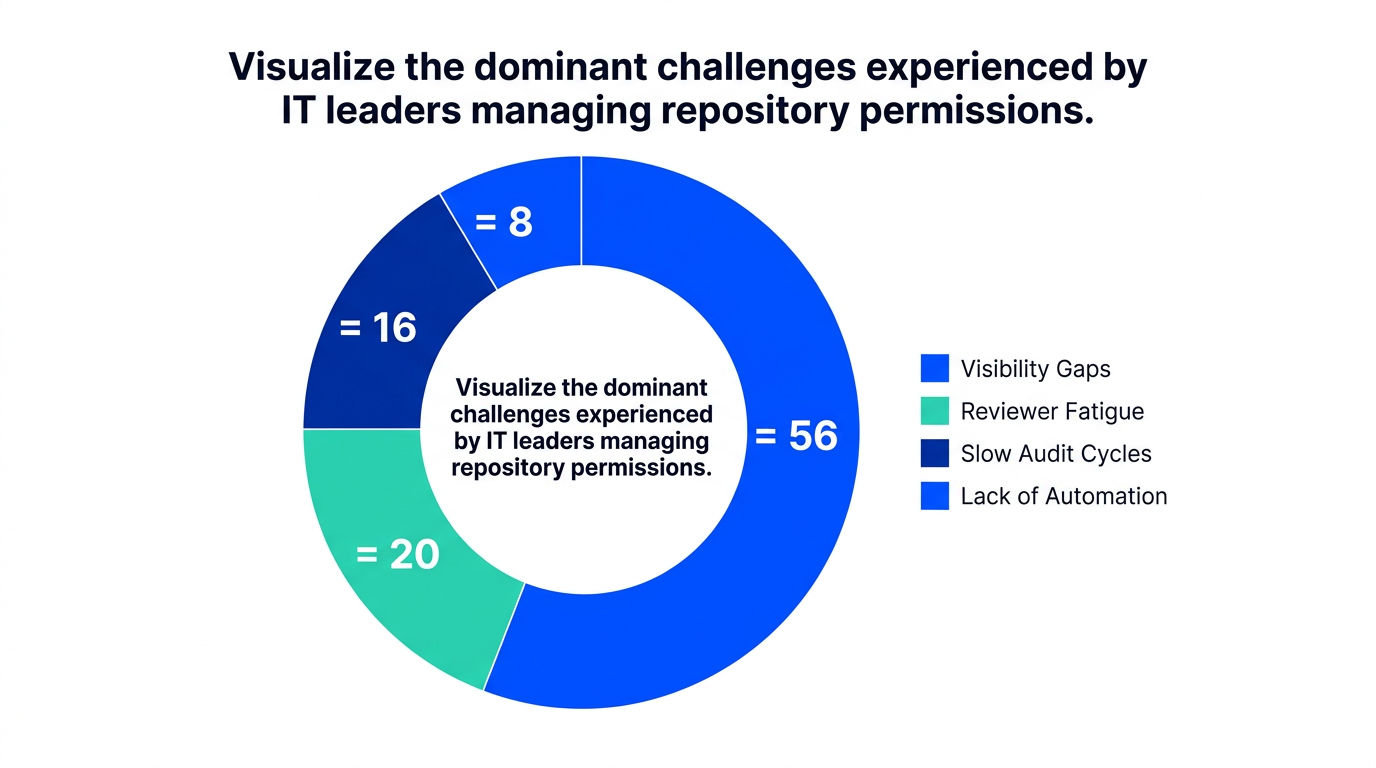
According to Gartner 2026 research, 56% of surveyed IT leaders cite "visibility gaps" in permissions as their top SaaS governance challenge. When IT and security teams cannot see who holds exact rights to specific repositories, they lack the foundational data required to secure the broader organization.
A comprehensive review involves breaking down the organizational structure into easily auditable segments. An effective audit strategy isolates user types and analyzes their specific interaction levels across the platform.
GitHub utilizes a hierarchy of organization roles (Owners, Members, Billing Managers) alongside repository-specific roles (Admin, Write, Read, Maintain, Triage). Evaluating these tiered structures is the first step in user access management. Reviewers must verify that organization owners are limited strictly to primary technical leaders. Security analysts must also guarantee that repository administrative rights are only distributed to individuals who actively require them to merge core base code.
Outside contractors and partnered development teams routinely require access to specific repositories. Managing these external accounts poses a severe risk. Forrester 2026 data reveals that only 38% of large organizations can accurately and quickly identify all external collaborators with active access. Consolidating a unified list of these external users allows security practitioners to manually revoke privileges the moment a vendor contract expires.
A thorough third-party app audit GitHub strategy is equally essential. Developers actively connect integrations, webhooks, and productivity applications to their core repositories. These connected applications often inherit dangerous read-and-write permissions. Security personnel must list every active integration and formally disconnect applications that exhibit low utilization.
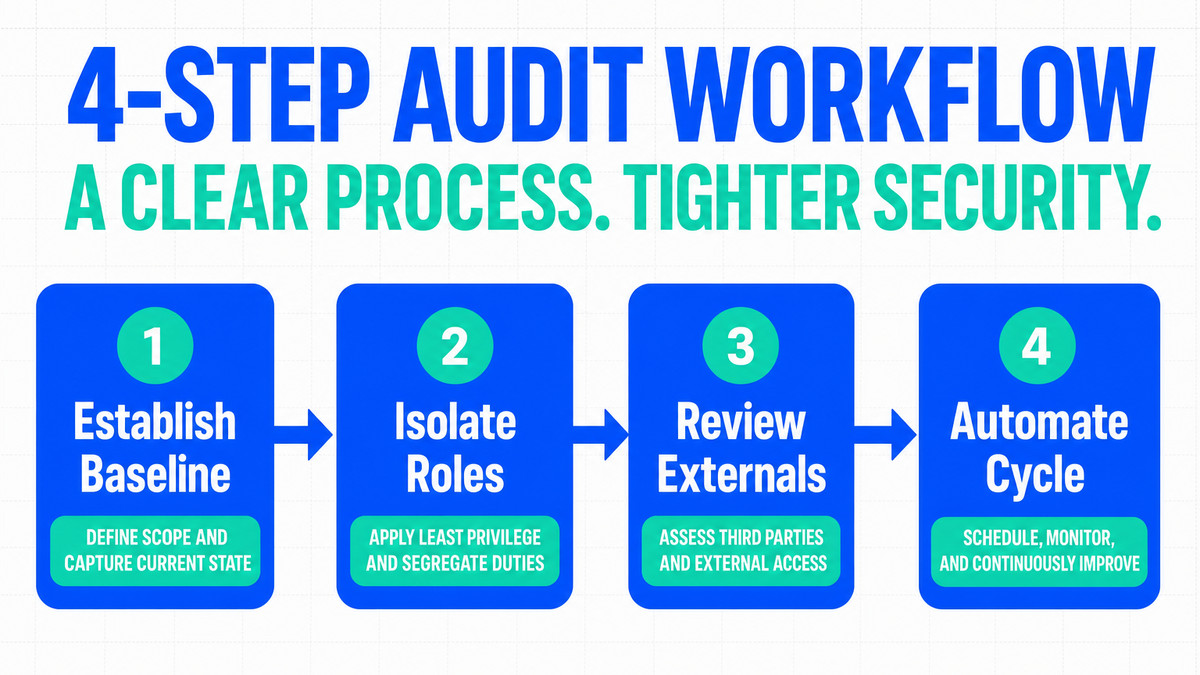
Transitioning from reactive checks to proactive defense requires a formalized workflow. The following process guides organizations toward achieving absolute repository governance and sustained security compliance.
Establish a Centralized Baseline: Consolidate an active directory of all organization members and cross-reference them against internal HR records. This step immediately highlights former employees who still possess active software licenses.
Isolate Over-Privileged Accounts: Filter the user directory to identify individuals holding permanent administrative access. Enforce strict justification protocols that require managers to authorize ongoing administrative rights.
Perform a Targeted External Collaboration Review: Separate external contractors from internal staff. Demand that internal sponsors actively verify the ongoing necessity of every external account.
Automate the Recertification Cycle: Deploy dedicated governance platforms to handle user recertification routinely. Routine automated checks guarantee that deviations are flagged immediately.
Enterprises consistently struggle to execute these steps manually due to sheer volume and reviewer fatigue. Consolidating this entire process through a dedicated Application Discovery and Inventory tool ensures absolute accuracy.
The manual calculation of user privileges consumes hundreds of IT hours yearly. Modern enterprises now prioritize automated GitHub access certification to eliminate human error and dramatically accelerate audit readiness. Dr. Amelia Chang, a SaaS Security Analyst for Gartner 2026, states, "Effective GitHub access reviews now hinge on continuous monitoring and automated recertification, rather than static, annual audits."
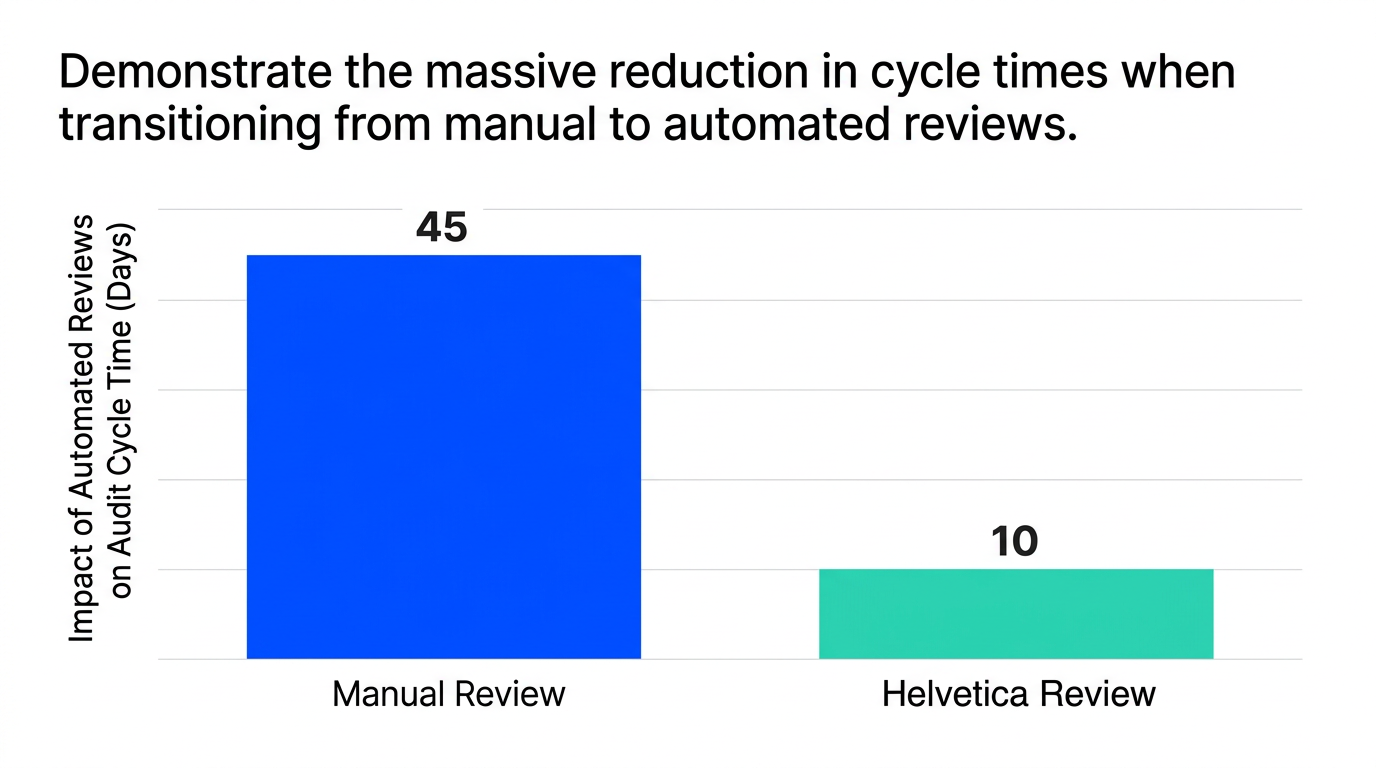
The operational impact of adopting automation is highly measurable. Organizations operating without intelligent governance tools experience review cycles lasting over a month. Forrester 2026 data shows that access recertification cycles dropped from an average of 45 days to under 10 days for enterprises implementing automated review solutions. Furthermore, IDC 2026 recorded that 90% of organizations reported automated access certification tools reduced the total time required by more than half.
SaaS automation not only improves security postures but also actively recovers wasted software expenditures. Michael Sato, a Chief Information Security Officer cited in Forrester 2026, notes that organizations embracing centralized visibility are securing massive cost savings by identifying and deleting redundant SaaS licenses.
Enterprises operating complex software supply chains require rigorous platforms to enforce their governance strategies. CloudNuro acts as the definitive Enterprise SaaS Management Platform, enabling continuous visibility, unmatched control, and significant cost optimization.
CloudNuro centralizes software environments by discovering all internal users and monitoring exact software access levels. IT leaders use CloudNuro to automate their GitHub IAM review processes completely. The platform immediately highlights stagnant accounts and excessive external collaborative permissions. By deploying SaaS Governance and Compliance Solutions, IT organizations can trigger automated workflows that force departmental managers to certify internal engineering roles periodically.
A recognized global enterprise solutions provider utilized the automated policy enforcement modules available within CloudNuro to streamline operations. Their targeted deployment reduced the overall time required for access reviews by 60 percent while drastically improving audit readiness across dispersed engineering teams. Similarly, a major manufacturing organization relied on CloudNuro to aggregate detailed inventory intelligence. This deployment helped them achieve 100 percent compliance during an annual software audit and completely eliminated excess external collaborator risk.
CloudNuro pairs extensive access security with comprehensive License Optimization Features. Finance teams can view exact software utilization metrics and reallocate dormant GitHub licenses to incoming employees. This cross-department accountability prevents unnecessary license purchasing and actively drives a culture of financial discipline throughout the enterprise.
Begin by utilizing a centralized SaaS management platform to pull all active directory members and specific repository roles. You must isolate organization owners, analyze third-party app connections, and cross-reference active accounts against HR offboarding logs to ensure former employees are entirely disconnected.
Consistent reviews directly prevent unauthorized code alterations and data breaches. According to Verizon DBIR 2026, 67% of breaches in software ecosystems involved misconfigured user access. Identifying stale permissions keeps intellectual property safe and guarantees successful regulatory audits.
Best practices include mandating the least privilege principle, frequently auditing external collaboration accounts, revoking unapproved third-party integrations, and transitioning from manual spreadsheet tracking to automated continuous access monitoring.
Organizations automate this workflow by connecting their repository directories directly into a SaaS Management platform. These tools trigger automated recertification emails to engineering managers, requiring them to click a button to either approve or deny ongoing access for their direct reports.
Dedicated platforms like CloudNuro provide deep visibility into application usage and granular permission datasets. SaaS Management Platform Overview deployments categorize expenses, enable chargebacks, and enforce security policies precisely to meet stringent compliance mandates.
The security of an enterprise heavily relies on how strictly it manages its central code repository access. Manual auditing protocols are simply too slow and error-prone to protect organizations against immediate digital vulnerabilities. By transitioning toward automated governance workflows, structural blind spots are immediately illuminated and corrected.
Achieving complete compliance while actively avoiding unnecessary licensing costs requires a definitive, centralized management platform. CloudNuro provides the unified visibility IT and finance leaders require to track every external collaborator and optimize every internal software purchase. Request a demo to see how CloudNuro empowers global enterprise teams to enforce security protocols and drive total financial accountability.
CloudNuro is a leader in Enterprise SaaS Management Platforms, providing enterprises with unmatched visibility, governance, and cost optimization. Recognized twice in a row in the SaaS Management Platforms category and named a Leader in the SoftwareReviews Data Quadrant, CloudNuro is trusted by global enterprises and government agencies to bring financial discipline to SaaS, cloud, and AI. Trusted by enterprises such as Konica Minolta and Federal Signal, CloudNuro provides centralized SaaS inventory, license optimization, and renewal management along with advanced cost allocation and chargeback, giving IT and Finance leaders the visibility, control, and cost-conscious culture needed to drive financial discipline.
Request a no cost, no obligation free assessment —just 15 minutes to savings!
Get StartedConducting a precise GitHub access review is a critical requirement for securing enterprise intellectual property. Modern engineering teams rely on digital repositories to build, iterate, and deploy software at scale. This accelerated pace of development consistently creates complex collaboration networks. Administrators must manage internal engineers, external contractors, and third-party application identities simultaneously. When user permissions go unmonitored for extended periods, the resulting digital sprawl generates severe compliance vulnerabilities.
Security teams that implement continuous access monitoring can immediately identify compromised credentials and enforce strict governance standards. IT leaders must move beyond manual spreadsheets and embrace automated auditing platforms to maintain financial accountability and protect their most valuable codebases.
Failing to perform a routine GitHub permissions audit exposes modern organizations to immense operational risk. The Verizon DBIR 2026 data shows that 67% of SaaS data breaches involved misconfigured or excessive user permissions in source code repositories. Administrators often grant temporary administrative rights to contractors during active sprints but fail to revoke these privileges once the project concludes. This oversight allows external identities to retain elevated capabilities long after their required usefulness has ended.
Regulatory agencies and internal auditors demand strict enforcement of the least privilege principle GitHub environments require. Unmanaged access points directly contribute to failing compliance checks. A KPMG 2026 report indicates that 43% of compliance audit failures for software enterprises were directly caused by insufficient documentation or absent repository access reviews. Establishing rigid, documented evaluation cycles mitigates these costly audit failures.
According to Gartner 2026 research, 56% of surveyed IT leaders cite "visibility gaps" in permissions as their top SaaS governance challenge. When IT and security teams cannot see who holds exact rights to specific repositories, they lack the foundational data required to secure the broader organization.
A comprehensive review involves breaking down the organizational structure into easily auditable segments. An effective audit strategy isolates user types and analyzes their specific interaction levels across the platform.
GitHub utilizes a hierarchy of organization roles (Owners, Members, Billing Managers) alongside repository-specific roles (Admin, Write, Read, Maintain, Triage). Evaluating these tiered structures is the first step in user access management. Reviewers must verify that organization owners are limited strictly to primary technical leaders. Security analysts must also guarantee that repository administrative rights are only distributed to individuals who actively require them to merge core base code.
Outside contractors and partnered development teams routinely require access to specific repositories. Managing these external accounts poses a severe risk. Forrester 2026 data reveals that only 38% of large organizations can accurately and quickly identify all external collaborators with active access. Consolidating a unified list of these external users allows security practitioners to manually revoke privileges the moment a vendor contract expires.
A thorough third-party app audit GitHub strategy is equally essential. Developers actively connect integrations, webhooks, and productivity applications to their core repositories. These connected applications often inherit dangerous read-and-write permissions. Security personnel must list every active integration and formally disconnect applications that exhibit low utilization.
Transitioning from reactive checks to proactive defense requires a formalized workflow. The following process guides organizations toward achieving absolute repository governance and sustained security compliance.
Establish a Centralized Baseline: Consolidate an active directory of all organization members and cross-reference them against internal HR records. This step immediately highlights former employees who still possess active software licenses.
Isolate Over-Privileged Accounts: Filter the user directory to identify individuals holding permanent administrative access. Enforce strict justification protocols that require managers to authorize ongoing administrative rights.
Perform a Targeted External Collaboration Review: Separate external contractors from internal staff. Demand that internal sponsors actively verify the ongoing necessity of every external account.
Automate the Recertification Cycle: Deploy dedicated governance platforms to handle user recertification routinely. Routine automated checks guarantee that deviations are flagged immediately.
Enterprises consistently struggle to execute these steps manually due to sheer volume and reviewer fatigue. Consolidating this entire process through a dedicated Application Discovery and Inventory tool ensures absolute accuracy.
The manual calculation of user privileges consumes hundreds of IT hours yearly. Modern enterprises now prioritize automated GitHub access certification to eliminate human error and dramatically accelerate audit readiness. Dr. Amelia Chang, a SaaS Security Analyst for Gartner 2026, states, "Effective GitHub access reviews now hinge on continuous monitoring and automated recertification, rather than static, annual audits."
The operational impact of adopting automation is highly measurable. Organizations operating without intelligent governance tools experience review cycles lasting over a month. Forrester 2026 data shows that access recertification cycles dropped from an average of 45 days to under 10 days for enterprises implementing automated review solutions. Furthermore, IDC 2026 recorded that 90% of organizations reported automated access certification tools reduced the total time required by more than half.
SaaS automation not only improves security postures but also actively recovers wasted software expenditures. Michael Sato, a Chief Information Security Officer cited in Forrester 2026, notes that organizations embracing centralized visibility are securing massive cost savings by identifying and deleting redundant SaaS licenses.
Enterprises operating complex software supply chains require rigorous platforms to enforce their governance strategies. CloudNuro acts as the definitive Enterprise SaaS Management Platform, enabling continuous visibility, unmatched control, and significant cost optimization.
CloudNuro centralizes software environments by discovering all internal users and monitoring exact software access levels. IT leaders use CloudNuro to automate their GitHub IAM review processes completely. The platform immediately highlights stagnant accounts and excessive external collaborative permissions. By deploying SaaS Governance and Compliance Solutions, IT organizations can trigger automated workflows that force departmental managers to certify internal engineering roles periodically.
A recognized global enterprise solutions provider utilized the automated policy enforcement modules available within CloudNuro to streamline operations. Their targeted deployment reduced the overall time required for access reviews by 60 percent while drastically improving audit readiness across dispersed engineering teams. Similarly, a major manufacturing organization relied on CloudNuro to aggregate detailed inventory intelligence. This deployment helped them achieve 100 percent compliance during an annual software audit and completely eliminated excess external collaborator risk.
CloudNuro pairs extensive access security with comprehensive License Optimization Features. Finance teams can view exact software utilization metrics and reallocate dormant GitHub licenses to incoming employees. This cross-department accountability prevents unnecessary license purchasing and actively drives a culture of financial discipline throughout the enterprise.
Begin by utilizing a centralized SaaS management platform to pull all active directory members and specific repository roles. You must isolate organization owners, analyze third-party app connections, and cross-reference active accounts against HR offboarding logs to ensure former employees are entirely disconnected.
Consistent reviews directly prevent unauthorized code alterations and data breaches. According to Verizon DBIR 2026, 67% of breaches in software ecosystems involved misconfigured user access. Identifying stale permissions keeps intellectual property safe and guarantees successful regulatory audits.
Best practices include mandating the least privilege principle, frequently auditing external collaboration accounts, revoking unapproved third-party integrations, and transitioning from manual spreadsheet tracking to automated continuous access monitoring.
Organizations automate this workflow by connecting their repository directories directly into a SaaS Management platform. These tools trigger automated recertification emails to engineering managers, requiring them to click a button to either approve or deny ongoing access for their direct reports.
Dedicated platforms like CloudNuro provide deep visibility into application usage and granular permission datasets. SaaS Management Platform Overview deployments categorize expenses, enable chargebacks, and enforce security policies precisely to meet stringent compliance mandates.
The security of an enterprise heavily relies on how strictly it manages its central code repository access. Manual auditing protocols are simply too slow and error-prone to protect organizations against immediate digital vulnerabilities. By transitioning toward automated governance workflows, structural blind spots are immediately illuminated and corrected.
Achieving complete compliance while actively avoiding unnecessary licensing costs requires a definitive, centralized management platform. CloudNuro provides the unified visibility IT and finance leaders require to track every external collaborator and optimize every internal software purchase. Request a demo to see how CloudNuro empowers global enterprise teams to enforce security protocols and drive total financial accountability.
CloudNuro is a leader in Enterprise SaaS Management Platforms, providing enterprises with unmatched visibility, governance, and cost optimization. Recognized twice in a row in the SaaS Management Platforms category and named a Leader in the SoftwareReviews Data Quadrant, CloudNuro is trusted by global enterprises and government agencies to bring financial discipline to SaaS, cloud, and AI. Trusted by enterprises such as Konica Minolta and Federal Signal, CloudNuro provides centralized SaaS inventory, license optimization, and renewal management along with advanced cost allocation and chargeback, giving IT and Finance leaders the visibility, control, and cost-conscious culture needed to drive financial discipline.
Request a no cost, no obligation free assessment - just 15 minutes to savings!
Get StartedWe're offering complimentary ServiceNow license assessments to only 25 enterprises this quarter who want to unlock immediate savings without disrupting operations.
Get Free AssessmentGet Started




CloudNuro Corp
1755 Park St. Suite 207
Naperville, IL 60563
Phone : +1-630-277-9470
Email: info@cloudnuro.com




.webp)

Recognized Leader in SaaS Management Platforms by Info-Tech SoftwareReviews
.png)



.svg)