

Sign Up
Thank you for Submitting!
How to Automate Employee Offboarding: A Step-by-Step IT Playbook Automated employee offboarding is now one of the most critical workflows for IT, security, and finance teams managing large SaaS environments. When offboarding remains manual, you create a perfect storm of security exposure, compliance risk, and license waste. According to Forrester (2026), 73% of IT leaders report that automating employee offboarding reduced security incidents tied to orphaned accounts. Gartner (2026) also finds that organizations with automated offboarding reclaim 44% more SaaS licenses than those using manual steps. This playbook gives IT leaders a practical, step-by-step guide to automate employee offboarding across SaaS and cloud systems, reduce risk, and build financial discipline around licenses and access.
Manual offboarding is like trying to close every window in a skyscraper by hand during a storm. You might get most of them, but the one you miss can cause the most damage. Research shows the impact of getting this right:
Automated workflows cut deprovisioning time from 2.7 hours to 16 minutes on average (ISG 2026).
Enterprises with automation reclaim 44% more SaaS licenses (Gartner 2026).
88% of enterprises cite compliance and audit readiness as their top driver for automated offboarding platforms (IDC 2026).
As Dr. Maya Patel from Forrester notes, "Automated offboarding is now a board-level priority because the threat of lingering access can undermine enterprise security overnight."
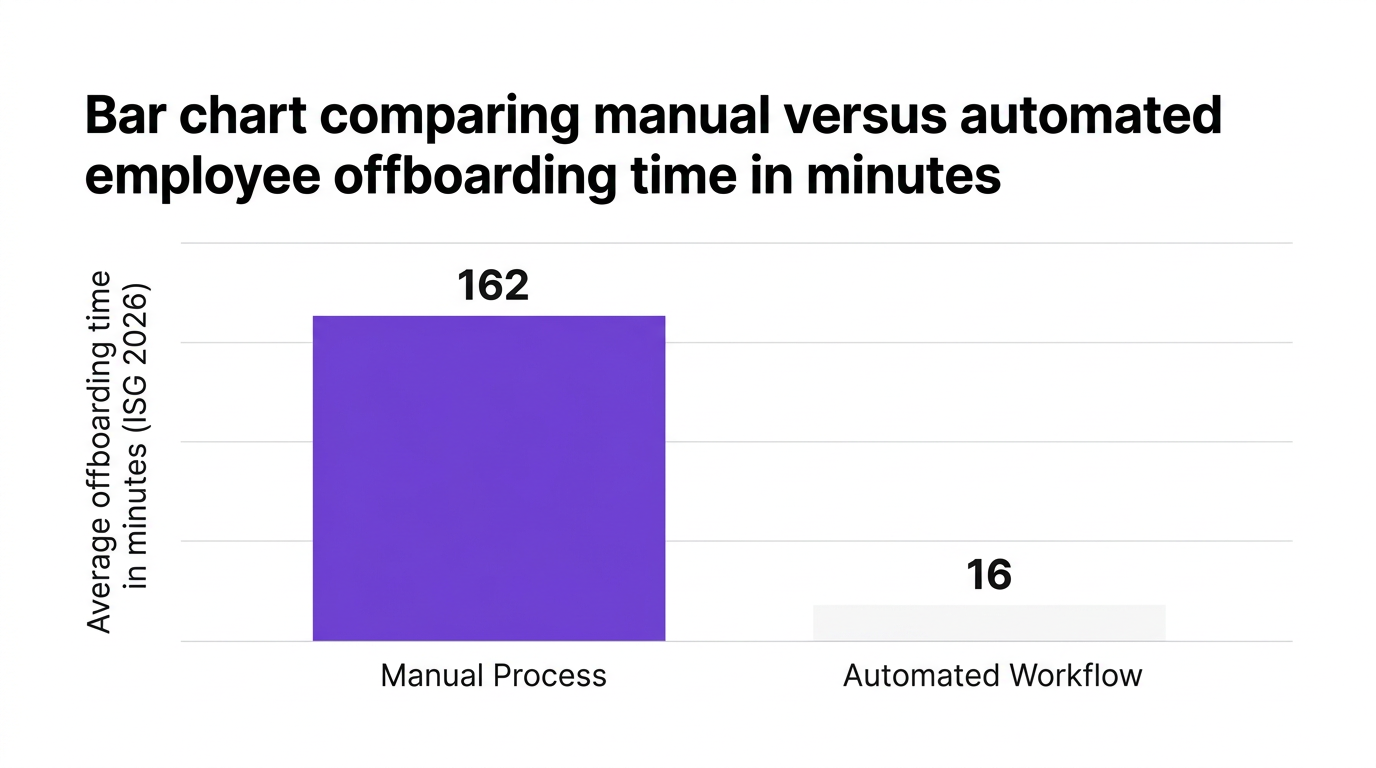
These numbers highlight a simple truth, automated employee offboarding is no longer optional if you run a SaaS-heavy, regulated, or distributed environment.
Common failure modes include:
Orphaned SaaS accounts that retain access long after termination.
License waste, where IT keeps paying for seats assigned to former employees.
Shadow IT remaining active, since users often sign up for unsanctioned tools.
Inconsistent compliance evidence, making audits painful and slow.
A leading SaaS management council reported that 60% of organizations achieved at least a 34% reduction in SaaS spend waste within 12 months after implementing offboarding automation (2026). That is direct budget impact tied to a single process.
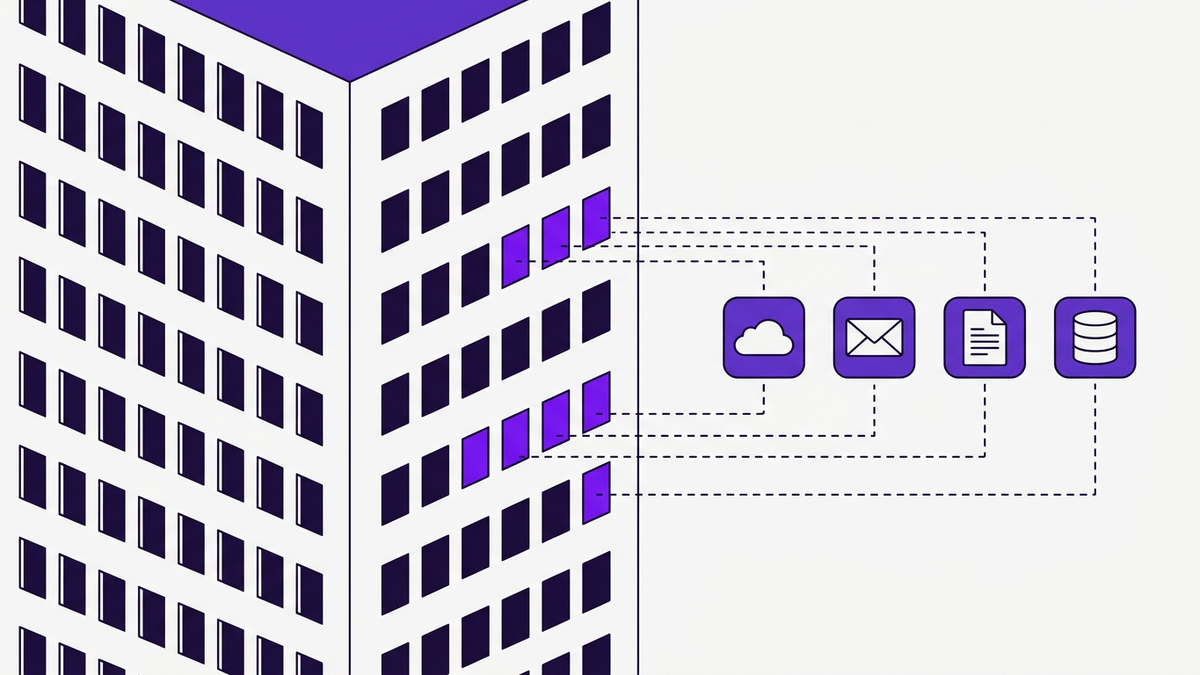
The foundation of automated employee offboarding is a zero-trust offboarding process that assumes no access is safe once an employee exits. Everything flows from a single source of truth and every action produces an audit trail. Think about this in three layers: identity, access, and data.
Start by codifying how your organization handles the full identity lifecycle. Key elements of a strong JML policy:
Standard triggers: resignations, terminations, contract end dates, and role changes.
Roles and ownership: HR owns status changes, IT owns technical execution, security owns policy, and finance validates license recovery.
Time-based rules: immediate lock for involuntary exits, scheduled deprovisioning for natural end dates, and post-exit data retention rules.
This policy must explicitly define how SaaS employee offboarding is handled across all core and long-tail applications.
A zero-trust offboarding process assumes that:
Every identity is verified at every step.
Access is granted and revoked based on identity and role, not network location.
No entitlement persists beyond the end of need.
For offboarding, that means:
Immediate access revocation for high-risk systems.
Automated SaaS access removal across identity providers and direct app integrations.
Automated audit trail for offboarding that logs who was offboarded, when, and which systems were touched.

The most reliable offboarding workflows start where the employee lifecycle actually changes, HR. HRIS-triggered offboarding automation eliminates manual handoffs and missed emails. According to InfoTech (2026), 98% of companies integrating HRIS-triggered offboarding automation have reduced shadow IT and unsanctioned app usage after offboarding events.
To automate employee offboarding effectively, HR needs to be the master source of status changes. Practical steps:
Configure HRIS to emit an event (or API call) for status changes such as "terminated" or "last day set".
Pass structured attributes with each event, including department, manager, location, and role.
Treat these events as the trigger for the HR and IT offboarding workflow.
This reduces the risk of IT not being informed or being informed too late.
Define how HR events translate to technical actions:
Termination date set → schedule offboarding workflow for that date.
Immediate termination → run IT offboarding workflow in real time.
Role change → adjust app bundles and entitlements, not a full offboard but critical for access hygiene.
Each HR event should:
Create an offboarding task record.
Inform identity systems, SaaS management, and ticketing tools.
Initiate logging for offboarding compliance automation.
This is where specialized SaaS management platform for offboarding capabilities become essential.
Once triggers are in place, you can construct a repeatable offboarding workflow automation blueprint. A helpful analogy is a factory assembly line, every offboarding event goes through the same core stations, with optional steps depending on the role.
Every IT offboarding automation flow should include:
Identity lock
- Disable primary directory and SSO accounts.
- Invalidate tokens and sessions.
- Enforce device check-in if required.
SaaS access removal
- Use SaaS user deprovisioning automation across all connected apps.
- Remove group memberships and role assignments.
- Reassign critical objects like ownership of records or projects.
Data retention and transfer
- Archive email and storage.
- Transfer ownership of SaaS assets to managers or shared accounts.
- Enforce data retention rules per compliance requirements.
License reclamation during employee offboarding
- Mark licenses for immediate recovery.
- Return seats to central pools.
- Update cost centers for chargeback or showback.
Logging and reporting
- Capture timestamps for each step.
- Store records in a central log for offboarding security automation and audit.
Add conditional branches to handle different profiles:
High-risk roles, such as admins and finance users, with more aggressive timelines and checks.
Contractors and vendors, with fixed end dates and explicit asset return steps.
Executives, with more tailored data handover and extended retention.
This identity-based offboarding model ensures you maintain both security and business continuity.
Many organizations focus on security and forget that offboarding is also a powerful cost optimization lever. According to the SaaS Management Council (2026), 60% of organizations achieved at least a 34% reduction in SaaS spend waste within 12 months of implementing offboarding automation.
As Ellen Wu from ISG notes, "License reclamation embedded within the offboarding process is an often-overlooked driver of immediate and quantifiable ROI for IT budgets." To capture this value:
Tie each deprovisioning event directly to automated license reclamation.
Tag reclaimed licenses with cost center and app metadata.
Report monthly on dollar value of recovered spend.
This approach supports both FinOps and ITAM objectives and helps eliminate manual offboarding checklists that never get completed.
Orphaned accounts are a double penalty, you pay for unused licenses and maintain hidden risk. To avoid orphaned SaaS accounts during offboarding:
Maintain a central SaaS inventory with user-to-app mapping.
Use a platform that discovers unsanctioned and long-tail apps via integrations and activity data.
Automate a "final sweep" step to confirm that no accounts remain active after offboarding.
Gartner data (2026) shows that enterprises using automated workflows have a 68% license reclamation rate, compared with only 32% of licenses remaining lost or unused.
For heavily regulated sectors such as healthcare, finance, and government, secure employee offboarding is as much about compliance as it is about access control. IDC (2026) reports that 88% of enterprises list compliance and audit readiness as the primary driver for adopting offboarding automation.
To support auditors and regulators, your workflows should:
Produce an automated audit trail for offboarding, including timestamps and system-level confirmations.
Capture proof of automated access revocation for SaaS apps and core systems.
Store logs in a secure, centralized repository with retention aligned to policy.
This transforms audits from ad hoc data collection into a predictable reporting exercise.
Offboarding is a key point to reduce risk from disgruntled or compromised accounts. To use offboarding to reduce insider threat:
Enforce offboarding to reduce insider threat policies that trigger real-time access removal for high-risk terminations.
Monitor for residual access attempts after termination, using SIEM or security tools.
Validate that high-privilege roles receive focused scrutiny before and after offboarding.
When this fails, the result is often lingering admin accounts or privileged logins that remain active for months.
CloudNuro is designed to operationalize everything described in this playbook and give IT teams a practical way to automate employee offboarding at scale. With a governance-first architecture and over 400 integrations, CloudNuro delivers identity-aware workflows, cost optimization, and compliance-grade reporting in one platform.
CloudNuro AI Custodian unifies HR-triggered events with identity, SaaS, and cloud operations. Key capabilities for SaaS lifecycle management offboarding:
HRIS-triggered offboarding automation that starts workflows as soon as HR updates an employee status.
Automated access revocation for SaaS apps across over 400 integrated systems.
Full automated audit trail for offboarding, including timestamps, actions, and success status.
This gives IT, security, and compliance teams a single source of truth for offboarding. You can learn more about these capabilities in the CloudNuro product overview and the dedicated SaaS management solution pages.
For high-value applications, Microsoft 365 Custodian and Salesforce Custodian automate:
User deprovisioning and group removal.
License reclamation and right-sizing of entitlements.
Policy-based retention and data transfer to managers or shared mailboxes.
This combination helps reduce offboarding time from hours to minutes for key systems and ensures no high-value account is left behind.
CloudNuro FinOps Services incorporate cost governance into every offboarding event. This includes:
Identifying unused or underused licenses reclaimed during offboarding.
Providing recommendations to reallocate or retire these licenses.
Powering chargeback and showback by mapping reclaimed cost to departments.
You can explore these capabilities in more detail through CloudNuro FinOps services and IT operations solutions.
CloudNuro’s unified cloud custodian approach ensures that offboarding is not limited to a single SaaS but covers your full environment, from major platforms to specialized tools. Benefits for IT offboarding automation include:
Consistent offboarding workflow automation across directories, SaaS, and cloud resources.
Unified policies that apply to joiners, movers, and leavers.
Integrated security posture with IT security controls aligned to offboarding activities.
Learn more in the unified cloud custodian and IT security solutions pages.
Automation is most compelling when it delivers measurable results. Two recent examples illustrate what is possible when organizations standardize IT offboarding workflow automation.
A global financial firm implemented automated offboarding for core collaboration and CRM platforms, with a strong focus on license reclamation and compliance. Results (ISG Casebook 2026):
Reduced dormant license costs by $2.8 million annually.
Cut offboarding time per user from 3 hours to under 20 minutes.
Improved audit-readiness with clean, exportable offboarding logs.
A large healthcare provider pursued offboarding compliance automation linked to HR and cloud management. According to IDC (2026), the organization:
Eliminated 99% of orphaned accounts across SaaS and cloud systems.
Achieved zero compliance exceptions during a recent regulatory audit.
Standardized offboarding for thousands of clinicians and staff.
These examples show how SaaS employee offboarding can drive both security and financial outcomes when treated as a formal, automated program.

To run offboarding like a disciplined program, not an ad hoc activity, you need measurable metrics. Here are essential KPIs to track offboarding KPIs effectively.
Measure the time from HR status change to full deprovisioning and license reclamation.
Target: Reduce offboarding time from hours to minutes for the majority of users.
Segment by role and risk profile to see where bottlenecks remain.
Track the percentage of offboarded users who still show active accounts in any system.
Target: reduce this rate close to zero.
Use discovery and monitoring tools to validate that no accounts linger.
Measure how many licenses are reclaimed per offboarded user, and the dollar value.
KPI: percent of reclaimed licenses vs total associated licenses.
Financial KPI: monthly savings from automation-driven reclamation.
Track:
Number of offboarding events with complete audit trails.
Time required to prepare offboarding evidence for audits.
Number of compliance exceptions tied to access and identity.
These metrics ensure your compliance automation software and SaaS management platform for offboarding deliver tangible value.
Automated employee offboarding is the use of workflows and integrations to remove user access, reclaim licenses, and create audit logs when employees leave, without manual steps. It starts from a trigger, typically HR or identity, and orchestrates deprovisioning across SaaS, cloud, and on-prem systems.
Automation limits the window in which ex-employees retain access. By combining offboarding security automation with zero-trust policies and comprehensive deprovisioning, you minimize the chance that orphaned accounts or forgotten admin credentials can be used maliciously.
Yes. Automated workflows directly support license reclamation during employee offboarding. By reclaiming and reallocating unused licenses, organizations avoid paying for dormant seats and can often delay or reduce renewals.
When HR updates an employee to "terminated" or sets a last working day, the HR system sends a structured event. This event triggers IT workflows to disable identities, remove SaaS access, reassign data, reclaim licenses, and generate logs, all under a single HR and IT offboarding workflow.
Look for capabilities such as:
Native and API-based SaaS user deprovisioning automation across a wide app catalog.
HRIS integration for event-based triggers.
Built-in offboarding compliance automation and reporting.
Strong cost and license analytics embedded in the process.
Platforms like CloudNuro bring these features together in a single governance-first solution.
Start by documenting your current steps and identifying the most critical systems. Then, adopt a SaaS management and automation platform such as CloudNuro, connect it to HR and core systems, and begin by automating a small set of high-risk, high-cost applications before expanding.
Automated employee offboarding delivers value across security, compliance, and cost. Research from multiple firms shows:
73% of IT leaders reduced security incidents by eliminating orphaned accounts.
Automated workflows cut deprovisioning time from hours to minutes.
Organizations reclaim significantly more SaaS licenses and reduce waste.
If you want to automate employee offboarding in a way that is scalable, auditable, and financially disciplined, you need a SaaS-aware platform that unifies HR, IT, security, and finance. CloudNuro provides that foundation, combining AI-driven SaaS management, license reclamation, and compliance-grade automation across your entire application stack. Take the next step:
Request a Demo to see automated offboarding in action.
Get Free Savings to quantify cost optimization opportunities.
Explore Product to understand how CloudNuro can standardize your IT offboarding workflow.
CloudNuro is a leader in Enterprise SaaS Management Platforms, providing enterprises with unmatched visibility, governance, and cost optimization. Recognized twice in a row in the SaaS Management Platforms category and named a Leader in the SoftwareReviews Data Quadrant, CloudNuro is trusted by global enterprises and government agencies to bring financial discipline to SaaS, cloud, and AI. Trusted by enterprises such as Konica Minolta and Federal Signal, CloudNuro provides centralized SaaS inventory, license optimization, and renewal management along with advanced cost allocation and chargeback, giving IT and Finance leaders the visibility, control, and cost-conscious culture needed to drive financial discipline.
Request a no cost, no obligation free assessment —just 15 minutes to savings!
Get StartedHow to Automate Employee Offboarding: A Step-by-Step IT Playbook Automated employee offboarding is now one of the most critical workflows for IT, security, and finance teams managing large SaaS environments. When offboarding remains manual, you create a perfect storm of security exposure, compliance risk, and license waste. According to Forrester (2026), 73% of IT leaders report that automating employee offboarding reduced security incidents tied to orphaned accounts. Gartner (2026) also finds that organizations with automated offboarding reclaim 44% more SaaS licenses than those using manual steps. This playbook gives IT leaders a practical, step-by-step guide to automate employee offboarding across SaaS and cloud systems, reduce risk, and build financial discipline around licenses and access.
Manual offboarding is like trying to close every window in a skyscraper by hand during a storm. You might get most of them, but the one you miss can cause the most damage. Research shows the impact of getting this right:
Automated workflows cut deprovisioning time from 2.7 hours to 16 minutes on average (ISG 2026).
Enterprises with automation reclaim 44% more SaaS licenses (Gartner 2026).
88% of enterprises cite compliance and audit readiness as their top driver for automated offboarding platforms (IDC 2026).
As Dr. Maya Patel from Forrester notes, "Automated offboarding is now a board-level priority because the threat of lingering access can undermine enterprise security overnight."
These numbers highlight a simple truth, automated employee offboarding is no longer optional if you run a SaaS-heavy, regulated, or distributed environment.
Common failure modes include:
Orphaned SaaS accounts that retain access long after termination.
License waste, where IT keeps paying for seats assigned to former employees.
Shadow IT remaining active, since users often sign up for unsanctioned tools.
Inconsistent compliance evidence, making audits painful and slow.
A leading SaaS management council reported that 60% of organizations achieved at least a 34% reduction in SaaS spend waste within 12 months after implementing offboarding automation (2026). That is direct budget impact tied to a single process.
The foundation of automated employee offboarding is a zero-trust offboarding process that assumes no access is safe once an employee exits. Everything flows from a single source of truth and every action produces an audit trail. Think about this in three layers: identity, access, and data.
Start by codifying how your organization handles the full identity lifecycle. Key elements of a strong JML policy:
Standard triggers: resignations, terminations, contract end dates, and role changes.
Roles and ownership: HR owns status changes, IT owns technical execution, security owns policy, and finance validates license recovery.
Time-based rules: immediate lock for involuntary exits, scheduled deprovisioning for natural end dates, and post-exit data retention rules.
This policy must explicitly define how SaaS employee offboarding is handled across all core and long-tail applications.
A zero-trust offboarding process assumes that:
Every identity is verified at every step.
Access is granted and revoked based on identity and role, not network location.
No entitlement persists beyond the end of need.
For offboarding, that means:
Immediate access revocation for high-risk systems.
Automated SaaS access removal across identity providers and direct app integrations.
Automated audit trail for offboarding that logs who was offboarded, when, and which systems were touched.
The most reliable offboarding workflows start where the employee lifecycle actually changes, HR. HRIS-triggered offboarding automation eliminates manual handoffs and missed emails. According to InfoTech (2026), 98% of companies integrating HRIS-triggered offboarding automation have reduced shadow IT and unsanctioned app usage after offboarding events.
To automate employee offboarding effectively, HR needs to be the master source of status changes. Practical steps:
Configure HRIS to emit an event (or API call) for status changes such as "terminated" or "last day set".
Pass structured attributes with each event, including department, manager, location, and role.
Treat these events as the trigger for the HR and IT offboarding workflow.
This reduces the risk of IT not being informed or being informed too late.
Define how HR events translate to technical actions:
Termination date set → schedule offboarding workflow for that date.
Immediate termination → run IT offboarding workflow in real time.
Role change → adjust app bundles and entitlements, not a full offboard but critical for access hygiene.
Each HR event should:
Create an offboarding task record.
Inform identity systems, SaaS management, and ticketing tools.
Initiate logging for offboarding compliance automation.
This is where specialized SaaS management platform for offboarding capabilities become essential.
Once triggers are in place, you can construct a repeatable offboarding workflow automation blueprint. A helpful analogy is a factory assembly line, every offboarding event goes through the same core stations, with optional steps depending on the role.
Every IT offboarding automation flow should include:
Identity lock
- Disable primary directory and SSO accounts.
- Invalidate tokens and sessions.
- Enforce device check-in if required.
SaaS access removal
- Use SaaS user deprovisioning automation across all connected apps.
- Remove group memberships and role assignments.
- Reassign critical objects like ownership of records or projects.
Data retention and transfer
- Archive email and storage.
- Transfer ownership of SaaS assets to managers or shared accounts.
- Enforce data retention rules per compliance requirements.
License reclamation during employee offboarding
- Mark licenses for immediate recovery.
- Return seats to central pools.
- Update cost centers for chargeback or showback.
Logging and reporting
- Capture timestamps for each step.
- Store records in a central log for offboarding security automation and audit.
Add conditional branches to handle different profiles:
High-risk roles, such as admins and finance users, with more aggressive timelines and checks.
Contractors and vendors, with fixed end dates and explicit asset return steps.
Executives, with more tailored data handover and extended retention.
This identity-based offboarding model ensures you maintain both security and business continuity.
Many organizations focus on security and forget that offboarding is also a powerful cost optimization lever. According to the SaaS Management Council (2026), 60% of organizations achieved at least a 34% reduction in SaaS spend waste within 12 months of implementing offboarding automation.
As Ellen Wu from ISG notes, "License reclamation embedded within the offboarding process is an often-overlooked driver of immediate and quantifiable ROI for IT budgets." To capture this value:
Tie each deprovisioning event directly to automated license reclamation.
Tag reclaimed licenses with cost center and app metadata.
Report monthly on dollar value of recovered spend.
This approach supports both FinOps and ITAM objectives and helps eliminate manual offboarding checklists that never get completed.
Orphaned accounts are a double penalty, you pay for unused licenses and maintain hidden risk. To avoid orphaned SaaS accounts during offboarding:
Maintain a central SaaS inventory with user-to-app mapping.
Use a platform that discovers unsanctioned and long-tail apps via integrations and activity data.
Automate a "final sweep" step to confirm that no accounts remain active after offboarding.
Gartner data (2026) shows that enterprises using automated workflows have a 68% license reclamation rate, compared with only 32% of licenses remaining lost or unused.
For heavily regulated sectors such as healthcare, finance, and government, secure employee offboarding is as much about compliance as it is about access control. IDC (2026) reports that 88% of enterprises list compliance and audit readiness as the primary driver for adopting offboarding automation.
To support auditors and regulators, your workflows should:
Produce an automated audit trail for offboarding, including timestamps and system-level confirmations.
Capture proof of automated access revocation for SaaS apps and core systems.
Store logs in a secure, centralized repository with retention aligned to policy.
This transforms audits from ad hoc data collection into a predictable reporting exercise.
Offboarding is a key point to reduce risk from disgruntled or compromised accounts. To use offboarding to reduce insider threat:
Enforce offboarding to reduce insider threat policies that trigger real-time access removal for high-risk terminations.
Monitor for residual access attempts after termination, using SIEM or security tools.
Validate that high-privilege roles receive focused scrutiny before and after offboarding.
When this fails, the result is often lingering admin accounts or privileged logins that remain active for months.
CloudNuro is designed to operationalize everything described in this playbook and give IT teams a practical way to automate employee offboarding at scale. With a governance-first architecture and over 400 integrations, CloudNuro delivers identity-aware workflows, cost optimization, and compliance-grade reporting in one platform.
CloudNuro AI Custodian unifies HR-triggered events with identity, SaaS, and cloud operations. Key capabilities for SaaS lifecycle management offboarding:
HRIS-triggered offboarding automation that starts workflows as soon as HR updates an employee status.
Automated access revocation for SaaS apps across over 400 integrated systems.
Full automated audit trail for offboarding, including timestamps, actions, and success status.
This gives IT, security, and compliance teams a single source of truth for offboarding. You can learn more about these capabilities in the CloudNuro product overview and the dedicated SaaS management solution pages.
For high-value applications, Microsoft 365 Custodian and Salesforce Custodian automate:
User deprovisioning and group removal.
License reclamation and right-sizing of entitlements.
Policy-based retention and data transfer to managers or shared mailboxes.
This combination helps reduce offboarding time from hours to minutes for key systems and ensures no high-value account is left behind.
CloudNuro FinOps Services incorporate cost governance into every offboarding event. This includes:
Identifying unused or underused licenses reclaimed during offboarding.
Providing recommendations to reallocate or retire these licenses.
Powering chargeback and showback by mapping reclaimed cost to departments.
You can explore these capabilities in more detail through CloudNuro FinOps services and IT operations solutions.
CloudNuro’s unified cloud custodian approach ensures that offboarding is not limited to a single SaaS but covers your full environment, from major platforms to specialized tools. Benefits for IT offboarding automation include:
Consistent offboarding workflow automation across directories, SaaS, and cloud resources.
Unified policies that apply to joiners, movers, and leavers.
Integrated security posture with IT security controls aligned to offboarding activities.
Learn more in the unified cloud custodian and IT security solutions pages.
Automation is most compelling when it delivers measurable results. Two recent examples illustrate what is possible when organizations standardize IT offboarding workflow automation.
A global financial firm implemented automated offboarding for core collaboration and CRM platforms, with a strong focus on license reclamation and compliance. Results (ISG Casebook 2026):
Reduced dormant license costs by $2.8 million annually.
Cut offboarding time per user from 3 hours to under 20 minutes.
Improved audit-readiness with clean, exportable offboarding logs.
A large healthcare provider pursued offboarding compliance automation linked to HR and cloud management. According to IDC (2026), the organization:
Eliminated 99% of orphaned accounts across SaaS and cloud systems.
Achieved zero compliance exceptions during a recent regulatory audit.
Standardized offboarding for thousands of clinicians and staff.
These examples show how SaaS employee offboarding can drive both security and financial outcomes when treated as a formal, automated program.
To run offboarding like a disciplined program, not an ad hoc activity, you need measurable metrics. Here are essential KPIs to track offboarding KPIs effectively.
Measure the time from HR status change to full deprovisioning and license reclamation.
Target: Reduce offboarding time from hours to minutes for the majority of users.
Segment by role and risk profile to see where bottlenecks remain.
Track the percentage of offboarded users who still show active accounts in any system.
Target: reduce this rate close to zero.
Use discovery and monitoring tools to validate that no accounts linger.
Measure how many licenses are reclaimed per offboarded user, and the dollar value.
KPI: percent of reclaimed licenses vs total associated licenses.
Financial KPI: monthly savings from automation-driven reclamation.
Track:
Number of offboarding events with complete audit trails.
Time required to prepare offboarding evidence for audits.
Number of compliance exceptions tied to access and identity.
These metrics ensure your compliance automation software and SaaS management platform for offboarding deliver tangible value.
Automated employee offboarding is the use of workflows and integrations to remove user access, reclaim licenses, and create audit logs when employees leave, without manual steps. It starts from a trigger, typically HR or identity, and orchestrates deprovisioning across SaaS, cloud, and on-prem systems.
Automation limits the window in which ex-employees retain access. By combining offboarding security automation with zero-trust policies and comprehensive deprovisioning, you minimize the chance that orphaned accounts or forgotten admin credentials can be used maliciously.
Yes. Automated workflows directly support license reclamation during employee offboarding. By reclaiming and reallocating unused licenses, organizations avoid paying for dormant seats and can often delay or reduce renewals.
When HR updates an employee to "terminated" or sets a last working day, the HR system sends a structured event. This event triggers IT workflows to disable identities, remove SaaS access, reassign data, reclaim licenses, and generate logs, all under a single HR and IT offboarding workflow.
Look for capabilities such as:
Native and API-based SaaS user deprovisioning automation across a wide app catalog.
HRIS integration for event-based triggers.
Built-in offboarding compliance automation and reporting.
Strong cost and license analytics embedded in the process.
Platforms like CloudNuro bring these features together in a single governance-first solution.
Start by documenting your current steps and identifying the most critical systems. Then, adopt a SaaS management and automation platform such as CloudNuro, connect it to HR and core systems, and begin by automating a small set of high-risk, high-cost applications before expanding.
Automated employee offboarding delivers value across security, compliance, and cost. Research from multiple firms shows:
73% of IT leaders reduced security incidents by eliminating orphaned accounts.
Automated workflows cut deprovisioning time from hours to minutes.
Organizations reclaim significantly more SaaS licenses and reduce waste.
If you want to automate employee offboarding in a way that is scalable, auditable, and financially disciplined, you need a SaaS-aware platform that unifies HR, IT, security, and finance. CloudNuro provides that foundation, combining AI-driven SaaS management, license reclamation, and compliance-grade automation across your entire application stack. Take the next step:
Request a Demo to see automated offboarding in action.
Get Free Savings to quantify cost optimization opportunities.
Explore Product to understand how CloudNuro can standardize your IT offboarding workflow.
CloudNuro is a leader in Enterprise SaaS Management Platforms, providing enterprises with unmatched visibility, governance, and cost optimization. Recognized twice in a row in the SaaS Management Platforms category and named a Leader in the SoftwareReviews Data Quadrant, CloudNuro is trusted by global enterprises and government agencies to bring financial discipline to SaaS, cloud, and AI. Trusted by enterprises such as Konica Minolta and Federal Signal, CloudNuro provides centralized SaaS inventory, license optimization, and renewal management along with advanced cost allocation and chargeback, giving IT and Finance leaders the visibility, control, and cost-conscious culture needed to drive financial discipline.
Request a no cost, no obligation free assessment - just 15 minutes to savings!
Get StartedWe're offering complimentary ServiceNow license assessments to only 25 enterprises this quarter who want to unlock immediate savings without disrupting operations.
Get Free AssessmentGet Started




CloudNuro Corp
1755 Park St. Suite 207
Naperville, IL 60563
Phone : +1-630-277-9470
Email: info@cloudnuro.com




.webp)

Recognized Leader in SaaS Management Platforms by Info-Tech SoftwareReviews
.png)


.svg)