

Sign Up
Thank you for Submitting!
Optimizing inference is rapidly becoming the focal point for technology leaders and AI engineers. As large language models (LLMs) and machine learning move from experimental to enterprise-scale deployment, managing inference latency and cost is no longer optional, it is essential for sustainable AI operations. Inference optimization is the set of strategies and tools used to accelerate model serving speed while reducing the resources and cost required per prediction.

Enterprises are facing an undeniable economic shift: Inference now dominates AI spending, with organizations under pressure to deliver fast, secure, and financially responsible LLM and AI applications. The good news? Targeted optimizations can yield dramatic improvements, driving competitive advantage and strong governance.
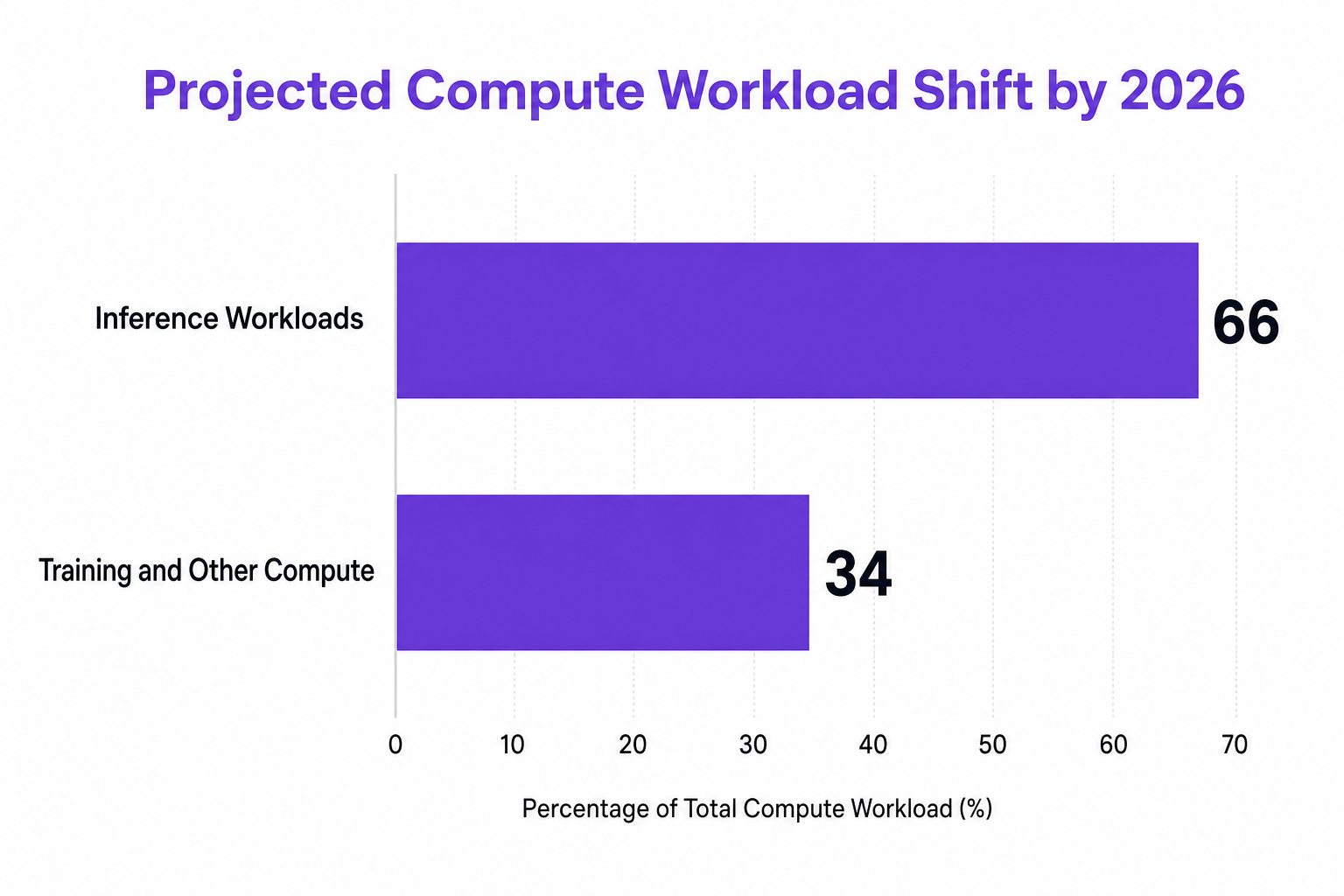
Recent trends underline a transformation in AI economics. Inference workloads are projected to account for about two-thirds of all enterprise compute by 2026, overtaking training in spending focus and operational importance.
With LLM inference optimization software forecasted to grow from $5.6 billion in 2025 to $32.8 billion by 2034, every technology leader needs a playbook for balancing cost, speed, and security. Costs are falling, GPT-3.5-level inference prices dropped 280-fold in two years, but volume and complexity are exploding. Achieving low latency and optimal cost at scale requires a comprehensive approach, not just isolated tweaks.
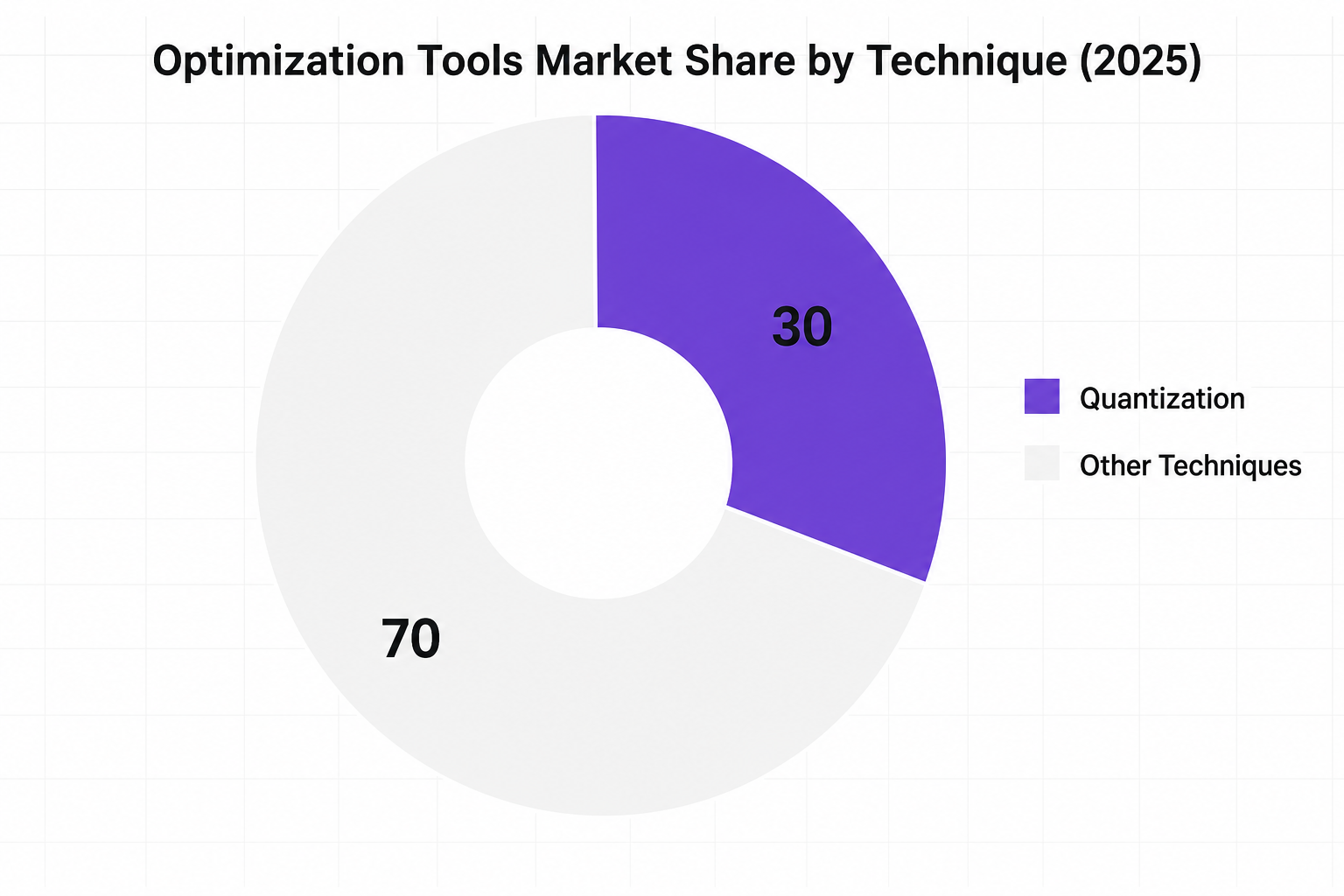
Quantization is now mainstream, representing 30% of all inference optimization techniques deployed by organizations. By converting model weights from floating point to lower-precision (such as INT8), memory requirements decrease, by around 4x, and throughput can leap 2.5x. Quantization-aware inference is also key for enabling ultra-fast, 1-10 millisecond latencies, especially for edge and real-time applications, without significant accuracy loss.
Dynamic batching aggregates incoming LLM or AI requests to process them simultaneously, improving GPU and CPU utilization and lowering per-sample latency. It is especially effective for online API deployments where request volume varies. Implementing batching in model servers (e.g., vLLM or TensorRT-optimized endpoints) not only boosts throughput but also brings consistent performance, even under bursty loads. CloudNuro’s FinOps platform highlights utilization hotspots and batch inefficiencies, turning infrastructure-level data into actionable batch sizing recommendations.
Not all neurons contribute equally to a model’s performance. Model pruning removes redundant or less impactful weights and nodes, preserving accuracy while shrinking model size, and footprint. Combined with compression algorithms, this slashes inference times and resource needs, especially in edge, mobile, and low-latency environments.
Inference-optimized hardware is now the largest revenue segment in the optimization tools space, accounting for nearly half of spend in 2025. Modern inference accelerators, like NVIDIA’s TensorRT, offer kernel fusion, reduced memory bottlenecks, and support for mixed-precision computation. Right-sizing VM types, deploying inference-optimized GPUs, and using hardware-specific model compilers (NVIDIA TensorRT, Jetson, ONNX-TensorRT) can generate significant operating cost reductions.
CloudNuro makes these infrastructure optimizations practical with automated discovery of underutilized assets and real-time cost recommendations for reserved and spot instances across AWS, Azure, GCP, and Oracle Cloud environments.
Kernel fusion combines sequences of model operations into a single, more efficient computational step. This reduces memory access times and overall latency. Both vLLM and TensorRT incorporate operator fusion in their kernels, contributing to measurable improvements in token generation speed and API responsiveness. CloudNuro tracks model serving logs and identifies where operator efficiency gains are possible based on real-world usage.
Distillation shrinks giant models into smaller, faster variants by transferring knowledge from teacher to student models. This is pivotal for enterprise LLM and generative AI deployments where minimal latency and lower cloud bills are prerequisites for scale. Distilled models also tend to consume less memory, delivering significant cost efficiency across inference pipelines.
Sophisticated model servers like vLLM and NVIDIA TensorRT have reset performance expectations for LLM inference. vLLM enables high-concurrency, low-latency LLM serving through cutting-edge scheduling and batch execution. TensorRT turbocharges deep learning models across NVIDIA hardware, offering automatic graph optimizations, kernel selection, and memory planning. ONNX Optimization further streamlines model portability and operator acceleration, making it easier to deploy models at scale and speed. CloudNuro’s seamless integrations help enterprises quickly benchmark, monitor, and transition models between serving stacks, never missing a governance or cost milestone.
Modern FinOps requires architectures that instantly add or remove serving endpoints to match changing demand, helping avoid idle spend and maximize resource utilization. Cloud-native, serverless inference solutions (including GPU-backed containers spun up on-demand) allow enterprises to scale inference with fluctuating traffic patterns, from batch scoring to real-time chatbots. CloudNuro’s platform gives granular visibility into auto-scaling costs and utilization trends, letting teams make informed decisions about runtime, concurrency, and provisioning.
Token-level optimizations, such as speculative decoding and token caching, can dramatically reduce latency for LLMs. By precomputing and reusing common token sequences, organizations achieve faster response times without extra model compute. Efficient caching, combined with request deduplication, directly translates into lower infrastructure costs and higher throughput.
No optimization strategy is complete without FinOps discipline. Fine-grained resource tagging, showback, and chargeback processes give IT and finance teams full transparency into per-inference and per-application cost. Real-time dashboards and alerting on utilization anomalies stop overprovisioning before it starts. CloudNuro enables this with unified SaaS and AI infrastructure views, helping organizations enforce their policies while enabling teams to innovate securely and efficiently.
One major metropolitan transit authority partnered with CloudNuro to embed FinOps decision intelligence across day-to-day AI and SaaS operations. By operationalizing automated cost allocation, VM optimization, and resource governance, the organization achieved ongoing run-rate optimization, predictable AI costs, and full control across a complex technology environment.
Many enterprises now standardize dynamic batching, hardware-accelerated inference, and advanced quantization as part of their regular AI cost control routines. CloudNuro’s automation-first approach transforms what was once a low-level technical challenge into a governed, cross-functional process with measurable results for IT, Finance, and business leadership.
What is inference optimization and why is it important?
Inference optimization is the process of improving the speed, efficiency, and cost-effectiveness of running machine learning models in production. It is essential because inference overtakes training as the most significant economic and operational focus in AI. Optimizing inference means better user experiences, lower bills, and less wasted cloud spend.
How can LLM inference latency be reduced?
Key methods include quantization, dynamic batching, kernel fusion, using specialized inference hardware (like NVIDIA TensorRT), model pruning, distillation, and serverless architectures for automatic scaling. Tools like vLLM and ONNX also offer built-in optimizations for latency.
What are the best tools for inference optimization (like vLLM, TensorRT)?
Leading options include vLLM for high-throughput LLM serving, NVIDIA TensorRT for deep learning model acceleration on GPUs, and ONNX Runtime for cross-framework compatibility and hardware support. Benchmarking and monitoring using CloudNuro lets enterprises determine which tools deliver best results for their specific workloads.
How do you balance cost and speed in LLM inference?
By benchmarking workloads, right-sizing hardware, leveraging quantization and batching, and enforcing governance policies through a FinOps platform like CloudNuro. Transparent allocation, real-time monitoring, and integration with finance teams allow rapid experimentation without sacrificing cost control.
What are real-world examples of inference optimization techniques?
Top techniques successfully used at scale include INT8 quantization for memory and speed; dynamic batching for higher throughput; model pruning for faster edge inference; TensorRT optimization for kernel fusion and memory planning; serverless inference endpoints for instant scaling; and platform-level governance for full visibility into cost and performance.
Inference optimization is a critical driver for competitive, secure, and cost-conscious AI in enterprises. Techniques such as quantization, dynamic batching, advanced serving architectures, and disciplined cost governance give organizations the agility and savings needed in the new era of LLM and machine learning operations.
CloudNuro’s FinOps Services and automation platform deliver the complete toolkit for operationalizing inference optimization, providing end-to-end visibility, automated infrastructure recommendations, and real-time cost governance across SaaS, cloud, and AI environments.
About CloudNuro
CloudNuro is a leader in Enterprise AI Adoption Management, providing enterprises with unmatched visibility, governance, and cost optimization. Recognized twice in a row in the SaaS Management Platforms category and named a Leader in the SoftwareReviews Data Quadrant, CloudNuro is trusted by global enterprises and government agencies to bring financial discipline to SaaS, cloud, and AI. Trusted by enterprises, CloudNuro provides centralized SaaS inventory, license optimization, and renewal management along with advanced cost allocation and chargeback, giving IT and Finance leaders the visibility, control, and cost-conscious culture needed to drive financial discipline.
Request a no cost, no obligation free assessment —just 15 minutes to savings!
Get StartedOptimizing inference is rapidly becoming the focal point for technology leaders and AI engineers. As large language models (LLMs) and machine learning move from experimental to enterprise-scale deployment, managing inference latency and cost is no longer optional, it is essential for sustainable AI operations. Inference optimization is the set of strategies and tools used to accelerate model serving speed while reducing the resources and cost required per prediction.
Enterprises are facing an undeniable economic shift: Inference now dominates AI spending, with organizations under pressure to deliver fast, secure, and financially responsible LLM and AI applications. The good news? Targeted optimizations can yield dramatic improvements, driving competitive advantage and strong governance.
Recent trends underline a transformation in AI economics. Inference workloads are projected to account for about two-thirds of all enterprise compute by 2026, overtaking training in spending focus and operational importance.
With LLM inference optimization software forecasted to grow from $5.6 billion in 2025 to $32.8 billion by 2034, every technology leader needs a playbook for balancing cost, speed, and security. Costs are falling, GPT-3.5-level inference prices dropped 280-fold in two years, but volume and complexity are exploding. Achieving low latency and optimal cost at scale requires a comprehensive approach, not just isolated tweaks.
Quantization is now mainstream, representing 30% of all inference optimization techniques deployed by organizations. By converting model weights from floating point to lower-precision (such as INT8), memory requirements decrease, by around 4x, and throughput can leap 2.5x. Quantization-aware inference is also key for enabling ultra-fast, 1-10 millisecond latencies, especially for edge and real-time applications, without significant accuracy loss.
Dynamic batching aggregates incoming LLM or AI requests to process them simultaneously, improving GPU and CPU utilization and lowering per-sample latency. It is especially effective for online API deployments where request volume varies. Implementing batching in model servers (e.g., vLLM or TensorRT-optimized endpoints) not only boosts throughput but also brings consistent performance, even under bursty loads. CloudNuro’s FinOps platform highlights utilization hotspots and batch inefficiencies, turning infrastructure-level data into actionable batch sizing recommendations.
Not all neurons contribute equally to a model’s performance. Model pruning removes redundant or less impactful weights and nodes, preserving accuracy while shrinking model size, and footprint. Combined with compression algorithms, this slashes inference times and resource needs, especially in edge, mobile, and low-latency environments.
Inference-optimized hardware is now the largest revenue segment in the optimization tools space, accounting for nearly half of spend in 2025. Modern inference accelerators, like NVIDIA’s TensorRT, offer kernel fusion, reduced memory bottlenecks, and support for mixed-precision computation. Right-sizing VM types, deploying inference-optimized GPUs, and using hardware-specific model compilers (NVIDIA TensorRT, Jetson, ONNX-TensorRT) can generate significant operating cost reductions.
CloudNuro makes these infrastructure optimizations practical with automated discovery of underutilized assets and real-time cost recommendations for reserved and spot instances across AWS, Azure, GCP, and Oracle Cloud environments.
Kernel fusion combines sequences of model operations into a single, more efficient computational step. This reduces memory access times and overall latency. Both vLLM and TensorRT incorporate operator fusion in their kernels, contributing to measurable improvements in token generation speed and API responsiveness. CloudNuro tracks model serving logs and identifies where operator efficiency gains are possible based on real-world usage.
Distillation shrinks giant models into smaller, faster variants by transferring knowledge from teacher to student models. This is pivotal for enterprise LLM and generative AI deployments where minimal latency and lower cloud bills are prerequisites for scale. Distilled models also tend to consume less memory, delivering significant cost efficiency across inference pipelines.
Sophisticated model servers like vLLM and NVIDIA TensorRT have reset performance expectations for LLM inference. vLLM enables high-concurrency, low-latency LLM serving through cutting-edge scheduling and batch execution. TensorRT turbocharges deep learning models across NVIDIA hardware, offering automatic graph optimizations, kernel selection, and memory planning. ONNX Optimization further streamlines model portability and operator acceleration, making it easier to deploy models at scale and speed. CloudNuro’s seamless integrations help enterprises quickly benchmark, monitor, and transition models between serving stacks, never missing a governance or cost milestone.
Modern FinOps requires architectures that instantly add or remove serving endpoints to match changing demand, helping avoid idle spend and maximize resource utilization. Cloud-native, serverless inference solutions (including GPU-backed containers spun up on-demand) allow enterprises to scale inference with fluctuating traffic patterns, from batch scoring to real-time chatbots. CloudNuro’s platform gives granular visibility into auto-scaling costs and utilization trends, letting teams make informed decisions about runtime, concurrency, and provisioning.
Token-level optimizations, such as speculative decoding and token caching, can dramatically reduce latency for LLMs. By precomputing and reusing common token sequences, organizations achieve faster response times without extra model compute. Efficient caching, combined with request deduplication, directly translates into lower infrastructure costs and higher throughput.
No optimization strategy is complete without FinOps discipline. Fine-grained resource tagging, showback, and chargeback processes give IT and finance teams full transparency into per-inference and per-application cost. Real-time dashboards and alerting on utilization anomalies stop overprovisioning before it starts. CloudNuro enables this with unified SaaS and AI infrastructure views, helping organizations enforce their policies while enabling teams to innovate securely and efficiently.
One major metropolitan transit authority partnered with CloudNuro to embed FinOps decision intelligence across day-to-day AI and SaaS operations. By operationalizing automated cost allocation, VM optimization, and resource governance, the organization achieved ongoing run-rate optimization, predictable AI costs, and full control across a complex technology environment.
Many enterprises now standardize dynamic batching, hardware-accelerated inference, and advanced quantization as part of their regular AI cost control routines. CloudNuro’s automation-first approach transforms what was once a low-level technical challenge into a governed, cross-functional process with measurable results for IT, Finance, and business leadership.
What is inference optimization and why is it important?
Inference optimization is the process of improving the speed, efficiency, and cost-effectiveness of running machine learning models in production. It is essential because inference overtakes training as the most significant economic and operational focus in AI. Optimizing inference means better user experiences, lower bills, and less wasted cloud spend.
How can LLM inference latency be reduced?
Key methods include quantization, dynamic batching, kernel fusion, using specialized inference hardware (like NVIDIA TensorRT), model pruning, distillation, and serverless architectures for automatic scaling. Tools like vLLM and ONNX also offer built-in optimizations for latency.
What are the best tools for inference optimization (like vLLM, TensorRT)?
Leading options include vLLM for high-throughput LLM serving, NVIDIA TensorRT for deep learning model acceleration on GPUs, and ONNX Runtime for cross-framework compatibility and hardware support. Benchmarking and monitoring using CloudNuro lets enterprises determine which tools deliver best results for their specific workloads.
How do you balance cost and speed in LLM inference?
By benchmarking workloads, right-sizing hardware, leveraging quantization and batching, and enforcing governance policies through a FinOps platform like CloudNuro. Transparent allocation, real-time monitoring, and integration with finance teams allow rapid experimentation without sacrificing cost control.
What are real-world examples of inference optimization techniques?
Top techniques successfully used at scale include INT8 quantization for memory and speed; dynamic batching for higher throughput; model pruning for faster edge inference; TensorRT optimization for kernel fusion and memory planning; serverless inference endpoints for instant scaling; and platform-level governance for full visibility into cost and performance.
Inference optimization is a critical driver for competitive, secure, and cost-conscious AI in enterprises. Techniques such as quantization, dynamic batching, advanced serving architectures, and disciplined cost governance give organizations the agility and savings needed in the new era of LLM and machine learning operations.
CloudNuro’s FinOps Services and automation platform deliver the complete toolkit for operationalizing inference optimization, providing end-to-end visibility, automated infrastructure recommendations, and real-time cost governance across SaaS, cloud, and AI environments.
About CloudNuro
CloudNuro is a leader in Enterprise AI Adoption Management, providing enterprises with unmatched visibility, governance, and cost optimization. Recognized twice in a row in the SaaS Management Platforms category and named a Leader in the SoftwareReviews Data Quadrant, CloudNuro is trusted by global enterprises and government agencies to bring financial discipline to SaaS, cloud, and AI. Trusted by enterprises, CloudNuro provides centralized SaaS inventory, license optimization, and renewal management along with advanced cost allocation and chargeback, giving IT and Finance leaders the visibility, control, and cost-conscious culture needed to drive financial discipline.
Request a no cost, no obligation free assessment - just 15 minutes to savings!
Get StartedWe're offering complimentary ServiceNow license assessments to only 25 enterprises this quarter who want to unlock immediate savings without disrupting operations.
Get Free AssessmentGet Started




CloudNuro Corp
1755 Park St. Suite 207
Naperville, IL 60563
Phone : +1-630-277-9470
Email: info@cloudnuro.com





.webp)

Recognized Leader in SaaS Management Platforms by Info-Tech SoftwareReviews



%20Solutions%20for%20Zero%20Trust%20Networkin.png)
.svg)