

Sign Up
Thank you for Submitting!
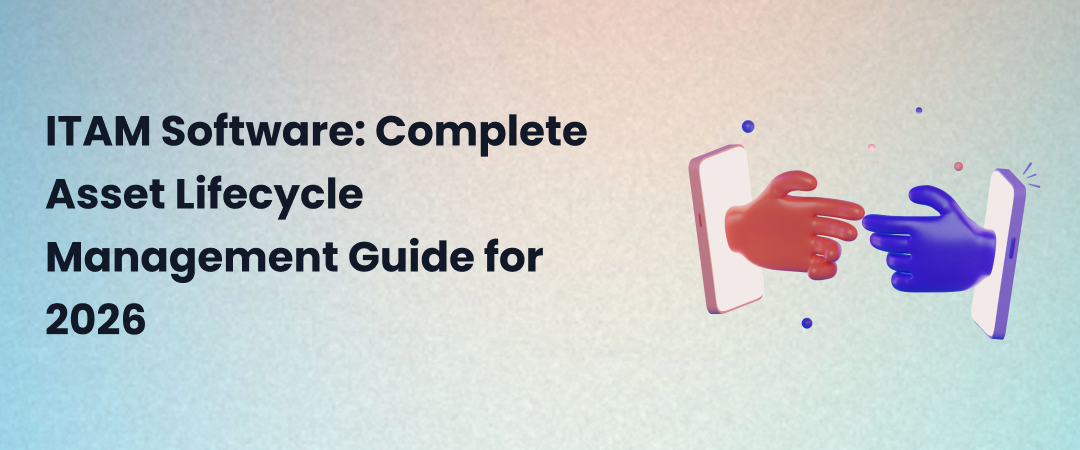
ITAM software enables organizations to track, manage, and optimize IT assets throughout their lifecycle, from procurement and deployment management to retirement. In 2026, effective ITAM platforms must handle hardware, software, SaaS, and cloud assets while maintaining compliance tracking across all stages. This guide covers the complete lifecycle framework, essential capabilities, modern challenges, including SaaS integration, and practical implementation strategies for building a mature asset management practice.
Here is a number that should concern every IT leader: organizations lose an average of 30% of their IT asset value through poor lifecycle management. That includes hardware disposed of too early, software licenses wasted on departed employees, and cloud resources running without purpose.
The complexity has multiplied dramatically. Traditional ITAM software focused on tracking desktops and servers. Today's IT asset managers must govern:
The organizations succeeding at IT asset management in 2026 have moved beyond spreadsheets and point solutions. They have implemented comprehensive ITAM platforms that provide visibility across all asset types and manage assets throughout their lifecycle.
In this guide, we explore IT asset management solutions that address modern complexity, the complete asset lifecycle framework, essential platform capabilities, and practical implementation approaches that deliver measurable value.
ITAM software (IT Asset Management software) refers to platforms that help organizations discover, track, manage, and optimize their IT assets throughout the entire lifecycle of ownership. This encompasses hardware assets, software licenses, SaaS subscriptions, and cloud resources.
IT asset management has transformed significantly:
| Era | Focus | Primary Challenges |
|---|---|---|
| Traditional (Pre-2010) | Hardware tracking | Physical inventory, depreciation |
| License Management (2010-2018) | Software compliance | Vendor audits, true-up costs |
| Cloud Era (2018-2023) | Multi-environment | Shadow IT, SaaS sprawl |
| Unified (2024+) | Complete lifecycle | Hybrid visibility, cost optimization |
ITAM encompasses all IT assets, including hardware, software, and services.
SAM (software asset management) focuses specifically on software licenses and entitlements.
SAM is a subset of ITAM. Modern ITAM platforms typically include SAM capabilities while extending to hardware, cloud, and SaaS management.
Effective ITAM software manages assets through every stage of the IT asset lifecycle:
The lifecycle begins before procurement:
Key Activities:
ITAM Platform Support:
Managing the acquisition process:
Key Activities:
Procurement Tracking Capabilities:
For SaaS procurement specifically, see our SaaS inventory management guide.
Recording assets as they arrive:
Key Activities:
Platform Capabilities:
Moving assets into production use:
Key Activities:
Deployment Management Features:
Understanding asset discovery tools helps ensure deployed assets remain visible.
💡 CloudNuro provides unified visibility across hardware, software, and SaaS assets. Request a demo to see complete lifecycle management in action.
The longest lifecycle stage:
Key Activities:
Operational Capabilities:
Maximizing asset value during operational life:
Key Activities:
For license optimization strategies, understanding actual usage is essential.
End-of-life management:
Key Activities:
Retirement Process Capabilities:
| Stage | Duration | Key Risk | ITAM Value |
|---|---|---|---|
| Planning | Days to weeks | Over-provisioning | Right-sized procurement |
| Procurement | Days to months | Cost overruns | Spend visibility |
| Receiving | Hours to days | Inventory gaps | Complete tracking |
| Deployment | Hours to days | Configuration drift | Standardization |
| Operations | Years | Underutilization | Optimization insights |
| Optimization | Ongoing | Waste accumulation | Cost reduction |
| Retirement | Days to weeks | Security and compliance | Proper disposal |
When evaluating ITAM software, prioritize these essential capabilities:
Finding all assets across the environment:
Discovery Methods:
For detailed coverage, see our guide on ITAM tools for asset tracking.
Single source of truth for all assets:
Repository Capabilities:
Ensuring license and regulatory compliance:
Compliance Features:
Connecting assets to costs:
Financial Capabilities:
For financial integration, understand FinOps and ITAM collaboration.
Streamlining lifecycle processes:
Automation Features:
Driving insights from asset data:
Analytics Capabilities:
💡 CloudNuro delivers actionable insights from your asset data within 24 hours. Get your free assessment.
| Capability | Basic Asset Tracking | Traditional ITAM | Modern ITAM | Unified IT Platform |
|---|---|---|---|---|
| Hardware Discovery | Manual entry | Agent-based | Multi-method | Comprehensive |
| Software Tracking | Limited | License focus | Full SAM | Integrated |
| SaaS Management | None | None or basic | Growing | Native |
| Cloud Assets | None | Limited | API-based | Unified view |
| Lifecycle Workflows | None | Basic | Advanced | End-to-end |
| Compliance Tracking | Spreadsheet | Vendor-specific | Multi-vendor | Holistic |
| Financial Integration | None | Basic | TCO analysis | FinOps aligned |
| ITSM Integration | None | Standard | Bidirectional | Unified |
| Analytics | Basic reports | Standard | Advanced | AI-enhanced |
| Price Range | £5-20/asset/year | £20-50/asset/year | £40-80/asset/year | Custom |
| Best For | Small IT shops | Traditional enterprises | Modern IT | Digital transformation |
Small Organizations (Under 500 assets):
Mid-Size Organizations (500-5000 assets):
Enterprise (5000+ assets):
For organizations considering open-source options, see our guide to open source asset management.
The IT asset lifecycle now extends well beyond traditional hardware and software:
Traditional ITAM software was not designed for SaaS:
SaaS Management Challenges:
Understanding SaaS visibility for asset managers has become essential for complete asset management.
Cloud resources present unique lifecycle challenges:
Cloud-Specific Issues:
For cloud-specific guidance, see our cloud asset management guide.
Modern workforces create tracking challenges:
Distributed Asset Issues:
Effective modern ITAM requires integration with:
Successful ITAM platform implementation requires a structured approach:
Establish Baseline:
Initial Discovery:
Design Lifecycle Processes:
Platform Configuration:
For rationalization approaches, see application rationalization.
Drive Quick Wins:
Establish Cadence:
Expand Capabilities:
Continuous Improvement:
💡 CloudNuro accelerates ITAM maturity with a 15-minute setup and results in 24 hours. Request a demo to see the fastest path to value.
ITAM software (IT Asset Management software) refers to platforms that help organizations discover, track, manage, and optimize IT assets throughout their entire lifecycle. This includes hardware assets (servers, endpoints, network equipment), software licenses, SaaS subscriptions, and cloud resources.
Modern ITAM platforms provide visibility across all asset types, automate lifecycle processes from procurement tracking to retirement, maintain compliance tracking, and deliver analytics that drive optimization decisions.
The complete IT asset lifecycle includes seven stages:
Each stage requires specific processes and controls. See our ITAM tools for asset tracking for tools that support all stages.
ITAM (IT Asset Management) focuses on assets: what you own, where they are, who uses them, and what they cost.
ITSM (IT Service Management) focuses on services: how you deliver IT capabilities to users and manage incidents, changes, and requests.
They are complementary disciplines that share data. Assets support services; service events affect assets. Modern organizations integrate ITAM and ITSM for comprehensive IT governance.
Compliance tracking ensures your organization meets software licensing terms, regulatory requirements, and internal policies:
License Compliance:
Regulatory Compliance:
Poor compliance tracking leads to audit penalties, security vulnerabilities, and operational risk.
Selection should consider:
For SAM-specific tools, see SAM tools to reduce waste.
ITAM typically delivers value through:
| Benefit Area | Typical Impact |
|---|---|
| License compliance savings | 15-30% reduction in true-up costs |
| Waste elimination | 20-35% reduction in unused licenses |
| Procurement efficiency | 10-20% savings through consolidation |
| Audit cost reduction | 40-60% reduction in audit preparation time |
| Refresh optimization | 10-15% extension of useful life |
Organizations with no current ITAM typically see the highest returns. For IT asset management solutions, CloudNuro delivers measurable results within 24 hours.
✅ ITAM software has evolved from simple hardware tracking to comprehensive platforms managing hardware, software, SaaS, and cloud assets across the complete IT asset lifecycle.
✅ The lifecycle includes seven stages: planning, procurement tracking, receiving, deployment management, operations, optimization, and retirement process. Each requires specific processes and platform capabilities.
✅ Modern ITAM must address SaaS visibility, cloud asset complexity, and distributed workforce challenges that traditional platforms cannot handle.
✅ Compliance tracking throughout the lifecycle prevents audit penalties, security vulnerabilities, and regulatory violations.
✅ Core platform capabilities include comprehensive discovery, unified repository, compliance management, financial integration, workflow automation, and analytics.
✅ Implementation should be phased: foundation (discovery), process definition, optimization sprint, then maturity development.
✅ Integration with ITSM, procurement, HR, finance, and SaaS management creates comprehensive IT governance.
ITAM software has become an essential part of the infrastructure for organizations that depend on technology. The complexity of modern IT environments, spanning hardware, software, SaaS, and cloud, exceeds what manual tracking or simple tools can manage.
The organizations succeeding at IT asset management in 2026 have moved beyond tracking to proper lifecycle management. They maintain visibility from the moment an asset is requested through its eventual retirement. They use data to optimize utilization, ensure compliance, and drive cost efficiency. They connect asset management to broader IT and business operations.
The IT asset lifecycle framework provides structure for this comprehensive approach. Each stage, from procurement tracking through deployment management to retirement process, requires specific processes and controls. ITAM platforms that support all stages with automation and analytics deliver the visibility and control modern IT demands.
The question for your organization is not whether to implement ITAM software, but rather how to do so. The question is whether your current approach provides the lifecycle management, compliance tracking, and optimization capabilities your IT complexity requires.
Start with comprehensive discovery. Build processes for each lifecycle stage. Measure and optimize continuously. The cost savings, risk reduction, and operational efficiency that follow justify the investment.
CloudNuro is a leader in Enterprise SaaS Management Platforms, giving enterprises unmatched visibility, governance, and cost optimization. Recognized twice in a row by Gartner in the SaaS Management Platforms (2024, 2025) and named a Leader in the Info-Tech SoftwareReviews Data Quadrant, CloudNuro is trusted by global enterprises and government agencies to bring financial discipline to SaaS, cloud, and AI.
Trusted by enterprises such as Konica Minolta and FederalSignal, CloudNuro provides centralized SaaS inventory, license optimization, and renewal management along with advanced cost allocation and chargeback, giving IT and Finance leaders the visibility, control, and cost-conscious culture needed to drive financial discipline.
As the only Unified FinOps SaaS Management Platform for the Enterprise, CloudNuro brings AI, SaaS, and IaaS management together in a unified view. With a 15-minute setup and measurable results in under 24 hours, CloudNuro gives IT teams a fast path to value.
Request a Demo | Get Free Savings Assessment | Explore Product
Request a no cost, no obligation free assessment —just 15 minutes to savings!
Get StartedITAM software enables organizations to track, manage, and optimize IT assets throughout their lifecycle, from procurement and deployment management to retirement. In 2026, effective ITAM platforms must handle hardware, software, SaaS, and cloud assets while maintaining compliance tracking across all stages. This guide covers the complete lifecycle framework, essential capabilities, modern challenges, including SaaS integration, and practical implementation strategies for building a mature asset management practice.
Here is a number that should concern every IT leader: organizations lose an average of 30% of their IT asset value through poor lifecycle management. That includes hardware disposed of too early, software licenses wasted on departed employees, and cloud resources running without purpose.
The complexity has multiplied dramatically. Traditional ITAM software focused on tracking desktops and servers. Today's IT asset managers must govern:
The organizations succeeding at IT asset management in 2026 have moved beyond spreadsheets and point solutions. They have implemented comprehensive ITAM platforms that provide visibility across all asset types and manage assets throughout their lifecycle.
In this guide, we explore IT asset management solutions that address modern complexity, the complete asset lifecycle framework, essential platform capabilities, and practical implementation approaches that deliver measurable value.
ITAM software (IT Asset Management software) refers to platforms that help organizations discover, track, manage, and optimize their IT assets throughout the entire lifecycle of ownership. This encompasses hardware assets, software licenses, SaaS subscriptions, and cloud resources.
IT asset management has transformed significantly:
| Era | Focus | Primary Challenges |
|---|---|---|
| Traditional (Pre-2010) | Hardware tracking | Physical inventory, depreciation |
| License Management (2010-2018) | Software compliance | Vendor audits, true-up costs |
| Cloud Era (2018-2023) | Multi-environment | Shadow IT, SaaS sprawl |
| Unified (2024+) | Complete lifecycle | Hybrid visibility, cost optimization |
ITAM encompasses all IT assets, including hardware, software, and services.
SAM (software asset management) focuses specifically on software licenses and entitlements.
SAM is a subset of ITAM. Modern ITAM platforms typically include SAM capabilities while extending to hardware, cloud, and SaaS management.
Effective ITAM software manages assets through every stage of the IT asset lifecycle:
The lifecycle begins before procurement:
Key Activities:
ITAM Platform Support:
Managing the acquisition process:
Key Activities:
Procurement Tracking Capabilities:
For SaaS procurement specifically, see our SaaS inventory management guide.
Recording assets as they arrive:
Key Activities:
Platform Capabilities:
Moving assets into production use:
Key Activities:
Deployment Management Features:
Understanding asset discovery tools helps ensure deployed assets remain visible.
💡 CloudNuro provides unified visibility across hardware, software, and SaaS assets. Request a demo to see complete lifecycle management in action.
The longest lifecycle stage:
Key Activities:
Operational Capabilities:
Maximizing asset value during operational life:
Key Activities:
For license optimization strategies, understanding actual usage is essential.
End-of-life management:
Key Activities:
Retirement Process Capabilities:
| Stage | Duration | Key Risk | ITAM Value |
|---|---|---|---|
| Planning | Days to weeks | Over-provisioning | Right-sized procurement |
| Procurement | Days to months | Cost overruns | Spend visibility |
| Receiving | Hours to days | Inventory gaps | Complete tracking |
| Deployment | Hours to days | Configuration drift | Standardization |
| Operations | Years | Underutilization | Optimization insights |
| Optimization | Ongoing | Waste accumulation | Cost reduction |
| Retirement | Days to weeks | Security and compliance | Proper disposal |
When evaluating ITAM software, prioritize these essential capabilities:
Finding all assets across the environment:
Discovery Methods:
For detailed coverage, see our guide on ITAM tools for asset tracking.
Single source of truth for all assets:
Repository Capabilities:
Ensuring license and regulatory compliance:
Compliance Features:
Connecting assets to costs:
Financial Capabilities:
For financial integration, understand FinOps and ITAM collaboration.
Streamlining lifecycle processes:
Automation Features:
Driving insights from asset data:
Analytics Capabilities:
💡 CloudNuro delivers actionable insights from your asset data within 24 hours. Get your free assessment.
| Capability | Basic Asset Tracking | Traditional ITAM | Modern ITAM | Unified IT Platform |
|---|---|---|---|---|
| Hardware Discovery | Manual entry | Agent-based | Multi-method | Comprehensive |
| Software Tracking | Limited | License focus | Full SAM | Integrated |
| SaaS Management | None | None or basic | Growing | Native |
| Cloud Assets | None | Limited | API-based | Unified view |
| Lifecycle Workflows | None | Basic | Advanced | End-to-end |
| Compliance Tracking | Spreadsheet | Vendor-specific | Multi-vendor | Holistic |
| Financial Integration | None | Basic | TCO analysis | FinOps aligned |
| ITSM Integration | None | Standard | Bidirectional | Unified |
| Analytics | Basic reports | Standard | Advanced | AI-enhanced |
| Price Range | £5-20/asset/year | £20-50/asset/year | £40-80/asset/year | Custom |
| Best For | Small IT shops | Traditional enterprises | Modern IT | Digital transformation |
Small Organizations (Under 500 assets):
Mid-Size Organizations (500-5000 assets):
Enterprise (5000+ assets):
For organizations considering open-source options, see our guide to open source asset management.
The IT asset lifecycle now extends well beyond traditional hardware and software:
Traditional ITAM software was not designed for SaaS:
SaaS Management Challenges:
Understanding SaaS visibility for asset managers has become essential for complete asset management.
Cloud resources present unique lifecycle challenges:
Cloud-Specific Issues:
For cloud-specific guidance, see our cloud asset management guide.
Modern workforces create tracking challenges:
Distributed Asset Issues:
Effective modern ITAM requires integration with:
Successful ITAM platform implementation requires a structured approach:
Establish Baseline:
Initial Discovery:
Design Lifecycle Processes:
Platform Configuration:
For rationalization approaches, see application rationalization.
Drive Quick Wins:
Establish Cadence:
Expand Capabilities:
Continuous Improvement:
💡 CloudNuro accelerates ITAM maturity with a 15-minute setup and results in 24 hours. Request a demo to see the fastest path to value.
ITAM software (IT Asset Management software) refers to platforms that help organizations discover, track, manage, and optimize IT assets throughout their entire lifecycle. This includes hardware assets (servers, endpoints, network equipment), software licenses, SaaS subscriptions, and cloud resources.
Modern ITAM platforms provide visibility across all asset types, automate lifecycle processes from procurement tracking to retirement, maintain compliance tracking, and deliver analytics that drive optimization decisions.
The complete IT asset lifecycle includes seven stages:
Each stage requires specific processes and controls. See our ITAM tools for asset tracking for tools that support all stages.
ITAM (IT Asset Management) focuses on assets: what you own, where they are, who uses them, and what they cost.
ITSM (IT Service Management) focuses on services: how you deliver IT capabilities to users and manage incidents, changes, and requests.
They are complementary disciplines that share data. Assets support services; service events affect assets. Modern organizations integrate ITAM and ITSM for comprehensive IT governance.
Compliance tracking ensures your organization meets software licensing terms, regulatory requirements, and internal policies:
License Compliance:
Regulatory Compliance:
Poor compliance tracking leads to audit penalties, security vulnerabilities, and operational risk.
Selection should consider:
For SAM-specific tools, see SAM tools to reduce waste.
ITAM typically delivers value through:
| Benefit Area | Typical Impact |
|---|---|
| License compliance savings | 15-30% reduction in true-up costs |
| Waste elimination | 20-35% reduction in unused licenses |
| Procurement efficiency | 10-20% savings through consolidation |
| Audit cost reduction | 40-60% reduction in audit preparation time |
| Refresh optimization | 10-15% extension of useful life |
Organizations with no current ITAM typically see the highest returns. For IT asset management solutions, CloudNuro delivers measurable results within 24 hours.
✅ ITAM software has evolved from simple hardware tracking to comprehensive platforms managing hardware, software, SaaS, and cloud assets across the complete IT asset lifecycle.
✅ The lifecycle includes seven stages: planning, procurement tracking, receiving, deployment management, operations, optimization, and retirement process. Each requires specific processes and platform capabilities.
✅ Modern ITAM must address SaaS visibility, cloud asset complexity, and distributed workforce challenges that traditional platforms cannot handle.
✅ Compliance tracking throughout the lifecycle prevents audit penalties, security vulnerabilities, and regulatory violations.
✅ Core platform capabilities include comprehensive discovery, unified repository, compliance management, financial integration, workflow automation, and analytics.
✅ Implementation should be phased: foundation (discovery), process definition, optimization sprint, then maturity development.
✅ Integration with ITSM, procurement, HR, finance, and SaaS management creates comprehensive IT governance.
ITAM software has become an essential part of the infrastructure for organizations that depend on technology. The complexity of modern IT environments, spanning hardware, software, SaaS, and cloud, exceeds what manual tracking or simple tools can manage.
The organizations succeeding at IT asset management in 2026 have moved beyond tracking to proper lifecycle management. They maintain visibility from the moment an asset is requested through its eventual retirement. They use data to optimize utilization, ensure compliance, and drive cost efficiency. They connect asset management to broader IT and business operations.
The IT asset lifecycle framework provides structure for this comprehensive approach. Each stage, from procurement tracking through deployment management to retirement process, requires specific processes and controls. ITAM platforms that support all stages with automation and analytics deliver the visibility and control modern IT demands.
The question for your organization is not whether to implement ITAM software, but rather how to do so. The question is whether your current approach provides the lifecycle management, compliance tracking, and optimization capabilities your IT complexity requires.
Start with comprehensive discovery. Build processes for each lifecycle stage. Measure and optimize continuously. The cost savings, risk reduction, and operational efficiency that follow justify the investment.
CloudNuro is a leader in Enterprise SaaS Management Platforms, giving enterprises unmatched visibility, governance, and cost optimization. Recognized twice in a row by Gartner in the SaaS Management Platforms (2024, 2025) and named a Leader in the Info-Tech SoftwareReviews Data Quadrant, CloudNuro is trusted by global enterprises and government agencies to bring financial discipline to SaaS, cloud, and AI.
Trusted by enterprises such as Konica Minolta and FederalSignal, CloudNuro provides centralized SaaS inventory, license optimization, and renewal management along with advanced cost allocation and chargeback, giving IT and Finance leaders the visibility, control, and cost-conscious culture needed to drive financial discipline.
As the only Unified FinOps SaaS Management Platform for the Enterprise, CloudNuro brings AI, SaaS, and IaaS management together in a unified view. With a 15-minute setup and measurable results in under 24 hours, CloudNuro gives IT teams a fast path to value.
Request a Demo | Get Free Savings Assessment | Explore Product
Request a no cost, no obligation free assessment - just 15 minutes to savings!
Get StartedWe're offering complimentary ServiceNow license assessments to only 25 enterprises this quarter who want to unlock immediate savings without disrupting operations.
Get Free AssessmentGet Started



CloudNuro Corp
1755 Park St. Suite 207
Naperville, IL 60563
Phone : +1-630-277-9470
Email: info@cloudnuro.com


.svg)



.webp)

Recognized Leader in SaaS Management Platforms by Info-Tech SoftwareReviews

%20Tools%20for%20Governance%20(2025%20Guide).png)
