

Sign Up
Thank you for Submitting!

In today's rapidly evolving enterprise landscape, organizations investing in large language models (LLMs) face new challenges around performance, compliance, cost, and governance. While the promise of generative AI in driving business value is undeniable, proactively tracking the right LLM metrics is essential to realizing its full potential, and avoiding risk and wasted spend. AI observability is the foundation, turning black-box models into transparent systems that IT, data, and business leaders can govern, optimize, and trust.
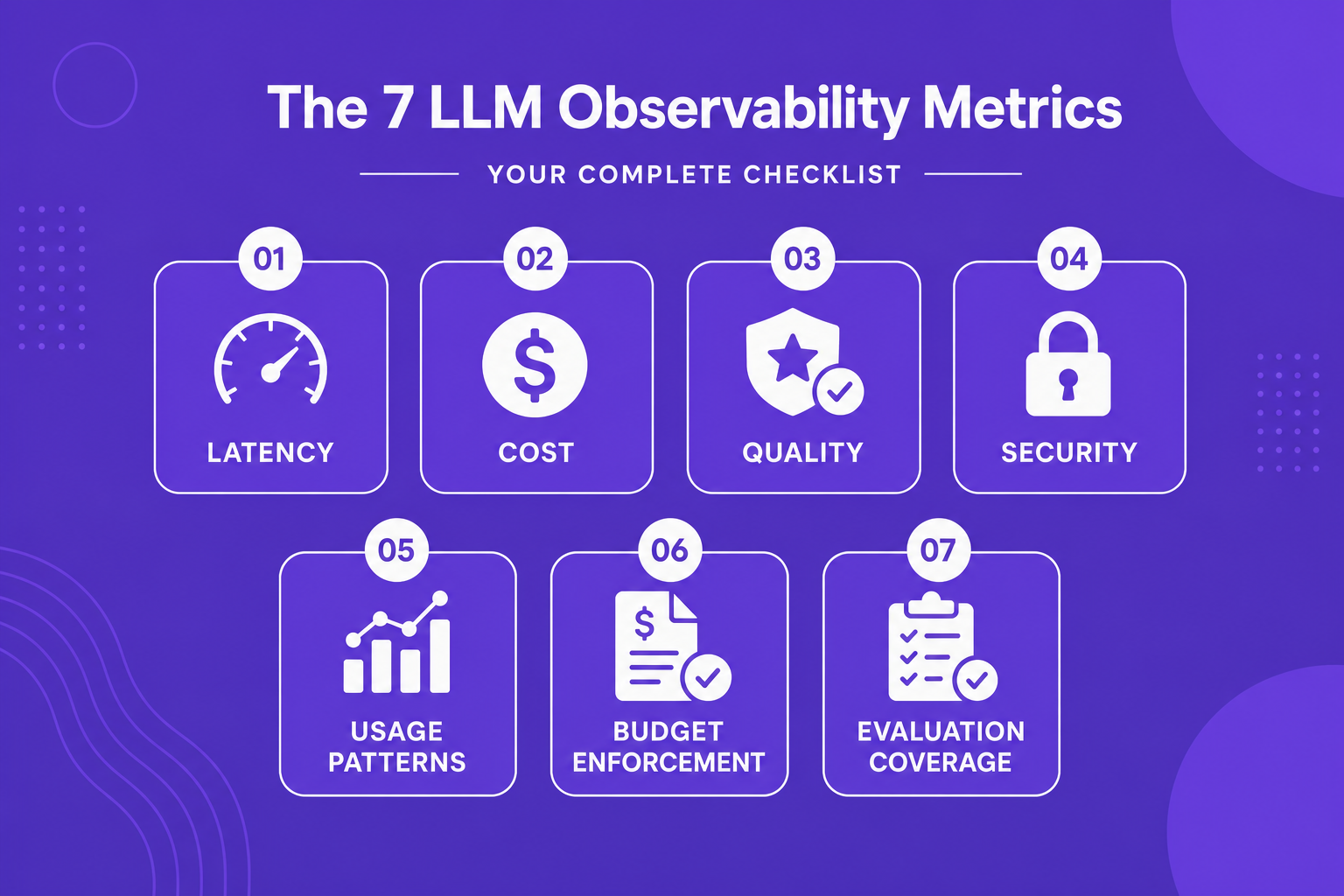
What are the must-track metrics for your enterprise LLM observability stack, and how can best practices in artificial intelligence observability deliver better outcomes? Let’s explore seven essential metrics, the rationale for monitoring each, and how CloudNuro’s AI Custodian helps enterprises succeed.
AI observability is no longer a niche concern; it is a board-level imperative for enterprises deploying LLMs at scale. Consider these industry insights:
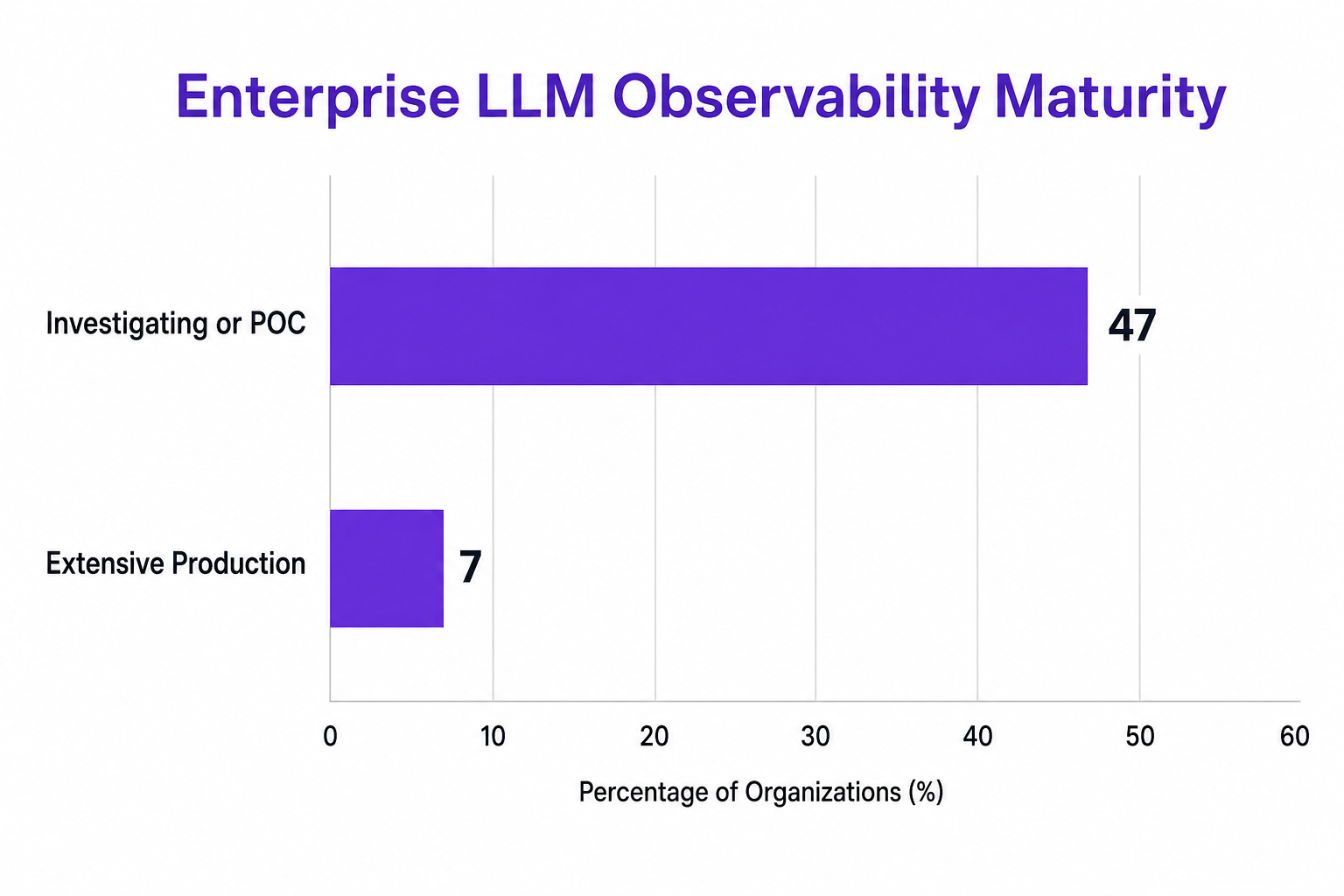
Only 7% of organizations have LLM observability running extensively or exclusively in production,
Nearly half of all enterprises (47%) are currently researching or running a proof of concept for LLM observability,
68% of regulated enterprises have already invested in specialized observability tools.
Monitoring these key metrics is now the standard in overseeing not just LLM performance, but also security, cost optimization, and governance:
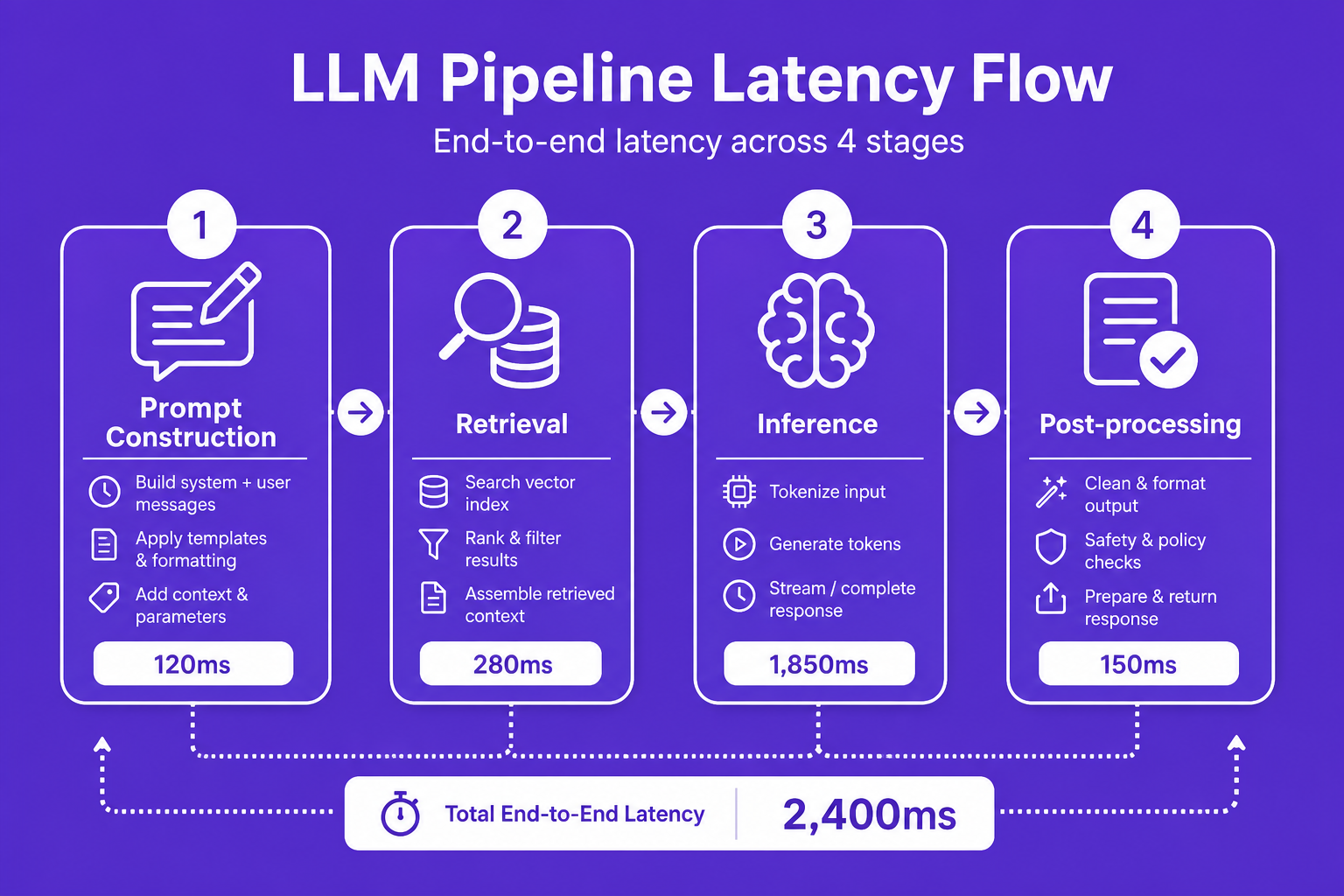
Latency refers to the time it takes for an LLM to receive a prompt and deliver a response. Monitoring latency, including both "Time to First Token" and total response time, directly impacts user experience, system reliability, and operational efficiency. Slow responses can stall business processes or frustrate end users, while excessive delays are often early warning signals for architectural bottlenecks.
Expert Insight: Time to First Token is now considered a first-class user-experience metric because streaming applications often fail perceptually for the user long before total response time becomes an issue.
What to track: End-to-end latency, stage-level latency (prompt, retrieval, inference, post-processing), and real-time latency metrics by agent or application.
CloudNuro’s Approach: CloudNuro captures latency at every stage, visualizing bottlenecks by pipeline component and agent. This enables operational teams to quickly isolate issues and prioritize optimizations.
LLM costs are dynamic, driven by model choice, token volume, inference complexity, and vendor pricing. Cost observability in AI is moving away from simple token counts and toward granular economic indicators such as cost per resolved task or cost of quality. Untracked spend can result in budget overruns or even compliance violations in regulated sectors.
What to track: Agent-level token usage; cost per request, user, or project; compliance with budget limits; custom contract pricing metrics.
CloudNuro’s Approach: Enterprises using CloudNuro’s AI Governance dashboard can upload custom contract rates, enforce budget ceilings by agent or project, and visualize precise usage and financials, ensuring true negotiated costs and maximizing return on every AI investment.
LLM outputs must be accurate, relevant, and safe, especially in domains like healthcare, finance, and government. Quality monitoring has evolved from measuring raw text similarity to evaluating strict task success and groundedness, with both human and automated scoring.
What to track: Task completion rates, groundedness scores, accuracy, and non-repudiation; agent and pipeline-specific quality KPIs.
CloudNuro’s Approach: CloudNuro merges performance data with governance controls, delivering dashboards that highlight success rates and flag reliability or compliance concerns at both macro and micro levels.
Sensitive data exposure, unauthorized model access, and policy violations are major risks for enterprises deploying LLMs. AI observability stacks must include continuous security and compliance monitoring to meet legal and internal requirements.
What to track: PII data leaks, compliance policy breaches, usage violations, and audit records per agent or session.
CloudNuro’s Approach: The AI Custodian module flags potential misuse, including excessive personal use or PII sharing, in real time. Automated alerts and policy-based governance ensure enterprises stay audit-ready and compliant by design.

Understanding how, when, and by whom LLMs are used unlocks actionable insights for scaling, training, and further optimization. Tracking usage patterns helps IT and data leaders strengthen governance, budget forecasting, and operational resilience.
What to track: Agent-level activity; peak usage times; user demographics; periodic consumption graphs.
CloudNuro’s Approach: CloudNuro provides full AI usage visibility across hundreds of applications, enabling enterprises to identify heavy users, spot anomalies, and uncover optimization opportunities.
LLMs can quickly consume vast resources if left unregulated. Integrating strict budget and quota controls in your monitoring strategy helps maintain financial discipline and prevents unauthorized or accidental overspend.
What to track: Budget limits at project/user/agent level; quota breaches; automated enforcement actions.
CloudNuro’s Approach: CloudNuro allows organizations to configure granular budget boundaries, enforces consumption thresholds automatically, and dynamically forecasts future needs based on historical trends.
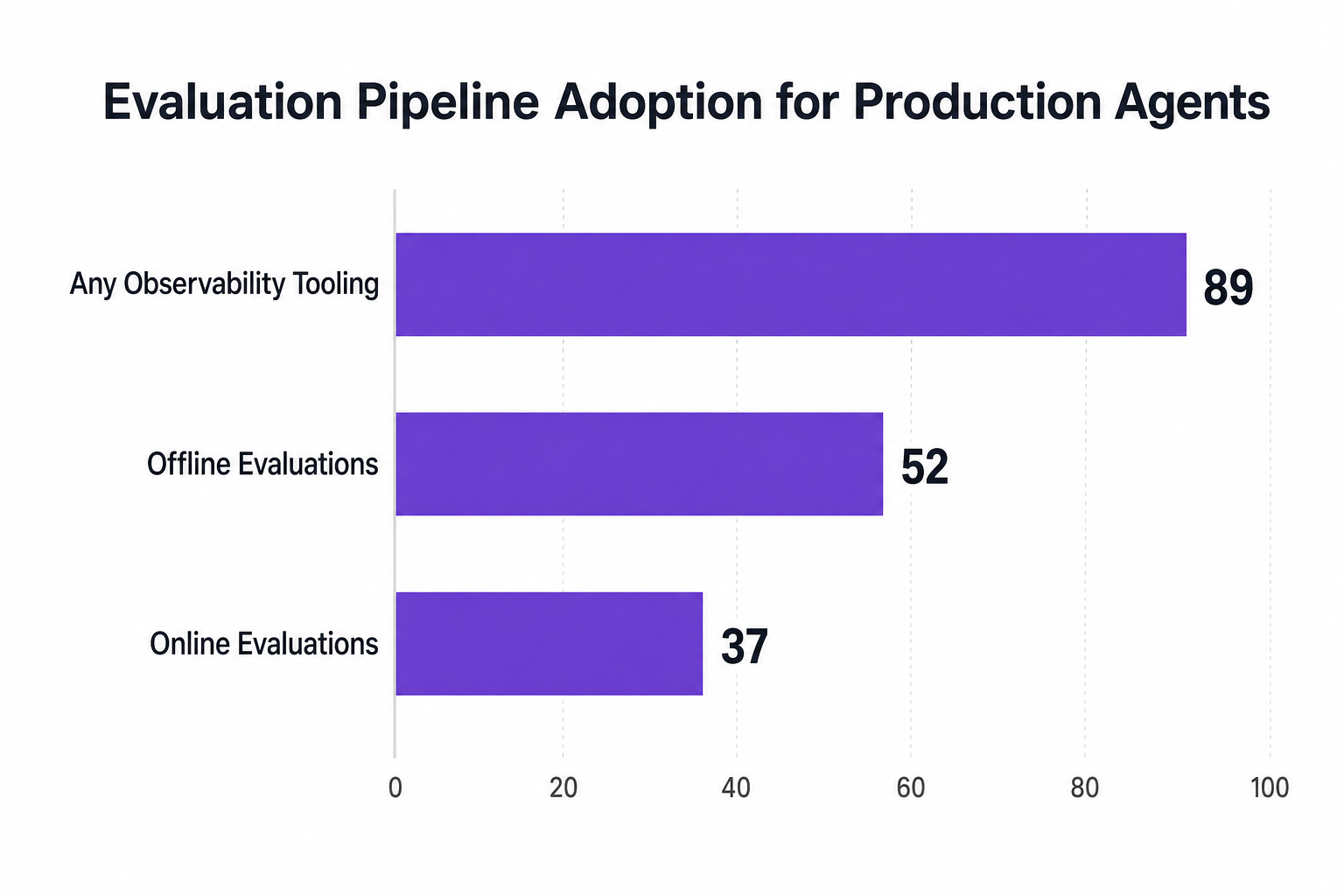
Evaluation pipelines are instrumental in validating LLM performance and uncovering areas for improvement. However, just 37% of teams currently use online evaluations for production AI agents, even as 89% rely on some observability tooling.
What to track: Adoption rates of offline and online evaluation; frequency of pipeline runs; coverage per agent or application.
CloudNuro’s Approach: CloudNuro enables comprehensive tracking of evaluations alongside production metrics, ensuring continuous improvement and alignment with evolving enterprise standards.
What are essential metrics for AI observability in LLM stacks?
Key metrics include latency (especially Time to First Token), cost at the agent and project level, output quality, security/compliance events, usage patterns, strict budget enforcement, and evaluation pipeline adoption.
How does latency affect LLM observability in enterprises?
High latency can degrade user experiences and slow business workflows. Tracking not only overall latency but also stage-specific delays helps pinpoint and resolve bottlenecks, leading to smoother, more reliable AI services.
What KPIs should be tracked for AI model quality and reliability?
Track groundedness, task completion rates, accuracy, and agent-level reliability. Monitoring both raw and governed output quality ensures trust in business-critical AI applications.
How can enterprises optimize the cost of LLM observability?
Optimizing observability costs requires granular token and usage tracking, integration of negotiated pricing, proactive budget enforcement, and automated alerts for spend anomalies. CloudNuro’s cost visualization and forecasting tools are built for this.
What are the best tools for AI monitoring and LLM metrics?
Best-in-class tools offer deep integration, multi-stage insight, and automation. CloudNuro leads with a unified governance-first platform, supporting 400+ enterprise apps and providing actionable dashboards, alerts, and compliance controls for LLM observability.
CloudNuro delivers a governance-first, AI-enabled platform for enterprise LLM observability. Here is how it addresses the most urgent enterprise challenges:
Full Stack Visibility: Unify monitoring across the entire AI, LLM, and SaaS stack, capturing every metric that matters, without silos.
Rapid Time-to-Value: Organizations typically identify 20% to 30% in cost savings within 90 days, with payback periods averaging just 1.5 months.
Automated Rightsizing & Optimization: CloudNuro’s proprietary engine forecasts needs, right-sizes usage, and uncovers savings opportunities automatically.
Compliance and Security by Design: Real-time misuse flagging, strict governance policies, and dynamic enforcement keep your operations secure and audit-ready.
Industry Recognition: Leading global enterprises trust CloudNuro for unmatched visibility, control, and cost discipline across AI and SaaS landscapes.
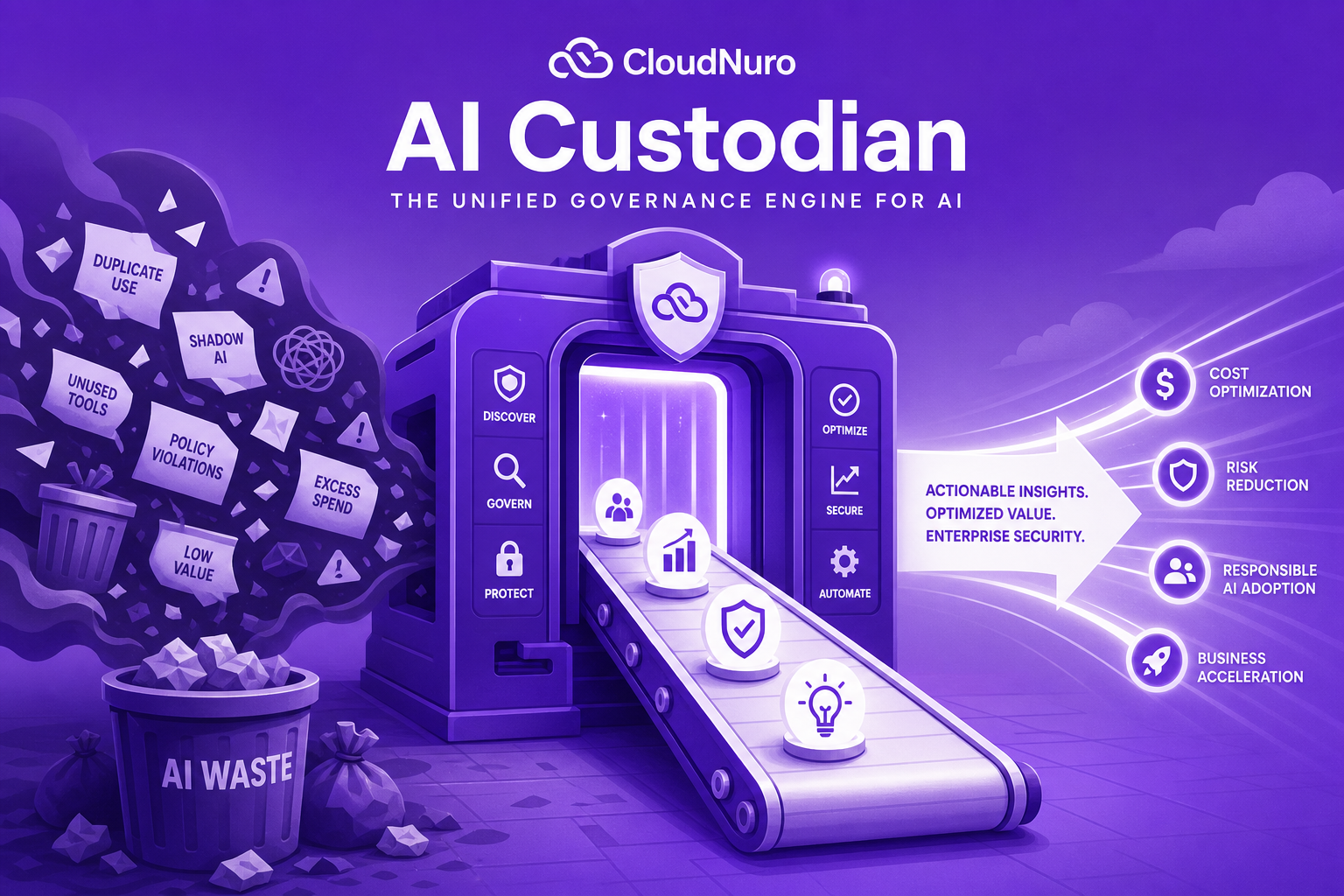
Enterprises moving from proof of concept to production AI cannot rely on guesswork or fragmented monitoring. By tracking these seven LLM observability metrics, organizations unlock better performance, robust governance, and transformative savings. CloudNuro’s AI Custodian offers the actionable insights, automation, and coverage needed to make artificial intelligence observability your competitive edge.
CloudNuro is a leader in Enterprise AI Adoption Management, providing enterprises with unmatched visibility, governance, and cost optimization. Recognized twice in a row in the SaaS Management Platforms category and named a Leader in the SoftwareReviews Data Quadrant, CloudNuro is trusted by global enterprises and government agencies to bring financial discipline to SaaS, cloud, and AI. Trusted by enterprises, CloudNuro provides centralized SaaS inventory, license optimization, and renewal management along with advanced cost allocation and chargeback, giving IT and Finance leaders the visibility, control, and cost-conscious culture needed to drive financial discipline.
Request a no cost, no obligation free assessment —just 15 minutes to savings!
Get StartedIn today's rapidly evolving enterprise landscape, organizations investing in large language models (LLMs) face new challenges around performance, compliance, cost, and governance. While the promise of generative AI in driving business value is undeniable, proactively tracking the right LLM metrics is essential to realizing its full potential, and avoiding risk and wasted spend. AI observability is the foundation, turning black-box models into transparent systems that IT, data, and business leaders can govern, optimize, and trust.
What are the must-track metrics for your enterprise LLM observability stack, and how can best practices in artificial intelligence observability deliver better outcomes? Let’s explore seven essential metrics, the rationale for monitoring each, and how CloudNuro’s AI Custodian helps enterprises succeed.
AI observability is no longer a niche concern; it is a board-level imperative for enterprises deploying LLMs at scale. Consider these industry insights:
Only 7% of organizations have LLM observability running extensively or exclusively in production,
Nearly half of all enterprises (47%) are currently researching or running a proof of concept for LLM observability,
68% of regulated enterprises have already invested in specialized observability tools.
Monitoring these key metrics is now the standard in overseeing not just LLM performance, but also security, cost optimization, and governance:
Latency refers to the time it takes for an LLM to receive a prompt and deliver a response. Monitoring latency, including both "Time to First Token" and total response time, directly impacts user experience, system reliability, and operational efficiency. Slow responses can stall business processes or frustrate end users, while excessive delays are often early warning signals for architectural bottlenecks.
Expert Insight: Time to First Token is now considered a first-class user-experience metric because streaming applications often fail perceptually for the user long before total response time becomes an issue.
What to track: End-to-end latency, stage-level latency (prompt, retrieval, inference, post-processing), and real-time latency metrics by agent or application.
CloudNuro’s Approach: CloudNuro captures latency at every stage, visualizing bottlenecks by pipeline component and agent. This enables operational teams to quickly isolate issues and prioritize optimizations.
LLM costs are dynamic, driven by model choice, token volume, inference complexity, and vendor pricing. Cost observability in AI is moving away from simple token counts and toward granular economic indicators such as cost per resolved task or cost of quality. Untracked spend can result in budget overruns or even compliance violations in regulated sectors.
What to track: Agent-level token usage; cost per request, user, or project; compliance with budget limits; custom contract pricing metrics.
CloudNuro’s Approach: Enterprises using CloudNuro’s AI Governance dashboard can upload custom contract rates, enforce budget ceilings by agent or project, and visualize precise usage and financials, ensuring true negotiated costs and maximizing return on every AI investment.
LLM outputs must be accurate, relevant, and safe, especially in domains like healthcare, finance, and government. Quality monitoring has evolved from measuring raw text similarity to evaluating strict task success and groundedness, with both human and automated scoring.
What to track: Task completion rates, groundedness scores, accuracy, and non-repudiation; agent and pipeline-specific quality KPIs.
CloudNuro’s Approach: CloudNuro merges performance data with governance controls, delivering dashboards that highlight success rates and flag reliability or compliance concerns at both macro and micro levels.
Sensitive data exposure, unauthorized model access, and policy violations are major risks for enterprises deploying LLMs. AI observability stacks must include continuous security and compliance monitoring to meet legal and internal requirements.
What to track: PII data leaks, compliance policy breaches, usage violations, and audit records per agent or session.
CloudNuro’s Approach: The AI Custodian module flags potential misuse, including excessive personal use or PII sharing, in real time. Automated alerts and policy-based governance ensure enterprises stay audit-ready and compliant by design.
Understanding how, when, and by whom LLMs are used unlocks actionable insights for scaling, training, and further optimization. Tracking usage patterns helps IT and data leaders strengthen governance, budget forecasting, and operational resilience.
What to track: Agent-level activity; peak usage times; user demographics; periodic consumption graphs.
CloudNuro’s Approach: CloudNuro provides full AI usage visibility across hundreds of applications, enabling enterprises to identify heavy users, spot anomalies, and uncover optimization opportunities.
LLMs can quickly consume vast resources if left unregulated. Integrating strict budget and quota controls in your monitoring strategy helps maintain financial discipline and prevents unauthorized or accidental overspend.
What to track: Budget limits at project/user/agent level; quota breaches; automated enforcement actions.
CloudNuro’s Approach: CloudNuro allows organizations to configure granular budget boundaries, enforces consumption thresholds automatically, and dynamically forecasts future needs based on historical trends.
Evaluation pipelines are instrumental in validating LLM performance and uncovering areas for improvement. However, just 37% of teams currently use online evaluations for production AI agents, even as 89% rely on some observability tooling.
What to track: Adoption rates of offline and online evaluation; frequency of pipeline runs; coverage per agent or application.
CloudNuro’s Approach: CloudNuro enables comprehensive tracking of evaluations alongside production metrics, ensuring continuous improvement and alignment with evolving enterprise standards.
What are essential metrics for AI observability in LLM stacks?
Key metrics include latency (especially Time to First Token), cost at the agent and project level, output quality, security/compliance events, usage patterns, strict budget enforcement, and evaluation pipeline adoption.
How does latency affect LLM observability in enterprises?
High latency can degrade user experiences and slow business workflows. Tracking not only overall latency but also stage-specific delays helps pinpoint and resolve bottlenecks, leading to smoother, more reliable AI services.
What KPIs should be tracked for AI model quality and reliability?
Track groundedness, task completion rates, accuracy, and agent-level reliability. Monitoring both raw and governed output quality ensures trust in business-critical AI applications.
How can enterprises optimize the cost of LLM observability?
Optimizing observability costs requires granular token and usage tracking, integration of negotiated pricing, proactive budget enforcement, and automated alerts for spend anomalies. CloudNuro’s cost visualization and forecasting tools are built for this.
What are the best tools for AI monitoring and LLM metrics?
Best-in-class tools offer deep integration, multi-stage insight, and automation. CloudNuro leads with a unified governance-first platform, supporting 400+ enterprise apps and providing actionable dashboards, alerts, and compliance controls for LLM observability.
CloudNuro delivers a governance-first, AI-enabled platform for enterprise LLM observability. Here is how it addresses the most urgent enterprise challenges:
Full Stack Visibility: Unify monitoring across the entire AI, LLM, and SaaS stack, capturing every metric that matters, without silos.
Rapid Time-to-Value: Organizations typically identify 20% to 30% in cost savings within 90 days, with payback periods averaging just 1.5 months.
Automated Rightsizing & Optimization: CloudNuro’s proprietary engine forecasts needs, right-sizes usage, and uncovers savings opportunities automatically.
Compliance and Security by Design: Real-time misuse flagging, strict governance policies, and dynamic enforcement keep your operations secure and audit-ready.
Industry Recognition: Leading global enterprises trust CloudNuro for unmatched visibility, control, and cost discipline across AI and SaaS landscapes.
Enterprises moving from proof of concept to production AI cannot rely on guesswork or fragmented monitoring. By tracking these seven LLM observability metrics, organizations unlock better performance, robust governance, and transformative savings. CloudNuro’s AI Custodian offers the actionable insights, automation, and coverage needed to make artificial intelligence observability your competitive edge.
CloudNuro is a leader in Enterprise AI Adoption Management, providing enterprises with unmatched visibility, governance, and cost optimization. Recognized twice in a row in the SaaS Management Platforms category and named a Leader in the SoftwareReviews Data Quadrant, CloudNuro is trusted by global enterprises and government agencies to bring financial discipline to SaaS, cloud, and AI. Trusted by enterprises, CloudNuro provides centralized SaaS inventory, license optimization, and renewal management along with advanced cost allocation and chargeback, giving IT and Finance leaders the visibility, control, and cost-conscious culture needed to drive financial discipline.
Request a no cost, no obligation free assessment - just 15 minutes to savings!
Get StartedWe're offering complimentary ServiceNow license assessments to only 25 enterprises this quarter who want to unlock immediate savings without disrupting operations.
Get Free AssessmentGet Started




CloudNuro Corp
1755 Park St. Suite 207
Naperville, IL 60563
Phone : +1-630-277-9470
Email: info@cloudnuro.com





.webp)

Recognized Leader in SaaS Management Platforms by Info-Tech SoftwareReviews



.svg)