

Sign Up
Thank you for Submitting!
The pace of large language model (LLM) creation has become relentless. New AI models are released at a furious rate, each promising better results, higher efficiency, or niche capabilities. For enterprise leaders, the excitement of AI innovation is matched by new risks: unpredictably rising costs, governance gaps, and the creeping chaos of "model sprawl."

The question facing every CIO and IT leader: How can you achieve scalable AI governance and keep your enterprise operations efficient when models multiply faster than anyone can reasonably evaluate or test them? With LLMs flooding the market and user demands growing, even the strongest enterprise architecture feels the strain.
This article explores the forces behind LLM model sprawl, the critical dangers, and how CloudNuro’s AI Custodian platform provides unified visibility, governance, and cost control, empowering IT and finance teams to manage explosion in complexity and build a secure, cost-efficient future for business AI.
LLM model sprawl refers to the rapid proliferation of large language models, tools, and agent deployments across an organization. Today, more than 70% of businesses already use three or more AI models inside their operations, and the share deploying six or more models has nearly doubled year over year. In the past 12 months, organizations reported an 11-fold increase in the number of AI models put into production.
Why does this matter? Each new model or tool increases the surface area for security, the likelihood of compliance breaches, and the chances of redundant or runaway SaaS spending. The result is a new era of AI complexity management, where the challenge is not adopting AI, but reining it in.
Common pitfalls of unchecked LLM sprawl include:
Inability to track which models are in use, where, and by whom
Shadow IT, unapproved model endpoints, and unauthorized data flows
Ballooning costs from idle agents, duplicate deployments, and unused licenses
Difficulty maintaining regulatory compliance as model updates outpace traditional controls
How big is this explosion? Let’s look at the data:
The volume of registered AI models has surged by 1,018%.
The average enterprise now deploys 4.7 distinct AI models per account, up from just 2.1 last year.
The density and variety of available LLMs doubles every 3.5 months.
The enterprise AI model market is projected to grow from 6.7 billion to 71.1 billion within a decade.
Organizations deploying multi-model routing architectures report a median cost reduction of 71%, yet the pathway to such savings is blocked by visibility and governance challenges.
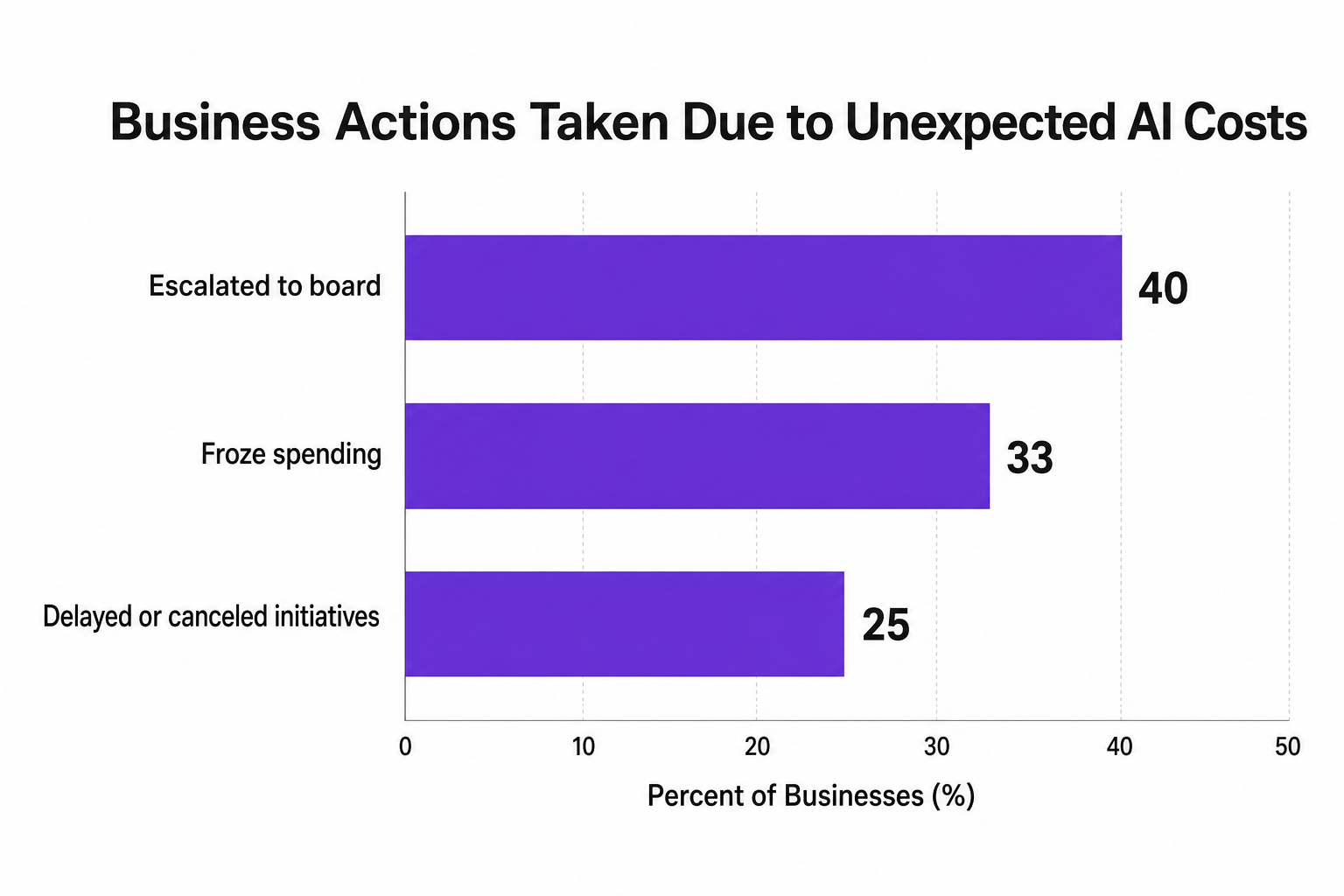
Several trends are driving the surge:
Workloads are spread across diverse providers and sizes rather than standardized on a single foundational model.
Rapid adoption of small, open-source, and flash models is increasing competition for each use case.
Security surface areas expand with each integration, raising the risk of data leaks and compliance failures.
Expert insight confirms that overruns in AI spend stem directly from gaps in forecasting and operational visibility, not simply from poor budgeting. Engineering teams are abandoning single-model architectures in favor of multi-model portfolios to improve flexibility and reduce risk. However, as model portfolios grow, so does the complexity for IT operations and finance to monitor, govern, and optimize them at scale.
Unchecked LLM sprawl introduces significant risks for enterprises:
Lost Visibility: Without unified dashboards, IT teams struggle to locate all model endpoints or track usage statistics. Shadow AI can emerge undetected, undermining security and compliance.
Uncontrolled Costs: The spread of duplicate and idle AI agents drives up licensing, infrastructure, and SaaS fees, bleeding budgets dry.
Compliance Gaps: Frequent model updates and the uncontrolled adoption of new AI tools disrupt regular security reviews, raising the risk of privacy violations.
Ineffective Governance: Organizations lacking automated policy enforcement or real-time filtering are more vulnerable to sensitive data leaks in AI prompts and responses.
A large public sector organization, for example, centralized access for thousands of distributed employees to achieve automated cost control and unified governance. Another global pharmaceutical enterprise slashed unapproved AI app usage by 32% and saved 14 million in a single year, testament to the high stakes and real-world ROI of effective AI stewardship.
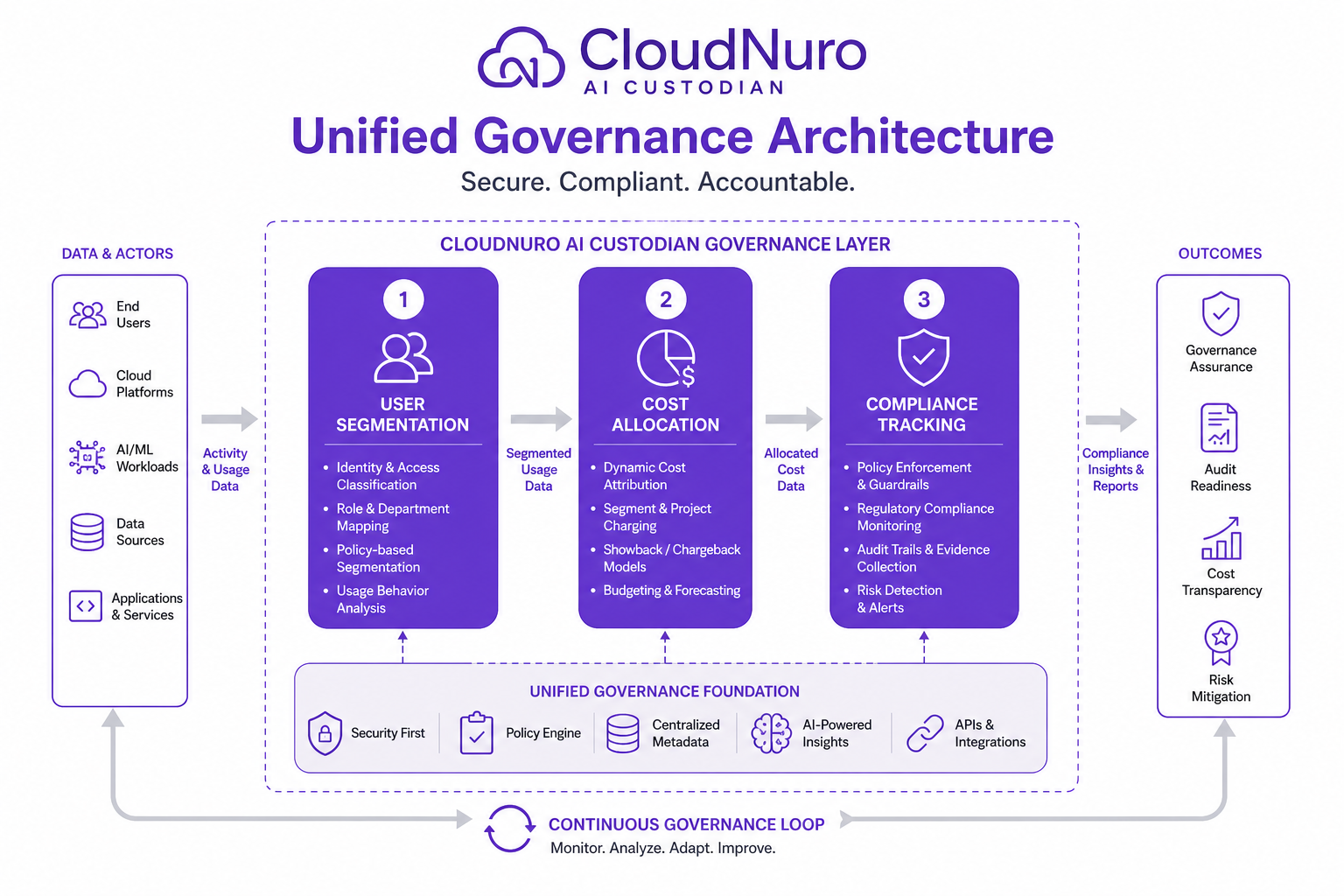
CloudNuro’s AI Custodian is purpose-built to combat model sprawl and complexity:
Complete Visibility: CloudNuro unifies model, user, and agent activities into a single, real-time dashboard, making it easy to spot shadow IT, unmanaged model endpoints, and unused licenses before they become budgetary threats.
Automated Cost Optimization: Project-based budgeting tools track exact token consumption and financial outlay down to the agent and model level. The system segments users into Power, General, Low, and Dormant bands, allowing rapid license clawbacks and immediate savings.
Real-Time Security & Compliance: Inline compliance filters intercept PII and block sensitive keywords or outputs in real time, long before they reach an unauthorized model. Integrations with enterprise security suites like Purview flag potential over-sharing or data leakage.
Smart Model Management: Automated analytics surface idle agents, duplicate deployments, and misapplied model horsepower, providing IT leaders with actionable recommendations to reduce redundancy and optimize overall AI architecture.
The body always opens with text.
Enterprise Impact:
A transportation agency reclaimed 1,700 unused licenses, achieving 64% savings on productivity suites via usage-based insights and structured governance.
An enterprise transportation client reached 100% AI usage visibility, curbing unwarranted AI investment expansion.
Mastering model sprawl requires a strategic, multi-pronged approach:
Centralize Inventory: Use automated tools to maintain a single source of truth for all AI models, agents, and endpoints deployed across the organization.
Automate Model Evaluation: Implement scalable LLM benchmarking and automated testing frameworks to accelerate safe adoption, reducing manual overhead and delay.
Monitor Usage and Adoption: Continuously track user behaviors, prompt frequency, and agent activity to highlight dormant, duplicate, or shadow models.
Integrate Security & Compliance at Every Step: Embed real-time PII scrubbing, output filtering, and compliance guardrails before AI prompts ever reach production.
Enforce Project-Based Cost Allocation: Tie model usage directly to project budgets and stakeholders, clarifying ownership and surfacing overspend risk before it impacts the bottom line.
CloudNuro’s AI Custodian automates these best practices, replacing chaos with control, oversight, and sustainable cost savings.
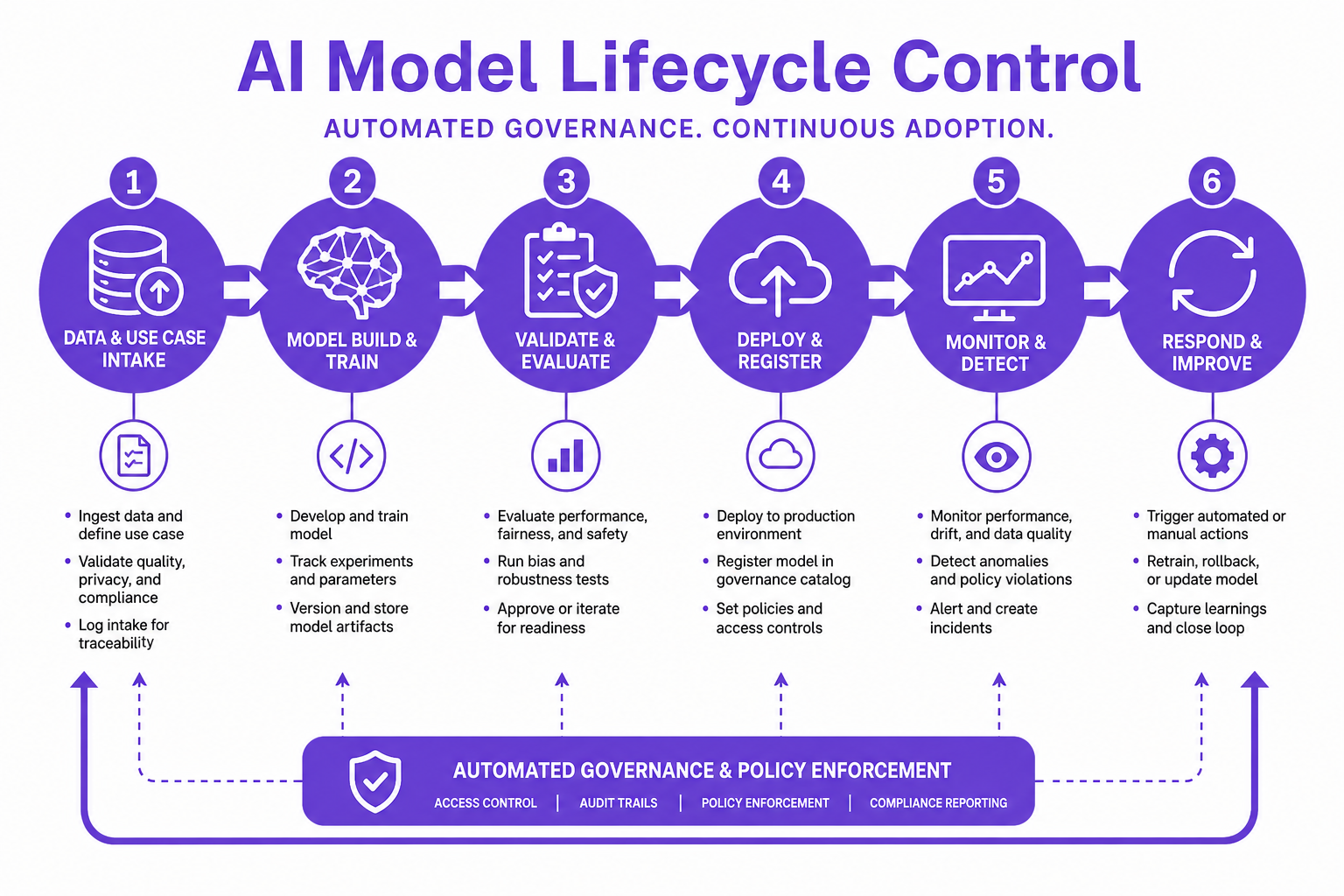
With the LLM market evolving at breakneck speed, proactive model lifecycle management is essential. Recommendations include:
Lifecycle Control: Institute regular model reviews and end-of-life processes to retire underperforming or redundant deployments.
Policy Automation: Leverage governance-first platforms that automate compliance rule enforcement and role-based model access.
Adoption Monitoring: Track and report on prompt activity, engagement by user band, and dormant tool exposure.
Communication: Equip stakeholders with clear, actionable reporting to drive cost optimization and continuous improvement.
Enterprises that take a proactive, governance-centered approach, leveraging platforms like CloudNuro, are best positioned to safely keep pace as models multiply and evolve.
LLM model sprawl is the uncontrolled proliferation of large language models and AI tools across an enterprise, resulting in complexity, cost overruns, increased risk, and governance gaps.
By deploying unified monitoring platforms, automating model inventories, and instituting scalable, automated evaluation frameworks, enterprises can track and manage new model releases without overwhelming IT operations.
Best practices include centralized model inventory, automated benchmarking, continuous usage monitoring, real-time compliance filtering, and project-based cost controls.
Rapid model proliferation introduces issues such as compliance blind spots, ballooning licensing costs, confusion over model ownership, and an expanded attack surface for security incidents.
Organizations should automate model lifecycle management, implement strict policy enforcement platforms, and maintain continuous monitoring of AI usage to preempt unnecessary sprawl.
The future of enterprise AI will depend not just on innovation, but on governance, discipline, and the ability to keep pace with relentless model proliferation. As LLM model sprawl accelerates, the winners will be those who unify visibility, automate compliance, and optimize cost, without stifling growth.
CloudNuro’s AI Custodian empowers enterprise technology leaders to make the wild surge in AI manageable, secure, and accountable. The result: your business gains agility and intelligence while safeguarding budget and compliance. Stop model sprawl before it becomes model chaos, start building a disciplined AI operation today.
About CloudNuro
CloudNuro is a leader in Enterprise AI Adoption Management, providing enterprises with unmatched visibility, governance, and cost optimization. Recognized twice in a row in the SaaS Management Platforms category and named a Leader in the SoftwareReviews Data Quadrant, CloudNuro is trusted by global enterprises and government agencies to bring financial discipline to SaaS, cloud, and AI. Trusted by enterprises, CloudNuro provides centralized SaaS inventory, license optimization, and renewal management along with advanced cost allocation and chargeback, giving IT and Finance leaders the visibility, control, and cost-conscious culture needed to drive financial discipline.
Request a no cost, no obligation free assessment —just 15 minutes to savings!
Get StartedThe pace of large language model (LLM) creation has become relentless. New AI models are released at a furious rate, each promising better results, higher efficiency, or niche capabilities. For enterprise leaders, the excitement of AI innovation is matched by new risks: unpredictably rising costs, governance gaps, and the creeping chaos of "model sprawl."
The question facing every CIO and IT leader: How can you achieve scalable AI governance and keep your enterprise operations efficient when models multiply faster than anyone can reasonably evaluate or test them? With LLMs flooding the market and user demands growing, even the strongest enterprise architecture feels the strain.
This article explores the forces behind LLM model sprawl, the critical dangers, and how CloudNuro’s AI Custodian platform provides unified visibility, governance, and cost control, empowering IT and finance teams to manage explosion in complexity and build a secure, cost-efficient future for business AI.
LLM model sprawl refers to the rapid proliferation of large language models, tools, and agent deployments across an organization. Today, more than 70% of businesses already use three or more AI models inside their operations, and the share deploying six or more models has nearly doubled year over year. In the past 12 months, organizations reported an 11-fold increase in the number of AI models put into production.
Why does this matter? Each new model or tool increases the surface area for security, the likelihood of compliance breaches, and the chances of redundant or runaway SaaS spending. The result is a new era of AI complexity management, where the challenge is not adopting AI, but reining it in.
Common pitfalls of unchecked LLM sprawl include:
Inability to track which models are in use, where, and by whom
Shadow IT, unapproved model endpoints, and unauthorized data flows
Ballooning costs from idle agents, duplicate deployments, and unused licenses
Difficulty maintaining regulatory compliance as model updates outpace traditional controls
How big is this explosion? Let’s look at the data:
The volume of registered AI models has surged by 1,018%.
The average enterprise now deploys 4.7 distinct AI models per account, up from just 2.1 last year.
The density and variety of available LLMs doubles every 3.5 months.
The enterprise AI model market is projected to grow from 6.7 billion to 71.1 billion within a decade.
Organizations deploying multi-model routing architectures report a median cost reduction of 71%, yet the pathway to such savings is blocked by visibility and governance challenges.
Several trends are driving the surge:
Workloads are spread across diverse providers and sizes rather than standardized on a single foundational model.
Rapid adoption of small, open-source, and flash models is increasing competition for each use case.
Security surface areas expand with each integration, raising the risk of data leaks and compliance failures.
Expert insight confirms that overruns in AI spend stem directly from gaps in forecasting and operational visibility, not simply from poor budgeting. Engineering teams are abandoning single-model architectures in favor of multi-model portfolios to improve flexibility and reduce risk. However, as model portfolios grow, so does the complexity for IT operations and finance to monitor, govern, and optimize them at scale.
Unchecked LLM sprawl introduces significant risks for enterprises:
Lost Visibility: Without unified dashboards, IT teams struggle to locate all model endpoints or track usage statistics. Shadow AI can emerge undetected, undermining security and compliance.
Uncontrolled Costs: The spread of duplicate and idle AI agents drives up licensing, infrastructure, and SaaS fees, bleeding budgets dry.
Compliance Gaps: Frequent model updates and the uncontrolled adoption of new AI tools disrupt regular security reviews, raising the risk of privacy violations.
Ineffective Governance: Organizations lacking automated policy enforcement or real-time filtering are more vulnerable to sensitive data leaks in AI prompts and responses.
A large public sector organization, for example, centralized access for thousands of distributed employees to achieve automated cost control and unified governance. Another global pharmaceutical enterprise slashed unapproved AI app usage by 32% and saved 14 million in a single year, testament to the high stakes and real-world ROI of effective AI stewardship.
CloudNuro’s AI Custodian is purpose-built to combat model sprawl and complexity:
Complete Visibility: CloudNuro unifies model, user, and agent activities into a single, real-time dashboard, making it easy to spot shadow IT, unmanaged model endpoints, and unused licenses before they become budgetary threats.
Automated Cost Optimization: Project-based budgeting tools track exact token consumption and financial outlay down to the agent and model level. The system segments users into Power, General, Low, and Dormant bands, allowing rapid license clawbacks and immediate savings.
Real-Time Security & Compliance: Inline compliance filters intercept PII and block sensitive keywords or outputs in real time, long before they reach an unauthorized model. Integrations with enterprise security suites like Purview flag potential over-sharing or data leakage.
Smart Model Management: Automated analytics surface idle agents, duplicate deployments, and misapplied model horsepower, providing IT leaders with actionable recommendations to reduce redundancy and optimize overall AI architecture.
The body always opens with text.
Enterprise Impact:
A transportation agency reclaimed 1,700 unused licenses, achieving 64% savings on productivity suites via usage-based insights and structured governance.
An enterprise transportation client reached 100% AI usage visibility, curbing unwarranted AI investment expansion.
Mastering model sprawl requires a strategic, multi-pronged approach:
Centralize Inventory: Use automated tools to maintain a single source of truth for all AI models, agents, and endpoints deployed across the organization.
Automate Model Evaluation: Implement scalable LLM benchmarking and automated testing frameworks to accelerate safe adoption, reducing manual overhead and delay.
Monitor Usage and Adoption: Continuously track user behaviors, prompt frequency, and agent activity to highlight dormant, duplicate, or shadow models.
Integrate Security & Compliance at Every Step: Embed real-time PII scrubbing, output filtering, and compliance guardrails before AI prompts ever reach production.
Enforce Project-Based Cost Allocation: Tie model usage directly to project budgets and stakeholders, clarifying ownership and surfacing overspend risk before it impacts the bottom line.
CloudNuro’s AI Custodian automates these best practices, replacing chaos with control, oversight, and sustainable cost savings.
With the LLM market evolving at breakneck speed, proactive model lifecycle management is essential. Recommendations include:
Lifecycle Control: Institute regular model reviews and end-of-life processes to retire underperforming or redundant deployments.
Policy Automation: Leverage governance-first platforms that automate compliance rule enforcement and role-based model access.
Adoption Monitoring: Track and report on prompt activity, engagement by user band, and dormant tool exposure.
Communication: Equip stakeholders with clear, actionable reporting to drive cost optimization and continuous improvement.
Enterprises that take a proactive, governance-centered approach, leveraging platforms like CloudNuro, are best positioned to safely keep pace as models multiply and evolve.
LLM model sprawl is the uncontrolled proliferation of large language models and AI tools across an enterprise, resulting in complexity, cost overruns, increased risk, and governance gaps.
By deploying unified monitoring platforms, automating model inventories, and instituting scalable, automated evaluation frameworks, enterprises can track and manage new model releases without overwhelming IT operations.
Best practices include centralized model inventory, automated benchmarking, continuous usage monitoring, real-time compliance filtering, and project-based cost controls.
Rapid model proliferation introduces issues such as compliance blind spots, ballooning licensing costs, confusion over model ownership, and an expanded attack surface for security incidents.
Organizations should automate model lifecycle management, implement strict policy enforcement platforms, and maintain continuous monitoring of AI usage to preempt unnecessary sprawl.
The future of enterprise AI will depend not just on innovation, but on governance, discipline, and the ability to keep pace with relentless model proliferation. As LLM model sprawl accelerates, the winners will be those who unify visibility, automate compliance, and optimize cost, without stifling growth.
CloudNuro’s AI Custodian empowers enterprise technology leaders to make the wild surge in AI manageable, secure, and accountable. The result: your business gains agility and intelligence while safeguarding budget and compliance. Stop model sprawl before it becomes model chaos, start building a disciplined AI operation today.
About CloudNuro
CloudNuro is a leader in Enterprise AI Adoption Management, providing enterprises with unmatched visibility, governance, and cost optimization. Recognized twice in a row in the SaaS Management Platforms category and named a Leader in the SoftwareReviews Data Quadrant, CloudNuro is trusted by global enterprises and government agencies to bring financial discipline to SaaS, cloud, and AI. Trusted by enterprises, CloudNuro provides centralized SaaS inventory, license optimization, and renewal management along with advanced cost allocation and chargeback, giving IT and Finance leaders the visibility, control, and cost-conscious culture needed to drive financial discipline.
Request a no cost, no obligation free assessment - just 15 minutes to savings!
Get StartedWe're offering complimentary ServiceNow license assessments to only 25 enterprises this quarter who want to unlock immediate savings without disrupting operations.
Get Free AssessmentGet Started




CloudNuro Corp
1755 Park St. Suite 207
Naperville, IL 60563
Phone : +1-630-277-9470
Email: info@cloudnuro.com





.webp)

Recognized Leader in SaaS Management Platforms by Info-Tech SoftwareReviews
.png)

.png)
.svg)