

Sign Up
Thank you for Submitting!
SaaS user access provisioning is the process of granting the right users the right access to the right cloud applications at the right time. In the context of employee onboarding and offboarding, it is the foundation of how securely and efficiently people enter and exit your digital workplace.
Done well, provisioning and deprovisioning reduce risk, improve productivity, and avoid costly license waste. Done poorly, they create orphaned SaaS accounts, audit findings, and unexpected spend that keeps IT and Finance teams on the defensive.
This guide explains how SaaS user access provisioning and deprovisioning work, why automation is now essential, and how to modernize your digital employee lifecycle with strong governance and cost discipline.
SaaS user access provisioning is the set of workflows that create, configure, and maintain user accounts and permissions across cloud applications. It typically starts when an employee is hired or changes roles and continues as their responsibilities evolve.
Instead of manually creating accounts in each application, modern IT teams aim for user provisioning automation, often driven by HR or identity systems as the source of truth.
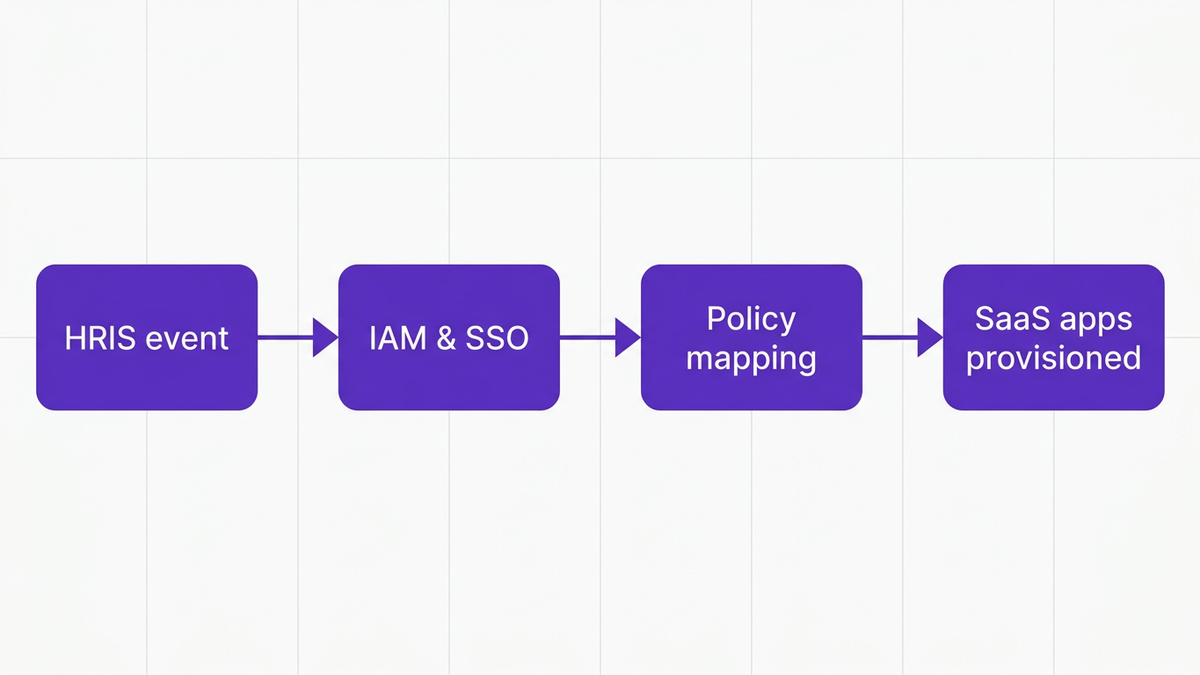
At a practical level, SaaS user access provisioning includes:
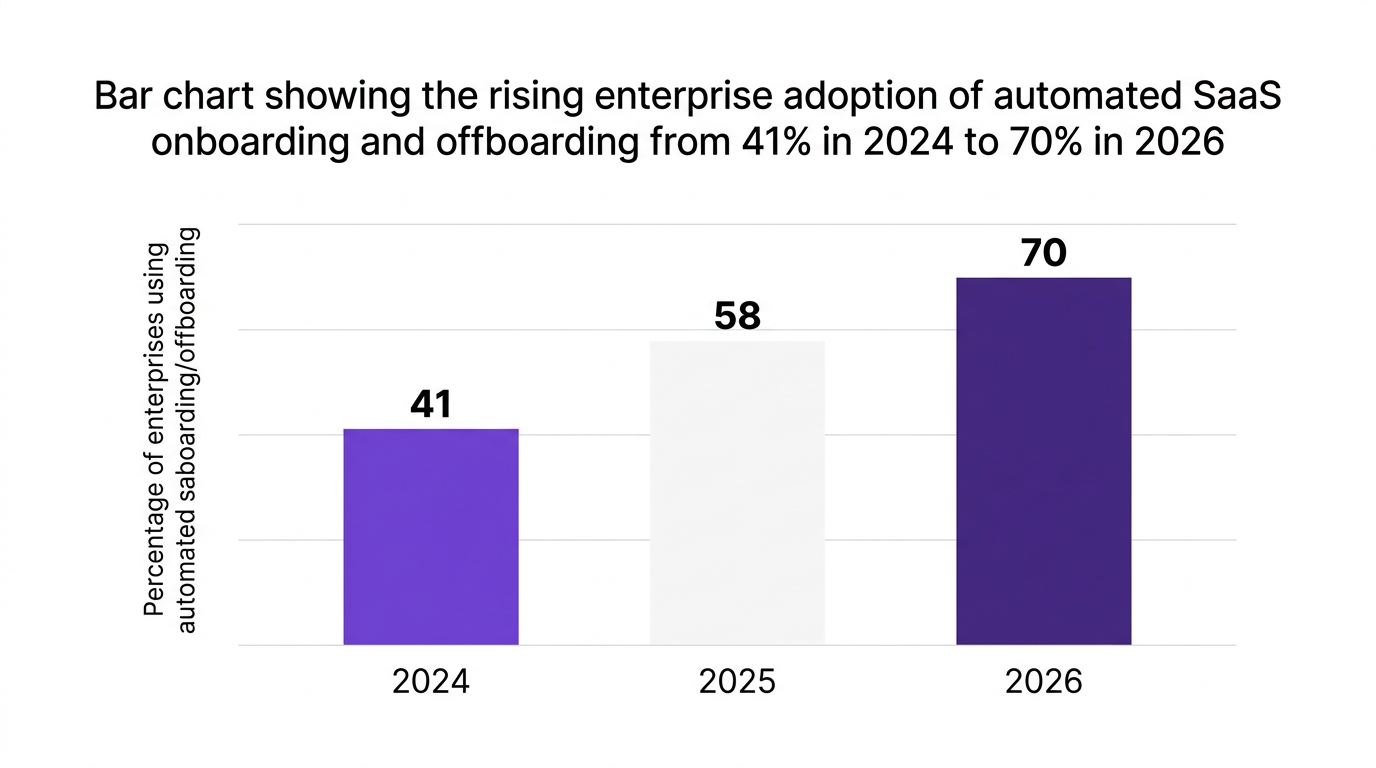
According to a recent identity management report from 2026, 88% of organizations say manual onboarding and offboarding is the leading cause of identity lifecycle management gaps, with automation adoption expected to reach 70% by 2026. That shift reflects a simple truth: the volume and complexity of SaaS apps have outgrown manual processes.
Provisioning is one pillar of SaaS identity lifecycle management, which manages access from day one to the last day:
Treat this as a continuous digital employee lifecycle, not a one-time event. Each stage changes which SaaS apps, data sets, and permissions are appropriate, and each change has direct cost and risk impact.
SaaS deprovisioning is the inverse of provisioning: it is the process of removing, revoking, or downgrading user access to SaaS applications when employees leave or change roles. This is the core of any effective employee offboarding process.
According to a 2026 security risks forecast, orphaned SaaS accounts increase the probability of security breaches by 45%, and breaches tied to improper deprovisioning are expected to grow by 18% in 2026. That risk profile makes deprovisioning a security and compliance priority, not just an IT clean-up exercise.
Effective deprovisioning starts with clear policies and reliable automation. Core SaaS deprovisioning best practices include:
According to a compliance trends outlook for 2026, 60% of enterprises report compliance audit failures due to inadequate SaaS deprovisioning and inconsistent access governance. Automated deprovisioning is a direct way to cut that number by standardizing and documenting every step.
Weak provisioning and deprovisioning are among the most common security risks in onboarding and offboarding. They undercut even strong security controls by leaving gaps attackers or insiders can exploit.
Key risks include:
A 2026 enterprise IT survey notes that orphaned SaaS accounts are a top contributor to access-related incidents, especially in regulated sectors. Another 2026 enterprise SaaS planning survey found that 72% of IT leaders consider SaaS identity lifecycle automation the top strategic priority for reducing operational risk and boosting productivity.
Many teams rely on spreadsheets and emailed checklists to track offboarding. On paper, it looks controlled. In practice, it depends on:
This breaks down with remote work, contractor churn, and SaaS sprawl. A single missed step can leave sensitive data and costly licenses exposed for months.
Provisioning and deprovisioning are not just IT hygiene. They are direct levers for SaaS spend optimization and audit readiness.
A 2026 SaaS spend research publication reports that an average of 30% of SaaS licenses remain unused after employees leave or change roles, costing large enterprises over 17 million dollars annually by 2026. Another SaaS governance efficiency analysis shows automated SaaS offboarding can cut license waste by up to 22% and reduce provisioning times by as much as 85%.
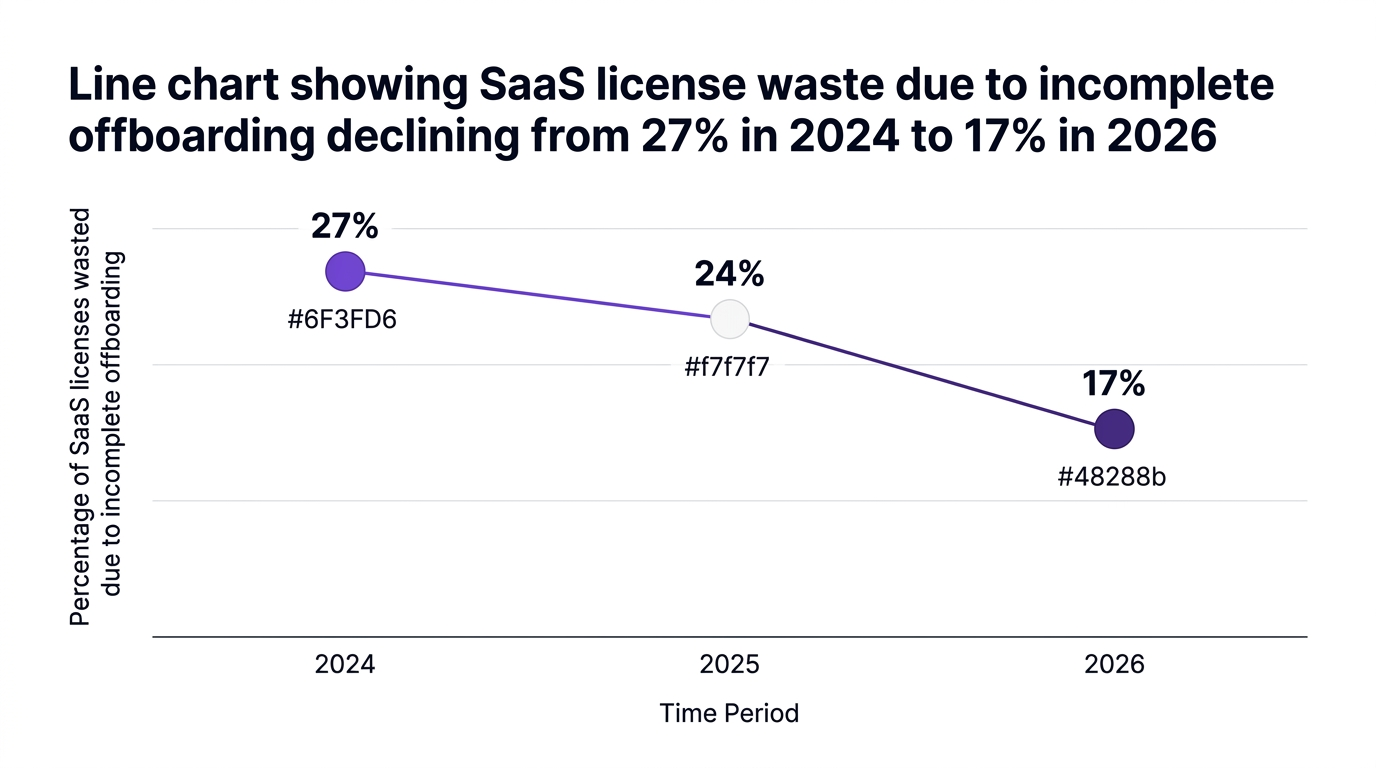
From a cost lens, weak deprovisioning means:
From a compliance lens, poor access governance means:
According to a recent enterprise IT report, organizations that standardize identity lifecycle processes are significantly more likely to pass compliance audits on the first cycle and report lower SaaS-related incidents.
A global financial institution automated its SaaS onboarding and offboarding through an AI-driven access governance solution. Within a year, it:
Similarly, a large healthcare provider implemented role-based deprovisioning automation. It eliminated 99% of orphaned accounts and improved regulatory scores across two consecutive audits.
These examples highlight a pattern: cost savings from SaaS offboarding are as much about risk reduction and compliance as they are about reclaiming licenses.
Manual workflows cannot keep pace with the scale and speed of cloud adoption. That is why SaaS identity lifecycle management is shifting to automation, powered by integrations with HRIS, IAM, and ITSM.
According to a 2026 automation market forecast, zero-touch onboarding and automated SaaS offboarding are expected to surpass 65 percent penetration among large enterprises. This reflects a broad move from ticket-driven processes to policy-driven automation.
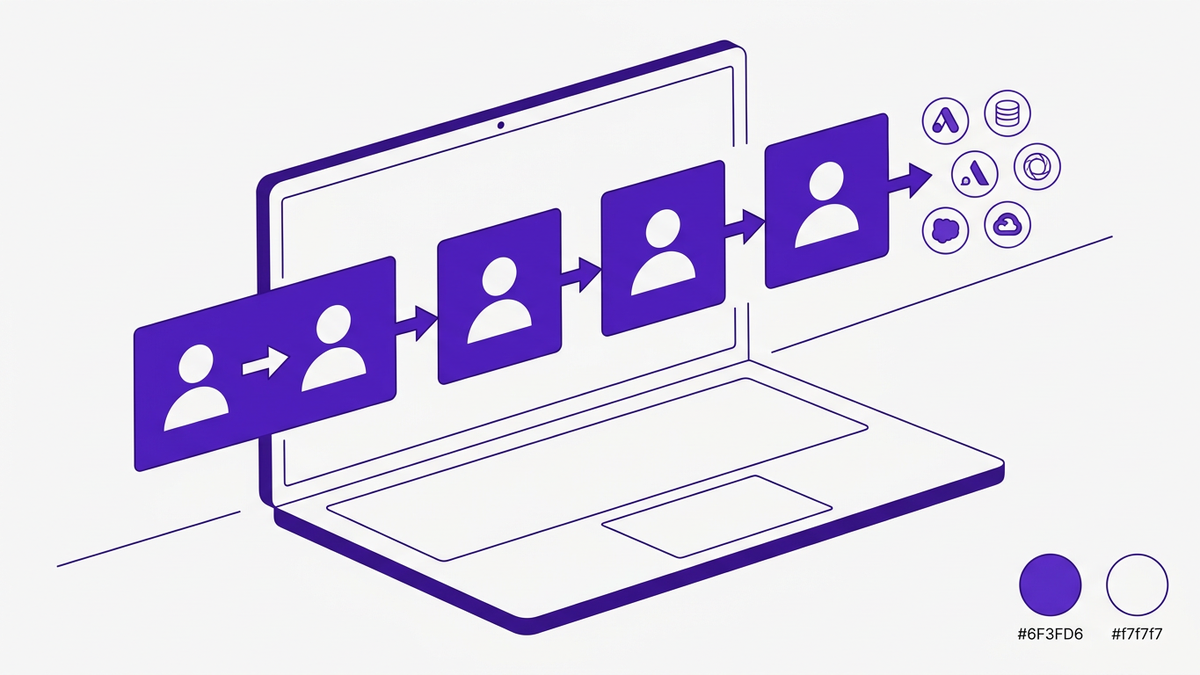
Mature teams design SaaS onboarding workflows that deliver zero-touch onboarding SaaS experiences:
The result is employee onboarding automation where a new hire can have secure access to all required apps on day one, without manual account creation. This improves productivity and consistency, while reducing helpdesk ticket volume.
On the offboarding side, the termination protocol for SaaS should trigger deprovisioning when HR or IT marks a user as inactive:
This is where SaaS deprovisioning best practices intersect with ITSM workflow automation and HRIS integration. The goal is to remove the human memory component, so no one has to “remember” which apps a user accessed.
There is a valid concern that misconfigured policies could over-provision or deprovision incorrectly at scale. That is why:
The risk of controlled automation, however, is typically lower than the cumulative risk of inconsistent manual operations across dozens or hundreds of SaaS apps.
To operationalize this, IT, Security, and HR teams should align on a pragmatic SaaS onboarding checklist and offboarding checklist tailored to their environment.
For each new hire or role change, ensure your SaaS user access provisioning covers:
This checklist should be encoded as policy in your user provisioning automation platform, not just stored as a document.
For each leaver, contractor end, or long-term leave, your employee offboarding process should:
With automation, these steps can execute in minutes, not days, supporting both compliance in SaaS onboarding and offboarding obligations.
CloudNuro is designed to bring automation, governance, and cost discipline to the entire digital employee lifecycle across SaaS and cloud apps. It addresses the common failure points in onboarding and offboarding that create risk, waste, and audit noise.
CloudNuro AI Custodian provides a single-pane-of-glass for cloud app user management, integrating with more than 400 SaaS and public cloud applications. This centralizes:
By correlating HR, identity, and SaaS usage data, CloudNuro strengthens enterprise SaaS governance and reduces blind spots that manual methods often miss.
CloudNuro enables policy-based SaaS user access provisioning that fuels zero-touch onboarding SaaS initiatives:
This reduces provisioning times, cuts ticket volume, and supports employee onboarding automation at scale while keeping security controls intact.
For offboarding, CloudNuro focuses on risk and cost:
Combined with CloudNuro FinOps Services, organizations can actively identify unused or underutilized licenses and track cost savings from SaaS offboarding over time.
CloudNuro's Microsoft 365 Custodian and Salesforce Custodian modules go deeper into these critical platforms:
These capabilities improve both SaaS identity lifecycle management and compliance outcomes, especially during audits and internal reviews.
SaaS user access provisioning is the process of creating, configuring, and managing user accounts and permissions across cloud applications. It typically starts when an employee is hired and includes assigning licenses, setting roles, and enforcing access control for SaaS apps.
Automated offboarding ensures that access is removed quickly and consistently when employees or contractors leave. It reduces security risks in onboarding and offboarding, minimizes orphaned SaaS accounts, and improves compliance by providing reliable logs of deprovisioning actions.
Organizations can avoid orphaned accounts by connecting HRIS and IAM systems to a central SaaS identity lifecycle management platform. When HR or IT updates employment status, policies should automatically revoke or adjust access across all integrated SaaS apps.
Poor deprovisioning leaves former employees, contractors, or vendors with access to corporate data and systems. This increases the chance of data leaks, unauthorized activity, and compliance violations, especially when admin-level access is left active.
Effective lifecycle management standardizes provisioning and deprovisioning, which reduces unused licenses and SaaS license waste. It also strengthens enterprise SaaS governance by enforcing consistent policies, improving auditability, and reducing incidents tied to mismanaged access.
Single sign-on and multi-factor authentication centralize and harden authentication for SaaS apps. Integrated into SaaS onboarding workflows, they help ensure new users are onboarded with secure, consistent sign-in experiences and that high-risk apps have appropriate authentication strength from day one.
SaaS user access provisioning is no longer just an IT operations concern. It is a core capability that shapes security, compliance, productivity, and financial outcomes across the entire digital employee lifecycle.
By prioritizing automated provisioning and deprovisioning, tightening SaaS identity lifecycle management, and eliminating orphaned SaaS accounts, organizations can significantly improve security posture, pass audits with less friction, and reduce SaaS license waste.
CloudNuro helps enterprises achieve precisely that, with policy-driven automation, deep visibility, and built-in cost optimization across SaaS and cloud estates.
To see how CloudNuro can modernize your SaaS user access provisioning and offboarding processes, align IT and Finance, and drive measurable savings, request a personalized walkthrough of the platform.
Request a no cost, no obligation free assessment —just 15 minutes to savings!
Get StartedSaaS user access provisioning is the process of granting the right users the right access to the right cloud applications at the right time. In the context of employee onboarding and offboarding, it is the foundation of how securely and efficiently people enter and exit your digital workplace.
Done well, provisioning and deprovisioning reduce risk, improve productivity, and avoid costly license waste. Done poorly, they create orphaned SaaS accounts, audit findings, and unexpected spend that keeps IT and Finance teams on the defensive.
This guide explains how SaaS user access provisioning and deprovisioning work, why automation is now essential, and how to modernize your digital employee lifecycle with strong governance and cost discipline.
SaaS user access provisioning is the set of workflows that create, configure, and maintain user accounts and permissions across cloud applications. It typically starts when an employee is hired or changes roles and continues as their responsibilities evolve.
Instead of manually creating accounts in each application, modern IT teams aim for user provisioning automation, often driven by HR or identity systems as the source of truth.
At a practical level, SaaS user access provisioning includes:
According to a recent identity management report from 2026, 88% of organizations say manual onboarding and offboarding is the leading cause of identity lifecycle management gaps, with automation adoption expected to reach 70% by 2026. That shift reflects a simple truth: the volume and complexity of SaaS apps have outgrown manual processes.
Provisioning is one pillar of SaaS identity lifecycle management, which manages access from day one to the last day:
Treat this as a continuous digital employee lifecycle, not a one-time event. Each stage changes which SaaS apps, data sets, and permissions are appropriate, and each change has direct cost and risk impact.
SaaS deprovisioning is the inverse of provisioning: it is the process of removing, revoking, or downgrading user access to SaaS applications when employees leave or change roles. This is the core of any effective employee offboarding process.
According to a 2026 security risks forecast, orphaned SaaS accounts increase the probability of security breaches by 45%, and breaches tied to improper deprovisioning are expected to grow by 18% in 2026. That risk profile makes deprovisioning a security and compliance priority, not just an IT clean-up exercise.
Effective deprovisioning starts with clear policies and reliable automation. Core SaaS deprovisioning best practices include:
According to a compliance trends outlook for 2026, 60% of enterprises report compliance audit failures due to inadequate SaaS deprovisioning and inconsistent access governance. Automated deprovisioning is a direct way to cut that number by standardizing and documenting every step.
Weak provisioning and deprovisioning are among the most common security risks in onboarding and offboarding. They undercut even strong security controls by leaving gaps attackers or insiders can exploit.
Key risks include:
A 2026 enterprise IT survey notes that orphaned SaaS accounts are a top contributor to access-related incidents, especially in regulated sectors. Another 2026 enterprise SaaS planning survey found that 72% of IT leaders consider SaaS identity lifecycle automation the top strategic priority for reducing operational risk and boosting productivity.
Many teams rely on spreadsheets and emailed checklists to track offboarding. On paper, it looks controlled. In practice, it depends on:
This breaks down with remote work, contractor churn, and SaaS sprawl. A single missed step can leave sensitive data and costly licenses exposed for months.
Provisioning and deprovisioning are not just IT hygiene. They are direct levers for SaaS spend optimization and audit readiness.
A 2026 SaaS spend research publication reports that an average of 30% of SaaS licenses remain unused after employees leave or change roles, costing large enterprises over 17 million dollars annually by 2026. Another SaaS governance efficiency analysis shows automated SaaS offboarding can cut license waste by up to 22% and reduce provisioning times by as much as 85%.
From a cost lens, weak deprovisioning means:
From a compliance lens, poor access governance means:
According to a recent enterprise IT report, organizations that standardize identity lifecycle processes are significantly more likely to pass compliance audits on the first cycle and report lower SaaS-related incidents.
A global financial institution automated its SaaS onboarding and offboarding through an AI-driven access governance solution. Within a year, it:
Similarly, a large healthcare provider implemented role-based deprovisioning automation. It eliminated 99% of orphaned accounts and improved regulatory scores across two consecutive audits.
These examples highlight a pattern: cost savings from SaaS offboarding are as much about risk reduction and compliance as they are about reclaiming licenses.
Manual workflows cannot keep pace with the scale and speed of cloud adoption. That is why SaaS identity lifecycle management is shifting to automation, powered by integrations with HRIS, IAM, and ITSM.
According to a 2026 automation market forecast, zero-touch onboarding and automated SaaS offboarding are expected to surpass 65 percent penetration among large enterprises. This reflects a broad move from ticket-driven processes to policy-driven automation.
Mature teams design SaaS onboarding workflows that deliver zero-touch onboarding SaaS experiences:
The result is employee onboarding automation where a new hire can have secure access to all required apps on day one, without manual account creation. This improves productivity and consistency, while reducing helpdesk ticket volume.
On the offboarding side, the termination protocol for SaaS should trigger deprovisioning when HR or IT marks a user as inactive:
This is where SaaS deprovisioning best practices intersect with ITSM workflow automation and HRIS integration. The goal is to remove the human memory component, so no one has to “remember” which apps a user accessed.
There is a valid concern that misconfigured policies could over-provision or deprovision incorrectly at scale. That is why:
The risk of controlled automation, however, is typically lower than the cumulative risk of inconsistent manual operations across dozens or hundreds of SaaS apps.
To operationalize this, IT, Security, and HR teams should align on a pragmatic SaaS onboarding checklist and offboarding checklist tailored to their environment.
For each new hire or role change, ensure your SaaS user access provisioning covers:
This checklist should be encoded as policy in your user provisioning automation platform, not just stored as a document.
For each leaver, contractor end, or long-term leave, your employee offboarding process should:
With automation, these steps can execute in minutes, not days, supporting both compliance in SaaS onboarding and offboarding obligations.
CloudNuro is designed to bring automation, governance, and cost discipline to the entire digital employee lifecycle across SaaS and cloud apps. It addresses the common failure points in onboarding and offboarding that create risk, waste, and audit noise.
CloudNuro AI Custodian provides a single-pane-of-glass for cloud app user management, integrating with more than 400 SaaS and public cloud applications. This centralizes:
By correlating HR, identity, and SaaS usage data, CloudNuro strengthens enterprise SaaS governance and reduces blind spots that manual methods often miss.
CloudNuro enables policy-based SaaS user access provisioning that fuels zero-touch onboarding SaaS initiatives:
This reduces provisioning times, cuts ticket volume, and supports employee onboarding automation at scale while keeping security controls intact.
For offboarding, CloudNuro focuses on risk and cost:
Combined with CloudNuro FinOps Services, organizations can actively identify unused or underutilized licenses and track cost savings from SaaS offboarding over time.
CloudNuro's Microsoft 365 Custodian and Salesforce Custodian modules go deeper into these critical platforms:
These capabilities improve both SaaS identity lifecycle management and compliance outcomes, especially during audits and internal reviews.
SaaS user access provisioning is the process of creating, configuring, and managing user accounts and permissions across cloud applications. It typically starts when an employee is hired and includes assigning licenses, setting roles, and enforcing access control for SaaS apps.
Automated offboarding ensures that access is removed quickly and consistently when employees or contractors leave. It reduces security risks in onboarding and offboarding, minimizes orphaned SaaS accounts, and improves compliance by providing reliable logs of deprovisioning actions.
Organizations can avoid orphaned accounts by connecting HRIS and IAM systems to a central SaaS identity lifecycle management platform. When HR or IT updates employment status, policies should automatically revoke or adjust access across all integrated SaaS apps.
Poor deprovisioning leaves former employees, contractors, or vendors with access to corporate data and systems. This increases the chance of data leaks, unauthorized activity, and compliance violations, especially when admin-level access is left active.
Effective lifecycle management standardizes provisioning and deprovisioning, which reduces unused licenses and SaaS license waste. It also strengthens enterprise SaaS governance by enforcing consistent policies, improving auditability, and reducing incidents tied to mismanaged access.
Single sign-on and multi-factor authentication centralize and harden authentication for SaaS apps. Integrated into SaaS onboarding workflows, they help ensure new users are onboarded with secure, consistent sign-in experiences and that high-risk apps have appropriate authentication strength from day one.
SaaS user access provisioning is no longer just an IT operations concern. It is a core capability that shapes security, compliance, productivity, and financial outcomes across the entire digital employee lifecycle.
By prioritizing automated provisioning and deprovisioning, tightening SaaS identity lifecycle management, and eliminating orphaned SaaS accounts, organizations can significantly improve security posture, pass audits with less friction, and reduce SaaS license waste.
CloudNuro helps enterprises achieve precisely that, with policy-driven automation, deep visibility, and built-in cost optimization across SaaS and cloud estates.
To see how CloudNuro can modernize your SaaS user access provisioning and offboarding processes, align IT and Finance, and drive measurable savings, request a personalized walkthrough of the platform.
Request a no cost, no obligation free assessment - just 15 minutes to savings!
Get StartedWe're offering complimentary ServiceNow license assessments to only 25 enterprises this quarter who want to unlock immediate savings without disrupting operations.
Get Free AssessmentGet Started



CloudNuro Corp
1755 Park St. Suite 207
Naperville, IL 60563
Phone : +1-630-277-9470
Email: info@cloudnuro.com



.webp)

Recognized Leader in SaaS Management Platforms by Info-Tech SoftwareReviews

.svg)