

Sign Up
Thank you for Submitting!
When technology and finance leaders evaluate cost management disciplines, the discussion regarding TokenOps vs. FinOps is rapidly becoming the dominant topic in boardroom conversations. Artificial intelligence workloads introduce unprecedented unit economics that break traditional cloud cost forecasting models. Enterprise AI requires more than standard consumption oversight. Governing large language model usage, tracking token consumption per prompt, and attributing those exact costs to specific business outcomes demands a highly specialized discipline. This article examines the core differences, the limitations of traditional frameworks, and the specialized approaches required to gain total transparency over enterprise AI investments.
According to Gartner 2026 research, 62% of enterprises running large language models expect token-level cost controls to be a mandatory management capability by year end. As adoption accelerates, understanding this shift is the only way organizations can scale generative AI without unpredictable budget overruns.
FinOps relies on cloud spending methodologies originally built for relatively static infrastructure configurations. Traditional cloud platforms charge by the hour, gigabyte, or computing instance. Finance teams allocate these infrastructure costs using broad tagging models. This works well when capacity is predictable and workloads remain consistent across predictable user groups.
TokenOps changes the magnification level to focus entirely on AI unit economics. Instead of looking at virtual machines, TokenOps maps the cost of inputs and outputs through model prompts. Every interaction consumes tokens, and the real cost of execution fluctuates based on prompt complexity, specific model routing, and token generation volume. Token-level governance ensures that IT and finance departments track exact AI cost per business outcome, creating a microscopic view of efficiency.
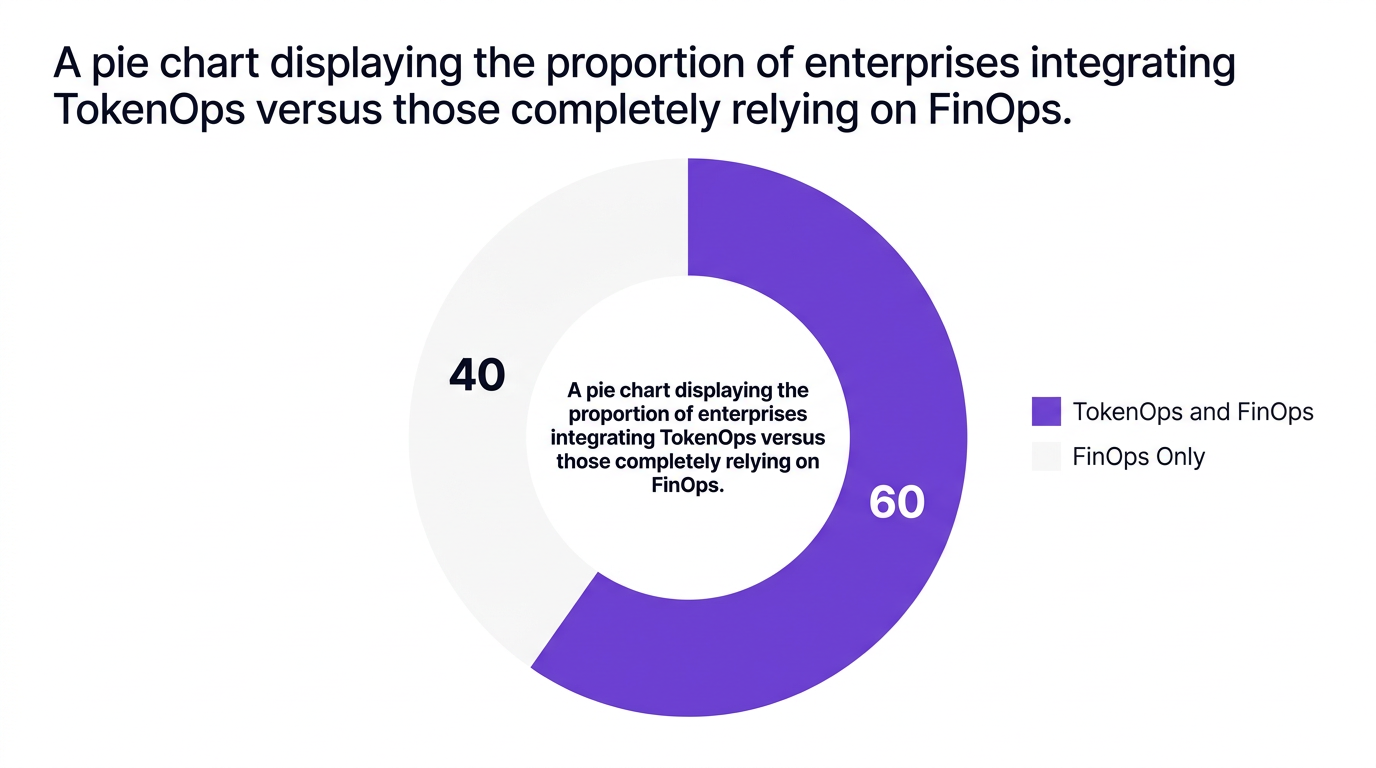
While FinOps provides a foundation for high-level cloud visibility, it fails to capture the intricate transactional costs of generative AI. According to Gartner 2026 insights, 60% of cloud FinOps teams will need to incorporate TokenOps methods to accurately model AI unit economics. Maintaining basic FinOps is no longer sufficient for organizations operating advanced LLM workloads.
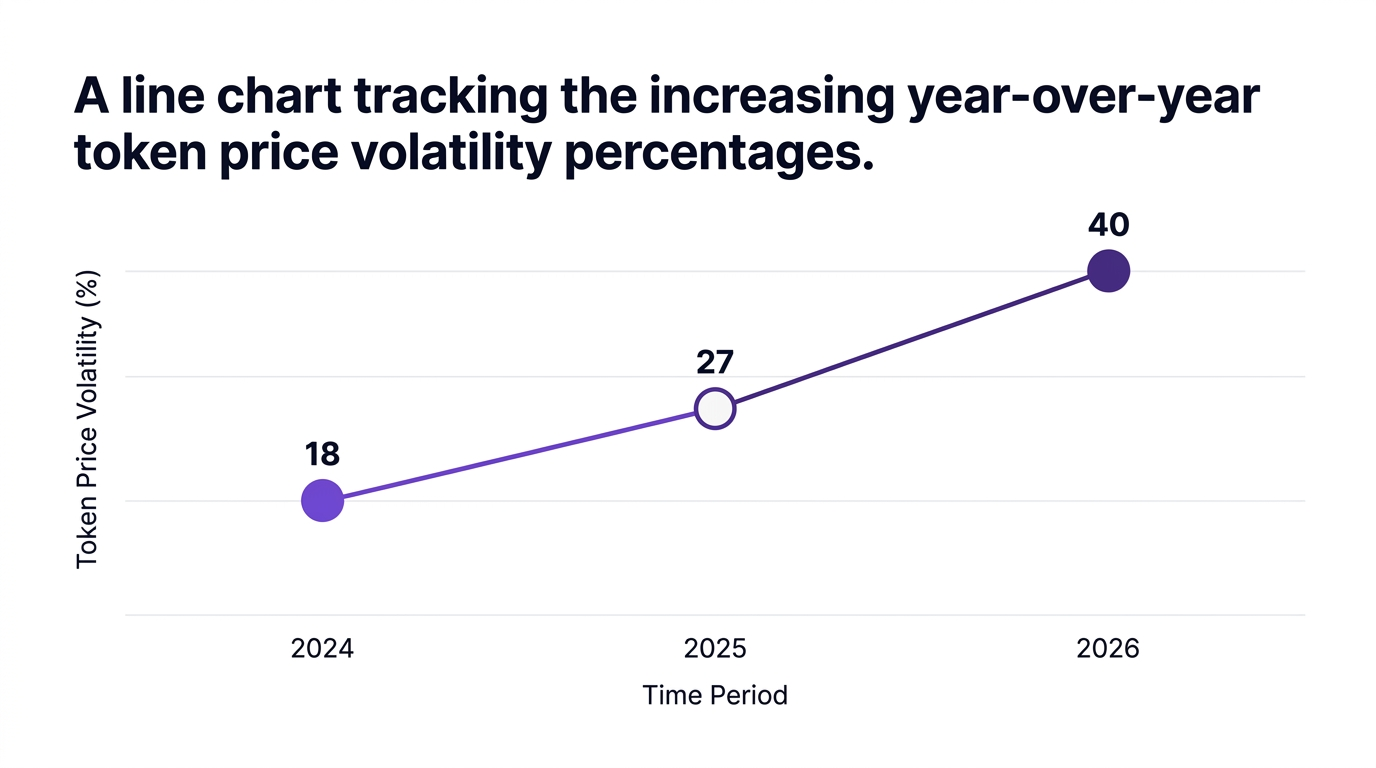
Traditional financial operations frameworks encounter severe limitations when applied to generative AI. First, dynamic pricing fundamentally disrupts static budgeting. Cloud providers and AI developers frequently adjust their token pricing structures based on model versions and computational demand. ISG 2026 data shows that token prices for enterprise API calls are projected to fluctuate drastically over upcoming years.
The second critical limitation relates to accurate token attribution. Traditional cloud tagging assigns a database or server to a specific department. LLMs operate as a shared service across an entire enterprise. A single API endpoint might serve marketing logic, sales automation, and customer support queries simultaneously. Standard cloud monitoring identifies the total API cost but cannot divide that cost accurately among the departments utilizing the service. IDC 2026 research highlights that 75% of AI-driven enterprises cite lack of token attribution as their top challenge for accurate AI chargeback and showback.
Finally, FinOps structures lack visibility into prompt construction and operational efficiency. Token spend management requires actionable insight into prompt caching, unnecessary context windows, and model routing choices. An inefficient prompt looped thousands of times by a workflow automation script creates rapid invoice inflation that traditional cloud governance tools will only flag after the invoice arrives.
Organizations implementing dedicated AI cost management disciplines immediately observe substantive financial impacts. Transitioning from ambiguous budget allocations to precise accounting creates entirely new optimization frameworks. When enterprises track exact token usage, they hold individual business unit leaders accountable for their specific technology consumption.

Real-world applications showcase profound savings. Healthcare Enterprise X deployed a specialized tracking layer on top of their standard billing processes, which reduced their generative AI token spend by 38% in six months. This efficiency was achieved through automated model routing cost optimization and strict prompt length governance (Forrester 2026). Similarly, Financial Services Firm Y instituted an AI chargeback methodology, resulting in a 44% decrease in unit costs while enabling real-time compliance reporting by line of business (IDC 2026).
By measuring business outcome per token, these companies transitioned AI from an unpredictable research expenditure to a tightly managed, high-ROI corporate asset. The data proves that token economics is fundamentally a distinct practice requiring distinct tools.
Controlling enterprise AI costs involves proactive technical measures applied across the organization.
Granular Attribution Networks: Organizations must tag individual programmatic calls at the API layer. This enables precise AI chargeback and showback, ensuring each department covers its respective computing footprint.
Dynamic Model Routing: Not every query demands the most expensive foundational model. Optimizing workflows involves routing straightforward classification tasks to cheaper, smaller models while reserving expensive logic engines for complex reasoning.
Prompt Caching Frameworks: Repetitive enterprise queries generate redundant computational costs. Implementing intelligent caching architectures prevents identical requests from driving identical API charges repeatedly.
Agentic AI Governance: Autonomous agents consume tokens systematically to solve complex tasks. Establishing strict boundary limits on agentic reasoning prevents automation loops from destroying budgets over a single weekend.
By 2026, organizations utilizing these practices will reduce AI inference cost overruns by up to 35% compared to organizations utilizing traditional baseline oversight frameworks (Forrester 2026). Precision oversight creates the structural discipline required for safe scalability.
The fundamental conflict of TokenOps vs. FinOps requires a unified platform capable of intersecting both macro-level cloud expenditure and micro-level AI consumption. CloudNuro acts as the definitive governance layer, providing unmatched visibility and control across the entire enterprise IT landscape.
Organizations can use the AI Custodian to achieve absolute clarity regarding token utilization. This solution delivers token-level discovery, attribution, and optimization. IT leaders secure granular visibility and automated governance over language model costs, ensuring internal chargeback methodologies remain pinpoint accurate.
Additionally, combining comprehensive tracking with the Unified Cloud Custodian integrates AI costs directly into overall organizational planning. CloudNuro connects with over 400 applications, establishing a unified compliance framework. This integration enables business leaders to map specific compliance standards directly to AI expenditures in real time.
For enterprises scaling their optimization, CloudNuro FinOps Services deliver expert guidance. These services extend classic governance functions to fully encapsulate emerging token requirements, modeling exact unit economics to protect your enterprise budgets. To see the full scope of how these solutions interconnect, explore the product overview.
FinOps handles overarching cloud infrastructure expenditures based on standardized instances or database volumes. TokenOps directly manages the unique fractional economics of AI models by tracking inputs and outputs at the prompt level, providing granular visibility into specific application and user behavior.
LLMs charge based on the volume of data processed during a query. Without token-level governance, organizations cannot accurately attribute these micro-transactions to specific departments. This lack of oversight leads to unchecked budget consumption and prevents meaningful return-on-investment calculations.
Traditional cloud finance methods monitor total API endpoints but cannot dissect variable consumption rates driven by complex prompts. They fail to handle dynamic price fluctuations from AI providers and cannot optimize the technical mechanisms, such as prompt caching, required to reduce inference events.
Enterprises should deploy deep routing logic to match task complexity with the appropriate language model size. Implementing strict prompt guidelines, adopting robust caching mechanisms, and setting strict consumption ceilings for autonomous agents drastically reduce operational expenditures.
The most successful practice involves immediate API tagging paired with an AI observance platform. Connecting usage directly back to the active directory identity or departmental access key allows companies to generate precise financial reporting and build a cost-conscious culture around AI experimentation.
The evaluation of TokenOps vs. FinOps is not about replacing traditional cloud tracking; it focuses on evolving disciplines to meet the unique challenges of generative functionality. Enterprise leaders recognize that long-term AI success relies entirely on predictable economics.
To achieve true optimization, organizations must build an infrastructure that understands business context at the deepest computational layer. Achieving token level governance, predicting API pricing volatility, and effectively attributing expenditures across diverse departments ensures that artificial intelligence remains a powerful asset instead of a fiscal liability. Establish your proactive governance architecture today to secure total programmatic control.
About CloudNuro
CloudNuro is a leader in Enterprise SaaS Management Platforms, providing enterprises with unmatched visibility, governance, and cost optimization. Recognized twice in a row in the SaaS Management Platforms category and named a Leader in the SoftwareReviews Data Quadrant, CloudNuro is trusted by global enterprises and government agencies to bring financial discipline to SaaS, cloud, and AI. Trusted by enterprises such as Konica Minolta and Federal Signal, CloudNuro provides centralized SaaS inventory, license optimization, and renewal management along with advanced cost allocation and chargeback, giving IT and Finance leaders the visibility, control, and cost-conscious culture needed to drive financial discipline.
Request a no cost, no obligation free assessment —just 15 minutes to savings!
Get StartedWhen technology and finance leaders evaluate cost management disciplines, the discussion regarding TokenOps vs. FinOps is rapidly becoming the dominant topic in boardroom conversations. Artificial intelligence workloads introduce unprecedented unit economics that break traditional cloud cost forecasting models. Enterprise AI requires more than standard consumption oversight. Governing large language model usage, tracking token consumption per prompt, and attributing those exact costs to specific business outcomes demands a highly specialized discipline. This article examines the core differences, the limitations of traditional frameworks, and the specialized approaches required to gain total transparency over enterprise AI investments.
According to Gartner 2026 research, 62% of enterprises running large language models expect token-level cost controls to be a mandatory management capability by year end. As adoption accelerates, understanding this shift is the only way organizations can scale generative AI without unpredictable budget overruns.
FinOps relies on cloud spending methodologies originally built for relatively static infrastructure configurations. Traditional cloud platforms charge by the hour, gigabyte, or computing instance. Finance teams allocate these infrastructure costs using broad tagging models. This works well when capacity is predictable and workloads remain consistent across predictable user groups.
TokenOps changes the magnification level to focus entirely on AI unit economics. Instead of looking at virtual machines, TokenOps maps the cost of inputs and outputs through model prompts. Every interaction consumes tokens, and the real cost of execution fluctuates based on prompt complexity, specific model routing, and token generation volume. Token-level governance ensures that IT and finance departments track exact AI cost per business outcome, creating a microscopic view of efficiency.
While FinOps provides a foundation for high-level cloud visibility, it fails to capture the intricate transactional costs of generative AI. According to Gartner 2026 insights, 60% of cloud FinOps teams will need to incorporate TokenOps methods to accurately model AI unit economics. Maintaining basic FinOps is no longer sufficient for organizations operating advanced LLM workloads.
Traditional financial operations frameworks encounter severe limitations when applied to generative AI. First, dynamic pricing fundamentally disrupts static budgeting. Cloud providers and AI developers frequently adjust their token pricing structures based on model versions and computational demand. ISG 2026 data shows that token prices for enterprise API calls are projected to fluctuate drastically over upcoming years.
The second critical limitation relates to accurate token attribution. Traditional cloud tagging assigns a database or server to a specific department. LLMs operate as a shared service across an entire enterprise. A single API endpoint might serve marketing logic, sales automation, and customer support queries simultaneously. Standard cloud monitoring identifies the total API cost but cannot divide that cost accurately among the departments utilizing the service. IDC 2026 research highlights that 75% of AI-driven enterprises cite lack of token attribution as their top challenge for accurate AI chargeback and showback.
Finally, FinOps structures lack visibility into prompt construction and operational efficiency. Token spend management requires actionable insight into prompt caching, unnecessary context windows, and model routing choices. An inefficient prompt looped thousands of times by a workflow automation script creates rapid invoice inflation that traditional cloud governance tools will only flag after the invoice arrives.
Organizations implementing dedicated AI cost management disciplines immediately observe substantive financial impacts. Transitioning from ambiguous budget allocations to precise accounting creates entirely new optimization frameworks. When enterprises track exact token usage, they hold individual business unit leaders accountable for their specific technology consumption.
Real-world applications showcase profound savings. Healthcare Enterprise X deployed a specialized tracking layer on top of their standard billing processes, which reduced their generative AI token spend by 38% in six months. This efficiency was achieved through automated model routing cost optimization and strict prompt length governance (Forrester 2026). Similarly, Financial Services Firm Y instituted an AI chargeback methodology, resulting in a 44% decrease in unit costs while enabling real-time compliance reporting by line of business (IDC 2026).
By measuring business outcome per token, these companies transitioned AI from an unpredictable research expenditure to a tightly managed, high-ROI corporate asset. The data proves that token economics is fundamentally a distinct practice requiring distinct tools.
Controlling enterprise AI costs involves proactive technical measures applied across the organization.
Granular Attribution Networks: Organizations must tag individual programmatic calls at the API layer. This enables precise AI chargeback and showback, ensuring each department covers its respective computing footprint.
Dynamic Model Routing: Not every query demands the most expensive foundational model. Optimizing workflows involves routing straightforward classification tasks to cheaper, smaller models while reserving expensive logic engines for complex reasoning.
Prompt Caching Frameworks: Repetitive enterprise queries generate redundant computational costs. Implementing intelligent caching architectures prevents identical requests from driving identical API charges repeatedly.
Agentic AI Governance: Autonomous agents consume tokens systematically to solve complex tasks. Establishing strict boundary limits on agentic reasoning prevents automation loops from destroying budgets over a single weekend.
By 2026, organizations utilizing these practices will reduce AI inference cost overruns by up to 35% compared to organizations utilizing traditional baseline oversight frameworks (Forrester 2026). Precision oversight creates the structural discipline required for safe scalability.
The fundamental conflict of TokenOps vs. FinOps requires a unified platform capable of intersecting both macro-level cloud expenditure and micro-level AI consumption. CloudNuro acts as the definitive governance layer, providing unmatched visibility and control across the entire enterprise IT landscape.
Organizations can use the AI Custodian to achieve absolute clarity regarding token utilization. This solution delivers token-level discovery, attribution, and optimization. IT leaders secure granular visibility and automated governance over language model costs, ensuring internal chargeback methodologies remain pinpoint accurate.
Additionally, combining comprehensive tracking with the Unified Cloud Custodian integrates AI costs directly into overall organizational planning. CloudNuro connects with over 400 applications, establishing a unified compliance framework. This integration enables business leaders to map specific compliance standards directly to AI expenditures in real time.
For enterprises scaling their optimization, CloudNuro FinOps Services deliver expert guidance. These services extend classic governance functions to fully encapsulate emerging token requirements, modeling exact unit economics to protect your enterprise budgets. To see the full scope of how these solutions interconnect, explore the product overview.
FinOps handles overarching cloud infrastructure expenditures based on standardized instances or database volumes. TokenOps directly manages the unique fractional economics of AI models by tracking inputs and outputs at the prompt level, providing granular visibility into specific application and user behavior.
LLMs charge based on the volume of data processed during a query. Without token-level governance, organizations cannot accurately attribute these micro-transactions to specific departments. This lack of oversight leads to unchecked budget consumption and prevents meaningful return-on-investment calculations.
Traditional cloud finance methods monitor total API endpoints but cannot dissect variable consumption rates driven by complex prompts. They fail to handle dynamic price fluctuations from AI providers and cannot optimize the technical mechanisms, such as prompt caching, required to reduce inference events.
Enterprises should deploy deep routing logic to match task complexity with the appropriate language model size. Implementing strict prompt guidelines, adopting robust caching mechanisms, and setting strict consumption ceilings for autonomous agents drastically reduce operational expenditures.
The most successful practice involves immediate API tagging paired with an AI observance platform. Connecting usage directly back to the active directory identity or departmental access key allows companies to generate precise financial reporting and build a cost-conscious culture around AI experimentation.
The evaluation of TokenOps vs. FinOps is not about replacing traditional cloud tracking; it focuses on evolving disciplines to meet the unique challenges of generative functionality. Enterprise leaders recognize that long-term AI success relies entirely on predictable economics.
To achieve true optimization, organizations must build an infrastructure that understands business context at the deepest computational layer. Achieving token level governance, predicting API pricing volatility, and effectively attributing expenditures across diverse departments ensures that artificial intelligence remains a powerful asset instead of a fiscal liability. Establish your proactive governance architecture today to secure total programmatic control.
About CloudNuro
CloudNuro is a leader in Enterprise SaaS Management Platforms, providing enterprises with unmatched visibility, governance, and cost optimization. Recognized twice in a row in the SaaS Management Platforms category and named a Leader in the SoftwareReviews Data Quadrant, CloudNuro is trusted by global enterprises and government agencies to bring financial discipline to SaaS, cloud, and AI. Trusted by enterprises such as Konica Minolta and Federal Signal, CloudNuro provides centralized SaaS inventory, license optimization, and renewal management along with advanced cost allocation and chargeback, giving IT and Finance leaders the visibility, control, and cost-conscious culture needed to drive financial discipline.
Request a no cost, no obligation free assessment - just 15 minutes to savings!
Get StartedWe're offering complimentary ServiceNow license assessments to only 25 enterprises this quarter who want to unlock immediate savings without disrupting operations.
Get Free AssessmentGet Started




CloudNuro Corp
1755 Park St. Suite 207
Naperville, IL 60563
Phone : +1-630-277-9470
Email: info@cloudnuro.com





.webp)

Recognized Leader in SaaS Management Platforms by Info-Tech SoftwareReviews


.png)

.svg)