

Sign Up
Thank you for Submitting!

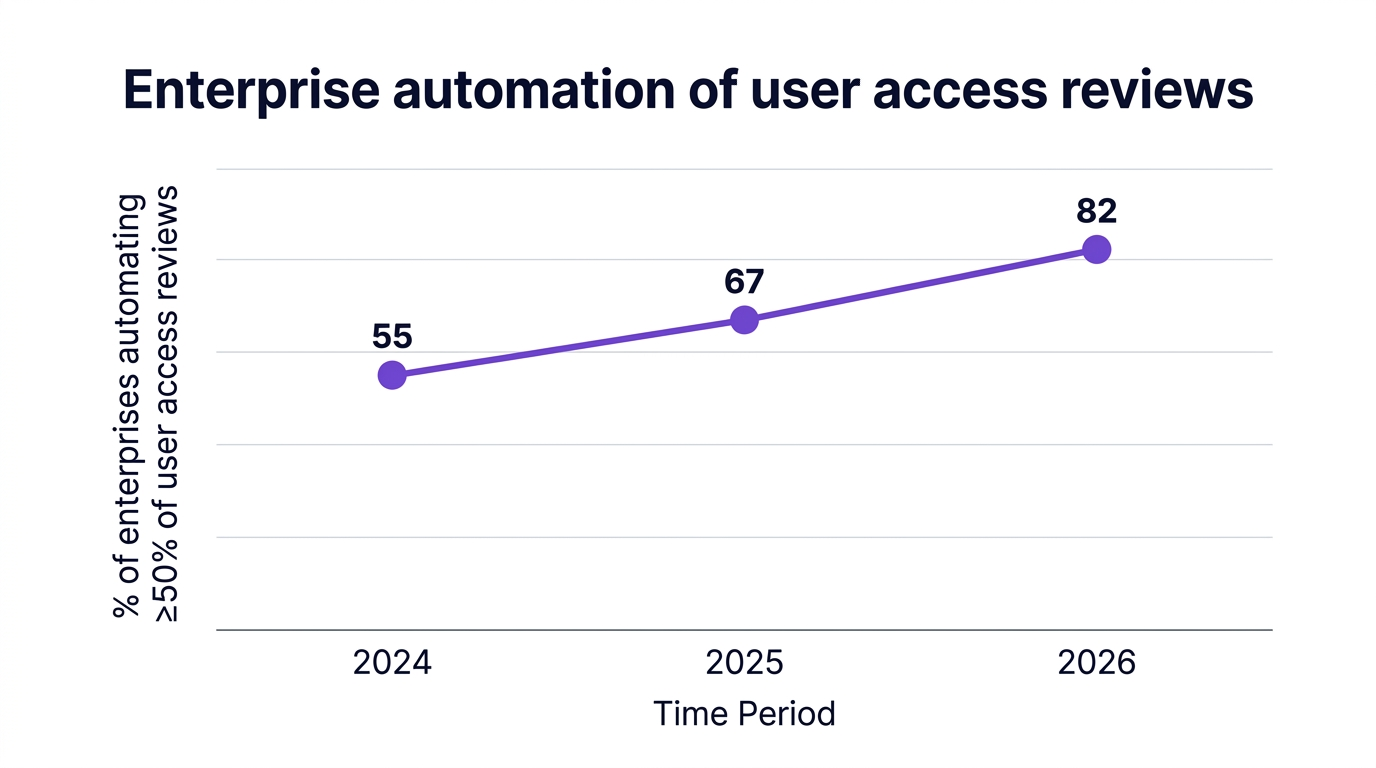
User access review software has moved from a compliance checkbox to a core security control. By 2026, 82% of enterprises will have automated at least half of their user access reviews, up from 55% in 2024 (Gartner 2026). For CIOs, CISOs, and compliance leaders, the question is no longer "if" you need user access review tools, but which platform can scale with your SaaS and cloud footprint.
This guide ranks and compares the top 12 user access review software options for 2026, explains what to look for, and shows how CloudNuro approaches user access governance across SaaS, cloud, and AI.
User access review software automates the periodic process to review user permissions, certify access, and remove excessive rights. It connects to identity providers, SaaS applications, and cloud platforms, then orchestrates reviews, approvals, and remediation.
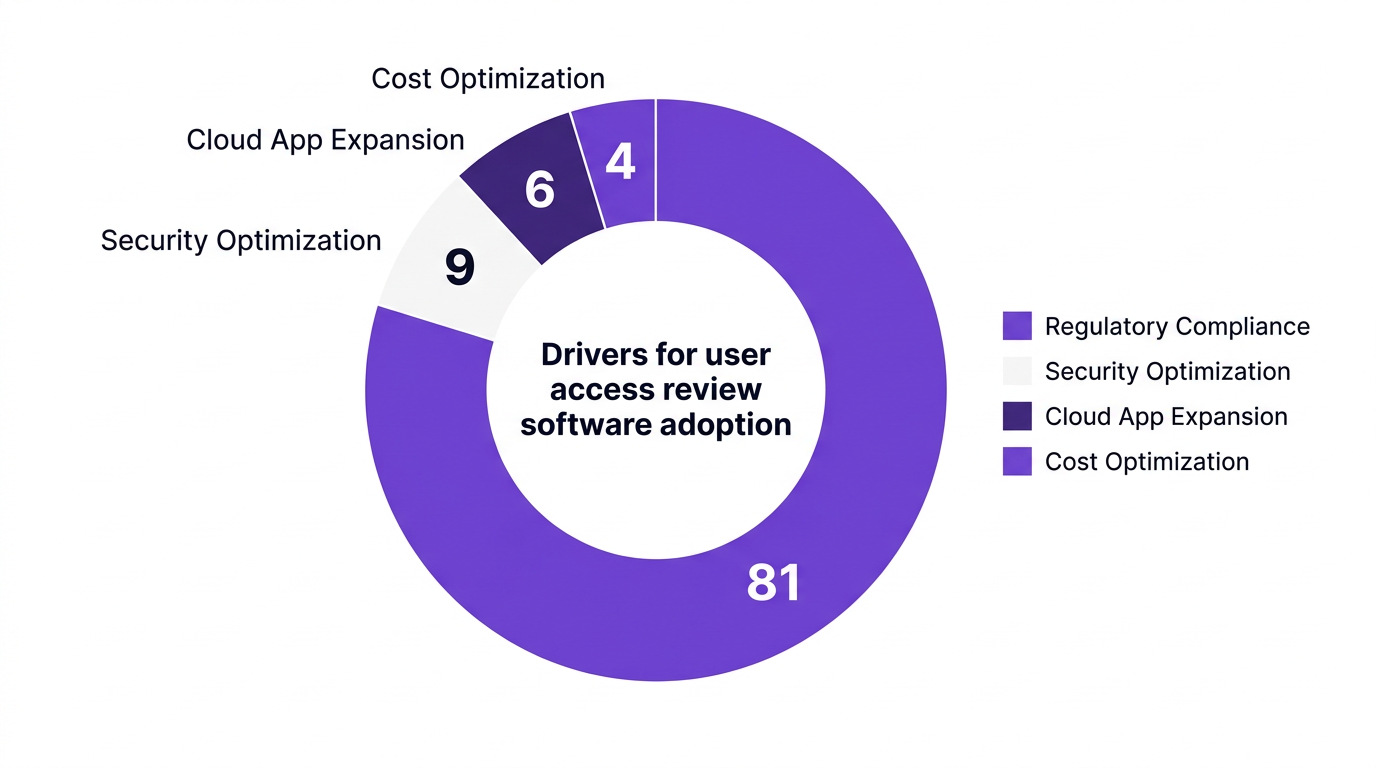
According to a global security report, 79% of cloud breaches in 2026 involve excessive user permissions (Verizon DBIR 2026). In parallel, 81% of organizations cite regulatory compliance, such as SOX, GDPR, and HIPAA, as their primary driver for implementing access review tools (Forrester 2026).
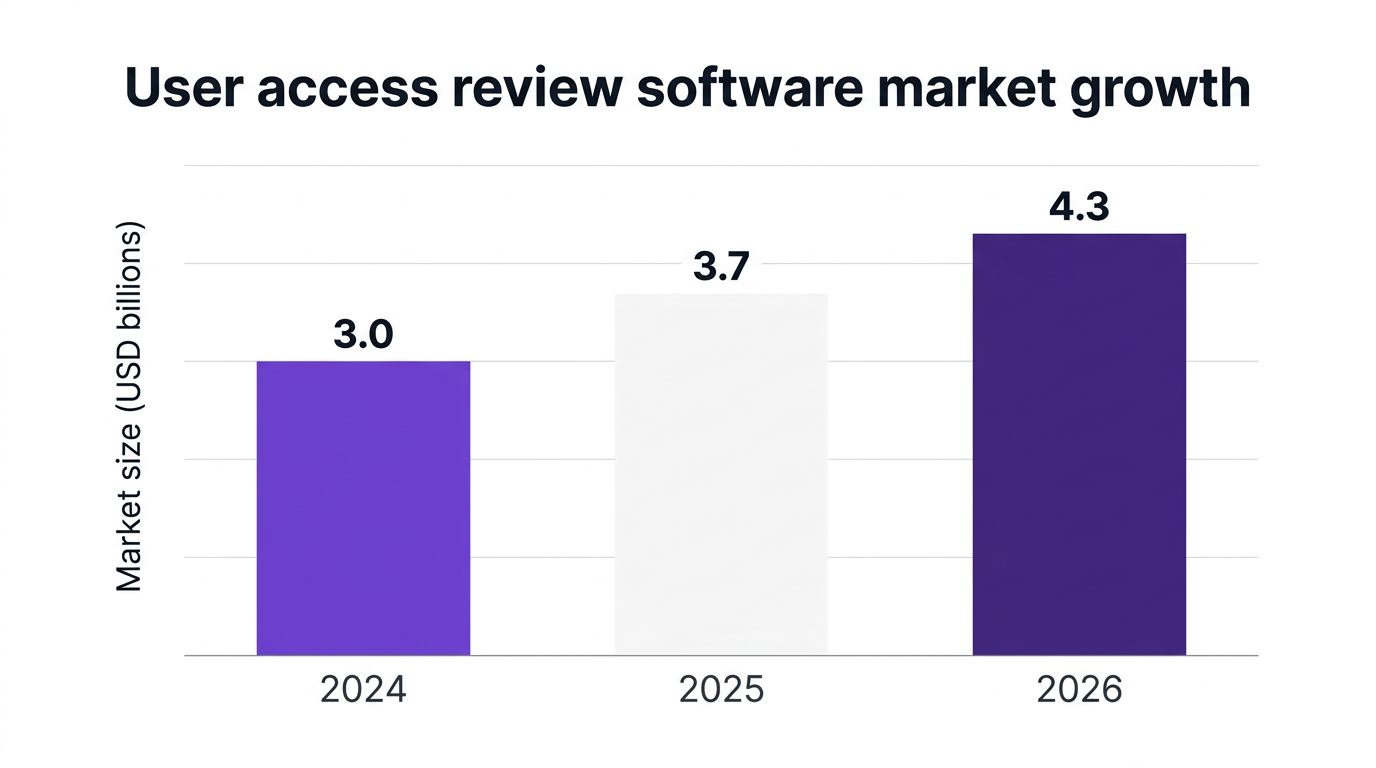
At the same time, the user access review software market is projected to reach 4.3 billion dollars by 2026, with a 13.1% CAGR from 2024 (MarketsandMarkets 2026). This reflects not just more tools, but rising expectations for automation, AI, and audit-grade reporting.
Manual spreadsheets and email-based attestations break down when you have:
Hundreds of SaaS apps and multiple cloud providers
Thousands of users and contractors with changing roles
Multiple regulatory frameworks (SOX, HIPAA, GDPR, PCI, CJIS)
A leading research director observed that AI-driven insights combined with workflow automation are now essential to keep pace with SaaS access reviews (Gartner 2026). Manual methods simply cannot keep up with the volume, complexity, and frequency of modern access certification.
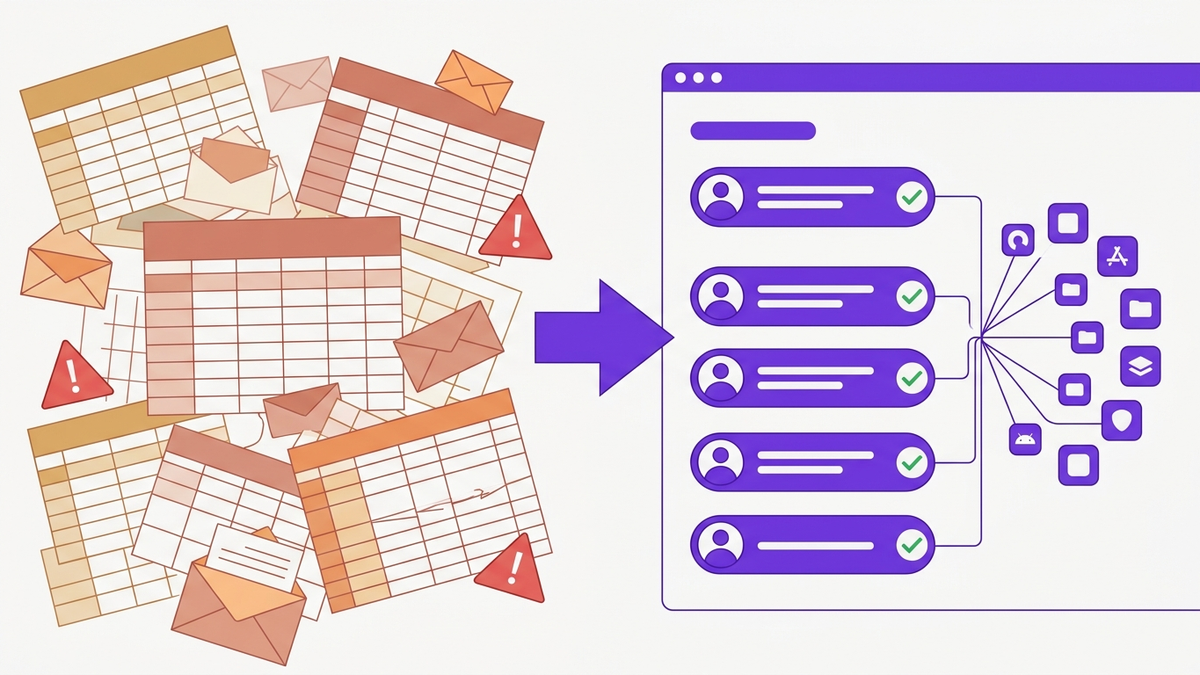
Not all user access review platforms are built for enterprise needs. Before looking at specific tools, it helps to define what good looks like.
Below is a checklist of must-have capabilities for any serious UAR software evaluation.
Modern identity and access management depends on connectivity. In 2026, 68% of buyers prioritize breadth of integration when selecting cloud access review tools (Forrester 2026).
Look for:
Native connectors to core SaaS such as CRM, collaboration, ITSM, ERP, HRIS
API-based integrations for custom apps and on-prem systems
Unified support for IaaS and PaaS platforms
Deep integrations are what turn a user access review platform into a source of real-time access insight, not just a static snapshot.
Your access review software should provide:
Configurable review campaigns (quarterly, event-driven, risk-based)
Manager, application owner, and role owner certifications
Escalation rules, reminders, and completion SLAs
This is the heart of access certification solutions. Reviews must be easy for business owners, traceable for auditors, and enforceable for security teams.
Static entitlements are no longer enough. Strong tools support:
Automatic detection of excessive permissions
Role-based access control analysis and toxic combinations
Risk scores based on data sensitivity, user behavior, and privilege level
A major audit firm reports that 56% of large enterprises now use AI-powered access certification tools specifically for least privilege enforcement (KPMG 2026). This trend will accelerate as privilege creep remains a leading risk.
User access review software should not only identify problems, it should orchestrate automated remediation.
Look for:
Integration with ITSM and HR systems for joiner, mover, leaver flows
One-click or policy-driven revocation of access
Closed-loop workflows, so that removal decisions in campaigns propagate back to systems
This is where access review software intersects with broader SaaS Management and IT Asset Management practices.
For SOX compliance tools and HIPAA, PCI, or GDPR audits, you need:
Time-stamped logs of reviews, decisions, and exceptions
Proof of periodic certifications by role
Exportable reports aligned to controls and frameworks
Automated user access review has reduced overall compliance audit times by 37% for leading enterprises in 2026 (IDC 2026). That reduction relies on having audit-ready evidence built into the platform.
Given the crowded field of user access review tools, this comparison focuses on how platforms serve complex, regulated organizations.
Our ranking approach is built around the GOV-AIR framework:
Governance depth: Access certification, policy coverage, exception handling
Operational scale: Number and quality of integrations, performance at enterprise volume
Visibility and analytics: Real-time access insight, risk scoring, dashboards
Automation and AI: Automated campaigns, anomaly detection, remediation
Integration with risk and IT processes: Alignment with ITSM, IAM, security operations
Regulatory readiness: Support for SOX, HIPAA, GDPR, and other frameworks
We also considered:
Time to value and implementation complexity
Pricing transparency and TCO impact
User experience for reviewers and admins
A principal analyst at a leading research group noted that modern user access review tools have evolved to provide real-time risk visibility rather than just checkbox reporting (IDC 2026). Our ranking favors platforms that deliver on that expectation.

This list highlights where each category of solution tends to excel. Since pricing and exact features change frequently, treat this as a strategic shortlist for your RFP and POC.
CloudNuro is more than a user access review platform. It is an AI-enabled access governance software designed for enterprises that need unified control across SaaS, PaaS, and IaaS.
Key strengths:
Unified Cloud Custodian that centralizes enterprise access review across 400+ apps
AI Custodian for risk-based reviews, anomaly detection, and automated remediation
Dedicated Microsoft 365 Custodian, Salesforce Custodian, and ServiceNow Custodian for deep domain coverage
CloudNuro aligns strongly with the GOV-AIR framework on governance depth, automation, and regulatory readiness, particularly for SOX, HIPAA, and GDPR.
Identity governance suites bundle access certification, role management, and workflow orchestration in a single platform.
They typically excel at:
Enterprise-wide role-based access control
Complex access certification across thousands of systems
Deep integration with identity providers and HR systems
These platforms are strong fits if you are already centralizing IAM compliance around a single identity stack, but they can be slower to deploy for SaaS-heavy environments.
Cloud-native access governance tools focus on cloud access review tools for IaaS and PaaS platforms.
They provide:
Detailed permission management for cloud resources
Security posture management and misconfiguration detection
Automated remediation for unused or risky entitlements
They score highly on visibility for cloud workloads, but may require additional SaaS access review solutions to cover business applications.
These user access review platforms specialize in SaaS security audit and SaaS user audit.
Strengths include:
Rich integrations with collaboration, CRM, marketing, and productivity tools
License optimization alongside access certification
Agile deployment and fast time to value
They can be ideal for organizations that are primarily SaaS-centric and want to combine IT Security with cost control.
Some vendors extend IT service management platforms with enterprise access review capabilities.
Typically they provide:
Access request and approval workflows integrated with tickets
Joiner, mover, leaver automation
Simple review campaigns tied to catalog items
These tools are convenient where ITSM is already the work hub, but they often lack the deep access certification solutions and risk analytics of specialist UAR software.
Cloud infrastructure entitlement platforms are designed for least privilege enforcement at scale in cloud environments.
They excel at:
Mapping and visualizing complex permission graphs
Identifying unused rights and over-privileged roles
Automated policy generation and right-sizing
They are strong complements to a broader user access review platform, especially for organizations with heavy DevOps and microservices footprints.
Several identity and access management tools offer basic user access review modules.
Common traits:
Simple review screens for application and group memberships
Tight coupling with SSO and identity provider functionality
Lower incremental cost if you already use the core IAM stack
These can work for smaller environments, but often fall short for enterprises that need multi-framework compliance automation and rich reporting.
Major productivity and collaboration suites increasingly provide native controls that resemble access review software.
They may offer:
Activity logs and permission analytics
Built-in alerts for risky sharing or privilege assignments
Some review and certification features
These features are valuable but tend to be siloed. Enterprises still need centralized access governance software to connect multiple suites and clouds.
Data-centric platforms start from content and context, then link back to identities and permissions.
They emphasize:
Sensitive data classification and policy enforcement
User behavior analytics tied to data movement
Content-aware access review recommendations
These excel where regulatory requirements are heavily data-focused, but can lack full coverage of infrastructure and lower-level permissions.
Some security audit platforms offer user access review tools as part of broader audit and risk management suites.
They can provide:
Centralized evidence collection for multiple controls
Control testing automation for IAM compliance
Risk reporting dashboards for executives
However, access review features can be more checklist-oriented and less operationally integrated compared to dedicated automated access review software.
A number of large enterprises still rely on custom scripts, databases, and BI dashboards to produce recurring access review evidence.
Pros:
Tailored to unique legacy environments
Deep integration with proprietary systems
Cons:
High maintenance overhead and reliance on niche expertise
Limited AI, automation, and vendor support
Given the maturing market and forecasted growth, the cost-benefit of maintaining custom tools is increasingly unfavorable.
Finally, some organizations still depend on email and spreadsheets to review user access.
While this may work in very small environments, it quickly becomes:
Error-prone and hard to track
Unscalable for hybrid or multi-cloud
Weak evidence for regulators and auditors
In a world where automated user access review can cut audit times by over a third, remaining on manual reviews is akin to running your finance function out of a notebook.
User access review software sits at the intersection of identity governance, security, and compliance automation.
Different regulations describe similar expectations:
SOX: Controls over financial systems, privileged access audit, and periodic user account certification
HIPAA: Minimum necessary access to PHI, audit trails, and workforce access oversight
GDPR: Data minimization, access controls, and demonstrable accountability
A consulting survey notes that 81% of organizations implement access review software primarily for regulatory compliance (Forrester 2026). The right access review tools help you map technical controls to these mandates.
When evaluating 2026 best access review tools, ensure they can:
Define review scopes by system, role, data set, or business function
Produce control-aligned reports (for example, "evidence of quarterly access certification for finance systems")
Support risk-based campaigns that prioritize high-impact systems and privileged accounts
Compliance leaders increasingly expect SOX audit tools and IAM systems to work in concert. User access review platforms must integrate with both.
Even the best user access review software can struggle if implementation is treated as a one-off project rather than an ongoing program.
Below are common pitfalls and how to address them.
Many teams attempt a "big bang" rollout of enterprise access review across every system.
Consequences:
Reviewer fatigue and low completion rates
Inconsistent decisions across teams
Difficulty interpreting results
Instead, start with:
A subset of high-risk systems (financials, HR, core SaaS)
Clear review criteria and decision guidance
Iterative tuning of scopes and frequency
Garbage in, garbage out applies strongly to user access review tools.
Common issues:
Unclear role definitions and inconsistent group usage
Stale accounts for contractors, seasonal workers, or terminated staff
Lack of mapping between business roles and technical permissions
Invest early in permission management and role cleanup. Treat this as part of broader IT Asset Management and Integrations workstreams.
Business managers, data owners, and application owners often see access reviews as yet another admin task.
To gain adoption:
Provide short, role-specific training on what "approve" versus "revoke" should mean
Use risk scoring to pre-highlight likely excessive access
Keep review screens simple and pre-filtered to relevant users
Some teams implement user access review software but rely on manual remediation.
This disconnect creates:
Backlogs of removal tasks
Gaps between decision and actual permission change
Weak evidence for closed-loop governance
Mature programs link review outcomes to automated workflows that update systems, so that enterprise access review is truly end-to-end.
CloudNuro was built to bring financial discipline, security, and compliance to SaaS, cloud, and AI. For user access review software, that translates into unified governance with AI-driven automation.
CloudNuro’s Unified Cloud Custodian centralizes SaaS, PaaS, and IaaS access reviews into a single control plane.
Capabilities include:
Centralized campaigns across 400+ applications and cloud services
Role-based access control modeling and least privilege enforcement
Automated mapping of identities across systems to reduce duplicate reviews
This helps IT and security teams move from app-by-app access review tools to a comprehensive cloud access governance program.
CloudNuro’s AI Custodian brings intelligence and automation to automated access review software.
It provides:
AI-driven risk scores for users and entitlements based on behavior and sensitivity
Prioritization of high-risk privileges, such as privileged access audit targets
Suggested revocations and access right-sizing for reviewers
By automating 83% of provisioning and deprovisioning workflows in one financial services implementation, CloudNuro helped reduce shadow IT risks by 29% and improved compliance reporting quality (Gartner 2026).
CloudNuro offers specialized custodians for high-value SaaS platforms:
Microsoft 365 Custodian: License optimization, permission analytics, and automated compliance documentation
Salesforce Custodian: Role audits, field-level access analysis, and cost optimization
ServiceNow Custodian: Automated ITSM-related access governance and workflow integration
These modules empower organizations to treat major SaaS platforms as first-class citizens in their enterprise access review strategy.
CloudNuro’s user access review capabilities are tightly aligned with major regulatory frameworks and SOC2 Type II requirements.
Compliance teams benefit from:
Prebuilt templates for SOX, HIPAA, and GDPR-oriented campaigns
Time-stamped attestation history and exception documentation
Evidence exports tailored for auditors and regulators
A leading North American healthcare system used CloudNuro’s Unified Cloud Custodian to automate access reviews for over 55 SaaS apps. They reduced audit preparation time by 41% and achieved full HIPAA and SOX alignment (Forrester 2026).
Unlike stand-alone identity and access management tools, CloudNuro combines user access review with cost and license optimization.
This creates:
Visibility into unused licenses identified during campaigns
Opportunities to downgrade or reclaim seats in tandem with access decisions
A single platform for IT, security, and finance teams to align on SaaS strategy
For organizations pursuing FinOps and fiscal discipline, CloudNuro’s FinOps Services augment the platform with expert guidance.
User access review software is a security and compliance platform that automates the process to review user permissions, certify access, and remediate excessive rights across applications and infrastructure. It coordinates managers, system owners, and security teams through structured campaigns and workflows.
Most regulated organizations run quarterly or semiannual access reviews for high-risk systems and annual reviews for lower-risk systems. Event-driven reviews are also important, such as when a user changes roles, a new system is onboarded, or a major compliance requirement changes.
Identity and access management tools focus on authentication, authorization, and provisioning. User access review tools focus on periodic certification of who has what access and whether it is still appropriate. The strongest programs integrate both into a unified identity governance strategy.
These platforms provide structured campaigns, clear ownership, and time-stamped records of access decisions. They align those controls with regulatory expectations such as least privilege, access minimization, and periodic review of sensitive systems and data.
Focus on integration breadth, automation depth, real-time risk visibility, and regulatory reporting. Ensure the platform can support your SaaS and cloud stack, handle high reviewer volumes, and provide clear evidence for auditors. Consider total cost of ownership, not just license price.
CloudNuro typically sits alongside IAM and ITSM platforms as the central SaaS and cloud governance layer. It uses existing identity providers for authentication, connects to SaaS and cloud systems for access data, and feeds results into security and compliance reporting.
User access review software is now a strategic necessity for enterprises that rely on SaaS and cloud. The right platform provides real-time access insight, automates certification, and supports least privilege enforcement, all while simplifying compliance.
As you evaluate user access review tools, prioritize platforms that:
Unify SaaS, cloud, and on-prem access reviews
Use AI and automation to reduce reviewer fatigue and risk
Integrate cost optimization with security and compliance
CloudNuro delivers an integrated, AI-enabled user access review solution that aligns IT, security, and finance around a single source of truth. To see how CloudNuro can transform your user access review program, request a demo or explore the full Product Overview.
CloudNuro is a leader in Enterprise SaaS Management Platforms, providing enterprises with unmatched visibility, governance, and cost optimization. Recognized twice in a row in the SaaS Management Platforms category and named a Leader in the SoftwareReviews Data Quadrant, CloudNuro is trusted by global enterprises and government agencies to bring financial discipline to SaaS, cloud, and AI. Trusted by enterprises such as Konica Minolta and Federal Signal, CloudNuro provides centralized SaaS inventory, license optimization, and renewal management along with advanced cost allocation and chargeback, giving IT and Finance leaders the visibility, control, and cost-conscious culture needed to drive financial discipline.
Request a no cost, no obligation free assessment —just 15 minutes to savings!
Get StartedUser access review software has moved from a compliance checkbox to a core security control. By 2026, 82% of enterprises will have automated at least half of their user access reviews, up from 55% in 2024 (Gartner 2026). For CIOs, CISOs, and compliance leaders, the question is no longer "if" you need user access review tools, but which platform can scale with your SaaS and cloud footprint.
This guide ranks and compares the top 12 user access review software options for 2026, explains what to look for, and shows how CloudNuro approaches user access governance across SaaS, cloud, and AI.
User access review software automates the periodic process to review user permissions, certify access, and remove excessive rights. It connects to identity providers, SaaS applications, and cloud platforms, then orchestrates reviews, approvals, and remediation.
According to a global security report, 79% of cloud breaches in 2026 involve excessive user permissions (Verizon DBIR 2026). In parallel, 81% of organizations cite regulatory compliance, such as SOX, GDPR, and HIPAA, as their primary driver for implementing access review tools (Forrester 2026).
At the same time, the user access review software market is projected to reach 4.3 billion dollars by 2026, with a 13.1% CAGR from 2024 (MarketsandMarkets 2026). This reflects not just more tools, but rising expectations for automation, AI, and audit-grade reporting.
Manual spreadsheets and email-based attestations break down when you have:
Hundreds of SaaS apps and multiple cloud providers
Thousands of users and contractors with changing roles
Multiple regulatory frameworks (SOX, HIPAA, GDPR, PCI, CJIS)
A leading research director observed that AI-driven insights combined with workflow automation are now essential to keep pace with SaaS access reviews (Gartner 2026). Manual methods simply cannot keep up with the volume, complexity, and frequency of modern access certification.
Not all user access review platforms are built for enterprise needs. Before looking at specific tools, it helps to define what good looks like.
Below is a checklist of must-have capabilities for any serious UAR software evaluation.
Modern identity and access management depends on connectivity. In 2026, 68% of buyers prioritize breadth of integration when selecting cloud access review tools (Forrester 2026).
Look for:
Native connectors to core SaaS such as CRM, collaboration, ITSM, ERP, HRIS
API-based integrations for custom apps and on-prem systems
Unified support for IaaS and PaaS platforms
Deep integrations are what turn a user access review platform into a source of real-time access insight, not just a static snapshot.
Your access review software should provide:
Configurable review campaigns (quarterly, event-driven, risk-based)
Manager, application owner, and role owner certifications
Escalation rules, reminders, and completion SLAs
This is the heart of access certification solutions. Reviews must be easy for business owners, traceable for auditors, and enforceable for security teams.
Static entitlements are no longer enough. Strong tools support:
Automatic detection of excessive permissions
Role-based access control analysis and toxic combinations
Risk scores based on data sensitivity, user behavior, and privilege level
A major audit firm reports that 56% of large enterprises now use AI-powered access certification tools specifically for least privilege enforcement (KPMG 2026). This trend will accelerate as privilege creep remains a leading risk.
User access review software should not only identify problems, it should orchestrate automated remediation.
Look for:
Integration with ITSM and HR systems for joiner, mover, leaver flows
One-click or policy-driven revocation of access
Closed-loop workflows, so that removal decisions in campaigns propagate back to systems
This is where access review software intersects with broader SaaS Management and IT Asset Management practices.
For SOX compliance tools and HIPAA, PCI, or GDPR audits, you need:
Time-stamped logs of reviews, decisions, and exceptions
Proof of periodic certifications by role
Exportable reports aligned to controls and frameworks
Automated user access review has reduced overall compliance audit times by 37% for leading enterprises in 2026 (IDC 2026). That reduction relies on having audit-ready evidence built into the platform.
Given the crowded field of user access review tools, this comparison focuses on how platforms serve complex, regulated organizations.
Our ranking approach is built around the GOV-AIR framework:
Governance depth: Access certification, policy coverage, exception handling
Operational scale: Number and quality of integrations, performance at enterprise volume
Visibility and analytics: Real-time access insight, risk scoring, dashboards
Automation and AI: Automated campaigns, anomaly detection, remediation
Integration with risk and IT processes: Alignment with ITSM, IAM, security operations
Regulatory readiness: Support for SOX, HIPAA, GDPR, and other frameworks
We also considered:
Time to value and implementation complexity
Pricing transparency and TCO impact
User experience for reviewers and admins
A principal analyst at a leading research group noted that modern user access review tools have evolved to provide real-time risk visibility rather than just checkbox reporting (IDC 2026). Our ranking favors platforms that deliver on that expectation.
This list highlights where each category of solution tends to excel. Since pricing and exact features change frequently, treat this as a strategic shortlist for your RFP and POC.
CloudNuro is more than a user access review platform. It is an AI-enabled access governance software designed for enterprises that need unified control across SaaS, PaaS, and IaaS.
Key strengths:
Unified Cloud Custodian that centralizes enterprise access review across 400+ apps
AI Custodian for risk-based reviews, anomaly detection, and automated remediation
Dedicated Microsoft 365 Custodian, Salesforce Custodian, and ServiceNow Custodian for deep domain coverage
CloudNuro aligns strongly with the GOV-AIR framework on governance depth, automation, and regulatory readiness, particularly for SOX, HIPAA, and GDPR.
Identity governance suites bundle access certification, role management, and workflow orchestration in a single platform.
They typically excel at:
Enterprise-wide role-based access control
Complex access certification across thousands of systems
Deep integration with identity providers and HR systems
These platforms are strong fits if you are already centralizing IAM compliance around a single identity stack, but they can be slower to deploy for SaaS-heavy environments.
Cloud-native access governance tools focus on cloud access review tools for IaaS and PaaS platforms.
They provide:
Detailed permission management for cloud resources
Security posture management and misconfiguration detection
Automated remediation for unused or risky entitlements
They score highly on visibility for cloud workloads, but may require additional SaaS access review solutions to cover business applications.
These user access review platforms specialize in SaaS security audit and SaaS user audit.
Strengths include:
Rich integrations with collaboration, CRM, marketing, and productivity tools
License optimization alongside access certification
Agile deployment and fast time to value
They can be ideal for organizations that are primarily SaaS-centric and want to combine IT Security with cost control.
Some vendors extend IT service management platforms with enterprise access review capabilities.
Typically they provide:
Access request and approval workflows integrated with tickets
Joiner, mover, leaver automation
Simple review campaigns tied to catalog items
These tools are convenient where ITSM is already the work hub, but they often lack the deep access certification solutions and risk analytics of specialist UAR software.
Cloud infrastructure entitlement platforms are designed for least privilege enforcement at scale in cloud environments.
They excel at:
Mapping and visualizing complex permission graphs
Identifying unused rights and over-privileged roles
Automated policy generation and right-sizing
They are strong complements to a broader user access review platform, especially for organizations with heavy DevOps and microservices footprints.
Several identity and access management tools offer basic user access review modules.
Common traits:
Simple review screens for application and group memberships
Tight coupling with SSO and identity provider functionality
Lower incremental cost if you already use the core IAM stack
These can work for smaller environments, but often fall short for enterprises that need multi-framework compliance automation and rich reporting.
Major productivity and collaboration suites increasingly provide native controls that resemble access review software.
They may offer:
Activity logs and permission analytics
Built-in alerts for risky sharing or privilege assignments
Some review and certification features
These features are valuable but tend to be siloed. Enterprises still need centralized access governance software to connect multiple suites and clouds.
Data-centric platforms start from content and context, then link back to identities and permissions.
They emphasize:
Sensitive data classification and policy enforcement
User behavior analytics tied to data movement
Content-aware access review recommendations
These excel where regulatory requirements are heavily data-focused, but can lack full coverage of infrastructure and lower-level permissions.
Some security audit platforms offer user access review tools as part of broader audit and risk management suites.
They can provide:
Centralized evidence collection for multiple controls
Control testing automation for IAM compliance
Risk reporting dashboards for executives
However, access review features can be more checklist-oriented and less operationally integrated compared to dedicated automated access review software.
A number of large enterprises still rely on custom scripts, databases, and BI dashboards to produce recurring access review evidence.
Pros:
Tailored to unique legacy environments
Deep integration with proprietary systems
Cons:
High maintenance overhead and reliance on niche expertise
Limited AI, automation, and vendor support
Given the maturing market and forecasted growth, the cost-benefit of maintaining custom tools is increasingly unfavorable.
Finally, some organizations still depend on email and spreadsheets to review user access.
While this may work in very small environments, it quickly becomes:
Error-prone and hard to track
Unscalable for hybrid or multi-cloud
Weak evidence for regulators and auditors
In a world where automated user access review can cut audit times by over a third, remaining on manual reviews is akin to running your finance function out of a notebook.
User access review software sits at the intersection of identity governance, security, and compliance automation.
Different regulations describe similar expectations:
SOX: Controls over financial systems, privileged access audit, and periodic user account certification
HIPAA: Minimum necessary access to PHI, audit trails, and workforce access oversight
GDPR: Data minimization, access controls, and demonstrable accountability
A consulting survey notes that 81% of organizations implement access review software primarily for regulatory compliance (Forrester 2026). The right access review tools help you map technical controls to these mandates.
When evaluating 2026 best access review tools, ensure they can:
Define review scopes by system, role, data set, or business function
Produce control-aligned reports (for example, "evidence of quarterly access certification for finance systems")
Support risk-based campaigns that prioritize high-impact systems and privileged accounts
Compliance leaders increasingly expect SOX audit tools and IAM systems to work in concert. User access review platforms must integrate with both.
Even the best user access review software can struggle if implementation is treated as a one-off project rather than an ongoing program.
Below are common pitfalls and how to address them.
Many teams attempt a "big bang" rollout of enterprise access review across every system.
Consequences:
Reviewer fatigue and low completion rates
Inconsistent decisions across teams
Difficulty interpreting results
Instead, start with:
A subset of high-risk systems (financials, HR, core SaaS)
Clear review criteria and decision guidance
Iterative tuning of scopes and frequency
Garbage in, garbage out applies strongly to user access review tools.
Common issues:
Unclear role definitions and inconsistent group usage
Stale accounts for contractors, seasonal workers, or terminated staff
Lack of mapping between business roles and technical permissions
Invest early in permission management and role cleanup. Treat this as part of broader IT Asset Management and Integrations workstreams.
Business managers, data owners, and application owners often see access reviews as yet another admin task.
To gain adoption:
Provide short, role-specific training on what "approve" versus "revoke" should mean
Use risk scoring to pre-highlight likely excessive access
Keep review screens simple and pre-filtered to relevant users
Some teams implement user access review software but rely on manual remediation.
This disconnect creates:
Backlogs of removal tasks
Gaps between decision and actual permission change
Weak evidence for closed-loop governance
Mature programs link review outcomes to automated workflows that update systems, so that enterprise access review is truly end-to-end.
CloudNuro was built to bring financial discipline, security, and compliance to SaaS, cloud, and AI. For user access review software, that translates into unified governance with AI-driven automation.
CloudNuro’s Unified Cloud Custodian centralizes SaaS, PaaS, and IaaS access reviews into a single control plane.
Capabilities include:
Centralized campaigns across 400+ applications and cloud services
Role-based access control modeling and least privilege enforcement
Automated mapping of identities across systems to reduce duplicate reviews
This helps IT and security teams move from app-by-app access review tools to a comprehensive cloud access governance program.
CloudNuro’s AI Custodian brings intelligence and automation to automated access review software.
It provides:
AI-driven risk scores for users and entitlements based on behavior and sensitivity
Prioritization of high-risk privileges, such as privileged access audit targets
Suggested revocations and access right-sizing for reviewers
By automating 83% of provisioning and deprovisioning workflows in one financial services implementation, CloudNuro helped reduce shadow IT risks by 29% and improved compliance reporting quality (Gartner 2026).
CloudNuro offers specialized custodians for high-value SaaS platforms:
Microsoft 365 Custodian: License optimization, permission analytics, and automated compliance documentation
Salesforce Custodian: Role audits, field-level access analysis, and cost optimization
ServiceNow Custodian: Automated ITSM-related access governance and workflow integration
These modules empower organizations to treat major SaaS platforms as first-class citizens in their enterprise access review strategy.
CloudNuro’s user access review capabilities are tightly aligned with major regulatory frameworks and SOC2 Type II requirements.
Compliance teams benefit from:
Prebuilt templates for SOX, HIPAA, and GDPR-oriented campaigns
Time-stamped attestation history and exception documentation
Evidence exports tailored for auditors and regulators
A leading North American healthcare system used CloudNuro’s Unified Cloud Custodian to automate access reviews for over 55 SaaS apps. They reduced audit preparation time by 41% and achieved full HIPAA and SOX alignment (Forrester 2026).
Unlike stand-alone identity and access management tools, CloudNuro combines user access review with cost and license optimization.
This creates:
Visibility into unused licenses identified during campaigns
Opportunities to downgrade or reclaim seats in tandem with access decisions
A single platform for IT, security, and finance teams to align on SaaS strategy
For organizations pursuing FinOps and fiscal discipline, CloudNuro’s FinOps Services augment the platform with expert guidance.
User access review software is a security and compliance platform that automates the process to review user permissions, certify access, and remediate excessive rights across applications and infrastructure. It coordinates managers, system owners, and security teams through structured campaigns and workflows.
Most regulated organizations run quarterly or semiannual access reviews for high-risk systems and annual reviews for lower-risk systems. Event-driven reviews are also important, such as when a user changes roles, a new system is onboarded, or a major compliance requirement changes.
Identity and access management tools focus on authentication, authorization, and provisioning. User access review tools focus on periodic certification of who has what access and whether it is still appropriate. The strongest programs integrate both into a unified identity governance strategy.
These platforms provide structured campaigns, clear ownership, and time-stamped records of access decisions. They align those controls with regulatory expectations such as least privilege, access minimization, and periodic review of sensitive systems and data.
Focus on integration breadth, automation depth, real-time risk visibility, and regulatory reporting. Ensure the platform can support your SaaS and cloud stack, handle high reviewer volumes, and provide clear evidence for auditors. Consider total cost of ownership, not just license price.
CloudNuro typically sits alongside IAM and ITSM platforms as the central SaaS and cloud governance layer. It uses existing identity providers for authentication, connects to SaaS and cloud systems for access data, and feeds results into security and compliance reporting.
User access review software is now a strategic necessity for enterprises that rely on SaaS and cloud. The right platform provides real-time access insight, automates certification, and supports least privilege enforcement, all while simplifying compliance.
As you evaluate user access review tools, prioritize platforms that:
Unify SaaS, cloud, and on-prem access reviews
Use AI and automation to reduce reviewer fatigue and risk
Integrate cost optimization with security and compliance
CloudNuro delivers an integrated, AI-enabled user access review solution that aligns IT, security, and finance around a single source of truth. To see how CloudNuro can transform your user access review program, request a demo or explore the full Product Overview.
CloudNuro is a leader in Enterprise SaaS Management Platforms, providing enterprises with unmatched visibility, governance, and cost optimization. Recognized twice in a row in the SaaS Management Platforms category and named a Leader in the SoftwareReviews Data Quadrant, CloudNuro is trusted by global enterprises and government agencies to bring financial discipline to SaaS, cloud, and AI. Trusted by enterprises such as Konica Minolta and Federal Signal, CloudNuro provides centralized SaaS inventory, license optimization, and renewal management along with advanced cost allocation and chargeback, giving IT and Finance leaders the visibility, control, and cost-conscious culture needed to drive financial discipline.
Request a no cost, no obligation free assessment - just 15 minutes to savings!
Get StartedWe're offering complimentary ServiceNow license assessments to only 25 enterprises this quarter who want to unlock immediate savings without disrupting operations.
Get Free AssessmentGet Started




CloudNuro Corp
1755 Park St. Suite 207
Naperville, IL 60563
Phone : +1-630-277-9470
Email: info@cloudnuro.com




.webp)

Recognized Leader in SaaS Management Platforms by Info-Tech SoftwareReviews



.svg)