

Sign Up
Thank you for Submitting!
The user access review process has become one of the most scrutinized controls in SaaS and cloud audits. For enterprises in finance, healthcare, government, and other regulated sectors, poorly executed reviews can trigger findings, fines, and unplanned remediation work.
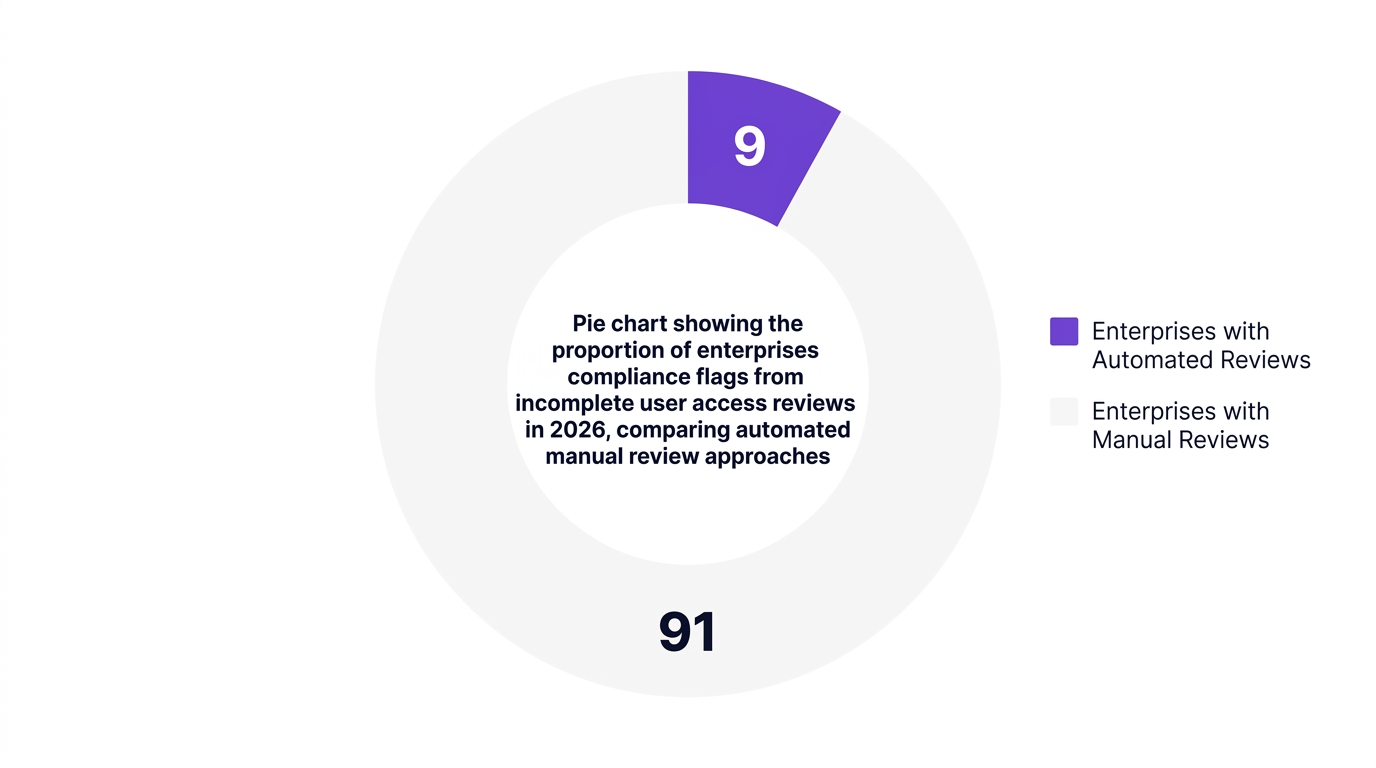
Recent industry research shows that 78% of enterprises in highly regulated sectors now list automated user access reviews as essential for audit readiness in 2026. Another market study found that 91% of SaaS-heavy enterprises that skipped quarterly user access reviews received at least one compliance flag. Governance-focused IT leaders cannot treat access reviews as a once-a-year checkbox.
This guide presents a 6-step access review framework you can apply across your SaaS stack, grounded in real data and aligned with how auditors think. Along the way, you will see how a SaaS management platform like CloudNuro can operationalize this user access review process and connect it directly to cost optimization.
A user access review process is a structured, periodic activity where application owners and business managers validate which users have access to which systems and what level of permissions they hold. The goal is to confirm that access is still appropriate, aligned to job roles, and compliant with internal policies and regulations.
In practice, this involves:
A recent enterprise IT report notes that organizations using AI-driven automation have reduced time spent on user access reviews by an average of 62% in 2026. That transition from manual spreadsheets to structured workflows is the difference between “best effort” security and audit-ready access reviews.
For many audit teams, access reviews are the practical proof that identity access management controls are real, not just policy documents. They tie together least privilege, role-based access control, and license governance in a single, repeatable motion.
According to a 2026 benchmark, enterprises that integrated continuous user access review workflows into their SaaS management platforms reduced access-related incidents by 48%. Another analysis found that access review driven license optimization yielded an average of 28% annual SaaS cost savings for organizations with more than 1,000 cloud users.
Why this matters for IT and compliance leaders:
A useful analogy is fleet management: if you never reconcile who has which vehicle, you lose track of both safety and fuel spend. The same applies to identity access management and SaaS licenses.

Frequency should be driven by risk, regulation, and application criticality.
A practical baseline many enterprises adopt is:
However, the trend is clearly moving toward continuous and event-driven access certification. Recent SaaS governance market analysis shows strong growth in continuous access certification models where reviews are triggered by risk signals such as role changes, department transfers, or anomalous activity, instead of waiting for the next calendar cycle.
The most mature organizations use a hybrid model:
This approach reduces the “compliance cliff” where a single massive annual user recertification process overwhelms business owners, increases error rates, and frustrates auditors.
Below is a 6-step access review framework you can apply to the entire SaaS portfolio, from core suites to specialized cloud applications. The goal is to make your user access review process repeatable, evidence-rich, and automation-ready.
The biggest failure point in user entitlement review is simple: you cannot review what you cannot see. Many organizations still run access certification using exports pulled independently from each application.
To address this, start by building a single, centralized inventory that includes:
Where possible, integrate with your identity provider and HR system, so identity access management is tied to joiner, mover, and leaver processes. This is where SaaS management platforms and access governance tools provide immediate value, aggregating entitlement data from hundreds of cloud apps.
When this fails: Audit teams commonly uncover entire clusters of unmanaged shadow SaaS accounts because they were left out of the inventory. The result is a set of last-minute manual reviews with weak evidence.
Not every system deserves the same level of scrutiny. A simple access review framework starts with risk ranking your applications, then mapping review requirements accordingly.
Consider these drivers when scoring risk:
From there, define review frequency, depth, and approvers. For example:
This structured approach allows you to build a SaaS compliance checklist that is explainable to auditors and efficient for business teams.
Once scope is clear, you need a baseline for acceptable access. Otherwise, managers are certifying users against intuition, not policy.
Create and maintain:
Link these to your periodic access certification workflow:
A senior IT compliance advisor recently noted that AI-powered access reviews have moved from “nice-to-have” to operational necessity for enterprises with hundreds of SaaS apps. Role definitions augmented by AI-driven anomaly detection help identify users whose entitlements look out of pattern, even if their job title appears correct.
The heart of your user access review process is the review cycle itself: notifying reviewers, presenting accurate context, and collecting decisions.
A robust review cycle should include:
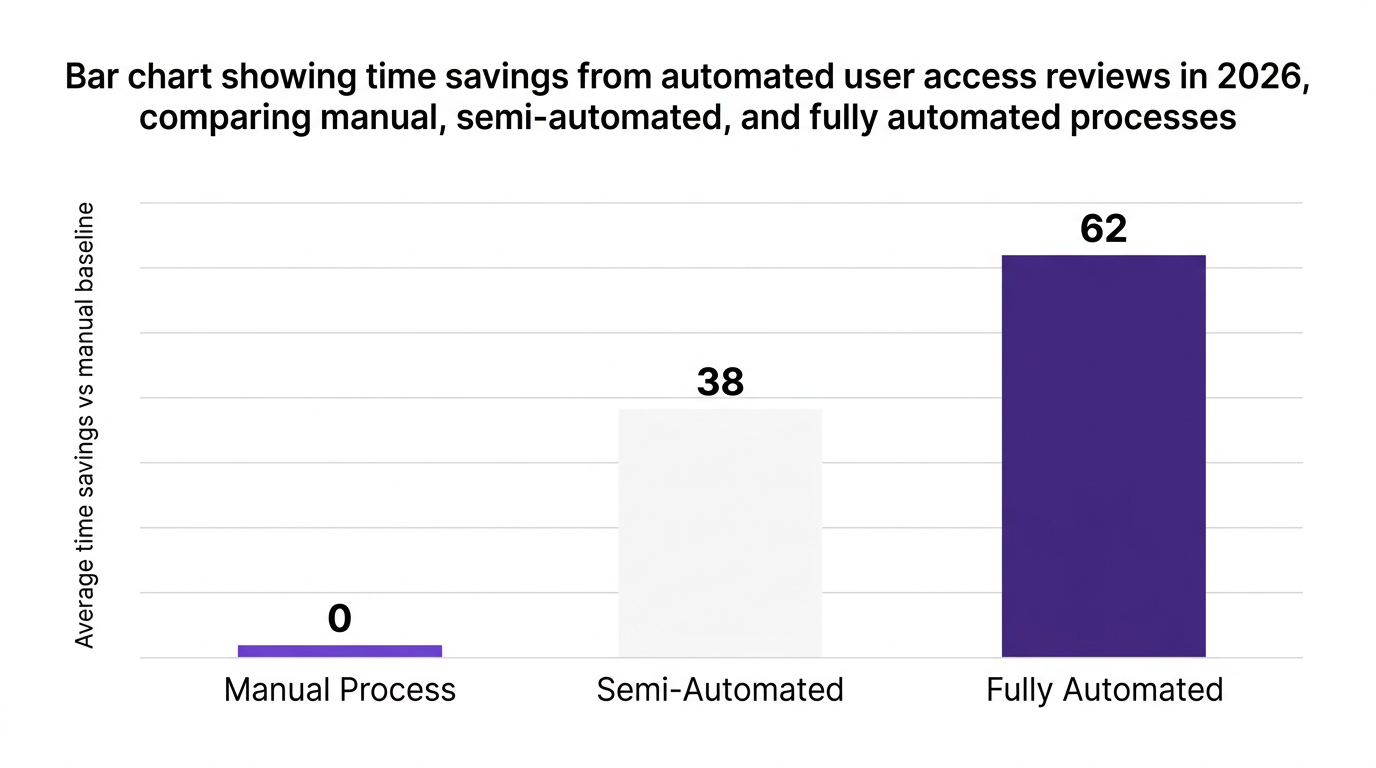
A recent SaaS management trends report found that organizations using AI-driven automation platforms cut user access review time by 62% in 2026, compared to manual processes. With semi-automated workflows, the time savings were still significant, at about 38%.
Reviews mean little if revocations and changes are not enforced. This is where the user recertification process must tie into provisioning tools and license management.
Best practice is to:
One audit analysis from 2026 showed that access review driven license optimization produced an average of 28% annual SaaS cost savings for large organizations. This is where FinOps for IT compliance becomes real: the same process that removes risk also recovers spend.
A national healthcare provider that deployed an AI-enabled SaaS management platform with automated user access review reduced dormant account risk by 67% and passed its 2026 audit with zero access-related findings. The remediation loop was the key difference compared to their previous spreadsheet-driven process.
The final step in an audit-ready user access review process is evidence generation and ongoing visibility.
Auditors typically ask for:
A security automation report in 2026 noted that only 18% of organizations could provide real-time access review evidence before automation, compared to 69% after adopting automated access reviews. That evidence covers not only IT audit evidence, but also supports board-level risk discussions.
To sustain this, build dashboards for:
This converts a periodic compliance event into continuous access governance, which auditors increasingly expect.
CloudNuro is built for enterprises that need governance-first SaaS management and audit-ready access reviews across complex environments.
Below is how the platform aligns with and accelerates each step of the 6-step access review framework.
CloudNuro AI Custodian provides automated SaaS discovery and centralized entitlement inventory across more than 400 applications. It consolidates user entitlements, usage, and spend in one place, including:
This gives IT and compliance leaders a single source of truth for identity access management across their SaaS landscape.
CloudNuro allows you to tag applications by risk level and build differentiated review policies per tier. You can define who reviews what, how often, and under which conditions, supporting both periodic access certification and event-driven reviews.
Integrated risk indicators surface:
These risk signals drive smarter, prioritized review cycles instead of treating every application equally.
With CloudNuro, you can encode role-based permissions into the platform and apply them across specific SaaS ecosystems through dedicated modules:
The platform highlights deviations from standard role definitions as exceptions, helping reviewers quickly see where access exceeds least privilege expectations. Managers can perform user entitlement review with contextual data such as last login, usage, and cost impact.
CloudNuro supports automated access reviews by:
Because CloudNuro is an AI-enabled SaaS platform, it can also flag anomalies, such as users whose entitlements differ significantly from peers in the same role. This focuses reviewer attention where risk is highest.
CloudNuro closes the loop between governance and cost control through:
This allows IT and finance leaders to treat each review cycle as both a risk mitigation SaaS control and a license optimization event. Enterprises commonly reclaim licenses from inactive or misaligned accounts and reinvest them where needed.
CloudNuro is built with compliance management and audit response in mind. Out-of-the-box reports support:
This produces the IT audit evidence auditors expect in a form that can be exported on demand, directly answering common security audit prep requests for cloud application audits.
Even mature organizations fall into predictable traps when running access reviews.
Here are several common pitfalls and how to address them:
A common counterargument is that automation creates a “black box” that auditors will distrust. In practice, auditors tend to trust automation more when it is well documented, produces consistent reports, and clearly shows who approved what, when, and why. The real concern is opaque tooling, not automation itself.
The user access review process in SaaS environments is a structured, periodic activity to verify that users have the correct access level to each cloud application. It includes gathering entitlement data, assigning reviewers, validating access against roles and policies, and revoking unnecessary privileges.
For regulated sectors, this process underpins identity access management, access certification, and compliance reporting obligations.
Many enterprises conduct quarterly reviews for high-risk or regulated applications and semiannual or annual reviews for lower-risk systems. However, more organizations are adopting continuous user access review models where event-driven triggers, such as job changes or suspicious activity, initiate additional reviews.
The right cadence depends on regulatory requirements, data sensitivity, and your risk appetite, but quarterly for critical apps is a widely accepted minimum.
Automation streamlines data collection, reviewer assignment, notifications, and evidence generation. A 2026 SaaS trends report found that AI-driven automation reduced user access review time by 62%, while semi-automated processes still saved about 38%.
Automation also reduces manual error, improves detection of orphaned accounts and high-risk entitlements, and produces audit-ready reports with minimal extra effort.
An audit-ready access review framework typically includes:
Aligning these steps with a SaaS management platform such as CloudNuro helps ensure consistency and traceability.
Access reviews reveal dormant, orphaned, and over-entitled users, which often map directly to unnecessary SaaS licenses. By feeding review outcomes into license optimization workflows, organizations can reclaim unused seats, downgrade expensive roles, and right-size contracts.
A 2026 audit analysis found that this approach delivered average SaaS cost savings of 28% for large enterprises, reinforcing the link between governance and FinOps.
For SaaS-heavy environments, effective access governance tools should provide:
Platforms like CloudNuro add further value by linking governance to cost optimization and FinOps, so every review cycle both reduces risk and supports budget goals.
The user access review process is no longer just a security hygiene practice. It is a core control that auditors, regulators, and boards expect to see implemented in a governance-first, automation-supported way.
The 6-step framework outlined here helps you move from ad hoc, spreadsheet-based efforts to audit-ready access reviews that are consistent, efficient, and directly connected to SaaS governance automation and cost savings. With CloudNuro, IT and compliance leaders can centralize entitlements, automate review cycles, enforce remediation, and produce real-time evidence while reclaiming significant SaaS spend.
To build an access review program that satisfies auditors and strengthens your financial discipline, explore how CloudNuro can standardize and automate your user access review process across your entire SaaS portfolio.
CloudNuro is a leader in Enterprise SaaS Management Platforms, providing enterprises with unmatched visibility, governance, and cost optimization. Recognized twice in a row in the SaaS Management Platforms category and named a Leader in the SoftwareReviews Data Quadrant, CloudNuro is trusted by global enterprises and government agencies to bring financial discipline to SaaS, cloud, and AI. Trusted by enterprises such as Konica Minolta and Federal Signal, CloudNuro provides centralized SaaS inventory, license optimization, and renewal management along with advanced cost allocation and chargeback, giving IT and Finance leaders the visibility, control, and cost-conscious culture needed to drive financial discipline. Request a Demo | Get Free Savings | Explore Product
Request a no cost, no obligation free assessment —just 15 minutes to savings!
Get StartedThe user access review process has become one of the most scrutinized controls in SaaS and cloud audits. For enterprises in finance, healthcare, government, and other regulated sectors, poorly executed reviews can trigger findings, fines, and unplanned remediation work.
Recent industry research shows that 78% of enterprises in highly regulated sectors now list automated user access reviews as essential for audit readiness in 2026. Another market study found that 91% of SaaS-heavy enterprises that skipped quarterly user access reviews received at least one compliance flag. Governance-focused IT leaders cannot treat access reviews as a once-a-year checkbox.
This guide presents a 6-step access review framework you can apply across your SaaS stack, grounded in real data and aligned with how auditors think. Along the way, you will see how a SaaS management platform like CloudNuro can operationalize this user access review process and connect it directly to cost optimization.
A user access review process is a structured, periodic activity where application owners and business managers validate which users have access to which systems and what level of permissions they hold. The goal is to confirm that access is still appropriate, aligned to job roles, and compliant with internal policies and regulations.
In practice, this involves:
A recent enterprise IT report notes that organizations using AI-driven automation have reduced time spent on user access reviews by an average of 62% in 2026. That transition from manual spreadsheets to structured workflows is the difference between “best effort” security and audit-ready access reviews.
For many audit teams, access reviews are the practical proof that identity access management controls are real, not just policy documents. They tie together least privilege, role-based access control, and license governance in a single, repeatable motion.
According to a 2026 benchmark, enterprises that integrated continuous user access review workflows into their SaaS management platforms reduced access-related incidents by 48%. Another analysis found that access review driven license optimization yielded an average of 28% annual SaaS cost savings for organizations with more than 1,000 cloud users.
Why this matters for IT and compliance leaders:
A useful analogy is fleet management: if you never reconcile who has which vehicle, you lose track of both safety and fuel spend. The same applies to identity access management and SaaS licenses.
Frequency should be driven by risk, regulation, and application criticality.
A practical baseline many enterprises adopt is:
However, the trend is clearly moving toward continuous and event-driven access certification. Recent SaaS governance market analysis shows strong growth in continuous access certification models where reviews are triggered by risk signals such as role changes, department transfers, or anomalous activity, instead of waiting for the next calendar cycle.
The most mature organizations use a hybrid model:
This approach reduces the “compliance cliff” where a single massive annual user recertification process overwhelms business owners, increases error rates, and frustrates auditors.
Below is a 6-step access review framework you can apply to the entire SaaS portfolio, from core suites to specialized cloud applications. The goal is to make your user access review process repeatable, evidence-rich, and automation-ready.
The biggest failure point in user entitlement review is simple: you cannot review what you cannot see. Many organizations still run access certification using exports pulled independently from each application.
To address this, start by building a single, centralized inventory that includes:
Where possible, integrate with your identity provider and HR system, so identity access management is tied to joiner, mover, and leaver processes. This is where SaaS management platforms and access governance tools provide immediate value, aggregating entitlement data from hundreds of cloud apps.
When this fails: Audit teams commonly uncover entire clusters of unmanaged shadow SaaS accounts because they were left out of the inventory. The result is a set of last-minute manual reviews with weak evidence.
Not every system deserves the same level of scrutiny. A simple access review framework starts with risk ranking your applications, then mapping review requirements accordingly.
Consider these drivers when scoring risk:
From there, define review frequency, depth, and approvers. For example:
This structured approach allows you to build a SaaS compliance checklist that is explainable to auditors and efficient for business teams.
Once scope is clear, you need a baseline for acceptable access. Otherwise, managers are certifying users against intuition, not policy.
Create and maintain:
Link these to your periodic access certification workflow:
A senior IT compliance advisor recently noted that AI-powered access reviews have moved from “nice-to-have” to operational necessity for enterprises with hundreds of SaaS apps. Role definitions augmented by AI-driven anomaly detection help identify users whose entitlements look out of pattern, even if their job title appears correct.
The heart of your user access review process is the review cycle itself: notifying reviewers, presenting accurate context, and collecting decisions.
A robust review cycle should include:
A recent SaaS management trends report found that organizations using AI-driven automation platforms cut user access review time by 62% in 2026, compared to manual processes. With semi-automated workflows, the time savings were still significant, at about 38%.
Reviews mean little if revocations and changes are not enforced. This is where the user recertification process must tie into provisioning tools and license management.
Best practice is to:
One audit analysis from 2026 showed that access review driven license optimization produced an average of 28% annual SaaS cost savings for large organizations. This is where FinOps for IT compliance becomes real: the same process that removes risk also recovers spend.
A national healthcare provider that deployed an AI-enabled SaaS management platform with automated user access review reduced dormant account risk by 67% and passed its 2026 audit with zero access-related findings. The remediation loop was the key difference compared to their previous spreadsheet-driven process.
The final step in an audit-ready user access review process is evidence generation and ongoing visibility.
Auditors typically ask for:
A security automation report in 2026 noted that only 18% of organizations could provide real-time access review evidence before automation, compared to 69% after adopting automated access reviews. That evidence covers not only IT audit evidence, but also supports board-level risk discussions.
To sustain this, build dashboards for:
This converts a periodic compliance event into continuous access governance, which auditors increasingly expect.
CloudNuro is built for enterprises that need governance-first SaaS management and audit-ready access reviews across complex environments.
Below is how the platform aligns with and accelerates each step of the 6-step access review framework.
CloudNuro AI Custodian provides automated SaaS discovery and centralized entitlement inventory across more than 400 applications. It consolidates user entitlements, usage, and spend in one place, including:
This gives IT and compliance leaders a single source of truth for identity access management across their SaaS landscape.
CloudNuro allows you to tag applications by risk level and build differentiated review policies per tier. You can define who reviews what, how often, and under which conditions, supporting both periodic access certification and event-driven reviews.
Integrated risk indicators surface:
These risk signals drive smarter, prioritized review cycles instead of treating every application equally.
With CloudNuro, you can encode role-based permissions into the platform and apply them across specific SaaS ecosystems through dedicated modules:
The platform highlights deviations from standard role definitions as exceptions, helping reviewers quickly see where access exceeds least privilege expectations. Managers can perform user entitlement review with contextual data such as last login, usage, and cost impact.
CloudNuro supports automated access reviews by:
Because CloudNuro is an AI-enabled SaaS platform, it can also flag anomalies, such as users whose entitlements differ significantly from peers in the same role. This focuses reviewer attention where risk is highest.
CloudNuro closes the loop between governance and cost control through:
This allows IT and finance leaders to treat each review cycle as both a risk mitigation SaaS control and a license optimization event. Enterprises commonly reclaim licenses from inactive or misaligned accounts and reinvest them where needed.
CloudNuro is built with compliance management and audit response in mind. Out-of-the-box reports support:
This produces the IT audit evidence auditors expect in a form that can be exported on demand, directly answering common security audit prep requests for cloud application audits.
Even mature organizations fall into predictable traps when running access reviews.
Here are several common pitfalls and how to address them:
A common counterargument is that automation creates a “black box” that auditors will distrust. In practice, auditors tend to trust automation more when it is well documented, produces consistent reports, and clearly shows who approved what, when, and why. The real concern is opaque tooling, not automation itself.
The user access review process in SaaS environments is a structured, periodic activity to verify that users have the correct access level to each cloud application. It includes gathering entitlement data, assigning reviewers, validating access against roles and policies, and revoking unnecessary privileges.
For regulated sectors, this process underpins identity access management, access certification, and compliance reporting obligations.
Many enterprises conduct quarterly reviews for high-risk or regulated applications and semiannual or annual reviews for lower-risk systems. However, more organizations are adopting continuous user access review models where event-driven triggers, such as job changes or suspicious activity, initiate additional reviews.
The right cadence depends on regulatory requirements, data sensitivity, and your risk appetite, but quarterly for critical apps is a widely accepted minimum.
Automation streamlines data collection, reviewer assignment, notifications, and evidence generation. A 2026 SaaS trends report found that AI-driven automation reduced user access review time by 62%, while semi-automated processes still saved about 38%.
Automation also reduces manual error, improves detection of orphaned accounts and high-risk entitlements, and produces audit-ready reports with minimal extra effort.
An audit-ready access review framework typically includes:
Aligning these steps with a SaaS management platform such as CloudNuro helps ensure consistency and traceability.
Access reviews reveal dormant, orphaned, and over-entitled users, which often map directly to unnecessary SaaS licenses. By feeding review outcomes into license optimization workflows, organizations can reclaim unused seats, downgrade expensive roles, and right-size contracts.
A 2026 audit analysis found that this approach delivered average SaaS cost savings of 28% for large enterprises, reinforcing the link between governance and FinOps.
For SaaS-heavy environments, effective access governance tools should provide:
Platforms like CloudNuro add further value by linking governance to cost optimization and FinOps, so every review cycle both reduces risk and supports budget goals.
The user access review process is no longer just a security hygiene practice. It is a core control that auditors, regulators, and boards expect to see implemented in a governance-first, automation-supported way.
The 6-step framework outlined here helps you move from ad hoc, spreadsheet-based efforts to audit-ready access reviews that are consistent, efficient, and directly connected to SaaS governance automation and cost savings. With CloudNuro, IT and compliance leaders can centralize entitlements, automate review cycles, enforce remediation, and produce real-time evidence while reclaiming significant SaaS spend.
To build an access review program that satisfies auditors and strengthens your financial discipline, explore how CloudNuro can standardize and automate your user access review process across your entire SaaS portfolio.
CloudNuro is a leader in Enterprise SaaS Management Platforms, providing enterprises with unmatched visibility, governance, and cost optimization. Recognized twice in a row in the SaaS Management Platforms category and named a Leader in the SoftwareReviews Data Quadrant, CloudNuro is trusted by global enterprises and government agencies to bring financial discipline to SaaS, cloud, and AI. Trusted by enterprises such as Konica Minolta and Federal Signal, CloudNuro provides centralized SaaS inventory, license optimization, and renewal management along with advanced cost allocation and chargeback, giving IT and Finance leaders the visibility, control, and cost-conscious culture needed to drive financial discipline. Request a Demo | Get Free Savings | Explore Product
Request a no cost, no obligation free assessment - just 15 minutes to savings!
Get StartedWe're offering complimentary ServiceNow license assessments to only 25 enterprises this quarter who want to unlock immediate savings without disrupting operations.
Get Free AssessmentGet Started




CloudNuro Corp
1755 Park St. Suite 207
Naperville, IL 60563
Phone : +1-630-277-9470
Email: info@cloudnuro.com





.webp)

Recognized Leader in SaaS Management Platforms by Info-Tech SoftwareReviews

.svg)