

Sign Up
Thank you for Submitting!
User access review is no longer a check-the-box activity. For enterprises running hundreds of SaaS applications, a SaaS user access review process is now one of the most critical controls for security, compliance, and cost optimization.
According to a recent SaaS security study from 2026, nearly 68% of enterprises increased the frequency of user access reviews for SaaS platforms to meet updated compliance expectations. Yet another 2026 governance survey found that only 41% of organizations conduct user access review across all SaaS apps, leaving serious blind spots.
This guide explains what a user access review is in a SaaS context, why it matters for SOX, SOC 2, ISO 27001, and similar frameworks, how often you should perform it, and how to automate access review at scale.
A SaaS user access review is a formal, periodic evaluation of who has access to which SaaS applications and what level of permissions they hold.
In practice, this means verifying:
For SaaS environments, a comprehensive SaaS user access review will typically span:
A useful analogy is a building with hundreds of rooms and shared spaces. A user access review is your master key inventory and door access log. You check who has keys, which doors those keys open, and whether that access still makes sense for their role.
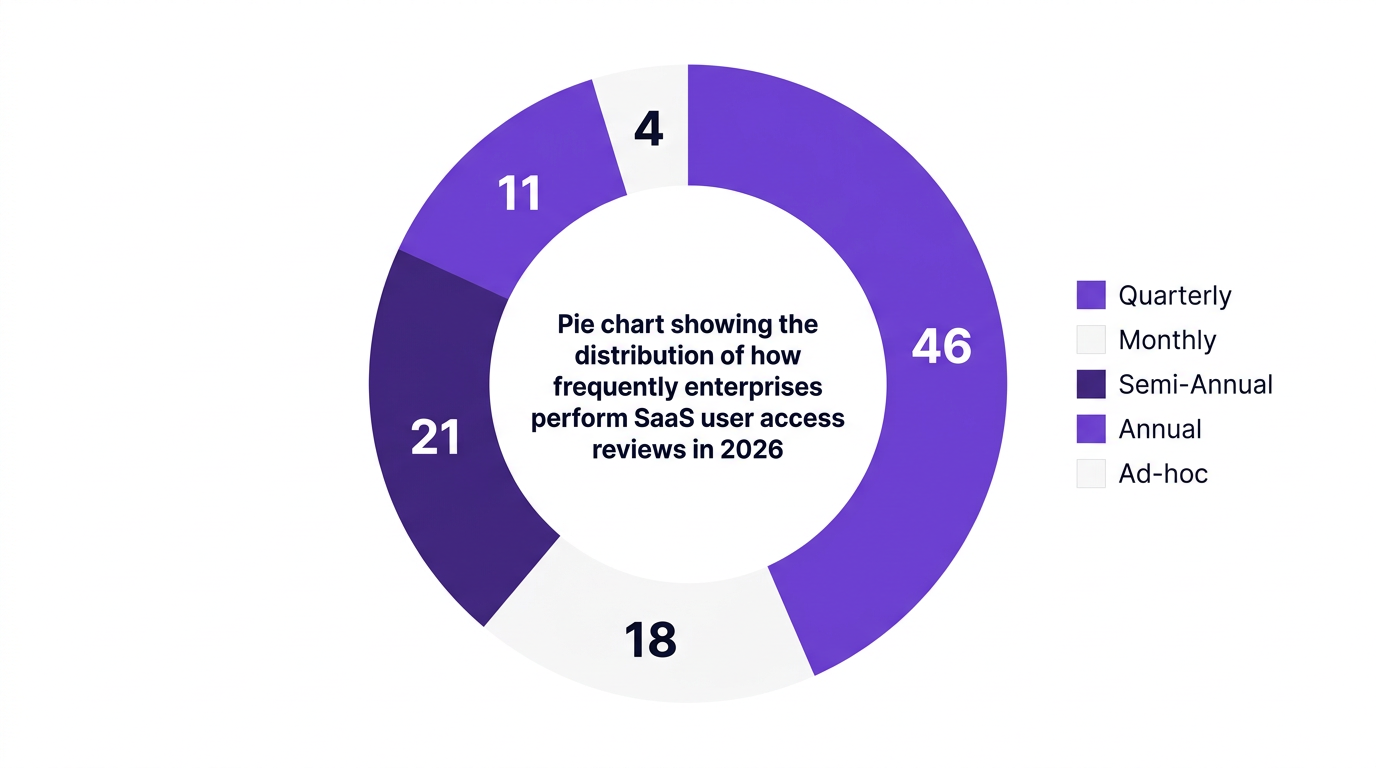
According to a 2026 SaaS security study, the frequency of SaaS user access reviews is evolving as follows:
This shift reflects how regulators and auditors now expect SaaS access review to be a continuous governance control rather than a once-a-year clean up.
For regulated enterprises, a strong SaaS access review process directly supports multiple compliance frameworks.
For SOX, access to financial reporting systems and related SaaS apps must be restricted to authorized personnel and reviewed periodically.
A robust SOX user access review program will:
A recent enterprise compliance benchmark from 2026 found that 84% of organizations conducting quarterly SaaS user access reviews saw a significant drop in audit findings and compliance gaps. This is especially relevant to SOX user access review, where incomplete access logs or missing approvals are common audit issues.
For SOC 2, user access review supports the Security, Availability, and Confidentiality trust principles.
SOC 2 access review expectations typically include:
In many SOC 2 examinations, inability to produce coherent SaaS access review records is now considered a top risk driver.
For ISO 27001, control families such as A.9 (Access Control) require regular review of user access rights, including user access review across critical SaaS platforms.
According to a 2026 audit readiness survey, 72% of IT managers reported that SaaS access review automation was key to meeting ISO 27001 audit standards. Manual spreadsheet-driven certification simply does not scale to hundreds of SaaS applications.
Across SOX, SOC 2, and ISO 27001, the underlying compliance access management requirement is consistent: prove that access is granted on a need-to-know basis, reviewed regularly, and cleaned up quickly when no longer needed.
While compliance is often the trigger, the organizational benefits of SaaS user access review go beyond audits.
Every dormant account or excessive admin role becomes a potential attack path.
Recent identity governance analysis in 2026 showed that enterprises using AI-powered user access review tools improved detection of unnecessary privileged access by 57%. This directly supports a least privilege SaaS posture by ensuring:
In sectors like healthcare and finance, a 2026 compliance insights study found that 65% of security leaders named automated SaaS access reviews as the most impactful control for SOX and SOC 2 compliance and security.
User access review is also a powerful cost optimization lever.
As part of SaaS entitlements management, reviews surface:
One global healthcare provider that implemented automated quarterly SaaS user access reviews in 2026 reported 35% cost savings on SaaS licenses while also reducing audit remediation time by 62%.
These results align with a 2026 cloud security market report, where automated user access review solutions reduced manual audit labor cost by a median of 47% in regulated industries.
There is no single standard frequency, but patterns are emerging.
A practical periodic access review strategy often looks like this:
However, regulators increasingly prefer continuous user access review or near real time review for critical systems.
This does not mean humans reviewing every change instantly. Instead, it typically involves:
Enterprises are moving away from a single annual user access review toward a risk-based cadence supported by automated user access review tools.
A repeatable SaaS access review process should be predictable for auditors and efficient for your reviewers.
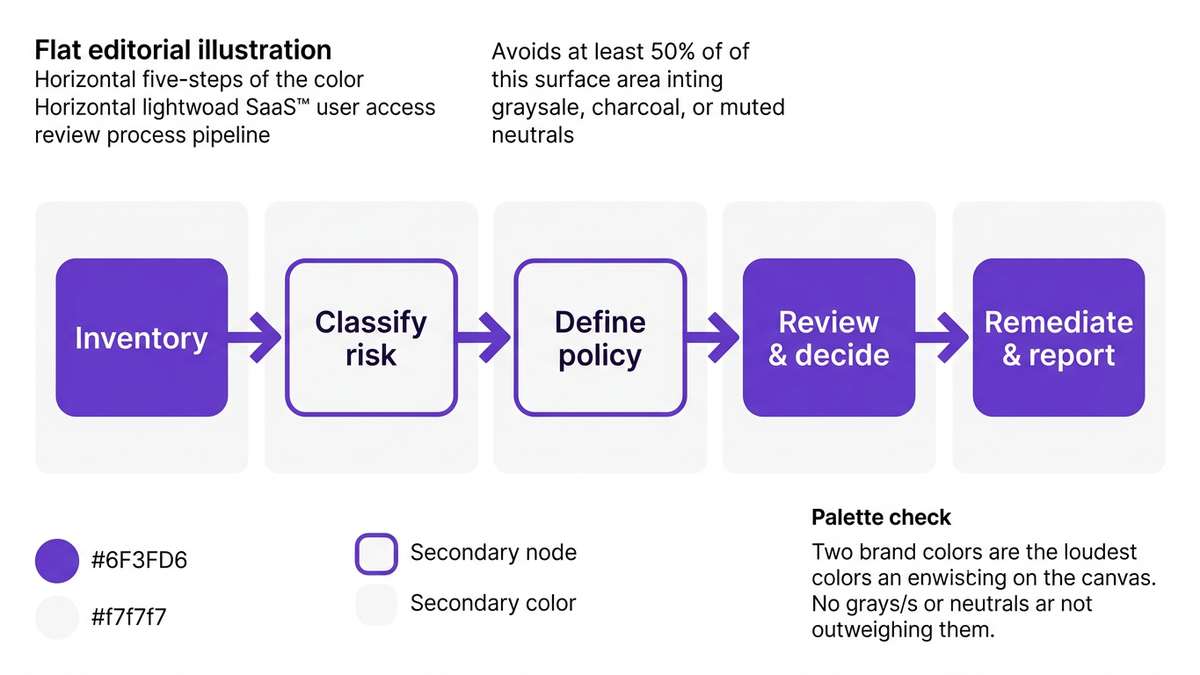
Below is a practical SaaS access review process you can standardize globally.
Start by categorizing your SaaS estate into risk tiers:
From there, define frequency and required reviewers for each tier.
You cannot review what you cannot see.
A centralized SaaS inventory should include:
This is where SaaS access governance and SaaS security posture management capabilities become critical.
Codify expectations in a user access review policy for SaaS that covers:
Ensure the policy explicitly calls out requirements for SOX user access review, SOC 2 access review, and ISO 27001 user access review where applicable.
For each SaaS access review cycle, reviewers should see:
This context turns reviews from a blind checkbox into informed decisions. It also supports SaaS permissions management and SaaS user access management by aligning access to actual usage and job function.
Once decisions are made, remediation should be executed quickly and consistently.
Key steps:
Your user access review checklist should include verification that:
Manual spreadsheet based access certification quickly collapses under SaaS scale.
A recent enterprise IT report in 2026 highlighted that only 41% of organizations conduct user access review across all SaaS apps, largely because manual processes are not sustainable.
Automated user access review software helps you:
According to a 2026 cloud security market assessment, automated user access review tools reduced manual audit labor cost by roughly 47% in regulated industries.
AI enabled identity governance SaaS capabilities further improve effectiveness by:
A 2026 analysis of AI in identity governance found that organizations implementing AI powered user access review saw 57% better detection of unnecessary privileged access.
This combination of user access review automation and AI driven prioritization is becoming the standard for modern SaaS access governance.
CloudNuro was designed around a governance first architecture, which makes SaaS user access review a native capability rather than an afterthought.
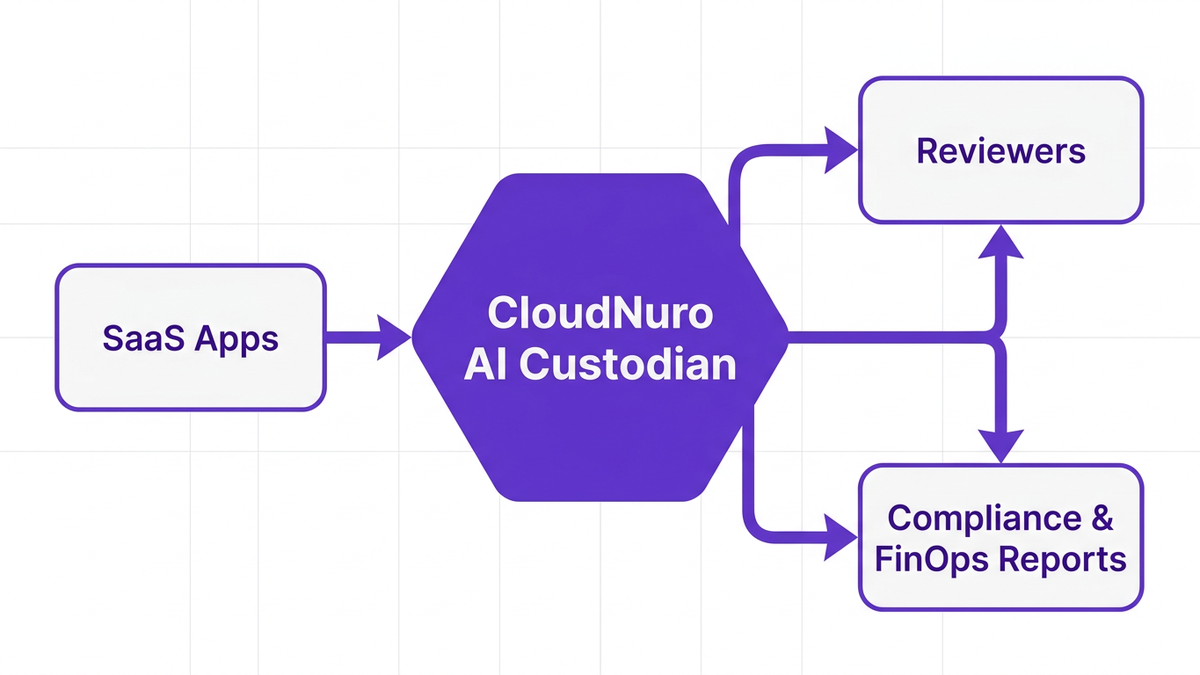
CloudNuro AI Custodian provides a centralized SaaS inventory and unified access view across more than 400 SaaS applications.
Key capabilities for SaaS access review include:
This single pane visibility is the foundation for consistent SaaS access audit processes.
For high value platforms, CloudNuro offers specialized custodians.
User access review for Microsoft 365 with Microsoft 365 Custodian:
User access review for Salesforce with Salesforce Custodian:
Together, these reduce both audit exposure and overspend while ensuring least privilege SaaS access.
CloudNuro AI Custodian layers AI over access data to support continuous user access review.
Examples of AI driven insight include:
CloudNuro FinOps Services then use this data for automated cost optimization:
Enterprises that adopt this combined governance and FinOps approach typically report:
CloudNuro functions as a SaaS management platform with access reviews embedded, rather than a disconnected identity tool, which simplifies implementation and ongoing operations.
Even mature organizations stumble with SaaS access review.
Some teams argue that an annual user access review is adequate.
However, 2026 compliance benchmarks show that organizations running quarterly SaaS user access reviews see far fewer audit issues. In cloud environments where roles and apps change weekly, annual reviews leave long windows of unmitigated risk.
A more nuanced approach is a risk-based frequency, where Tier 1 systems are reviewed quarterly or monthly, and low risk utilities can remain annual.
Another common view is that SSO, SCIM, and RBAC alone provide enough control.
While identity platforms and role based access control are critical, they do not eliminate the need for:
User access review is the human and governance layer on top of technical controls, not a replacement for them.
A SaaS user access review is a structured process where designated reviewers periodically evaluate who has access to each SaaS application, what permissions they hold, and whether that access is still appropriate.
It typically involves validating active users, admin roles, high risk entitlements, and cleaning up orphaned or dormant accounts.
User access review for compliance is essential because frameworks like SOX, SOC 2, and ISO 27001 require evidence that access to critical systems is granted on a least privilege basis and reviewed regularly.
Well executed SaaS access review programs reduce audit findings, demonstrate strong control over financial and sensitive data, and prove that excessive privileges are removed in a timely manner.
Most enterprises now run quarterly access review cycles for high risk SaaS applications, such as finance, HR, and CRM systems.
Medium risk systems are often reviewed semi annually, and low risk apps annually. Critical identities and privileged roles are increasingly monitored with continuous user access review using automated alerting.
Best practices for automated user access review include:
Using dedicated user access review software or a SaaS management platform with access reviews prevents spreadsheet sprawl and manual errors.
Automation reduces audit risk by ensuring that reviews happen on schedule, decisions are logged, and remediation is consistent.
Platforms that support SaaS access governance centralize access data, route reviews to the right owners, and provide standardized reports for auditors, which together lower the chance of missing critical access issues or failing to produce evidence.
Enterprises often use a combination of identity governance SaaS, SaaS management platforms, and native admin tools from key applications.
CloudNuro brings these capabilities together by offering unified SaaS user access review, role visibility, and cost optimization across Microsoft 365, Salesforce, and hundreds of other SaaS applications.
User access review is now a foundational control for SaaS security, compliance, and cost governance.
Enterprises that treat user access review as an ongoing, automated discipline, rather than a yearly audit fire drill, are seeing fewer compliance issues, stronger least privilege SaaS posture, and significant reductions in SaaS spend.
CloudNuro helps CIOs, CISOs, and IT leaders operationalize this by providing AI enabled, automated user access review across Microsoft 365, Salesforce, and 400 plus SaaS applications, integrated with FinOps grade cost optimization.
If you are ready to modernize your SaaS access review process and improve audit readiness while cutting costs, explore how CloudNuro can support your next review cycle.
CloudNuro is a leader in Enterprise SaaS Management Platforms, providing enterprises with unmatched visibility, governance, and cost optimization. Recognized twice in a row in the SaaS Management Platforms category and named a Leader in the SoftwareReviews Data Quadrant, CloudNuro is trusted by global enterprises and government agencies to bring financial discipline to SaaS, cloud, and AI. Trusted by enterprises such as Konica Minolta and Federal Signal, CloudNuro provides centralized SaaS inventory, license optimization, and renewal management along with advanced cost allocation and chargeback, giving IT and Finance leaders the visibility, control, and cost-conscious culture needed to drive financial discipline. Request a Demo | Get Free Savings | Explore Product
Request a no cost, no obligation free assessment —just 15 minutes to savings!
Get StartedUser access review is no longer a check-the-box activity. For enterprises running hundreds of SaaS applications, a SaaS user access review process is now one of the most critical controls for security, compliance, and cost optimization.
According to a recent SaaS security study from 2026, nearly 68% of enterprises increased the frequency of user access reviews for SaaS platforms to meet updated compliance expectations. Yet another 2026 governance survey found that only 41% of organizations conduct user access review across all SaaS apps, leaving serious blind spots.
This guide explains what a user access review is in a SaaS context, why it matters for SOX, SOC 2, ISO 27001, and similar frameworks, how often you should perform it, and how to automate access review at scale.
A SaaS user access review is a formal, periodic evaluation of who has access to which SaaS applications and what level of permissions they hold.
In practice, this means verifying:
For SaaS environments, a comprehensive SaaS user access review will typically span:
A useful analogy is a building with hundreds of rooms and shared spaces. A user access review is your master key inventory and door access log. You check who has keys, which doors those keys open, and whether that access still makes sense for their role.
According to a 2026 SaaS security study, the frequency of SaaS user access reviews is evolving as follows:
This shift reflects how regulators and auditors now expect SaaS access review to be a continuous governance control rather than a once-a-year clean up.
For regulated enterprises, a strong SaaS access review process directly supports multiple compliance frameworks.
For SOX, access to financial reporting systems and related SaaS apps must be restricted to authorized personnel and reviewed periodically.
A robust SOX user access review program will:
A recent enterprise compliance benchmark from 2026 found that 84% of organizations conducting quarterly SaaS user access reviews saw a significant drop in audit findings and compliance gaps. This is especially relevant to SOX user access review, where incomplete access logs or missing approvals are common audit issues.
For SOC 2, user access review supports the Security, Availability, and Confidentiality trust principles.
SOC 2 access review expectations typically include:
In many SOC 2 examinations, inability to produce coherent SaaS access review records is now considered a top risk driver.
For ISO 27001, control families such as A.9 (Access Control) require regular review of user access rights, including user access review across critical SaaS platforms.
According to a 2026 audit readiness survey, 72% of IT managers reported that SaaS access review automation was key to meeting ISO 27001 audit standards. Manual spreadsheet-driven certification simply does not scale to hundreds of SaaS applications.
Across SOX, SOC 2, and ISO 27001, the underlying compliance access management requirement is consistent: prove that access is granted on a need-to-know basis, reviewed regularly, and cleaned up quickly when no longer needed.
While compliance is often the trigger, the organizational benefits of SaaS user access review go beyond audits.
Every dormant account or excessive admin role becomes a potential attack path.
Recent identity governance analysis in 2026 showed that enterprises using AI-powered user access review tools improved detection of unnecessary privileged access by 57%. This directly supports a least privilege SaaS posture by ensuring:
In sectors like healthcare and finance, a 2026 compliance insights study found that 65% of security leaders named automated SaaS access reviews as the most impactful control for SOX and SOC 2 compliance and security.
User access review is also a powerful cost optimization lever.
As part of SaaS entitlements management, reviews surface:
One global healthcare provider that implemented automated quarterly SaaS user access reviews in 2026 reported 35% cost savings on SaaS licenses while also reducing audit remediation time by 62%.
These results align with a 2026 cloud security market report, where automated user access review solutions reduced manual audit labor cost by a median of 47% in regulated industries.
There is no single standard frequency, but patterns are emerging.
A practical periodic access review strategy often looks like this:
However, regulators increasingly prefer continuous user access review or near real time review for critical systems.
This does not mean humans reviewing every change instantly. Instead, it typically involves:
Enterprises are moving away from a single annual user access review toward a risk-based cadence supported by automated user access review tools.
A repeatable SaaS access review process should be predictable for auditors and efficient for your reviewers.
Below is a practical SaaS access review process you can standardize globally.
Start by categorizing your SaaS estate into risk tiers:
From there, define frequency and required reviewers for each tier.
You cannot review what you cannot see.
A centralized SaaS inventory should include:
This is where SaaS access governance and SaaS security posture management capabilities become critical.
Codify expectations in a user access review policy for SaaS that covers:
Ensure the policy explicitly calls out requirements for SOX user access review, SOC 2 access review, and ISO 27001 user access review where applicable.
For each SaaS access review cycle, reviewers should see:
This context turns reviews from a blind checkbox into informed decisions. It also supports SaaS permissions management and SaaS user access management by aligning access to actual usage and job function.
Once decisions are made, remediation should be executed quickly and consistently.
Key steps:
Your user access review checklist should include verification that:
Manual spreadsheet based access certification quickly collapses under SaaS scale.
A recent enterprise IT report in 2026 highlighted that only 41% of organizations conduct user access review across all SaaS apps, largely because manual processes are not sustainable.
Automated user access review software helps you:
According to a 2026 cloud security market assessment, automated user access review tools reduced manual audit labor cost by roughly 47% in regulated industries.
AI enabled identity governance SaaS capabilities further improve effectiveness by:
A 2026 analysis of AI in identity governance found that organizations implementing AI powered user access review saw 57% better detection of unnecessary privileged access.
This combination of user access review automation and AI driven prioritization is becoming the standard for modern SaaS access governance.
CloudNuro was designed around a governance first architecture, which makes SaaS user access review a native capability rather than an afterthought.
CloudNuro AI Custodian provides a centralized SaaS inventory and unified access view across more than 400 SaaS applications.
Key capabilities for SaaS access review include:
This single pane visibility is the foundation for consistent SaaS access audit processes.
For high value platforms, CloudNuro offers specialized custodians.
User access review for Microsoft 365 with Microsoft 365 Custodian:
User access review for Salesforce with Salesforce Custodian:
Together, these reduce both audit exposure and overspend while ensuring least privilege SaaS access.
CloudNuro AI Custodian layers AI over access data to support continuous user access review.
Examples of AI driven insight include:
CloudNuro FinOps Services then use this data for automated cost optimization:
Enterprises that adopt this combined governance and FinOps approach typically report:
CloudNuro functions as a SaaS management platform with access reviews embedded, rather than a disconnected identity tool, which simplifies implementation and ongoing operations.
Even mature organizations stumble with SaaS access review.
Some teams argue that an annual user access review is adequate.
However, 2026 compliance benchmarks show that organizations running quarterly SaaS user access reviews see far fewer audit issues. In cloud environments where roles and apps change weekly, annual reviews leave long windows of unmitigated risk.
A more nuanced approach is a risk-based frequency, where Tier 1 systems are reviewed quarterly or monthly, and low risk utilities can remain annual.
Another common view is that SSO, SCIM, and RBAC alone provide enough control.
While identity platforms and role based access control are critical, they do not eliminate the need for:
User access review is the human and governance layer on top of technical controls, not a replacement for them.
A SaaS user access review is a structured process where designated reviewers periodically evaluate who has access to each SaaS application, what permissions they hold, and whether that access is still appropriate.
It typically involves validating active users, admin roles, high risk entitlements, and cleaning up orphaned or dormant accounts.
User access review for compliance is essential because frameworks like SOX, SOC 2, and ISO 27001 require evidence that access to critical systems is granted on a least privilege basis and reviewed regularly.
Well executed SaaS access review programs reduce audit findings, demonstrate strong control over financial and sensitive data, and prove that excessive privileges are removed in a timely manner.
Most enterprises now run quarterly access review cycles for high risk SaaS applications, such as finance, HR, and CRM systems.
Medium risk systems are often reviewed semi annually, and low risk apps annually. Critical identities and privileged roles are increasingly monitored with continuous user access review using automated alerting.
Best practices for automated user access review include:
Using dedicated user access review software or a SaaS management platform with access reviews prevents spreadsheet sprawl and manual errors.
Automation reduces audit risk by ensuring that reviews happen on schedule, decisions are logged, and remediation is consistent.
Platforms that support SaaS access governance centralize access data, route reviews to the right owners, and provide standardized reports for auditors, which together lower the chance of missing critical access issues or failing to produce evidence.
Enterprises often use a combination of identity governance SaaS, SaaS management platforms, and native admin tools from key applications.
CloudNuro brings these capabilities together by offering unified SaaS user access review, role visibility, and cost optimization across Microsoft 365, Salesforce, and hundreds of other SaaS applications.
User access review is now a foundational control for SaaS security, compliance, and cost governance.
Enterprises that treat user access review as an ongoing, automated discipline, rather than a yearly audit fire drill, are seeing fewer compliance issues, stronger least privilege SaaS posture, and significant reductions in SaaS spend.
CloudNuro helps CIOs, CISOs, and IT leaders operationalize this by providing AI enabled, automated user access review across Microsoft 365, Salesforce, and 400 plus SaaS applications, integrated with FinOps grade cost optimization.
If you are ready to modernize your SaaS access review process and improve audit readiness while cutting costs, explore how CloudNuro can support your next review cycle.
CloudNuro is a leader in Enterprise SaaS Management Platforms, providing enterprises with unmatched visibility, governance, and cost optimization. Recognized twice in a row in the SaaS Management Platforms category and named a Leader in the SoftwareReviews Data Quadrant, CloudNuro is trusted by global enterprises and government agencies to bring financial discipline to SaaS, cloud, and AI. Trusted by enterprises such as Konica Minolta and Federal Signal, CloudNuro provides centralized SaaS inventory, license optimization, and renewal management along with advanced cost allocation and chargeback, giving IT and Finance leaders the visibility, control, and cost-conscious culture needed to drive financial discipline. Request a Demo | Get Free Savings | Explore Product
Request a no cost, no obligation free assessment - just 15 minutes to savings!
Get StartedWe're offering complimentary ServiceNow license assessments to only 25 enterprises this quarter who want to unlock immediate savings without disrupting operations.
Get Free AssessmentGet Started



CloudNuro Corp
1755 Park St. Suite 207
Naperville, IL 60563
Phone : +1-630-277-9470
Email: info@cloudnuro.com



.webp)

Recognized Leader in SaaS Management Platforms by Info-Tech SoftwareReviews


.svg)