

Sign Up
Thank you for Submitting!
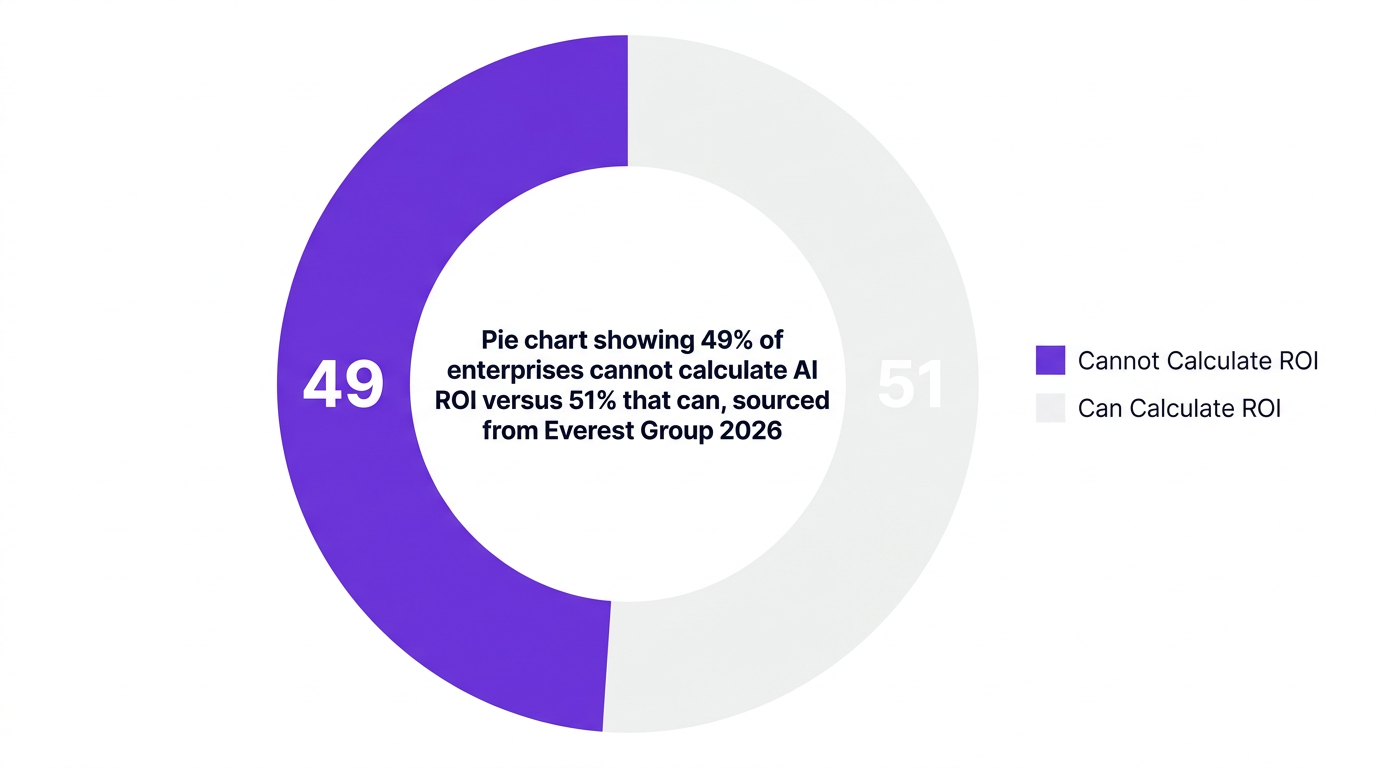
Nearly half of large organizations admit they cannot reliably quantify their AI investment return. According to Everest Group, 49% of enterprises report they cannot accurately calculate AI ROI because their data and metrics sit in silos and rely on manual spreadsheets.
At the same time, 81% of CIOs say demonstrating clear ROI is now the top priority for new AI initiatives, and over 70% of CFOs rank AI investment return as a top three planning metric for the coming fiscal year. The gap between expectation and measurement has become a board-level risk.
This article explains why enterprises struggle to calculate AI ROI in SaaS environments, then introduces a practical three-step framework that CIOs, CTOs, and CFOs can use to fix it. Along the way, you will see how a governance-first SaaS management platform like CloudNuro makes AI ROI measurable, repeatable, and auditable.
The core problem is not that AI projects lack value. It is that most enterprises lack the data structure and governance to trace AI outcomes back to financial impact.
Everest Group’s 2026 research highlights the issue clearly: 49% of enterprises say they cannot calculate AI ROI accurately due to fragmented data and inconsistent metrics. As Dr. Renata Gill notes, "Without harmonized data sources and automated tracking, most enterprises struggle to demonstrably link AI outcomes to business value."
Three structural issues show up repeatedly in large SaaS-heavy organizations:
Fragmented SaaS and AI footprint
AI capabilities are buried across dozens or hundreds of SaaS tools, custom models, and cloud services.
No single system tracks where AI is actually used, by whom, and for what processes.
Unclear ownership and financial accountability
AI initiatives may be sponsored by IT, line-of-business leaders, marketing, or operations.
Budget responsibility and performance accountability are rarely aligned for AI projects.
Manual, ad hoc measurement approaches
ROI is often reconstructed in PowerPoint once a year.
Key metrics, such as AI payback period or cost per automated transaction, cannot be refreshed in real time.
The result: leadership approves AI budgets on the strength of strategic narratives, then struggles to quantify realized value. AI becomes a black box cost center instead of a transparent investment with clear AI ROI metrics for subscription businesses.

To fix AI ROI measurement, you must first understand why it fails. Across CloudNuro customer engagements and market research, three patterns stand out.
Most enterprises cannot calculate AI ROI because they do not know exactly where AI is running.
AI features are embedded inside SaaS platforms, chatbots, search tools, marketing automation, and analytics.
Shadow IT introduces additional AI subscriptions that never flow through procurement.
IDC reports that 53% of enterprises that implemented integrated AI and SaaS governance platforms reduced untracked spending by more than 22% within 12 months. That result highlights how much AI spend is usually invisible.
Counterargument: Some leaders argue that you can still estimate ROI from top-level financials without granular inventory. In practice, those estimates rarely withstand scrutiny because no one can tie value to specific AI initiatives when budgets come under pressure.
AI ROI requires both cost inputs and business outputs.
Inputs: SaaS subscription costs, AI surcharges, infrastructure, data labeling, vendor services, and internal FTE.
Outputs: revenue uplift, pipeline generation, churn reduction, time saved, error reduction, or risk mitigation.
Gartner finds that only 29% of organizations have a standardized AI ROI measurement framework. As Marcus Eldridge puts it, "AI ROI measurement must extend beyond cost savings to include new revenue growth, efficiency, and risk mitigation."
When enterprises track only costs or only activity metrics, they cannot apply a robust AI ROI formula for B2B SaaS that satisfies finance.
Many AI programs start with a business case, then stop measuring once the project is funded.
There is no continuous AI ROI dashboard for SaaS CFO stakeholders.
Payback period, cost per outcome, and unit economics are not refreshed as usage patterns change.
Cloud Economics data shows that companies using automated AI ROI tracking achieve 38% higher cost savings on SaaS expenditures than those using manual or ad hoc methods. In other words, making ROI visible changes behavior.
Counterargument: Some teams worry that constant ROI tracking will slow innovation or discourage experimentation. In practice, transparent ai investment roi calculator dashboards allow leaders to ring fence a portfolio of experimental bets, while holding mature AI products to stricter financial standards.
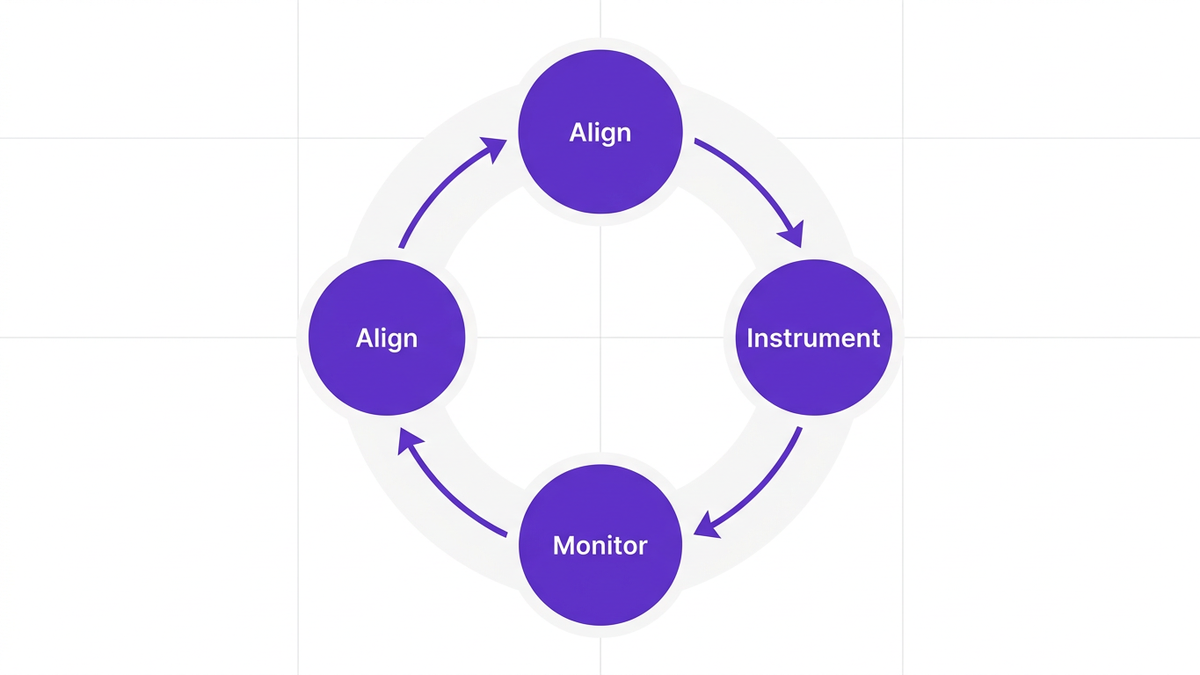
To move from opaque AI spending to measurable AI investment return, enterprises need a structured, repeatable approach. CloudNuro recommends a three-step framework called the AIM Loop: Align, Instrument, Monitor.
Think of this like implementing telemetry in a complex aircraft. You cannot rely on intuition alone once the system is in the air. You need instrumented feedback that ties pilot actions to performance.
Every AI project should start with a quantified hypothesis.
Define the primary value driver
Revenue: pipeline generation AI, cross-sell, upsell, and improved conversion.
Cost: case deflection from support chatbots, automation of manual workflows.
Risk/compliance: reduced audit findings, fewer security incidents.
Set explicit success metrics and baselines
For AI ROI in customer success automation tools, track churn, expansion revenue, and time-to-value.
For AI ROI in marketing automation in SaaS, track MQL-to-SQL conversion, CAC, and funnel velocity.
For AI ROI measurement of support chatbots in SaaS, track ticket volume, first-response time, and cost per resolution.
Translate metrics into financial outcomes
Define how each metric maps to dollars saved or dollars earned.
Agree upfront with finance on the formula that will be used.
Action tip: Require every AI initiative to produce a one-page "AI business value card" that includes the owner, target metrics, baseline, and projected payback.
Once you have alignment on business value, you need data. This is where many enterprises stall, because their AI and SaaS landscape spans hundreds of tools.
Key instrumentation tasks include:
Centralize SaaS and AI inventory
Discover all apps that include AI features, including "add-on" capabilities.
Map users, departments, and business processes to each AI-enabled tool.
Tag and classify AI spend
Tag invoices and subscriptions that include AI charges, such as usage-based models or AI feature tiers.
Distinguish between core SaaS costs and incremental AI spend.
Link usage to outcomes
Instrument events such as AI-powered searches, automated workflows, and chatbot sessions.
Connect these events to business metrics like closed-won deals, resolved tickets, or processed claims.
This is the foundation for any accurate AI ROI measurement framework for SaaS. Without it, your AI project ROI calculator B2B SaaS is guessing.
The final step is turning raw data into ai roi dashboards that support decision making.
Your monitoring layer should:
Calculate AI payback period automatically
Show how long each initiative will take to recover its costs.
Display payback in months, plus a target date.
Track AI ROI metrics for subscription businesses
Cost per AI-assisted transaction.
Incremental revenue per AI user.
Automation rate and cost per avoided manual task.
Benchmark against peers and internal targets
Use an AI ROI benchmark for SaaS companies to contextualize performance.
Highlight outliers where spend is high, and value is low.
Feed insights back into governance
Adjust license tiers, reduce underused AI features, or reallocate spend to higher-performing initiatives.
Use ROI data in QBRs with business stakeholders.
This creates a continuous AIM Loop: alignment informs instrumentation, instrumentation powers monitoring, and monitoring drives new alignment.
CloudNuro was built to solve exactly this problem: making AI and SaaS spend transparent, governed, and financially accountable.
Instead of piecing together siloed reports from each vendor, CloudNuro provides a single pane of glass across SaaS, PaaS, IaaS, and AI initiatives. This enables accurate AI ROI in SaaS management platforms without manual effort.
CloudNuro’s platform automatically discovers SaaS applications, including those that contain AI features, across your environment.
Deep integration with hundreds of apps surfaces where AI capabilities are enabled and who is using them.
Shadow IT and unapproved AI tools become visible, so untracked spend can be brought under governance.
Enterprises use this data as the foundation to measure AI ROI in SaaS products and ensure that every AI subscription has a clear owner and business case.
You can explore this in more detail on the CloudNuro product overview page.
CloudNuro links usage data with financial data so that you can calculate AI ROI at the level that matters: product, department, or initiative.
Tag AI-related subscriptions and allocate them to business units or cost centers.
Use embedded ai investment roi calculator and ai roi calculator saas tools to compute ROI, payback, and unit economics.
For example, a Fortune 500 financial services provider used CloudNuro’s Unified Cloud Custodian to reduce wasted SaaS spend by 23% and improve license utilization by 41%. Quarterly AI and SaaS ROI dashboards gave IT and finance a common view of value.
CloudNuro’s FinOps Services team helps enterprises build standardized ROI models and benchmarks that align with finance expectations.
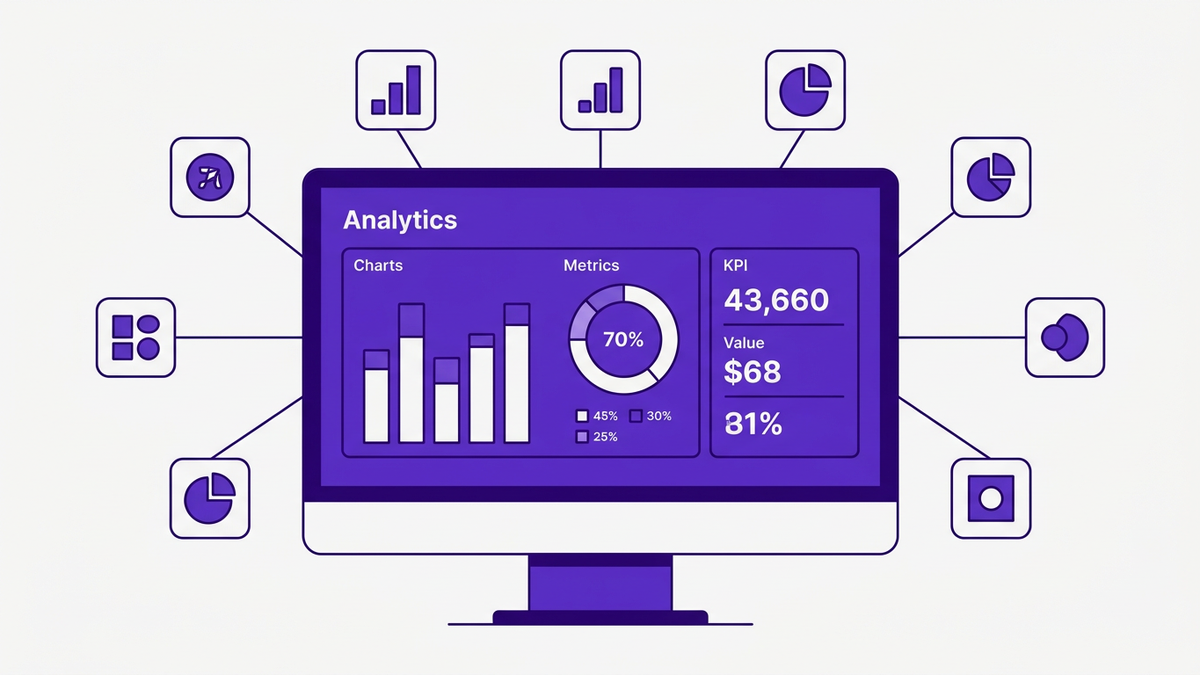
CloudNuro’s ROI dashboards and governance workflows give leadership real-time insight into AI performance.
CIOs see adoption, utilization, and performance of AI features across the SaaS estate.
CFOs track ai investment return against budgets, with drill-down views to specific tools.
A large healthcare network used CloudNuro’s AI Custodian to automate compliance reporting across more than 400 apps, reduce shadow IT by 28%, and validate a 19-month AI ROI payback period. This transformed AI discussions from speculative to data-backed.
CloudNuro also supports ai roi business case for saas cfo conversations by providing board-ready visuals, variance analysis, and scenario modeling.
To understand why enterprises choose CloudNuro as their SaaS and AI governance layer, see Why CloudNuro and recent CloudNuro case studies.
Once your AIM Loop is in place, you can start to refine ROI for specific AI use cases that are common in subscription businesses.
For AI-powered search and content experiences, many teams focus on the ROI of AI search optimization for SaaS and related metrics.
Useful metrics include:
Search success rate and time-to-answer.
Reduction in manual navigation and support tickets.
Conversion uplift from users who engage with AI search.
Some teams also explore AI share-of-voice ROI and generative engine optimization ROI, tracking how AI-generated content impacts visibility across AI-driven channels.
For revenue teams, AI’s impact can be framed through pipeline generation AI and funnel efficiency.
Key metrics include:
Incremental opportunities created or influenced by AI.
Increase in win rate for AI-assisted deals.
Reduction in time spent on manual research and data entry.
You can build an AI SEO ROI calculator for SaaS companies that combines search visibility, lead volume, and conversion metrics to quantify revenue impact.
Support chatbots and AI-assisted agents are ripe for ROI measurement.
Track:
Percentage of tickets deflected or auto-resolved.
Average handle time and first-response time.
Cost per contact, pre and post AI.
This yields clear ai roi measurement for support chatbots in saas, with a defensible payback period that can be shared in QBRs and board meetings.
For broader customer lifecycle, AI can also support net retention. Here, AI ROI for customer success automation tools often centers on churn reduction, product adoption, and revenue expansion.
To calculate AI ROI in SaaS, you need three inputs:
Total cost of the AI initiative: subscriptions, infrastructure, services, and internal labor.
Measurable business outcomes: revenue uplift, cost savings, or risk reduction.
A time horizon: typically 12 to 36 months.
A simple formula is:
AI ROI = (Net Financial Benefit from AI − Total AI Cost) / Total AI Cost
CloudNuro simplifies this by pulling cost and usage data directly from your SaaS stack, then tying it to outcome metrics in configurable ROI dashboards.
The largest hurdles are:
Lack of a unified inventory of AI and SaaS tools.
Disconnected cost, usage, and business outcome data.
Manual, one-off analyses instead of continuous measurement.
Platforms that combine SaaS discovery, financial tagging, and ai roi measurement automation remove much of this friction.
CFOs can improve accountability by:
Requiring a quantified AI business case before approving spend.
Mandating standardized ROI templates across business units.
Using an AI ROI dashboard for SaaS CFO stakeholders to monitor payback and performance.
CloudNuro’s FinOps Services help finance teams operationalize these practices and align AI metrics to existing financial governance processes.
You do not need a separate calculator for every AI tool, but you do need consistent logic.
For example, a generic AI project roi calculator can be applied across initiatives if you define:
How you will quantify benefits.
The expected lifetime of the AI solution.
The threshold ROI or payback period required.
CloudNuro provides configurable templates that adapt to different use cases while preserving a common measurement framework.
For most enterprises, quarterly reviews strike the right balance.
Monthly reviews are useful during initial rollout or rapid scaling.
Quarterly reviews work for mature initiatives and portfolio-level governance.
What matters most is that AI ROI becomes part of your standard performance rhythm, not a one-off exercise.
AI will continue to attract investment, but scrutiny is only increasing. Leaders who can show clear AI investment return will win budget, trust, and influence. Those who cannot will see their AI programs labeled as experimental and discretionary.
By adopting the AIM Loop, instrumenting SaaS and AI usage, and using a governance-first platform like CloudNuro, enterprises can move from anecdotal success stories to auditable, repeatable AI ROI.
If your organization is part of the 49% that cannot yet calculate AI ROI with confidence, now is the time to fix it.
See how CloudNuro centralizes SaaS and AI governance on the product overview.
Explore managed optimization and ROI services on FinOps Services.
Browse more insights on the CloudNuro blogs.
Make AI ROI measurable, defensible, and aligned with your enterprise financial strategy.
CloudNuro is a leader in Enterprise SaaS Management Platforms, providing enterprises with unmatched visibility, governance, and cost optimization. Recognized twice in a row in the SaaS Management Platforms category and named a Leader in the SoftwareReviews Data Quadrant, CloudNuro is trusted by global enterprises and government agencies to bring financial discipline to SaaS, cloud, and AI. Trusted by enterprises such as Konica Minolta and Federal Signal, CloudNuro provides centralized SaaS inventory, license optimization, and renewal management along with advanced cost allocation and chargeback, giving IT and Finance leaders the visibility, control, and cost-conscious culture needed to drive financial discipline.
Request a no cost, no obligation free assessment —just 15 minutes to savings!
Get StartedNearly half of large organizations admit they cannot reliably quantify their AI investment return. According to Everest Group, 49% of enterprises report they cannot accurately calculate AI ROI because their data and metrics sit in silos and rely on manual spreadsheets.
At the same time, 81% of CIOs say demonstrating clear ROI is now the top priority for new AI initiatives, and over 70% of CFOs rank AI investment return as a top three planning metric for the coming fiscal year. The gap between expectation and measurement has become a board-level risk.
This article explains why enterprises struggle to calculate AI ROI in SaaS environments, then introduces a practical three-step framework that CIOs, CTOs, and CFOs can use to fix it. Along the way, you will see how a governance-first SaaS management platform like CloudNuro makes AI ROI measurable, repeatable, and auditable.
The core problem is not that AI projects lack value. It is that most enterprises lack the data structure and governance to trace AI outcomes back to financial impact.
Everest Group’s 2026 research highlights the issue clearly: 49% of enterprises say they cannot calculate AI ROI accurately due to fragmented data and inconsistent metrics. As Dr. Renata Gill notes, "Without harmonized data sources and automated tracking, most enterprises struggle to demonstrably link AI outcomes to business value."
Three structural issues show up repeatedly in large SaaS-heavy organizations:
Fragmented SaaS and AI footprint
AI capabilities are buried across dozens or hundreds of SaaS tools, custom models, and cloud services.
No single system tracks where AI is actually used, by whom, and for what processes.
Unclear ownership and financial accountability
AI initiatives may be sponsored by IT, line-of-business leaders, marketing, or operations.
Budget responsibility and performance accountability are rarely aligned for AI projects.
Manual, ad hoc measurement approaches
ROI is often reconstructed in PowerPoint once a year.
Key metrics, such as AI payback period or cost per automated transaction, cannot be refreshed in real time.
The result: leadership approves AI budgets on the strength of strategic narratives, then struggles to quantify realized value. AI becomes a black box cost center instead of a transparent investment with clear AI ROI metrics for subscription businesses.
To fix AI ROI measurement, you must first understand why it fails. Across CloudNuro customer engagements and market research, three patterns stand out.
Most enterprises cannot calculate AI ROI because they do not know exactly where AI is running.
AI features are embedded inside SaaS platforms, chatbots, search tools, marketing automation, and analytics.
Shadow IT introduces additional AI subscriptions that never flow through procurement.
IDC reports that 53% of enterprises that implemented integrated AI and SaaS governance platforms reduced untracked spending by more than 22% within 12 months. That result highlights how much AI spend is usually invisible.
Counterargument: Some leaders argue that you can still estimate ROI from top-level financials without granular inventory. In practice, those estimates rarely withstand scrutiny because no one can tie value to specific AI initiatives when budgets come under pressure.
AI ROI requires both cost inputs and business outputs.
Inputs: SaaS subscription costs, AI surcharges, infrastructure, data labeling, vendor services, and internal FTE.
Outputs: revenue uplift, pipeline generation, churn reduction, time saved, error reduction, or risk mitigation.
Gartner finds that only 29% of organizations have a standardized AI ROI measurement framework. As Marcus Eldridge puts it, "AI ROI measurement must extend beyond cost savings to include new revenue growth, efficiency, and risk mitigation."
When enterprises track only costs or only activity metrics, they cannot apply a robust AI ROI formula for B2B SaaS that satisfies finance.
Many AI programs start with a business case, then stop measuring once the project is funded.
There is no continuous AI ROI dashboard for SaaS CFO stakeholders.
Payback period, cost per outcome, and unit economics are not refreshed as usage patterns change.
Cloud Economics data shows that companies using automated AI ROI tracking achieve 38% higher cost savings on SaaS expenditures than those using manual or ad hoc methods. In other words, making ROI visible changes behavior.
Counterargument: Some teams worry that constant ROI tracking will slow innovation or discourage experimentation. In practice, transparent ai investment roi calculator dashboards allow leaders to ring fence a portfolio of experimental bets, while holding mature AI products to stricter financial standards.
To move from opaque AI spending to measurable AI investment return, enterprises need a structured, repeatable approach. CloudNuro recommends a three-step framework called the AIM Loop: Align, Instrument, Monitor.
Think of this like implementing telemetry in a complex aircraft. You cannot rely on intuition alone once the system is in the air. You need instrumented feedback that ties pilot actions to performance.
Every AI project should start with a quantified hypothesis.
Define the primary value driver
Revenue: pipeline generation AI, cross-sell, upsell, and improved conversion.
Cost: case deflection from support chatbots, automation of manual workflows.
Risk/compliance: reduced audit findings, fewer security incidents.
Set explicit success metrics and baselines
For AI ROI in customer success automation tools, track churn, expansion revenue, and time-to-value.
For AI ROI in marketing automation in SaaS, track MQL-to-SQL conversion, CAC, and funnel velocity.
For AI ROI measurement of support chatbots in SaaS, track ticket volume, first-response time, and cost per resolution.
Translate metrics into financial outcomes
Define how each metric maps to dollars saved or dollars earned.
Agree upfront with finance on the formula that will be used.
Action tip: Require every AI initiative to produce a one-page "AI business value card" that includes the owner, target metrics, baseline, and projected payback.
Once you have alignment on business value, you need data. This is where many enterprises stall, because their AI and SaaS landscape spans hundreds of tools.
Key instrumentation tasks include:
Centralize SaaS and AI inventory
Discover all apps that include AI features, including "add-on" capabilities.
Map users, departments, and business processes to each AI-enabled tool.
Tag and classify AI spend
Tag invoices and subscriptions that include AI charges, such as usage-based models or AI feature tiers.
Distinguish between core SaaS costs and incremental AI spend.
Link usage to outcomes
Instrument events such as AI-powered searches, automated workflows, and chatbot sessions.
Connect these events to business metrics like closed-won deals, resolved tickets, or processed claims.
This is the foundation for any accurate AI ROI measurement framework for SaaS. Without it, your AI project ROI calculator B2B SaaS is guessing.
The final step is turning raw data into ai roi dashboards that support decision making.
Your monitoring layer should:
Calculate AI payback period automatically
Show how long each initiative will take to recover its costs.
Display payback in months, plus a target date.
Track AI ROI metrics for subscription businesses
Cost per AI-assisted transaction.
Incremental revenue per AI user.
Automation rate and cost per avoided manual task.
Benchmark against peers and internal targets
Use an AI ROI benchmark for SaaS companies to contextualize performance.
Highlight outliers where spend is high, and value is low.
Feed insights back into governance
Adjust license tiers, reduce underused AI features, or reallocate spend to higher-performing initiatives.
Use ROI data in QBRs with business stakeholders.
This creates a continuous AIM Loop: alignment informs instrumentation, instrumentation powers monitoring, and monitoring drives new alignment.
CloudNuro was built to solve exactly this problem: making AI and SaaS spend transparent, governed, and financially accountable.
Instead of piecing together siloed reports from each vendor, CloudNuro provides a single pane of glass across SaaS, PaaS, IaaS, and AI initiatives. This enables accurate AI ROI in SaaS management platforms without manual effort.
CloudNuro’s platform automatically discovers SaaS applications, including those that contain AI features, across your environment.
Deep integration with hundreds of apps surfaces where AI capabilities are enabled and who is using them.
Shadow IT and unapproved AI tools become visible, so untracked spend can be brought under governance.
Enterprises use this data as the foundation to measure AI ROI in SaaS products and ensure that every AI subscription has a clear owner and business case.
You can explore this in more detail on the CloudNuro product overview page.
CloudNuro links usage data with financial data so that you can calculate AI ROI at the level that matters: product, department, or initiative.
Tag AI-related subscriptions and allocate them to business units or cost centers.
Use embedded ai investment roi calculator and ai roi calculator saas tools to compute ROI, payback, and unit economics.
For example, a Fortune 500 financial services provider used CloudNuro’s Unified Cloud Custodian to reduce wasted SaaS spend by 23% and improve license utilization by 41%. Quarterly AI and SaaS ROI dashboards gave IT and finance a common view of value.
CloudNuro’s FinOps Services team helps enterprises build standardized ROI models and benchmarks that align with finance expectations.
CloudNuro’s ROI dashboards and governance workflows give leadership real-time insight into AI performance.
CIOs see adoption, utilization, and performance of AI features across the SaaS estate.
CFOs track ai investment return against budgets, with drill-down views to specific tools.
A large healthcare network used CloudNuro’s AI Custodian to automate compliance reporting across more than 400 apps, reduce shadow IT by 28%, and validate a 19-month AI ROI payback period. This transformed AI discussions from speculative to data-backed.
CloudNuro also supports ai roi business case for saas cfo conversations by providing board-ready visuals, variance analysis, and scenario modeling.
To understand why enterprises choose CloudNuro as their SaaS and AI governance layer, see Why CloudNuro and recent CloudNuro case studies.
Once your AIM Loop is in place, you can start to refine ROI for specific AI use cases that are common in subscription businesses.
For AI-powered search and content experiences, many teams focus on the ROI of AI search optimization for SaaS and related metrics.
Useful metrics include:
Search success rate and time-to-answer.
Reduction in manual navigation and support tickets.
Conversion uplift from users who engage with AI search.
Some teams also explore AI share-of-voice ROI and generative engine optimization ROI, tracking how AI-generated content impacts visibility across AI-driven channels.
For revenue teams, AI’s impact can be framed through pipeline generation AI and funnel efficiency.
Key metrics include:
Incremental opportunities created or influenced by AI.
Increase in win rate for AI-assisted deals.
Reduction in time spent on manual research and data entry.
You can build an AI SEO ROI calculator for SaaS companies that combines search visibility, lead volume, and conversion metrics to quantify revenue impact.
Support chatbots and AI-assisted agents are ripe for ROI measurement.
Track:
Percentage of tickets deflected or auto-resolved.
Average handle time and first-response time.
Cost per contact, pre and post AI.
This yields clear ai roi measurement for support chatbots in saas, with a defensible payback period that can be shared in QBRs and board meetings.
For broader customer lifecycle, AI can also support net retention. Here, AI ROI for customer success automation tools often centers on churn reduction, product adoption, and revenue expansion.
To calculate AI ROI in SaaS, you need three inputs:
Total cost of the AI initiative: subscriptions, infrastructure, services, and internal labor.
Measurable business outcomes: revenue uplift, cost savings, or risk reduction.
A time horizon: typically 12 to 36 months.
A simple formula is:
AI ROI = (Net Financial Benefit from AI − Total AI Cost) / Total AI Cost
CloudNuro simplifies this by pulling cost and usage data directly from your SaaS stack, then tying it to outcome metrics in configurable ROI dashboards.
The largest hurdles are:
Lack of a unified inventory of AI and SaaS tools.
Disconnected cost, usage, and business outcome data.
Manual, one-off analyses instead of continuous measurement.
Platforms that combine SaaS discovery, financial tagging, and ai roi measurement automation remove much of this friction.
CFOs can improve accountability by:
Requiring a quantified AI business case before approving spend.
Mandating standardized ROI templates across business units.
Using an AI ROI dashboard for SaaS CFO stakeholders to monitor payback and performance.
CloudNuro’s FinOps Services help finance teams operationalize these practices and align AI metrics to existing financial governance processes.
You do not need a separate calculator for every AI tool, but you do need consistent logic.
For example, a generic AI project roi calculator can be applied across initiatives if you define:
How you will quantify benefits.
The expected lifetime of the AI solution.
The threshold ROI or payback period required.
CloudNuro provides configurable templates that adapt to different use cases while preserving a common measurement framework.
For most enterprises, quarterly reviews strike the right balance.
Monthly reviews are useful during initial rollout or rapid scaling.
Quarterly reviews work for mature initiatives and portfolio-level governance.
What matters most is that AI ROI becomes part of your standard performance rhythm, not a one-off exercise.
AI will continue to attract investment, but scrutiny is only increasing. Leaders who can show clear AI investment return will win budget, trust, and influence. Those who cannot will see their AI programs labeled as experimental and discretionary.
By adopting the AIM Loop, instrumenting SaaS and AI usage, and using a governance-first platform like CloudNuro, enterprises can move from anecdotal success stories to auditable, repeatable AI ROI.
If your organization is part of the 49% that cannot yet calculate AI ROI with confidence, now is the time to fix it.
See how CloudNuro centralizes SaaS and AI governance on the product overview.
Explore managed optimization and ROI services on FinOps Services.
Browse more insights on the CloudNuro blogs.
Make AI ROI measurable, defensible, and aligned with your enterprise financial strategy.
CloudNuro is a leader in Enterprise SaaS Management Platforms, providing enterprises with unmatched visibility, governance, and cost optimization. Recognized twice in a row in the SaaS Management Platforms category and named a Leader in the SoftwareReviews Data Quadrant, CloudNuro is trusted by global enterprises and government agencies to bring financial discipline to SaaS, cloud, and AI. Trusted by enterprises such as Konica Minolta and Federal Signal, CloudNuro provides centralized SaaS inventory, license optimization, and renewal management along with advanced cost allocation and chargeback, giving IT and Finance leaders the visibility, control, and cost-conscious culture needed to drive financial discipline.
Request a no cost, no obligation free assessment - just 15 minutes to savings!
Get StartedWe're offering complimentary ServiceNow license assessments to only 25 enterprises this quarter who want to unlock immediate savings without disrupting operations.
Get Free AssessmentGet Started




CloudNuro Corp
1755 Park St. Suite 207
Naperville, IL 60563
Phone : +1-630-277-9470
Email: info@cloudnuro.com





.webp)

Recognized Leader in SaaS Management Platforms by Info-Tech SoftwareReviews


.png)
.svg)