

Sign Up
Thank you for Submitting!
AI cost forecasting has quickly become a board-level concern. As AI moves from experiments to production, CIOs and FinOps leaders are being asked a simple question that is surprisingly hard to answer: “What will this AI initiative actually cost us next quarter?”
Unlike traditional SaaS subscriptions, AI workloads are dominated by variable consumption: tokens processed, API call volume, and platform credits. A recent cost analysis report found that 62% of enterprises cite unpredictable AI usage costs as a top challenge in 2026, and another SaaS management survey reported 52% of organizations experienced at least one AI-related budget overrun in the past year.
This article breaks down how AI cost structures really work, presents a practical framework for AI cost forecasting, and shows how unified platforms like CloudNuro can give you the visibility and governance you need to budget confidently.
AI promises efficiency, but its economics can feel opaque. The shift to usage-based pricing means your bill is tied to what your models actually do in production, not just how many users you have.
A SaaS finance study in 2026 found that 35% of SaaS expenses within AI-driven platforms come from hidden costs such as untracked API call bursts and unexpected token usage. Another procurement trends report showed enterprises spend on average 17% more on AI consumption-based services than initially budgeted, mostly because of shadow usage.
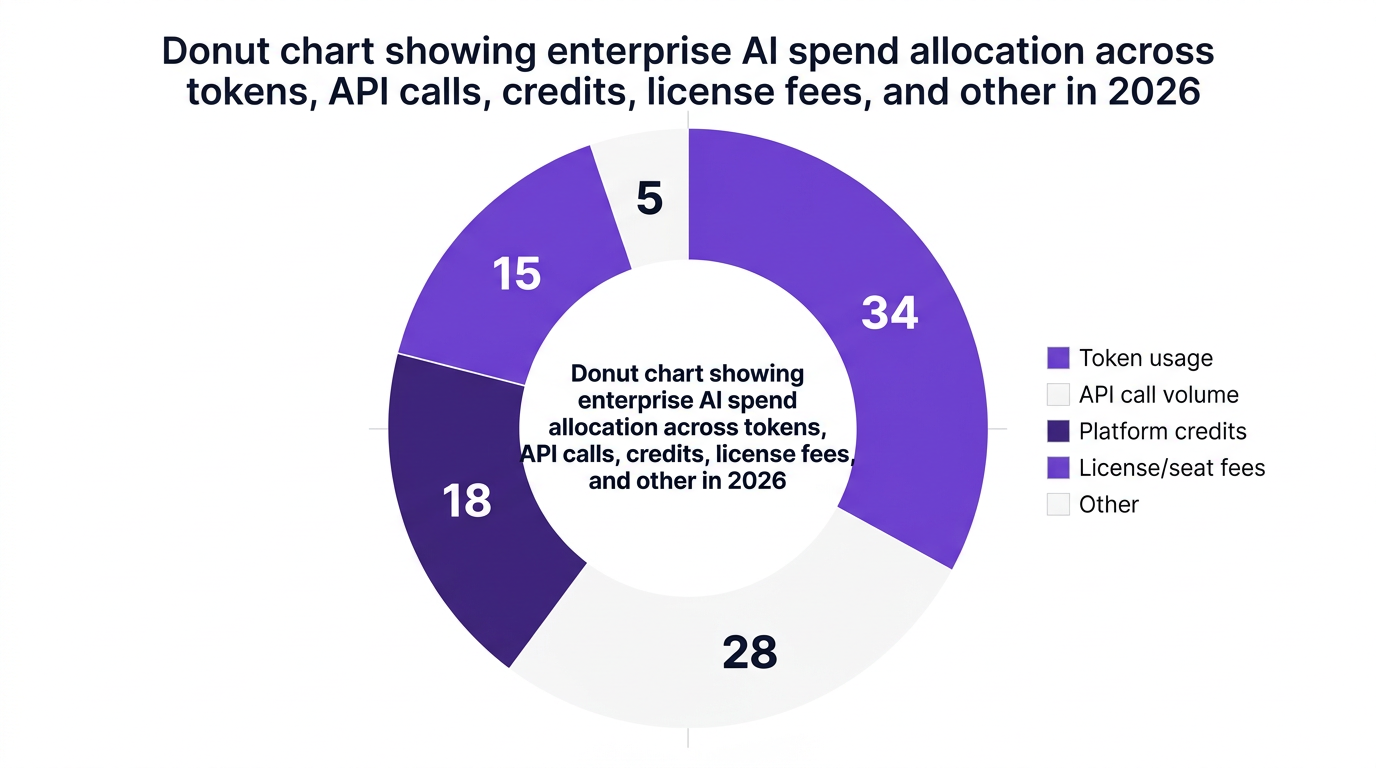
At a high level, enterprise AI spend tends to break down across several buckets:
According to a SaaS finance study in 2026, a typical breakdown looks like this:
In other words, over 80% of AI spend is usage-driven, not license-driven. That is why traditional SaaS budgeting models often fail when applied directly to AI.
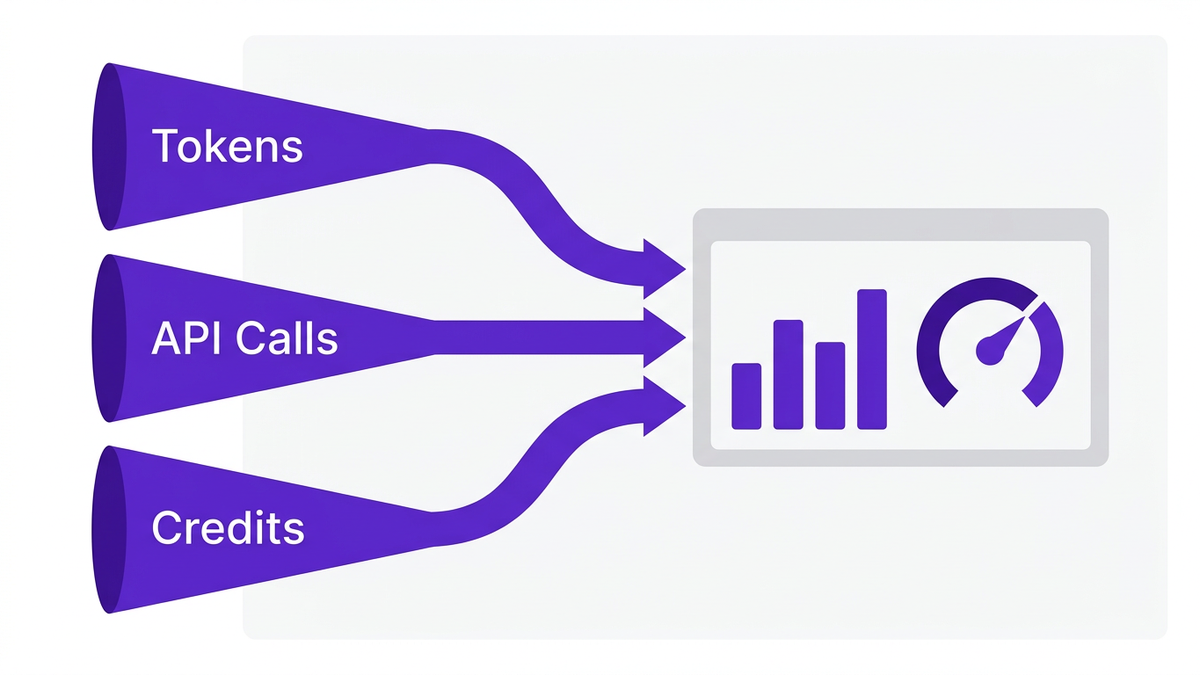
To improve AI cost forecasting, you first need a clear mental model for the three primary consumption drivers. Think of it like utilities: tokens are the kilowatt-hours, calls are the times you flip the switch, and credits are your preloaded balance with the provider.
Token pricing is usually tied directly to the size of the input and output your models handle. Key drivers include:
For forecasting, you need:
A technology adoption benchmark in 2026 noted that organizations with granular token tracking and forecasting had 28% lower cost overruns than those that relied on coarse estimates.
API call costs can be fixed per call, tiered, or bundled into credits. They are affected by:
To model API-related AI consumption costs accurately, you should:
Many AI platforms and cloud providers use credits or units as a shared currency across models and features. Credits simplify procurement but complicate finance.
According to an IT finance outlook in 2026, 48% of FinOps leaders ranked credit forecasting for AI platforms in their top three cloud budgeting priorities. The key challenges:
To manage cloud platform credits effectively, you need visibility into who consumes what, and a clear internal chargeback or showback model.
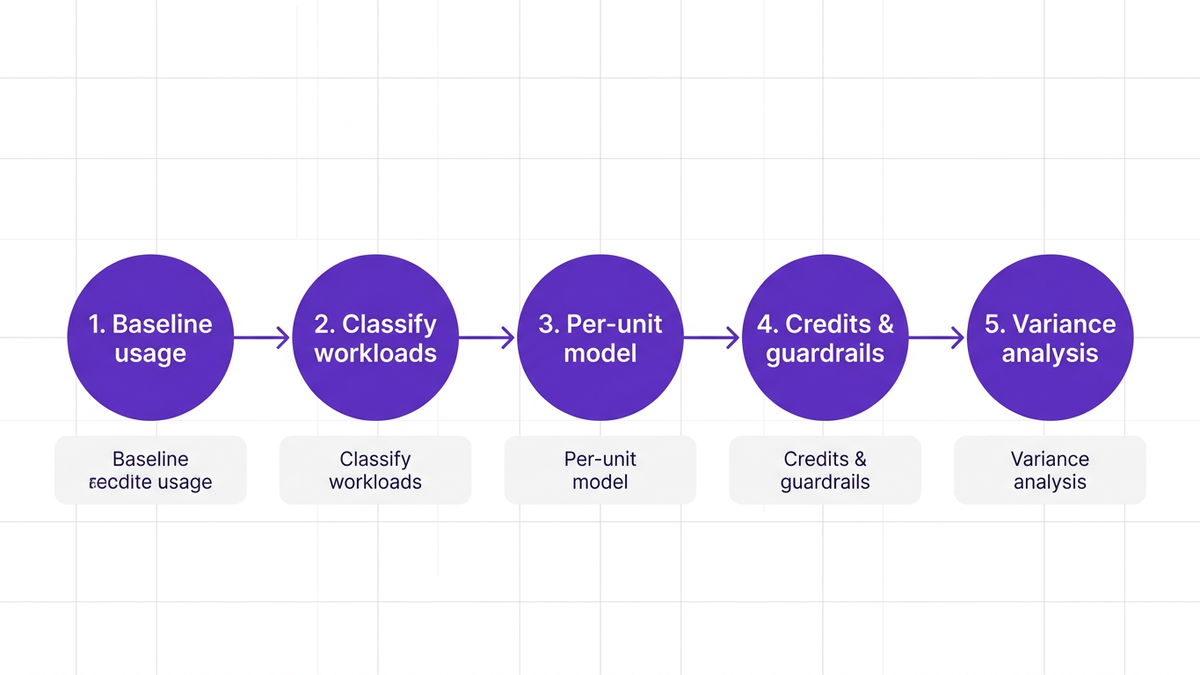
Many IT leaders try to treat AI like another SaaS subscription, then are surprised when actuals bear no resemblance to the budget. A better approach is to use a structured, FinOps-inspired framework.
Below is a 5-step AI budgeting model you can implement with current tools and data.
Start by discovering all AI usage, not just what IT approved. Shadow usage is a major source of budget risk. A procurement trends report in 2026 linked 17% average AI overspend directly to unmonitored services.
Actions:
Aim to produce a single baseline view of AI and SaaS cost drivers.
Not all workloads are equal from a forecasting perspective. Some are stable, others are very spiky. A useful classification is:
Tie different forecasting approaches to each class:
To avoid guesswork, translate AI usage into per unit economics:
This creates a usage-based pricing lens that finance teams can understand. For each workload, define:
Then calculate:
AI cost per transaction = (tokens per call × token price) + (calls per transaction × per-call cost)
This is similar to understanding cost per query in a database or cost per virtual machine hour in cloud.
Pure unit economics ignore practical constraints like credit pools and policy limits. To make your AI cost management more realistic:
A cloud economics advisor in 2026 noted that credit-only budgeting creates blind spots unless organizations integrate continuous monitoring and periodic recalibration of spend models.
Your forecasting model should produce:
Forecasts only become reliable when you compare them to reality on a recurring basis. A mature AI cost forecasting practice includes:
An industry cost analysis report in 2026 found that organizations that institutionalized this feedback loop saw cost overruns drop from 17% to around 6% on average.
Even experienced IT and finance leaders can misjudge AI economics. Based on recent SaaS and AI finance studies, several patterns stand out.
When a new AI feature works well, usage tends to grow faster than expected. Internal champions promote it, and before you know it, AI calls per user have doubled.
How to mitigate:
Many SaaS platforms now embed AI features that consume tokens or credits behind the scenes. Finance often budgets only for license fees, forgetting that AI usage can create a second, variable cost stream.
A SaaS finance study in 2026 estimated that 35% of AI-related SaaS spend is hidden in this way. This is a major blind spot for enterprise SaaS budgeting.
How to mitigate:
Manual spreadsheets are brittle for AI consumption costs. They are static, hard to reconcile across vendors, and often lack real-time signals.
A technology adoption benchmark in 2026 showed that enterprises using automated AI cost forecasting tools reported 28% fewer budget overruns than those relying solely on manual methods.
How to mitigate:
Promotional or introductory credits can create a misleading picture of your true run-rate. Finance may see low or zero bills at first, then be shocked when the credit cushion disappears.
How to mitigate:
A healthcare technology provider rolled out multiple AI-driven features for clinical documentation and patient engagement. Within months, AI-related costs started exceeding budgets, despite no formal AI platform contracts.
By adopting a unified AI and SaaS cost analytics platform, the organization:
Within three quarters in 2026, they achieved a 22% reduction in unbudgeted expenses and completely eliminated shadow IT AI spend.
A multinational financial services firm introduced AI-powered customer support and risk analysis tools. Spiky workloads caused unexpected monthly bill increases, often discovered only after invoices arrived.
The firm implemented real-time AI monitoring tools and forecasting dashboards that:
By Q2 2026, their FinOps team had reduced unforeseen AI service charges to near zero, even as total AI usage and business value continued to grow.

CloudNuro is built for organizations that want AI cost management, SaaS cost governance, and compliance-grade visibility in one place. Rather than stitching together point solutions, you can centralize data, analytics, and policy for both AI and broader SaaS.
Here is how CloudNuro supports accurate AI cost forecasting and IT cost optimization.
CloudNuro ingests usage and billing data from AI platforms and more than 400 SaaS and cloud applications. This gives CIOs and FinOps teams a single pane of glass for:
This unified perspective is critical for SaaS cost forecasting and enterprise SaaS budgeting, especially when AI usage is spread across multiple vendors and business units.
CloudNuro’s forecasting capabilities help you move from reactive to proactive management of AI platform costs:
Enterprises using automated AI forecasting approaches, similar to those CloudNuro enables, have been shown in industry benchmarks to reduce average budget overruns from roughly 17% to about 6%.
CloudNuro integrates with Microsoft 365 Custodian and Salesforce Custodian to identify underutilized AI-related licenses, permissions, and entitlements. This supports:
On the credits side, CloudNuro makes AI credits planning tangible by:
For sectors such as healthcare, finance, and government, AI spend compliance is not optional. CloudNuro’s governance-first architecture provides:
CloudNuro AI Custodian adds smart policy enforcement, such as:
Finally, CloudNuro’s FinOps Services provide expert-guided AI spend optimization:
The result is a virtuous cycle: better data, stronger forecasts, smarter governance, and ultimately sustained cost discipline across AI and SaaS.
Start by baselining existing usage across all AI workloads. Then build a per unit model that defines tokens and calls per transaction, multiplies that by expected transaction volume, and layers in adoption scenarios.
Use historical data where available, and supplement with pilot results and benchmarks from similar workloads. Automated monitoring and forecasting tools can then refine these models monthly through variance analysis.
Treat credits as a shared, finite resource that must be allocated transparently. Best practices include:
Critically, always model the true run-rate cost at full price, independent of promotional credits.
The primary defenses against surprise spend are visibility and governance. Organizations should:
A unified SaaS management platform like CloudNuro can automate these controls and provide continuous AI monitoring tools that surface anomalies before invoices arrive.
Yes. Modern AI cost management and SaaS management platforms ingest usage data from AI providers and SaaS tools, then apply forecasting models and anomaly detection. These platforms can:
CloudNuro, for example, provides predictive analytics and unified dashboards that give IT and finance teams a live view of predictive AI spend alongside broader cloud and SaaS costs.
Traditional SaaS is dominated by license or seat-based pricing, which makes budgeting straightforward but can lead to overprovisioning. AI services, by contrast, shift most cost into variable consumption, driven by tokens, calls, and credits.
This creates more financial risk if unmanaged, but also more flexibility. With proper SaaS cost governance, automation, and forecasting, enterprises can align AI spend much more closely to value delivered.
Common mistakes include:
Avoiding these errors requires cloud service usage analytics, continuous monitoring, policy guardrails, and a culture of collaboration between IT, product, and finance.
AI is becoming a core utility for digital business, but unlike electricity, your AI bill is not yet predictable unless you make it so. AI cost forecasting requires granular data, clear models, and governance that connects IT operations to financial accountability.
Organizations that treat AI like any other line item will continue to face 17% overruns and surprise invoices. Those that embrace unified platforms, predictive analytics, and FinOps practices will turn AI into a controllable, optimizable asset.
CloudNuro gives CIOs, CTOs, and FinOps leaders the visibility, control, and governance they need to bring financial discipline to AI, SaaS, and cloud. If you want to move from guesswork to confident budgeting for AI, now is the time to modernize your cost management stack.
Take the next step: connect your AI and SaaS environments to CloudNuro and see where you can cut spend, improve governance, and forecast with confidence.
Request a no cost, no obligation free assessment —just 15 minutes to savings!
Get StartedAI cost forecasting has quickly become a board-level concern. As AI moves from experiments to production, CIOs and FinOps leaders are being asked a simple question that is surprisingly hard to answer: “What will this AI initiative actually cost us next quarter?”
Unlike traditional SaaS subscriptions, AI workloads are dominated by variable consumption: tokens processed, API call volume, and platform credits. A recent cost analysis report found that 62% of enterprises cite unpredictable AI usage costs as a top challenge in 2026, and another SaaS management survey reported 52% of organizations experienced at least one AI-related budget overrun in the past year.
This article breaks down how AI cost structures really work, presents a practical framework for AI cost forecasting, and shows how unified platforms like CloudNuro can give you the visibility and governance you need to budget confidently.
AI promises efficiency, but its economics can feel opaque. The shift to usage-based pricing means your bill is tied to what your models actually do in production, not just how many users you have.
A SaaS finance study in 2026 found that 35% of SaaS expenses within AI-driven platforms come from hidden costs such as untracked API call bursts and unexpected token usage. Another procurement trends report showed enterprises spend on average 17% more on AI consumption-based services than initially budgeted, mostly because of shadow usage.
At a high level, enterprise AI spend tends to break down across several buckets:
According to a SaaS finance study in 2026, a typical breakdown looks like this:
In other words, over 80% of AI spend is usage-driven, not license-driven. That is why traditional SaaS budgeting models often fail when applied directly to AI.
To improve AI cost forecasting, you first need a clear mental model for the three primary consumption drivers. Think of it like utilities: tokens are the kilowatt-hours, calls are the times you flip the switch, and credits are your preloaded balance with the provider.
Token pricing is usually tied directly to the size of the input and output your models handle. Key drivers include:
For forecasting, you need:
A technology adoption benchmark in 2026 noted that organizations with granular token tracking and forecasting had 28% lower cost overruns than those that relied on coarse estimates.
API call costs can be fixed per call, tiered, or bundled into credits. They are affected by:
To model API-related AI consumption costs accurately, you should:
Many AI platforms and cloud providers use credits or units as a shared currency across models and features. Credits simplify procurement but complicate finance.
According to an IT finance outlook in 2026, 48% of FinOps leaders ranked credit forecasting for AI platforms in their top three cloud budgeting priorities. The key challenges:
To manage cloud platform credits effectively, you need visibility into who consumes what, and a clear internal chargeback or showback model.
Many IT leaders try to treat AI like another SaaS subscription, then are surprised when actuals bear no resemblance to the budget. A better approach is to use a structured, FinOps-inspired framework.
Below is a 5-step AI budgeting model you can implement with current tools and data.
Start by discovering all AI usage, not just what IT approved. Shadow usage is a major source of budget risk. A procurement trends report in 2026 linked 17% average AI overspend directly to unmonitored services.
Actions:
Aim to produce a single baseline view of AI and SaaS cost drivers.
Not all workloads are equal from a forecasting perspective. Some are stable, others are very spiky. A useful classification is:
Tie different forecasting approaches to each class:
To avoid guesswork, translate AI usage into per unit economics:
This creates a usage-based pricing lens that finance teams can understand. For each workload, define:
Then calculate:
AI cost per transaction = (tokens per call × token price) + (calls per transaction × per-call cost)
This is similar to understanding cost per query in a database or cost per virtual machine hour in cloud.
Pure unit economics ignore practical constraints like credit pools and policy limits. To make your AI cost management more realistic:
A cloud economics advisor in 2026 noted that credit-only budgeting creates blind spots unless organizations integrate continuous monitoring and periodic recalibration of spend models.
Your forecasting model should produce:
Forecasts only become reliable when you compare them to reality on a recurring basis. A mature AI cost forecasting practice includes:
An industry cost analysis report in 2026 found that organizations that institutionalized this feedback loop saw cost overruns drop from 17% to around 6% on average.
Even experienced IT and finance leaders can misjudge AI economics. Based on recent SaaS and AI finance studies, several patterns stand out.
When a new AI feature works well, usage tends to grow faster than expected. Internal champions promote it, and before you know it, AI calls per user have doubled.
How to mitigate:
Many SaaS platforms now embed AI features that consume tokens or credits behind the scenes. Finance often budgets only for license fees, forgetting that AI usage can create a second, variable cost stream.
A SaaS finance study in 2026 estimated that 35% of AI-related SaaS spend is hidden in this way. This is a major blind spot for enterprise SaaS budgeting.
How to mitigate:
Manual spreadsheets are brittle for AI consumption costs. They are static, hard to reconcile across vendors, and often lack real-time signals.
A technology adoption benchmark in 2026 showed that enterprises using automated AI cost forecasting tools reported 28% fewer budget overruns than those relying solely on manual methods.
How to mitigate:
Promotional or introductory credits can create a misleading picture of your true run-rate. Finance may see low or zero bills at first, then be shocked when the credit cushion disappears.
How to mitigate:
A healthcare technology provider rolled out multiple AI-driven features for clinical documentation and patient engagement. Within months, AI-related costs started exceeding budgets, despite no formal AI platform contracts.
By adopting a unified AI and SaaS cost analytics platform, the organization:
Within three quarters in 2026, they achieved a 22% reduction in unbudgeted expenses and completely eliminated shadow IT AI spend.
A multinational financial services firm introduced AI-powered customer support and risk analysis tools. Spiky workloads caused unexpected monthly bill increases, often discovered only after invoices arrived.
The firm implemented real-time AI monitoring tools and forecasting dashboards that:
By Q2 2026, their FinOps team had reduced unforeseen AI service charges to near zero, even as total AI usage and business value continued to grow.
CloudNuro is built for organizations that want AI cost management, SaaS cost governance, and compliance-grade visibility in one place. Rather than stitching together point solutions, you can centralize data, analytics, and policy for both AI and broader SaaS.
Here is how CloudNuro supports accurate AI cost forecasting and IT cost optimization.
CloudNuro ingests usage and billing data from AI platforms and more than 400 SaaS and cloud applications. This gives CIOs and FinOps teams a single pane of glass for:
This unified perspective is critical for SaaS cost forecasting and enterprise SaaS budgeting, especially when AI usage is spread across multiple vendors and business units.
CloudNuro’s forecasting capabilities help you move from reactive to proactive management of AI platform costs:
Enterprises using automated AI forecasting approaches, similar to those CloudNuro enables, have been shown in industry benchmarks to reduce average budget overruns from roughly 17% to about 6%.
CloudNuro integrates with Microsoft 365 Custodian and Salesforce Custodian to identify underutilized AI-related licenses, permissions, and entitlements. This supports:
On the credits side, CloudNuro makes AI credits planning tangible by:
For sectors such as healthcare, finance, and government, AI spend compliance is not optional. CloudNuro’s governance-first architecture provides:
CloudNuro AI Custodian adds smart policy enforcement, such as:
Finally, CloudNuro’s FinOps Services provide expert-guided AI spend optimization:
The result is a virtuous cycle: better data, stronger forecasts, smarter governance, and ultimately sustained cost discipline across AI and SaaS.
Start by baselining existing usage across all AI workloads. Then build a per unit model that defines tokens and calls per transaction, multiplies that by expected transaction volume, and layers in adoption scenarios.
Use historical data where available, and supplement with pilot results and benchmarks from similar workloads. Automated monitoring and forecasting tools can then refine these models monthly through variance analysis.
Treat credits as a shared, finite resource that must be allocated transparently. Best practices include:
Critically, always model the true run-rate cost at full price, independent of promotional credits.
The primary defenses against surprise spend are visibility and governance. Organizations should:
A unified SaaS management platform like CloudNuro can automate these controls and provide continuous AI monitoring tools that surface anomalies before invoices arrive.
Yes. Modern AI cost management and SaaS management platforms ingest usage data from AI providers and SaaS tools, then apply forecasting models and anomaly detection. These platforms can:
CloudNuro, for example, provides predictive analytics and unified dashboards that give IT and finance teams a live view of predictive AI spend alongside broader cloud and SaaS costs.
Traditional SaaS is dominated by license or seat-based pricing, which makes budgeting straightforward but can lead to overprovisioning. AI services, by contrast, shift most cost into variable consumption, driven by tokens, calls, and credits.
This creates more financial risk if unmanaged, but also more flexibility. With proper SaaS cost governance, automation, and forecasting, enterprises can align AI spend much more closely to value delivered.
Common mistakes include:
Avoiding these errors requires cloud service usage analytics, continuous monitoring, policy guardrails, and a culture of collaboration between IT, product, and finance.
AI is becoming a core utility for digital business, but unlike electricity, your AI bill is not yet predictable unless you make it so. AI cost forecasting requires granular data, clear models, and governance that connects IT operations to financial accountability.
Organizations that treat AI like any other line item will continue to face 17% overruns and surprise invoices. Those that embrace unified platforms, predictive analytics, and FinOps practices will turn AI into a controllable, optimizable asset.
CloudNuro gives CIOs, CTOs, and FinOps leaders the visibility, control, and governance they need to bring financial discipline to AI, SaaS, and cloud. If you want to move from guesswork to confident budgeting for AI, now is the time to modernize your cost management stack.
Take the next step: connect your AI and SaaS environments to CloudNuro and see where you can cut spend, improve governance, and forecast with confidence.
Request a no cost, no obligation free assessment - just 15 minutes to savings!
Get StartedWe're offering complimentary ServiceNow license assessments to only 25 enterprises this quarter who want to unlock immediate savings without disrupting operations.
Get Free AssessmentGet Started




CloudNuro Corp
1755 Park St. Suite 207
Naperville, IL 60563
Phone : +1-630-277-9470
Email: info@cloudnuro.com





.webp)

Recognized Leader in SaaS Management Platforms by Info-Tech SoftwareReviews



.svg)