

Sign Up
Thank you for Submitting!
A robust user access review process is now one of the most critical controls in SaaS-first enterprises. Security teams, auditors, and regulators increasingly expect repeatable, evidence-backed reviews of who has access to what, and why. A structured user access review checklist helps you systematize this work so you can be confident every review cycle is audit-ready.
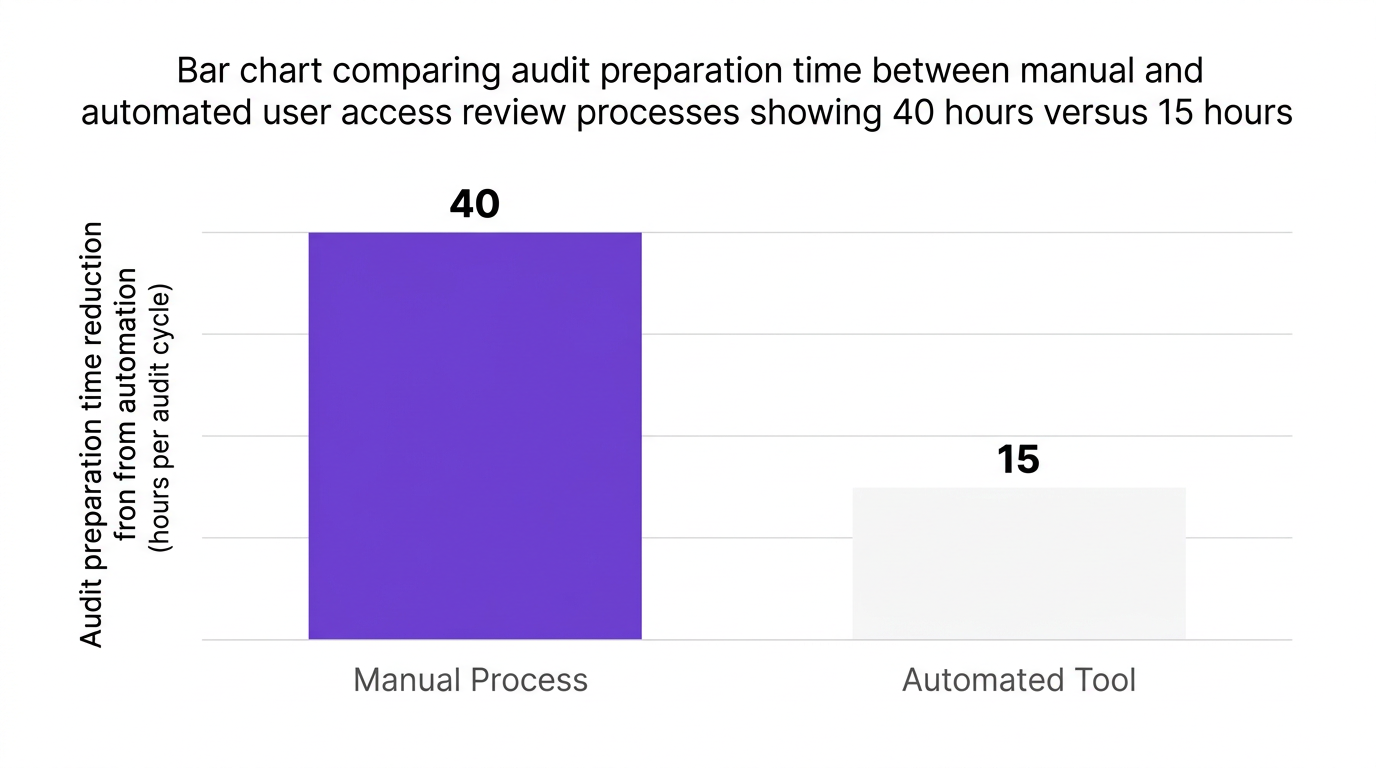
According to a recent industry report, 78% of organizations plan to increase their frequency of user access reviews in 2026 as regulatory pressure grows. Another recent analysis found that automated user access review tools reduce audit preparation time by 62 percent compared to manual processes. This guide walks through a 12 step checklist for building an efficient, defensible user access review process that fits modern SaaS environments.
A user access review is a formal, repeatable process where authorized owners validate that users have the right level of access to systems, data, and SaaS applications. It confirms that access is aligned with job responsibilities and that inappropriate or unused access is removed within a defined time frame.
This control underpins identity governance, cloud compliance, and enterprise SaaS governance. A recent enterprise IT report found that 85 percent of enterprises cite compliance with frameworks such as SOC 2 or ISO 27001 as a primary driver for implementing regular user access review processes. Another security trends summary reported that 70 percent of IT leaders discover at least one instance of inappropriate access during periodic access reviews.
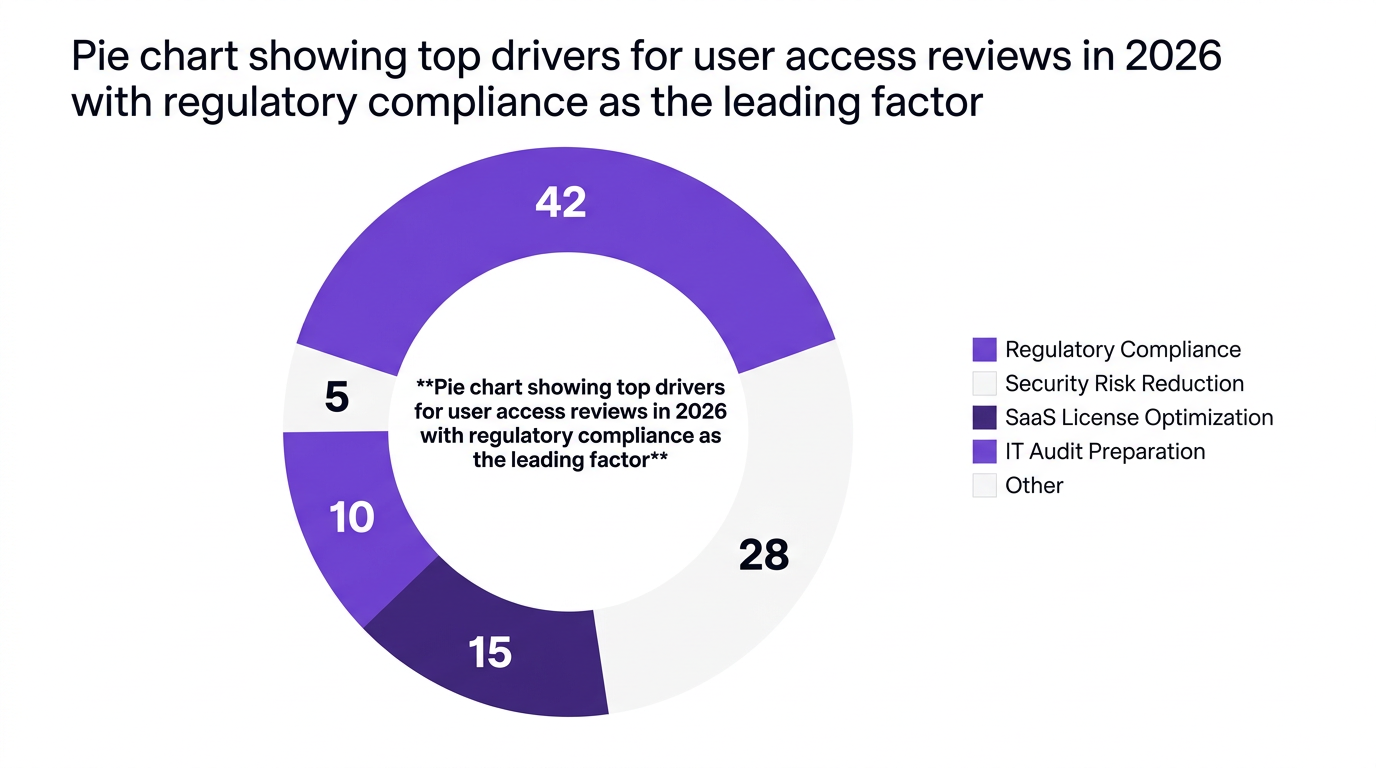
User access reviews are particularly important for:
Without a consistent user access review checklist, organizations struggle with incomplete reviews, missing documentation, and ad hoc decisions that do not stand up during a user access review audit.
This user access review checklist is designed to be practical and repeatable. It covers the entire user access review process flow from scoping to remediation and evidence retention.
Think of it as an internal playbook: the same way finance uses a monthly close checklist, IT and security can use this access review checklist to keep SaaS access audit-ready.
Start by clarifying why you are running a user access review. Common objectives include regulatory compliance, risk reduction, and SaaS license optimization.
Then define scope:
Document these in your user access review policy. Clear scope helps prevent scope creep and focuses reviewers on material risk.
Every effective user access review procedure assigns clear responsibilities. At minimum, define:
A common failure pattern is to rely solely on IT administrators for approvals. Instead, involve business owners who understand what access is actually required for each role.
The user access review process cannot function without an accurate inventory of users and entitlements. This means centralizing:
Organizations using unified SaaS access review tools report a 47 percent increase in review completeness in recent governance analyses. Without this central inventory, reviewers waste cycles hunting for basic information and risk missing high risk entitlements.
Not all systems carry equal risk. A user access review best practice is to classify applications by sensitivity so you can prioritize reviews and tailor user access review frequency.
Categories often include:
Within each system, identify high risk roles such as admins, data export privileges, or shared accounts. A privileged user access review should always receive heightened scrutiny and tighter deadlines.
A recent compliance forecast found that 46 percent of audit failures in cloud environments stem from a lack of documented or periodic user access reviews. To avoid this, codify user access review frequency and event based triggers.
Typical patterns include:
Codifying this in your user access review policy prevents ad hoc decisions and supports clear audit evidence.
Once inventory is in place, normalize your data so reviewers can quickly understand access. This includes:
AI-driven user entitlement review tools are increasingly used to pre-score risk and highlight anomalies. A market trends analysis in 2026 reported that over 60 percent of enterprises are piloting AI-based identity governance for this reason.
Your user access review process flow should route specific accounts to the right approvers. This is where user access review software makes a significant difference.
Common routing patterns:
Automated user access review tools reduce back and forth emails and provide clear task queues. This reduces reviewer fatigue and increases completion rates.
Many user access review procedures fail because reviewers lack context. They see a long list of entitlements but cannot tell what is truly necessary.
Improve review quality by including:
This context reduces rubber stamping and helps reviewers make informed decisions. It also supports license optimization by highlighting unused SaaS seats.
The best user access review tools do not stop at approvals. They automate enforcement so that revoke decisions actually translate into access changes.
Key elements include:
A common counterargument is that automation may unintentionally remove necessary access. The practical mitigation is to combine automation with clear rollback procedures and to pilot enforcement on lower risk groups before full rollout.
An audit-ready user access review requires defensible evidence. According to a recent audit readiness summary, organizations with strong user access control policies are twice as likely to pass external audits on the first attempt.
Ensure you capture:
Your user access review report should export these details in a format aligned to your governance framework. During a user access review audit, this report often becomes the primary artifact.
Each periodic access review generates valuable data. Use it to strengthen your user access review control and broader enterprise SaaS governance program.
Look for patterns such as:
In a recent modern governance analysis, organizations using unified platforms saw not only more complete reviews but also fewer exceptions over time as they iterated on role templates.
Quarterly access reviews remain essential, but many enterprises are moving toward continuous and event driven models.
A recent IT governance summary noted that the fastest growing compliance programs use identity automation for continuous and event driven access review. This looks like:
This approach shortens the window of exposure for inappropriate access and makes your user access review process more resilient.
Even with a solid user access review checklist, organizations run into predictable challenges. Recognizing them early helps you design controls that stand up in practice.
Annual campaigns alone are no longer enough for SaaS environments. With constant changes in roles and applications, an annual user access review procedure leaves long windows where inappropriate access can persist.
Counter this by combining quarterly access reviews with event driven checks tied to HR and identity systems. This hybrid model satisfies both periodic access review requirements and real world risk.
If reviewers receive long, unprioritized lists of entitlements, they will inevitably resort to bulk approvals. This undermines the intent of the control.
Use risk scoring and user access review tools that highlight high impact items first. Many organizations segment reviews by risk, for example reviewing privileged accounts monthly and low risk collaboration tools annually.
A recent market analysis found that organizations using manual processes spend almost three times more time preparing for audits compared to those with automated user access review software. Spreadsheets are brittle, error prone, and difficult to scale.
Automated platforms provide consistent workflows, access certification, and a single source of truth for evidence. While some teams worry about implementation complexity, low code workflow options have matured significantly and can be adopted incrementally.
Many enterprises still focus user access review processes on legacy systems and Active Directory user access review alone. Meanwhile, dozens or hundreds of SaaS apps proliferate outside central IT.
A strong enterprise SaaS governance program must include app discovery and SaaS access audit capabilities. Otherwise, you risk missing critical entitlements in marketing, finance, or line of business tools that sit outside your core identity stack.
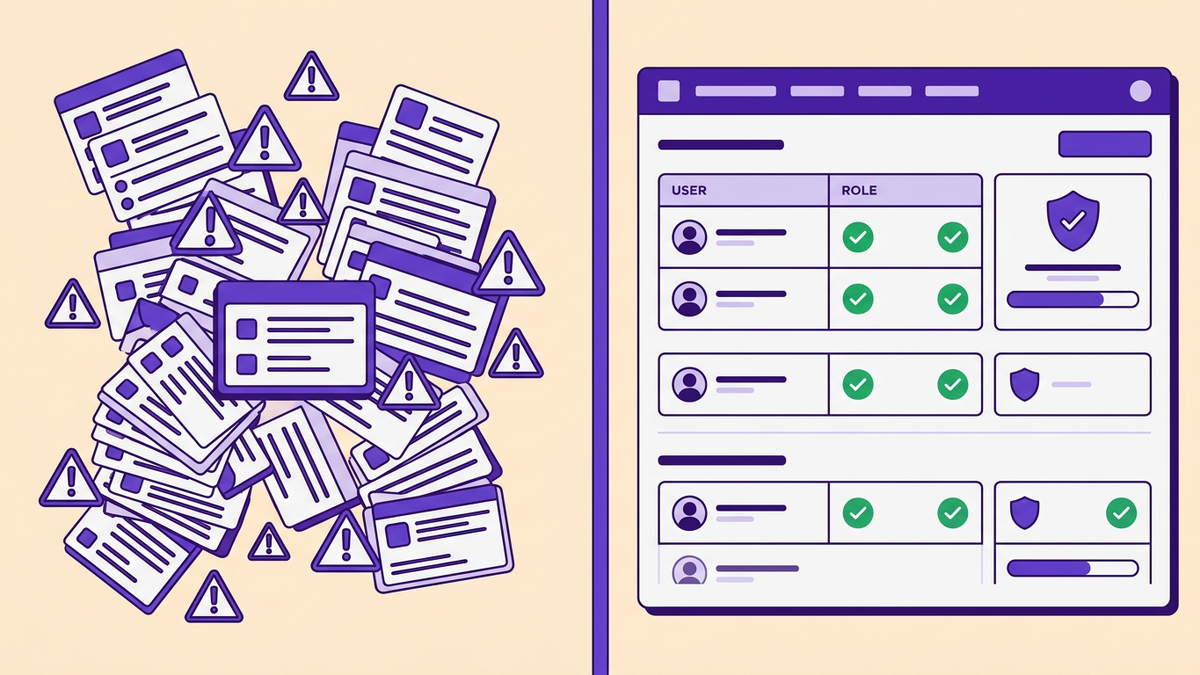
CloudNuro is designed to make the user access review process repeatable, scalable, and audit-ready across SaaS, PaaS, and IaaS. Its platform brings together inventory, automation, and AI so that IT, security, and finance teams can run consistent access reviews with less manual effort.
With Unified Cloud Custodian, organizations can schedule and execute periodic user access reviews across 400 plus connected applications from a single console. The platform ingests user, role, and entitlement data from SaaS, cloud infrastructure, and on premises identity sources.
Key capabilities include:
Audit-ready user access review reports are generated automatically, capturing decisions, timestamps, and implementation status for every entitlement.
CloudNuro’s Microsoft 365 Custodian and Salesforce Custodian provide specialized support for two of the most widely used enterprise SaaS platforms. These modules combine user access review tools with license optimization insights.
Teams can:
This combination of entitlement management and cost visibility makes each user access review not just a security control but also a cost optimization opportunity.
AI Custodian brings intelligence to user entitlement review. It monitors entitlements and usage patterns continuously, highlighting anomalies that should trigger out of band reviews.
Examples include:
Instead of waiting for the next quarterly access review, CloudNuro can prompt immediate review and, if configured, initiate automated remediation workflows.
Consider a global financial services organization that adopted a unified user access review platform in 2026. By automating over 95 percent of access certifications across their SaaS estate, they cut audit preparation time by 55 percent and discovered several orphaned privileged accounts.
Similarly, a large healthcare organization that implemented an AI-driven access review tool achieved a 68 percent improvement in remediation time for access violations and reached audit ready status two months ahead of schedule. CloudNuro’s capabilities are engineered to support similar outcomes for enterprises that demand strong identity governance and cloud compliance.
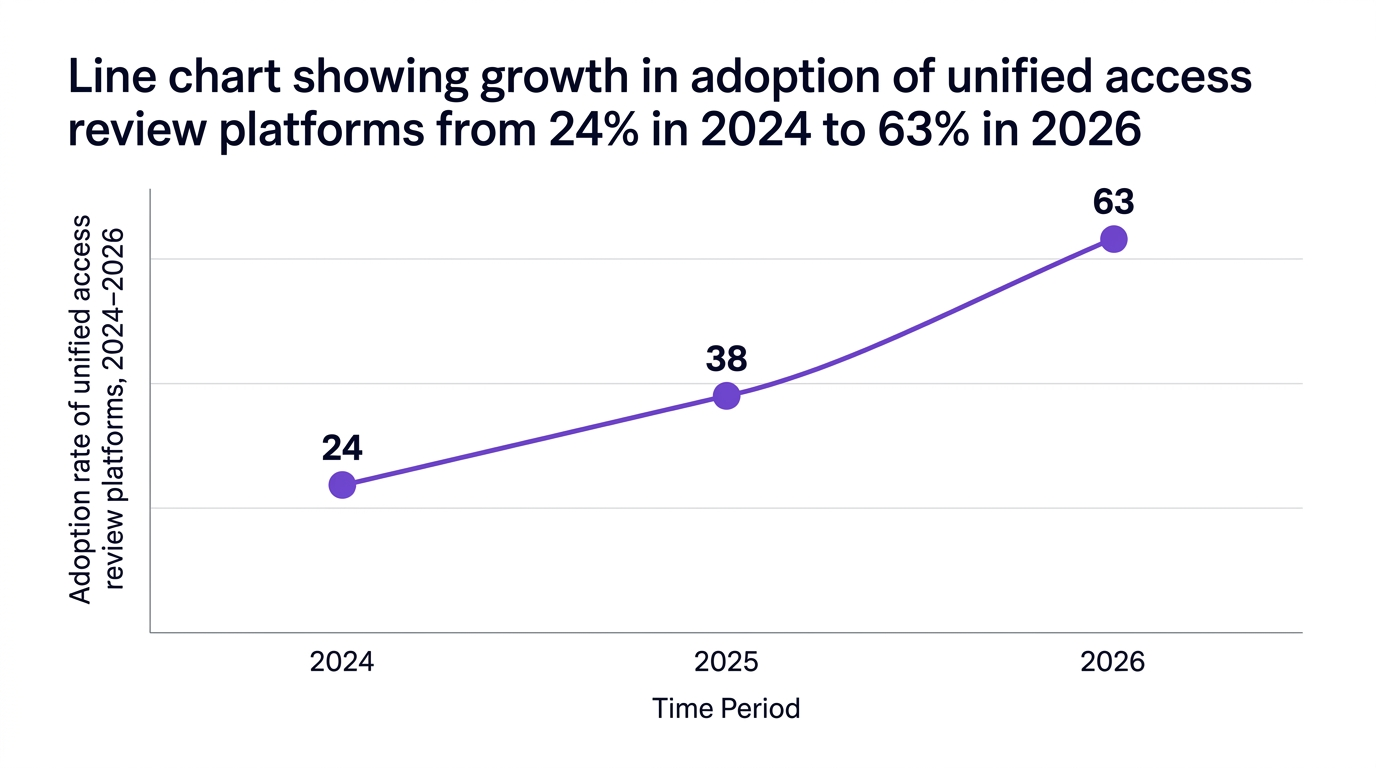
User access review frequency should align with risk. Many organizations run quarterly access reviews for high risk systems, semi annual reviews for moderate risk, and annual reviews for low risk applications.
Regulators often expect at least annual reviews for critical systems, with additional event driven checks when employees change roles or leave the organization.
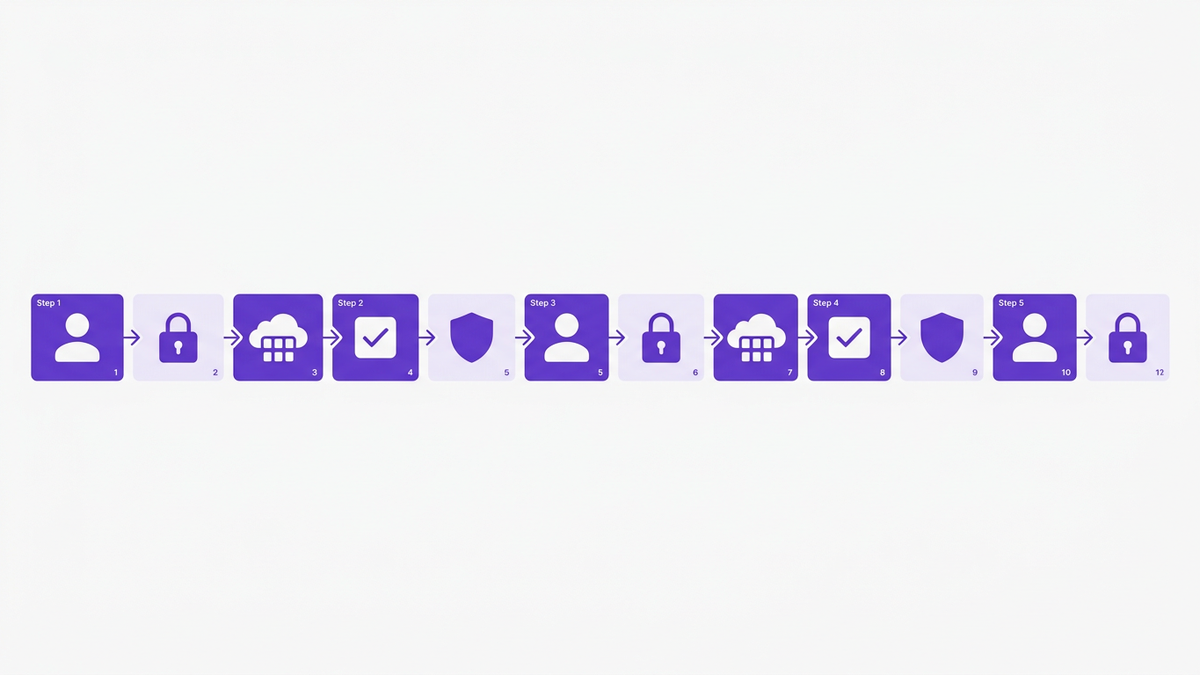
A typical user access review process flow looks like this:
User access review software can orchestrate each step with minimal manual handling.
A user access review typically focuses on who has access to which systems and data. A user entitlement review goes deeper into specific permissions, roles, and privileges within those systems.
In practice, an audit ready program combines both, especially for privileged user access review scenarios. For example, you might confirm that a user needs access to a CRM system and then separately confirm whether they require admin rights or only standard user roles.
Many security frameworks require demonstration of periodic access review as a key control. A structured user access review checklist, combined with clear evidence, shows auditors that you regularly validate and adjust access.
This reduces the likelihood of audit findings tied to identity governance. It also provides assurance to internal stakeholders that high risk access is monitored and corrected in a timely manner.
Effective user access review tools provide centralized inventories, workflow automation, and reporting. Features to look for include integrations with HR systems, identity platforms, and major SaaS applications, as well as configurable user access review policy templates.
Platforms like CloudNuro combine SaaS discovery, access certification workflows, and AI driven anomaly detection. This allows organizations to replace spreadsheet driven reviews with an integrated, audit ready user access review procedure.
Frequent mistakes include inconsistent scope, vague ownership, and manual evidence collection. Another common issue is failing to include SaaS and cloud environments, focusing only on legacy systems.
Avoid these by formalizing your user access review checklist, assigning clear control owners, and adopting enterprise SaaS governance platforms that can discover and manage access across your full application portfolio.
A disciplined user access review program is no longer optional. As SaaS adoption accelerates and regulations tighten, audit ready user access controls become a foundational requirement for security and enterprise SaaS governance.
By following the 12 step user access review checklist outlined above, and by adopting modern user access review software that centralizes inventory, automates workflows, and provides AI assisted insight, organizations can significantly reduce risk, improve audit outcomes, and optimize license spend.
CloudNuro is built to support this journey. If you are ready to transform your user access review process into a consistent, auditable control, consider how CloudNuro’s Unified Cloud Custodian and AI Custodian can provide the visibility and automation your teams need.
CloudNuro is a leader in Enterprise SaaS Management Platforms, providing enterprises with unmatched visibility, governance, and cost optimization. Recognized twice in a row in the SaaS Management Platforms category and named a Leader in the SoftwareReviews Data Quadrant, CloudNuro is trusted by global enterprises and government agencies to bring financial discipline to SaaS, cloud, and AI. Trusted by enterprises such as Konica Minolta and Federal Signal, CloudNuro provides centralized SaaS inventory, license optimization, and renewal management along with advanced cost allocation and chargeback, giving IT and Finance leaders the visibility, control, and cost-conscious culture needed to drive financial discipline. Request a Demo | Get Free Savings | Explore Product
Request a no cost, no obligation free assessment —just 15 minutes to savings!
Get StartedA robust user access review process is now one of the most critical controls in SaaS-first enterprises. Security teams, auditors, and regulators increasingly expect repeatable, evidence-backed reviews of who has access to what, and why. A structured user access review checklist helps you systematize this work so you can be confident every review cycle is audit-ready.
According to a recent industry report, 78% of organizations plan to increase their frequency of user access reviews in 2026 as regulatory pressure grows. Another recent analysis found that automated user access review tools reduce audit preparation time by 62 percent compared to manual processes. This guide walks through a 12 step checklist for building an efficient, defensible user access review process that fits modern SaaS environments.
A user access review is a formal, repeatable process where authorized owners validate that users have the right level of access to systems, data, and SaaS applications. It confirms that access is aligned with job responsibilities and that inappropriate or unused access is removed within a defined time frame.
This control underpins identity governance, cloud compliance, and enterprise SaaS governance. A recent enterprise IT report found that 85 percent of enterprises cite compliance with frameworks such as SOC 2 or ISO 27001 as a primary driver for implementing regular user access review processes. Another security trends summary reported that 70 percent of IT leaders discover at least one instance of inappropriate access during periodic access reviews.
User access reviews are particularly important for:
Without a consistent user access review checklist, organizations struggle with incomplete reviews, missing documentation, and ad hoc decisions that do not stand up during a user access review audit.
This user access review checklist is designed to be practical and repeatable. It covers the entire user access review process flow from scoping to remediation and evidence retention.
Think of it as an internal playbook: the same way finance uses a monthly close checklist, IT and security can use this access review checklist to keep SaaS access audit-ready.
Start by clarifying why you are running a user access review. Common objectives include regulatory compliance, risk reduction, and SaaS license optimization.
Then define scope:
Document these in your user access review policy. Clear scope helps prevent scope creep and focuses reviewers on material risk.
Every effective user access review procedure assigns clear responsibilities. At minimum, define:
A common failure pattern is to rely solely on IT administrators for approvals. Instead, involve business owners who understand what access is actually required for each role.
The user access review process cannot function without an accurate inventory of users and entitlements. This means centralizing:
Organizations using unified SaaS access review tools report a 47 percent increase in review completeness in recent governance analyses. Without this central inventory, reviewers waste cycles hunting for basic information and risk missing high risk entitlements.
Not all systems carry equal risk. A user access review best practice is to classify applications by sensitivity so you can prioritize reviews and tailor user access review frequency.
Categories often include:
Within each system, identify high risk roles such as admins, data export privileges, or shared accounts. A privileged user access review should always receive heightened scrutiny and tighter deadlines.
A recent compliance forecast found that 46 percent of audit failures in cloud environments stem from a lack of documented or periodic user access reviews. To avoid this, codify user access review frequency and event based triggers.
Typical patterns include:
Codifying this in your user access review policy prevents ad hoc decisions and supports clear audit evidence.
Once inventory is in place, normalize your data so reviewers can quickly understand access. This includes:
AI-driven user entitlement review tools are increasingly used to pre-score risk and highlight anomalies. A market trends analysis in 2026 reported that over 60 percent of enterprises are piloting AI-based identity governance for this reason.
Your user access review process flow should route specific accounts to the right approvers. This is where user access review software makes a significant difference.
Common routing patterns:
Automated user access review tools reduce back and forth emails and provide clear task queues. This reduces reviewer fatigue and increases completion rates.
Many user access review procedures fail because reviewers lack context. They see a long list of entitlements but cannot tell what is truly necessary.
Improve review quality by including:
This context reduces rubber stamping and helps reviewers make informed decisions. It also supports license optimization by highlighting unused SaaS seats.
The best user access review tools do not stop at approvals. They automate enforcement so that revoke decisions actually translate into access changes.
Key elements include:
A common counterargument is that automation may unintentionally remove necessary access. The practical mitigation is to combine automation with clear rollback procedures and to pilot enforcement on lower risk groups before full rollout.
An audit-ready user access review requires defensible evidence. According to a recent audit readiness summary, organizations with strong user access control policies are twice as likely to pass external audits on the first attempt.
Ensure you capture:
Your user access review report should export these details in a format aligned to your governance framework. During a user access review audit, this report often becomes the primary artifact.
Each periodic access review generates valuable data. Use it to strengthen your user access review control and broader enterprise SaaS governance program.
Look for patterns such as:
In a recent modern governance analysis, organizations using unified platforms saw not only more complete reviews but also fewer exceptions over time as they iterated on role templates.
Quarterly access reviews remain essential, but many enterprises are moving toward continuous and event driven models.
A recent IT governance summary noted that the fastest growing compliance programs use identity automation for continuous and event driven access review. This looks like:
This approach shortens the window of exposure for inappropriate access and makes your user access review process more resilient.
Even with a solid user access review checklist, organizations run into predictable challenges. Recognizing them early helps you design controls that stand up in practice.
Annual campaigns alone are no longer enough for SaaS environments. With constant changes in roles and applications, an annual user access review procedure leaves long windows where inappropriate access can persist.
Counter this by combining quarterly access reviews with event driven checks tied to HR and identity systems. This hybrid model satisfies both periodic access review requirements and real world risk.
If reviewers receive long, unprioritized lists of entitlements, they will inevitably resort to bulk approvals. This undermines the intent of the control.
Use risk scoring and user access review tools that highlight high impact items first. Many organizations segment reviews by risk, for example reviewing privileged accounts monthly and low risk collaboration tools annually.
A recent market analysis found that organizations using manual processes spend almost three times more time preparing for audits compared to those with automated user access review software. Spreadsheets are brittle, error prone, and difficult to scale.
Automated platforms provide consistent workflows, access certification, and a single source of truth for evidence. While some teams worry about implementation complexity, low code workflow options have matured significantly and can be adopted incrementally.
Many enterprises still focus user access review processes on legacy systems and Active Directory user access review alone. Meanwhile, dozens or hundreds of SaaS apps proliferate outside central IT.
A strong enterprise SaaS governance program must include app discovery and SaaS access audit capabilities. Otherwise, you risk missing critical entitlements in marketing, finance, or line of business tools that sit outside your core identity stack.
CloudNuro is designed to make the user access review process repeatable, scalable, and audit-ready across SaaS, PaaS, and IaaS. Its platform brings together inventory, automation, and AI so that IT, security, and finance teams can run consistent access reviews with less manual effort.
With Unified Cloud Custodian, organizations can schedule and execute periodic user access reviews across 400 plus connected applications from a single console. The platform ingests user, role, and entitlement data from SaaS, cloud infrastructure, and on premises identity sources.
Key capabilities include:
Audit-ready user access review reports are generated automatically, capturing decisions, timestamps, and implementation status for every entitlement.
CloudNuro’s Microsoft 365 Custodian and Salesforce Custodian provide specialized support for two of the most widely used enterprise SaaS platforms. These modules combine user access review tools with license optimization insights.
Teams can:
This combination of entitlement management and cost visibility makes each user access review not just a security control but also a cost optimization opportunity.
AI Custodian brings intelligence to user entitlement review. It monitors entitlements and usage patterns continuously, highlighting anomalies that should trigger out of band reviews.
Examples include:
Instead of waiting for the next quarterly access review, CloudNuro can prompt immediate review and, if configured, initiate automated remediation workflows.
Consider a global financial services organization that adopted a unified user access review platform in 2026. By automating over 95 percent of access certifications across their SaaS estate, they cut audit preparation time by 55 percent and discovered several orphaned privileged accounts.
Similarly, a large healthcare organization that implemented an AI-driven access review tool achieved a 68 percent improvement in remediation time for access violations and reached audit ready status two months ahead of schedule. CloudNuro’s capabilities are engineered to support similar outcomes for enterprises that demand strong identity governance and cloud compliance.
User access review frequency should align with risk. Many organizations run quarterly access reviews for high risk systems, semi annual reviews for moderate risk, and annual reviews for low risk applications.
Regulators often expect at least annual reviews for critical systems, with additional event driven checks when employees change roles or leave the organization.
A typical user access review process flow looks like this:
User access review software can orchestrate each step with minimal manual handling.
A user access review typically focuses on who has access to which systems and data. A user entitlement review goes deeper into specific permissions, roles, and privileges within those systems.
In practice, an audit ready program combines both, especially for privileged user access review scenarios. For example, you might confirm that a user needs access to a CRM system and then separately confirm whether they require admin rights or only standard user roles.
Many security frameworks require demonstration of periodic access review as a key control. A structured user access review checklist, combined with clear evidence, shows auditors that you regularly validate and adjust access.
This reduces the likelihood of audit findings tied to identity governance. It also provides assurance to internal stakeholders that high risk access is monitored and corrected in a timely manner.
Effective user access review tools provide centralized inventories, workflow automation, and reporting. Features to look for include integrations with HR systems, identity platforms, and major SaaS applications, as well as configurable user access review policy templates.
Platforms like CloudNuro combine SaaS discovery, access certification workflows, and AI driven anomaly detection. This allows organizations to replace spreadsheet driven reviews with an integrated, audit ready user access review procedure.
Frequent mistakes include inconsistent scope, vague ownership, and manual evidence collection. Another common issue is failing to include SaaS and cloud environments, focusing only on legacy systems.
Avoid these by formalizing your user access review checklist, assigning clear control owners, and adopting enterprise SaaS governance platforms that can discover and manage access across your full application portfolio.
A disciplined user access review program is no longer optional. As SaaS adoption accelerates and regulations tighten, audit ready user access controls become a foundational requirement for security and enterprise SaaS governance.
By following the 12 step user access review checklist outlined above, and by adopting modern user access review software that centralizes inventory, automates workflows, and provides AI assisted insight, organizations can significantly reduce risk, improve audit outcomes, and optimize license spend.
CloudNuro is built to support this journey. If you are ready to transform your user access review process into a consistent, auditable control, consider how CloudNuro’s Unified Cloud Custodian and AI Custodian can provide the visibility and automation your teams need.
CloudNuro is a leader in Enterprise SaaS Management Platforms, providing enterprises with unmatched visibility, governance, and cost optimization. Recognized twice in a row in the SaaS Management Platforms category and named a Leader in the SoftwareReviews Data Quadrant, CloudNuro is trusted by global enterprises and government agencies to bring financial discipline to SaaS, cloud, and AI. Trusted by enterprises such as Konica Minolta and Federal Signal, CloudNuro provides centralized SaaS inventory, license optimization, and renewal management along with advanced cost allocation and chargeback, giving IT and Finance leaders the visibility, control, and cost-conscious culture needed to drive financial discipline. Request a Demo | Get Free Savings | Explore Product
Request a no cost, no obligation free assessment - just 15 minutes to savings!
Get StartedWe're offering complimentary ServiceNow license assessments to only 25 enterprises this quarter who want to unlock immediate savings without disrupting operations.
Get Free AssessmentGet Started




CloudNuro Corp
1755 Park St. Suite 207
Naperville, IL 60563
Phone : +1-630-277-9470
Email: info@cloudnuro.com





.webp)

Recognized Leader in SaaS Management Platforms by Info-Tech SoftwareReviews


.svg)