

Sign Up
Thank you for Submitting!
A secure, efficient employee onboarding and offboarding workflow is now one of the most critical responsibilities on the IT roadmap. Hybrid work, SaaS sprawl, and tighter regulations mean every new hire and exit can either strengthen your security posture or expose gaps in access control, license usage, and audit readiness.
According to recent industry research, 82% of organizations plan to increase automation in employee onboarding and offboarding workflows by 2026, largely to improve security and efficiency. For CIOs, CISOs, and IT directors, the question is no longer if you should modernize, but how to design a scalable, automated, and compliant workflow that spans every SaaS and cloud app your business depends on.
The modern employee lifecycle touches dozens, sometimes hundreds, of systems. A typical enterprise user might interact with collaboration suites, CRM, HRIS, identity providers, project tools, and a long tail of niche SaaS apps.
Recent workforce studies show that 74% of IT departments identify SaaS sprawl as a major challenge in managing onboarding and offboarding, which reinforces the need for centralized governance platforms. Every manual step increases risk, cost, and time to productivity.
Three macro trends are turning the employee onboarding and offboarding workflow into a board-level concern:
In this environment, relying on spreadsheets and ticket comments for your IT onboarding offboarding process is like running mission-critical workloads on a single unpatched server. It might work, until it does not.
A resilient employee onboarding and offboarding workflow rests on a few foundational principles. If these are not in place, tooling choices and automation scripts will only paper over problems.
1. Identity as the source of truthYour identity lifecycle must be anchored in a single, authoritative source, usually an HR system or directory. All employee access provisioning workflow events should trigger from clear states: pre-hire, active, leave of absence, transfer, and termination.
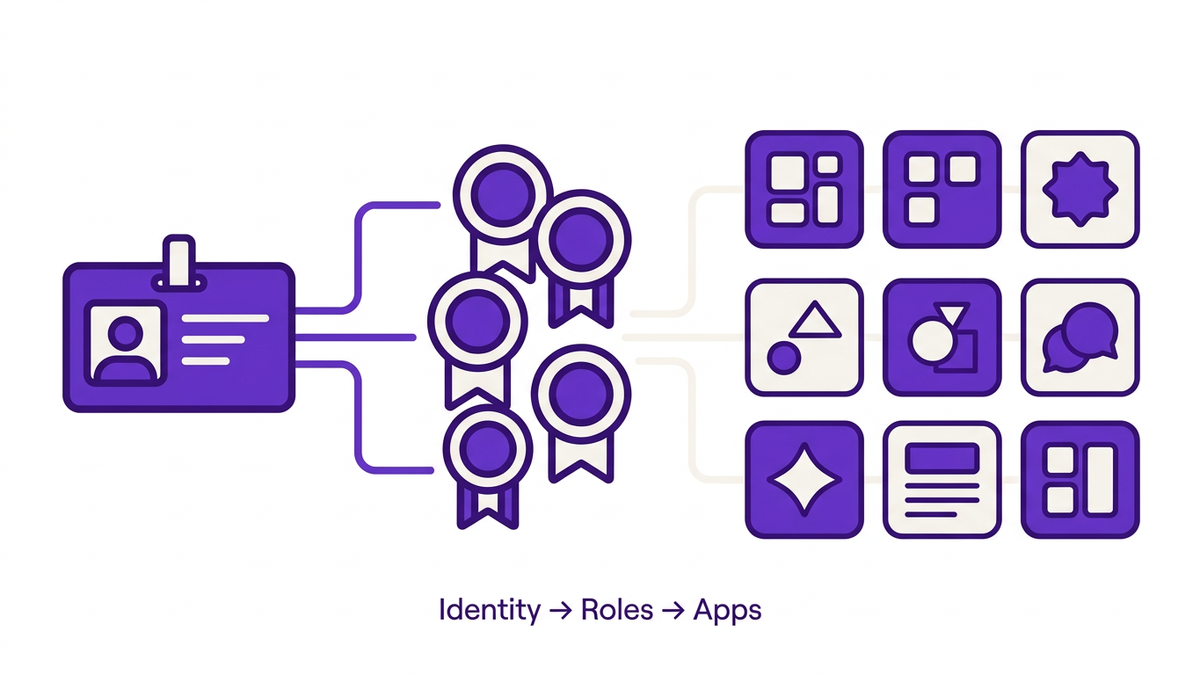
2. Role-based access by defaultRole-based access management in SaaS, often through groups or profiles, allows IT to grant a standard entitlements set per function and location. This enables:
Over 60% of organizations in 2026 list role-based controls as their top improvement priority because they dramatically reduce overprovisioning and access creep.
 3. Automation wherever humans add little value
Manual work should focus on exceptions and approvals, not repetitive provisioning tasks. A recent automation outlook notes that enterprises are targeting routine steps such as:
Onboarding and offboarding are the visible bookends of employee lifecycle management SaaS, but real security lives in the middle. Ongoing entitlement reviews, least privilege adjustments, and AI-assisted anomaly detection are now standard in advanced programs.
Think of IT onboarding like preparing a cockpit before takeoff. You need everything configured, tested, and safe before the pilot touches the controls. Rushing creates hidden risk and lost time.
Below is a structured approach to a secure and efficient employee onboarding and offboarding workflow, beginning with onboarding.
Action tip: Implement attribute-based rules that map “Engineering, US, Full-time” to a standard entitlement bundle. This minimizes one-off tickets for the new hire onboarding process IT teams handle daily.
This is where onboarding workflow automation delivers immediate ROI:
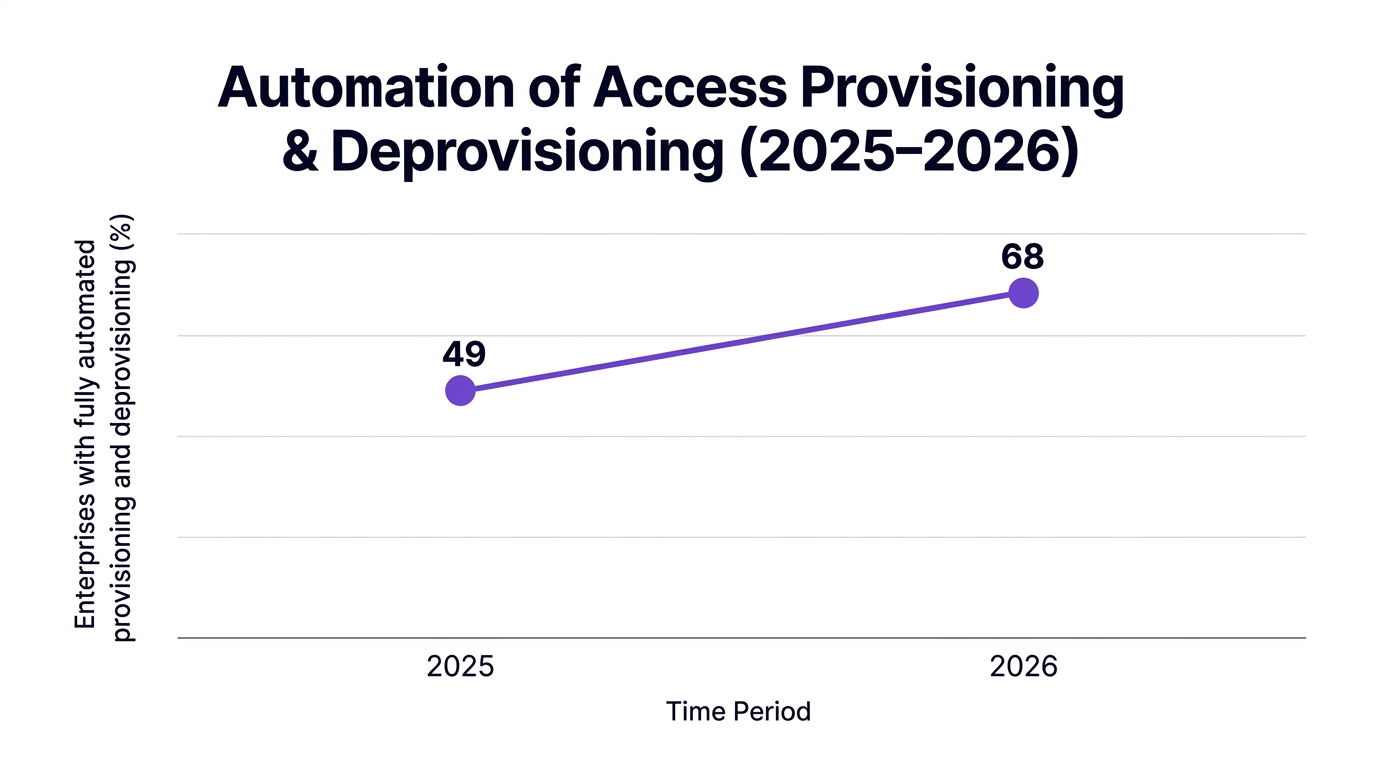
An enterprise IT modernization survey found that 68% of enterprises plan to fully automate access provisioning and deprovisioning by 2026, driven by both risk and productivity gains.
Counterpoint: Some leaders worry that aggressive automation may mis-provision users when HR data is wrong. This is a real risk, which is why approval checkpoints for sensitive roles and robust change management for HR data are critical.
This is where AI-powered analytics and governance automation can flag outliers, such as a marketing user accessing financial reporting systems.
If onboarding is about speed and productivity, offboarding is about certainty and closure. A single missed entitlement in a dormant SaaS account can undo years of investment in zero trust.
Recent security research shows that 35% of incidents in 2026 were linked to improperly offboarded employees, often because deprovisioning was partially manual. That is why secure IT offboarding steps must be exhaustively defined and automated.
A onboarding offboarding checklist IT teams can trust should also cover secondary identities, such as test accounts and admin profiles.
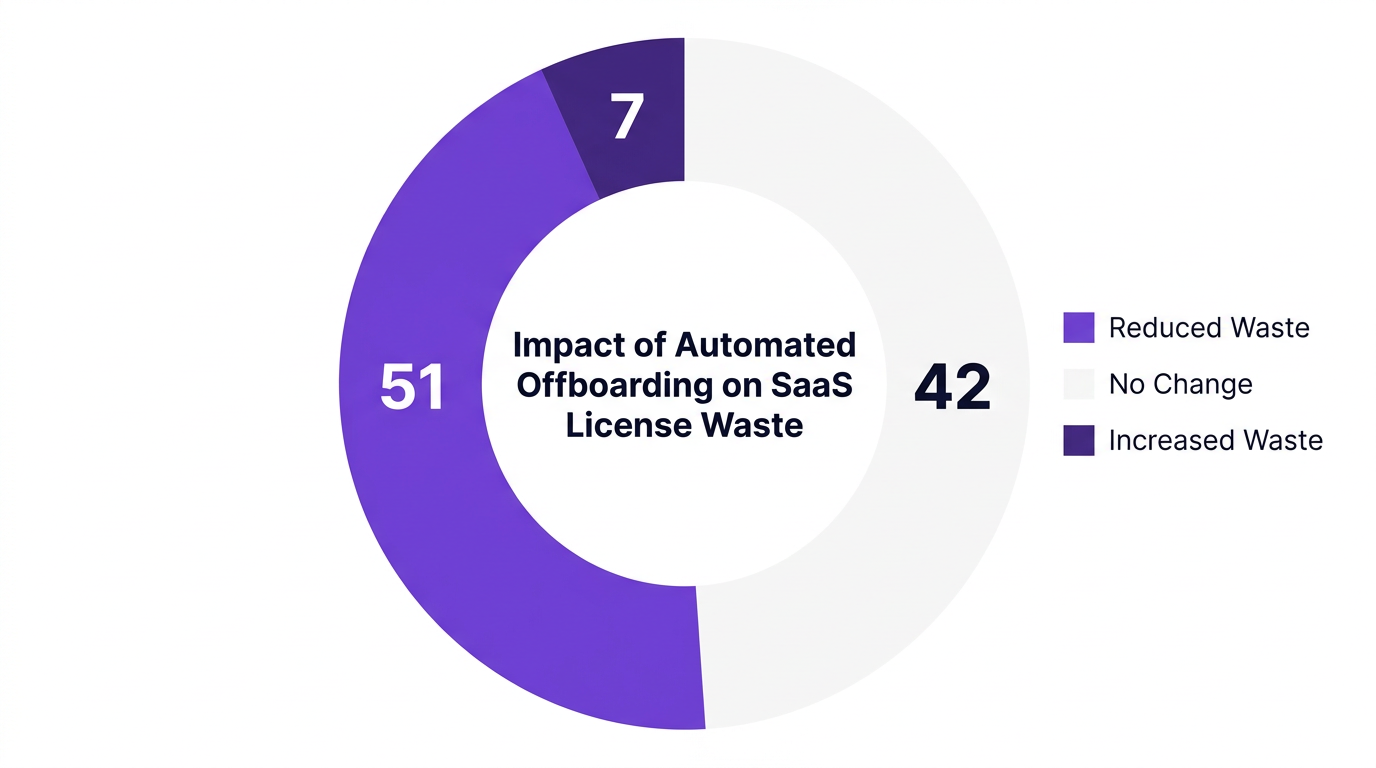
One 2026 SaaS management benchmark found that enterprises using automated offboarding workflows reported a 51% reduction in SaaS license waste. Offboarding is not just a security control, it is also a cost optimization engine.
Counterpoint: Some teams fear that strict, automated offboarding might disrupt business operations when users transition between roles or regions. This is why transfer workflows must be distinct from termination workflows, with clear rules for access migration rather than blanket removal.
To move from ad hoc scripts to a reliable automated onboarding system, IT leaders need a clear architecture that connects identity, HR, SaaS, and governance.
A typical architecture for onboarding workflow automation and offboarding includes:
Within this architecture, IT can define:
To fully support employee lifecycle management SaaS, look for capabilities such as:
These features, combined with AI insights, are increasingly used for continuous access review and anomaly detection during both onboarding and offboarding.
CloudNuro is designed for enterprises that want to treat the employee onboarding and offboarding workflow as a governed, automated, and audit-ready process across every SaaS and cloud environment.
CloudNuro continuously discovers SaaS usage and normalizes it into a centralized inventory. This gives IT a single view of which users have access to which apps, and at what license tier.
For onboarding, this means IT can align SaaS onboarding management with real application usage patterns, not guesswork. For offboarding, it means no more hidden accounts or unmanaged tools.
CloudNuro’s rule-based automation allows IT teams to design policy-driven employee access provisioning workflows:
An IT transformation analyst noted in 2026 that automated onboarding and offboarding workflows are now essential for both compliance and operational agility, which aligns with CloudNuro’s automation-first design.
CloudNuro’s governance-first architecture helps organizations operationalize role-based access management SaaS with:
This directly supports IT compliance onboarding by ensuring each access decision is aligned to policy, recorded, and reportable.
CloudNuro’s cost management capabilities tie directly into offboarding best practices IT teams are adopting in 2026:
Recent benchmark data shows a 51% reduction in SaaS license waste for organizations that adopt automated offboarding workflows. CloudNuro is built to help enterprises reach and often exceed that benchmark.
A large healthcare provider, as cited in a 2026 workflow report, implemented a centralized onboarding and offboarding platform integrated with over 200 SaaS apps. Within a year, they saw a 75% decrease in unauthorized access incidents and a 45% reduction in IT labor time per lifecycle event.
CloudNuro enables similar outcomes by unifying SaaS discovery, identity-driven workflows, and advanced automation. IT teams can shift from manually chasing tickets to governing a consistent, policy-driven employee lifecycle at scale.
Use this condensed onboarding offboarding checklist IT leaders can adapt as a starting point.
A structured checklist, implemented through an automated platform, turns onboarding and offboarding from a risky chore into a repeatable control.
The most effective workflow starts with HR-triggered lifecycle events flowing into identity, then into a centralized SaaS management layer. Access is granted based on roles and attributes, not individual requests, and deprovisioning is triggered automatically on termination or status changes.
The best workflows are policy-driven, highly automated, and fully auditable. They standardize what is common, and create clear exception paths for unique cases.
Automation reduces manual errors, accelerates day-one readiness, and closes offboarding gaps that create security risk. It allows IT to handle larger volumes of lifecycle events without linear headcount growth.
Recent market data indicates that enterprises moving to automation-first models often see double-digit reductions in IT labor time per user event and significant drops in unauthorized access incidents.
Key tools include identity platforms, SaaS management platforms, and workflow automation engines that can orchestrate deprovisioning across all systems. The most effective solutions provide centralized visibility, policy-based workflows, and detailed logs for audits.
CloudNuro combines these capabilities into a single platform focused on SaaS and cloud environments, which helps IT teams standardize secure IT offboarding steps across hundreds of applications.
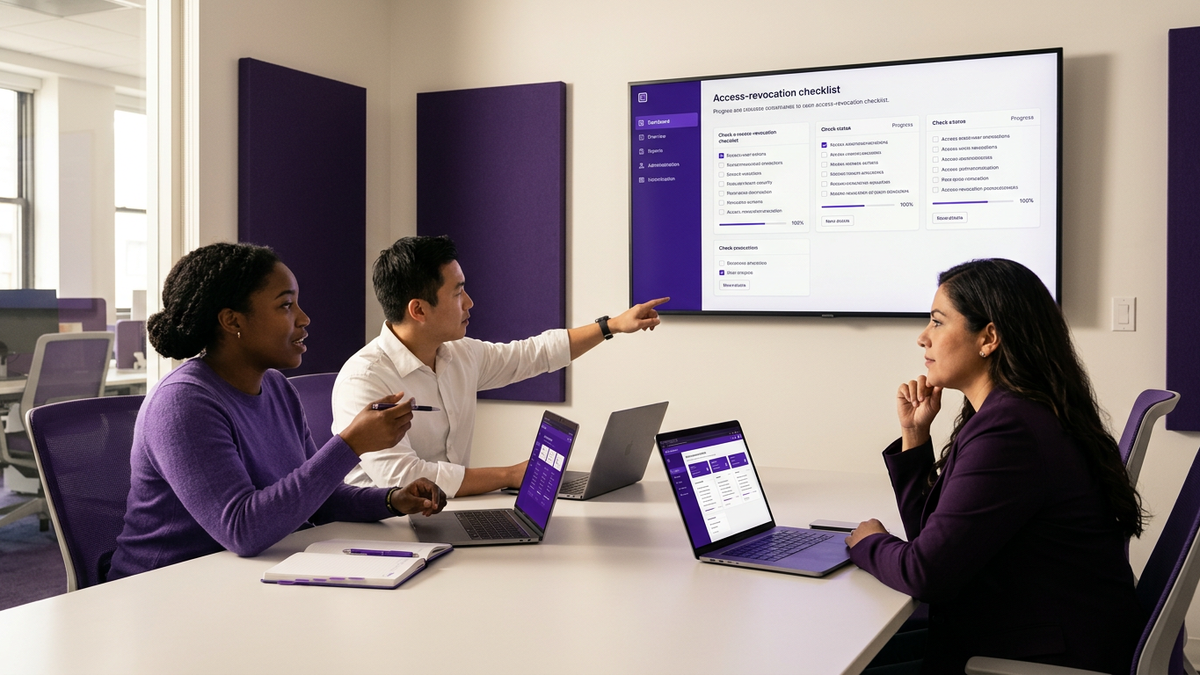
The critical steps are: immediate disablement of primary identity, revocation of all SaaS access and tokens, license reclamation, and reassignment of data and shared assets. You also need to remove users from admin or privileged roles that may exist outside normal user directories.
Documenting and automating these steps in a centralized workflow is essential to avoid missed apps and hidden accounts.
Integrate access management by basing entitlements on roles, attributes, and policies, then orchestrating them through automated workflows. Identity systems should drive group membership, which in turn governs access to SaaS and cloud apps.
Platforms such as CloudNuro help by mapping groups and roles to specific SaaS entitlements and enforcing role-based access management SaaS across the application landscape.
Key considerations include least privilege access, MFA enforcement, documented approval flows, and comprehensive logging of every access change. Regulators expect organizations to prove who had access to what, when, and why.
A mature program uses governance automation to maintain this evidence continuously, not just before audits.
The employee onboarding and offboarding workflow is no longer a back-office process. It is a strategic control that touches security, cost, and employee productivity. With 82% of organizations planning to increase automation by 2026, IT leaders who modernize now will be better positioned to handle growth, remote work, and rising compliance expectations.
By centralizing SaaS visibility, embracing role-based access, and using an automation-first approach, enterprises can turn onboarding and offboarding from a risk-prone chore into a reliable, efficient engine for security and financial discipline.
CloudNuro helps CIOs and IT leaders operationalize this model, unifying identity, SaaS management, and automation into a single fabric for the entire employee lifecycle.
Ready to modernize your employee onboarding and offboarding workflow and reduce both risk and SaaS waste? Explore how CloudNuro can help you automate, govern, and optimize every lifecycle event across your cloud and SaaS estate.
CloudNuro is a leader in Enterprise SaaS Management Platforms, providing enterprises with unmatched visibility, governance, and cost optimization. Recognized twice in a row in the SaaS Management Platforms category and named a Leader in the SoftwareReviews Data Quadrant, CloudNuro is trusted by global enterprises and government agencies to bring financial discipline to SaaS, cloud, and AI. Trusted by enterprises such as Konica Minolta and Federal Signal, CloudNuro provides centralized SaaS inventory, license optimization, and renewal management along with advanced cost allocation and chargeback, giving IT and Finance leaders the visibility, control, and cost-conscious culture needed to drive financial discipline. Request a Demo | Get Free Savings | Explore Product
Request a no cost, no obligation free assessment —just 15 minutes to savings!
Get StartedA secure, efficient employee onboarding and offboarding workflow is now one of the most critical responsibilities on the IT roadmap. Hybrid work, SaaS sprawl, and tighter regulations mean every new hire and exit can either strengthen your security posture or expose gaps in access control, license usage, and audit readiness.
According to recent industry research, 82% of organizations plan to increase automation in employee onboarding and offboarding workflows by 2026, largely to improve security and efficiency. For CIOs, CISOs, and IT directors, the question is no longer if you should modernize, but how to design a scalable, automated, and compliant workflow that spans every SaaS and cloud app your business depends on.
The modern employee lifecycle touches dozens, sometimes hundreds, of systems. A typical enterprise user might interact with collaboration suites, CRM, HRIS, identity providers, project tools, and a long tail of niche SaaS apps.
Recent workforce studies show that 74% of IT departments identify SaaS sprawl as a major challenge in managing onboarding and offboarding, which reinforces the need for centralized governance platforms. Every manual step increases risk, cost, and time to productivity.
Three macro trends are turning the employee onboarding and offboarding workflow into a board-level concern:
In this environment, relying on spreadsheets and ticket comments for your IT onboarding offboarding process is like running mission-critical workloads on a single unpatched server. It might work, until it does not.
A resilient employee onboarding and offboarding workflow rests on a few foundational principles. If these are not in place, tooling choices and automation scripts will only paper over problems.
1. Identity as the source of truthYour identity lifecycle must be anchored in a single, authoritative source, usually an HR system or directory. All employee access provisioning workflow events should trigger from clear states: pre-hire, active, leave of absence, transfer, and termination.
2. Role-based access by defaultRole-based access management in SaaS, often through groups or profiles, allows IT to grant a standard entitlements set per function and location. This enables:
Over 60% of organizations in 2026 list role-based controls as their top improvement priority because they dramatically reduce overprovisioning and access creep.
3. Automation wherever humans add little valueManual work should focus on exceptions and approvals, not repetitive provisioning tasks. A recent automation outlook notes that enterprises are targeting routine steps such as:
Onboarding and offboarding are the visible bookends of employee lifecycle management SaaS, but real security lives in the middle. Ongoing entitlement reviews, least privilege adjustments, and AI-assisted anomaly detection are now standard in advanced programs.
Think of IT onboarding like preparing a cockpit before takeoff. You need everything configured, tested, and safe before the pilot touches the controls. Rushing creates hidden risk and lost time.
Below is a structured approach to a secure and efficient employee onboarding and offboarding workflow, beginning with onboarding.
Action tip: Implement attribute-based rules that map “Engineering, US, Full-time” to a standard entitlement bundle. This minimizes one-off tickets for the new hire onboarding process IT teams handle daily.
This is where onboarding workflow automation delivers immediate ROI:
An enterprise IT modernization survey found that 68% of enterprises plan to fully automate access provisioning and deprovisioning by 2026, driven by both risk and productivity gains.
Counterpoint: Some leaders worry that aggressive automation may mis-provision users when HR data is wrong. This is a real risk, which is why approval checkpoints for sensitive roles and robust change management for HR data are critical.
This is where AI-powered analytics and governance automation can flag outliers, such as a marketing user accessing financial reporting systems.
If onboarding is about speed and productivity, offboarding is about certainty and closure. A single missed entitlement in a dormant SaaS account can undo years of investment in zero trust.
Recent security research shows that 35% of incidents in 2026 were linked to improperly offboarded employees, often because deprovisioning was partially manual. That is why secure IT offboarding steps must be exhaustively defined and automated.
A onboarding offboarding checklist IT teams can trust should also cover secondary identities, such as test accounts and admin profiles.
One 2026 SaaS management benchmark found that enterprises using automated offboarding workflows reported a 51% reduction in SaaS license waste. Offboarding is not just a security control, it is also a cost optimization engine.
Counterpoint: Some teams fear that strict, automated offboarding might disrupt business operations when users transition between roles or regions. This is why transfer workflows must be distinct from termination workflows, with clear rules for access migration rather than blanket removal.
To move from ad hoc scripts to a reliable automated onboarding system, IT leaders need a clear architecture that connects identity, HR, SaaS, and governance.
A typical architecture for onboarding workflow automation and offboarding includes:
Within this architecture, IT can define:
To fully support employee lifecycle management SaaS, look for capabilities such as:
These features, combined with AI insights, are increasingly used for continuous access review and anomaly detection during both onboarding and offboarding.
CloudNuro is designed for enterprises that want to treat the employee onboarding and offboarding workflow as a governed, automated, and audit-ready process across every SaaS and cloud environment.
CloudNuro continuously discovers SaaS usage and normalizes it into a centralized inventory. This gives IT a single view of which users have access to which apps, and at what license tier.
For onboarding, this means IT can align SaaS onboarding management with real application usage patterns, not guesswork. For offboarding, it means no more hidden accounts or unmanaged tools.
CloudNuro’s rule-based automation allows IT teams to design policy-driven employee access provisioning workflows:
An IT transformation analyst noted in 2026 that automated onboarding and offboarding workflows are now essential for both compliance and operational agility, which aligns with CloudNuro’s automation-first design.
CloudNuro’s governance-first architecture helps organizations operationalize role-based access management SaaS with:
This directly supports IT compliance onboarding by ensuring each access decision is aligned to policy, recorded, and reportable.
CloudNuro’s cost management capabilities tie directly into offboarding best practices IT teams are adopting in 2026:
Recent benchmark data shows a 51% reduction in SaaS license waste for organizations that adopt automated offboarding workflows. CloudNuro is built to help enterprises reach and often exceed that benchmark.
A large healthcare provider, as cited in a 2026 workflow report, implemented a centralized onboarding and offboarding platform integrated with over 200 SaaS apps. Within a year, they saw a 75% decrease in unauthorized access incidents and a 45% reduction in IT labor time per lifecycle event.
CloudNuro enables similar outcomes by unifying SaaS discovery, identity-driven workflows, and advanced automation. IT teams can shift from manually chasing tickets to governing a consistent, policy-driven employee lifecycle at scale.
Use this condensed onboarding offboarding checklist IT leaders can adapt as a starting point.
A structured checklist, implemented through an automated platform, turns onboarding and offboarding from a risky chore into a repeatable control.
The most effective workflow starts with HR-triggered lifecycle events flowing into identity, then into a centralized SaaS management layer. Access is granted based on roles and attributes, not individual requests, and deprovisioning is triggered automatically on termination or status changes.
The best workflows are policy-driven, highly automated, and fully auditable. They standardize what is common, and create clear exception paths for unique cases.
Automation reduces manual errors, accelerates day-one readiness, and closes offboarding gaps that create security risk. It allows IT to handle larger volumes of lifecycle events without linear headcount growth.
Recent market data indicates that enterprises moving to automation-first models often see double-digit reductions in IT labor time per user event and significant drops in unauthorized access incidents.
Key tools include identity platforms, SaaS management platforms, and workflow automation engines that can orchestrate deprovisioning across all systems. The most effective solutions provide centralized visibility, policy-based workflows, and detailed logs for audits.
CloudNuro combines these capabilities into a single platform focused on SaaS and cloud environments, which helps IT teams standardize secure IT offboarding steps across hundreds of applications.
The critical steps are: immediate disablement of primary identity, revocation of all SaaS access and tokens, license reclamation, and reassignment of data and shared assets. You also need to remove users from admin or privileged roles that may exist outside normal user directories.
Documenting and automating these steps in a centralized workflow is essential to avoid missed apps and hidden accounts.
Integrate access management by basing entitlements on roles, attributes, and policies, then orchestrating them through automated workflows. Identity systems should drive group membership, which in turn governs access to SaaS and cloud apps.
Platforms such as CloudNuro help by mapping groups and roles to specific SaaS entitlements and enforcing role-based access management SaaS across the application landscape.
Key considerations include least privilege access, MFA enforcement, documented approval flows, and comprehensive logging of every access change. Regulators expect organizations to prove who had access to what, when, and why.
A mature program uses governance automation to maintain this evidence continuously, not just before audits.
The employee onboarding and offboarding workflow is no longer a back-office process. It is a strategic control that touches security, cost, and employee productivity. With 82% of organizations planning to increase automation by 2026, IT leaders who modernize now will be better positioned to handle growth, remote work, and rising compliance expectations.
By centralizing SaaS visibility, embracing role-based access, and using an automation-first approach, enterprises can turn onboarding and offboarding from a risk-prone chore into a reliable, efficient engine for security and financial discipline.
CloudNuro helps CIOs and IT leaders operationalize this model, unifying identity, SaaS management, and automation into a single fabric for the entire employee lifecycle.
Ready to modernize your employee onboarding and offboarding workflow and reduce both risk and SaaS waste? Explore how CloudNuro can help you automate, govern, and optimize every lifecycle event across your cloud and SaaS estate.
CloudNuro is a leader in Enterprise SaaS Management Platforms, providing enterprises with unmatched visibility, governance, and cost optimization. Recognized twice in a row in the SaaS Management Platforms category and named a Leader in the SoftwareReviews Data Quadrant, CloudNuro is trusted by global enterprises and government agencies to bring financial discipline to SaaS, cloud, and AI. Trusted by enterprises such as Konica Minolta and Federal Signal, CloudNuro provides centralized SaaS inventory, license optimization, and renewal management along with advanced cost allocation and chargeback, giving IT and Finance leaders the visibility, control, and cost-conscious culture needed to drive financial discipline. Request a Demo | Get Free Savings | Explore Product
Request a no cost, no obligation free assessment - just 15 minutes to savings!
Get StartedWe're offering complimentary ServiceNow license assessments to only 25 enterprises this quarter who want to unlock immediate savings without disrupting operations.
Get Free AssessmentGet Started



CloudNuro Corp
1755 Park St. Suite 207
Naperville, IL 60563
Phone : +1-630-277-9470
Email: info@cloudnuro.com



.webp)

Recognized Leader in SaaS Management Platforms by Info-Tech SoftwareReviews
.png)

.svg)