

Sign Up
Thank you for Submitting!
Enterprise AI leaders are moving from experimentation to enforcement. With the EU AI Act entering into force, eu ai act compliance is no longer a legal side project, it is an operational discipline that touches every SaaS, cloud, and AI workload you run.
Gartner expects 67% of large enterprises in the EU to fall under high-risk AI requirements by the end of 2026 (Gartner, 2026). At the same time, IDC reports that 82% of enterprises lack end-to-end AI inventory and usage tracking, the single biggest barrier to compliance (IDC, 2026). This playbook gives you a realistic 90-day roadmap to move from scattered AI experiments to structured, audit-ready governance.
The EU AI Act is the first comprehensive AI regulation that directly ties enterprise ai compliance to how you design, deploy, and monitor AI systems across cloud and SaaS environments.
As Dr. Johanna Weber from the European Institute of Compliance puts it, "The EU AI Act will fundamentally reshape how enterprise AI is managed, shifting the focus to continuous compliance and risk visibility across all cloud and SaaS platforms" (2026).
At a practical level, enterprises must:
For large organizations, the hard part is not interpreting EU AI regulations in theory. It is mapping these requirements onto a messy reality of:
Research from Deloitte shows that structured 90-day compliance readiness programs reduce audit failure risk by 48% for enterprises preparing for the EU AI Act (Deloitte, 2026). A 90-day window is short enough to maintain urgency yet long enough to:
Think of it as a "minimum viable compliance" program: not perfect, but strong enough that an EU regulatory audit does not expose fundamental gaps.
Before building your roadmap, you need a working model of the eu ai act enterprise obligations. Below is a pragmatic breakdown tailored to enterprise AI teams.
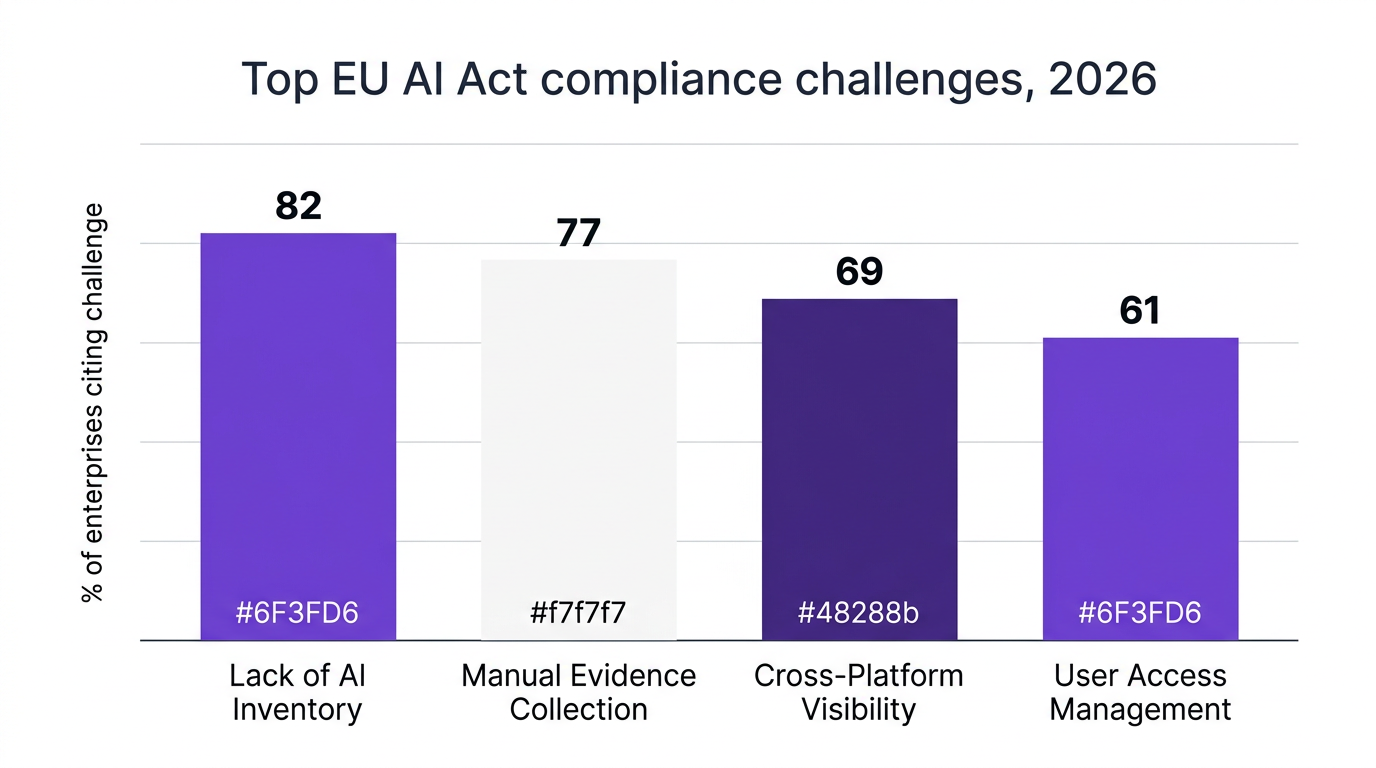
You cannot comply with what you cannot see. Yet 82% of enterprises cite lack of AI inventory as their top EU AI Act challenge (IDC, 2026).
Your first responsibility is a 360° inventory of AI systems, including:
This inventory underpins your eu ai act checklist, your risk assessments, and your audit story.
For high-risk AI systems, the EU AI law requirements focus on:
These elements form the backbone of your ai risk controls.
The Act elevates documentation from a static artifact to a living evidence trail. Michel Dubois from Gartner notes that "Automated compliance platforms are the only scalable way for large organizations to meet the EU AI Act's stringent record-keeping and transparency requirements" (2026).
Your documentation needs to show:
This is where automated audit workflow capabilities become critical.
Regulators will not just look at your models. They will examine your governance fabric:
Linnea Schuster from Capgemini highlights that "Audit readiness is not a one-time event, but a continuous operational discipline that mature enterprises are embedding into their AI and SaaS governance workflows" (2026).
To make this concrete, use the AI Act 90 day roadmap framework: three 30-day sprints that move you from visibility, to control, to evidence.
Objective: Build a defensible AI and SaaS inventory and define scope for high-risk systems.
Key actions:
By the end of Phase 1, you should have complete visibility across SaaS, cloud, and AI systems, at least at a baseline level.
Objective: Implement core ai risk controls and define repeatable ai governance processes.
Key actions:
By the end of Phase 2, your ai governance platform or governance processes should be actively enforcing and monitoring core controls.
Objective: Build an evidence-ready posture and test it through an internal EU regulatory audit simulation.
Key actions:

By the end of the first 90 days, your eu ai act checklist should include at least the following elements.
A centralized catalog with:
This register becomes your single source of truth for enterprise audit readiness.
For each high-risk system, you should maintain:
Strong SaaS security EU posture requires:
Each high-risk system must have:
You should standardize templates and processes for:
A leading European bank recently faced an aggressive timeline to prepare for an AI-related regulatory review. Over 100 AI and analytics systems were in production, many embedded in cloud and SaaS platforms.
The bank implemented an ai governance platform to automate documentation for high-risk models. Within 90 days, they:
Result: a 33% reduction in annual compliance workload and successful audit clearance in the 90-day window (Gartner, 2026).
A global pharmaceutical company followed a similar approach, using cross-platform custodianship and automated user access reviews to meet transparency and traceability requirements. Their conformity assessment reported zero non-conformities under the EU AI Act (Forrester, 2026).
These examples underscore a key lesson: automated compliance and governance-first architecture are no longer optional.
CloudNuro is purpose-built to give IT, security, and compliance leaders the visibility and automation they need for eu ai act compliance across SaaS, cloud, and AI.
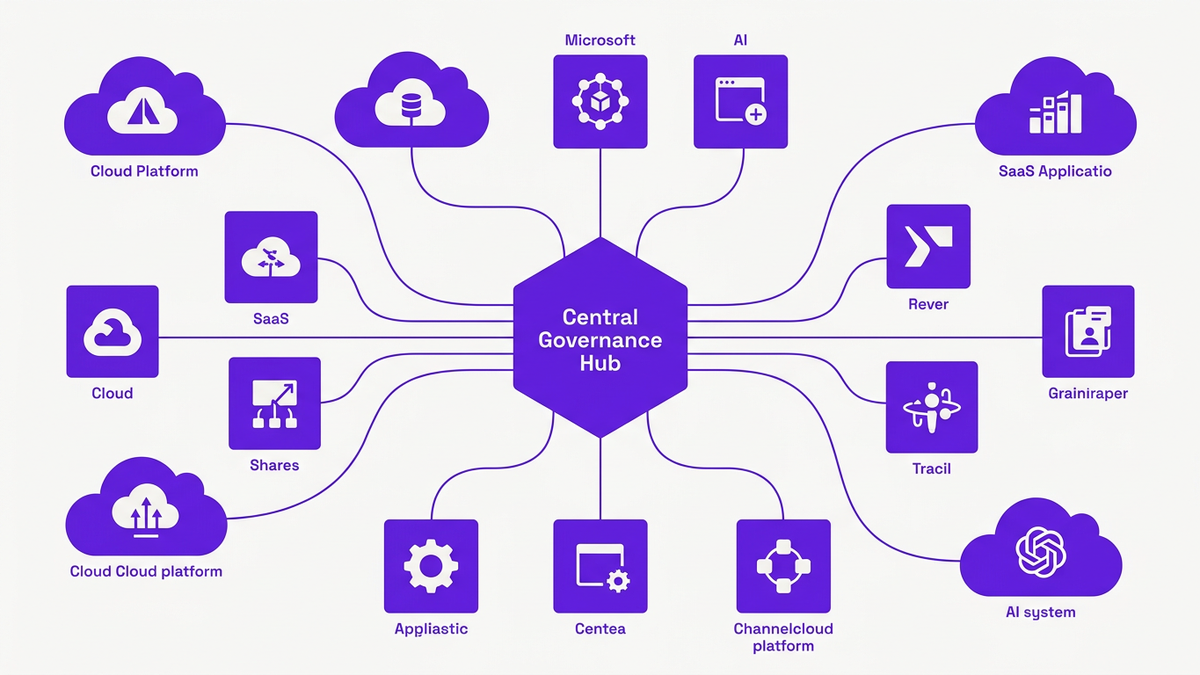
At the core is a governance-first architecture that unifies SaaS governance, AI oversight, and cost optimization into a single platform.
CloudNuro's Unified Cloud Custodian delivers 360° SaaS discovery across your environment.
You gain:
This directly addresses the 82% of enterprises that lack end-to-end AI inventory and usage tracking.
The CloudNuro AI Custodian focuses on high-risk AI systems and advanced ai governance requirements.
It enables:
This gives enterprises a continuously updated evidence trail tailored to AI Act audit readiness.
You can learn more about CloudNuro's AI-specific capabilities in the dedicated AI Custodian overview.
CloudNuro operationalizes IT compliance automation by:
This directly supports:
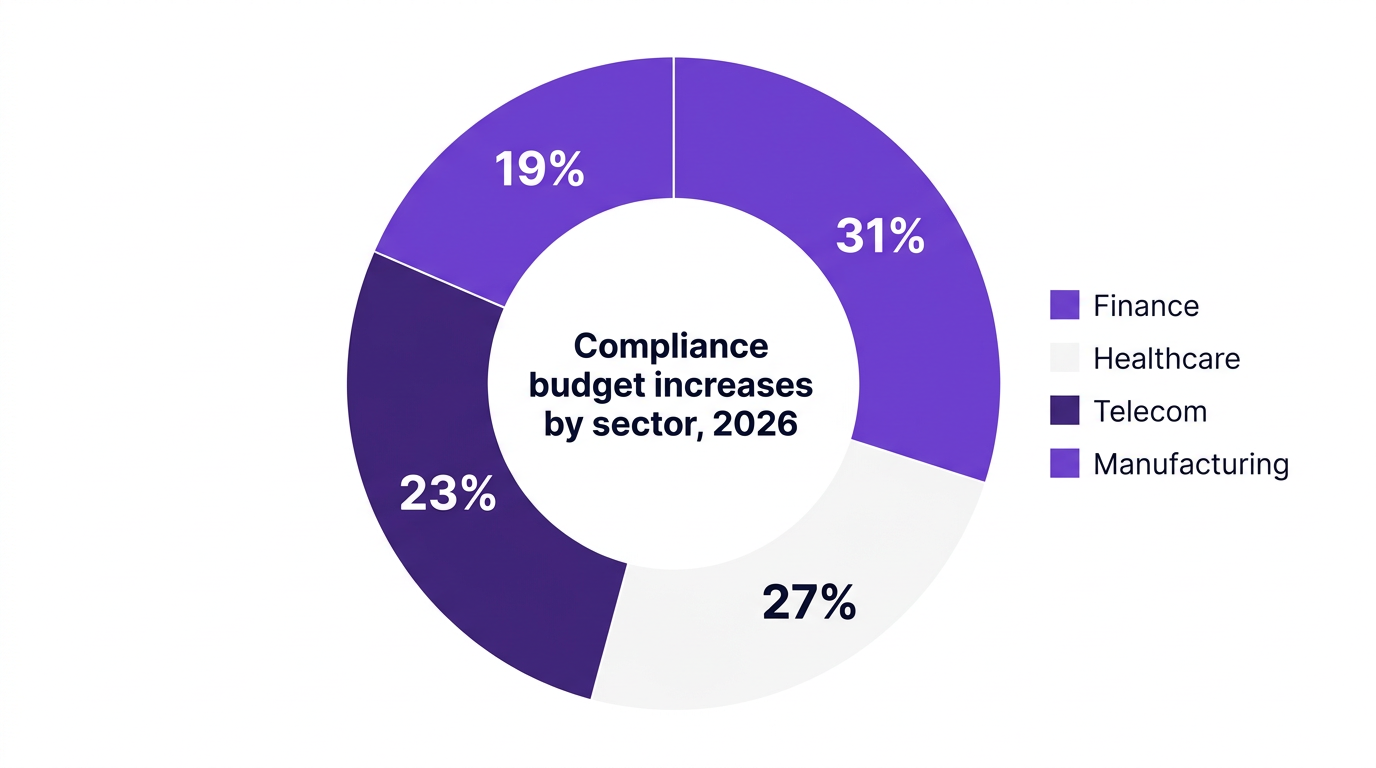
Compliance budgets are under pressure. Forrester reports that 56% of organizations in regulated sectors expect compliance budgets to increase by more than 20% in 2026 due to the EU AI Act (Forrester, 2026).
CloudNuro addresses this by combining automated cost optimization with cloud governance compliance:
This is further reinforced by CloudNuro's FinOps services, which help IT and finance leaders bring financial discipline to AI and SaaS portfolios.
CloudNuro is SOC 2 Type II certified and integrates with more than 400 applications, which means:
Many enterprises start by using CloudNuro for saas management and it security, then extend the same governance foundation to AI workloads.
To make your 90-day program stick, focus on these practices:
There are also recurring failure patterns:
A useful analogy is financial reporting. You would never wait until year-end to figure out your books. EU AI compliance should be treated the same way: a continuous, automated process, not an annual fire drill.
The main requirements include classifying AI systems by risk, implementing strict controls for high-risk systems, and maintaining comprehensive documentation and logging. Enterprises must also ensure human oversight, transparency, and integration of AI risk into broader enterprise compliance and security programs.
By 2026, regulators will expect continuous monitoring and evidence that AI systems across SaaS and cloud follow defined ai governance standards.
Use a three-phase AI Act 90 day roadmap: visibility, controls, and evidence.
In the first 30 days, build an AI inventory and classify systems. In days 31 to 60, implement core controls and embed AI into cloud saas compliance workflows. In the final 30 days, automate evidence collection and run a mock EU regulatory audit using your internal audit function or external experts.
An effective eu ai act checklist should cover:
It should also reference where ai compliance automation and automated audit workflow tools are used to maintain each area.
CloudNuro provides a cloudnuro compliance platform that unifies SaaS governance, AI oversight, and cost optimization.
Through the Unified Cloud Custodian and AI Custodian, CloudNuro delivers 360° AI discovery, real-time compliance monitoring, automated access reviews, and audit-ready reporting. This directly supports ai act audit readiness and ongoing enterprise ai compliance.
Key enablers include:
Together, these technologies create a sustainable foundation for cloud governance compliance.
The organizations that win under the EU AI Act will be those that treat eu ai act compliance as a driver of disciplined, efficient AI operations, not just a regulatory cost.
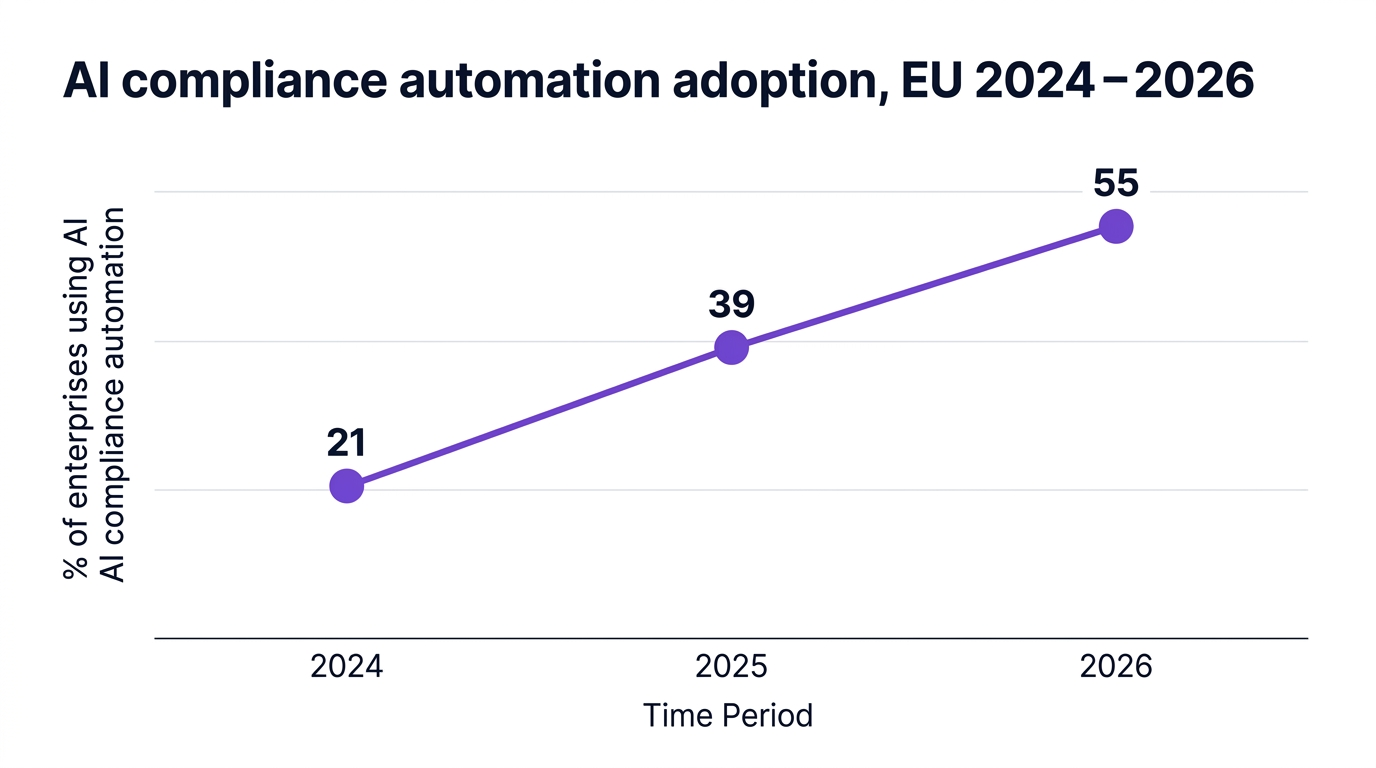
In the next 12 to 24 months, analysts expect enterprise adoption of AI compliance automation platforms in the EU to grow by 41% year over year (IDC, 2026). At the same time, 63% of C-suite executives plan to deploy cross-platform governance solutions to meet EU AI Act requirements by Q3 2026 (Capgemini, 2026).
Now is the moment to:
CloudNuro helps enterprises operationalize all three, with a governance-first architecture that spans SaaS, cloud, and AI.
Take your next step toward EU AI Act audit readiness in 90 days:
CloudNuro is a leader in Enterprise SaaS Management Platforms, providing enterprises with unmatched visibility, governance, and cost optimization. Recognized twice in a row in the SaaS Management Platforms category and named a Leader in the SoftwareReviews Data Quadrant, CloudNuro is trusted by global enterprises and government agencies to bring financial discipline to SaaS, cloud, and AI. Trusted by enterprises such as Konica Minolta and Federal Signal, CloudNuro provides centralized SaaS inventory, license optimization, and renewal management along with advanced cost allocation and chargeback, giving IT and Finance leaders the visibility, control, and cost-conscious culture needed to drive financial discipline. Request a Demo | Get Free Savings | Explore Product Request a Demo -> https://www.cloudnuro.ai/request-demo Get Free Savings -> https://www.cloudnuro.ai/free-savings-assessment Explore Product -> https://www.cloudnuro.ai/product-overview
Request a no cost, no obligation free assessment —just 15 minutes to savings!
Get StartedEnterprise AI leaders are moving from experimentation to enforcement. With the EU AI Act entering into force, eu ai act compliance is no longer a legal side project, it is an operational discipline that touches every SaaS, cloud, and AI workload you run.
Gartner expects 67% of large enterprises in the EU to fall under high-risk AI requirements by the end of 2026 (Gartner, 2026). At the same time, IDC reports that 82% of enterprises lack end-to-end AI inventory and usage tracking, the single biggest barrier to compliance (IDC, 2026). This playbook gives you a realistic 90-day roadmap to move from scattered AI experiments to structured, audit-ready governance.
The EU AI Act is the first comprehensive AI regulation that directly ties enterprise ai compliance to how you design, deploy, and monitor AI systems across cloud and SaaS environments.
As Dr. Johanna Weber from the European Institute of Compliance puts it, "The EU AI Act will fundamentally reshape how enterprise AI is managed, shifting the focus to continuous compliance and risk visibility across all cloud and SaaS platforms" (2026).
At a practical level, enterprises must:
For large organizations, the hard part is not interpreting EU AI regulations in theory. It is mapping these requirements onto a messy reality of:
Research from Deloitte shows that structured 90-day compliance readiness programs reduce audit failure risk by 48% for enterprises preparing for the EU AI Act (Deloitte, 2026). A 90-day window is short enough to maintain urgency yet long enough to:
Think of it as a "minimum viable compliance" program: not perfect, but strong enough that an EU regulatory audit does not expose fundamental gaps.
Before building your roadmap, you need a working model of the eu ai act enterprise obligations. Below is a pragmatic breakdown tailored to enterprise AI teams.
You cannot comply with what you cannot see. Yet 82% of enterprises cite lack of AI inventory as their top EU AI Act challenge (IDC, 2026).
Your first responsibility is a 360° inventory of AI systems, including:
This inventory underpins your eu ai act checklist, your risk assessments, and your audit story.
For high-risk AI systems, the EU AI law requirements focus on:
These elements form the backbone of your ai risk controls.
The Act elevates documentation from a static artifact to a living evidence trail. Michel Dubois from Gartner notes that "Automated compliance platforms are the only scalable way for large organizations to meet the EU AI Act's stringent record-keeping and transparency requirements" (2026).
Your documentation needs to show:
This is where automated audit workflow capabilities become critical.
Regulators will not just look at your models. They will examine your governance fabric:
Linnea Schuster from Capgemini highlights that "Audit readiness is not a one-time event, but a continuous operational discipline that mature enterprises are embedding into their AI and SaaS governance workflows" (2026).
To make this concrete, use the AI Act 90 day roadmap framework: three 30-day sprints that move you from visibility, to control, to evidence.
Objective: Build a defensible AI and SaaS inventory and define scope for high-risk systems.
Key actions:
By the end of Phase 1, you should have complete visibility across SaaS, cloud, and AI systems, at least at a baseline level.
Objective: Implement core ai risk controls and define repeatable ai governance processes.
Key actions:
By the end of Phase 2, your ai governance platform or governance processes should be actively enforcing and monitoring core controls.
Objective: Build an evidence-ready posture and test it through an internal EU regulatory audit simulation.
Key actions:
By the end of the first 90 days, your eu ai act checklist should include at least the following elements.
A centralized catalog with:
This register becomes your single source of truth for enterprise audit readiness.
For each high-risk system, you should maintain:
Strong SaaS security EU posture requires:
Each high-risk system must have:
You should standardize templates and processes for:
A leading European bank recently faced an aggressive timeline to prepare for an AI-related regulatory review. Over 100 AI and analytics systems were in production, many embedded in cloud and SaaS platforms.
The bank implemented an ai governance platform to automate documentation for high-risk models. Within 90 days, they:
Result: a 33% reduction in annual compliance workload and successful audit clearance in the 90-day window (Gartner, 2026).
A global pharmaceutical company followed a similar approach, using cross-platform custodianship and automated user access reviews to meet transparency and traceability requirements. Their conformity assessment reported zero non-conformities under the EU AI Act (Forrester, 2026).
These examples underscore a key lesson: automated compliance and governance-first architecture are no longer optional.
CloudNuro is purpose-built to give IT, security, and compliance leaders the visibility and automation they need for eu ai act compliance across SaaS, cloud, and AI.
At the core is a governance-first architecture that unifies SaaS governance, AI oversight, and cost optimization into a single platform.
CloudNuro's Unified Cloud Custodian delivers 360° SaaS discovery across your environment.
You gain:
This directly addresses the 82% of enterprises that lack end-to-end AI inventory and usage tracking.
The CloudNuro AI Custodian focuses on high-risk AI systems and advanced ai governance requirements.
It enables:
This gives enterprises a continuously updated evidence trail tailored to AI Act audit readiness.
You can learn more about CloudNuro's AI-specific capabilities in the dedicated AI Custodian overview.
CloudNuro operationalizes IT compliance automation by:
This directly supports:
Compliance budgets are under pressure. Forrester reports that 56% of organizations in regulated sectors expect compliance budgets to increase by more than 20% in 2026 due to the EU AI Act (Forrester, 2026).
CloudNuro addresses this by combining automated cost optimization with cloud governance compliance:
This is further reinforced by CloudNuro's FinOps services, which help IT and finance leaders bring financial discipline to AI and SaaS portfolios.
CloudNuro is SOC 2 Type II certified and integrates with more than 400 applications, which means:
Many enterprises start by using CloudNuro for saas management and it security, then extend the same governance foundation to AI workloads.
To make your 90-day program stick, focus on these practices:
There are also recurring failure patterns:
A useful analogy is financial reporting. You would never wait until year-end to figure out your books. EU AI compliance should be treated the same way: a continuous, automated process, not an annual fire drill.
The main requirements include classifying AI systems by risk, implementing strict controls for high-risk systems, and maintaining comprehensive documentation and logging. Enterprises must also ensure human oversight, transparency, and integration of AI risk into broader enterprise compliance and security programs.
By 2026, regulators will expect continuous monitoring and evidence that AI systems across SaaS and cloud follow defined ai governance standards.
Use a three-phase AI Act 90 day roadmap: visibility, controls, and evidence.
In the first 30 days, build an AI inventory and classify systems. In days 31 to 60, implement core controls and embed AI into cloud saas compliance workflows. In the final 30 days, automate evidence collection and run a mock EU regulatory audit using your internal audit function or external experts.
An effective eu ai act checklist should cover:
It should also reference where ai compliance automation and automated audit workflow tools are used to maintain each area.
CloudNuro provides a cloudnuro compliance platform that unifies SaaS governance, AI oversight, and cost optimization.
Through the Unified Cloud Custodian and AI Custodian, CloudNuro delivers 360° AI discovery, real-time compliance monitoring, automated access reviews, and audit-ready reporting. This directly supports ai act audit readiness and ongoing enterprise ai compliance.
Key enablers include:
Together, these technologies create a sustainable foundation for cloud governance compliance.
The organizations that win under the EU AI Act will be those that treat eu ai act compliance as a driver of disciplined, efficient AI operations, not just a regulatory cost.
In the next 12 to 24 months, analysts expect enterprise adoption of AI compliance automation platforms in the EU to grow by 41% year over year (IDC, 2026). At the same time, 63% of C-suite executives plan to deploy cross-platform governance solutions to meet EU AI Act requirements by Q3 2026 (Capgemini, 2026).
Now is the moment to:
CloudNuro helps enterprises operationalize all three, with a governance-first architecture that spans SaaS, cloud, and AI.
Take your next step toward EU AI Act audit readiness in 90 days:
CloudNuro is a leader in Enterprise SaaS Management Platforms, providing enterprises with unmatched visibility, governance, and cost optimization. Recognized twice in a row in the SaaS Management Platforms category and named a Leader in the SoftwareReviews Data Quadrant, CloudNuro is trusted by global enterprises and government agencies to bring financial discipline to SaaS, cloud, and AI. Trusted by enterprises such as Konica Minolta and Federal Signal, CloudNuro provides centralized SaaS inventory, license optimization, and renewal management along with advanced cost allocation and chargeback, giving IT and Finance leaders the visibility, control, and cost-conscious culture needed to drive financial discipline. Request a Demo | Get Free Savings | Explore Product Request a Demo -> https://www.cloudnuro.ai/request-demo Get Free Savings -> https://www.cloudnuro.ai/free-savings-assessment Explore Product -> https://www.cloudnuro.ai/product-overview
Request a no cost, no obligation free assessment - just 15 minutes to savings!
Get StartedWe're offering complimentary ServiceNow license assessments to only 25 enterprises this quarter who want to unlock immediate savings without disrupting operations.
Get Free AssessmentGet Started




CloudNuro Corp
1755 Park St. Suite 207
Naperville, IL 60563
Phone : +1-630-277-9470
Email: info@cloudnuro.com



.webp)

Recognized Leader in SaaS Management Platforms by Info-Tech SoftwareReviews


.svg)