

Sign Up
Thank you for Submitting!
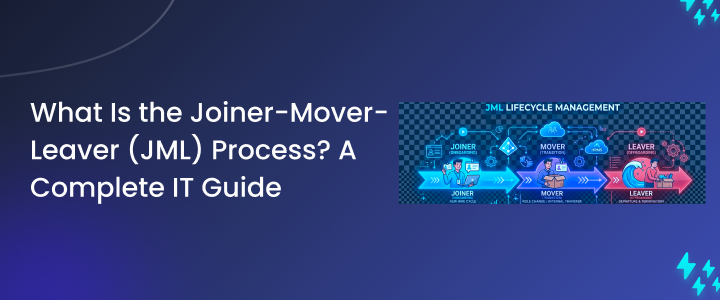
The joiner mover leaver process sounds simple: give people access when they start, adjust it when they change roles, and remove it when they leave. In reality, for SaaS heavy, hybrid-cloud enterprises, JML is one of the most critical and fragile parts of IT operations.
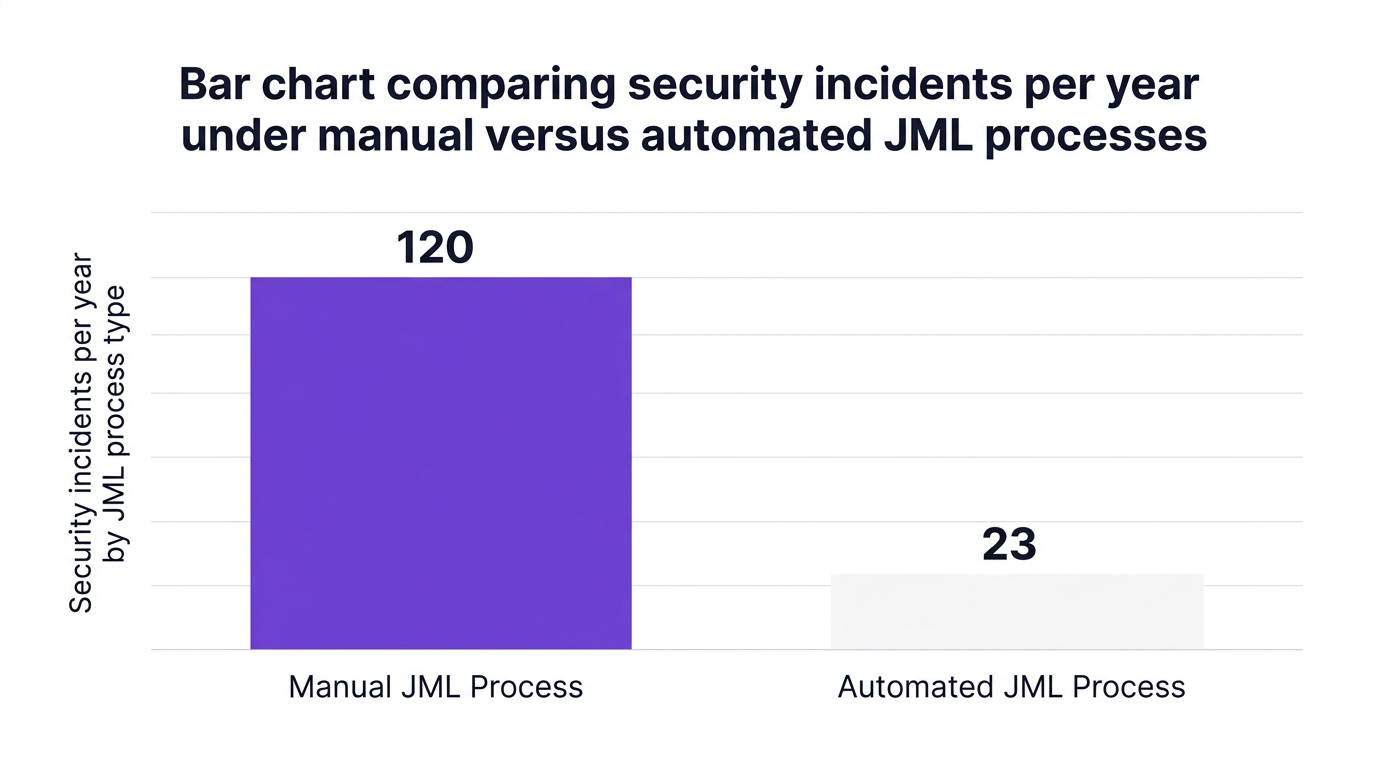
A leading security body reported that 60% of IT breaches in regulated industries can be traced to failures in the joiner-mover-leaver process (ISACA, 2026). At the same time, Gartner found that 81% of organizations that automated JML reduced security incidents linked to access mismanagement (2026). The gap between those numbers is the gap between manual, ad hoc workflows and disciplined, automated identity lifecycle management.
This guide explains the JML process meaning, how it works, where it fails, and how automation and SaaS governance can turn it into a strength, not a liability.
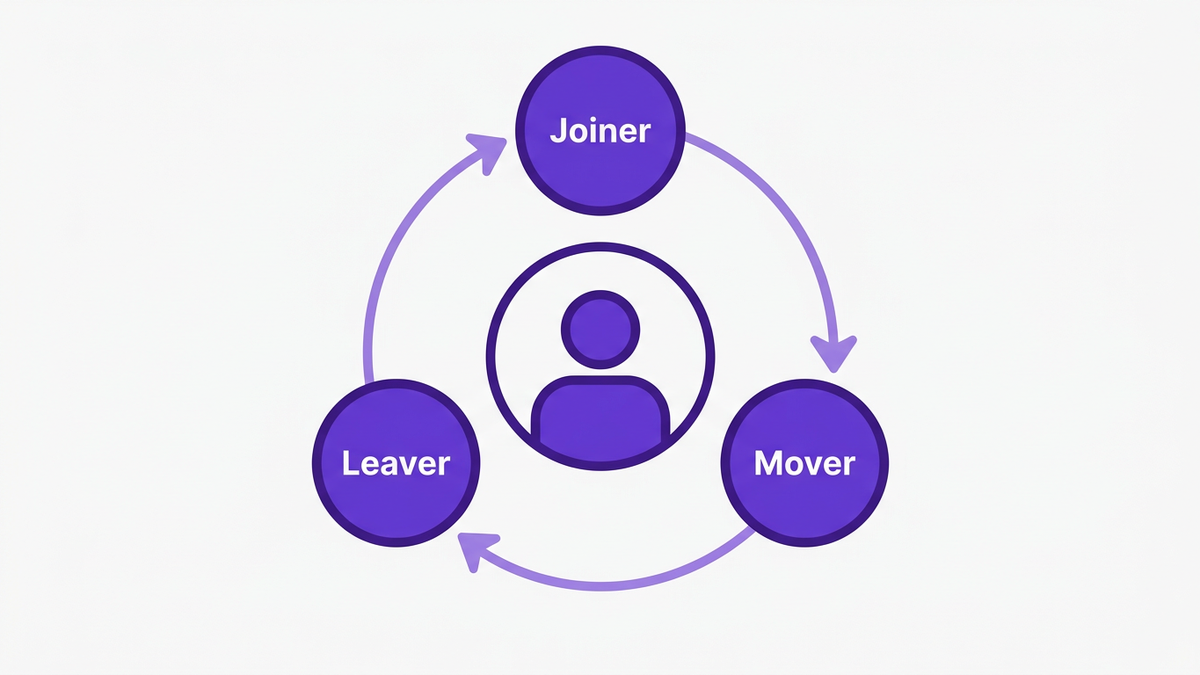
The joiner mover leaver process is an identity lifecycle management framework that manages user accounts and access across the full employee journey:
In practice, JML is a set of repeatable workflows that span HR, IT, security, and business owners. It connects HR events, such as hiring, internal transfers, and terminations, to workforce provisioning and user access deprovisioning across SaaS, cloud, and on-prem systems.
A security architect quoted by Gartner notes that, "Automating the joiner-mover-leaver process is no longer a luxury, it is a compliance and security necessity in 2026's hybrid cloud environments." JML is not a side-project. It is a core pillar of access governance, zero trust, and SaaS security automation.
For many CIOs, the JML process is where the abstract idea of "identity as the new perimeter" becomes painfully real. Every joiner, mover, and leaver event is a chance for access drift, orphaned accounts, and audit findings.
A Forrester analysis found that more than 72% of enterprises experienced compliance gaps due to incomplete user offboarding in cloud and SaaS environments (2026). Common patterns include:
Each of these becomes a long lived exposure. In a zero trust model, every unnecessary entitlement is a potential breach path.
Regulated sectors such as healthcare, finance, and government increasingly require documented identity lifecycle management. For example:
A leading analyst firm reports that 90% of financial institutions prioritized automated access governance in response to evolving compliance requirements (Accenture, 2026). If your JML process is stitched together in spreadsheets and email, it will not survive a modern audit.
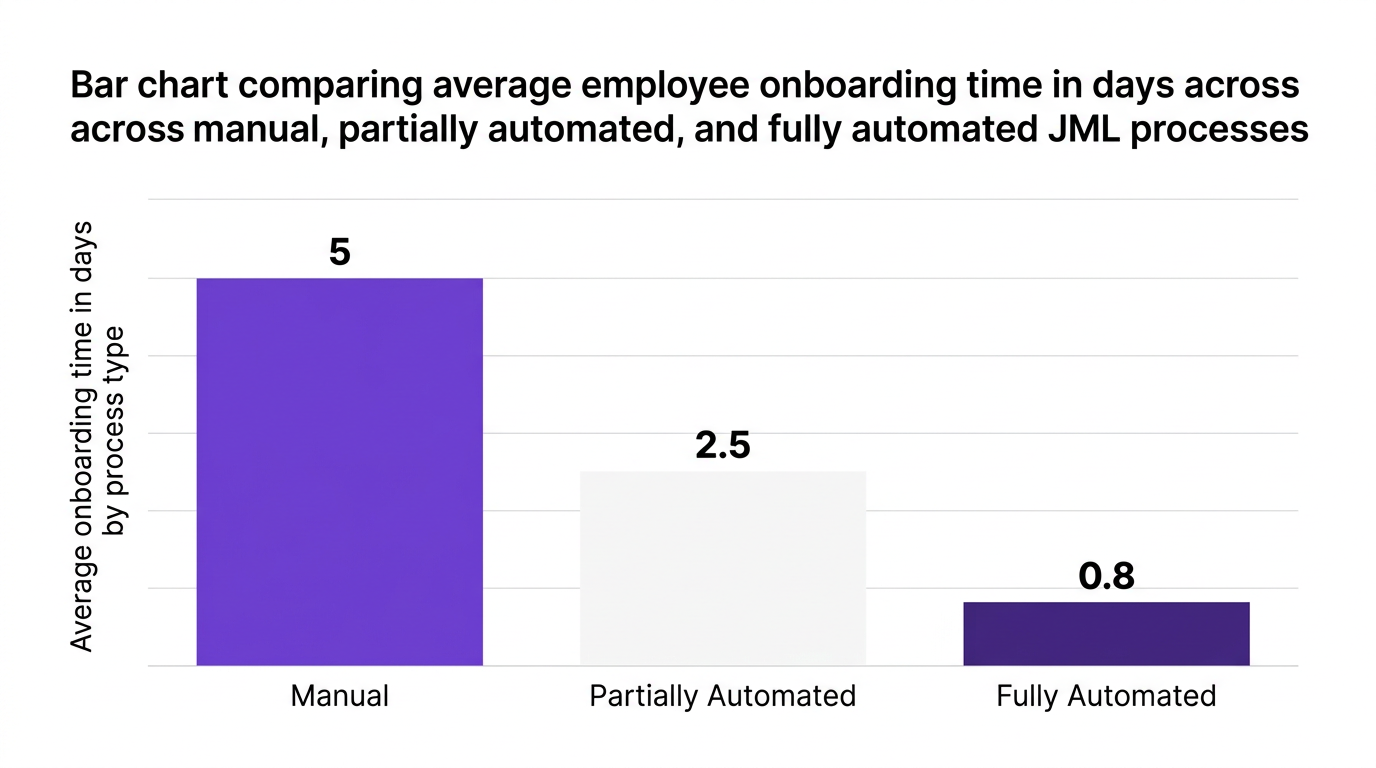
Manual JML creates friction for both IT and end users. IDC found that automated identity provisioning reduces average employee onboarding time from 5 days to less than 1 day (2026). That is not just a better experience. It also translates into real cost savings.
According to McKinsey, organizations using integrated JML automation saved an average of 25% in operational costs related to user lifecycle management (2026). For a large enterprise with thousands of staff changes per year, those savings are significant.
The most effective JML programs treat the employee lifecycle as a standardized process, not a collection of tickets. Think of it as an assembly line: HR triggers the event, policy defines the entitlements, and IT systems execute the provisioning and deprovisioning.
The IT onboarding process for a joiner should deliver three outcomes:
Best practices for joiners include:
A helpful analogy: treat joiner access like a clean, pre-configured laptop image. You would not build each device by hand. The same should be true for identity and SaaS access.
The mover phase is often the weakest link in the joiner mover leaver workflow. Promotions, lateral moves, project assignments, and manager changes all affect access. Common failure modes:
To control this, mature teams:
This is where identity governance automation is crucial. Manual reviews at scale are not sustainable.
For leavers, secure offboarding must be predictable and complete. A leading audit body found that 60% of IT breaches in regulated industries link back to JML failures, which often include terminated users retaining access (ISACA, 2026).
A strong leaver workflow should:
Here, automation is both a control and a safeguard against human error. Offboarding should feel like closing a circuit, not hunting for loose wires.

Even organizations with documented JML procedures run into recurring issues, especially as SaaS user management grows more complex.
With hundreds of SaaS tools in use, identities and roles fragment across systems. Without a centralized view of SaaS access control, IT cannot reliably answer basic questions:
An IDC report notes that growth in SaaS sprawl has elevated the need for unified digital identity governance, with multi-cloud JML orchestration projected to grow 22% year-over-year through 2026.
Manual JML workflows typically look like:
This breaks down under volume. Approvals lag, people wait for productivity apps, and offboarding can be delayed for "lack of time". Over time, staff normalize these exceptions, which erodes access governance.
JML touches HR processes, IT operations, and security policies. When each group works in isolation, you see:
One expert from ISACA notes that visibility and auditability across SaaS tools are pivotal for IT leaders seeking to enforce zero-trust architecture and continuous compliance (2026). Siloed ownership undermines that visibility.
Poor JML is also a budget problem. Dormant accounts, unused licenses after role changes, and orphaned subscriptions drive up SaaS spend. A McKinsey study showed that integrated JML automation delivered 25% savings in lifecycle management operational costs, driven partly by better license alignment (2026).
This is where JML intersects directly with cloud governance and FinOps objectives.
An automated JML process connects HR systems, identity providers, and SaaS platforms into a policy-driven engine. Instead of individual tickets, you get consistent, auditable workflows.
To build an automated JML process, most enterprises combine:
Key capabilities include:
A Tier-1 global bank integrated automated JML workflows with more than 300 SaaS and legacy systems. The results:
For a sector where "compliance risk IT" is watched at board level, those improvements free both time and risk budget.
A large healthcare provider deployed a unified SaaS access governance layer to formalize employee onboarding offboarding. They achieved:
For clinicians, that meant new staff could access critical systems on day one. For compliance officers, it meant fewer sleepless nights before audits.
Some IT leaders argue that:
There is some truth here. For small, low-regulation environments, lightweight processes may suffice. However, once you have:
Manual JML becomes a systemic risk. The breach and compliance statistics suggest that the risk of partial automation is often greater than the complexity of doing it properly.
To make the joiner mover leaver workflow resilient, focus on standardization, automation, and visibility.
Start with employee lifecycle management artifacts:
This RBAC foundation simplifies SaaS user management and keeps entitlements understandable.
HR must be the upstream trigger for JML. To avoid lag and manual work:
Aim for a world where digital onboarding and offboarding are event driven, not email driven.
Instead of annual or ad hoc reviews, use continuous access review cycles:
This keeps access aligned to reality, which is crucial as people frequently move between projects.
Set clear metrics around the joiner mover leaver process:
Use dashboards, often provided by SaaS governance platforms, to enforce cloud governance policies and identify bottlenecks.
Finally, treat JML as a cross-functional control:
If you already operate a SaaS management or FinOps practice, integrating JML metrics there will help connect security and cost outcomes.
For a deeper view of identity controls that complement JML, see this guide to identity and access management best practices.
CloudNuro is built for organizations that want JML to be automated, auditable, and cost-aware across SaaS and cloud.
CloudNuro discovers and normalizes user accounts across more than 400 SaaS and cloud platforms. From a single dashboard, IT and security teams can:
This unified inventory is the backbone for robust identity lifecycle management.
With CloudNuro AI Custodian, HR events can trigger end-to-end JML workflows:
Microsoft 365 Custodian and Salesforce Custodian extend this control to two of the most business-critical SaaS ecosystems. They automate license optimization, granular permission management, and create a complete audit trail for access changes.
CloudNuro’s governance-first architecture supports IT compliance automation and audit readiness:
Security leaders can also integrate CloudNuro insights into broader IT security initiatives and IT operations dashboards.
JML events are budget events too. CloudNuro aligns identity lifecycle management with cost optimization and cloud governance:
By combining JML automation with unified SaaS management, organizations avoid paying for access that no longer matches business reality.
Even with automation, failures can occur if:
CloudNuro mitigates these risks by:
The result is a joiner mover leaver process that is robust to real world change, not just designed for ideal conditions.
The JML process meaning is straightforward: it is a structured way for IT to manage user accounts as people join, move within, and leave an organization. It connects HR changes to technical actions like account creation, permission updates, and deprovisioning across SaaS and cloud systems.
JML is a specific workflow within the broader IAM discipline. IAM covers policies, technologies, and controls for all digital identities. The joiner mover leaver workflow focuses on the events in the employee lifecycle and the associated provisioning and deprovisioning steps.
SaaS environments often involve dozens or hundreds of applications. Managing joiners, movers, and leavers manually across that surface area leads to missed revocations, over-privileged users, and audit gaps. Research shows that 81% of organizations with automated JML reduced security incidents tied to access mismanagement (Gartner, 2026), which underlines the impact of automation.
JML handles access changes when people join, move, or leave. Access review automation complements this by periodically checking that existing access is still appropriate. Together, they deliver continuous governance: JML adjusts access based on events, while reviews validate that entitlements remain correct over time.
Common warning signs include:
If you see these patterns, it is time to reassess JML workflows, tooling, and ownership.
No. Many organizations start with a phased approach:
A unified platform like CloudNuro helps by giving you a single place to orchestrate and observe these phases.
The joiner mover leaver process is far more than an IT housekeeping routine. It is a strategic control that shapes your security posture, compliance readiness, and SaaS cost structure.
As SaaS and cloud footprints grow, organizations that treat JML as a first class capability, supported by automation and cloud governance, will:
CloudNuro provides the AI-powered SaaS operations management layer that makes this possible in complex, regulated environments. To see how a modern, automated joiner mover leaver framework could work in your organization, request a tailored walkthrough.
CloudNuro is a leader in Enterprise SaaS Management Platforms, providing enterprises with unmatched visibility, governance, and cost optimization. Recognized twice in a row in the SaaS Management Platforms category and named a Leader in the SoftwareReviews Data Quadrant, CloudNuro is trusted by global enterprises and government agencies to bring financial discipline to SaaS, cloud, and AI. Trusted by enterprises such as Konica Minolta and Federal Signal, CloudNuro provides centralized SaaS inventory, license optimization, and renewal management along with advanced cost allocation and chargeback, giving IT and Finance leaders the visibility, control, and cost-conscious culture needed to drive financial discipline.
Request a no cost, no obligation free assessment —just 15 minutes to savings!
Get StartedThe joiner mover leaver process sounds simple: give people access when they start, adjust it when they change roles, and remove it when they leave. In reality, for SaaS heavy, hybrid-cloud enterprises, JML is one of the most critical and fragile parts of IT operations.
A leading security body reported that 60% of IT breaches in regulated industries can be traced to failures in the joiner-mover-leaver process (ISACA, 2026). At the same time, Gartner found that 81% of organizations that automated JML reduced security incidents linked to access mismanagement (2026). The gap between those numbers is the gap between manual, ad hoc workflows and disciplined, automated identity lifecycle management.
This guide explains the JML process meaning, how it works, where it fails, and how automation and SaaS governance can turn it into a strength, not a liability.
The joiner mover leaver process is an identity lifecycle management framework that manages user accounts and access across the full employee journey:
In practice, JML is a set of repeatable workflows that span HR, IT, security, and business owners. It connects HR events, such as hiring, internal transfers, and terminations, to workforce provisioning and user access deprovisioning across SaaS, cloud, and on-prem systems.
A security architect quoted by Gartner notes that, "Automating the joiner-mover-leaver process is no longer a luxury, it is a compliance and security necessity in 2026's hybrid cloud environments." JML is not a side-project. It is a core pillar of access governance, zero trust, and SaaS security automation.
For many CIOs, the JML process is where the abstract idea of "identity as the new perimeter" becomes painfully real. Every joiner, mover, and leaver event is a chance for access drift, orphaned accounts, and audit findings.
A Forrester analysis found that more than 72% of enterprises experienced compliance gaps due to incomplete user offboarding in cloud and SaaS environments (2026). Common patterns include:
Each of these becomes a long lived exposure. In a zero trust model, every unnecessary entitlement is a potential breach path.
Regulated sectors such as healthcare, finance, and government increasingly require documented identity lifecycle management. For example:
A leading analyst firm reports that 90% of financial institutions prioritized automated access governance in response to evolving compliance requirements (Accenture, 2026). If your JML process is stitched together in spreadsheets and email, it will not survive a modern audit.
Manual JML creates friction for both IT and end users. IDC found that automated identity provisioning reduces average employee onboarding time from 5 days to less than 1 day (2026). That is not just a better experience. It also translates into real cost savings.
According to McKinsey, organizations using integrated JML automation saved an average of 25% in operational costs related to user lifecycle management (2026). For a large enterprise with thousands of staff changes per year, those savings are significant.
The most effective JML programs treat the employee lifecycle as a standardized process, not a collection of tickets. Think of it as an assembly line: HR triggers the event, policy defines the entitlements, and IT systems execute the provisioning and deprovisioning.
The IT onboarding process for a joiner should deliver three outcomes:
Best practices for joiners include:
A helpful analogy: treat joiner access like a clean, pre-configured laptop image. You would not build each device by hand. The same should be true for identity and SaaS access.
The mover phase is often the weakest link in the joiner mover leaver workflow. Promotions, lateral moves, project assignments, and manager changes all affect access. Common failure modes:
To control this, mature teams:
This is where identity governance automation is crucial. Manual reviews at scale are not sustainable.
For leavers, secure offboarding must be predictable and complete. A leading audit body found that 60% of IT breaches in regulated industries link back to JML failures, which often include terminated users retaining access (ISACA, 2026).
A strong leaver workflow should:
Here, automation is both a control and a safeguard against human error. Offboarding should feel like closing a circuit, not hunting for loose wires.
Even organizations with documented JML procedures run into recurring issues, especially as SaaS user management grows more complex.
With hundreds of SaaS tools in use, identities and roles fragment across systems. Without a centralized view of SaaS access control, IT cannot reliably answer basic questions:
An IDC report notes that growth in SaaS sprawl has elevated the need for unified digital identity governance, with multi-cloud JML orchestration projected to grow 22% year-over-year through 2026.
Manual JML workflows typically look like:
This breaks down under volume. Approvals lag, people wait for productivity apps, and offboarding can be delayed for "lack of time". Over time, staff normalize these exceptions, which erodes access governance.
JML touches HR processes, IT operations, and security policies. When each group works in isolation, you see:
One expert from ISACA notes that visibility and auditability across SaaS tools are pivotal for IT leaders seeking to enforce zero-trust architecture and continuous compliance (2026). Siloed ownership undermines that visibility.
Poor JML is also a budget problem. Dormant accounts, unused licenses after role changes, and orphaned subscriptions drive up SaaS spend. A McKinsey study showed that integrated JML automation delivered 25% savings in lifecycle management operational costs, driven partly by better license alignment (2026).
This is where JML intersects directly with cloud governance and FinOps objectives.
An automated JML process connects HR systems, identity providers, and SaaS platforms into a policy-driven engine. Instead of individual tickets, you get consistent, auditable workflows.
To build an automated JML process, most enterprises combine:
Key capabilities include:
A Tier-1 global bank integrated automated JML workflows with more than 300 SaaS and legacy systems. The results:
For a sector where "compliance risk IT" is watched at board level, those improvements free both time and risk budget.
A large healthcare provider deployed a unified SaaS access governance layer to formalize employee onboarding offboarding. They achieved:
For clinicians, that meant new staff could access critical systems on day one. For compliance officers, it meant fewer sleepless nights before audits.
Some IT leaders argue that:
There is some truth here. For small, low-regulation environments, lightweight processes may suffice. However, once you have:
Manual JML becomes a systemic risk. The breach and compliance statistics suggest that the risk of partial automation is often greater than the complexity of doing it properly.
To make the joiner mover leaver workflow resilient, focus on standardization, automation, and visibility.
Start with employee lifecycle management artifacts:
This RBAC foundation simplifies SaaS user management and keeps entitlements understandable.
HR must be the upstream trigger for JML. To avoid lag and manual work:
Aim for a world where digital onboarding and offboarding are event driven, not email driven.
Instead of annual or ad hoc reviews, use continuous access review cycles:
This keeps access aligned to reality, which is crucial as people frequently move between projects.
Set clear metrics around the joiner mover leaver process:
Use dashboards, often provided by SaaS governance platforms, to enforce cloud governance policies and identify bottlenecks.
Finally, treat JML as a cross-functional control:
If you already operate a SaaS management or FinOps practice, integrating JML metrics there will help connect security and cost outcomes.
For a deeper view of identity controls that complement JML, see this guide to identity and access management best practices.
CloudNuro is built for organizations that want JML to be automated, auditable, and cost-aware across SaaS and cloud.
CloudNuro discovers and normalizes user accounts across more than 400 SaaS and cloud platforms. From a single dashboard, IT and security teams can:
This unified inventory is the backbone for robust identity lifecycle management.
With CloudNuro AI Custodian, HR events can trigger end-to-end JML workflows:
Microsoft 365 Custodian and Salesforce Custodian extend this control to two of the most business-critical SaaS ecosystems. They automate license optimization, granular permission management, and create a complete audit trail for access changes.
CloudNuro’s governance-first architecture supports IT compliance automation and audit readiness:
Security leaders can also integrate CloudNuro insights into broader IT security initiatives and IT operations dashboards.
JML events are budget events too. CloudNuro aligns identity lifecycle management with cost optimization and cloud governance:
By combining JML automation with unified SaaS management, organizations avoid paying for access that no longer matches business reality.
Even with automation, failures can occur if:
CloudNuro mitigates these risks by:
The result is a joiner mover leaver process that is robust to real world change, not just designed for ideal conditions.
The JML process meaning is straightforward: it is a structured way for IT to manage user accounts as people join, move within, and leave an organization. It connects HR changes to technical actions like account creation, permission updates, and deprovisioning across SaaS and cloud systems.
JML is a specific workflow within the broader IAM discipline. IAM covers policies, technologies, and controls for all digital identities. The joiner mover leaver workflow focuses on the events in the employee lifecycle and the associated provisioning and deprovisioning steps.
SaaS environments often involve dozens or hundreds of applications. Managing joiners, movers, and leavers manually across that surface area leads to missed revocations, over-privileged users, and audit gaps. Research shows that 81% of organizations with automated JML reduced security incidents tied to access mismanagement (Gartner, 2026), which underlines the impact of automation.
JML handles access changes when people join, move, or leave. Access review automation complements this by periodically checking that existing access is still appropriate. Together, they deliver continuous governance: JML adjusts access based on events, while reviews validate that entitlements remain correct over time.
Common warning signs include:
If you see these patterns, it is time to reassess JML workflows, tooling, and ownership.
No. Many organizations start with a phased approach:
A unified platform like CloudNuro helps by giving you a single place to orchestrate and observe these phases.
The joiner mover leaver process is far more than an IT housekeeping routine. It is a strategic control that shapes your security posture, compliance readiness, and SaaS cost structure.
As SaaS and cloud footprints grow, organizations that treat JML as a first class capability, supported by automation and cloud governance, will:
CloudNuro provides the AI-powered SaaS operations management layer that makes this possible in complex, regulated environments. To see how a modern, automated joiner mover leaver framework could work in your organization, request a tailored walkthrough.
CloudNuro is a leader in Enterprise SaaS Management Platforms, providing enterprises with unmatched visibility, governance, and cost optimization. Recognized twice in a row in the SaaS Management Platforms category and named a Leader in the SoftwareReviews Data Quadrant, CloudNuro is trusted by global enterprises and government agencies to bring financial discipline to SaaS, cloud, and AI. Trusted by enterprises such as Konica Minolta and Federal Signal, CloudNuro provides centralized SaaS inventory, license optimization, and renewal management along with advanced cost allocation and chargeback, giving IT and Finance leaders the visibility, control, and cost-conscious culture needed to drive financial discipline.
Request a no cost, no obligation free assessment - just 15 minutes to savings!
Get StartedWe're offering complimentary ServiceNow license assessments to only 25 enterprises this quarter who want to unlock immediate savings without disrupting operations.
Get Free AssessmentGet Started




CloudNuro Corp
1755 Park St. Suite 207
Naperville, IL 60563
Phone : +1-630-277-9470
Email: info@cloudnuro.com




.webp)

Recognized Leader in SaaS Management Platforms by Info-Tech SoftwareReviews


.svg)