

Sign Up
Thank you for Submitting!
Executive IT leaders face a persistent challenge when deploying sophisticated analytics and generative models across their organizations. Modern artificial intelligence requires constant access to validated internal information, but legacy data silos actively restrict this flow. When enterprise data is fragmented across distinct clouds, databases, and departmental tools, organizations experience compromised model accuracy and an escalation in governance risks. Technology leaders are discovering that successful artificial intelligence adoption is impossible without a structured environment capable of feeding models reliably. Microsoft Fabric has emerged as a comprehensive solution for this infrastructure gap. By offering a unified environment, Microsoft Fabric allows CIOs to consolidate decentralized information, apply strict governance, and transform raw operations into an AI-ready data foundation.
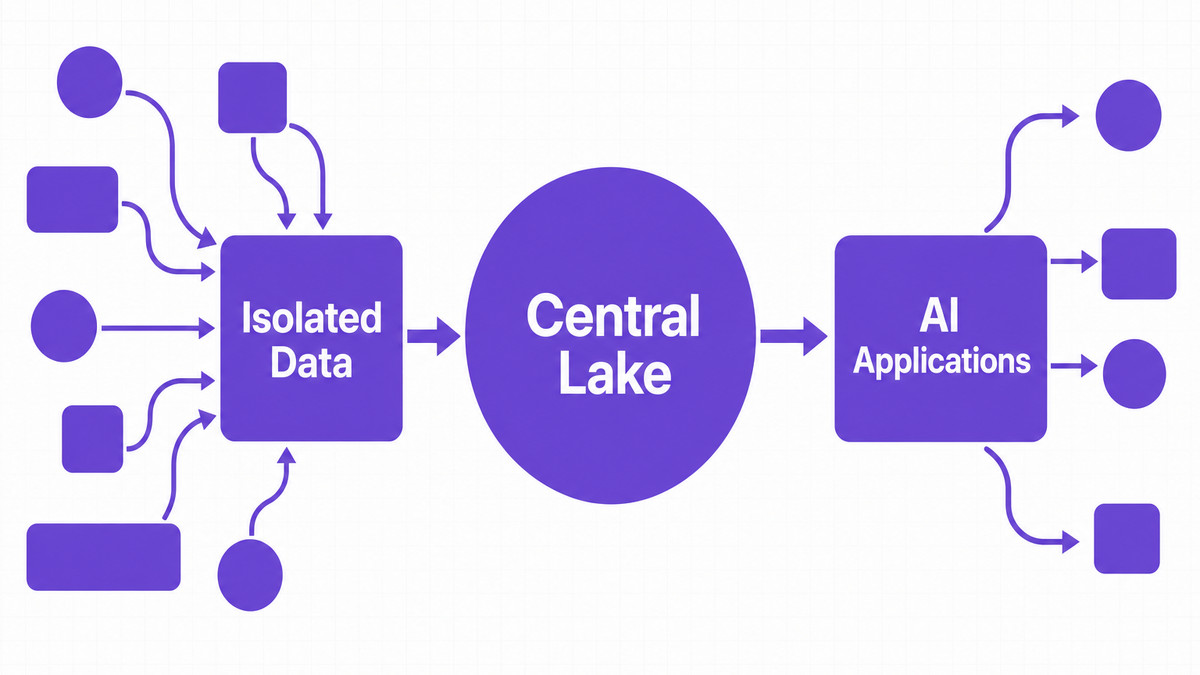
The fundamental barrier to building an AI-ready data foundation is the complex web of data movement. Historically, data engineers spent heavily on extracting, transforming, and loading information across various endpoints. Microsoft Fabric addresses this friction natively by centralizing all enterprise data within OneLake. This architecture functions as a single logical data lake for the entire organization. By standardizing the storage layer, CIOs eliminate redundant data copies and significantly reduce storage costs.
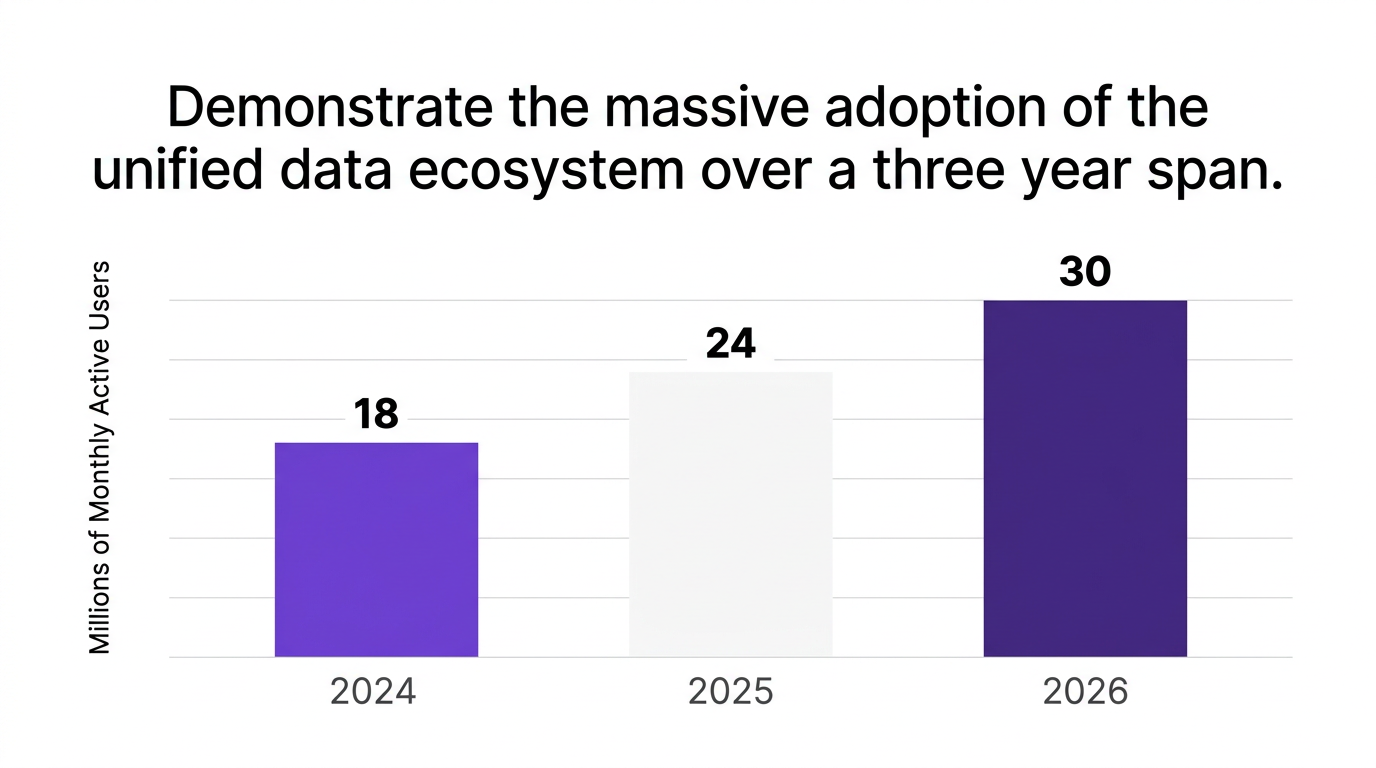
Technology industry research from 2026 highlights the massive scale of this consolidation, showing that over 30 million monthly active users now rely on OneLake backed data and insights. When business intelligence teams operate on a single source of truth, the risk of analytical discrepancy drops to near zero. A unified platform ensures that whether an analyst is running a traditional report or an executive is querying a custom copilot, they are interacting with the exact same governed datasets. This consistency is critical for enterprise AI transformation, as continuous data integrity prevents models from hallucinating based on outdated or misaligned regional records.
Artificial intelligence applications are inherently resource intensive. Operating these workloads directly on enterprise data requires processing power that traditional cloud architectures struggle to provide efficiently. Microsoft Fabric solves this bottleneck through a highly optimized, GPU-accelerated infrastructure designed specifically for concurrent analytical and predictive tasks.
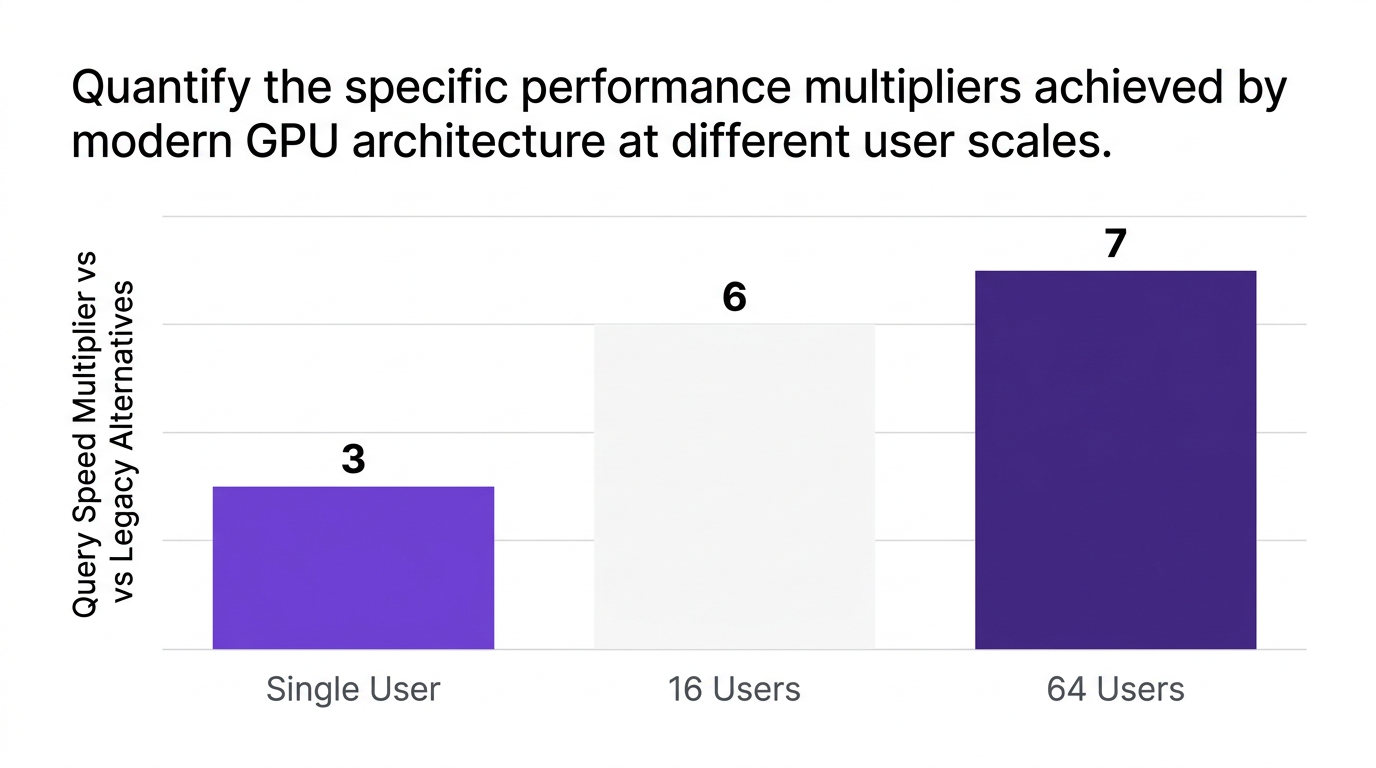
Performance metrics documented during developer conferences in 2026 demonstrate the power of this architecture. When compared to alternative cloud data warehouse providers, the GPU-accelerated Fabric Data Warehouse delivers drastically improved speeds. It operates up to 3 times faster at single user concurrency, 6 times faster at a 16 user concurrency, and 7 times faster overall. For a CIO, this performance multiplier translates directly to operational efficiency. Data teams spend less time waiting for complex queries to execute and more time developing strategic models. High concurrency handling also allows expanding global teams to query central datasets simultaneously without degrading the experience for automated intelligent agents operating in the background.
An AI-ready data foundation must prioritize security and access control above all else. Handing generative models open access to an unstructured enterprise lake creates massive security vulnerabilities. Microsoft Fabric introduces shared semantic models and advanced compliance frameworks that explicitly define business logic and restrict data access based on user credentials.
Through tools integrated directly into the unified platform, CIOs can monitor exact data lineage. Advanced tools like Fabric Data Agents have seen incredible improvements in reliability. Upgrades applied to internal model architectures in 2026 led to a 20 percent accuracy improvement for agentic workloads. By enforcing strict data governance Microsoft Fabric allows internal data agents to execute complex queries against trusted metrics rather than unverified raw tables. This capability allows risk management teams to approve artificial intelligence deployments with confidence, knowing that sensitive corporate information remains protected by the core architecture.
While Microsoft Fabric unifies the data layer, managing the overall software ecosystem remains a distinct challenge for IT leaders. Enterprise data does not exist in a vacuum. It flows through thousands of connected applications, user licenses, and cloud instances. To fully realize the return on investment of a next generation data platform, organizations must exert equal control over their software operations. CloudNuro acts as the centralized command center for this exact requirement.
Through the centralized orchestration of SaaS and cloud environments, the CloudNuro Unified Cloud Custodian provides comprehensive visibility into application usage, integrating perfectly alongside advanced data infrastructures. When organizations deploy high value systems like Microsoft Fabric, managing license distribution, departmental usage, and financial accountability is paramount. CloudNuro Chargeback delivers built-in financial mechanisms to track and allocate technology spending directly to the departments utilizing these resources.
Additionally, CloudNuro offers deep integrations tailored to enterprise frameworks. The Microsoft 365 Custodian enables complete management and license optimization for entire productivity suites. By combining the unified data processing capabilities of Microsoft Fabric with the comprehensive financial governance of CloudNuro, CIOs achieve a completely optimized technology ecosystem. The AI Custodian module further operationalizes these controls by providing intelligent anomaly detection and automated policy enforcement and IT operations across the multi-cloud state.
Theoretical architecture only matters when it delivers measurable transformation. Across diverse industries, IT leaders are proving the value of establishing an AI-ready data foundation. A major healthcare provider recently migrated their predictive workloads to the GPU-accelerated Fabric Data Warehouse. By utilizing this infrastructure, they reduced query times by up to 5 times in daily analytics. Their governed OneLake foundation allowed complex medical generative models to run in production across live datasets safely, drastically accelerating clinical resource planning.
Similarly, a global professional services firm adopted comprehensive data factory pipelines for enterprise resource analytics. By integrating built-in chargeback principles and unified governance frameworks, they improved complex business intelligence query execution by nearly 3.4 times. These outcomes underscore a clear operational reality. When data is organized, governed, and highly accessible, organizations can iterate on artificial intelligence initiatives faster and with much higher confidence.
Microsoft Fabric is a comprehensive data and analytics platform designed specifically for the era of artificial intelligence. It benefits CIOs by replacing fragmented vendor solutions with a single, deeply integrated environment. This reduces licensing costs, decreases architectural complexity, and guarantees that all organizational data is stored securely in one location.
Building an AI-ready data foundation begins with migrating siloed data into OneLake. From there, organizations must construct shared semantic models that define business rules clearly. Once the data is unified and properly labeled, built in copilot tools and specialized data agents can access these datasets to deliver accurate, contextually aware insights.
The primary advantage is the total elimination of disjointed data movement. Because tools for data engineering, real time analytics, and business intelligence all operate over the identical OneLake copy, teams eliminate extract and load delays. This shared infrastructure speeds up innovation and standardizes metrics across all global departments.
It provides centralized administrative capabilities that span the entire analytics workflow. Security rules defined once at the OneLake level automatically flow down to all connected applications and analytical reports. The platform tracks comprehensive data lineage and provides administrators with total visibility into how information is utilized by automated agents and human users alike.
Generative algorithms are entirely dependent on context. Without a structured foundation, AI applications produce inaccurate, disconnected, or unverified outputs based on poor data quality. An optimized data infrastructure ensures that models are trained and executed against clean, updated, and highly secured enterprise realities.
Building an AI-ready data foundation is not simply a technical upgrade. It is a mandatory evolution for businesses intending to remain competitive in a landscape dominated by intelligent automation. Microsoft Fabric for CIOs offers the exact architectural blueprint required to scale data operations securely and efficiently. By centralizing reporting frameworks, utilizing high performing compute resources, and enforcing strict semantic governance, technology leaders can finally provide their organizations with trusted analytical capabilities.
To ensure these powerful new infrastructures deliver maximum value without financial waste, enterprises must pair their data strategies with rigorous operational guardrails. Utilizing comprehensive optimization platforms ensures that every software license, cloud resource, and AI deployment is fully accounted for, secure, and actively supporting the digital transformation agenda.
CloudNuro is a leader in Enterprise SaaS Management Platforms, providing enterprises with unmatched visibility, governance, and cost optimization. Recognized twice in a row in the SaaS Management Platforms category and named a Leader in the SoftwareReviews Data Quadrant, CloudNuro is trusted by global enterprises and government agencies to bring financial discipline to SaaS, cloud, and AI.
Trusted by enterprises such as Konica Minolta and Federal Signal, CloudNuro provides centralized SaaS inventory, license optimization, and renewal management along with advanced cost allocation and chargeback, giving IT and Finance leaders the visibility, control, and cost-conscious culture needed to drive financial discipline.
Request a no cost, no obligation free assessment —just 15 minutes to savings!
Get StartedExecutive IT leaders face a persistent challenge when deploying sophisticated analytics and generative models across their organizations. Modern artificial intelligence requires constant access to validated internal information, but legacy data silos actively restrict this flow. When enterprise data is fragmented across distinct clouds, databases, and departmental tools, organizations experience compromised model accuracy and an escalation in governance risks. Technology leaders are discovering that successful artificial intelligence adoption is impossible without a structured environment capable of feeding models reliably. Microsoft Fabric has emerged as a comprehensive solution for this infrastructure gap. By offering a unified environment, Microsoft Fabric allows CIOs to consolidate decentralized information, apply strict governance, and transform raw operations into an AI-ready data foundation.
The fundamental barrier to building an AI-ready data foundation is the complex web of data movement. Historically, data engineers spent heavily on extracting, transforming, and loading information across various endpoints. Microsoft Fabric addresses this friction natively by centralizing all enterprise data within OneLake. This architecture functions as a single logical data lake for the entire organization. By standardizing the storage layer, CIOs eliminate redundant data copies and significantly reduce storage costs.
Technology industry research from 2026 highlights the massive scale of this consolidation, showing that over 30 million monthly active users now rely on OneLake backed data and insights. When business intelligence teams operate on a single source of truth, the risk of analytical discrepancy drops to near zero. A unified platform ensures that whether an analyst is running a traditional report or an executive is querying a custom copilot, they are interacting with the exact same governed datasets. This consistency is critical for enterprise AI transformation, as continuous data integrity prevents models from hallucinating based on outdated or misaligned regional records.
Artificial intelligence applications are inherently resource intensive. Operating these workloads directly on enterprise data requires processing power that traditional cloud architectures struggle to provide efficiently. Microsoft Fabric solves this bottleneck through a highly optimized, GPU-accelerated infrastructure designed specifically for concurrent analytical and predictive tasks.
Performance metrics documented during developer conferences in 2026 demonstrate the power of this architecture. When compared to alternative cloud data warehouse providers, the GPU-accelerated Fabric Data Warehouse delivers drastically improved speeds. It operates up to 3 times faster at single user concurrency, 6 times faster at a 16 user concurrency, and 7 times faster overall. For a CIO, this performance multiplier translates directly to operational efficiency. Data teams spend less time waiting for complex queries to execute and more time developing strategic models. High concurrency handling also allows expanding global teams to query central datasets simultaneously without degrading the experience for automated intelligent agents operating in the background.
An AI-ready data foundation must prioritize security and access control above all else. Handing generative models open access to an unstructured enterprise lake creates massive security vulnerabilities. Microsoft Fabric introduces shared semantic models and advanced compliance frameworks that explicitly define business logic and restrict data access based on user credentials.
Through tools integrated directly into the unified platform, CIOs can monitor exact data lineage. Advanced tools like Fabric Data Agents have seen incredible improvements in reliability. Upgrades applied to internal model architectures in 2026 led to a 20 percent accuracy improvement for agentic workloads. By enforcing strict data governance Microsoft Fabric allows internal data agents to execute complex queries against trusted metrics rather than unverified raw tables. This capability allows risk management teams to approve artificial intelligence deployments with confidence, knowing that sensitive corporate information remains protected by the core architecture.
While Microsoft Fabric unifies the data layer, managing the overall software ecosystem remains a distinct challenge for IT leaders. Enterprise data does not exist in a vacuum. It flows through thousands of connected applications, user licenses, and cloud instances. To fully realize the return on investment of a next generation data platform, organizations must exert equal control over their software operations. CloudNuro acts as the centralized command center for this exact requirement.
Through the centralized orchestration of SaaS and cloud environments, the CloudNuro Unified Cloud Custodian provides comprehensive visibility into application usage, integrating perfectly alongside advanced data infrastructures. When organizations deploy high value systems like Microsoft Fabric, managing license distribution, departmental usage, and financial accountability is paramount. CloudNuro Chargeback delivers built-in financial mechanisms to track and allocate technology spending directly to the departments utilizing these resources.
Additionally, CloudNuro offers deep integrations tailored to enterprise frameworks. The Microsoft 365 Custodian enables complete management and license optimization for entire productivity suites. By combining the unified data processing capabilities of Microsoft Fabric with the comprehensive financial governance of CloudNuro, CIOs achieve a completely optimized technology ecosystem. The AI Custodian module further operationalizes these controls by providing intelligent anomaly detection and automated policy enforcement and IT operations across the multi-cloud state.
Theoretical architecture only matters when it delivers measurable transformation. Across diverse industries, IT leaders are proving the value of establishing an AI-ready data foundation. A major healthcare provider recently migrated their predictive workloads to the GPU-accelerated Fabric Data Warehouse. By utilizing this infrastructure, they reduced query times by up to 5 times in daily analytics. Their governed OneLake foundation allowed complex medical generative models to run in production across live datasets safely, drastically accelerating clinical resource planning.
Similarly, a global professional services firm adopted comprehensive data factory pipelines for enterprise resource analytics. By integrating built-in chargeback principles and unified governance frameworks, they improved complex business intelligence query execution by nearly 3.4 times. These outcomes underscore a clear operational reality. When data is organized, governed, and highly accessible, organizations can iterate on artificial intelligence initiatives faster and with much higher confidence.
Microsoft Fabric is a comprehensive data and analytics platform designed specifically for the era of artificial intelligence. It benefits CIOs by replacing fragmented vendor solutions with a single, deeply integrated environment. This reduces licensing costs, decreases architectural complexity, and guarantees that all organizational data is stored securely in one location.
Building an AI-ready data foundation begins with migrating siloed data into OneLake. From there, organizations must construct shared semantic models that define business rules clearly. Once the data is unified and properly labeled, built in copilot tools and specialized data agents can access these datasets to deliver accurate, contextually aware insights.
The primary advantage is the total elimination of disjointed data movement. Because tools for data engineering, real time analytics, and business intelligence all operate over the identical OneLake copy, teams eliminate extract and load delays. This shared infrastructure speeds up innovation and standardizes metrics across all global departments.
It provides centralized administrative capabilities that span the entire analytics workflow. Security rules defined once at the OneLake level automatically flow down to all connected applications and analytical reports. The platform tracks comprehensive data lineage and provides administrators with total visibility into how information is utilized by automated agents and human users alike.
Generative algorithms are entirely dependent on context. Without a structured foundation, AI applications produce inaccurate, disconnected, or unverified outputs based on poor data quality. An optimized data infrastructure ensures that models are trained and executed against clean, updated, and highly secured enterprise realities.
Building an AI-ready data foundation is not simply a technical upgrade. It is a mandatory evolution for businesses intending to remain competitive in a landscape dominated by intelligent automation. Microsoft Fabric for CIOs offers the exact architectural blueprint required to scale data operations securely and efficiently. By centralizing reporting frameworks, utilizing high performing compute resources, and enforcing strict semantic governance, technology leaders can finally provide their organizations with trusted analytical capabilities.
To ensure these powerful new infrastructures deliver maximum value without financial waste, enterprises must pair their data strategies with rigorous operational guardrails. Utilizing comprehensive optimization platforms ensures that every software license, cloud resource, and AI deployment is fully accounted for, secure, and actively supporting the digital transformation agenda.
CloudNuro is a leader in Enterprise SaaS Management Platforms, providing enterprises with unmatched visibility, governance, and cost optimization. Recognized twice in a row in the SaaS Management Platforms category and named a Leader in the SoftwareReviews Data Quadrant, CloudNuro is trusted by global enterprises and government agencies to bring financial discipline to SaaS, cloud, and AI.
Trusted by enterprises such as Konica Minolta and Federal Signal, CloudNuro provides centralized SaaS inventory, license optimization, and renewal management along with advanced cost allocation and chargeback, giving IT and Finance leaders the visibility, control, and cost-conscious culture needed to drive financial discipline.
Request a no cost, no obligation free assessment - just 15 minutes to savings!
Get StartedWe're offering complimentary ServiceNow license assessments to only 25 enterprises this quarter who want to unlock immediate savings without disrupting operations.
Get Free AssessmentGet Started




CloudNuro Corp
1755 Park St. Suite 207
Naperville, IL 60563
Phone : +1-630-277-9470
Email: info@cloudnuro.com





.webp)

Recognized Leader in SaaS Management Platforms by Info-Tech SoftwareReviews
.png)



.svg)