

Sign Up
Thank you for Submitting!
Enterprises today are under constant pressure to maximize the value of their SaaS and cloud investments. Microsoft Fabric, with its unified analytics engine, presents incredible opportunities, but also introduces complexity when it comes to licensing and cost optimization. Understanding the Microsoft Fabric licensing landscape is crucial to prevent overspending, avoid compliance pitfalls, and right-size your environment for your actual needs.
In this guide, we'll cut through the confusion, explain the key concepts behind Microsoft Fabric licenses, and show you how to approach buying just what you need (and nothing you don't). We'll also explore how CloudNuro enables IT and finance leaders to automate and optimize SaaS and cloud licensing, so you can achieve true governance and savings.
Licensing represents the single largest recurring cost in many analytics environments, and the shift to cloud-based platforms like Microsoft Fabric makes this even more pronounced. Enterprises often overspend by an estimated 30% to 50% when idle capacity remains allocated, or when paying for unnecessary user licenses. The hybrid environment, spanning per-user, per-capacity, and add-on scenarios, makes cost governance a top priority.
Key market trends also reveal:
Organizations are moving from per-user licensing toward shared-capacity (pooling) models to consolidate analytics spending across BI, engineering, and AI workloads.
Groups are implementing continuous monitoring and automation (such as pause/resume scripts) for cost control.
It's critical to align technical architecture with licensing to avoid performance or cost bottlenecks, for example, separating heavy processing from interactive BI workloads.
CloudNuro's platform directly addresses these trends by enabling enterprises to:
Centralize visibility into Microsoft Fabric and other SaaS licenses
Identify opportunities to decommission under-used licenses and transition to the most efficient model
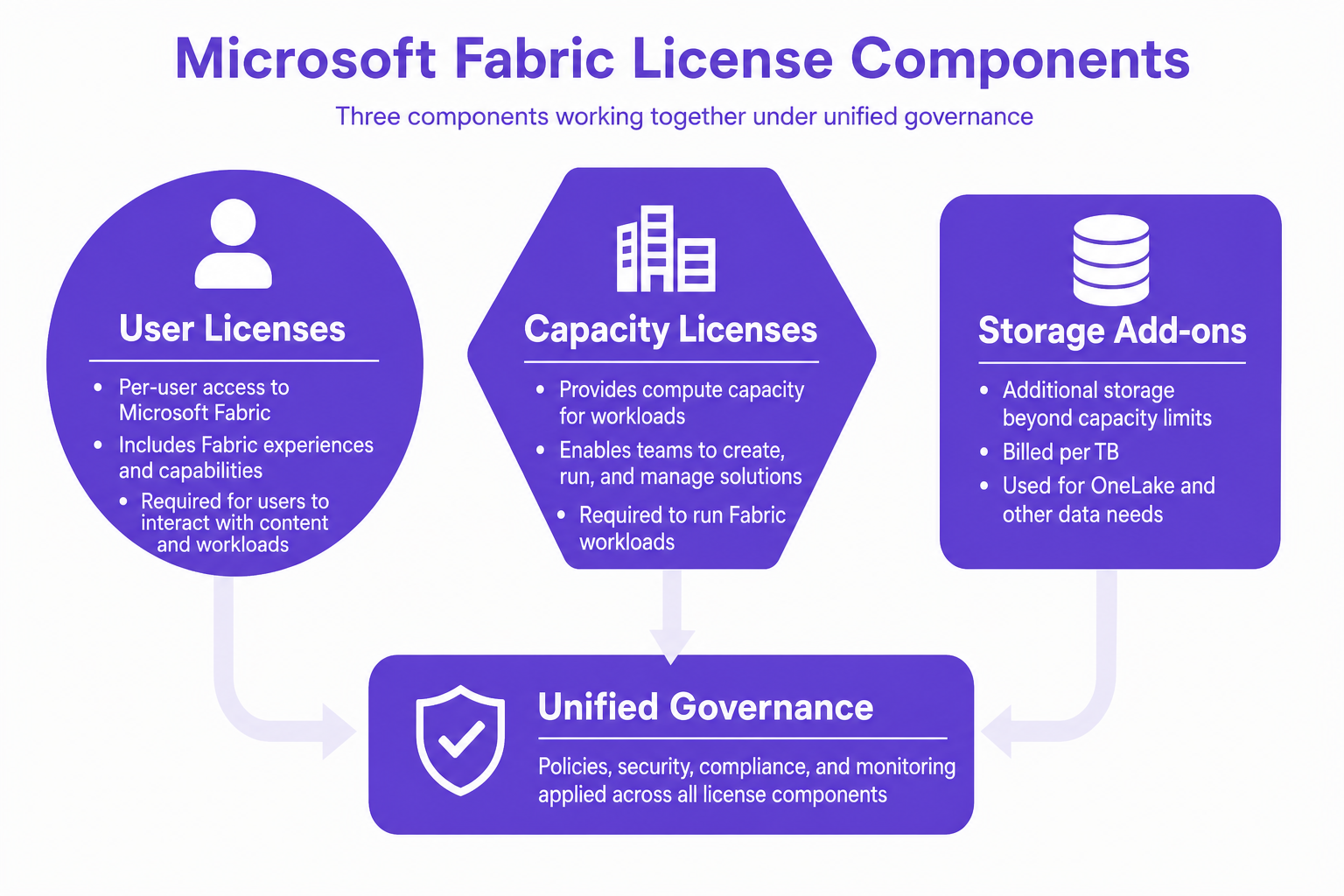
A Microsoft Fabric license grants access to Microsoft's unified data and analytics platform, which brings together services like Power BI, Data Factory, Synapse, and more under one framework. When evaluating your needs, it's important to understand that "Fabric license" is not one-size-fits-all, but instead involves several key elements:
User Licenses (for Creators/Pro Users): Required for users who build, configure, or share content.
Viewer Licenses: Sometimes needed for content consumption, though recent capacity upgrades can remove this requirement.
Capacity Licenses: Purchase an allotment of compute resources that can serve multiple users, key for scalability and cost pooling.
Add-ons: Such as additional storage or advanced features, which can add up if not monitored.
Many organizations initially buy per-user licenses and add capacity as their deployment matures. The right approach depends on your scale, consumption patterns, and governance needs.
Pricing for Microsoft Fabric can be substantial, particularly in enterprise settings. The true cost depends on a combination of per-user fees, capacity-based charges, and potential storage costs:
Per-User Licensing: Charged per month, per user. Best for small teams or pilots, but can create excess costs at scale.
Capacity (SKUs such as F32, F64, etc.): Billed per capacity node, per hour or per minute. Larger SKUs can eliminate the need for additional viewer licenses, particularly from F64 upwards.
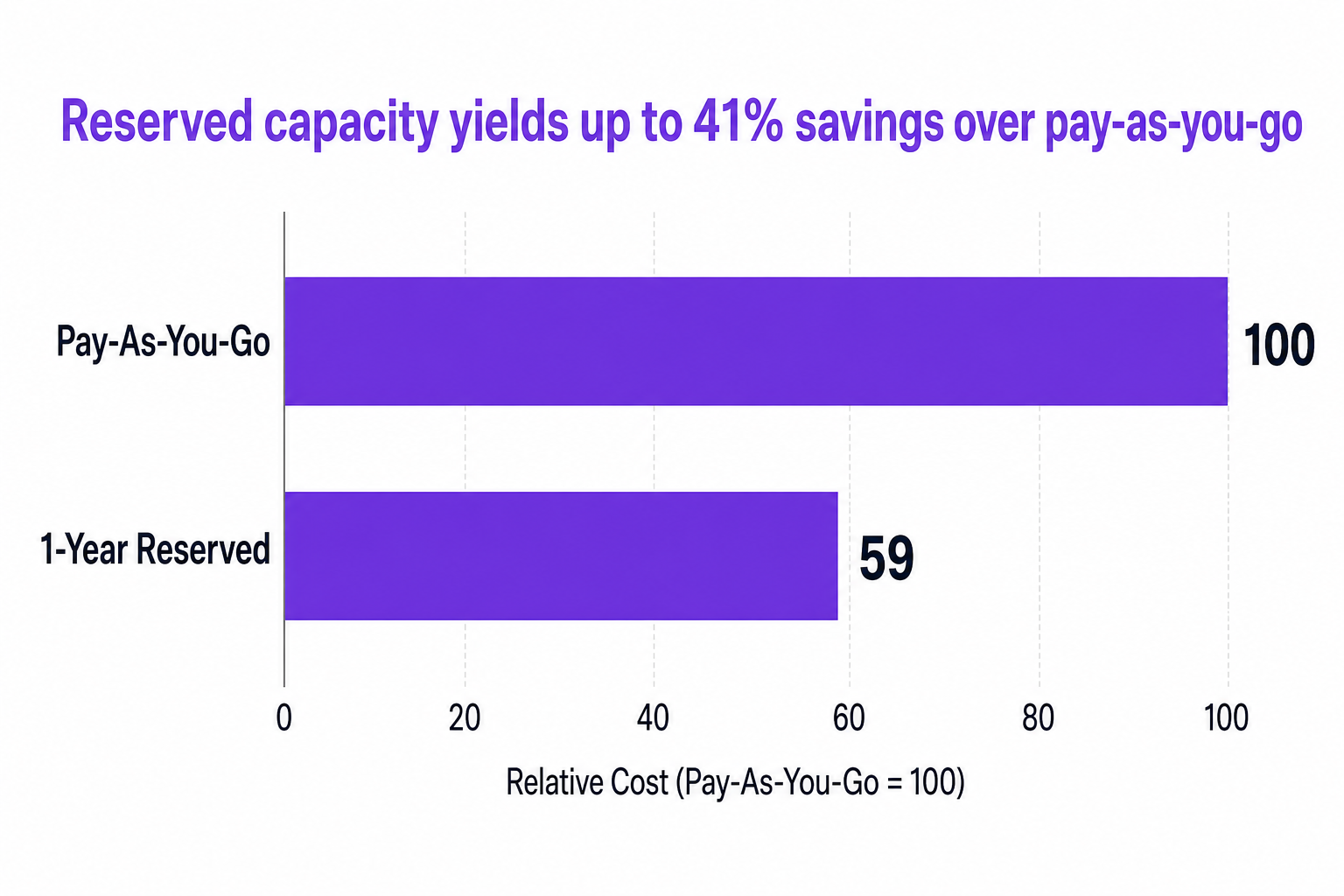
Reserved Capacity: Committing to 1-year reserved capacity can yield savings of up to 41% compared to pay-as-you-go rates.
Pay-As-You-Go: Charges accrue only during active use. Leveraging automated pause/resume schedules is critical to avoid charges for idle capacity.
Storage Charges: Data storage is billed separately, making it a key contributor to total cost of ownership.
CloudNuro’s granular reporting capabilities illuminate precisely which cost drivers are impacting your environment, arming IT and finance leaders with the data needed to make informed procurement decisions.
The Fabric licensing model is built around two primary approaches: user-based and capacity-based.
Ideal for smaller deployments or teams where a handful of users need full authoring capabilities.
Cost increases linearly as more users are added.
May require additional viewer licenses for extensive content consumption.
Allocates compute resources (e.g., F32 or F64 capacity nodes) that can be shared by all users.
Removes licensing friction as teams scale, supporting thousands of users under a single pool.
Upgrading to F64 or higher can eliminate separate viewer licenses for most scenarios.
Enables advanced governance: you can automate pause-and-resume, enforce budgets, and monitor utilization in real-time.
Tip from CloudNuro: The most reliable cost optimization strategy is to reserve only the baseline capacity needed to run continuously, then leave intermittent or spiky workloads on pay-as-you-go. This hybrid approach maximizes savings while safeguarding performance.
For most enterprises, the licensing challenge is not just "What does it cost?" but "What do we actually need?" Common pitfalls include:
Over-provisioning capacity that remains idle after business hours
Failing to right-size SKUs as usage patterns change
Paying for viewer or creator licenses that aren't used
CloudNuro's platform bridges IT and procurement by:
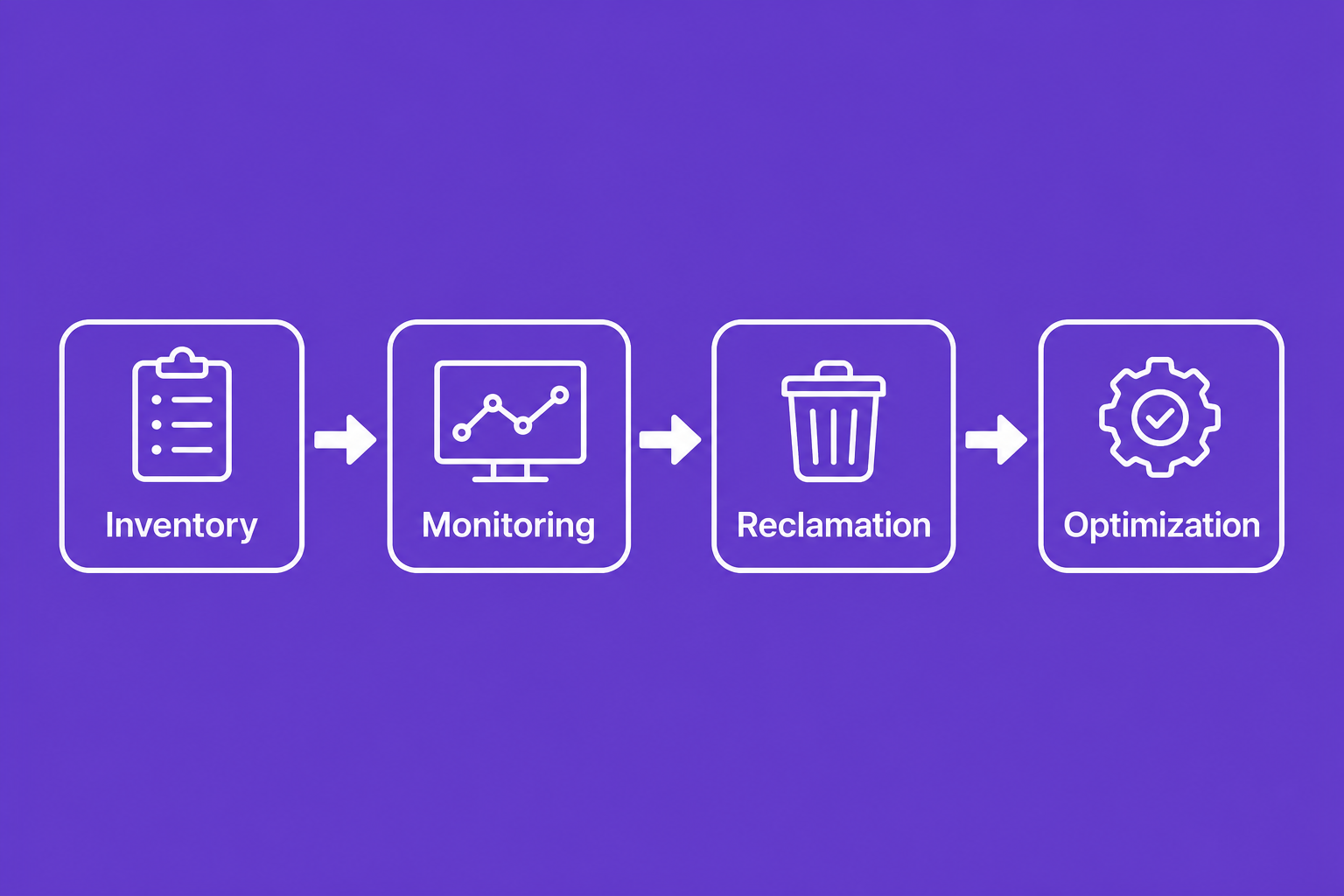
Delivering granular license inventory, usage, and cost analytics in a single dashboard
Monitoring employee movement, attrition, and role changes to reclaim or reallocate licenses automatically
Recommending SKU down-sizing or consolidation based on continuous utilization trends
Supporting license allocation across both SaaS and cloud infrastructure
Proof in Action: One deployment using CloudNuro identified over 150 opportunities for software license optimization, generating approximately $50,000 in annual savings. In another, automated tracking led to a 90% reclamation of unused licenses.
In highly regulated environments, compliance and governance are inseparable from licensing. Microsoft Fabric environments are frequently audited, making it vital to:
Maintain centralized, up-to-date SaaS license inventory
Prove allocation aligns with real business needs and user roles
Support cost allocation, chargebacks, and accountability across departments
CloudNuro’s governance-first architecture integrates directly with platforms like Microsoft 365, giving your organization unmatched visibility and automated compliance alerts. This not only helps pass audits but also sustains a cost-conscious culture.
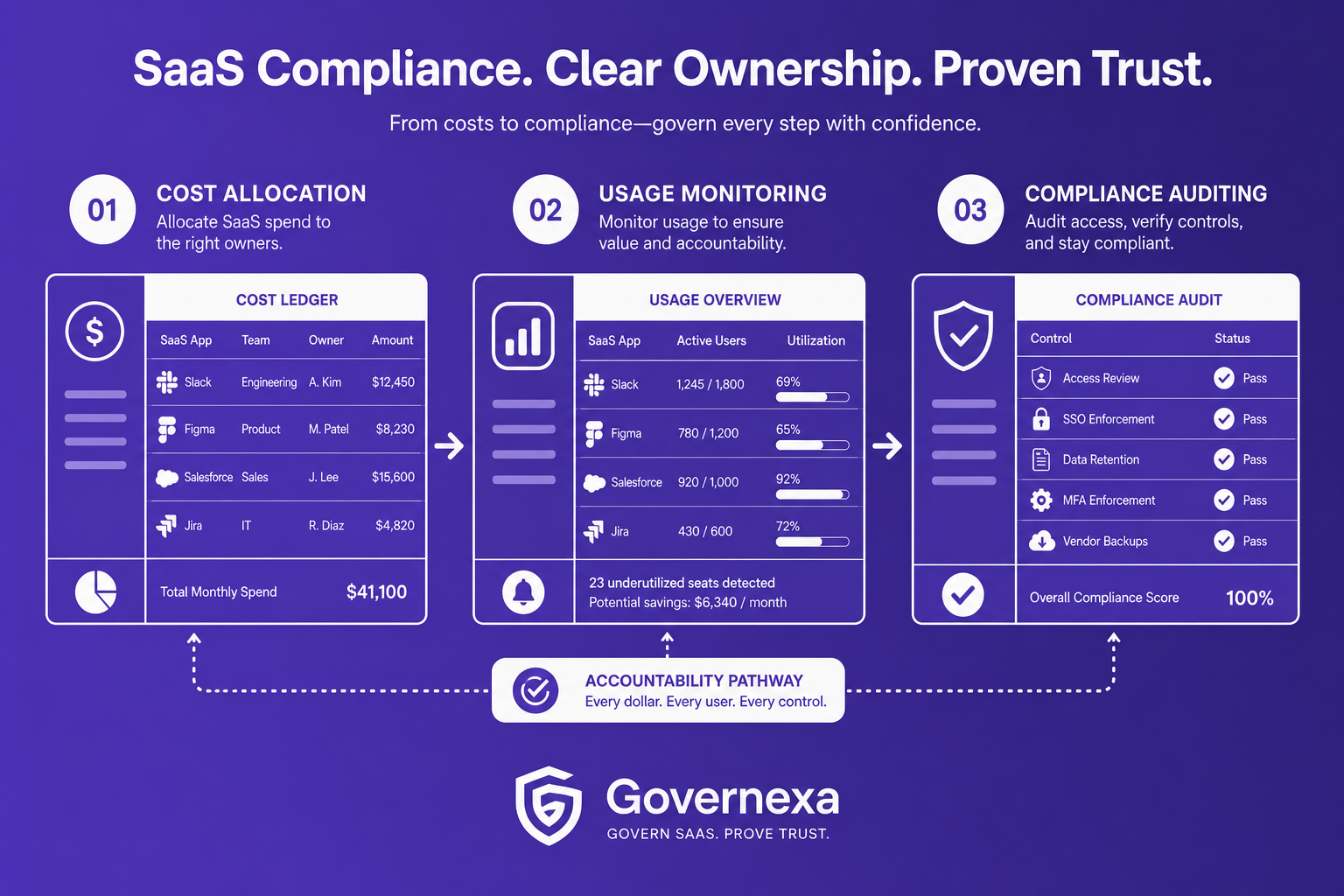
Enterprises implementing Microsoft Fabric often underestimate both the operational overhead and the complexity of ongoing license management. CloudNuro streamlines this by:
Mapping usage at both user and capacity levels, showing exactly where reclamation or consolidation is possible
Delivering automated alerts and reports to prevent unnecessary spend
Integrating with over 400 enterprise applications, not just Microsoft tools, for a holistic cost governance view
Applying FinOps best practices so your procurement, IT, and finance teams stay aligned, informed, and empowered
If you want to avoid hidden costs, streamline renewals, and ensure compliance as your analytics estate matures, CloudNuro is ready to help. Explore our Microsoft license optimization services or request a demo today.
A Microsoft Fabric license enables access to Microsoft's unified data and analytics platform. It can be for individual users (per-user/creator/viewer) or for an organization’s pooled compute resources (capacity-based). The right license depends on how your team works and scales.
Pricing varies based on the number of users, type of capacity SKU, storage used, and whether you opt for reserved or pay-as-you-go plans. Enterprises can save up to 41% with reserved capacity, and additional savings by pausing idle capacity or right-sizing SKUs.
A per-user license is billed for every individual with authoring or advanced consumption needs. A capacity license allows you to purchase compute resources shared by many users, often eliminating the need for separate viewer licenses and providing better economics at scale.
The model combines per-user, per-capacity, and add-on licensing. You can start small and grow, switch from user-based to capacity-based as adoption increases, and right-size dynamically with automated tools. True cost governance requires continuous monitoring and adjustment.
This depends on user roles, consumption patterns, and the degree of scaling or automation needed. CloudNuro’s analytics help pinpoint where you can downgrade, reclaim, or consolidate licenses, ensuring you only pay for what you actually use.
Buying Microsoft Fabric licenses is more than ticking a box, it is a strategic decision that affects cost, compliance, and business agility. With the right tools, governance, and analytics, enterprises can avoid overspending, unlock value from every license, and create a sustainable, cost-conscious culture. CloudNuro is the trusted partner IT and finance leaders need to bring rigor and predictability to Microsoft Fabric and the broader SaaS estate.
CloudNuro is a leader in Enterprise AI Adoption Management, providing enterprises with unmatched visibility, governance, and cost optimization. Recognized twice in a row in the SaaS Management Platforms category and named a Leader in the SoftwareReviews Data Quadrant, CloudNuro is trusted by global enterprises and government agencies to bring financial discipline to SaaS, cloud, and AI. Trusted by enterprises, CloudNuro provides centralized SaaS inventory, license optimization, and renewal management along with advanced cost allocation and chargeback, giving IT and Finance leaders the visibility, control, and cost-conscious culture needed to drive financial discipline.
Request a no cost, no obligation free assessment —just 15 minutes to savings!
Get StartedEnterprises today are under constant pressure to maximize the value of their SaaS and cloud investments. Microsoft Fabric, with its unified analytics engine, presents incredible opportunities, but also introduces complexity when it comes to licensing and cost optimization. Understanding the Microsoft Fabric licensing landscape is crucial to prevent overspending, avoid compliance pitfalls, and right-size your environment for your actual needs.
In this guide, we'll cut through the confusion, explain the key concepts behind Microsoft Fabric licenses, and show you how to approach buying just what you need (and nothing you don't). We'll also explore how CloudNuro enables IT and finance leaders to automate and optimize SaaS and cloud licensing, so you can achieve true governance and savings.
Licensing represents the single largest recurring cost in many analytics environments, and the shift to cloud-based platforms like Microsoft Fabric makes this even more pronounced. Enterprises often overspend by an estimated 30% to 50% when idle capacity remains allocated, or when paying for unnecessary user licenses. The hybrid environment, spanning per-user, per-capacity, and add-on scenarios, makes cost governance a top priority.
Key market trends also reveal:
Organizations are moving from per-user licensing toward shared-capacity (pooling) models to consolidate analytics spending across BI, engineering, and AI workloads.
Groups are implementing continuous monitoring and automation (such as pause/resume scripts) for cost control.
It's critical to align technical architecture with licensing to avoid performance or cost bottlenecks, for example, separating heavy processing from interactive BI workloads.
CloudNuro's platform directly addresses these trends by enabling enterprises to:
Centralize visibility into Microsoft Fabric and other SaaS licenses
Identify opportunities to decommission under-used licenses and transition to the most efficient model
A Microsoft Fabric license grants access to Microsoft's unified data and analytics platform, which brings together services like Power BI, Data Factory, Synapse, and more under one framework. When evaluating your needs, it's important to understand that "Fabric license" is not one-size-fits-all, but instead involves several key elements:
User Licenses (for Creators/Pro Users): Required for users who build, configure, or share content.
Viewer Licenses: Sometimes needed for content consumption, though recent capacity upgrades can remove this requirement.
Capacity Licenses: Purchase an allotment of compute resources that can serve multiple users, key for scalability and cost pooling.
Add-ons: Such as additional storage or advanced features, which can add up if not monitored.
Many organizations initially buy per-user licenses and add capacity as their deployment matures. The right approach depends on your scale, consumption patterns, and governance needs.
Pricing for Microsoft Fabric can be substantial, particularly in enterprise settings. The true cost depends on a combination of per-user fees, capacity-based charges, and potential storage costs:
Per-User Licensing: Charged per month, per user. Best for small teams or pilots, but can create excess costs at scale.
Capacity (SKUs such as F32, F64, etc.): Billed per capacity node, per hour or per minute. Larger SKUs can eliminate the need for additional viewer licenses, particularly from F64 upwards.
Reserved Capacity: Committing to 1-year reserved capacity can yield savings of up to 41% compared to pay-as-you-go rates.
Pay-As-You-Go: Charges accrue only during active use. Leveraging automated pause/resume schedules is critical to avoid charges for idle capacity.
Storage Charges: Data storage is billed separately, making it a key contributor to total cost of ownership.
CloudNuro’s granular reporting capabilities illuminate precisely which cost drivers are impacting your environment, arming IT and finance leaders with the data needed to make informed procurement decisions.
The Fabric licensing model is built around two primary approaches: user-based and capacity-based.
Ideal for smaller deployments or teams where a handful of users need full authoring capabilities.
Cost increases linearly as more users are added.
May require additional viewer licenses for extensive content consumption.
Allocates compute resources (e.g., F32 or F64 capacity nodes) that can be shared by all users.
Removes licensing friction as teams scale, supporting thousands of users under a single pool.
Upgrading to F64 or higher can eliminate separate viewer licenses for most scenarios.
Enables advanced governance: you can automate pause-and-resume, enforce budgets, and monitor utilization in real-time.
Tip from CloudNuro: The most reliable cost optimization strategy is to reserve only the baseline capacity needed to run continuously, then leave intermittent or spiky workloads on pay-as-you-go. This hybrid approach maximizes savings while safeguarding performance.
For most enterprises, the licensing challenge is not just "What does it cost?" but "What do we actually need?" Common pitfalls include:
Over-provisioning capacity that remains idle after business hours
Failing to right-size SKUs as usage patterns change
Paying for viewer or creator licenses that aren't used
CloudNuro's platform bridges IT and procurement by:
Delivering granular license inventory, usage, and cost analytics in a single dashboard
Monitoring employee movement, attrition, and role changes to reclaim or reallocate licenses automatically
Recommending SKU down-sizing or consolidation based on continuous utilization trends
Supporting license allocation across both SaaS and cloud infrastructure
Proof in Action: One deployment using CloudNuro identified over 150 opportunities for software license optimization, generating approximately $50,000 in annual savings. In another, automated tracking led to a 90% reclamation of unused licenses.
In highly regulated environments, compliance and governance are inseparable from licensing. Microsoft Fabric environments are frequently audited, making it vital to:
Maintain centralized, up-to-date SaaS license inventory
Prove allocation aligns with real business needs and user roles
Support cost allocation, chargebacks, and accountability across departments
CloudNuro’s governance-first architecture integrates directly with platforms like Microsoft 365, giving your organization unmatched visibility and automated compliance alerts. This not only helps pass audits but also sustains a cost-conscious culture.
Enterprises implementing Microsoft Fabric often underestimate both the operational overhead and the complexity of ongoing license management. CloudNuro streamlines this by:
Mapping usage at both user and capacity levels, showing exactly where reclamation or consolidation is possible
Delivering automated alerts and reports to prevent unnecessary spend
Integrating with over 400 enterprise applications, not just Microsoft tools, for a holistic cost governance view
Applying FinOps best practices so your procurement, IT, and finance teams stay aligned, informed, and empowered
If you want to avoid hidden costs, streamline renewals, and ensure compliance as your analytics estate matures, CloudNuro is ready to help. Explore our Microsoft license optimization services or request a demo today.
A Microsoft Fabric license enables access to Microsoft's unified data and analytics platform. It can be for individual users (per-user/creator/viewer) or for an organization’s pooled compute resources (capacity-based). The right license depends on how your team works and scales.
Pricing varies based on the number of users, type of capacity SKU, storage used, and whether you opt for reserved or pay-as-you-go plans. Enterprises can save up to 41% with reserved capacity, and additional savings by pausing idle capacity or right-sizing SKUs.
A per-user license is billed for every individual with authoring or advanced consumption needs. A capacity license allows you to purchase compute resources shared by many users, often eliminating the need for separate viewer licenses and providing better economics at scale.
The model combines per-user, per-capacity, and add-on licensing. You can start small and grow, switch from user-based to capacity-based as adoption increases, and right-size dynamically with automated tools. True cost governance requires continuous monitoring and adjustment.
This depends on user roles, consumption patterns, and the degree of scaling or automation needed. CloudNuro’s analytics help pinpoint where you can downgrade, reclaim, or consolidate licenses, ensuring you only pay for what you actually use.
Buying Microsoft Fabric licenses is more than ticking a box, it is a strategic decision that affects cost, compliance, and business agility. With the right tools, governance, and analytics, enterprises can avoid overspending, unlock value from every license, and create a sustainable, cost-conscious culture. CloudNuro is the trusted partner IT and finance leaders need to bring rigor and predictability to Microsoft Fabric and the broader SaaS estate.
CloudNuro is a leader in Enterprise AI Adoption Management, providing enterprises with unmatched visibility, governance, and cost optimization. Recognized twice in a row in the SaaS Management Platforms category and named a Leader in the SoftwareReviews Data Quadrant, CloudNuro is trusted by global enterprises and government agencies to bring financial discipline to SaaS, cloud, and AI. Trusted by enterprises, CloudNuro provides centralized SaaS inventory, license optimization, and renewal management along with advanced cost allocation and chargeback, giving IT and Finance leaders the visibility, control, and cost-conscious culture needed to drive financial discipline.
Request a no cost, no obligation free assessment - just 15 minutes to savings!
Get StartedWe're offering complimentary ServiceNow license assessments to only 25 enterprises this quarter who want to unlock immediate savings without disrupting operations.
Get Free AssessmentGet Started




CloudNuro Corp
1755 Park St. Suite 207
Naperville, IL 60563
Phone : +1-630-277-9470
Email: info@cloudnuro.com





.webp)

Recognized Leader in SaaS Management Platforms by Info-Tech SoftwareReviews


.svg)