

Sign Up
Thank you for Submitting!
AI assistants, copilots, and plug-in style tools are now woven into every workflow. Each one wants a quick "Sign in with" click. Behind that convenience sits a growing problem: OAuth sprawl driving a new wave of AI-native shadow apps that quietly expand SaaS sprawl and risk.
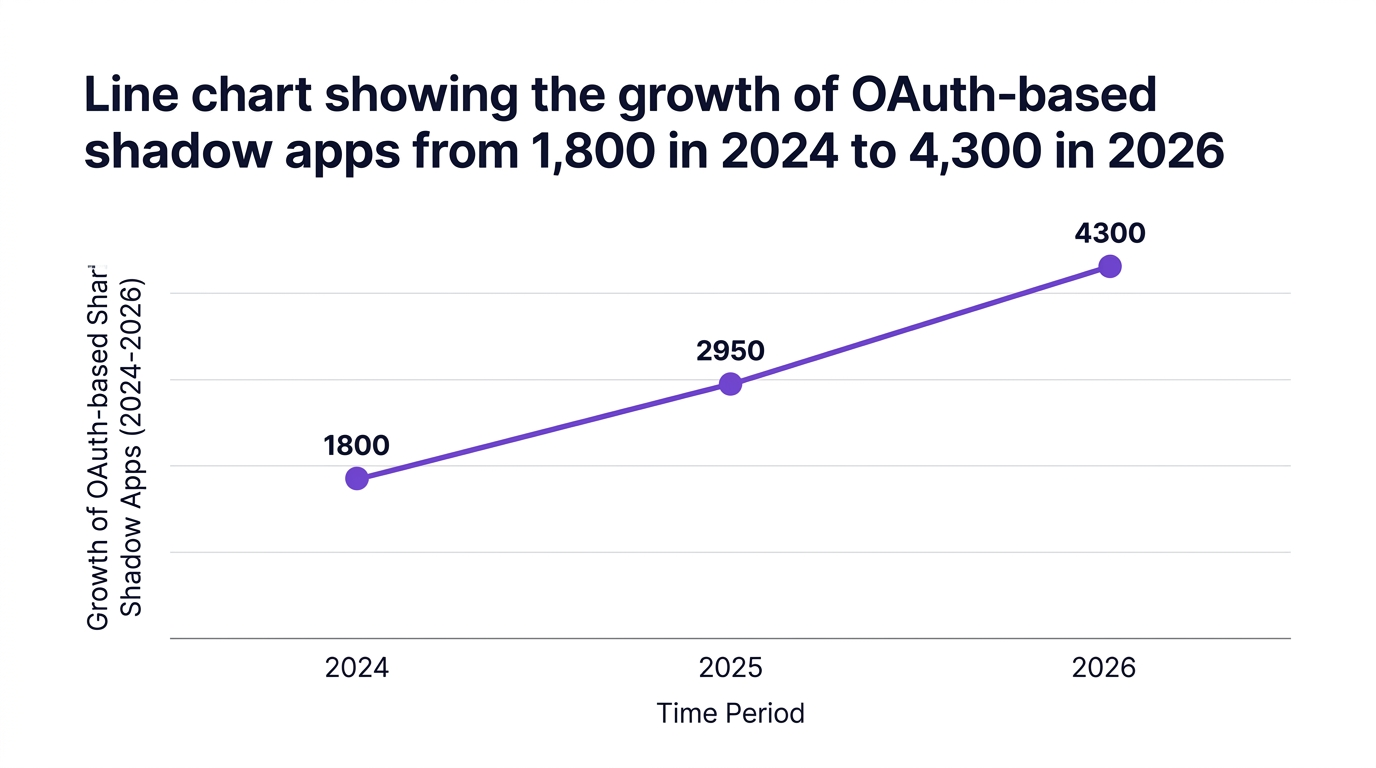
Gartner reports that 71% of enterprises saw a significant increase in OAuth-based third-party app connections due to AI-powered integrations in 2026 (Gartner 2026). At the same time, Forrester notes that 63% of security breaches tied to unauthorized OAuth permissions now originate from AI-native shadow applications (Forrester 2026).
This article explains how OAuth sprawl, AI shadow IT, and SaaS sprawl intersect, why traditional controls are failing, and how IT and security leaders can regain control with continuous discovery, unified SaaS management, and automated governance.
OAuth sprawl occurs when hundreds or thousands of third-party apps and AI tools gain access to core systems through "Sign in with" flows or token-based connections that are rarely reviewed. Each approval adds another integration, permission set, and data pathway.
In isolation, one AI writing assistant connected to your productivity suite looks harmless. At enterprise scale, it becomes application sprawl in the identity layer, with:
Unmanaged OAuth permissions
Hidden third-party app risk
Unmonitored data exposure paths
Gartner summarizes the risk clearly through one of its fellows: "The explosion of AI-native shadow apps is fundamentally changing the SaaS threat landscape, with OAuth sprawl emerging as the single largest blind spot for enterprise CISOs" (Gartner 2026).
AI-native shadow apps are tools that:
Use AI models to process enterprise data (content, code, customer records)
Connect to core systems via OAuth or APIs
Are often installed directly by end users, bypassing IT
Because OAuth permissions are often expressed as broad scopes such as "read all files" or "send email on your behalf", these apps can:
Read sensitive documents and chats
Access customer or patient records
Exfiltrate data to external AI services
Forrester found that 63% of breaches attributed to unauthorized OAuth permissions in the last 12 months came from AI-native shadow apps (Forrester 2026). These apps turn your identity provider into a back door for shadow IT.
Traditional saas sprawl was driven by standalone SaaS sign-ups. Now, ai shadow it compounds it:
Every AI plugin connected to a sanctioned SaaS app effectively becomes shadow SaaS
Users chain tools together, creating opaque data flows
Permissions persist long after the user stops using the app
The result is a dense mesh of connections that security teams cannot see or govern with spreadsheet-based IT asset management.
IDC reports that 82% of CIOs rank SaaS and AI app discovery as their top risk and compliance priority in 2026 (IDC 2026). At the same time, a privacy study found 88% of finance and health sector organizations observed higher data exposure risks from SaaS and shadow AI in 2026 (Ponemon 2026).
This shift is not theoretical. A 2026 case study from a healthcare enterprise illustrates the scale.

A large healthcare organization deployed a unified app discovery and governance platform in early 2026. Within weeks, the platform surfaced 2,400 unauthorized AI-native applications with excessive OAuth permissions across collaboration, CRM, and file storage environments.
By revoking risky permissions and enforcing policies, the organization reduced potential data leakage incidents by 58% (Ponemon 2026). That was not achieved by adding more manual reviews, but by implementing continuous, automated ai app discovery and governance.
There are three main reasons traditional controls break down with AI-native shadow apps:
SSO and MFA are necessary but not sufficient. OAuth tokens can bypass interactive logins once granted. SSO-centric controls often miss third-party scopes.
Manual access reviews cannot keep up. A Deloitte study found automated access reviews and policy enforcement cut compliance violations by 38% in 2026 (Deloitte 2026). Manual campaigns simply cannot scale to thousands of micro-integrations.
Point-in-time audits miss continuous change. New AI tools appear daily. Quarterly reviews are like checking your office doors once a season while staff prop them open every day.
A Chief Privacy Officer quoted by a research group captured the risk: "Without strong identity governance and unified monitoring, organizations are defenseless against data exfiltration paths introduced by unsanctioned AI integrations" (IDG 2026).
The shift to AI-native apps changes the problem definition. You no longer manage only saas shadow it at the application level. You must govern identity, OAuth permissions, and data paths.
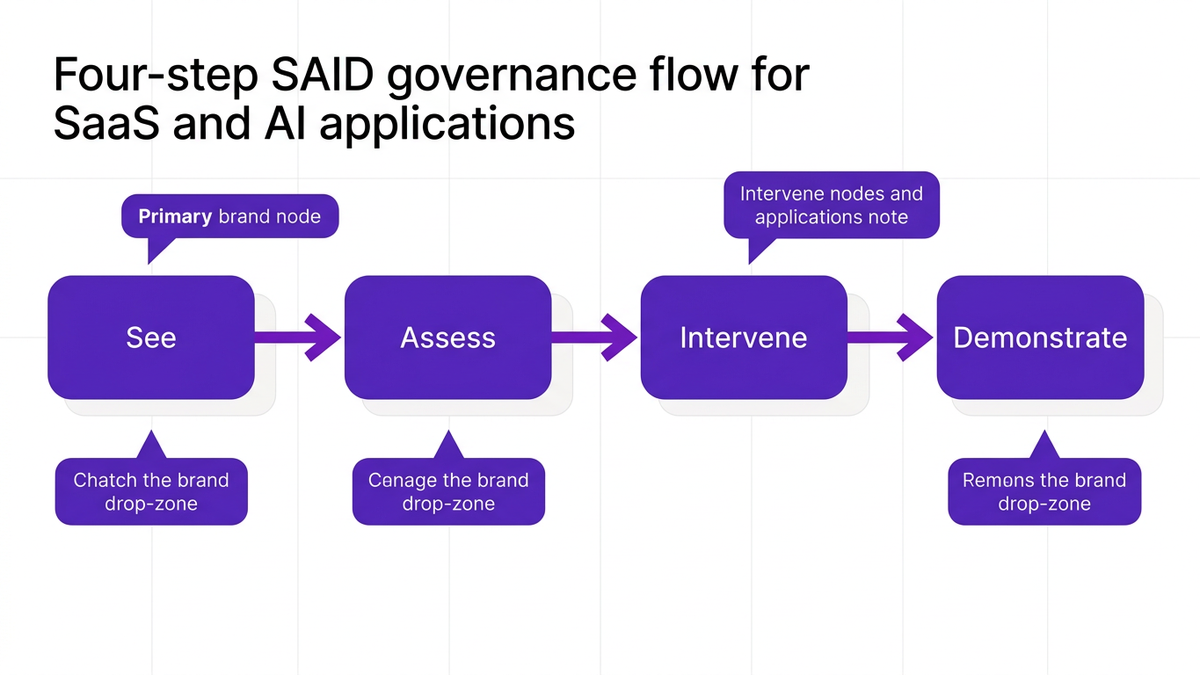
A practical way to think about this is the SAID Framework for modern SaaS and AI governance:
See: Continuous discovery of apps, OAuth grants, and data movement
Assess: Risk scoring based on scopes, data types, and user context
Intervene: Automated remediation, revocation, and policy enforcement
Demonstrate: Evidence for auditors and regulators
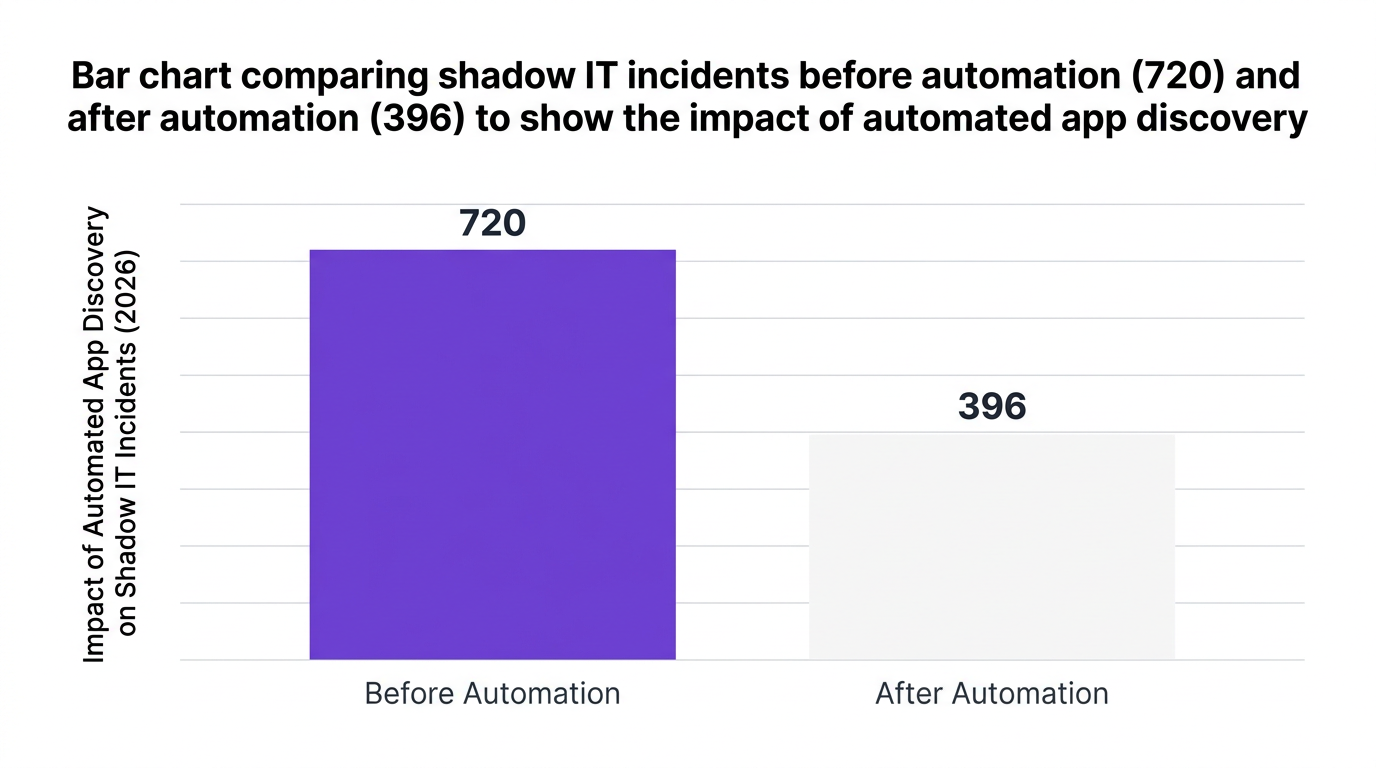
The data is clear. McKinsey reports that enterprises using continuous automated app discovery reduced shadow IT incidents by 45% by 2026 (McKinsey 2026). Visibility is not a one-time inventory, it is a continuous feed.
To get there, leaders are:
Integrating discovery across identity providers, SaaS admin APIs, and network logs
Using ai-powered discovery to classify apps and AI tools by function
Mapping OAuth permissions, token usage, and data access patterns
This creates the app visibility baseline required for any credible saas governance program.
Not all shadow apps are equal. A low-risk calendar integration and a high-risk AI document summarizer may sit side by side in the same tenant.
Risk assessments should consider:
Scope sensitivity: Read vs write vs admin permissions
Data domains: HR, finance, PHI, customer PII
User context: Privileged access, executives, or service accounts
This is where identity governance converges with api security and third-party app risk management.
Enterprises cannot remediate thousands of shadow apps by hand. According to Deloitte, 85% of enterprises now rely on automated, policy-driven access reviews and offboarding as a baseline for compliance (Deloitte 2026).
High-performing teams:
Use automated access review campaigns tied to business owners
Auto-revoke dormant OAuth tokens after a defined inactivity period
Trigger service automation workflows for service onboarding and offboarding
The goal is to treat OAuth sprawl the same way you treat firewall rules or privileged access, with policy, automation, and continuous monitoring.
Regulators and auditors increasingly expect evidence that saas security and cloud compliance controls cover not only sanctioned apps, but also connected third parties and AI tools.
You need to be able to show:
An inventory of SaaS and AI apps, including shadow saas
Policies for OAuth scopes and third-party access
Records of revoked risky access and completed reviews
This is one reason 79% of IT leaders plan to consolidate SaaS and AI application visibility under unified governance platforms in 2026 (KPMG 2026).
Containing saas sprawl in the age of AI-native shadow apps requires more than tool selection. It demands specific, repeatable practices that IT leaders can implement immediately.
OAuth scopes often grant:
Read or write access to files, emails, or records
Ability to send messages or emails as a user
Admin-level access to tenants
Treat these grants as you would privileged credentials:
Require approvals for high-risk scopes
Limit who can authorize apps enterprise-wide
Regularly purge stale or unused tokens
Instead of only registering full SaaS platforms, maintain a living catalog of:
AI-native apps and plugins connected to core platforms
Integration types (OAuth, API key, webhook)
Data categories accessed and stored
This register becomes a practical tool for it asset management and enterprise saas management, especially when linked to cost, risk, and owners.
KPMG notes that financial accountability and real-time chargeback for SaaS, AI, and cloud usage are now critical priorities (KPMG 2026). Security and FinOps teams should collaborate to:
Identify spend on unapproved or redundant shadow apps
Redirect spend to sanctioned, secure alternatives
Use chargeback to encourage a cost-conscious, security-aware culture
By tying risk and spend together, organizations can reduce both security exposure and waste, improving license optimization.
Shadow risk peaks when employees join or leave. To close that gap:
Bake app and integration approvals into service automation workflows
Auto-assign only pre-approved AI apps at onboarding
Auto-revoke all third-party OAuth tokens at offboarding
This reduces long-tailed access to data and strengthens saas security across the employee lifecycle.
As with phishing, users are both a risk vector and a control surface. Training should:
Explain how "Sign in with" connects apps to corporate data
Show examples of risky scopes, such as "read all files" or "manage directory"
Provide a simple process to request new AI tools through IT
One helpful analogy for executives is to compare OAuth sprawl to credit card subscriptions. A single free trial is harmless, but hundreds of forgotten recurring charges create financial chaos. OAuth tokens work the same way for security.
CloudNuro is built for enterprises that need real-time control over SaaS, cloud, and AI usage, without adding operational friction. Its governance-first architecture directly addresses OAuth sprawl, AI shadow IT, and saas sprawl.
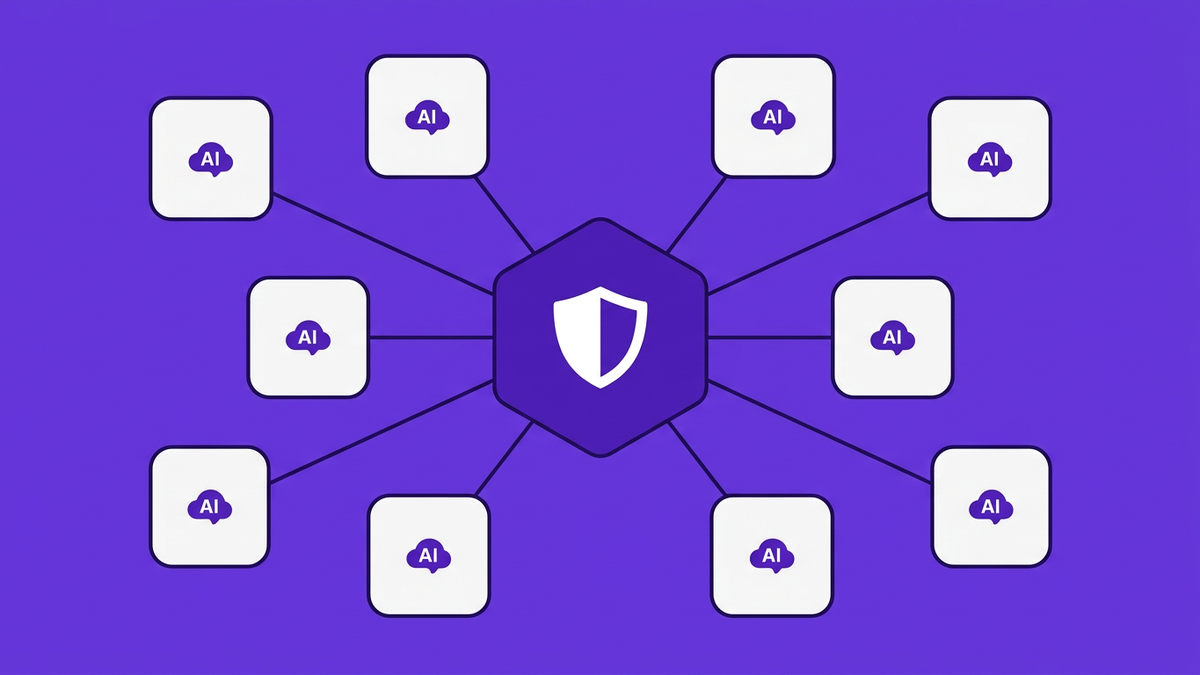
CloudNuro AI Custodian performs continuous, automated discovery of both sanctioned and unsanctioned AI-native applications across your environment. It:
Identifies OAuth-based and API-based connections to core SaaS platforms
Classifies AI tools and shadow apps by function and data access
Highlights high-risk OAuth permissions granted to shadow apps
This provides the "See" layer of the SAID Framework, powered by ai-powered discovery. A Gartner Fellow's observation about OAuth being the largest blind spot becomes less threatening when you can see every connection.
You can learn more about this capability in the dedicated AI governance overview at https://www.cloudnuro.ai/ai-custodian.
CloudNuro's Unified Cloud Custodian consolidates governance across SaaS, PaaS, and IaaS, which aligns with IDC's finding that 72% of firms are pursuing centralized platforms for shadow IT discovery, license visibility, and access review (IDC 2026).
With Unified Cloud Custodian, teams can:
Apply consistent policies for OAuth scopes, app categories, and data domains
Automate access reviews and policy enforcement across SaaS and AI workloads
Orchestrate onboarding and offboarding using integrated service automation
This creates a single control plane for saas management, multicloud management, and cloud compliance, rather than isolated tools for each domain. Additional details are available at https://www.cloudnuro.ai/unified-cloud-custodian.
CloudNuro's Microsoft 365 Custodian brings deep integration and governance to one of the most common SaaS cores. It:
Detects third-party apps and AI plugins connected to Microsoft 365 via OAuth
Surfaces risky scopes and tenant-wide permissions
Automates policy enforcement and periodic reviews
This complements CloudNuro's broader enterprise saas management capabilities at https://www.cloudnuro.ai/saas-management, where organizations can align application usage, risk, and spend.
CloudNuro's Finops Services help organizations quantify and reduce the spend associated with shadow apps and saas sprawl. According to CloudNuro outcomes, customers regularly achieve:
35% reduction in SaaS overspend
20%+ cloud optimization
18%+ savings on Microsoft 365
By tying risk data to usage and cost, CloudNuro enables IT and finance leaders to retire redundant tools, consolidate overlapping AI apps, and ensure license optimization across the portfolio. More on these services can be found at https://www.cloudnuro.ai/services/finops-services.
OAuth sprawl happens when many third-party apps and AI tools gain access to core systems through token-based permissions that are rarely reviewed or revoked. It is dangerous because each token can expose sensitive data, enable actions on behalf of users, and create unmonitored paths for data exfiltration.
As AI-native shadow apps grow, this sprawl shifts from a convenience feature to a primary attack surface. Breach statistics showing that 63% of OAuth-related incidents stem from AI-native shadow apps underline the risk (Forrester 2026).
Enterprises need continuous discovery, not periodic audits. Effective detection combines:
Integration with identity providers and SaaS admin APIs
AI-based classification of apps and integrations
Analysis of OAuth scopes, token use, and data access patterns
Platforms like CloudNuro AI Custodian automate this ai app discovery, helping security teams surface ai shadow it and shadow saas that would never appear in manual inventories.
CIOs can start with four concrete steps:
Establish a policy that treats OAuth scopes as privileged access.
Deploy continuous saas management and discovery for apps and OAuth connections.
Automate access reviews for high-risk apps and scopes.
Integrate AI app approvals into onboarding and offboarding workflows.
These steps align with the SAID Framework and can be implemented incrementally, often using existing identity and security investments plus a unified governance platform.
Unified saas governance brings SaaS apps, AI tools, and cloud workloads into a single control plane. This simplifies cloud compliance because auditors can see:
One authoritative inventory of apps and integrations
Central policies for access, permissions, and data handling
Evidence of continuous monitoring and remediation
According to IDC, organizations moving to unified governance platforms report better audit outcomes and reduced manual effort, especially when combined with automated workflows (IDC 2026).
AI-native tools are released daily, and users can connect them in one click. Quarterly or annual reviews cannot capture this velocity.
McKinsey's finding that continuous automated discovery reduces shadow IT incidents by 45% underscores that this is now a baseline requirement, not a nice-to-have (McKinsey 2026). Continuous discovery is the only way to keep app visibility aligned with the actual state of your environment.
OAuth sprawl and AI-native shadow apps have transformed saas sprawl from a cost and productivity concern into a primary security and compliance issue. AI plugins and integrations now sit at the intersection of saas security, identity, and data governance.
The organizations that will succeed in 2026 and beyond are those that:
Continuously discover SaaS apps, AI tools, and OAuth connections
Govern permissions and data flows with unified platforms
Automate reviews, onboarding, and offboarding
Tie risk to spend for disciplined, saas management
CloudNuro delivers the discovery, governance, and financial accountability needed to make that shift. To see how CloudNuro can help your organization reduce OAuth sprawl, contain AI shadow IT, and bring financial discipline to SaaS and AI usage, request a personalized walkthrough today.
CloudNuro is a leader in Enterprise SaaS Management Platforms, providing enterprises with unmatched visibility, governance, and cost optimization. Recognized twice in a row in the SaaS Management Platforms category and named a Leader in the SoftwareReviews Data Quadrant, CloudNuro is trusted by global enterprises and government agencies to bring financial discipline to SaaS, cloud, and AI. Trusted by enterprises such as Konica Minolta and Federal Signal, CloudNuro provides centralized SaaS inventory, license optimization, and renewal management along with advanced cost allocation and chargeback, giving IT and Finance leaders the visibility, control, and cost-conscious culture needed to drive financial discipline.
Request a no cost, no obligation free assessment —just 15 minutes to savings!
Get StartedAI assistants, copilots, and plug-in style tools are now woven into every workflow. Each one wants a quick "Sign in with" click. Behind that convenience sits a growing problem: OAuth sprawl driving a new wave of AI-native shadow apps that quietly expand SaaS sprawl and risk.
Gartner reports that 71% of enterprises saw a significant increase in OAuth-based third-party app connections due to AI-powered integrations in 2026 (Gartner 2026). At the same time, Forrester notes that 63% of security breaches tied to unauthorized OAuth permissions now originate from AI-native shadow applications (Forrester 2026).
This article explains how OAuth sprawl, AI shadow IT, and SaaS sprawl intersect, why traditional controls are failing, and how IT and security leaders can regain control with continuous discovery, unified SaaS management, and automated governance.
OAuth sprawl occurs when hundreds or thousands of third-party apps and AI tools gain access to core systems through "Sign in with" flows or token-based connections that are rarely reviewed. Each approval adds another integration, permission set, and data pathway.
In isolation, one AI writing assistant connected to your productivity suite looks harmless. At enterprise scale, it becomes application sprawl in the identity layer, with:
Unmanaged OAuth permissions
Hidden third-party app risk
Unmonitored data exposure paths
Gartner summarizes the risk clearly through one of its fellows: "The explosion of AI-native shadow apps is fundamentally changing the SaaS threat landscape, with OAuth sprawl emerging as the single largest blind spot for enterprise CISOs" (Gartner 2026).
AI-native shadow apps are tools that:
Use AI models to process enterprise data (content, code, customer records)
Connect to core systems via OAuth or APIs
Are often installed directly by end users, bypassing IT
Because OAuth permissions are often expressed as broad scopes such as "read all files" or "send email on your behalf", these apps can:
Read sensitive documents and chats
Access customer or patient records
Exfiltrate data to external AI services
Forrester found that 63% of breaches attributed to unauthorized OAuth permissions in the last 12 months came from AI-native shadow apps (Forrester 2026). These apps turn your identity provider into a back door for shadow IT.
Traditional saas sprawl was driven by standalone SaaS sign-ups. Now, ai shadow it compounds it:
Every AI plugin connected to a sanctioned SaaS app effectively becomes shadow SaaS
Users chain tools together, creating opaque data flows
Permissions persist long after the user stops using the app
The result is a dense mesh of connections that security teams cannot see or govern with spreadsheet-based IT asset management.
IDC reports that 82% of CIOs rank SaaS and AI app discovery as their top risk and compliance priority in 2026 (IDC 2026). At the same time, a privacy study found 88% of finance and health sector organizations observed higher data exposure risks from SaaS and shadow AI in 2026 (Ponemon 2026).
This shift is not theoretical. A 2026 case study from a healthcare enterprise illustrates the scale.
A large healthcare organization deployed a unified app discovery and governance platform in early 2026. Within weeks, the platform surfaced 2,400 unauthorized AI-native applications with excessive OAuth permissions across collaboration, CRM, and file storage environments.
By revoking risky permissions and enforcing policies, the organization reduced potential data leakage incidents by 58% (Ponemon 2026). That was not achieved by adding more manual reviews, but by implementing continuous, automated ai app discovery and governance.
There are three main reasons traditional controls break down with AI-native shadow apps:
SSO and MFA are necessary but not sufficient. OAuth tokens can bypass interactive logins once granted. SSO-centric controls often miss third-party scopes.
Manual access reviews cannot keep up. A Deloitte study found automated access reviews and policy enforcement cut compliance violations by 38% in 2026 (Deloitte 2026). Manual campaigns simply cannot scale to thousands of micro-integrations.
Point-in-time audits miss continuous change. New AI tools appear daily. Quarterly reviews are like checking your office doors once a season while staff prop them open every day.
A Chief Privacy Officer quoted by a research group captured the risk: "Without strong identity governance and unified monitoring, organizations are defenseless against data exfiltration paths introduced by unsanctioned AI integrations" (IDG 2026).
The shift to AI-native apps changes the problem definition. You no longer manage only saas shadow it at the application level. You must govern identity, OAuth permissions, and data paths.
A practical way to think about this is the SAID Framework for modern SaaS and AI governance:
See: Continuous discovery of apps, OAuth grants, and data movement
Assess: Risk scoring based on scopes, data types, and user context
Intervene: Automated remediation, revocation, and policy enforcement
Demonstrate: Evidence for auditors and regulators
The data is clear. McKinsey reports that enterprises using continuous automated app discovery reduced shadow IT incidents by 45% by 2026 (McKinsey 2026). Visibility is not a one-time inventory, it is a continuous feed.
To get there, leaders are:
Integrating discovery across identity providers, SaaS admin APIs, and network logs
Using ai-powered discovery to classify apps and AI tools by function
Mapping OAuth permissions, token usage, and data access patterns
This creates the app visibility baseline required for any credible saas governance program.
Not all shadow apps are equal. A low-risk calendar integration and a high-risk AI document summarizer may sit side by side in the same tenant.
Risk assessments should consider:
Scope sensitivity: Read vs write vs admin permissions
Data domains: HR, finance, PHI, customer PII
User context: Privileged access, executives, or service accounts
This is where identity governance converges with api security and third-party app risk management.
Enterprises cannot remediate thousands of shadow apps by hand. According to Deloitte, 85% of enterprises now rely on automated, policy-driven access reviews and offboarding as a baseline for compliance (Deloitte 2026).
High-performing teams:
Use automated access review campaigns tied to business owners
Auto-revoke dormant OAuth tokens after a defined inactivity period
Trigger service automation workflows for service onboarding and offboarding
The goal is to treat OAuth sprawl the same way you treat firewall rules or privileged access, with policy, automation, and continuous monitoring.
Regulators and auditors increasingly expect evidence that saas security and cloud compliance controls cover not only sanctioned apps, but also connected third parties and AI tools.
You need to be able to show:
An inventory of SaaS and AI apps, including shadow saas
Policies for OAuth scopes and third-party access
Records of revoked risky access and completed reviews
This is one reason 79% of IT leaders plan to consolidate SaaS and AI application visibility under unified governance platforms in 2026 (KPMG 2026).
Containing saas sprawl in the age of AI-native shadow apps requires more than tool selection. It demands specific, repeatable practices that IT leaders can implement immediately.
OAuth scopes often grant:
Read or write access to files, emails, or records
Ability to send messages or emails as a user
Admin-level access to tenants
Treat these grants as you would privileged credentials:
Require approvals for high-risk scopes
Limit who can authorize apps enterprise-wide
Regularly purge stale or unused tokens
Instead of only registering full SaaS platforms, maintain a living catalog of:
AI-native apps and plugins connected to core platforms
Integration types (OAuth, API key, webhook)
Data categories accessed and stored
This register becomes a practical tool for it asset management and enterprise saas management, especially when linked to cost, risk, and owners.
KPMG notes that financial accountability and real-time chargeback for SaaS, AI, and cloud usage are now critical priorities (KPMG 2026). Security and FinOps teams should collaborate to:
Identify spend on unapproved or redundant shadow apps
Redirect spend to sanctioned, secure alternatives
Use chargeback to encourage a cost-conscious, security-aware culture
By tying risk and spend together, organizations can reduce both security exposure and waste, improving license optimization.
Shadow risk peaks when employees join or leave. To close that gap:
Bake app and integration approvals into service automation workflows
Auto-assign only pre-approved AI apps at onboarding
Auto-revoke all third-party OAuth tokens at offboarding
This reduces long-tailed access to data and strengthens saas security across the employee lifecycle.
As with phishing, users are both a risk vector and a control surface. Training should:
Explain how "Sign in with" connects apps to corporate data
Show examples of risky scopes, such as "read all files" or "manage directory"
Provide a simple process to request new AI tools through IT
One helpful analogy for executives is to compare OAuth sprawl to credit card subscriptions. A single free trial is harmless, but hundreds of forgotten recurring charges create financial chaos. OAuth tokens work the same way for security.
CloudNuro is built for enterprises that need real-time control over SaaS, cloud, and AI usage, without adding operational friction. Its governance-first architecture directly addresses OAuth sprawl, AI shadow IT, and saas sprawl.
CloudNuro AI Custodian performs continuous, automated discovery of both sanctioned and unsanctioned AI-native applications across your environment. It:
Identifies OAuth-based and API-based connections to core SaaS platforms
Classifies AI tools and shadow apps by function and data access
Highlights high-risk OAuth permissions granted to shadow apps
This provides the "See" layer of the SAID Framework, powered by ai-powered discovery. A Gartner Fellow's observation about OAuth being the largest blind spot becomes less threatening when you can see every connection.
You can learn more about this capability in the dedicated AI governance overview at https://www.cloudnuro.ai/ai-custodian.
CloudNuro's Unified Cloud Custodian consolidates governance across SaaS, PaaS, and IaaS, which aligns with IDC's finding that 72% of firms are pursuing centralized platforms for shadow IT discovery, license visibility, and access review (IDC 2026).
With Unified Cloud Custodian, teams can:
Apply consistent policies for OAuth scopes, app categories, and data domains
Automate access reviews and policy enforcement across SaaS and AI workloads
Orchestrate onboarding and offboarding using integrated service automation
This creates a single control plane for saas management, multicloud management, and cloud compliance, rather than isolated tools for each domain. Additional details are available at https://www.cloudnuro.ai/unified-cloud-custodian.
CloudNuro's Microsoft 365 Custodian brings deep integration and governance to one of the most common SaaS cores. It:
Detects third-party apps and AI plugins connected to Microsoft 365 via OAuth
Surfaces risky scopes and tenant-wide permissions
Automates policy enforcement and periodic reviews
This complements CloudNuro's broader enterprise saas management capabilities at https://www.cloudnuro.ai/saas-management, where organizations can align application usage, risk, and spend.
CloudNuro's Finops Services help organizations quantify and reduce the spend associated with shadow apps and saas sprawl. According to CloudNuro outcomes, customers regularly achieve:
35% reduction in SaaS overspend
20%+ cloud optimization
18%+ savings on Microsoft 365
By tying risk data to usage and cost, CloudNuro enables IT and finance leaders to retire redundant tools, consolidate overlapping AI apps, and ensure license optimization across the portfolio. More on these services can be found at https://www.cloudnuro.ai/services/finops-services.
OAuth sprawl happens when many third-party apps and AI tools gain access to core systems through token-based permissions that are rarely reviewed or revoked. It is dangerous because each token can expose sensitive data, enable actions on behalf of users, and create unmonitored paths for data exfiltration.
As AI-native shadow apps grow, this sprawl shifts from a convenience feature to a primary attack surface. Breach statistics showing that 63% of OAuth-related incidents stem from AI-native shadow apps underline the risk (Forrester 2026).
Enterprises need continuous discovery, not periodic audits. Effective detection combines:
Integration with identity providers and SaaS admin APIs
AI-based classification of apps and integrations
Analysis of OAuth scopes, token use, and data access patterns
Platforms like CloudNuro AI Custodian automate this ai app discovery, helping security teams surface ai shadow it and shadow saas that would never appear in manual inventories.
CIOs can start with four concrete steps:
Establish a policy that treats OAuth scopes as privileged access.
Deploy continuous saas management and discovery for apps and OAuth connections.
Automate access reviews for high-risk apps and scopes.
Integrate AI app approvals into onboarding and offboarding workflows.
These steps align with the SAID Framework and can be implemented incrementally, often using existing identity and security investments plus a unified governance platform.
Unified saas governance brings SaaS apps, AI tools, and cloud workloads into a single control plane. This simplifies cloud compliance because auditors can see:
One authoritative inventory of apps and integrations
Central policies for access, permissions, and data handling
Evidence of continuous monitoring and remediation
According to IDC, organizations moving to unified governance platforms report better audit outcomes and reduced manual effort, especially when combined with automated workflows (IDC 2026).
AI-native tools are released daily, and users can connect them in one click. Quarterly or annual reviews cannot capture this velocity.
McKinsey's finding that continuous automated discovery reduces shadow IT incidents by 45% underscores that this is now a baseline requirement, not a nice-to-have (McKinsey 2026). Continuous discovery is the only way to keep app visibility aligned with the actual state of your environment.
OAuth sprawl and AI-native shadow apps have transformed saas sprawl from a cost and productivity concern into a primary security and compliance issue. AI plugins and integrations now sit at the intersection of saas security, identity, and data governance.
The organizations that will succeed in 2026 and beyond are those that:
Continuously discover SaaS apps, AI tools, and OAuth connections
Govern permissions and data flows with unified platforms
Automate reviews, onboarding, and offboarding
Tie risk to spend for disciplined, saas management
CloudNuro delivers the discovery, governance, and financial accountability needed to make that shift. To see how CloudNuro can help your organization reduce OAuth sprawl, contain AI shadow IT, and bring financial discipline to SaaS and AI usage, request a personalized walkthrough today.
CloudNuro is a leader in Enterprise SaaS Management Platforms, providing enterprises with unmatched visibility, governance, and cost optimization. Recognized twice in a row in the SaaS Management Platforms category and named a Leader in the SoftwareReviews Data Quadrant, CloudNuro is trusted by global enterprises and government agencies to bring financial discipline to SaaS, cloud, and AI. Trusted by enterprises such as Konica Minolta and Federal Signal, CloudNuro provides centralized SaaS inventory, license optimization, and renewal management along with advanced cost allocation and chargeback, giving IT and Finance leaders the visibility, control, and cost-conscious culture needed to drive financial discipline.
Request a no cost, no obligation free assessment - just 15 minutes to savings!
Get StartedWe're offering complimentary ServiceNow license assessments to only 25 enterprises this quarter who want to unlock immediate savings without disrupting operations.
Get Free AssessmentGet Started




CloudNuro Corp
1755 Park St. Suite 207
Naperville, IL 60563
Phone : +1-630-277-9470
Email: info@cloudnuro.com




.webp)

Recognized Leader in SaaS Management Platforms by Info-Tech SoftwareReviews



.svg)