

Sign Up
Thank you for Submitting!
For CIOs and CTOs, the center of gravity has shifted from storing data to using data to make and automate decisions. Intelligence platforms sit at the heart of this shift, transforming fragmented data lakes and warehouses into AI-driven, action-oriented systems.
According to IDC, 74% of enterprises are actively investing in intelligence platforms to move beyond data storage toward real-time, AI-driven analytics (IDC, 2026). Intelligence platforms are increasingly paired with technologies like Microsoft Fabric, where fabric data agents and AI workloads turn static dashboards into dynamic decision agents.
This article explains what intelligence platforms are, how they differ from storage platforms, why Microsoft Fabric matters, and how CloudNuro extends this model into SaaS management and cloud governance.
Traditional storage platforms were built to collect, store, and occasionally report on data. Intelligence platforms are built to interpret, recommend, and act.
Where storage platforms answer "what happened," intelligence platforms are designed to answer "what should we do now" and "can we do it automatically." That is the crucial difference for modern IT and FinOps teams.
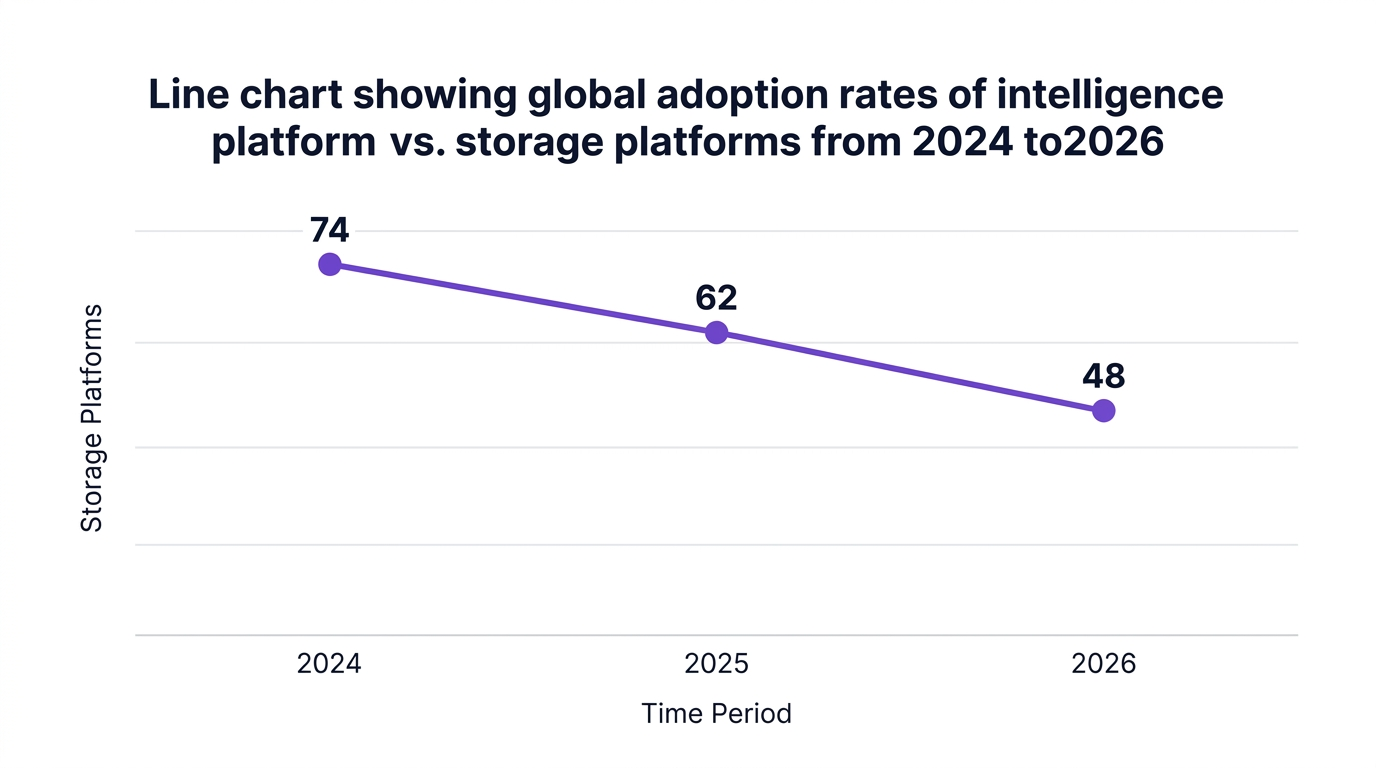
Analysts describe it this way: 87% of surveyed enterprises now prioritize platforms with embedded AI-driven insights over raw storage capabilities (IDC, 2026). The shift is not just architectural. It changes how teams work:
Storage platforms: ETL pipelines, schema management, dashboards updated on a schedule.
Intelligence platforms: AI models, data agents, policy engines, and real-time actions.
As one Gartner cloud researcher noted, "The transition from storage-centric to intelligence-centric platforms is redefining what it means to be data-driven, with AI now providing contextual, automated recommendations rather than static reports" (Gartner, 2026).
Key characteristics of intelligence platforms:
Context-aware AI: Models combine operational, financial, and security signals to generate recommendations.
Data agents: Task-specific agents monitor metrics and policies continuously.
Integrated governance: Controls for access, compliance, and risk embedded into analytics workflows.
Actionability: Integration with workflow automation and IT service tools to trigger changes, not just show charts.
For CIOs, this is similar to the difference between an archive and a trading desk. Storage is the archive, intelligence platforms are the trading desk that acts on signals in real time.
Static dashboards were useful when data changed slowly and decisions followed a monthly cadence. That world is gone.
A Forrester study reports that 85% of IT leaders believe static dashboards will be obsolete within 3 years, replaced by agent-centric analytics (Forrester, 2026). Enterprises increasingly want data agents that continuously watch, interpret, and act.

In environments powered by Microsoft Fabric analytics and similar architectures, AI-driven dashboards evolve into:
Fabric data agents that monitor pipeline health, query performance, and cost.
Compliance agents that watch access patterns, MFA coverage, and data sharing risks.
FinOps agents that detect underused licenses, idle resources, and budget anomalies.
According to a 2026 industry report on Microsoft Fabric, adoption of AI-powered data agents has reduced time-to-insight by 40% on average in large enterprises. That means questions that used to require a request, a backlog wait, and a dashboard update are now answered in near real time.
Why static dashboards are dying:
They assume humans have time to "go look" at dashboards.
They do not adapt to context or user role on their own.
They struggle to encode policy or trigger actions.
By contrast, agent-centric analytics:
Proactively push alerts and recommendations to the right stakeholder.
Explain why a risk, spike, or anomaly matters based on policy.
Integrate directly with workflow automation to open tickets, revoke access, or change configurations.
There is a common concern that agent-centric analytics might overwhelm teams with noise. That risk is real when agents are poorly designed. The remedy is disciplined governance, clear thresholds, and tight integration between intelligence platforms and IT workflows, which is exactly where CloudNuro focuses.
Microsoft Fabric gives enterprises a converged data plane with built-in analytics and AI services. Instead of stitching together separate tools for data warehousing, data lakes, and BI, Fabric acts as a unified intelligence substrate.
Adoption is strong: spending on intelligence platforms overall is projected to reach 23 billion dollars globally by 2026, up from 15 billion dollars in 2025 (MarketsandMarkets, 2026). Fabric is a core part of that growth, particularly in regulated industries.
Key capabilities that matter for CIOs and CTOs:
Unified data model: Operational, financial, and security telemetry converge into a single analytic fabric.
AI orchestration: Fabric data agents can sit on top of this model to drive automation.
Integrated governance: Native features for role-based access, data lineage, and policy enforcement.
A cloud strategy lead summarised it: "Microsoft Fabric’s data agents and AI fabric tightly couple governance with analytics, making real-time compliance possible at cloud scale" (2026). This is vital for enterprise SaaS management and cloud governance.
According to TechValidate research, 80% of organizations using Microsoft Fabric report improved compliance and security management across SaaS and cloud assets. That is a direct result of treating analytics and governance as one system, not two separate projects.
Fabric is not meant to replace SaaS management platforms. It excels at data unification and analytics, while platforms like CloudNuro bring:
Deep, application-specific context such as license models, edition tiers, and access entitlements.
Workflow automation across ITSM, IAM, and HR systems.
Built-for-purpose modules for license optimization, IT chargeback, and compliance automation.
For CIOs, the winning pattern is platform convergence: use Microsoft Fabric as the analytic fabric, and connect it to an enterprise SaaS management platform like CloudNuro to operationalize the insights.
Intelligence platforms are particularly powerful when applied to SaaS sprawl, shadow IT, and cloud governance. The combination of real-time business intelligence and workflow automation changes how IT, security, and finance collaborate.
Gartner reports that organizations using intelligence platforms have seen a 33% reduction in shadow IT issues due to enhanced real-time visibility (Gartner, 2026). That benefit compounds when integrated with a dedicated cloud governance platform.
Four high‑impact use cases for enterprise SaaS management:
Real-time app discovery and shadow IT control
Intelligence platforms ingest network, identity, and expense data to identify unsanctioned apps. Data agents can flag risky services, high-spend categories, or non-compliant regions for review.
License optimization and IT chargeback
With usage telemetry flowing into Fabric, a SaaS management platform can run AI models that recommend right-sizing. This supports automated cost optimization, reallocating unused seats and driving accurate IT chargeback to business units.
Integrated SaaS security and compliance
Intelligence platforms surface security signals such as MFA coverage, data sharing patterns, and admin role sprawl. A cloud governance platform can automate policy enforcement, revoke risky access, and generate evidence for SOC 2 Type II compliance.
Service onboarding automation and offboarding control
When new services are discovered or provisioned, data agents can trigger service onboarding automation and workflow automation in ITSM. This keeps joiners, movers, and leavers aligned with entitlements and reduces orphaned accounts.
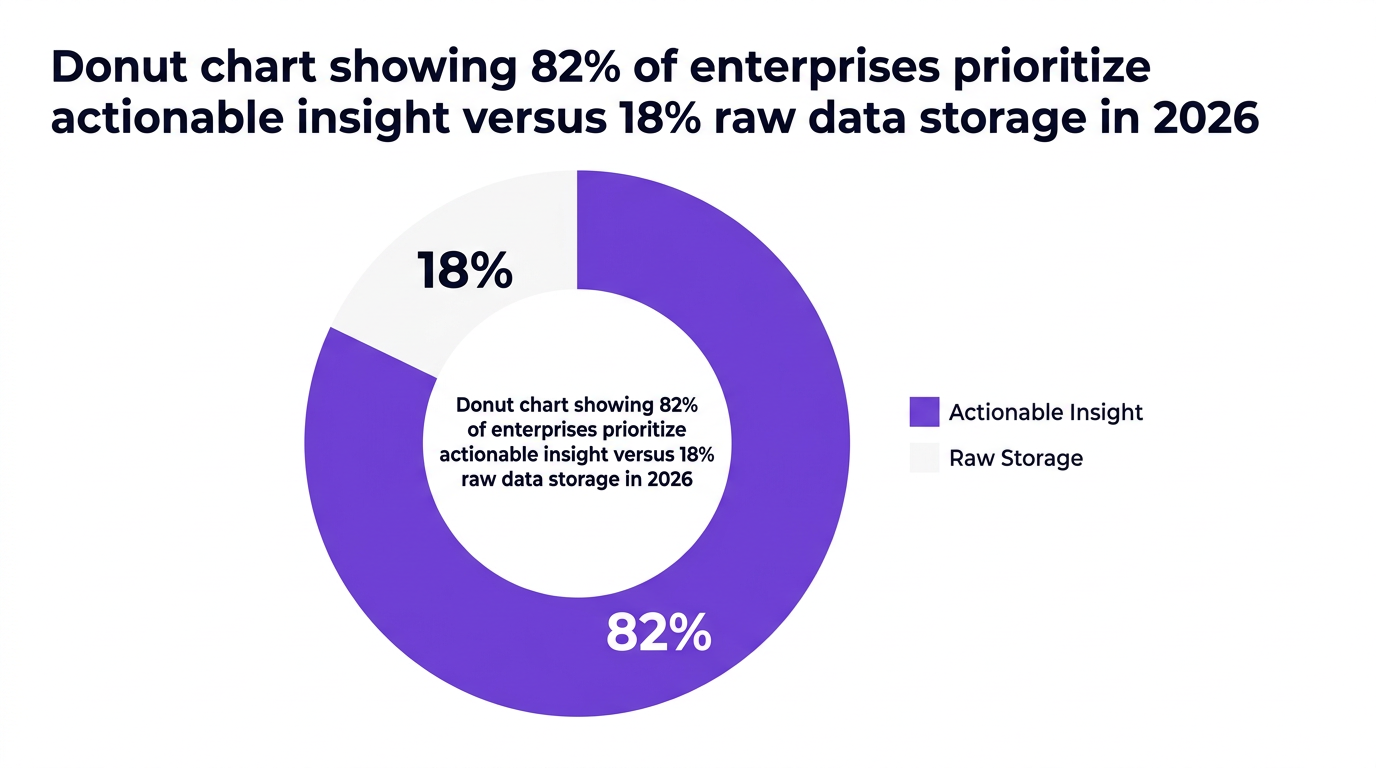
A McKinsey report notes that 82% of CIOs cite "actionable insight" from intelligence platforms as the primary driver for cloud modernization initiatives (McKinsey, 2026). Crucially, those insights only drive business value when they are connected to policy, process, and people.
CloudNuro sits on top of data fabrics such as Microsoft Fabric and extends them into enterprise SaaS management and cloud governance. The platform is designed for IT, security, and finance teams that want to move beyond dashboards into agent-centric operations.
CloudNuro provides:
Microsoft 365 Custodian and Salesforce Custodian for deep, domain-specific intelligence on collaboration and CRM ecosystems.
Unified Cloud Custodian to centralize app discovery, user access review, and policy automation across SaaS, PaaS, and IaaS.
CloudNuro AI Custodian and FinOps Services for continuous cost analytics, chargeback, and automated cost optimization.
You can explore these capabilities in more detail in the product overview and dedicated SaaS management solution pages.
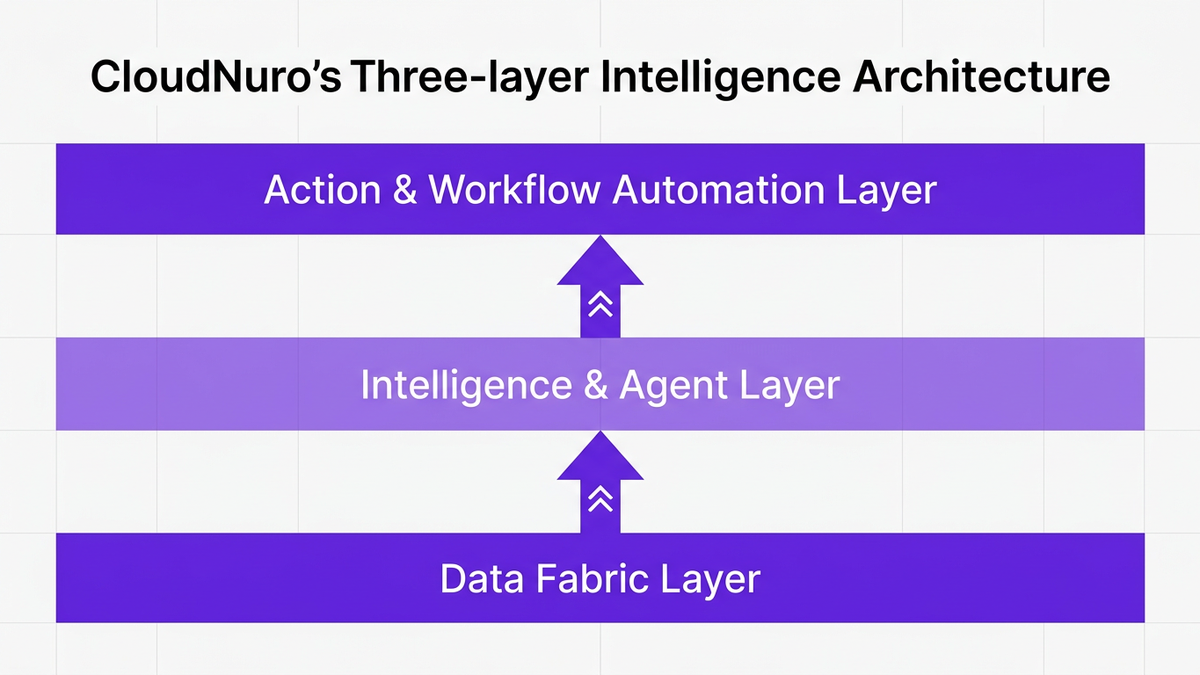
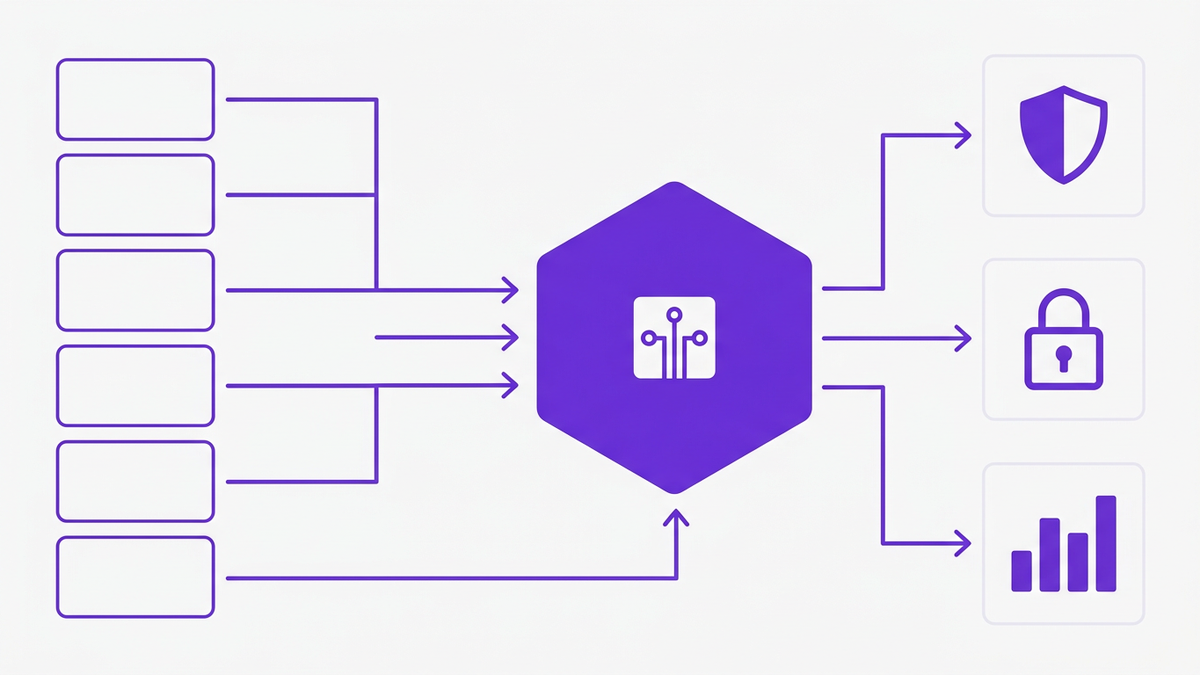
CloudNuro follows a three-layer model for agent-centric analytics:
Data fabric layer
Telemetry from SaaS, PaaS, and IaaS, including Microsoft 365, CRM, collaboration tools, identity providers, and cloud workloads, is unified. This can include direct integration with Microsoft Fabric analytics for AI-ready modeling.
Intelligence and agent layer
CloudNuro runs AI and rules-based agents for:
360° app discovery and shadow IT classification.
License optimization and automated cost optimization.
Integrated SaaS security signals such as MFA status, risky sharing, and admin proliferation.
Compliance automation, including evidence collection for SOC 2 Type II compliance.
Action and workflow automation layer
Insights flow into ticketing, IAM, HRIS, and collaboration systems through workflow automation. CloudNuro supports:
Service onboarding automation and seamless offboarding.
IT chargeback and cost allocation workflows.
Policy enforcement playbooks that act on anomalies.
This model converts intelligence platforms from passive analytics into closed-loop governance systems.
A Fortune 100 healthcare company used Microsoft Fabric as a unified data layer and implemented CloudNuro Unified Cloud Custodian on top.
Their prior state:
Over 50 static dashboards across security, finance, and IT asset management.
Manual spreadsheet reconciliations for SaaS spend, license usage, and compliance control.
Lengthy audit cycles due to fragmented evidence.
With CloudNuro and fabric data agents in place:
47% faster audit response time, driven by centralized evidence for SaaS access, license usage, and policy enforcement (2026 customer success data).
28% reduction in SaaS overspend, primarily from right-sizing licenses and eliminating redundant tools.
Automated service onboarding automation, with joiner and mover workflows linked directly to entitlements.
Another multinational financial firm implemented CloudNuro’s AI Custodian for 360° app discovery and automated policy enforcement. The outcome: 37% reduction in shadow IT exposure and a 31% improvement in SOX compliance process speed (CloudNuro Case Study, 2026).
These results highlight a core principle: intelligence platforms alone do not deliver outcomes. They need a governance-first architecture that connects insights to policy, process, and automation.
If you are considering how to operationalize this model, the IT operations solution and FinOps services pages provide reference patterns.
Moving from storage platforms and static BI to intelligence platforms and agent-centric analytics is a multi-phase journey. CIOs and CTOs can structure the transition in practical steps.
Start by cataloging:
Current storage platforms and data sources.
Existing dashboards, owners, and usage patterns.
Critical processes that depend on each dashboard.
This gives a baseline to identify which dashboards should become data agents, which can be retired, and which belong in a self-service IT store or portal.
Adopt or extend an intelligence platform such as Microsoft Fabric to:
Consolidate core operational, financial, and security data.
Standardize governance, lineage, and access policies.
Enable AI services that can drive agent-centric analytics.
As you do this, anticipate AI workload visibility needs. IT and security teams will need to understand where models run, what data they touch, and how decisions are logged for audits.
Rather than trying to replace all dashboards at once, pick 3 to 5 high-value, recurring questions. For example:
"Which licenses are underutilized across SaaS platforms?"
"Which apps present the highest security risk based on MFA and data sharing?"
"Which teams have the largest deviation from IT chargeback budgets?"
Design data agents to monitor these continuously, with clear thresholds and escalation paths. Integrate them with a cloud governance platform like CloudNuro to trigger workflows.
Tie intelligence platforms into:
ITSM tools for ticket creation and routing.
Identity and access management for entitlement changes.
Finance systems for allocation and chargeback entries.
This converts recommendations into repeatable, governed actions, not sporadic manual efforts.
As agent-centric analytics mature, you will see steady declines in dashboard logins and manual report requests. Use this data to:
Decommission low-value dashboards.
Simplify remaining BI assets to focus on strategic, exploratory analysis.
A useful analogy is autopilot in an aircraft. Pilots still use dashboards for situational awareness, but most routine work is done by automated systems. Intelligence platforms bring a similar shift to SaaS management and cloud governance.
An intelligence platform is a system that collects, interprets, and acts on data using AI and automation. A storage platform primarily stores data and sometimes supports reporting.
Intelligence platforms include data agents, policy engines, and workflow integrations that enable real-time decisioning, cost optimization, and governance, instead of relying on static dashboards and manual analysis.
AI-driven data agents continuously monitor metrics, policies, and thresholds. Instead of requiring users to check dashboards, agents proactively send alerts, recommendations, or automated actions when conditions are met.
This reduces time-to-insight, improves compliance automation, and ensures that critical issues such as SaaS sprawl, shadow IT, or risk anomalies are addressed in real time.
Microsoft Fabric provides a unified analytic fabric that consolidates data from multiple systems and supports AI at scale. Organizations report improvements in compliance, security, and time-to-insight, with some seeing a 40% reduction in time-to-insight after implementing Fabric data agents.
For CIOs and CTOs, Fabric serves as a foundation for intelligence platforms that support real-time business intelligence, governance, and cost optimization across SaaS and cloud assets.
Intelligence platforms enhance cloud governance by combining data from identity, finance, and operations into a single model. Data agents can detect shadow IT, misconfigured access, or non-compliant usage patterns and trigger workflows in a cloud governance platform.
This supports integrated SaaS security, license optimization, IT chargeback, and regulatory reporting, all with auditable controls.
It does not mean dashboards disappear entirely. It means the primary interface for operational decision-making shifts from dashboards to agents and automation.
IT leaders should plan to invest in data agents, workflow automation, and governance tooling that can use insights from intelligence platforms to drive actions, while keeping a smaller, more strategic set of dashboards for exploration and planning.
Start with a modern intelligence platform, rationalize existing dashboards, and identify a small set of high-value use cases. Build data agents for these, integrate them with SaaS management and cloud governance platforms, and then gradually retire low-value dashboards.
Engage IT operations, security, and finance teams together so that workflow automation, policy enforcement, and cost optimization are designed jointly rather than in silos.
CloudNuro is a leader in Enterprise SaaS Management Platforms, providing enterprises with unmatched visibility, governance, and cost optimization. Recognized twice in a row in the SaaS Management Platforms category and named a Leader in the SoftwareReviews Data Quadrant, CloudNuro is trusted by global enterprises and government agencies to bring financial discipline to SaaS, cloud, and AI.
Trusted by enterprises such as Konica Minolta and Federal Signal, CloudNuro provides centralized SaaS inventory, license optimization, and renewal management along with advanced cost allocation and chargeback, giving IT and Finance leaders the visibility, control, and cost-conscious culture needed to drive financial discipline.
Request a no cost, no obligation free assessment —just 15 minutes to savings!
Get StartedFor CIOs and CTOs, the center of gravity has shifted from storing data to using data to make and automate decisions. Intelligence platforms sit at the heart of this shift, transforming fragmented data lakes and warehouses into AI-driven, action-oriented systems.
According to IDC, 74% of enterprises are actively investing in intelligence platforms to move beyond data storage toward real-time, AI-driven analytics (IDC, 2026). Intelligence platforms are increasingly paired with technologies like Microsoft Fabric, where fabric data agents and AI workloads turn static dashboards into dynamic decision agents.
This article explains what intelligence platforms are, how they differ from storage platforms, why Microsoft Fabric matters, and how CloudNuro extends this model into SaaS management and cloud governance.
Traditional storage platforms were built to collect, store, and occasionally report on data. Intelligence platforms are built to interpret, recommend, and act.
Where storage platforms answer "what happened," intelligence platforms are designed to answer "what should we do now" and "can we do it automatically." That is the crucial difference for modern IT and FinOps teams.
Analysts describe it this way: 87% of surveyed enterprises now prioritize platforms with embedded AI-driven insights over raw storage capabilities (IDC, 2026). The shift is not just architectural. It changes how teams work:
Storage platforms: ETL pipelines, schema management, dashboards updated on a schedule.
Intelligence platforms: AI models, data agents, policy engines, and real-time actions.
As one Gartner cloud researcher noted, "The transition from storage-centric to intelligence-centric platforms is redefining what it means to be data-driven, with AI now providing contextual, automated recommendations rather than static reports" (Gartner, 2026).
Key characteristics of intelligence platforms:
Context-aware AI: Models combine operational, financial, and security signals to generate recommendations.
Data agents: Task-specific agents monitor metrics and policies continuously.
Integrated governance: Controls for access, compliance, and risk embedded into analytics workflows.
Actionability: Integration with workflow automation and IT service tools to trigger changes, not just show charts.
For CIOs, this is similar to the difference between an archive and a trading desk. Storage is the archive, intelligence platforms are the trading desk that acts on signals in real time.
Static dashboards were useful when data changed slowly and decisions followed a monthly cadence. That world is gone.
A Forrester study reports that 85% of IT leaders believe static dashboards will be obsolete within 3 years, replaced by agent-centric analytics (Forrester, 2026). Enterprises increasingly want data agents that continuously watch, interpret, and act.
In environments powered by Microsoft Fabric analytics and similar architectures, AI-driven dashboards evolve into:
Fabric data agents that monitor pipeline health, query performance, and cost.
Compliance agents that watch access patterns, MFA coverage, and data sharing risks.
FinOps agents that detect underused licenses, idle resources, and budget anomalies.
According to a 2026 industry report on Microsoft Fabric, adoption of AI-powered data agents has reduced time-to-insight by 40% on average in large enterprises. That means questions that used to require a request, a backlog wait, and a dashboard update are now answered in near real time.
Why static dashboards are dying:
They assume humans have time to "go look" at dashboards.
They do not adapt to context or user role on their own.
They struggle to encode policy or trigger actions.
By contrast, agent-centric analytics:
Proactively push alerts and recommendations to the right stakeholder.
Explain why a risk, spike, or anomaly matters based on policy.
Integrate directly with workflow automation to open tickets, revoke access, or change configurations.
There is a common concern that agent-centric analytics might overwhelm teams with noise. That risk is real when agents are poorly designed. The remedy is disciplined governance, clear thresholds, and tight integration between intelligence platforms and IT workflows, which is exactly where CloudNuro focuses.
Microsoft Fabric gives enterprises a converged data plane with built-in analytics and AI services. Instead of stitching together separate tools for data warehousing, data lakes, and BI, Fabric acts as a unified intelligence substrate.
Adoption is strong: spending on intelligence platforms overall is projected to reach 23 billion dollars globally by 2026, up from 15 billion dollars in 2025 (MarketsandMarkets, 2026). Fabric is a core part of that growth, particularly in regulated industries.
Key capabilities that matter for CIOs and CTOs:
Unified data model: Operational, financial, and security telemetry converge into a single analytic fabric.
AI orchestration: Fabric data agents can sit on top of this model to drive automation.
Integrated governance: Native features for role-based access, data lineage, and policy enforcement.
A cloud strategy lead summarised it: "Microsoft Fabric’s data agents and AI fabric tightly couple governance with analytics, making real-time compliance possible at cloud scale" (2026). This is vital for enterprise SaaS management and cloud governance.
According to TechValidate research, 80% of organizations using Microsoft Fabric report improved compliance and security management across SaaS and cloud assets. That is a direct result of treating analytics and governance as one system, not two separate projects.
Fabric is not meant to replace SaaS management platforms. It excels at data unification and analytics, while platforms like CloudNuro bring:
Deep, application-specific context such as license models, edition tiers, and access entitlements.
Workflow automation across ITSM, IAM, and HR systems.
Built-for-purpose modules for license optimization, IT chargeback, and compliance automation.
For CIOs, the winning pattern is platform convergence: use Microsoft Fabric as the analytic fabric, and connect it to an enterprise SaaS management platform like CloudNuro to operationalize the insights.
Intelligence platforms are particularly powerful when applied to SaaS sprawl, shadow IT, and cloud governance. The combination of real-time business intelligence and workflow automation changes how IT, security, and finance collaborate.
Gartner reports that organizations using intelligence platforms have seen a 33% reduction in shadow IT issues due to enhanced real-time visibility (Gartner, 2026). That benefit compounds when integrated with a dedicated cloud governance platform.
Four high‑impact use cases for enterprise SaaS management:
Real-time app discovery and shadow IT control
Intelligence platforms ingest network, identity, and expense data to identify unsanctioned apps. Data agents can flag risky services, high-spend categories, or non-compliant regions for review.
License optimization and IT chargeback
With usage telemetry flowing into Fabric, a SaaS management platform can run AI models that recommend right-sizing. This supports automated cost optimization, reallocating unused seats and driving accurate IT chargeback to business units.
Integrated SaaS security and compliance
Intelligence platforms surface security signals such as MFA coverage, data sharing patterns, and admin role sprawl. A cloud governance platform can automate policy enforcement, revoke risky access, and generate evidence for SOC 2 Type II compliance.
Service onboarding automation and offboarding control
When new services are discovered or provisioned, data agents can trigger service onboarding automation and workflow automation in ITSM. This keeps joiners, movers, and leavers aligned with entitlements and reduces orphaned accounts.
A McKinsey report notes that 82% of CIOs cite "actionable insight" from intelligence platforms as the primary driver for cloud modernization initiatives (McKinsey, 2026). Crucially, those insights only drive business value when they are connected to policy, process, and people.
CloudNuro sits on top of data fabrics such as Microsoft Fabric and extends them into enterprise SaaS management and cloud governance. The platform is designed for IT, security, and finance teams that want to move beyond dashboards into agent-centric operations.
CloudNuro provides:
Microsoft 365 Custodian and Salesforce Custodian for deep, domain-specific intelligence on collaboration and CRM ecosystems.
Unified Cloud Custodian to centralize app discovery, user access review, and policy automation across SaaS, PaaS, and IaaS.
CloudNuro AI Custodian and FinOps Services for continuous cost analytics, chargeback, and automated cost optimization.
You can explore these capabilities in more detail in the product overview and dedicated SaaS management solution pages.
CloudNuro follows a three-layer model for agent-centric analytics:
Data fabric layer
Telemetry from SaaS, PaaS, and IaaS, including Microsoft 365, CRM, collaboration tools, identity providers, and cloud workloads, is unified. This can include direct integration with Microsoft Fabric analytics for AI-ready modeling.
Intelligence and agent layer
CloudNuro runs AI and rules-based agents for:
360° app discovery and shadow IT classification.
License optimization and automated cost optimization.
Integrated SaaS security signals such as MFA status, risky sharing, and admin proliferation.
Compliance automation, including evidence collection for SOC 2 Type II compliance.
Action and workflow automation layer
Insights flow into ticketing, IAM, HRIS, and collaboration systems through workflow automation. CloudNuro supports:
Service onboarding automation and seamless offboarding.
IT chargeback and cost allocation workflows.
Policy enforcement playbooks that act on anomalies.
This model converts intelligence platforms from passive analytics into closed-loop governance systems.
A Fortune 100 healthcare company used Microsoft Fabric as a unified data layer and implemented CloudNuro Unified Cloud Custodian on top.
Their prior state:
Over 50 static dashboards across security, finance, and IT asset management.
Manual spreadsheet reconciliations for SaaS spend, license usage, and compliance control.
Lengthy audit cycles due to fragmented evidence.
With CloudNuro and fabric data agents in place:
47% faster audit response time, driven by centralized evidence for SaaS access, license usage, and policy enforcement (2026 customer success data).
28% reduction in SaaS overspend, primarily from right-sizing licenses and eliminating redundant tools.
Automated service onboarding automation, with joiner and mover workflows linked directly to entitlements.
Another multinational financial firm implemented CloudNuro’s AI Custodian for 360° app discovery and automated policy enforcement. The outcome: 37% reduction in shadow IT exposure and a 31% improvement in SOX compliance process speed (CloudNuro Case Study, 2026).
These results highlight a core principle: intelligence platforms alone do not deliver outcomes. They need a governance-first architecture that connects insights to policy, process, and automation.
If you are considering how to operationalize this model, the IT operations solution and FinOps services pages provide reference patterns.
Moving from storage platforms and static BI to intelligence platforms and agent-centric analytics is a multi-phase journey. CIOs and CTOs can structure the transition in practical steps.
Start by cataloging:
Current storage platforms and data sources.
Existing dashboards, owners, and usage patterns.
Critical processes that depend on each dashboard.
This gives a baseline to identify which dashboards should become data agents, which can be retired, and which belong in a self-service IT store or portal.
Adopt or extend an intelligence platform such as Microsoft Fabric to:
Consolidate core operational, financial, and security data.
Standardize governance, lineage, and access policies.
Enable AI services that can drive agent-centric analytics.
As you do this, anticipate AI workload visibility needs. IT and security teams will need to understand where models run, what data they touch, and how decisions are logged for audits.
Rather than trying to replace all dashboards at once, pick 3 to 5 high-value, recurring questions. For example:
"Which licenses are underutilized across SaaS platforms?"
"Which apps present the highest security risk based on MFA and data sharing?"
"Which teams have the largest deviation from IT chargeback budgets?"
Design data agents to monitor these continuously, with clear thresholds and escalation paths. Integrate them with a cloud governance platform like CloudNuro to trigger workflows.
Tie intelligence platforms into:
ITSM tools for ticket creation and routing.
Identity and access management for entitlement changes.
Finance systems for allocation and chargeback entries.
This converts recommendations into repeatable, governed actions, not sporadic manual efforts.
As agent-centric analytics mature, you will see steady declines in dashboard logins and manual report requests. Use this data to:
Decommission low-value dashboards.
Simplify remaining BI assets to focus on strategic, exploratory analysis.
A useful analogy is autopilot in an aircraft. Pilots still use dashboards for situational awareness, but most routine work is done by automated systems. Intelligence platforms bring a similar shift to SaaS management and cloud governance.
An intelligence platform is a system that collects, interprets, and acts on data using AI and automation. A storage platform primarily stores data and sometimes supports reporting.
Intelligence platforms include data agents, policy engines, and workflow integrations that enable real-time decisioning, cost optimization, and governance, instead of relying on static dashboards and manual analysis.
AI-driven data agents continuously monitor metrics, policies, and thresholds. Instead of requiring users to check dashboards, agents proactively send alerts, recommendations, or automated actions when conditions are met.
This reduces time-to-insight, improves compliance automation, and ensures that critical issues such as SaaS sprawl, shadow IT, or risk anomalies are addressed in real time.
Microsoft Fabric provides a unified analytic fabric that consolidates data from multiple systems and supports AI at scale. Organizations report improvements in compliance, security, and time-to-insight, with some seeing a 40% reduction in time-to-insight after implementing Fabric data agents.
For CIOs and CTOs, Fabric serves as a foundation for intelligence platforms that support real-time business intelligence, governance, and cost optimization across SaaS and cloud assets.
Intelligence platforms enhance cloud governance by combining data from identity, finance, and operations into a single model. Data agents can detect shadow IT, misconfigured access, or non-compliant usage patterns and trigger workflows in a cloud governance platform.
This supports integrated SaaS security, license optimization, IT chargeback, and regulatory reporting, all with auditable controls.
It does not mean dashboards disappear entirely. It means the primary interface for operational decision-making shifts from dashboards to agents and automation.
IT leaders should plan to invest in data agents, workflow automation, and governance tooling that can use insights from intelligence platforms to drive actions, while keeping a smaller, more strategic set of dashboards for exploration and planning.
Start with a modern intelligence platform, rationalize existing dashboards, and identify a small set of high-value use cases. Build data agents for these, integrate them with SaaS management and cloud governance platforms, and then gradually retire low-value dashboards.
Engage IT operations, security, and finance teams together so that workflow automation, policy enforcement, and cost optimization are designed jointly rather than in silos.
CloudNuro is a leader in Enterprise SaaS Management Platforms, providing enterprises with unmatched visibility, governance, and cost optimization. Recognized twice in a row in the SaaS Management Platforms category and named a Leader in the SoftwareReviews Data Quadrant, CloudNuro is trusted by global enterprises and government agencies to bring financial discipline to SaaS, cloud, and AI.
Trusted by enterprises such as Konica Minolta and Federal Signal, CloudNuro provides centralized SaaS inventory, license optimization, and renewal management along with advanced cost allocation and chargeback, giving IT and Finance leaders the visibility, control, and cost-conscious culture needed to drive financial discipline.
Request a no cost, no obligation free assessment - just 15 minutes to savings!
Get StartedWe're offering complimentary ServiceNow license assessments to only 25 enterprises this quarter who want to unlock immediate savings without disrupting operations.
Get Free AssessmentGet Started




CloudNuro Corp
1755 Park St. Suite 207
Naperville, IL 60563
Phone : +1-630-277-9470
Email: info@cloudnuro.com





.webp)

Recognized Leader in SaaS Management Platforms by Info-Tech SoftwareReviews


.svg)